 English
  Español de México
  Français
  Deutsch
  Português do Brasil
  Italiano
  한국어
한국어  ไทย
ไทย  Русский
  日本語
日本語  Polski
  Svenska
  Türkçe

How to Choose the Right Capacity for Multi-Use Balm Packaging
June 04,2026
How to Choose the Right Capacity for Multi-Use Balm Packaging
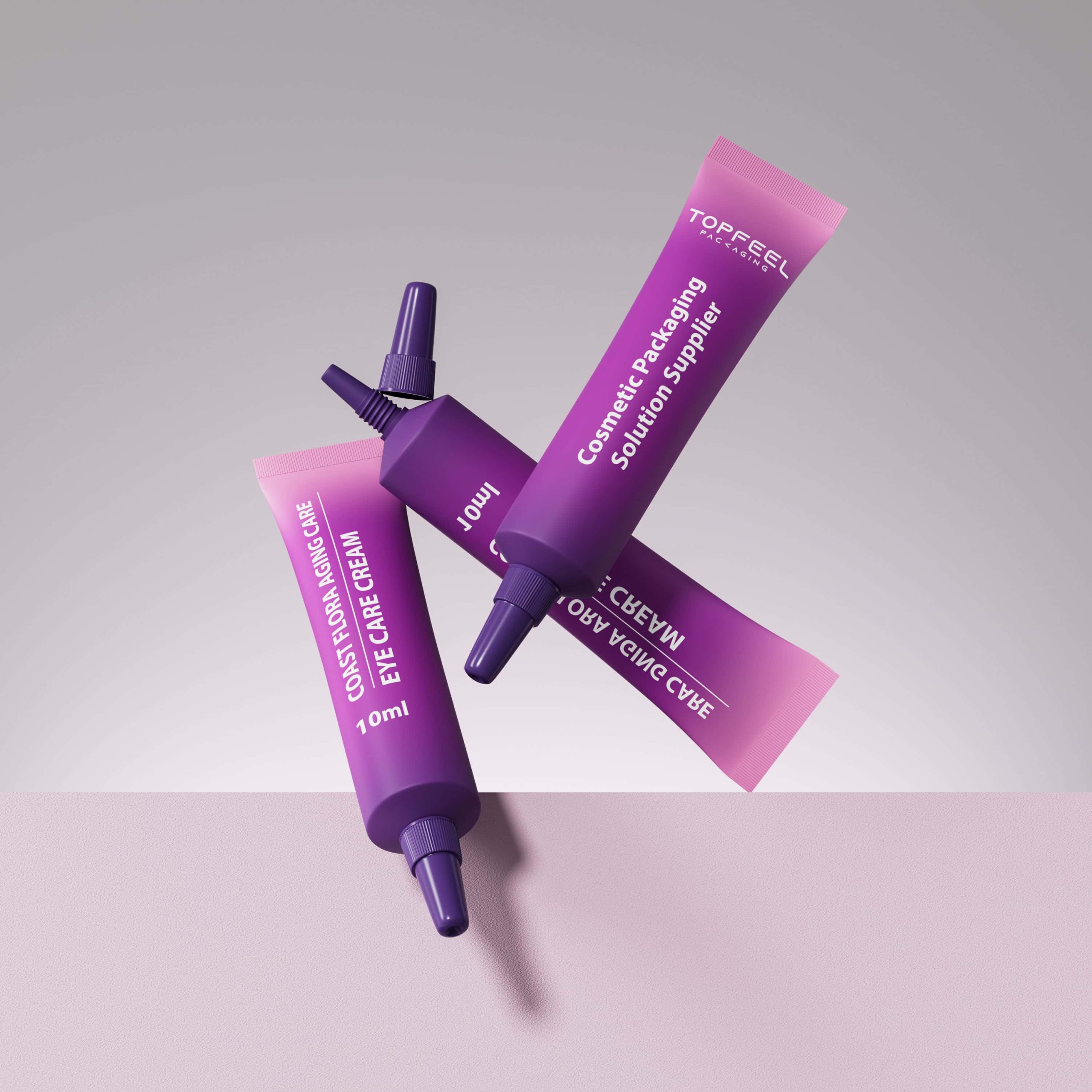
Multi-Use tube makeup Packaging sounds simple, but the wrong capacity quietly drains margins, annoys users, and clogs production faster than a bad filling line.
Insights from McKinsey’s beauty packaging outlook and Euromonitor’s analysis show demand for right-sized formats balancing sustainability, usability, and supply efficiency, with brands prioritizing capacities aligned to formulation behavior.
Pick smart sizes now, or pay later in waste, costly returns, and awkward shelf life.
Key Notes on Multi-Use Tube Makeup Packaging
→ Match formulation to dispensing: Choose spatula tips for high-viscosity creams and nozzle tips for fluid balms to ensure precise, hygienic application.
→ Select barrier layers wisely: PE tubes suit simple formulas, while laminated constructions guard against moisture and oxygen for sensitive blends.
→ Optimize tube sizing: Offer 15 ml for sampling, 30 ml for daily routines, and 50 ml for heavy-use or family packs to balance user needs and shelf life.
→ Embrace sustainability: Integrate PCR plastics or refillable designs and lightweight mono-materials to cut waste and streamline production.
3 Key Factors Determining Balm Tube Capacity
Capacity in Multi-Use tube makeup Packaging is not just about milliliters. It connects product formulation, materials, shelf life, and even how eco-friendly your order feels. When planning a Multi-Use tube makeup Packaging line, details like viscosity, barrier layers, and recycled content shape real-world performance.
Matching Product Formulation to Dispensing Mechanism (Cream Concealer & Spatula Tip)
In Multi-Use tube makeup Packaging, the link between product formulation and dispensing mechanism decides user satisfaction.
-
Start with product consistency
-
High-viscosity cream concealer
- Works best with:
- Spatula tip for smooth swipe control
- Narrow nozzle for spot correction
-
Medium viscosity formulas
- Pair with soft squeeze PE heads
-
-
Align with application method
- Direct-on-skin glide
- Finger-blend support
- Tool-assisted detailing
-
Fine-tune flow control
- Orifice diameter
- Wall thickness
- Air-backflow prevention
• Thick textures need wider internal channels.
• Thin formulas demand tighter seals.
• Residue control keeps hygiene in check.
When brands develop Multi-Use tube makeup Packaging, testing flow under real squeeze pressure matters. At Topfeelmakeup, compatibility trials ensure the viscosity matches the applicator geometry, so the last drop feels as usable as the first.
Selecting Tube Materials and Barrier Layers for Shelf Life (PE vs. Laminated Tube)
Material choice shapes shelf life and user feel in Multi-Use tube makeup Packaging.
- PE tube: flexible, budget-friendly, easy to decorate.
- Laminated tube: enhanced oxygen barrier, stronger protection for active ingredients.
- Hybrid options: balance cost and product stability.
Key checks:
- Material compatibility with oils and waxes
- Required barrier layers against moisture
- Expected storage climate
If a balm includes sensitive antioxidants, a laminated tube reduces oxidation risk. For simpler formulas, PE often works just fine and keeps squeezing smooth.
A quick comparison mindset:
- Cost focus → PE
- Protection focus → Laminated
- Premium skincare positioning → Enhanced tube materials with custom barrier stack
Well-designed Multi-Use tube makeup Packaging blends performance and comfort.
Balancing Order Volume with Sustainability Attributes (PCR Plastic & Refillable Design)
Capacity planning meets eco goals inside Multi-Use tube makeup Packaging strategies.
-
Define demand scale
-
Pilot run
- Lower MOQ
- Standard molds
-
Mass production
- Custom tooling
- Cost efficiency per unit
-
-
Integrate sustainability attributes
- PCR plastic inclusion rate
- Lightweighting to cut material use
- Mono-material for easier recycling
-
Explore extended lifecycle
-
Refillable design
- Replace inner cartridge
- Keep outer shell
-
Encourage circular programs
-
♻ Lower environmental impact starts with smarter design, not just recycled claims.
Using recycled content supports the circular economy, yet extrusion compatibility must stay stable. Topfeelmakeup evaluates how PCR ratios affect wall strength and sealing integrity in Multi-Use tube makeup Packaging, making sure sustainability upgrades don’t disrupt filling lines or long-term durability.
Comparing 15ml vs. 30ml vs. 50ml Balms
Choosing balm size is not just about volume; it shapes user habits, packaging engineering, and repurchase rhythm. From travel-friendly minis to value size family tubes, Multi-Use tube makeup Packaging must match real-life routines.
15ml Balm
Small but mighty. The 15ml option thrives in pocket-sized, on-the-go lifestyles where lip care or targeted use matters more than bulk.
- Fits purse essential kits
- Supports sample size campaigns
- Works well for precise lip care
- Lightweight tube makeup packaging lowers material cost.
- Slim cosmetic squeeze tube improves grip.
- Smaller nozzle reduces product waste.
In daily life, this multi-use cosmetic tube slides into airport pouches, desk drawers, and gym bags without drama. Brands often pair Multi-Use tube makeup Packaging here with rollerballs or mini brushes, keeping dosing tight and clean.
Short bursts of hydration.
Quick shine touch-ups.
Frequent repurchase cycles that keep momentum steady.
30ml Balm
The 30ml format sits comfortably between convenience and commitment. It’s the bathroom staple and reliable desk companion, built for daily use across hand care and face care.
- Balanced for moderate consumption
- Compatible with pump or flip-top
- Ideal for versatile application
-
Consumer Usage Context
1.1 Morning skincare routine
1.2 Office reapplication
1.3 Post-wash hydration
-
Packaging Engineering
2.1 Tube wall thickness
- Standard 0.35mm

- Reinforced 0.45mm
2.2 Cap options
- Flip-top - Airless mini pump -
Shelf-Life & Barrier
3.1 EVOH layer inclusion
3.2 Oxygen permeability control

Scientific comparison of common 30ml makeup tube packaging materials:
| Material Type | Oxygen Transmission (cc/m²·day) | Typical Shelf Life (months) | Recyclability Level | Cost Index |
|---|---|---|---|---|
| PE Single Layer | 150–200 | 12 | Medium | 1.0 |
| PE + EVOH | 5–20 | 18 | Medium | 1.3 |
| Aluminum Barrier | <1 | 24 | Low | 1.6 |
| PCR-PE Blend | 120–180 | 12 | High | 1.1 |
| Sugarcane Bio-PE | 140–190 | 12 | High | 1.2 |
Multi-Use tube makeup Packaging in 30ml often balances barrier strength and squeeze comfort. For growing brands, including Topfeelmakeup, this format feels safe yet flexible—big enough to prove value, compact enough to finish before expiry.
50ml Balm
The 50ml tube leans toward home use and frequent application, ideal for body care or multi-purpose routines. It’s the long-lasting pick with less frequent repurchase pressure.
- Durable seams required
- Stronger shoulder design
- Enhanced barrier layers
Consumers treating balm as general application cream expect consistent flow and sturdy makeup tube packaging. Larger Multi-Use tube makeup Packaging must handle repeated squeezes without panel collapse.
“By 2025, value-driven personal care purchases are accelerating, with larger pack sizes gaining share in household categories,” notes Euromonitor International’s 2025 global beauty outlook.
That trend explains the rise of 50ml cosmetic squeeze tube formats. The thicker wall supports higher-viscosity formulas, while wide caps prevent leakage in shared bathrooms.
More product.
More stability time.
More family-level convenience.
When engineered right, Multi-Use tube makeup Packaging at 50ml becomes the dependable workhorse of any balm line.
Avoid Overstock: Right-Size Your Balm Tubes
Running short on balm tubes hurts. Sitting on pallets of unsold stock hurts more. When producing Multi-Use tube makeup Packaging, balance is everything. From production planning to packaging decoration, every choice shapes cost, waste, and shelf speed. Let’s keep inventory lean while quality stays tight.
Forecasting Demand with Batch Consistency Data
Accurate demand forecasting starts with clean historical data and proven batch consistency. For Multi-Use tube makeup Packaging, small deviations in fill weight or viscosity can distort sales velocity tracking.
-
Data Foundation
1.1 Collect
- Past 12–24 months of sales
- Seasonal lifts tied to market trends
- SKU-level sell-through rates
1.2 Validate
- Compare lab-tested batch consistency metrics
- Cross-check defect rate against return data
-
Planning Alignment
2.1 Sync production planning with:
- Confirmed retailer forecasts
- E-commerce conversion averages
2.2 Adjust inventory management targets:
- Safety stock = 1.2× monthly velocity
- Reorder point = Lead time × daily demand
| Metric | Q1 | Q2 | Q3 | Q4 |
|---|---|---|---|---|
| Avg. Monthly Demand (units) | 120,000 | 145,000 | 165,000 | 210,000 |
| Batch Variance (%) | 1.8 | 1.5 | 1.3 | 1.2 |
| Return Rate (%) | 0.9 | 0.8 | 0.7 | 0.7 |
| Overstock Days | 22 | 18 | 14 | 10 |
-
Continuous Refinement
3.1 Monthly review
3.2 Compare forecast vs. actual
3.3 Fine-tune SKU mix for makeup tube packaging lines
The result? Fewer write-offs. Smoother replenishment. Stronger cash flow.
Streamlining Manufacturing: Extrusion Process and Tube Sealing
Clean seams matter. A leaking cosmetic tube packaging unit can wipe out margins fast.
To stabilize the manufacturing process, focus on:
- Calibrated extrusion process temperature bands
- Automated tube sealing pressure checks
- Real-time quality control cameras
Here’s the simple flow:
- Resin feeding →
- Controlled extrusion →
- Shoulder molding →
- Inline inspection →
- Precision sealing
If material flow slows, output drops. If automation sensors drift, seal strength weakens.
According to McKinsey’s 2025 advanced manufacturing outlook, manufacturers applying higher automation integration saw productivity increases of 15–20% in packaging operations.
For Multi-Use tube makeup Packaging, that boost translates to tighter tolerances and faster runs. Production efficiency isn’t flashy. It’s disciplined. And discipline keeps cosmetic tube stock from piling up.
Minimizing Waste through Lightweight Packaging and Recyclable Material
Waste reduction isn’t just green talk. It cuts freight, storage, and disposal fees.
For Multi-Use tube makeup Packaging, optimize packaging design through layered decisions:
-
Material Strategy
1.1 Shift to mono-layer PE or PP
1.2 Improve material sourcing transparency
1.3 Audit supplier PCR percentages
-
Structural Reduction
- Trim wall thickness by 5–8%
- Maintain barrier integrity
- Revalidate drop testing
-
Sustainability Initiatives
3.1 Track CO₂ per 10,000 units
3.2 Measure post-consumer recyclability
3.3 Publish annual environmental impact summaries
The Ellen MacArthur Foundation noted in its 2024 plastics circularity update that mono-material flexible packaging significantly improves mechanical recycling rates when properly labeled.
Lightweight cosmetic tubes ship cheaper. They store tighter. They waste less. That’s real waste reduction, not lip service.
Coordinating Decoration Runs: Matte Finish, Hot Stamping, and Label Application
Decoration chaos inflates cost. Smart sequencing keeps visual branding sharp without burning setup hours.
For Multi-Use tube makeup Packaging, align printing techniques like this:
-
Pre-Press Planning
1.1 Confirm graphic design color codes
1.2 Lock Pantone references
1.3 Validate artwork scaling
-
Production Order
2.1 Base coat application
2.2 Matte finish curing
2.3 Hot stamping foil transfer
2.4 Label application or silk screen
-
Efficiency Controls
- Batch similar SKUs together
- Reduce plate changes
- Standardize drying times
When packaging decoration runs are coordinated, changeover time drops and scrap rates shrink.
Matte textures feel premium. Foil pops under store lights. Labels must sit straight—no bubbles, no drift. In makeup tube packaging, small visual flaws get noticed fast.
Right-sized production plus disciplined decoration scheduling keeps stock balanced. No warehouse overload. No rushed reprints. Just steady output that matches real demand.

