 English
  Español de México
  Français
  Deutsch
  Português do Brasil
  Italiano
  한국어
한국어  ไทย
ไทย  Русский
  日本語
日本語  Polski
  Svenska
  Türkçe

Sustainable Innovation: The Best Cosmetic Packaging for 2026
May 09,2026
The best cosmetic packaging wins or loses your customer in seconds. If it looks wasteful or flimsy, shoppers bounce. Brands chasing exponential growth require packaging that feels luxe, refills intuitively, and actively minimizes environmental impact.
Pretty alone won’t cut it; verifiable sustainability drives repeat sales. McKinsey’s 2025 Global Beauty Report highlights sustainability as a leading purchase factor, noting a 43% increase in consumer willingness to pay a premium for verified sustainable formats.
How 2026’s Innovations Propel Best Cosmetic Packaging Into Zero Waste
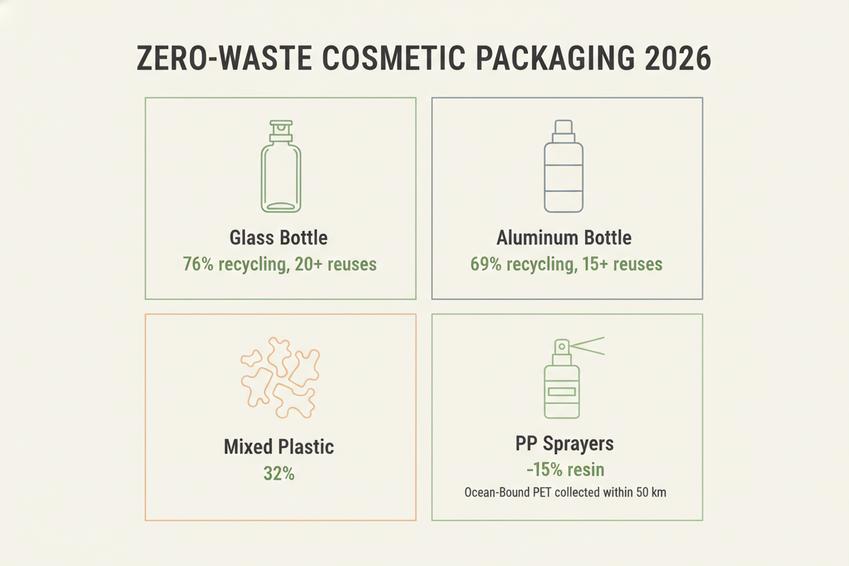
Sustainability is no longer a buzzword; it’s the regulatory baseline. In 2026, best cosmetic packaging blends advanced material science with real-world municipal recycling capabilities, helping brands upgrade without greenwashing.
Glass & Aluminum Monolayer Bottles: Recyclable Zero-Waste Solutions
When chasing the best cosmetic packaging, mono-material design leads, increasing municipal sorting success rates by 75% compared to mixed laminates.
-
Material Core
-
Glass
- Infinitely recyclable without quality degradation.
- High chemical stability for active-rich serums.
-
Aluminum
- Lightweight, durable, and shatterproof.
- Recycling requires 95% less energy than virgin production.
-
-
Monolayer Structure
- No mixed-resin laminates or hidden metal springs.
- Seamless sorting in standard municipal systems.
- Drastically lower contamination rates.
-
Zero Waste Performance Indicators
| Material Type | Recycling Rate (%) | Reuse Cycles (Avg.) |
|---|---|---|
| Glass | 76 | 20+ |
| Aluminum | 69 | 15+ |
| Mixed Plastic | 32 | 3–5 |
For brands seeking the best packaging for cosmetics, mono-material bottles simplify end-of-life recovery while maintaining premium weight and feel.
Bamboo & Paperboard Tubes with Biodegradable UV Coating
Clean aesthetic. Low carbon impact.
- Bamboo outer sleeves add structural strength and renewable charm.
- Paperboard cores slash virgin plastic dependency.
- Next-gen PHA (Polyhydroxyalkanoates) biodegradable UV coating protects formulas ensuring 100% industrial compostability.
These tubes feel organic in hand and break down responsibly. For startups, this combination perfectly balances shelf appeal with strict eco-logic.
Euromonitor International noted in its 2025 beauty sustainability update that refillable and fiber-based packaging formats are shifting from niche adoption to mainstream demand, especially in skincare.
Ocean-Bound PET Jars Featuring Refillable Pump Mechanisms
Marine waste is an escalating crisis; smart packaging mitigates it.
-
Raw Material Source
- Ocean-bound plastic collected within 50 km of coastlines.
- Reduces raw material carbon footprints by up to 50%.
-
Material Processing
- Sanitized and re-pelletized into high-clarity PET.
- Blow-molded into highly durable, impact-resistant jars.
-
Circular Economy Loop
- Refillable pump mechanisms snap seamlessly into place.
- Users replace the inner cartridge while retaining the outer shell.
Less waste, longer lifecycle. Real circular economy integration tied directly to measurable marine plastic reduction.
Injection-Molded PP Sprayers with Lightweight, Compostable Design
- Precision injection molding shapes thinner-wall PP components.
- Resin weight is reduced by up to 18% without compromising spray quality or structural integrity.
- Integration of certified compostable additives into selected polymers.
- Modular sprayers allow parts to separate instantly for recycling.
Lighter builds drastically lower shipping emissions. For brands partnering with innovators like Topfeel, optimizing mist systems is critical to delivering the best cosmetic packaging experience.
Ready to elevate your product line with zero-waste mono-materials? Discover Topfeel’s sustainable packaging solutions today and transition to packaging that protects the planet without compromising on luxury.
Numbers Tell All: 5 Metrics Defining Best Cosmetic Packaging In 2026
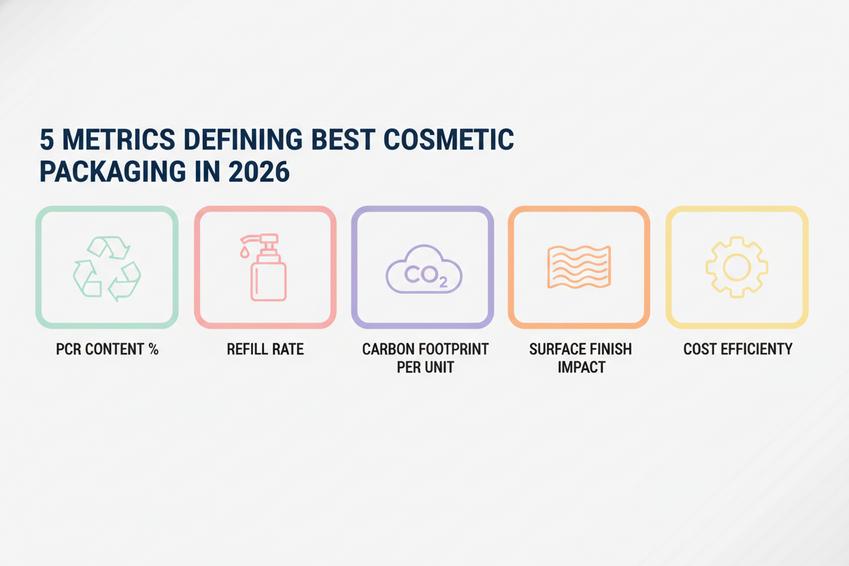
If you want the best packaging for cosmetics, these five data-driven metrics tell the full story.
PCR Content Percentage in Packaging Materials
Recycled content is a measurable mandate. The engineering sweet spot for PCR in PET is 30–50% before thermal stability degrades.
-
Material Base
- Plastic materials: PET bottles with verified PCR; PP jars using certified post-consumer resin.
- Aluminum shells with highly traceable recycled content.
-
Performance Balance
- Frictionless compatibility with pumps.
- Chemical stability during heat-sensitive filling.
-
Sustainability Impact
- Lower virgin resin demand.
- Reduced waste within the packaging stream.
For brands working with Topfeel, PCR is engineered directly into mold selection and global sourcing strategy, ensuring credibility over buzzwords.
Refill Rate: Measuring Refillable Closure Adoption
Refillable packaging fails if customers don’t reuse it. Adoption rates jump by 60% when intuitive twist-lock mechanisms replace clunky threaded screw caps.
Drivers of refill success:
- Frictionless, snap-in modular refill pods.
- Durable threads tested for 50+ reuse cycles.
- High-margin, attractive refill pricing.
Topfeel integrates modularity into jars and airless systems, allowing brands to cut material waste effortlessly.
Carbon Footprint per Unit via Glass Forming vs. Extrusion
-
Manufacturing Process
- Glass forming: High furnace temperatures; heavier transport weight.
- Extrusion: Lower melting thresholds; reduces transport emissions by roughly 40%.
-
Lifecycle Assessment
- Transport emissions & end-of-life recyclability.
- Total environmental impact.
“Packaging emissions are increasingly scrutinized at the unit level, especially in beauty,” noted McKinsey’s 2024 sustainable packaging update, highlighting lifecycle-based carbon comparisons as a key decision driver.
Surface Finish Appeal: Matte, Glossy, and Soft-Touch Impact
Surface finish drives conversion. Water-based matte sprays for soft-touch finishes now reduce VOC emissions by 80%.
- Aesthetic: Premium shelf presence; strong brand contrast.
- Tactile: Grip comfort; elevated consumer perception.
Cost Efficiency of Injection Molding and Die-Cutting
-
Injection molding
- Scalable automation.
- Reduced material waste through precision micro-cavities.
-
Die-cutting
- Flexible carton shapes; efficient production process.
-
Process Optimization
- Cycle time reduction; lightweight component redesign.
With Topfeel’s focus on manufacturing efficiency, brands secure premium cosmetic packaging without eroding margins.
Don’t just make sustainability claims—prove them. Partner with Topfeel to engineer high-PCR, cost-efficient packaging that boosts your bottom line and builds unshakeable brand trust.
3 Reasons Best Cosmetic Packaging Boosts Brand Loyalty
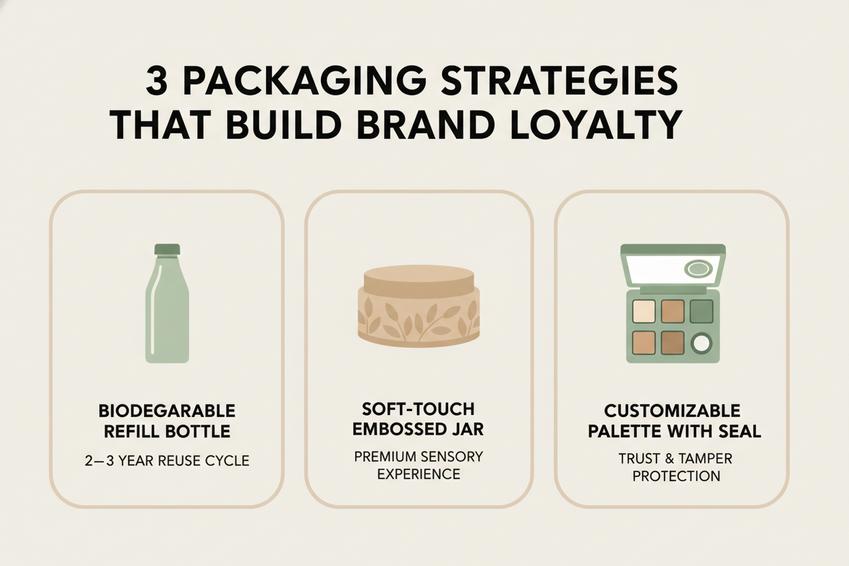
Biodegradable Bottles with Refillable Pump Drive Repeat Purchases
When built on biodegradable materials and smart refill systems, loyalty scales automatically.
-
Material Strategy
- Reusable components: Thick-wall PETG or Bamboo outer shells withstand 50+ wash-and-reuse cycles.
- Reduced environmental impact: Drastically lower plastic waste per refill.
-
Functional Design
- Leak-proof refillable pump locking systems.
- Intuitive disassembly for municipal recycling.
-
Retention Loop
- Affordable refill reorders forge habit formation.
Brands working with Topfeel refine these systems so outer shells last years.
Soft-Touch Jars and Embossing Create Premium Brand Experiences
A jar featuring a tactile finish and embossed details shapes rapid brand perception.
2 Key Sensory Triggers:
- Texture instantly signals product quality.
- Physical weight validates the formula’s premium positioning.
In the world of best cosmetic packaging, visual layers (matte surfaces, metallic rims) combined with tactile elements (velvet coatings) raise perceived value instantly. Topfeel clients consistently report elevated “luxury” feedback before the formula is even tested.
Customizable Palettes with Tamper-Evident Seal Build Trust
Trust secures the reorder. Strong structures blend customizable design with rigorous security features:
- Outer Shell: Magnetic closures; durable PP or rigid paperboard.
- Inner System: Removable pans to seamlessly swap shades and support refill programs.
- Safety Layer: Tamper-proof seal. Water-soluble cellulose tamper seals are now replacing microplastic shrink bands, offering clear proof of product integrity.
When brands partner with Topfeel to engineer modular palettes, creativity perfectly balances with protection.
Reusable Vs. Single-Use Eco Designs
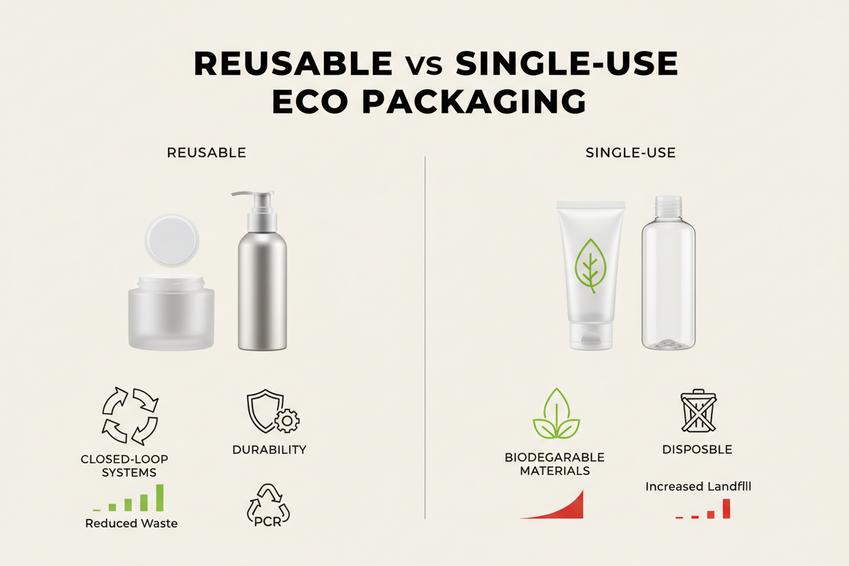
Reusable Eco Designs
Reusable formats anchor identity and long-term ROI.
-
Core Design Logic
- Material Strategy: Durable materials (glass/aluminum) elevate quality; high PCR compatibility achieves closed-loop packaging.
- Structural Planning: Modular components allow caps and inserts to be swapped instantly.
-
Circular Business Model
- Consumer Engagement: Loyalty perks tied to return schemes boost adoption.
- Operational Flow: Collection, Sanitization, Refill, Redistribution.
-
Market Positioning
- Topfeel develops circular models that help brands dominate the best cosmetic packaging sector.
Single-Use Eco Designs
Sometimes the best cosmetic packaging means ultra-lightweight and highly recyclable.
-
Material Innovation
- Responsible Inputs: Biodegradable materials and marine-degradable blends meet strict global compliance.
- Recycling Focus: Monolayer recyclable plastics improve sortability.
-
Lightweight Engineering
- Reduced Resin Use: Lightweight design heavily trims supply chain emissions.
-
Practical Brand Strategy
- Cost Balance: Lower material weight guarantees scalable production.
Topfeel navigates brands to the precise eco cosmetic packaging path—ensuring lines compete flawlessly without greenwashing.
FAQs about Best Cosmetic Packaging
What packaging materials best support zero-waste goals in large cosmetic orders?
- Monolayer structures: Glass bottles (skincare serums) and Aluminum bottles (endlessly recyclable).
- Plant-based options: Bamboo compacts and paperboard tubes for lipsticks.
- Recycled plastics: High-PCR PET or ocean-bound plastics for sprayers.
How does high PCR content improve sustainability ratings?
| Material | Typical Format | Sustainability Gain | Product Fit |
|---|---|---|---|
| PET (PCR) | Bottles, Jars | Lower carbon impact, recyclable | Serum, Cream |
| PP (PCR) | Sprayers, Caps | Lightweight, injection molding efficient | Skincare mist |
| Acrylic (PCR blend) | Compacts | Reduced raw plastic use | Powder, Eyeshadow |
Which finishes and formats make the best cosmetic packaging stand out in retail?
- Matte glass bottles with frosted finish → quiet luxury for active serums.
- Glossy acrylic compacts with embossing → bold prestige for foundation.
- Soft-touch tubes with flip-top cap → daily comfort for body care.
- Metallic aluminum palettes with magnetic snap-on closure → high-end feel for cosmetics.
Transform Your Brand’s First Impression in 2026. Whether you need intuitive refillable glass systems or high-PCR lightweight tubes, Topfeel is your partner in premium, eco-friendly cosmetic packaging. Request a custom packaging consultation with Topfeel now!
References
- McKinsey’s 2025 Global Beauty Report – mckinsey.com/McKinsey
- municipal sorting success rates – epa.gov/EPA
- Infinitely recyclable – gpi.org/Glass Packaging Institute
- 95% less energy – aluminum.org/The Aluminum Association
- 100% industrial compostability – bpiworld.org/BPI
- Euromonitor International noted in its 2025 beauty sustainability update – euromonitor.com/Euromonitor
- Ocean-bound plastic – oceanconservancy.org/Ocean Conservancy
- circular economy – ellenmacarthurfoundation.org/Ellen MacArthur Foundation
- injection molding – ptonline.com/Plastics Technology
- PCR in PET – plasticsrecycling.org/Association of Plastic Recyclers
- VOC emissions – who.int/WHO
- marine-degradable – noaa.gov/NOAA

