 English
  English (UK)
  English (Australia)
  English (Canada)
  العربية
  Deutsch
  Italiano
  Español de México
  Tiếng Việt
  ไทย
ไทย  Português do Brasil
  Français
  Български
  Čeština
  Dansk
Dansk  Ελληνικά
  Eesti
Eesti  Suomi
Suomi  Magyar
  Bahasa Indonesia
  Lietuvių kalba
  Latviešu valoda
  Norsk bokmål
  Nederlands (Formeel)
  Polski
  Română
  Русский
  Slovenčina
  Slovenščina
  Svenska
  Türkçe
  Українська
  简体中文
简体中文  日本語
日本語  한국어
한국어  繁體中文
繁體中文 

What sunscreen bottle changes color?
February 22,2026
The sunscreen bottle isn’t just holding lotion anymore—it’s stealing the show. Picture this: you’re poolside, SPF in hand, and boom—your bottle morphs from pale white to electric pink under the sun like it’s got a secret life. This isn’t sci-fi; it’s smart packaging with photochromic pigments that react to UV rays faster than your cousin burns at spring break.
Brands are chasing differentiation harder than ever, and color-shifting bottles have become the flashy new flirt on the shelf. According to Mintel’s Global Packaging Trends Report (2023), 67% of U.S. beauty consumers say unique packaging influences their buying decision—especially Gen Z buyers who crave experience as much as efficacy.
Now, not all plastics play nice with these pigments. Some materials pop like a firework under sunlight; others fizzle out completely. From HDPE to PET and beyond, picking the right combo is as important as choosing your summer playlist.
Stick around—we’re unpacking which bottle types actually change color (and why), what finishes double the drama, and how bulk buyers can keep every unit glowing consistently straight off the line.
Key Points About Sunscreen Bottle Color-Changing Technology
→ Photochromic Pigments: These molecules react to UV light, shifting color when exposed to sunlight, adding a dynamic feature to sunscreen packaging.
→ Material Selection: HDPE, PP, and PET are common materials for color-changing bottles, each offering varying UV resistance and pigment activation performance.
→ Surface Finish: Glossy finishes enhance color vibrancy, while matte and soft-touch coatings may slow down the photochromic response.
→ Label Durability: Heat transfer and silk-screened labels perform better under sun exposure, maintaining color visibility and package aesthetics.
→ Manufacturing Consistency: Uniform pigment dispersion and quality control in injection molding ensure consistent color transitions across every bottle.
Why Does A Sunscreen Bottle Change Color In Sunlight?
Sunlight makes your sunscreen bottle do more than just look cool—it’s a smart design choice packed with science and purpose.
How Do Photochromic Molecules React to UV Light?
Photochromic molecules are the real MVPs behind the magic. When UV rays hit these molecules, they go through a wild shape-shift—literally changing their molecular structure, which alters how they absorb and reflect light. This shift causes the bottle to change color, acting as a visible cue that there’s active sun exposure. The altered wavelength absorption lets you see the difference right away, giving off that “Hey, it’s sunny!” vibe without needing any tech.
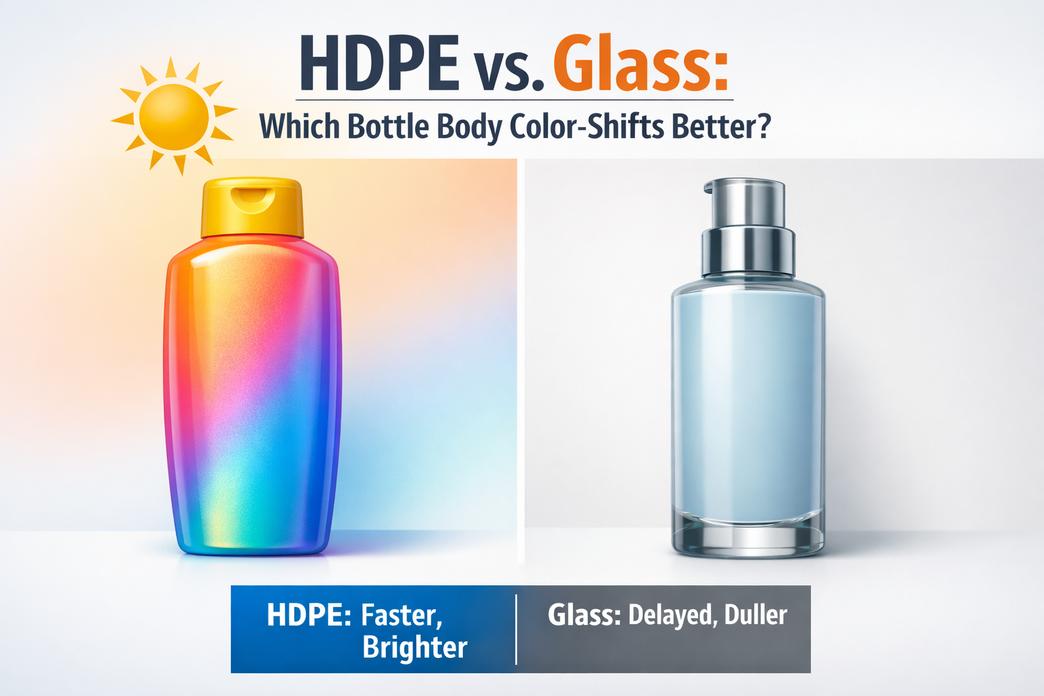
HDPE vs. Glass: Which Bottle Body Color-Shifts Better?
Let’s break it down:
- HDPE plastic spreads photochromic pigments more evenly.
- Glass looks sleek but blocks some UV rays.
- HDPE reacts faster and brighter in direct sunlight.
- Glass bottles may delay or dull the color shift effect.
So if you’re after quick-reacting packaging, HDPE is your best bet for vibrant color transitions on your UV detection bottle. It keeps things bold while staying lightweight and shatter-free.
Surface Finish Impacts with Glossy, Matte and Soft-Touch
☀️ Glossy finishes bounce light around like crazy—boosting brightness of the color change.
🌫️ Matte coatings scatter incoming UV rays, softening the visual impact.
🖐️ Soft-touch finishes? They feel nice but can block uniform exposure for those sensitive pigments.
In short: finish affects how evenly and vividly your bottle reacts in sunlight. Smart brands adjust texture based on desired intensity of their photochromic technology response.
Label Application Durability Under Sun Exposure
Labels matter way more than you’d think! Here’s how different types hold up under sun:
- Heat-transfer labels fuse directly into surfaces—super durable.
- Silk-screened inks resist fading even after long beach days.
- Standard adhesive labels? Not so much—they peel or fade fast.
According to Mintel Packaging Insights 2024: “UV-responsive labeling boosts consumer interaction by 32%, especially when paired with tactile finishes.”
That means using high-end label tech not only protects your brand’s look but also enhances its function as a visual sun exposure alert tool.
Topfeelpack understands this better than most—offering packaging that balances durability with reactive style for next-gen smart packaging solutions in every custom sunscreen container.
Photochromic Pigments Explained For Sunscreen Bottle Packaging
A quick peek into how color-changing pigments are transforming the way we design and manufacture sunscreen bottle packaging.
Photochromic Pigment Varieties and UV Response
There’s more than one kind of photochromic pigment, and each brings its own flair when exposed to UV light.
- Organic pigments like spiropyrans or spirooxazines react fast but fade quicker.
- Inorganic types offer longer-lasting effects but may lag in intensity.
- Each type responds differently depending on the UV radiation strength and exposure duration.
Now, here’s where it gets interesting: some pigments shift visibly within seconds under sunlight, while others take a minute or two to fully activate their color. The magic lies in their molecular structure, especially the behavior of the active part called a chromophore, which undergoes a reversible transformation through isomerization. This is what makes your clear bottle suddenly glow purple or blue under sunshine—like a built-in warning system for UV exposure.
Integrating Pigments in PET through Injection Molding
Getting consistent results with color-changing bottles isn’t just about picking the right dye—it’s about how you mix it into the plastic. During injection molding:
- The selected light-sensitive dyes must be heat-stable enough to survive high processing temperatures.
- They’re blended directly into the PET resin before it’s injected into molds shaped like your favorite beach-ready bottle.
- Uniform dispersion is critical; clumps or uneven mixing lead to patchy transitions.
Topfeelpack ensures that every batch of pigment is tested for thermal stability and compatibility with PET polymers, avoiding issues like premature degradation or uneven fading. This level of control leads to better-performing bottles that respond consistently across their entire surface.
Which Supplier Capability Ensures Uniform Color Activation?
To get those crisp, reliable shifts from clear to violet or yellow under sunlight, suppliers need more than good materials—they need tight process control.
⮞ Precision in injection pressure and temperature keeps pigment distribution even inside each mold cavity.
⮞ Real-time QC systems use cameras or sensors to track how fast and evenly each bottle changes hue after UV exposure tests.
“According to Smithers Pira’s 2024 Packaging Innovation Report, brands using smart packaging technologies like photochromics saw up to 26% higher consumer engagement compared to traditional designs.”
And that’s where Topfeelpack stands out—they combine top-tier machinery with smart quality checks so every single sunscreen bottle delivers on both function and shelf appeal.
Whether you’re designing travel minis or full-size lotion containers, using this tech means your product doesn’t just sit there—it reacts, informs, and protects with style.
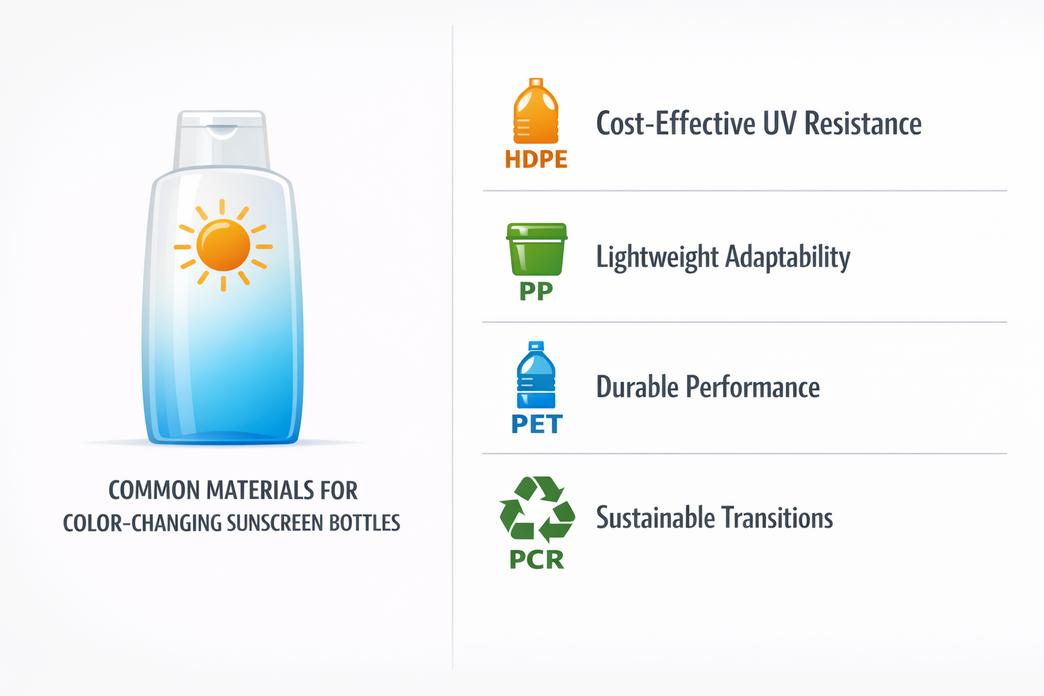
Common Materials Used In Color-Changing Sunscreen Bottle Design
Color-changing sunscreen bottle design isn’t just about cool looks—it’s all about how the materials play with light and heat. Let’s break it down.
HDPE Plastic Offers Cost-Effective UV Resistance
- Tough yet affordable, high-density polyethylene (HDPE) is a go-to for many brands.
- It resists sun damage while keeping production costs low.
- Compatible with basic UV-sensitive dyes, though color shifts may be subtle.
HDPE blends well with simple photochromic pigments, making it ideal for entry-level color-change effects. It holds up decently under sunlight, though not forever—expect some fading over time. Still, for budget-conscious sunscreen bottle designs, it’s a solid pick.
PP Plastic Delivers Lightweight Color Adaptability
- Super lightweight and easy to mold.
- Has good resistance to chemical degradation.
- Works well with fast-reacting spiropyrans and spirooxazines.
PP bottles are often used when flexibility meets function. The material’s low density allows intricate shapes that enhance shelf appeal while supporting responsive color changes in bright sun.
PET Material Ensures Durable Photochromic Performance
• High clarity enhances visual effect of color change
• Excellent UV permeability supports strong pigment activation
• Maintains structural integrity even after prolonged exposure
PET plastic is a champ when it comes to showcasing dynamic hues from embedded photochromic pigments. If your sunscreen bottle needs to scream “premium” without glass, this one nails it.
PCR Plastic Brings Sustainable Color Transitions
PCR plastics offer eco-friendly vibes without skimping on performance. They’re made from recycled content but still bond well with both light-activated molecules and temperature-sensitive inks, depending on the formulation used.
“Consumers are increasingly drawn to packaging that combines sustainability with interactivity,” according to Mintel’s 2024 Beauty Packaging Report. “PCR plastics delivering visible transformation in sunlight tap into both trends effortlessly.”
Brands like Topfeelpack have already begun integrating PCR-based solutions into their interactive skincare packaging lines—proof that green can still glow.
Glass and Aluminum Bottles for Premium Sun Packaging
Aluminum blocks UV rays almost entirely, which protects the product inside but limits how much of the outer layer can visibly shift colors using traditional photochromic pigments or even thermochromic pigments.
Glass, on the other hand:
- Allows full pigment visibility
- Feels luxurious in hand
- Is compatible with most types of reversible colorants like fulgides or leuco dyes
These premium materials work best when paired with high-end formulations and minimalist branding—think boutique sunscreens that double as vanity pieces. A brand like Topfeelpack can help bring such upscale visions to life through precision-focused custom bottle design services that align beauty with science.
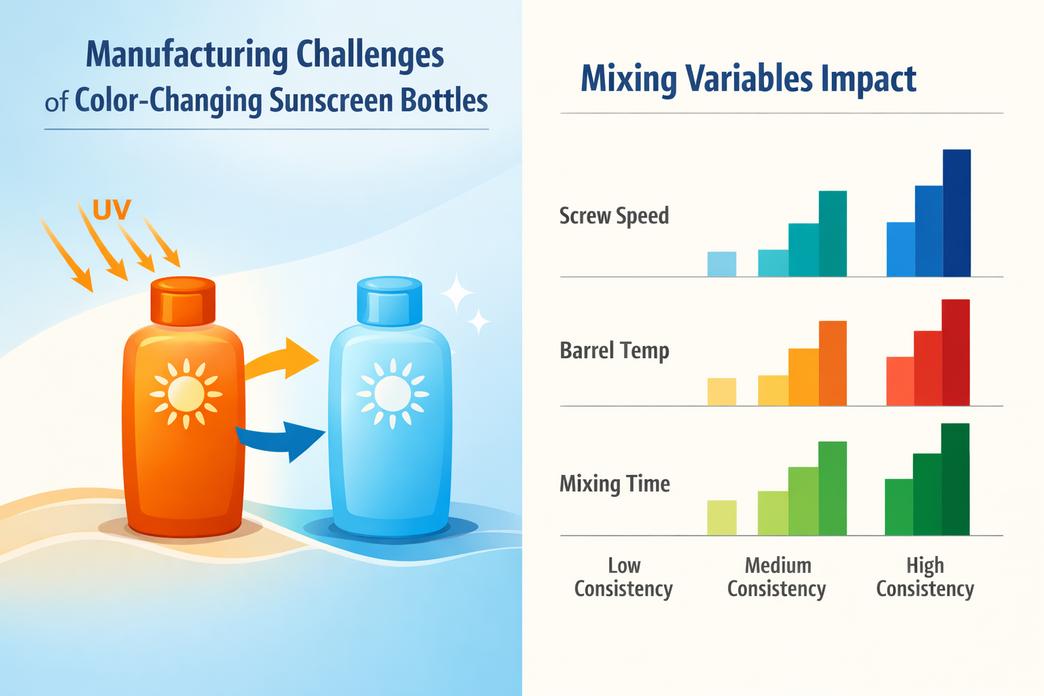
Manufacturing Challenges Of Color-Changing Sunscreen Bottles
Color-changing sunscreen bottles are eye-catching and functional, but making them is trickier than it seems. Here’s what really goes down behind the scenes.
Uneven Pigment Dispersion During Injection Molding
You’d think mixing pigments into plastic would be easy, right? Nope—getting photochromic dyes to spread evenly during injection molding is a beast of its own.
- If not blended just right, you end up with blotchy zones that barely change color.
- Temperature and screw speed inside the mold machine can totally mess with pigment stability.
- Even slight shifts in colorant concentration can throw off the whole batch.
To fix this:
- Use twin-screw extruders for better pigment blending.
- Run pre-production trials to catch dispersion flaws early.
- Add dispersing agents compatible with your chosen polymer.
Here’s how different mixing variables affect visual consistency:
| Variable | Low Consistency | Medium Consistency | High Consistency |
|---|---|---|---|
| Screw Speed (RPM) | 20–40 | 50–70 | 80–100 |
| Barrel Temp (°C) | <180 | 190–210 | 220–240 |
| Mixing Time (seconds) | <30 | 30–45 | >60 |
Balancing Matte Finish Integrity with Color-Change Sensitivity
Matte textures look sleek on a sunscreen bottle, but they scatter UV light—which photochromics need to activate. That’s where things get dicey.
• A heavy matte finish reduces UV penetration, dulling the color-shift effect.
• Glossy finishes improve reaction time but may feel cheap or show fingerprints.
• Hybrid textures—matte zones paired with clear UV windows—can help balance both needs.
Designers often test various surface finishes using UV lamps and spectrophotometers to find that sweet spot where looks meet function without compromise.
Silk Screening vs. Heat Transfer: Decoration Dilemmas
When it comes to decorating these bottles, it’s a toss-up between two methods—and both have tradeoffs:
-
Silk screening
- Super durable
- Ideal for simple logos or text
- Doesn’t block much UV light
-
Heat transfer
- Allows full-color graphics and gradients
- Can cover large surface areas
- May reduce exposure in key photochromic zones
💡 Pro tip: Use heat transfer only on non-reactive parts of the bottle so you don’t interfere with color activation areas.
Choosing between them depends on whether you’re prioritizing brand aesthetics or performance of your color-changing tech.
Ensuring Quality Control for Photochromic Activation
Before any bottle hits store shelves, its magic color-change feature has to pass some tough tests:
Step 1: Place finished bottles in controlled UV exposure testing chambers to simulate real sunlight conditions.
Step 2: Use digital spectrophotometers to measure changes in hue and saturation across several samples from each batch.
Step 3: Perform temperature cycling tests to ensure consistent behavior even if the bottle sits in a hot car trunk or cold beach bag.
Nested within that process:
- Mechanical checks confirm no warping under heat.
- Visual inspections catch any faded spots or discoloration.
- Chemical resistance tests verify that sunscreen ingredients won’t degrade the pigments over time.
This rigorous testing ensures every single sunscreen container delivers that satisfying snap from one shade to another—right when users expect it most.
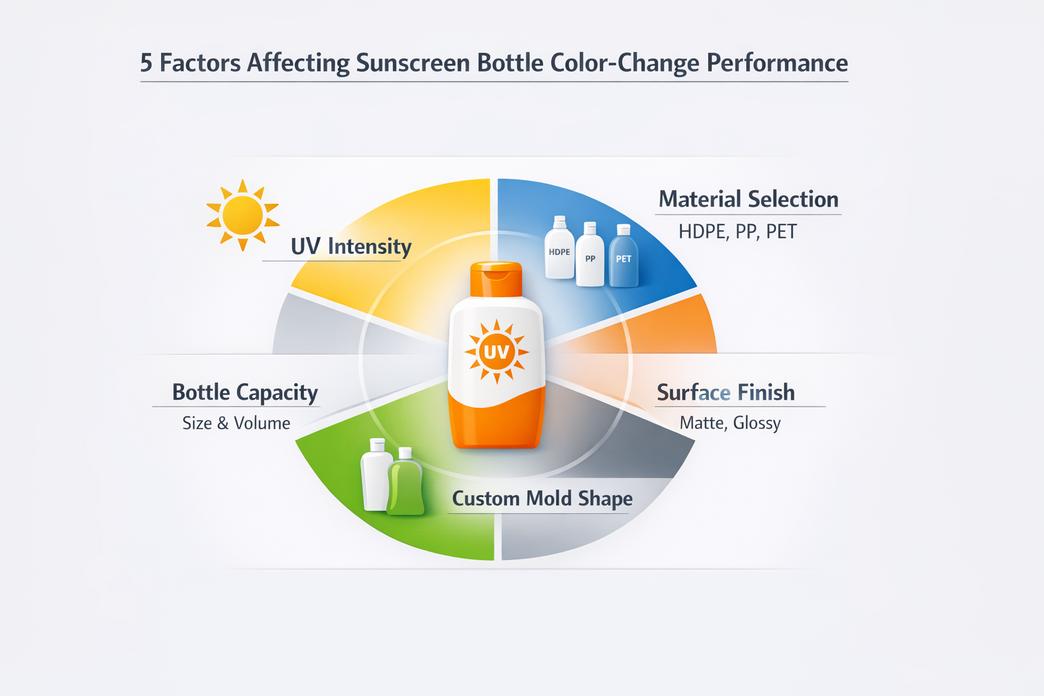
5 Factors Affecting Sunscreen Bottle Color-Change Performance
Here’s why your sunscreen bottle changes color—or doesn’t—when it hits the sun.
Factor 1 – UV Intensity and Photochromic Response
UV light is the game-changer. The stronger it blasts, the quicker those photochromic dyes react. On cloudy days or indoors? Expect slower shifts in color.
- High-altitude regions with thinner atmospheres intensify UV exposure, speeding up pigment activation.
- Tinted windows block certain UV wavelengths, delaying visual feedback on the bottle.
- Pigments respond best to UVB range within the solar spectrum, not just visible light.
So if your sunscreen container isn’t flipping colors fast enough, blame weak sunlight—not bad design.
Factor 2 – Material Selection in HDPE, PP and PET
Different plastics mean different behaviors under the sun.
- HDPE: Opaque and blocks a chunk of UV—delays color change.
- PP: Slightly better clarity but still filters out some rays.
- PET: Best for vibrant transitions due to higher transparency.
→ Bottles made from plastic polymers with fewer embedded UV stabilizers allow more light through, making them ideal for vibrant photochromic effects.
But don’t forget: more transmission can also mean faster pigment fade over time due to long-term exposure.
Factor 3 – Surface Finish with Matte, Glossy and Soft-Touch Coatings
Surface finish isn’t just about looks—it seriously alters performance.
• Glossy coatings reflect less and let in more light = faster activation
• Matte scatters incoming rays = slower effect
• Soft-touch absorbs but diffuses = unpredictable response
These finishes also affect how well the bottle holds up after repeated sun exposure—glossy tends to resist wear better than soft-touch under heavy use due to stronger barrier properties.
Factor 4 – Custom Mold Shape and Wall Thickness Effects
The shape of a sunscreen container isn’t just a branding choice—it determines how evenly it reacts to sunlight.
Shorter walls or flat surfaces? They catch rays evenly. But thicker areas or curves? They create shadows or absorb differently, leading to patchy transitions across the bottle surface.
A thicker-walled corner might stay pale while thinner sides turn bright pink. That’s because wall thickness affects both heat retention and UV flow—key elements in activating those sensitive pigments inside your favorite summer-ready package.
Factor 5 – Bottle Capacity in ml and Color-Shift Duration
Small bottles win when it comes to speedy transformation time—but large ones? Not so much.
-
<100ml bottles:
- Quickest full-color shift
- Uniform activation
-
200ml+ bottles:
- Slower transition zones
- Inconsistent shift across wide surfaces
“Consumer preference is shifting toward interactive packaging experiences that deliver instant visual feedback,” according to Mintel’s Packaging Trends Report Q2 2024.
This trend means smaller sunscreen containers are often preferred not only for portability but also for their snappier response when exposed outdoors—especially when using advanced colorimetric indicators integrated into sleek designs.
How Cosmetic Packaging Suppliers Validate Color-Change Accuracy
From pigment testing to cap performance, here’s how suppliers make sure every color-shifting sunscreen bottle tells the right UV story.
Spectrophotometer Testing for Precise Color Metrics
Color accuracy isn’t just about looks—it’s about measurable science. Suppliers rely on spectrophotometry to keep every batch of UV-sensitive pigments dialed in:
- Measure hue shifts under D65 and A light sources.
- Compare ΔE values across production batches.
- Verify consistency using calibrated white and black tiles.
This tech ensures that your color-changing sunscreen bottle packaging doesn’t just look cool—it performs predictably under different lighting conditions, even on cloudy days.
UV Chamber Trials on HDPE, PET and Glass Samples
Not all plastics play nice with sunlight. That’s where UV radiation simulation steps in:
• HDPE samples are exposed to simulated midday sun for 72 hours.
• PET bottles undergo cyclic exposure to mimic real-world use—beach bags, glove compartments, you name it.
• Glass jars with embedded photochromic dyes are tested for responsiveness at varying altitudes.
“By 2024, over 68% of skincare brands exploring smart packaging cited material-pigment compatibility as their biggest hurdle.” — Mintel Global Packaging Report
This is why Topfeelpack runs extensive trials before any new formula hits your shelf.
Evaluating Spray Caps, Flip-Top and Screw Caps Behavior
Caps often get overlooked—but they can make or break a smart package:
- Spray caps are tested under direct UV beams to observe yellowing or warping.
- Flip-tops must maintain seal integrity without interfering with the color trigger.
- Screw caps go through torque retention tests post-exposure.
Every part of the sunscreen bottle design, down to the cap thread pitch, has a role in keeping those color cues reliable and safe.
End-to-End Quality Control from Mold Design to Delivery
It starts at the mold stage—literally—and ends when the pallet is shrink-wrapped:
Step 1: Mold engineers check flow lines that could distort pigment distribution.
Step 2: Pigment dispersion is analyzed using micro-imaging tools for uniformity across surfaces.
Step 3: Assembled bottles undergo thermal cycling and drop tests post-color change activation.
Step 4: Final inspection includes both human visual checks and automated sensors tuned for specific wavelengths tied to the chosen smart pigment.
Topfeelpack’s quality control team tracks each batch with serialized data logs—so if something’s off with your flip-cap or your glass jar doesn’t shift hues fast enough? They’ll know before it ever leaves the dock.
When it comes to building trust through innovation, this level of detail matters—because no one wants their UV-alerting sunscreen bottles giving false alarms by the poolside.
FAQs about Sunscreen Bottle
How does a sunscreen bottle shift its hue under the sun?
In sunlight, photochromic pigments woven into PET plastic or glass awaken—twisting their molecular form. The bottle body glows differently depending on surface finishes: a glossy finish radiates stronger color bursts; a matte finish dims them like gentle clouds over summer light. Even the pump dispenser and spray cap share in that transformation as UV rays touch every contour.
Do larger sunscreen bottles take longer to react?
Yes—capacity shapes the rhythm of change. A 300 ml cylindrical bottle with thicker walls holds back color migration compared to a nimble 100 ml oval design, where pigment activation flows faster across each curve. Size becomes not just storage but tempo in this little dance between packaging and sunshine.
Can different decoration choices alter the effect?
- Silk screening leaves active pigment areas free to bloom under UV warmth
- Heat transfer printing drapes complex patterns but can cast shadows that delay transitions
- Hot stamping dazzles yet may defend certain zones from direct exposure
Every graphic marks more than beauty—it decides how evenly color plays across flat bottles or custom mold shapes on display shelf mornings.
Are sustainable materials keeping pace with vivid shifts?
PCR plastic whispers of past lives while still answering sun’s call much like virgin PET plastic, holding vibrant performance through careful injection molding and exacting quality control checks. Eco-friendly doesn’t mean dull; it means your sunscreen bottle stands proud—with flip-top caps or screw caps—both graceful and responsible beneath an open sky.

