 English
  Español de México
  Français
  Deutsch
  Português do Brasil
  Italiano
  한국어
한국어  ไทย
ไทย  Русский
  日本語
日本語  Polski
  Svenska
  Türkçe

Sunscreen Bottle Design Secrets for 2026 Brands
March 20,2026
Sunscreen bottle design isn’t just about holding SPF—it’s the silent salesperson on a scorching July shelf. One scuff, one leaky cap, and your brand’s toast. Grand View Research reports the global sun care market is projected to reach about $15.92 billion by 2030, which means competition is heating up fast. Packaging isn’t decoration; it’s survival gear.
Buyers want durability, eco-cred, and cost control—without the drama. Get the design wrong, and margins melt. Get it right, and you own the beach.
Key Points: Sunscreen Bottle Design Essentials
➔ Material Matters – Choose HDPE for UV protection or PET for clarity and recyclability.
➔ Shape & Grip – Employ injection molding to craft ergonomic, water-resistant contours.
➔ Dispensing Decisions – Weigh pump dispensers for dosing accuracy versus flip-top caps for budget friendliness.
➔ Branding & Finish – Opt for silk screen printing on HDPE or vibrant shrink sleeves for full-body graphics.
➔ Green Goals – Integrate PCR resins or sugarcane bioplastic and consider refillable systems to shrink your carbon footprint.
5 Steps To Perfect Sunscreen Bottle Design
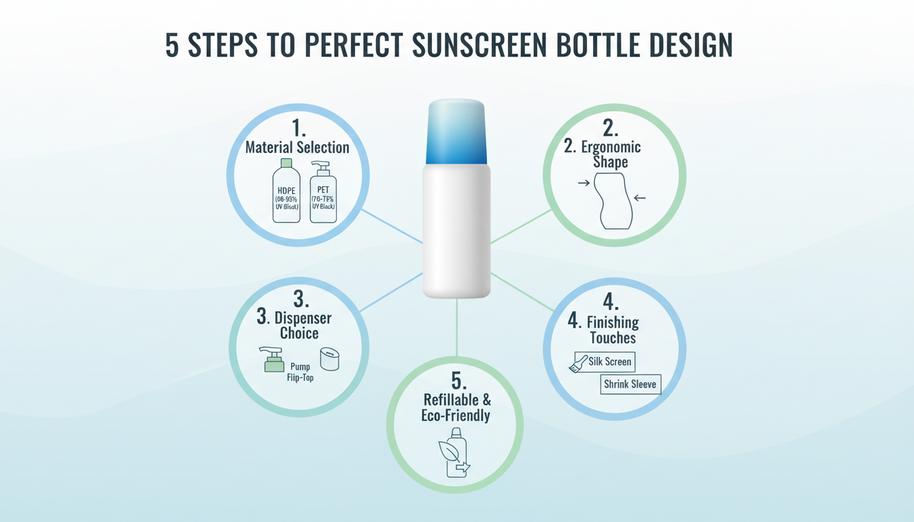
Great sunscreen sells, but smart sunscreen bottle design is what makes people grab it off the shelf. From picking the right plastic to lowering carbon impact, every sunscreen, bottle, and design choice shapes user trust. Let’s break down how to build a sunscreen bottle that looks good, feels right, and works hard.
Step 1: Selecting HDPE or PET Plastic for UV Protection
In sunscreen bottle design, smart material selection drives product safety and shelf life.
-
Core plastic properties
-
HDPE plastic
- Strong UV protection
- Excellent chemical resistance
- Natural light barrier for sensitive formulas
-
PET plastic
- Clear finish for visual branding
- Lightweight strength
- Good oxygen resistance
-
-
Performance comparison
| Property | HDPE Plastic | PET Plastic |
|---|---|---|
| UV Blocking (%) | 90–95% | 70–75% |
| Density (g/cm³) | 0.94–0.97 | 1.34–1.39 |
| Impact Resistance | High | Medium |
| Recyclability Code | #2 | #1 |
-
Decision factors in bottle design
- Sunscreen formula sensitivity
- Desired transparency
- Recycling goals
Brands working with Topfeelpack often test both options to fine-tune their sunscreen packaging design for beach, sport, or daily-use lines.
Step 2: Crafting an Ergonomic Shape with Injection Molding
A good bottle shape feels natural in wet hands. That’s where ergonomic design and injection molding come in.
-
Mold design planning
- Grip curves
- Thumb indents
- Non-slip textures
-
Manufacturing process control
- Precision cavity building
- Wall thickness balance
- Quality checks per batch
-
Impact on user experience and product handling
- Easier squeeze
- Stable standing base
- Travel-friendly sizing
In sunscreen bottle design, comfort isn’t extra. It’s survival in a sandy, slippery world.
Step 3: Choosing Between Pump Dispensers and Flip-Top Caps
The right dispensing mechanisms change how people use sunscreen.
-
Closure types
-
Pump dispensers
- Controlled dosing
- Cleaner application
- Higher-end feel
-
Flip-top caps
- Lower cost
- Quick access
- Easy refill pairing
-
-
Functional checkpoints
- Viscosity match
- Leak testing
- Child-safe options
Good packaging functionality keeps sunscreen bottle design practical, not just pretty.
Step 4: Finishing Touches with Silk Screen Printing or Shrink Sleeves
Surface detail makes or breaks brand recall.
-
Surface decoration routes
-
Silk screen printing
- Direct ink bonding
- Scratch resistance
- Crisp logo lines
-
Shrink sleeves
- 360° graphic design
- Tamper evidence
- Bold shelf presence
-
-
Label durability tests
- Water soak
- UV exposure
- Abrasion rub
Topfeelpack supports both printing methods, helping brands align brand aesthetics with real-world wear.
Step 5: Ensuring Refillable Systems and Carbon Footprint Reduction
Modern sunscreen bottle design must think long term.
-
Refillable systems
- Inner cartridge replacement
- Reusable outer shell
- Reduced virgin plastic use
-
Lowering carbon footprint
- PCR resin integration
- Sugarcane-based bioplastic
- Lightweight bottle redesign
-
Bigger sustainability goals
- Waste reduction
- Circular economy alignment
- Measurable environmental impact reporting
Smart beauty packaging isn’t hype anymore. It’s expected. And with the right sunscreen, bottle, and design strategy, brands can cut waste without losing shelf appeal.
Layers Of Protection: Bottle Shape, Labeling, Materials
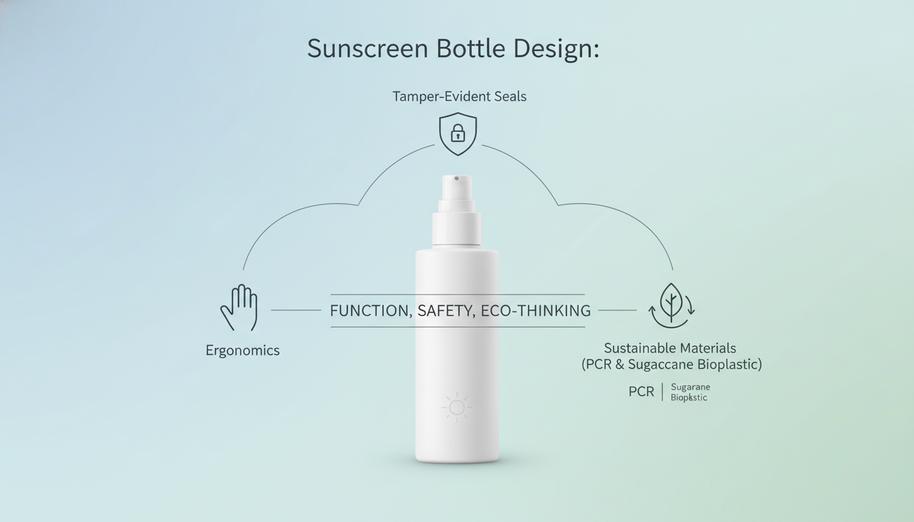
A smart sunscreen bottle design does more than look cool on a shelf. It protects the formula, keeps hands dry at the beach, and builds trust at first glance. Great sunscreen packaging design blends function, safety, and eco-thinking without overcomplicating things.
Ergonomic Shape: Boosting Water Resistance and Ergonomics
A high-performing sunscreen bottle design starts with the right bottle silhouette and smart grip logic.
-
Grip & Handling
1.1 Grip enhancement
- Textured panels reduce slip in wet conditions.
- Curved edges improve user comfort during quick reapplication.
1.2 Stability features
- A wider base supports upright storage in beach bags.
- Balanced weight improves control while squeezing.
-
Dispensing Control
2.1 Dispensing mechanism
- Flip caps limit sand intrusion.
- Airless pumps protect formula purity.
2.2 Waterproof design
- Sealed closures minimize leakage.
- Tight threading protects seal integrity.
-
Outdoor Reliability
3.1 Custom molding reduces panel stress.
3.2 Reinforced shoulders prevent cracks.
For brands refining sunscreen bottle design, Topfeelpack fine-tunes ergonomic curves so the sunblock bottle design feels natural in hand, even mid-swim.
Label Application Techniques for Tamper-Evident Seals
In sunscreen packaging design, labeling is more than decoration; it guards product truth.
- Label material must resist oil and UV exposure.
- Strong adhesive properties prevent edge lifting.
- Advanced printing technology keeps SPF data sharp.
- Shrink sleeves wrap fully around the sunscreen bottle.
- Hot stamping adds premium detail.
- Integrated security features reveal first opening.
The application process matters. Precise heat control protects seal integrity, while clean alignment supports a polished bottle design. A reliable sunscreen bottle design uses tamper-evident bands that snap on first twist. Consumers notice that small click. It signals safety.
Material Choices: PCR Materials vs. Sugarcane Bioplastic
Material choice defines the long-term value of a sunscreen bottle design.
-
PCR Path
1.1 Recycled content reduces virgin resin demand.
1.2 Strong durability keeps structure firm in heat.
1.3 Stable chemical resistance protects active ingredients.
1.4 Measurable sustainability metrics support ESG goals.
1.5 Lower production impact compared to virgin plastics.
-
Sugarcane Bioplastic Route
2.1 Renewable sourcing lowers carbon footprint.
2.2 Comparable durability for daily beach use.
2.3 Partial biodegradability under industrial conditions.
A thoughtful sunscreen bottle design balances eco claims with real-world toughness. Topfeelpack aligns bottle design strategy with sustainability targets, ensuring each sunscreen bottle feels sturdy, responsible, and ready for the sun.
Sustainable Vs. Traditional Plastics: Which Wins?
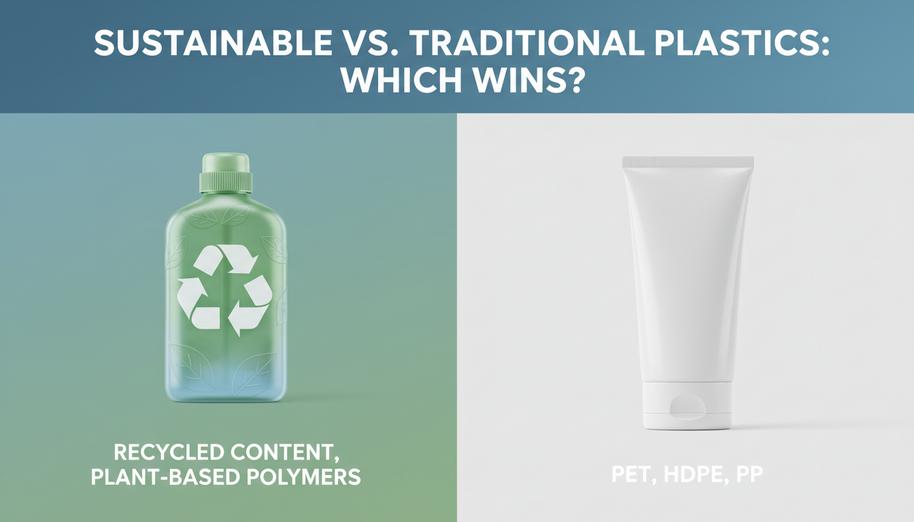
Choosing materials for sunscreen bottle design isn’t just about looks anymore. Brands care about cost, vibe, and impact. From eco-driven sunscreen bottle packaging to classic plastic builds, every sunscreen bottle design choice shapes shelf appeal and long-term brand value. Let’s break down how sustainable and traditional plastics stack up in real-world sunscreen packaging design.
Sustainable Plastics
When planning a greener sunscreen bottle design, material selection often flows like this:
-
Material Source
1.1 Recycled content
- Post-consumer resin supports the circular economy.
- Options include ocean-bound plastic for strong sustainability storytelling.
1.2 Plant origins
- Plant-based polymers such as sugarcane blends.
- Lower reliance on virgin plastic inputs.
-
Environmental Impact
2.1 End-of-life
- Some blends support biodegradable performance under specific conditions.
2.2 Emissions
- Reduced carbon footprint claims can strengthen sunscreen bottle packaging narratives.
-
Brand Positioning
3.1 Marketing edge
- A sustainable sunscreen bottle design speaks directly to eco-aware shoppers.
3.2 Premium perception
- Higher cost, yes.
- Stronger shelf story, absolutely.
For brands working with Topfeelpack, eco-focused sunscreen bottle design can balance aesthetics and responsibility without sacrificing visual punch.
Traditional Plastics
Classic materials still dominate sunscreen bottle design for a reason.
- PET, HDPE, and PP offer proven durability.
- High chemical resistance protects SPF formulas.
- Established recycling infrastructure supports global distribution.
-
Cost-effectiveness
- Stable supply chains
- Efficient tooling
- Predictable lead times
A sunscreen bottle design using HDPE feels sturdy in hand. A PET sunscreen bottle offers clarity and gloss. For mass-market sunscreen packaging design, that reliability matters.
Some brands mix approaches: sustainable exterior layers with traditional structural cores. Topfeelpack often helps optimize this balance, keeping sunscreen bottle design practical while trimming excess material usage.
In short, sustainable options boost brand story and reduce impact. Traditional plastics win on cost and performance. The smarter sunscreen bottle design doesn’t pick sides blindly—it aligns material choice with market goals, price point, and the kind of statement the brand wants to make.
FAQs about Sunscreen Bottle Design
How can sunscreen bottle design improve durability and UV protection?
Sunscreen lives under harsh sun and sandy hands—its bottle must endure the same. A smart sunscreen bottle design balances material strength with user comfort:
-
Material shield
- HDPE plastic: strong UV protection, ideal for beach exposure
- PET plastic: clear, tough, suitable for visible formulas
- Aluminum: blocks light completely, premium feel
-
Structural defense
- Blow molding ensures even wall thickness
- Ergonomic shape improves grip when hands are wet
- Tamper-evident seals protect product integrity during customs clearance
When durability fails, trust fails. Strong structure keeps both intact.
Which sustainable materials work best for large sunscreen packaging orders?
Brands feel pressure to cut waste without risking leakage or delays. The right materials reduce environmental impact while staying production-ready.
- PCR materials: lower carbon footprint, compatible with existing assembly lines
- Sugarcane bioplastic: renewable source with stable performance
- glass pump bottle or Aluminum: recyclable packaging for refill concepts
Pairing lightweight design with reduced material usage also lowers shipping methods cost and simplifies warehousing solutions. Sustainability becomes practical, not symbolic.
What dispenser types suit different sunscreen textures?
Texture decides function. A watery spray at the beach feels different from a thick cream for hiking.
- Pump dispensers → precise dosing for creams
- Flip-top caps → simple, cost-effective for daily use
- Spray nozzles → even mist for fluid formulas
- Airless pumps → protect sensitive ingredients from air and contamination
The wrong closure frustrates users; the right one builds loyalty in a single squeeze.
Why is decoration and labeling critical in sunscreen bottle design?
Under bright sunlight, branding must stay sharp and compliant.
Silk screen printing resists fading.
Shrink sleeves offer full-body graphics and tamper visibility.
Label application supports regulatory data and child-resistant closures instructions.
Decoration is not vanity—it signals safety, authenticity, and quality control discipline across inventory management systems.
What factors influence bulk pricing and lead times?
Cost tension often begins long before production. Tooling development, material choice, and minimum order quantity shape the final quote.
| Cost Driver | Impact on Price | Impact on Lead Times |
|---|---|---|
| HDPE or PP plastic | Moderate | Stable supply |
| Aluminum | Higher | Longer sourcing |
| Custom molding | Increases unit cost | Extends tooling stage |
| Hot stamping / Offset printing | Adds decoration cost | Extra production steps |
| Refillable systems | Higher initial setup | Long-term savings |
Clear planning shortens delays. Smart sunscreen bottle design protects margins as carefully as it protects skin.
References
[Sun Care Products Market Size | Industry Report, 2030 – https://www.grandviewresearch.com/industry-analysis/sun-care-products-market-report]
[HDPE Rigid – Natural | Association of Plastic Recyclers – https://plasticsrecycling.org/apr-design-hub/apr-design-guide/hdpe-rigid-natural/]
[Polyethylene terephthalate (PET or PETE) | Britannica – https://www.britannica.com/science/polyethylene-terephthalate]
[Shrink Sleeve Labels on PET Containers | APR Resource Document – https://s3-us-west-1.amazonaws.com/ptab-filings%2FPGR2025-00025%2F1009]
[Feedstock | European Bioplastics – https://www.european-bioplastics.org/bioplastics/Feedstock/]
[GSA Airless | Aptar – https://aptar.com/en-us/products/gsa-airless-dispensing-pump]
[21 CFR 211.132 | Tamper-evident packaging requirements – https://www.ecfr.gov/current/title-21/chapter-I/subchapter-C/part-211/subpart-G/section-211.132]

