 English
  Español de México
  Français
  Deutsch
  Português do Brasil
  Italiano
  한국어
한국어  ไทย
ไทย  Русский
  日本語
日本語  Polski
  Svenska
  Türkçe

Can You Really Recycle Makeup Containers? Here Is the Truth
April 16,2026
Here’s the kicker. U.S. EPA updates in 2024 flagged small-format plastics, mixed materials, and pumps as frequent recycling rejects, even when labeled recyclable. Design beats intention every time. Mono-materials glide through systems; Franken-packaging jams them.
This guide pulls back the curtain—no fairy dust, no green gloss. We’ll talk design choices that actually survive the sorting line, supplier moves that keep regulators calm, and why circular systems feel less like charity and more like smart poker. Stick around. The truth is about to tap the glass.
Key Points to Recycle Makeup Containers
➔ Clean and Sort by Material: Rinse residues, peel off labels, and separate plastic, glass, and metal.
➔ Choose Mono-Material Packages: Simplify disassembly and boost mechanical recycling rates.
➔ Leverage Take-Back Schemes: Drop off at in-store collection points or brand take-back programs.
➔ Opt for Closed-Loop Designs: Prioritize refillable compacts, reusable tubes, and supplier-transparent systems.
7 Surprising Truths To Finally Recycle Makeup Containers Properly
Trying to recycle makeup containers sounds easy—rinse, toss, done. Not quite. From polymers to labels, small design details decide if you truly recycle makeup containers or just wish-cycle them. If you want to recycle cosmetic packaging the right way, these truths clear things up fast.

Biodegradable Polymers Aren’t Always Home-Compostable
When you recycle makeup containers, “biodegradable” can be misleading.
-
Material properties
-
Biodegradable polymers often require:
- High heat (55–60°C)
- Managed airflow
- Industrial microbial balance
-
Backyard bins lack this control, so decomposition stalls.
-
-
Waste stream reality
- Marked home-compostable? Check certification.
- Most go to industrial composting facilities only.
- Mixing with regular organic waste may contaminate batches.
That mismatch increases environmental impact instead of reducing it. If your goal is to recycle makeup containers responsibly, verify local compost access before tossing bio-based caps.
Recycled Glass Jars May Need Specialized Material Sorting
Recycled glass isn’t just glass.
-
Mixed-color glass jars reduce processing efficiency.
-
Coatings cause contamination during remelting.
-
Proper material sorting at recycling facilities separates:
- Clear
- Amber
- Green
- Coated variants
To recycle makeup containers made of glass, remove pumps and lids. Clean jars help color sorting stay accurate and protect recycling streams.
Post-Consumer Recycled Plastic Isn’t a Catch-All Solution
Using post-consumer recycled plastic sounds perfect. Reality is pickier.
- Plastic types must match resin codes.
- Poor cleaning lowers material quality.
- Complex product design blocks recyclability.
Under the hood:
-
Supply chain limits
- Inconsistent feedstock
- High sorting costs
-
Recycling limitations
- Downcycling risk
- Blend instability with virgin plastic
If you recycle makeup containers with mixed plastics, separation is key. Brands like Topfeel design mono-material options to reduce those headaches and support better cosmetic container recycling.
Chemical Recycling Beats Mechanical Methods for Some Bio-Based Resins
Some bio-based resins break down during mechanical recycling.
- Collection and sorting
- Depolymerization via chemical recycling
- Recovery of pure monomers
- Rebuilding high-grade polymer
This method prevents polymer degradation and supports a tighter circular economy loop. When you recycle makeup containers made from sensitive bio-resins, chemical processes may keep material value higher than grinding and remelting.
Closed-Loop Systems Require Supplier Transparency and Reverse Logistics
A real closed loop isn’t just a buzzword.
-
Supplier transparency
- Clear resin sourcing
- Verified material traceability
-
Reverse logistics
- Store drop-off points
- Mail-back systems
-
Collection infrastructure
- Sorting hubs
- Cleaning stations
Add strong collaboration across the product lifecycle, and mono-material compacts return to shelves faster. Topfeel supports refillable formats so customers can recycle makeup containers and rebuy inserts instead of full packs.
Cradle to Cradle Certification Does Not Guarantee Label Removability
Cradle to Cradle certification checks material recovery and safety.
But here’s the catch:
- Sticky adhesive technology can block separation.
- Tough product labeling slows the recycling process.
- Poor label removability leaves residue on PET or glass.
To recycle makeup containers smoothly, peel labels when possible. Design for recycling matters just as much as certification badges.
Incentive Programs Drive Higher Take-Back Scheme Participation
Want people to recycle makeup containers? Give them a reason.
-
Incentive programs
- Points
- Discounts
- Gift samples
-
Deposit systems boost return rates.
-
Clear brand responsibility messaging increases consumer participation.
The OECD’s 2024 Global Plastics Outlook notes that deposit-return systems can raise packaging collection rates above 80% in well-managed markets.
Higher recycling rates mean real waste reduction, not just good vibes. Topfeel encourages refill swaps and take-back efforts, making it easier for customers to recycle makeup containers, recycle makeup jars, and rethink cosmetic packaging from the start.
Classification: Plastic, Glass, And Metal Cases
Sorting waste can feel like a chore, yet learning how to recycle makeup containers gets easier when you break materials down. If you want to recycle makeup, cut waste, and actually see your empty jars turned into something new, material type matters. Here’s how plastic, glass, and metal cases stack up.
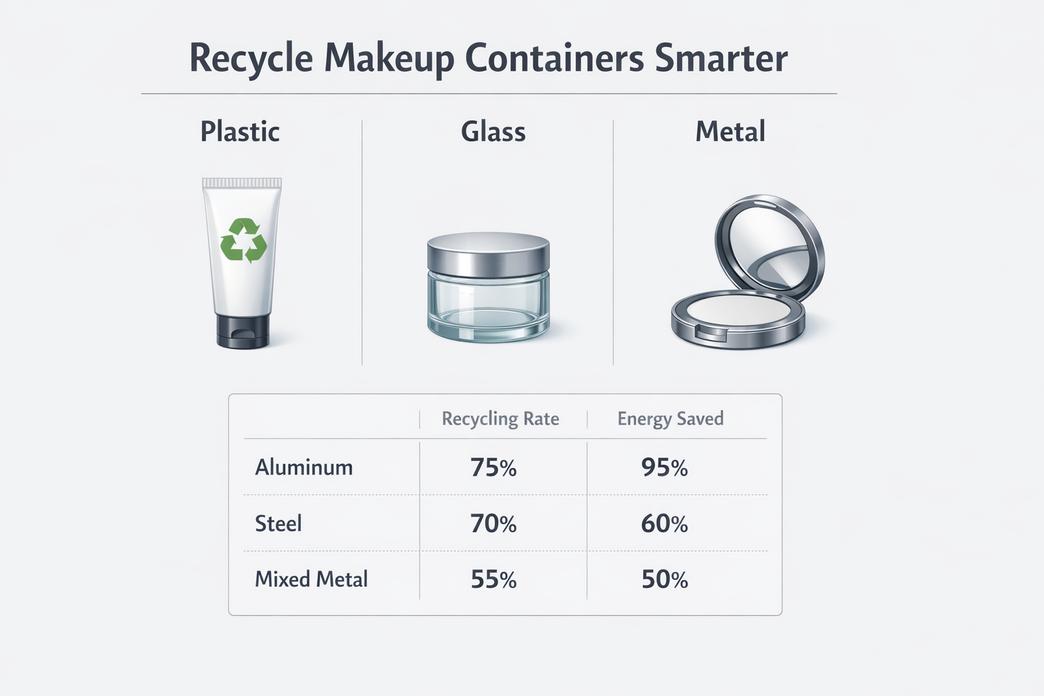
Plastic Cases
When you recycle makeup containers made of plastic, details count.
-
Common formats include:
- plastic packaging
- plastic tubes
- Bottles with pump mechanisms and dispensers
- Check recycling symbols on the base.
- Confirm material identification (PET, PP, HDPE).
- Follow cleaning instructions before disposal.
For better makeup container recycling:
-
Remove:
- Caps
- Mixed-material pump mechanisms
-
Rinse residue.
-
Separate labels if required locally.
Brands like Topfeel design mono-material options to help recycle cosmetic containers without drama. Fewer mixed parts mean higher recycling rates and less landfill guilt.
Glass Cases
Glass bottles and jars look luxe but demand care.
To recycle makeup safely:
- Rinse thoroughly.
- Complete label removal.
- Detach pumps and metal collars.
Because glass is among the most fragile materials, broken pieces should go to special collection points. Keep shards separate from general bins to avoid contamination. Done right, you can recycle makeup containers made of glass again and again without quality loss.
Metal Cases
Metal formats such as aluminum cans, tin, metal compacts, and some aerosol cans are recycling champions—if cleaned.
Preparation flow:
- Empty product.
- Wipe out cleaning residue.
- Lightly crushing (if accepted).
- Deliver to metal recycling facilities.
| Material Type | Average Recycling Rate (%) | Energy Saved vs. Virgin Material (%) |
|---|---|---|
| Aluminum | 75 | 95 |
| Steel/Tin | 70 | 60 |
| Mixed Metal | 55 | 50 |
Lightweight aluminum cases from Topfeel reduce shipping weight and make it easier to recycle makeup containers at scale. Smart design keeps the loop tight and waste low.
4 Simple Steps To Recycle Makeup Containers
Recycling beauty empties doesn’t have to feel like a chore. If you want to recycle makeup containers without the guesswork, break it down by material, system, and smarter packaging swaps.

Step 1: Clean, Remove Labels, and Sort by Material
To properly recycle makeup containers, start by handling your makeup containers like a mini sorting station at home.
- Rinse leftover product during cleaning.
- Finish label removal so adhesives don’t mess up material sorting.
- Separate plastic, glass, and metal parts.
Then go a bit deeper:
- Twist off pumps and caps.
- Check resin codes on plastics.
- Keep mixed materials in a separate pile.
Material breakdown guide
| Material Type | Common Item | Local Recycling Acceptance | Prep Level |
|---|---|---|---|
| Plastic (PET) | Serum & toner bottles | High | Rinse |
| Glass | Foundation bottles | High | Rinse |
| Metal | Aluminum tins | Medium | Wipe clean |
| Mixed parts | Pump dispensers | Low | Disassemble |
Clean sorting makes it easier to recycle cosmetic packaging and keeps contamination low.
Step 2 Use Mechanical Recycling for Mono-Material Bottles
If you want to truly recycle makeup containers, focus on mono-material bottles.
Inside the recycling process, this usually happens:
-
Collection and sorting
- Identification of plastic bottles
- Removal of foreign materials
-
Size reduction
- Shredding into flakes
-
Thermal stage
- Melting and filtering
-
Final stage
- Reprocessing into pellets
Mono structures protect polymer quality. That means fewer additives and less virgin plastic next round. When you recycle makeup packaging made from one resin family, the output is cleaner and more usable.
Step 3 Drop Off at In-Store Collection Points or Take-Back Schemes
Not all beauty empties belong in curbside bins. Some need specialized recycling.
Look for:
- In-store collection boxes at beauty retailers
- Brand-led take-back schemes
- Local recycling centers that accept cosmetic waste
How it usually works:
- Consumers return empties at drop-off points.
- Cosmetic brands consolidate items.
- Materials move through reverse logistics.
This route often handles pumps, mirrors, and layered packaging that standard programs reject. It’s a solid move if you’re serious about how to recycle makeup containers the right way.
Step 4 Choose Compostable Paperboard or Reusable Tubes
Prevention beats cleanup. If you regularly recycle makeup containers, switching formats cuts effort.
Smarter swaps include:
- Compostable paperboard cartons with FSC certification
- Reusable tubes for creams
- Refillable packaging systems
- Certified biodegradable materials
These forms support sustainable packaging goals and push the circular economy forward. Fewer mixed plastics. More repeat use. Less stress when you recycle makeup containers next time.
How Do You Recycle Makeup Containers?
Recycling beauty empties sounds simple, yet to truly recycle makeup containers the right way, you’ve got to understand materials, systems, and smart design. If you care about cutting waste and making makeup containers recycling actually work, this guide keeps it real and practical.
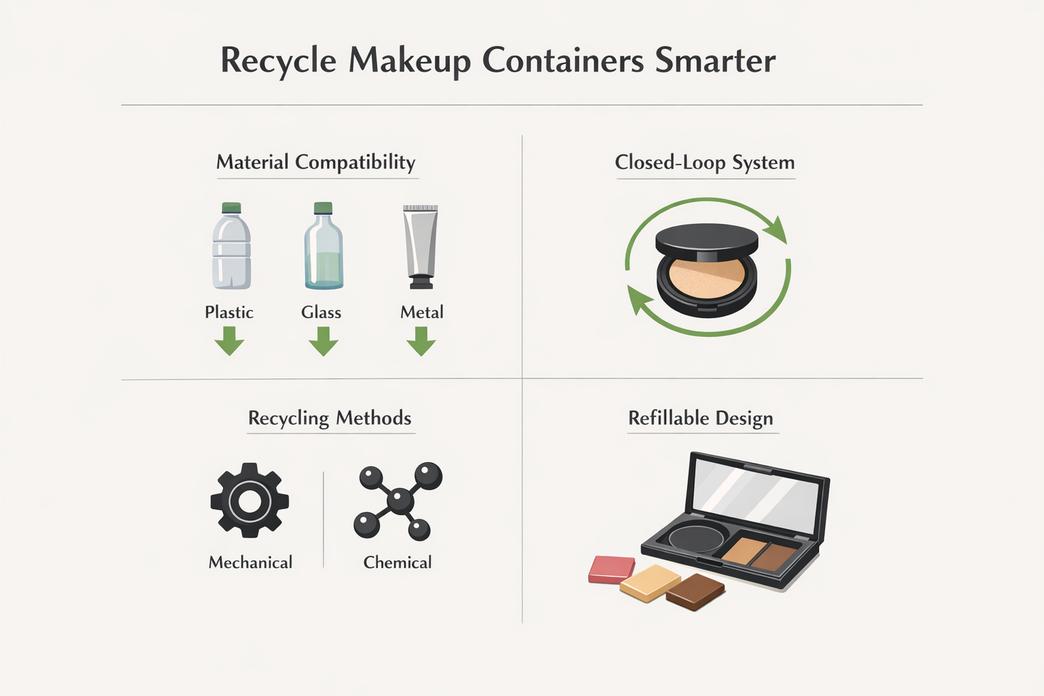
What Role Does Material Compatibility Play in Recycling?
To properly recycle makeup containers, material match-up matters more than most people think. Mixing the wrong plastic types, glass, and metal can mess up entire recycling batches.
-
Common issues:
- Residue causing contamination
- Mixed plastic types that can’t be processed together
- Decorative coatings that confuse sorting systems
When you drop empties into recycling facilities, this usually happens:
-
Sorting
- Optical scanners separate plastic types
- Magnets pull out metal
- Manual checks remove heavy contamination
-
Processing
- Plastics are shredded
- Glass is crushed
- Metal is melted and reformed
-
Quality Control
- Batches with high contamination get rejected
- Clean streams move forward into material recovery
If you want to recycle makeup containers effectively, rinse out product, separate removable parts, and check local recycling rules. Brands like Topfeel design packaging with compatible plastic types to make cosmetic packaging recycling smoother and less wasteful.
Why Closed-Loop Systems Improve Your Carbon Footprint Reduction
Closed-loop thinking flips the script on waste. Instead of trashing empties, materials stay in a circular economy where closed-loop systems turn used packaging back into new units.
Here’s how it supports carbon footprint reduction:
- Resource conservation cuts demand for virgin materials
- Waste reduction keeps packaging out of landfills
- Energy savings lower total emissions
Process flow often looks like this:
-
Collection
- Consumers return empties
- Retail drop-off bins support makeup containers recycling
-
Reprocessing
- Cleaned materials enter controlled sustainability pipelines
- Recycled resin replaces virgin input
-
Reproduction
- New compacts or tubes are molded
- Materials circulate again
When brands like Topfeel adopt closed-loop systems, customers who recycle containers become part of real resource conservation, not just a feel-good habit.
When to Opt for Chemical Depolymerization Over Mechanical Recycling
Mechanical recycling works great—until it doesn’t. If plastic degradation weakens structure or complex plastics are layered together, quality drops fast.
In those cases, chemical depolymerization makes sense.
Comparison snapshot:
-
Mechanical recycling
- Grinds and remelts
- Shortens polymer chains
- Works best for clean, single plastic types
-
Chemical depolymerization
- Breaks polymer chains to molecular level
- Handles mixed or degraded plastics
- Restores output close to virgin materials
Decision pathway:
- Assess material condition
- Check contamination level
- Evaluate expected material recovery quality
- Choose the method that preserves performance
If you’re serious about how to recycle makeup containers at scale, both methods have a role. Smart brands combine them to keep more cosmetic packaging recycling streams alive.
How Refillable Compacts and Modular Palettes Fit Depot Systems
Refill culture is picking up speed, and it’s changing how we recycle makeup containers.
Refillable design focuses on:
- Refillable compacts with removable pans
- Modular palettes that snap in and out
- Durable outer shells built for reuse
Depot model breakdown:
-
Product Design
- Strong hinges
- Replaceable inserts
- Minimal mixed materials
-
Consumer Behavior
- Return used pans
- Keep outer case
- Buy refills instead of full units
-
Waste Management
- Collected inserts cleaned
- Sorted for reusable packaging streams
- Integrated into depot systems
This setup reduces landfill pressure and supports smarter waste management. Brands like Topfeel invest in refillable compacts that align with depot systems, making it easier for customers to recycle makeup, recycle containers, and shrink everyday beauty waste without overthinking it.
When refillable design, smart sorting, and the right recovery method work together, recycle makeup containers stops being a buzzword—and becomes a habit that actually moves the needle.
Too Confusing? Streamline Recycling Makeup Containers
Sorting beauty empties can feel like a guessing game. If brands want people to actually recycle makeup containers, the process has to be simple, clear, and kind of obvious. Here’s how smarter packaging and better engagement make recycle makeup containers easier and less annoying.

Favor Mono-Material Bottles for Ease of Disassembly
When brands design for mono-material bottles, the whole recycling process gets smoother. Fewer mixed plastics mean easier material separation and less sorting confusion.
-
Core packaging rethink
-
- Align component design with one dominant polymer
-
- Reduce glued inserts and mixed pumps
-
- Choose widely accepted recyclable materials
-
-
Disassembly logic
-
Cap
- Snap-fit instead of metal spring pumps
- Clear resin labels for accurate sorting
-
Bottle
- Single resin body
- Minimal colorants to improve recovery
-
| Packaging Type | Material Mix Count | Disassembly Time (sec) | Recycling Yield (%) | Sorting Accuracy (%) |
|---|---|---|---|---|
| Multi-layer pump bottle | 4–6 | 45 | 52 | 60 |
| Mixed resin tube | 3 | 30 | 63 | 68 |
| Mono-material bottle | 1 | 12 | 85 | 90 |
| Mono-material tube | 1 | 15 | 82 | 88 |
| Refillable rigid shell | 1 (outer) | 10 | 92 | 93 |
Cleaner inputs lead to higher output. When customers recycle makeup containers made from one material, facilities waste less time pulling things apart. That’s how brands like Topfeel design product packaging that makes recycle makeup containers practical, not complicated.
Boost Convenience with Refill Stations and Reusable Tubes
People recycle makeup containers more often when it’s easy. No one wants a ten-step ritual just to toss a lipstick tube.
Here’s what works:
- Refill stations in-store
- Lightweight reusable tubes
- Clear return bins near checkout
Convenience ties directly to the consumer experience. When refills are quick, the circular economy stops sounding academic and starts feeling normal. A shopper finishes foundation, pops into a store, refills, done. That small loop supports real waste reduction.
Topfeel pushes this idea further by pairing refill counters with durable outer shells. The outer pack stays; only the insert changes. It’s a simple switch that helps consumers recycle makeup containers less frequently because there’s less to discard in the first place.
Short version: reduce, refill, then recycle makeup containers that truly reach end-of-life. That rhythm builds better makeup container recycling habits over time.
Engage Consumers via Incentive Programs and Education
Good design matters. Clear motivation matters just as much.
-
Education layer
- Explain recycling guidelines on-pack
- Share short videos about sustainable practices
- Highlight accepted materials for recycling makeup packaging
-
Incentive layer
-
Points for returning empties
-
Tiered incentive programs
- Bronze: 5 empties
- Silver: 15 empties
- Gold: 30+ empties
-
Limited-edition rewards to lift participation rates
-
-
Community layer
- Social awareness campaigns
- In-store events that boost brand engagement
- QR codes linking to local recycling maps
When brands keep instructions clear and rewards real, people actually recycle makeup containers instead of tossing them in general trash. Topfeel integrates consumer education into packaging design, using simple icons and short copy that breaks down how to recycle makeup containers step by step—no jargon, no guilt trips.
The result? Higher return volumes, stronger loyalty, and a culture where makeup packaging recycling feels like second nature rather than a chore.
Local Vs. Industrial Cosmetic Recycling

Recycling beauty empties sounds simple, yet how you recycle makeup containers depends on where they end up. Some go through city systems, others move through high-tech plants. Knowing the difference helps you recycle makeup containers the smart way.
Local Recycling
When you recycle makeup containers through neighborhood systems, the journey usually stays close to home.
-
Collection at community level
1.1 Drop-off points
- collection bins placed in retail areas
- curbside pickup tied to weekly trash routes
1.2 Household flow
- Items from household waste sorted before entering municipal programs
-
Sorting and handling
2.1 At sorting centers
- Glass jars separated by color
- Aluminum pans pulled by magnets
2.2 Transfer to local facilities
- Clean PET plastic gets baled
- Contaminated pumps often rejected
-
Best fit materials
- Clear glass bottles
- Metal tins
- Select plastics marked #1 or #2
Local systems work well for simple packaging. If you want to recycle cosmetic packaging easily, rinse it, dry it, then send it through your city stream. That’s the no-fuss route to recycle makeup containers without special handling.
Industrial Recycling
Some beauty packs are too complex for city lines. That’s where advanced networks step in to recycle makeup containers at scale.
-
Entry through brand or retailer
1.1 manufacturer take-back programs
1.2 Reverse supply chain logistics
-
Processing at scale
2.1 Arrival at specialized facilities
- AI-based advanced sorting
- Component breakdown for mixed materials
2.2 Treatment in processing plants
- Chemical depolymerization
- Resin purification and material recovery
-
Output and reuse
3.1 repurposing materials into new pellets
3.2 Feeding recycled resin back into production
The Ellen MacArthur Foundation’s 2024 plastics report notes that chemical recycling capacity is expanding, yet mechanical recycling still handles the majority of post-consumer plastic due to cost and infrastructure readiness.
Industrial systems manage pumps, mirrors, and bio-resins that local programs reject. If your goal is to recycle makeup containers with mixed parts, this route keeps more material in circulation and cuts waste headed to landfill.
FAQs about Recycle Makeup Containers
1. How can brands design packaging that’s easier to recycle makeup containers at scale?
Great recycling starts at the drawing board.
- Choose mono-material bottles and recyclable jars to simplify material sorting.
- Replace mixed plastics with post-consumer recycled plastic, recycled glass, or sustainable aluminum.
- Design for ease of disassembly and label removability to reduce contamination.
A minimalist design, lightweighting, and material compatibility make mechanical recycling smoother and protect closed-loop systems. Certifications such as Cradle to Cradle and FSC certified signal long-term commitment, not short-term trends.
2. Why is supplier transparency critical in closed-loop systems?
Closed-loop systems only work when every link is visible.
- Supplier transparency supports ethical sourcing and local manufacturing.
- Clear reverse logistics ensures refillable compacts, reusable tubes, and modular palettes return safely.
- Verified partners with B Corp certification or Plastic Neutral goals strengthen carbon footprint reduction claims.
Without traceability, waste stream management breaks down. With it, brands gain trust and measurable recovery rates.
3. What is the right process to recycle makeup containers properly?
Different materials demand different paths.
| Material | Best Process | Key Consideration |
|---|---|---|
| Recycled glass | Mechanical recycling | Clean separation |
| Post-consumer recycled plastic | Mechanical recycling | Material sorting accuracy |
| Mixed or bio-based resins | Chemical recycling (depolymerization) | Quality restoration |
| Biodegradable polymers | Industrial processing | Controlled conditions |
Clean containers, remove labels, and separate parts before collection. Small actions at home protect large-scale recycling outcomes.
4. How do consumer programs increase returns of cosmetic packaging?
Recycling improves when people feel involved.
• Take-back schemes and in-store collection points make returns convenient.
• Refill stations extend the life of recyclable jars and mono-material bottles.
• Incentive programs and consumer education turn routine shopping into conscious action.
Consumer convenience is not optional; it’s the heartbeat of depot systems that actually function.
5. When should chemical recycling replace mechanical recycling?
Mechanical recycling suits clean, single-material packaging. Chemical recycling steps in when:
- Bio-based resins degrade after repeated processing.
- Mixed plastics resist standard material sorting.
- Closed-loop systems require depolymerization to restore purity.
Used wisely, chemical recycling supports advanced waste stream management and keeps recycle makeup containers aligned with long-term sustainability goals under EcoCert and similar standards.
References
- Previous EPA Waste Management Updates – epa.gov
- PLA/PHB-Based Materials Fully Biodegradable under Both Industrial and Home-Composting Conditions – PMC
- Compostable polymers – https://www.google.com/search?q=elixance.com
- A Short Introduction To Glass Recycling – hazardouswasteexperts.com
- The sensors that make glass recycling possible – ACS Publications
- Effective Minimum Postconsumer Recycled Content Laws – plasticsrecycling.org
- Recycling Plastic: Complications & Limitations – alexandriava.gov
- The Plastics Industry’s Wish List for a Second Trump Administration – propublica.org
- The Standard – Cradle to Cradle Products Innovation Institute
- Global Plastics Outlook – oecd.org
- Aluminum Recycling – aluminum.org
- FSC Certification – fsc.org
- Circular Economy Introduction – ellenmacarthurfoundation.org

