 English
  Español de México
  Français
  Deutsch
  Português do Brasil
  Italiano
  한국어
한국어  ไทย
ไทย  Русский
  日本語
日本語  Polski
  Svenska
  Türkçe

Powder Makeup vs. Liquid: Which Formula Is Right for Your Skin Type
June 26,2026
Choosing between powder makeup and liquid makeup is one of the most common dilemmas for beauty enthusiasts and cosmetic brands. The core difference between the two formulas lies in texture, coverage, wear effect and skin compatibility. Matching the right makeup formula with skin type is the key to long-lasting, flawless makeup. Meanwhile, the supporting powder packaging makeup and liquid foundation packaging also determine the product’s portability, usage experience and market competitiveness. This blog will comprehensively compare the two formulas, analyze their applicable skin types, and sort out their pros, cons and application scenarios.
 1. Basic Definition & Core Characteristics
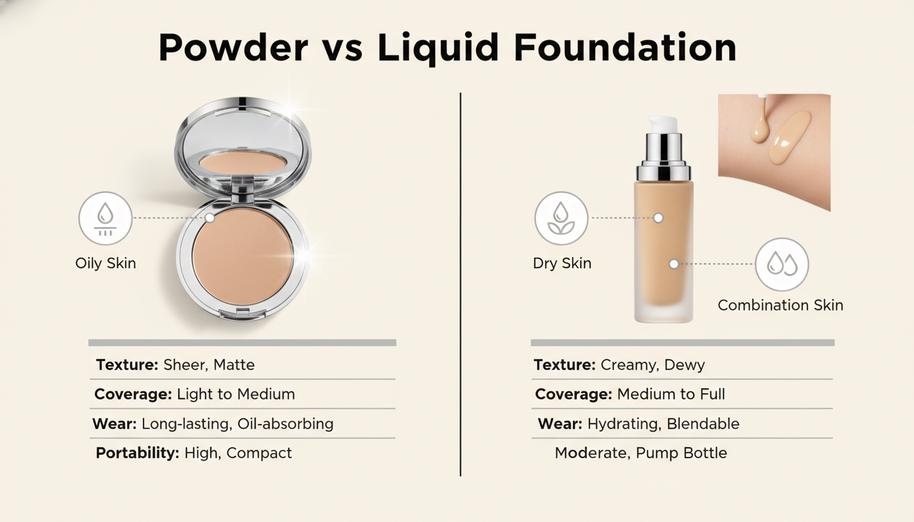
Before exploring skin type matching, it is necessary to clarify the essential attributes of powder makeup and liquid makeup. Their formula differences fundamentally lead to different skin adaptability and makeup effects, and also put forward differentiated requirements for cosmetic packaging design.
1.1 Powder Makeup Core Traits
- Formula Composition : Mainly composed of mineral powder, talc, pigment and oil-absorbing ingredients, anhydrous solid formula, lightweight and breathable.
- Makeup Effect : Presents matte and velvety skin finish, with excellent oil-control and blurring effect on pores and fine lines.
- Usage Advantage : Quick to apply, easy to touch up, not easy to smudge, suitable for daily rapid makeup and outdoor long-term wear.
- Packaging Adaptation : Mostly matched with compact, flip-top powder packaging with built-in puff and mirror, which is dust-proof, portable and convenient for on-the-go touch-ups.
1.2 Liquid Makeup Core Traits
- Formula Composition : Water-based or oil-water mixed formula, containing moisturizing ingredients, skin care essences and sunscreen components, with fluid texture.
- Makeup Effect : Creates dewy, glossy and natural skin finish, with strong fitting power and uniform skin tone modification ability.
- Usage Advantage : Rich coverage, can effectively cover blemishes, redness and dullness, with diverse texture options (lightweight, medium, full coverage).
- Packaging Adaptation : Matched with bottle-type liquid foundation packaging with dropper, pump or squeeze design, which effectively isolates air and prevents liquid deterioration and stratification.
2. Skin Type Matching Comparison
Different skin types have distinct demands for makeup oil control, moisturization and fitting degree. Oily skin pursues refreshing and non-greasy effect, dry skin needs moisturizing and non-caking makeup, while combination and sensitive skin require balanced and mild formulas. The following table intuitively sorts out the matching degree of two makeup formulas for all skin types.
| Skin Type | Best Matching Formula | Usage Advantages | Precautions |
|---|---|---|---|
| Oily Skin | Powder Makeup | Strong oil-absorbing capacity, long-lasting matte finish, effectively avoids makeup melting, reduces pore clogging, and maintains refreshing skin state all day | Need to clean packaging regularly to avoid powder agglomeration caused by residual oil stains |
| Dry Skin | Liquid Makeup | Rich in moisturizing factors, fits dry skin perfectly, does not highlight dry lines and peeling, creates tender dewy skin | Avoid heavy and dry liquid formulas; choose hydrating and nourishing styles |
| Combination Skin | Mixed Use (Liquid Base + Powder Setting) | Liquid foundation moisturizes dry areas, and powder controls oil in T-zone, realizing balanced makeup effect | Control powder dosage to prevent uneven makeup between dry and oily areas |
| Sensitive Skin | Mild Liquid / Fine Powder Makeup | Low-irritation formulas reduce skin burden; fine powder is breathable, and hydrating liquid formula soothes skin | Prioritize products with pure formulas and safe packaging materials to avoid skin irritation |
| Mature Skin | Lightweight Liquid Makeup | Moisturizing and anti-aging ingredients improve skin dullness, modify fine lines, and create natural glossy skin | Avoid overly dry powder makeup to prevent accentuating aging lines |
3. Pros & Cons of Two Makeup Formulas
Each makeup formula has its unique strengths and limitations. Understanding their advantages and disadvantages can help users accurately select products according to seasonal changes, usage scenarios and skin conditions, and also help brands optimize product and packaging design.
3.1 Powder Makeup: Advantages & Disadvantages
-
Core Advantages
- Superior oil control and long-lasting matte effect, ideal for summer and high-temperature environments
- Light texture, breathable and non-stuffy, low burden on oily and acne-prone skin
- Easy to store and carry, convenient for partial touch-ups at any time with professional powder packaging
- Not easy to breed bacteria, long shelf life with good sealing packaging
-
Main Disadvantages
- Lack of moisturizing performance, easy to cake and highlight dry patches on dry skin
- Relatively single coverage, difficult to cover severe blemishes and uneven skin tone
- Prone to powder flying, requiring high sealing and anti-fall design of packaging
3.2 Liquid Makeup: Advantages & Disadvantages
-
Core Advantages
- Excellent moisturizing and fitting performance, natural and docile makeup effect
- Adjustable coverage, can meet light daily makeup and high-coverage concealing needs
- Diversified functional formulas, with sunscreen, anti-oxidation and skin care effects
- Smooth texture, no floating powder, suitable for all-season daily makeup
-
Main Disadvantages
- Poor oil control effect, easy to melt and oxidize on oily skin in hot weather
- High requirement for packaging air tightness, easy to deteriorate and stratify if sealed poorly
- Relatively cumbersome to carry, not conducive to quick touch-ups outdoors
 4. Scenario-Based Selection Guide
 4. Scenario-Based Selection Guide
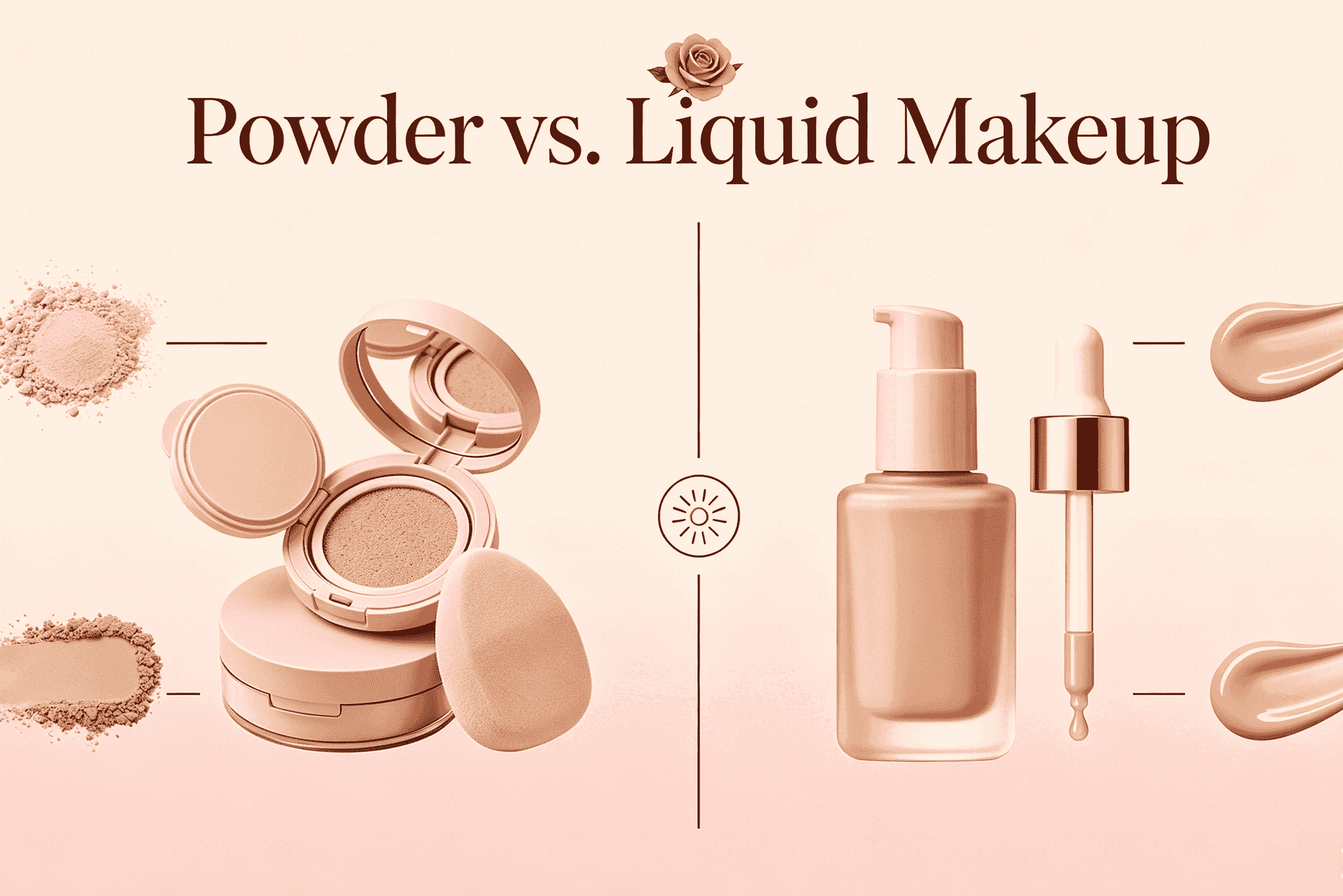
In addition to skin type matching, usage scenarios are also important basis for formula selection. Different occasions such as daily commuting, outdoor activities, formal makeup and long-term makeup have different requirements for makeup durability, texture and appearance.
- Daily Office Commute : Light liquid foundation for dry/normal skin; thin layer of powder makeup for oily skin, creating natural and long-lasting base makeup
- Outdoor Sports & High Temperature Environment : Prioritize powder makeup, with strong oil control and sweat resistance, matching portable powder packaging for emergency touch-ups
- Formal Occasions & Fine Makeup : Liquid makeup as base, with even and delicate coverage, modifying skin flaws in all directions
- Long-Term Makeup Wearing : Mixed use of liquid and powder formulas to balance moisturization and oil control, avoiding makeup melting and caking
5. Packaging Matching Tips for Different Formulas
Makeup formula performance and user experience are closely related to packaging design. Reasonable packaging selection can maximize product advantages and solve usage pain points. Brands need to match professional packaging solutions according to formula characteristics.
- Powder Makeup Packaging : Focus on dust prevention, compression and portability. Flip-top compact packaging with mirror and puff is the mainstream, which can avoid powder flying and facilitate daily use and touch-ups. High-quality sealing structure can extend product shelf life and keep powder dry and delicate.
- Liquid Foundation Packaging : Focus on air isolation, quantitative output and anti-stratification. Pump and dropper-type liquid packaging can effectively control dosage, avoid waste and secondary pollution, and maintain the stability of liquid formula for a long time.

