 English
  Español de México
  Français
  Deutsch
  Português do Brasil
  Italiano
  한국어
한국어  ไทย
ไทย  Русский
  日本語
日本語  Polski
  Svenska
  Türkçe

Where to Source the Best Bulk Pink Lip Gloss Tube Supplies?
August 18,2026
Bulk tube buying turns color into a procurement test. A weak batch can bring mismatched pinks, leaky wipers, loose applicators, or damaged decoration.
For PETG, PP, acrylic, or PCR tubes, balance quality controls, capacity, timing, and landed cost.
Key Highlights for Pink Lip Gloss Tube Sourcing
➔ Leverage PETG & PCR Platforms: Compare resin traceability, color consistency, sustainability claims, and production capacity.
➔ Domestic vs. Overseas Balance: Weigh development access against tooling, molding, decoration, and freight.
➔ Material & QC Focus: Compare appearance and handling needs, then inspect molding tolerances, leakage, and assembly.
➔ MOQ & Customization Tactics: Ask how stock components, shared tooling, and decoration change the minimum order.
5 Unexpected Ways To Find Bulk Pink Lip Gloss Tube Suppliers
Reliable bulk sourcing can start outside ordinary catalogs. Material platforms, factories, and industry events broaden the field, but compare every lead on plastic, finish, applicator, and production readiness.
Leverage PETG Extrusion Molding Marketplaces
Specialist marketplace listings can make PETG polymer factories easier to compare. Use the wholesale tube sourcing guide to frame the questions before contacting vendors.
-
Screen each supplier by:
- Extrusion and molding capability for the tube body.
- Decoration options for consistent pink lip gloss packaging.
- In-house assembly, which can cut handoffs and fit problems.
Request decorated samples rather than judging a rendering. Compare them under controlled lighting and on the intended clear, frosted, or colored substrate.
Tap Into HDPE Bulk Material Auctions
HDPE material auctions may expose resin channels, but resin price does not qualify a finished package. Trace the supplier to its cosmetic packaging partners and document the grade and batch.
| Check | Trial Qty | Target Rate | Tolerance |
|---|---|---|---|
| Color match | 100 | 95% | ±5% |
| Fill test | 100 | 99% | ±1% |
| Leak test | 100 | 100% | 0% |
| Drop test | 50 | 98% | ±2% |
| Cap fit | 100 | 99% | ±1% |
These are buyer-defined screening targets, not universal standards. Confirm the polymer and plastic specification required by the formula, then commission suitable cosmetics testing before production.
Scout PCR & Bio-plastic Sourcing Platforms
-
Search sourcing platform catalogs for PCR and bio-plastic options, then compare claims against the FTC Green Guides for the U.S. market.
-
Compare:
- Recycled content percentages and batch traceability.
- Material color stability, since pink shades can shift.
- Sustainable claims against certificates and the actual polymer grade.
Recycled plastic still needs formula-compatibility testing before a large order. Recycling claims should reflect the target market’s collection and processing conditions.
Partner With OEMs Offering Snap-on Cap Assemblies
An OEM manufacturer can simplify a tube lip gloss project by supplying matched parts.
-
Body system
- Tube
- Wiper and applicator
-
Closure system
- Snap-on cap
- Rod and insert
-
Final assembly
- Confirm every component fits.
- Test leakage with the intended formula.
An integrated supplier can reduce tolerance handoffs, but the approved specification must still define each mating part.
Explore Trade Shows Featuring Matte Finish Tubes
At a trade show or packaging exhibition, handle each matte finish tube instead of relying on photos. Inspect the coating, test the wand and wiper, and record minimum quantities and lead times.
For bulk pink lip gloss tube sourcing, an industry event makes side-by-side cosmetic packaging comparisons practical.
Compare beyond color: Coordinating material, decoration, assembly, sample testing, and supplier inspection keeps one sourcing framework accountable. Topfeel Makeup’s OEM/ODM workflow covers PETG or PP structures, surface decoration, assembly, and quality checks, helping buyers compare an integrated route instead of fragmented quotes.
Review the lip gloss packaging category with the wholesale sourcing guide to prepare a supplier scorecard.
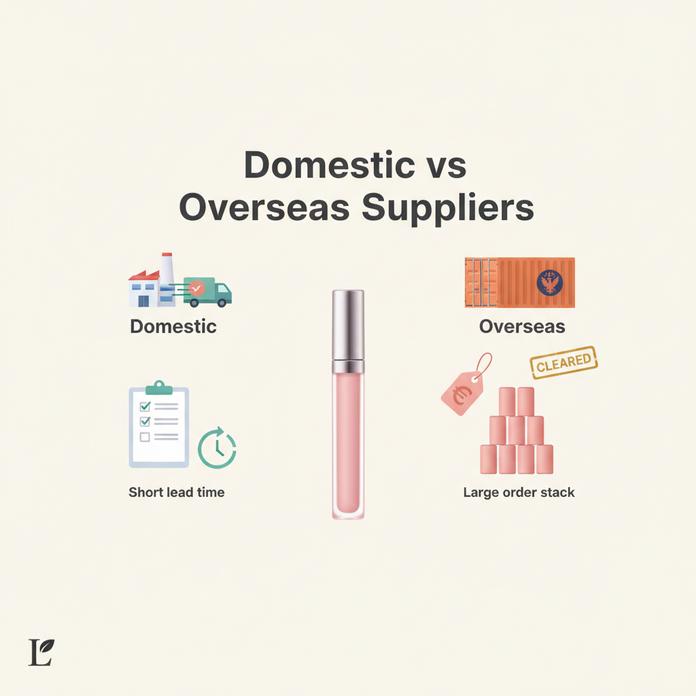 Where To Source: Domestic Vs. Overseas Suppliers
Choosing a supplier for a pink lip gloss tube takes more than comparing factory prices. Timing, order size, quality access, and transport costs change the commercial result.
Domestic Suppliers
Buying closer to home can make sense when a pink lip gloss tube needs frequent restocking or hands-on inspection. Local manufacturers and Regional distributors may also simplify development communication.
-
Development and production
-
Faster turnaround
- Shorter lead times can reduce exposure to long ocean schedules after sample approval.
- Smaller replenishment runs may keep inventory lean.
-
Product oversight
- Nearby factories can make Quality assurance visits more practical.
- Checking decoration, cap fit, wiper performance, and color against the approved sample can expose drift.
-
-
Day-to-day purchasing
-
Clear coordination
- Communication ease supports feedback on drawings, samples, and changes.
-
Local requirements
- Regulatory compliance remains the responsible person’s duty; Great Britain, for example, specifies information required on cosmetic packaging.
- Simpler Shipping logistics can reduce cross-border paperwork.
-
Smaller brands can structure that comparison with a cosmetic packaging sourcing guide rather than a generic factory profile.
Overseas Suppliers
International sourcing can broaden tooling, molding, decoration, and applicator choices. International manufacturers with sufficient Production capacity may price larger orders competitively.
-
Start with landed cost, not the factory quote. Import duties, freight, insurance, and Customs clearance belong in the model; Incoterms® rules clarify delivery obligations but do not replace a complete cost calculation.
-
Build realistic timing into the purchase plan. Extended lead times can include production queues and changing Shipping routes.
-
Review factory capabilities before committing:
- Use Global sourcing comparisons for molding, printing, applicators, and minimum quantities.
- Account for time zones and Cultural considerations when setting approvals.
A signed sample and change-control process provide a shared reference before mass production. Importers should also map the destination’s import process before confirming the delivery schedule.
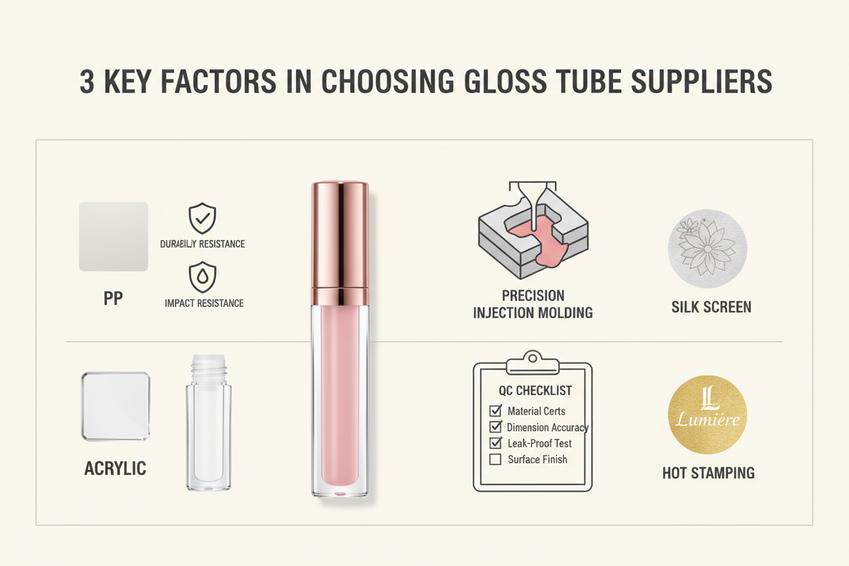 3 Key Factors In Choosing Gloss Tube Suppliers
Choosing a supplier for a pink lip gloss tube requires the material, molding accuracy, and decoration to work as one system. Each affects use, appearance, and cost.
Material Quality: PP vs. Acrylic Durability
For a pink lip gloss tube, material selection starts with handling, appearance, and formula contact. The tube lip gloss guide helps frame the complete package during sampling.
-
PP plastic
- Its material properties can suit flexible components; verify impact strength on the finished design.
- Strong chemical resistance still depends on the grade, formula, and contact conditions, so run compatibility tests.
-
Acrylic plastic
- Acrylic can provide clarity and a rigid, glass-like feel.
- Greater rigidity makes drop durability testing important on the final wall thickness and geometry.
A quality assessment checks wall thickness, drop performance, color consistency, and formula contact. Eastman’s description of Tritan copolyester also illustrates why buyers should identify a specific material family and grade rather than rely on a generic resin label.
Injection Molding & Quality Control Standards
A design is not production-ready when caps wobble or gloss leaks. The injection molding process needs defined controls from mold to final assembly.
-
Molding control
- Check mold design and material flow around shoulders, bases, wipers, and inserts.
- Set measurable dimensional tolerances under documented manufacturing standards.
-
Assembly control
- Test closure fit, wiper retention, torque, and leakage.
- Use repeatable inspection protocols to detect short shots, flash, and warping.
-
Batch control
- Record defects and sample results for quality assurance.
- Strong defect prevention uses the record to improve production consistency.
Customization Capabilities: Silk Screen vs. Hot Stamping
Decoration gives a pink lip gloss tube its shelf identity, but each method needs its own approval criteria.
-
Silk screen printing
- Best for logos, fine text, and multi-color graphic application when adhesion trials pass.
- Ask about ink adhesion, registration, surface finish, curing, and minimum quantities.
-
Hot stamping
- Transfers foil with heat and pressure to create metallic branding elements.
- Curved gloss tube shapes may require careful tooling to keep edges clean.
Compare both decoration techniques by setup cost, substrate compatibility, and order size. A documented packaging test program can combine distribution stresses with package-performance checks instead of relying on appearance alone.
Control the interface: Materials, molding, and decoration succeed or fail as one package.
Topfeel Makeup combines injection molding, hot stamping or silkscreen, assembly, and quality checks in one workflow. Compare a clear PETG tube with the lip gloss category to decide which structure and finish should enter formula, leak, and decoration trials.
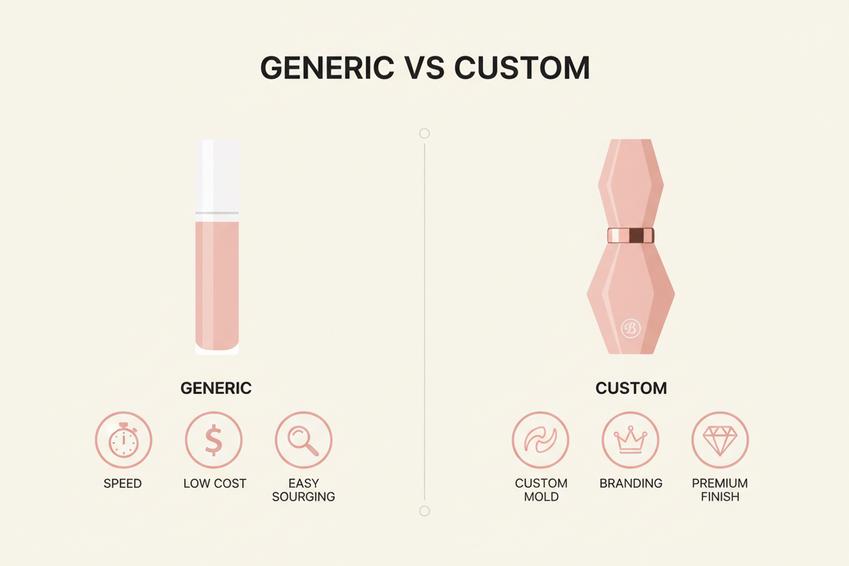 Generic Vs. Custom Pink Lip Gloss Tube
Choosing a pink lip gloss tube comes down to budget, timing, identity, and technical fit. Compare stock and made-to-order routes before requesting samples.
Generic Tubes
Generic packaging starts with a Standard design and existing tooling. It can suit a launch that does not justify a new mold; the small-business packaging guide gives that choice a broader sourcing context.
-
Sourcing and production
-
Ready-made tubes generally use established capacities; confirm the fill target.
- Off-the-shelf components can reduce tooling expense.
- Quick availability may shorten sampling schedules.
-
Common shapes make filling-line planning easier.
- A Universal fit should be confirmed across closures, wipers, and applicators.
- Basic colors, including a stock pink tube, give brands an accessible starting point.
-
For trial runs, a generic tube can make lower minimums easier to discuss. Stock packaging may accept logo or surface decoration, but the supplier should confirm the approved treatment and component combination.
Custom Tubes
A custom tube gives product teams more control over appearance and use while adding development work; review makeup packaging design before briefing the finish.
- Design: A Unique design can alter diameter, length, capacity, wall shape, and applicator choice, while Personalized colors require an approved color standard.
- Engineering: Specific molds support Exclusive shapes and Tailored specifications, but add sampling and approval time.
- Brand expression: Branding elements can include logos, printing, metallization, gradients, or special coatings.
A Bespoke tube is useful when distinctive structure justifies setup cost. Define fit, sealing, color, and applicator acceptance before mass production. For EU sales, decoration and material choices should also be considered alongside current packaging-waste rules.
Can You Negotiate MOQ On Pink Lip Gloss Tubes?
MOQ discussions for a pink lip gloss tube are most productive when stock parts and existing molds fit the job. Compare Suppliers, decoration choices, and component options before locking in Bulk supplies, using a wholesale gloss tube guide as the sourcing brief.
Assessing Typical Minimums by Capacity (5–15ml)
A useful Assessment starts with Capacity, because different Lip gloss tubes may use different tooling and components.
-
5ml and 7ml
- Stock molds can make smaller quantities easier to discuss.
- Custom applicators, pink shades, or printing may raise minimums.
-
10ml and 15ml
- These Volume ranges may offer more ready-made choices.
- Check Product dimensions; diameter can matter as much as fill volume.
MOQ figures vary by product, so ask for separate minimums covering stock tubes, custom color, printing, and applicators. Compare each format against the chosen fill target.
Strategies to Lower MOQ with Assembly Partners
Smart Strategies change fewer parts at once. Assembly partners can combine stocked bodies with compatible caps, wipers, and rods without developing every component.
-
Start with Collaboration
- Keep the tube body standard.
- Customize printing or cap color.
-
Then discuss Negotiation tactics
- Ask whether one component run can serve several designs.
- Set Partnership agreements covering quantities and lead times.
-
Protect Production efficiency
- Use Contract manufacturing and Supply chain management to avoid inefficient component runs.
Require an approved assembly specification before assuming that stock parts lower the MOQ.
Leveraging Shared Tooling to Reduce Order Sizes
Shared tooling can avoid a new mold when an existing geometry fits the product brief.
-
Match existing hardware
- Select Standardized components with common diameters and lengths.
- Use established Production molds for a suitable capacity.
-
Build around compatibility
- Confirm cap, wiper, rod, and bottle fit through Supplier collaboration.
- Review Tooling agreements before requesting unique changes.
-
Control spending
- Cost reduction comes from avoiding unnecessary mold work.
- Better Manufacturing efficiency can improve the case for a smaller order.
Before shipment, choose a distribution test appropriate to the route; ISTA procedures distinguish among test series and transport contexts rather than prescribing one universal protocol.
📦 Make MOQ trade-offs visible: Capacity, assembly strategy, and shared tooling should be costed together before a bulk commitment.
Topfeel Makeup states that MOQ usually ranges from 10,000–20,000 pieces by product complexity, with higher quantities possible for custom molds. Review the lip gloss tube range and 5 ml square format, then ask customer service to quote stock, color, decoration, applicator, and tooling minimums separately.
References
- Cosmetic Testing Services — Intertek
- Incoterms® rules — International Chamber of Commerce
- Tritan copolyester — Eastman
- Packaging Testing Services — Intertek
- Packaging waste — European Commission
- Test Procedures — International Safe Transit Association

