 English
  English (UK)
  English (Australia)
  English (Canada)
  العربية
  Deutsch
  Italiano
  Español de México
  Tiếng Việt
  ไทย
ไทย  Português do Brasil
  Français
  Български
  Čeština
  Dansk
Dansk  Ελληνικά
  Eesti
Eesti  Suomi
Suomi  Magyar
  Bahasa Indonesia
  Lietuvių kalba
  Latviešu valoda
  Norsk bokmål
  Nederlands (Formeel)
  Polski
  Română
  Русский
  Slovenčina
  Slovenščina
  Svenska
  Türkçe
  Українська
  简体中文
简体中文  日本語
日本語  한국어
한국어  繁體中文
繁體中文 
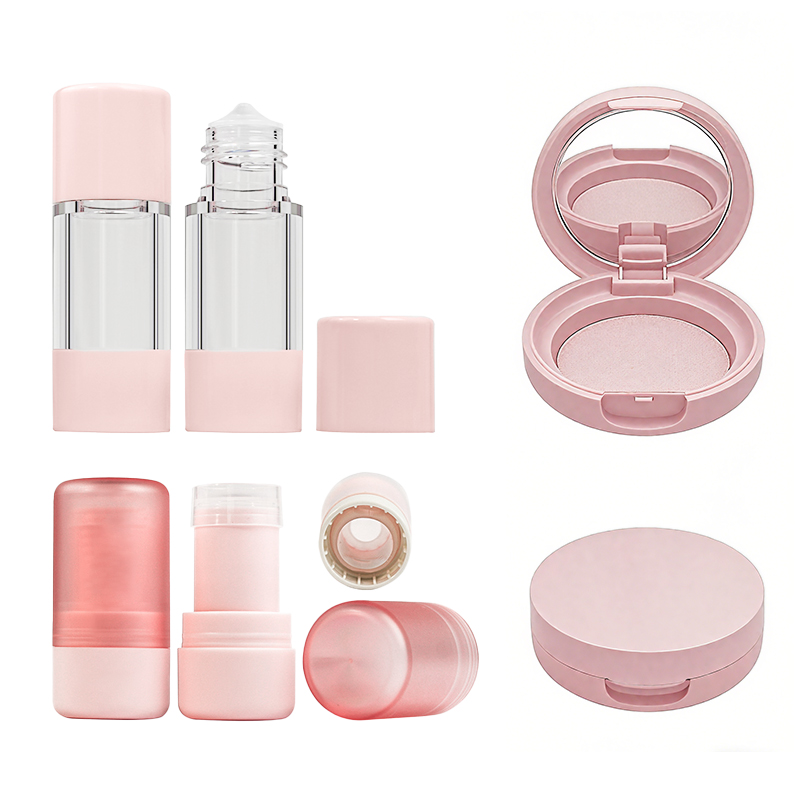
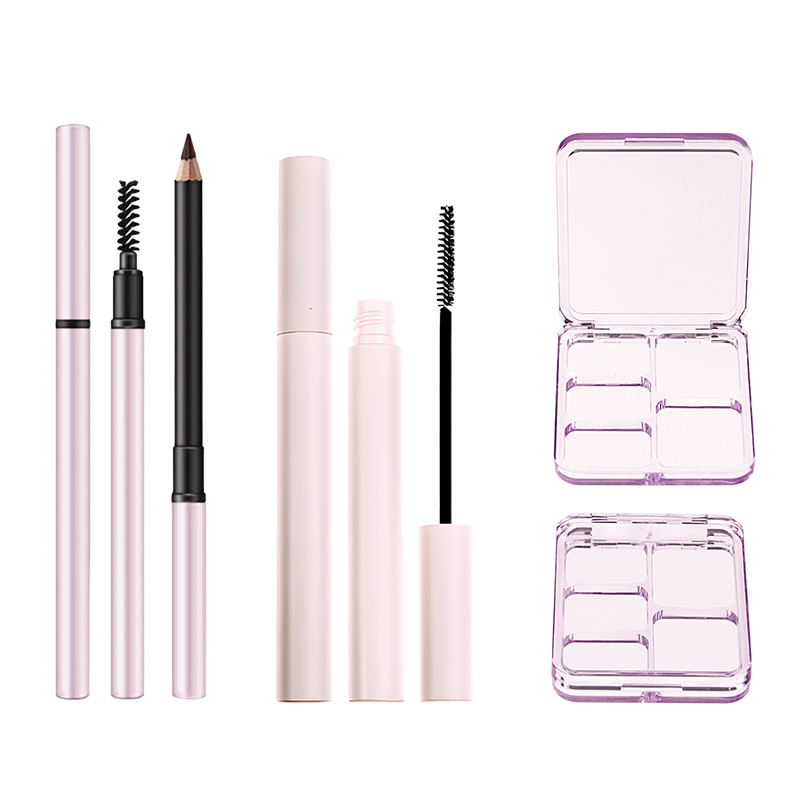
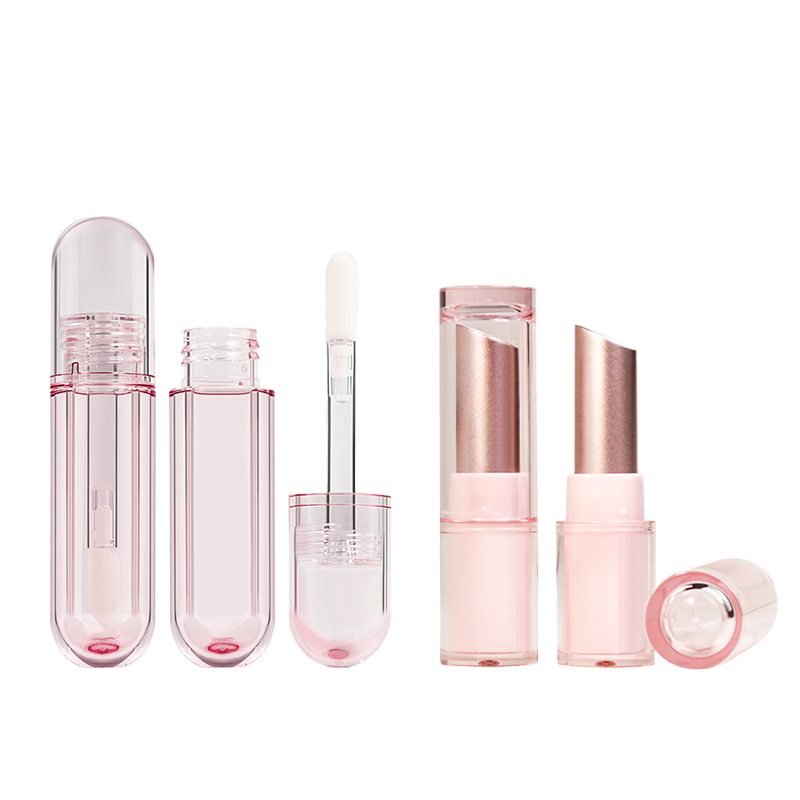

2026 Makeup Container Guide for Sustainable Cosmetic Packaging Buyers
March 23,2026
The makeup container used to be an afterthought—just a pretty shell for the real star inside. Not anymore. Today it’s the dealbreaker at retail, the talking point in boardrooms, the line item that keeps procurement managers up at 2 a.m. Sustainability claims fly around like confetti, but sorting compostable from recyclable can feel like reading the fine print on a gym contract. One wrong packaging partner and suddenly your “clean beauty” launch looks… not so clean.
McKinsey reports that over 60% of U.S. consumers are willing to pay more for sustainable packaging. That’s not fluff—that’s margin. And NielsenIQ has echoed the shift toward eco-conscious purchasing in beauty year after year.
Here’s the tension: refillable airless pumps, mono-material jars, ocean-bound plastics—all shiny on a pitch deck. But which ones scale without wrecking cost, compliance, or credibility? That’s the crossroads. And that’s exactly where this guide steps in.
Quick Answers: Choosing the Perfect Makeup Container
➔ Opt for mono-material jars or ocean-bound plastics to streamline recycling and reduce marine waste.
➔ Prioritize airless pumps and UV protection features to extend formula shelf life and ensure dispensing accuracy.
➔ Evaluate materials—glass for premium clarity, bamboo for renewable appeal, PCR plastic for cost-effective sustainability.
➔ Look for tamper-evident, child-resistant closures and refillable designs to enhance safety, compliance, and consumer loyalty.
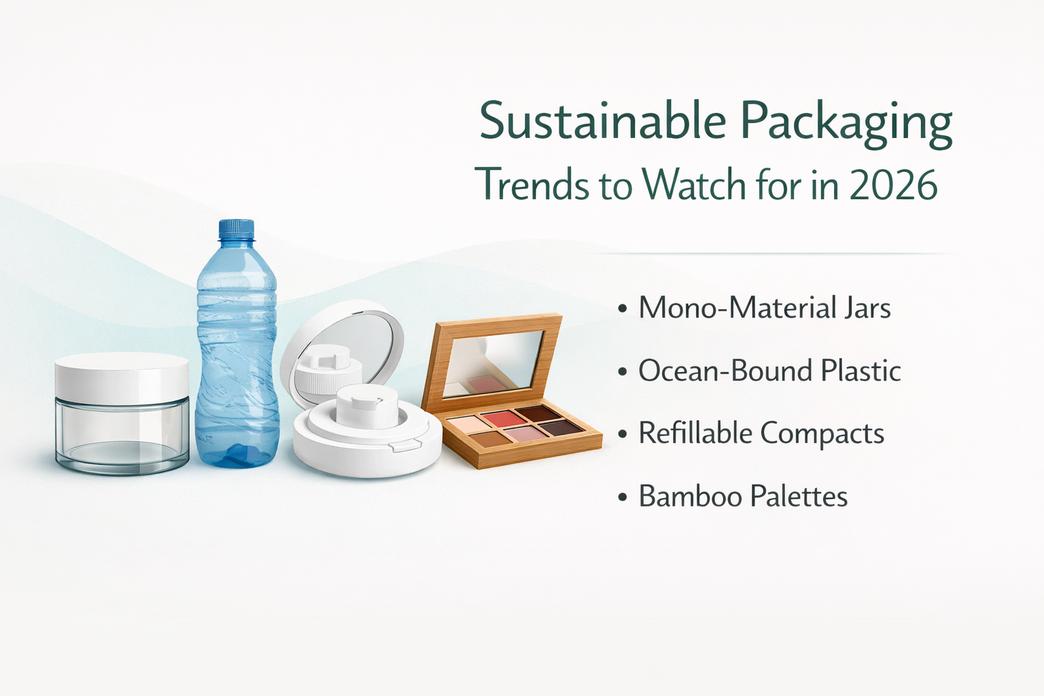
Sustainable Packaging Trends to Watch for in 2026
Sustainability is no longer a nice extra; it’s the baseline for every makeup container on the shelf. In 2026, brands are rethinking how each makeup, container, and beauty package moves through the world, from sourcing to refill, without losing style.
Mono-Material Jars for Easy Recycling
When designing mono-material jars for cosmetic packaging, brands are tightening every detail of the makeup container system:
-
Material Strategy
1.1 Single resin or glass structure
- Eliminates mixed layers that disrupt recycling streams.
- Supports a cleaner circular economy loop.
1.2 Lightweight wall engineering
- Reduces raw material use.
- Keeps the cosmetic container tough enough for daily drops.
-
Closure Compatibility
2.1 Standardized screw caps
- Same material family as the jar body.
- Simplifies sorting at recycling facilities.
2.2 Seal integrity
- Maintains product safety inside the makeup container.
For brands working with Topfeelpack, this approach turns a simple makeup jar into a smart, sustainable beauty container that fits real recycling systems.
Ocean-Bound Plastic Bottles on the Rise
Using ocean-bound plastic in bottles is shifting how each makeup container tells its story:
-
Raw Material Recovery
1.1 Collection near coastlines
- Prevents marine pollution before it spreads.
1.2 Verified supply chain tracking
- Confirms origin and processing standards.
-
Manufacturing Control
2.1 Advanced blow molding
- Keeps bottle walls even and strong.
2.2 Quality checks
- Ensures recycled materials meet performance needs.
The result is an eco-friendly cosmetic container that feels premium, not patched together. A makeup container made this way keeps performance tight while giving waste a second shot.
Refillable Compacts Featuring Airless Pumps
The modern refillable compact is more than a trend; it reshapes how a makeup container lives over time:
-
Core Structure
1.1 Durable outer shell
- Designed for long-term reusability.
1.2 Replaceable inner cartridge
- Cuts material use and drives waste reduction.
-
Dispensing Technology
2.1 Integrated airless pumps
- Boost product preservation by limiting air exposure.
2.2 Precise dosage control
- Adds real consumer convenience.
This setup extends shelf life and keeps every cosmetic container clean and efficient. With Topfeelpack, brands can pair sleek design with a refill plan that customers actually stick to.
Bamboo Palettes with Built-In UV Protection
A bamboo palette brings natural texture to the makeup container world, yet it’s engineered for performance:
-
Material Composition
1.1 Rapidly renewable natural materials
- Supports lower environmental impact.
1.2 Partially biodegradable structure
- Reduces long-term waste footprint.
-
Protective Engineering
2.1 Integrated UV protection coating
- Shields formulas from light damage.
2.2 Sealed inner tray
- Maintains product integrity.
-
Design Appeal
3.1 Warm grain finish
- Strong aesthetic appeal on shelves.
3.2 Refillable pan options
- Extends the life of the makeup container.
This kind of cosmetic packaging proves that a beauty container can feel earthy and still guard the formula like a pro.
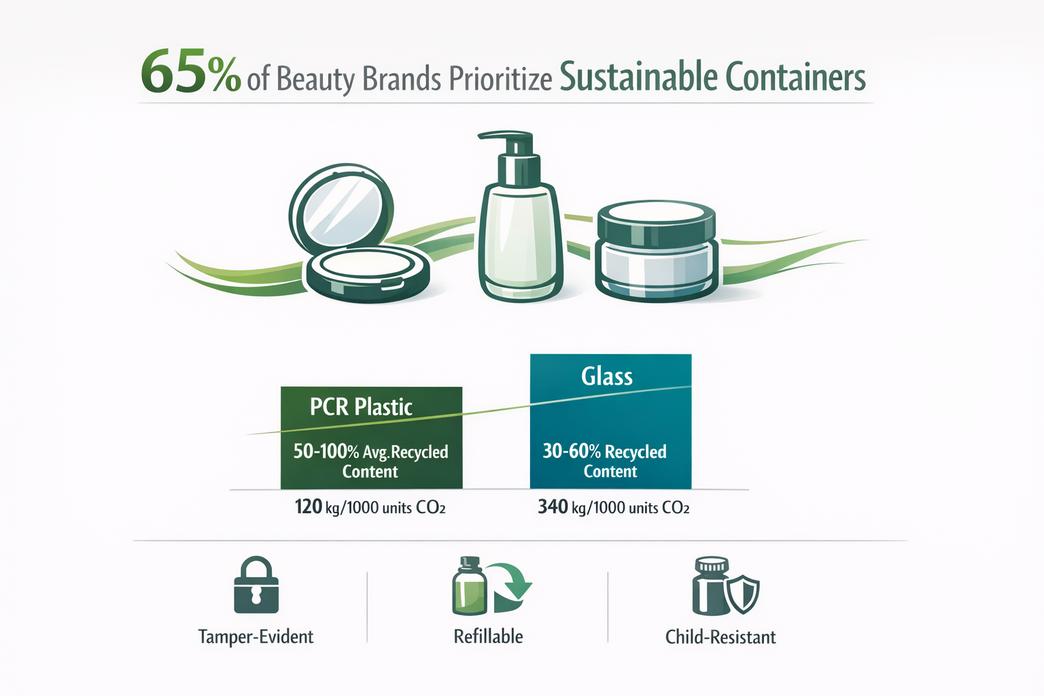
65% of Beauty Brands Already Prioritize Sustainable Containers
Sustainability is no longer a side note in beauty. Around 65% of brands now rethink every makeup container, from raw material to refill system. A modern makeup container isn’t just cute on a shelf; it has to protect formulas, cut waste, and still feel premium in hand. Even small cosmetic containers are under review.
Preferred Container Types: Compacts, Bottles, Jars
When brands choose a makeup container, decisions usually branch into three main formats within Cosmetic Packaging and Beauty Product Packaging:
-
-
Pressed powder makeup container
- Slim profile for portability
- Works well with refill pans
-
Cream foundation makeup container
- Airtight hinge design
- Compatible with mirror inserts
-
-
Bottles
-
Pump bottles for liquid foundation
- Airless system reduces oxidation
- Precise dosage control
-
Dropper bottles for serums
- Glass or PCR Plastic body
- Tamper bands for security
-
-
Jars
-
Skincare-infused makeup jar
- Thick wall for luxury feel
- Refillable inner cup
-
- Child-safe lid options
- Strong seal for product integrity
-
Each makeup container type supports different molding methods and closure systems, keeping production efficient while upgrading user experience. In short, format drives function.
Top Materials: PCR Plastic, Glass, Recycled Content
Material choice shapes both vibe and carbon math. Brands now compare Sustainable Materials using measurable data:
| Material Type | Avg. Recycled Content (%) | CO₂ Emissions (kg/1000 units) | Refill Compatibility | Durability Score (1–10) |
|---|---|---|---|---|
| PCR Plastic | 50–100 | 120 | High | 8 |
| Virgin PP | 0 | 210 | Medium | 9 |
| Glass | 30–60 | 340 | High | 10 |
| Aluminum | 40–70 | 260 | Medium | 9 |
| Mixed Recycled Content Resin | 30–80 | 150 | High | 8 |
A 2025 McKinsey beauty report noted:
“Sustainable packaging now influences purchasing decisions for over 60% of global beauty consumers, with refillable formats growing at double-digit rates.”
That insight keeps pushing every makeup container supplier toward Eco-Friendly Packaging and higher Post-Consumer Recycled ratios.
Must-Have Features: Tamper-Evident, Refillable, Child-Resistant
Safety and sustainability now walk side by side in Packaging Features.
-
Tamper-Evident
- Induction seals under caps
- Breakable safety rings
- Shrink bands on bottles
-
Refillable
- Snap-in inner cups for jars
- Magnetic pans inside compacts
- Twist-out cartridges for liquid makeup container systems
-
Child-Resistant
- Push-and-turn closures
- Dual-action pump locks
- Certified testing aligned with consumer safety standards
Each feature protects Product Integrity while keeping Sustainable Design practical. The result? A makeup container that feels safe, smart, and ready for the next refill cycle.
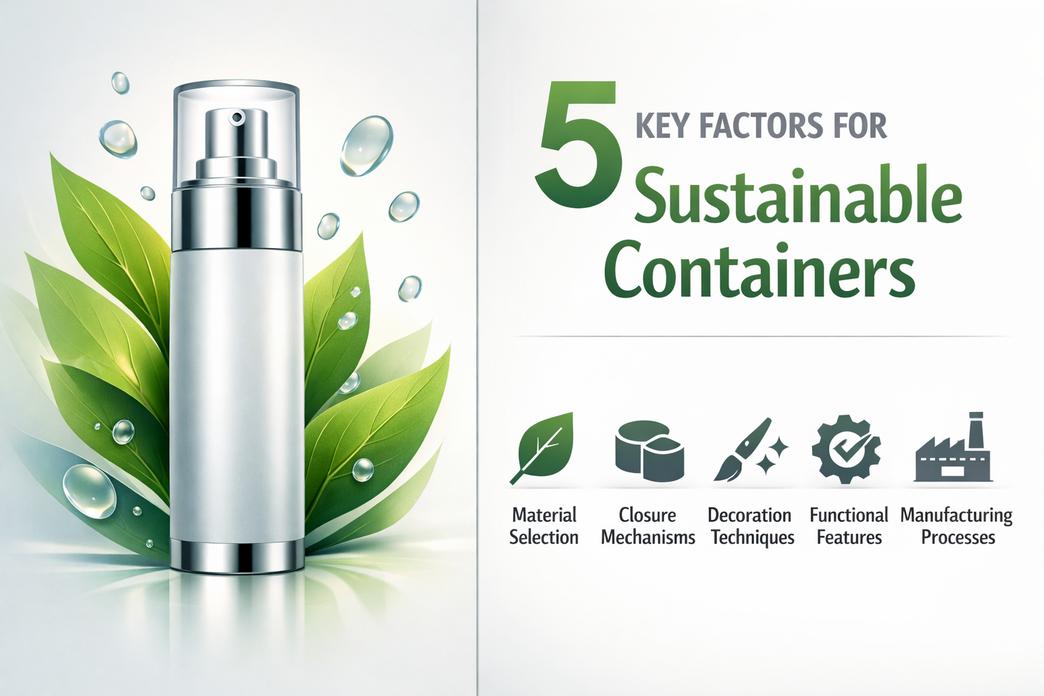
5 Key Factors to Consider When Choosing Sustainable Containers
Choosing the right makeup container isn’t just about looks. It shapes product safety, shelf life, and how eco-friendly your brand feels. A smart makeup packaging container keeps formulas fresh and customers happy—without harming the planet.
Material Selection: Biodegradable vs. Compostable
When selecting materials for a makeup container, clarity matters.
- Biodegradable materials break down over time.
- Compostable packaging requires specific compost conditions.
- Bioplastics and plant-based plastics often sound similar but perform differently.
- Check material certifications for disposal standards.
- Review compatibility with oils or active ingredients.
- Confirm local compost infrastructure access.
Comparison of Common Sustainable Materials
| Material Type | Decomposition Time (Months) | Industrial Compost Needed | Typical Use in Cosmetic Container |
|---|---|---|---|
| PLA Bioplastic | 6–12 | Yes | Lightweight jars |
| PHA | 3–6 | Sometimes | Tubes |
| Bamboo Fiber Composite | 12–24 | No | Caps & outer shells |
For brands working with Topfeelpack, material audits often include testing natural polymers against formula stability to prevent warping or leaks.
Closure Mechanisms and Dispensing Accuracy
Closures affect daily use more than most people think.
-
Under closure systems:
-
Airless pumps
- Protect formula
- Improve dispensing precision
-
Screw caps
- Simple
- Cost-effective
-
Flip-top closures
- Quick access
- Travel-friendly
-
A leak-proof design keeps the makeup container clean inside makeup bags. Small detail. Big difference in user experience and product integrity.
Decoration Techniques That Minimize Waste
Decoration should look sharp without waste overload.
• Water-based inks reduce emissions.
• Eco-friendly printing supports recyclability.
• Minimalist design lowers material use.
Avoid heavy hot stamping or thick coatings when recyclable labels can do the job. Smart brands balance embossing with reduced solvent use so the cosmetic container still feels premium but stays sustainable.
Functional Features: Airless Technology & UV Protection
For sensitive formulas:
- Integrate airless pumps to limit oxidation.
- Add UV-resistant coatings for light protection.
- Support preservative reduction while maintaining formula stability.
Short shelf life kills trust. A well-designed makeup packaging container with hygienic dispensing extends product shelf life and keeps customers coming back.
Manufacturing Processes: Injection Molding Quality Control
Under manufacturing standards:
-
Injection molding accuracy
- Controlled material flow
- Balanced wall thickness
-
Advanced mold design
- Reduces defects
- Improves closure fit
-
Continuous defect detection
- Prevents leakage
- Supports sustainable manufacturing
Cycle time optimization cuts energy waste. Consistent molding protects long-term performance of every makeup container shipped.
Brands partnering with Topfeelpack often focus on tight quality control benchmarks, ensuring each cosmetic container meets durability and environmental targets without compromise.
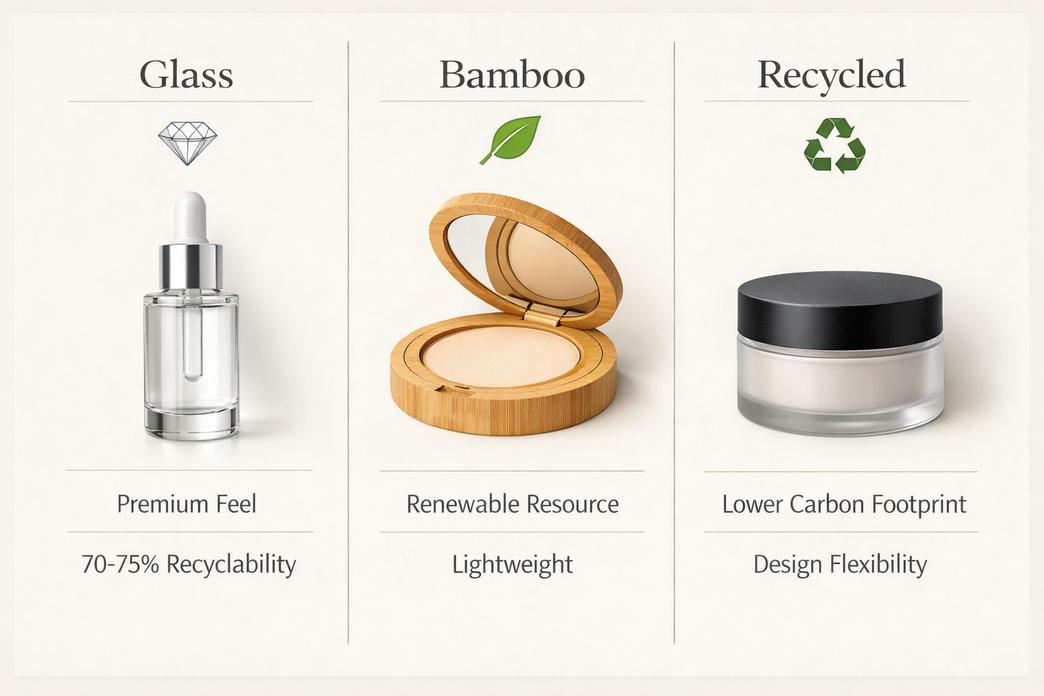
How to Choose Between Glass, Bamboo, and Recycled Makeup Containers
Picking the right makeup container isn’t just about looks. It shapes brand vibe, cost control, and how your product feels in hand. From classic glass to earthy bamboo and smart recycled options, each makeup container choice sends a clear message.
Glass Makeup Containers
When a beauty brand wants that upscale vibe, glass often wins. A makeup container made from glass feels solid, cool, and serious.
-
Performance Core
1.1 Material Traits
- durability supports long-term storage.
- inertness protects sensitive formulas.
- Strong chemical resistance suits serums and oils.
1.2 Visual & Functional Value
- High clarity boosts shelf appeal.
- Natural light blocking options (amber, frosted).
- Noticeable weight adds a premium feel.
-
Sustainability & Metrics
| Property | Typical Value | Brand Impact |
|---|---|---|
| Recyclability Rate (EU) | 70–75% | Strong recyclability |
| Density (g/cm³) | 2.4–2.6 | Higher shipping weight |
| Chemical Interaction Risk | Very Low | High formula safety |
| Reuse Cycles (avg.) | 5–10 | Supports refill programs |
-
Best Fit Scenarios
3.1 Skincare jars
3.2 Dropper bottles
3.3 Luxury cosmetic packaging lines
Topfeelpack often recommends glass when brands want stable structure and visual clarity in a cosmetic container range.
Bamboo Makeup Containers
Bamboo packaging speaks softly but stands out.
-
Material Identity
1.1 Eco Appeal
- Fast-growing renewable resource
- Surface-level biodegradability
1.2 Brand Expression
- Warm natural aesthetic
- Comfortable grip, lightweight handling
-
Functional Structure
2.1 Outer Shell
- Solid durability for daily use
2.2 Inner System
- Plastic liners for moisture resistance
- Protects creams inside the makeup container
-
Practical Notes
- Ideal for balms, powders, refillable compacts
- Pairs well with minimalist branding
A bamboo makeup container blends green messaging with decent performance, especially when designed carefully by teams like Topfeelpack.
Recycled Content Makeup Containers
Recycled plastic isn’t a compromise anymore. It’s a strategy.
-
Material Sources
1.1 post-consumer recycled plastic
1.2 post-industrial recycled plastic
-
Environmental Metrics
- Lower carbon footprint
- Supports the circular economy
- Cuts reduced virgin plastic demand
-
Engineering Considerations
3.1 Quality Control
- Maintain material integrity
3.2 Design Freedom
- Strong design flexibility for bottles and palettes
-
Business Advantages
4.1 Cost balance at scale
4.2 Easy adaptation across cosmetic packaging lines
For brands scaling fast, a recycled makeup container keeps performance solid while aligning with eco goals. Topfeelpack helps balance sustainability with clean design, so your makeup container line looks sharp and stays responsible.
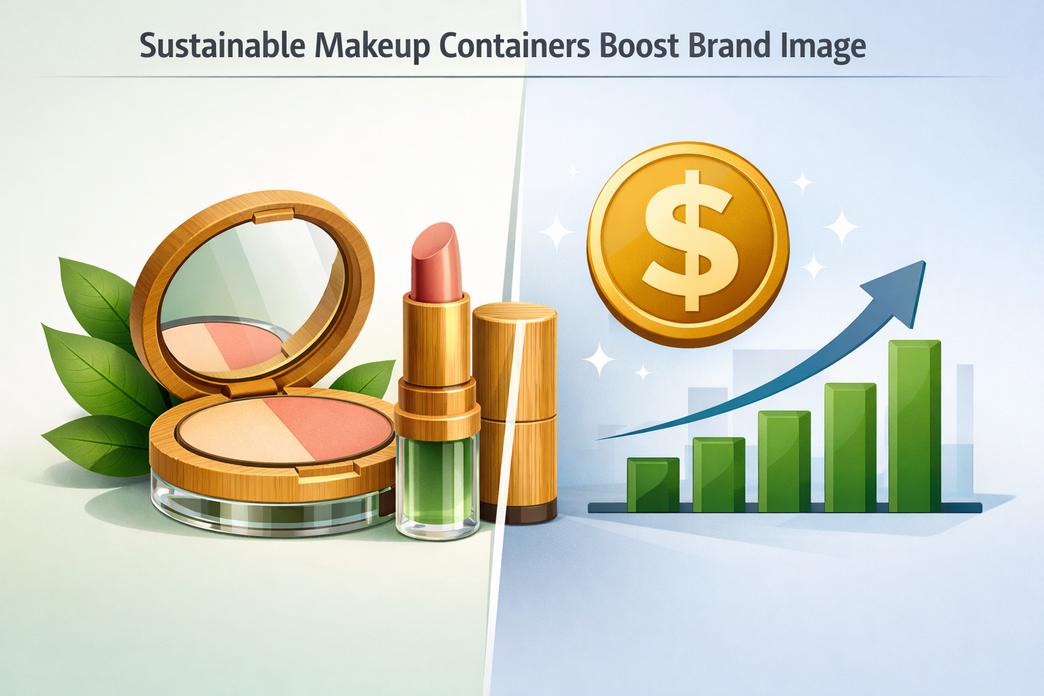
How Can Sustainable Makeup Containers Boost Brand Image?
Sustainable thinking is reshaping every makeup container on the shelf. From material choice to refill design, smart brands are turning each makeup container into a story about values, trust, and long-term growth.
Elevating Eco Credentials to Attract Investors
A sustainable makeup container is more than packaging; it signals measurable commitment.
-
Strengthening Sustainable Packaging strategies
- Use of PCR in every cosmetic container line
- Transition from mixed plastics to mono-material makeup container formats
- Clear carbon data integrated into ESG Reporting
-
Building stronger Investor Relations narratives
- Transparent sourcing policies tied to Corporate Social Responsibility goals
- Public lifecycle assessments for each makeup case and refill unit
- Annual sustainability metrics tied to Investment Opportunities
-
Enhancing Brand Reputation through proof
- Refillable lipstick container programs
- Reduced resin weight in compact makeup container designs
- Third-party environmental audits
Brands working with suppliers like Topfeelpack often document resin reduction percentages and refill adoption rates. That kind of data speaks clearly in boardrooms. A well-designed makeup container becomes a visible asset, not just a cost line.
Engaging Eco-Conscious Consumers Through Design
Consumers judge fast. A makeup container either feels responsible or it doesn’t.
-
Aligning with Consumer Preferences
- Bamboo caps paired with glass makeup container bases
- Matte recycled finishes that signal Sustainable Materials
- Refill pods that snap neatly into the original cosmetic container
-
Driving Consumer Engagement
- QR codes explaining resin origin
- Minimal ink decoration for cleaner recycling
- Modular makeup packaging that extends product life
-
Reinforcing Brand Loyalty
- Consistent Eco-Friendly Design language across every makeup container
- Elevated Product Aesthetics without excess weight
- Durable hinge systems for compact makeup cases
Short message. Clear intent. Smart design.
When a makeup container feels sturdy and responsible, shoppers stick around.
Creating Media Buzz with Innovative Green Packaging
Press coverage often starts with something tangible—like a next-gen makeup container.
-
Fueling Green Packaging Innovation
- Ocean-bound resin integrated into foundation makeup container shells
- Airless refill cartridges reducing waste
- Lightweight pumps cutting plastic per unit
-
Activating Public Relations momentum
- Launch events centered on sustainable makeup packaging
- Data-backed sustainability claims for credible Media Coverage
- Transparent storytelling tied to Brand Storytelling
-
Powering Marketing Campaigns and Industry Recognition
- Before-and-after waste comparisons
- Awards submissions highlighting refillable cosmetic container systems
- Collaboration announcements with packaging experts like Topfeelpack
A bold makeup container redesign travels fast across social feeds and trade publications. Done right, it turns simple packaging into a headline—and headlines build brands.
FAQs about Makeup Container
What sustainable trends are shaping makeup container design in 2026?
Beauty buyers are under pressure—from consumers and investors alike. The shift is clear:
- Mono-material compacts, jars, and bottles simplify recycling and reduce sorting errors.
- PCR plastic and ocean-bound plastic cut virgin plastic use while keeping injection molding efficiency high.
- Refillable palettes and airless pump bottles lower repeat waste and build long-term brand loyalty.
- Bamboo accents and lightweighting strategies reduce carbon impact without sacrificing shelf appeal.
Behind the scenes, careful tooling, blow molding precision, and strict quality control keep these sustainable upgrades production-ready.
How do mono-material containers improve recycling performance?
A mono-material makeup container—plastic with plastic, glass with glass—removes guesswork in waste streams. No mixed layers. No bonded barriers that complicate sorting.
- Easier mechanical recycling
- Lower contamination rates
- Better recovery value
For example, a PET bottle with a matching screw cap or a PP compact with a snap-on lid streamlines processing. The result: higher recycling yield and fewer rejected units at scale.
Which container types are most requested in bulk cosmetic orders?
Large-scale production still centers on high-demand formats, but expectations are rising.
| Container Type | Common Materials | Typical Closures | Key Manufacturing Process |
|---|---|---|---|
| Bottles | Plastic, glass | Pump dispensers, droppers | Blow molding |
| Jars | Acrylic, PCR plastic | Screw caps | Injection molding |
| Tubes | Plastic, aluminum | Flip-top caps | Extrusion |
| Compacts & Palettes | Plastic, bamboo | Snap-on lids | Tooling + assembly |
Decoration—silk screening, hot stamping, metallization, offset printing—adds identity without slowing production lines.
What functional features should brands prioritize for performance and safety?
A makeup container is more than a shell; it protects reputation.
- Airless technology guards formula freshness and improves dispensing accuracy.
- UV protection and frosting shield sensitive ingredients on retail shelves.
- Tamper-evident and child-resistant closures build trust at first touch.
- Refillable design keeps customers coming back instead of switching brands.
When assembly tolerances are tight and quality control is strict, even aerosols, droppers, and roll-on applicators perform flawlessly across global shipping routes.
References
- McKinsey reports – mckinsey.com/McKinsey & Company
- NielsenIQ – nielseniq.com/NielsenIQ
- circular economy – ellenmacarthurfoundation.org/Ellen MacArthur Foundation
- ocean-bound plastic – plasticsforchange.org/Plastics For Change
- marine pollution – unep.org/UN Environment Programme
- waste reduction – wrap.org.uk/WRAP
- Post-Consumer Recycled – epa.gov/Environmental Protection Agency
- consumer safety standards – fda.gov/U.S. Food and Drug Administration
- Biodegradable materials – bpiworld.org/BPI
- renewable resource – fsc.org/Forest Stewardship Council
- carbon footprint – sciencebasedtargets.org/Science Based Targets
- ESG Reporting – globalreporting.org/Global Reporting Initiative
- environmental audits – iso.org/ISO

