 English
  Español de México
  Français
  Deutsch
  Português do Brasil
  Italiano
  한국어
한국어  ไทย
ไทย  Русский
  日本語
日本語  Polski
  Svenska
  Türkçe

Modern Trends in Eco-Friendly Lip Care Packaging Bulk Design
August 14,2026
Bulk buyers face a packaging plot twist: greener ideas still must survive tooling, filling, shipping, and shelves. For lip care packaging bulk, scalability counts.
The Ellen MacArthur Foundation’s Global Commitment 2024 Progress Report found signatory brands and retailers increased post-consumer recycled plastic content from 4.7% to 14% during 2018–2023.
That makes the trick choosing materials, refill systems, finishes, testing, and suppliers that can scale without nasty surprises.
Key Highlights for Lip Care Packaging Bulk
➔ Embrace PCR content: Boost post-consumer recycled plastic to cut virgin resin use and support lightweight, recyclable PP tubes.
➔ Explore innovative designs: Bamboo-infused cases, refillable compacts, UV-coated aluminum bottles, or glass jars with PCR caps.
➔ Compare materials: Weigh PCR plastic versus PLA—consider sourcing, composting infrastructure, heat resistance, and processing needs.
➔ Vet suppliers rigorously: Require ISO/GMP certification, documented QA, tooling expertise, and scalable production for ABS, PET, bamboo, or PCR options.
➔ Ensure compliance: Conduct FDA compatibility and leak testing under GMP, document QA records, and validate structural integrity before bulk ordering.
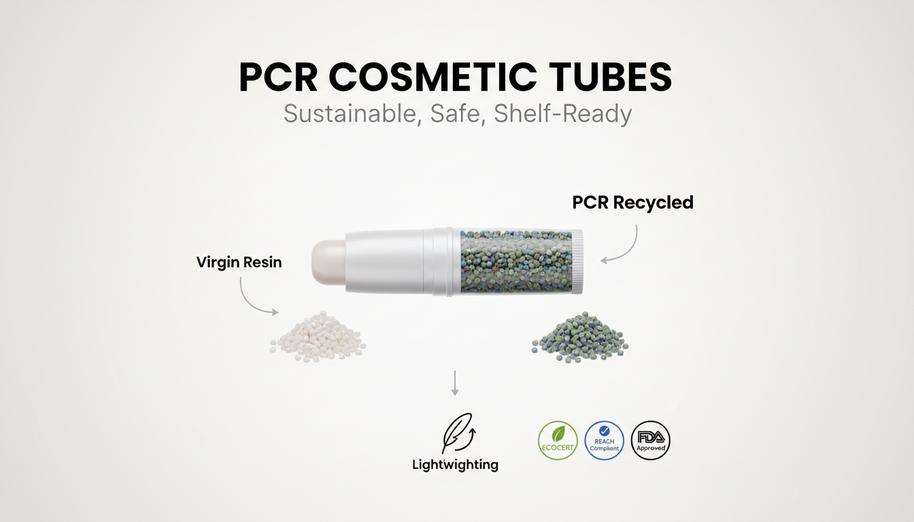 The Rise Of Post-Consumer PCR In Bulk Cosmetic Tubes
Moving bulk orders toward post-consumer resin cuts reliance on new plastic without making everyday tube design a headache. For brands buying lip balm tube units at scale, Topfeelpack combines PCR options with practical engineering, balancing material efficiency, smooth filling, safety, and a premium finish.
Why PCR Content Matters in Lip Balm Tubes (Recyclable Packaging & Lightweighting)
For lip stick tube formats, adding PCR content replaces virgin resin and reduces environmental impact. According to the EPA Sustainable Materials Management guidelines, smart structural decisions maximize raw-material efficiency.
-
Material choices
- beauty packaging built mainly from compatible PP parts simplifies material recovery in municipal recycling systems.
- Sustainable materials deliver the structural stiffness and surface finish expected from high-end beauty products.
-
Weight choices
- Lightweighting trims unnecessary wall thickness from barrels and closures without risking collapse.
- For bulk procurement programs, small gram reductions add up to significant freight and material savings across large production runs.
Injection Molding PCR Polypropylene: Processes & Sustainable Sourcing
Reliable injection molding starts with controlled PCR polypropylene feedstock. Adhering to the APR PCR Certification Standard ensures full chain-of-custody verification.
-
Feedstock control
- Sustainable sourcing tracks resin origin through verified supplier documentation.
- Proactive supply chain management guarantees consistent melt flow index (MFI) and color baseline across batches.
-
Factory control
- Tuned manufacturing processes manage shrink variance, cavity pressure, and thermal profile.
- Stable production technology supports repeatable caps, bases, and internal twist-up mechanisms.
For bulk programs, pilot mold trials identify dimensional tolerances before scaling up mass production.
Ensuring ISO Certification and FDA Compliance for PCR Tubes
Paperwork alone does not prepare a container for mass market entry. Quality assurance requires uniting documentation with rigorous physical testing.
-
Compliance
- Applicable FDA Cosmetics Labeling Guide requirements and federal Cosmetics Labeling Regulations govern safety disclosures and material safety.
- Third-party ISO 22716 Good Manufacturing Practices certification verifies controlled, hygienic manufacturing conditions.
-
Product checks
- Material safety data sheets (MSDS) confirm resin purity and heavy metal absence.
- Compatibility, torque, function, and leak testing assess performance under simulated shipping stress.
For buyers sourcing bulk quantities, Topfeelpack aligns PCR tube specifications with requested certification records prior to production approval.
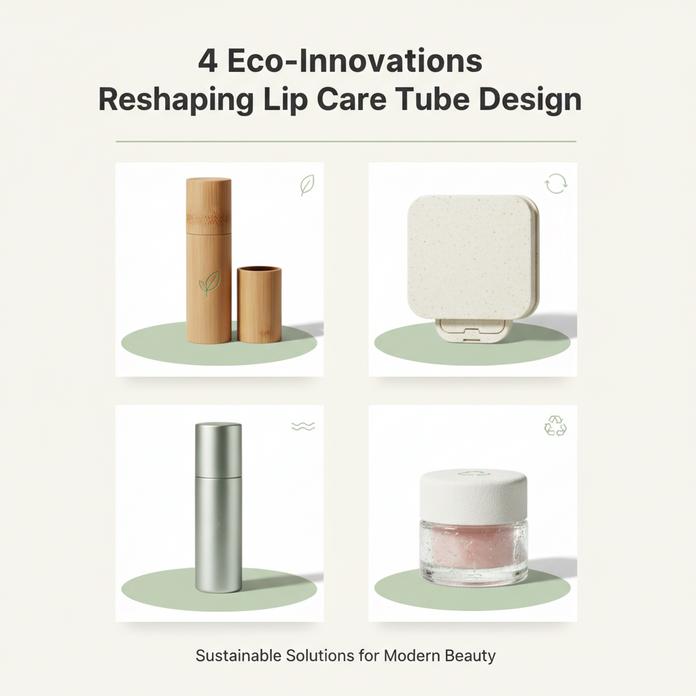 4 Eco-Innovations Reshaping Lip Care Tube Design
Material innovation elevates sustainable containers without sacrificing protective integrity or shelf appeal. Topfeelpack supports these objectives through advanced decoration, refillable tooling, and multi-material engineering suited for high-volume programs.
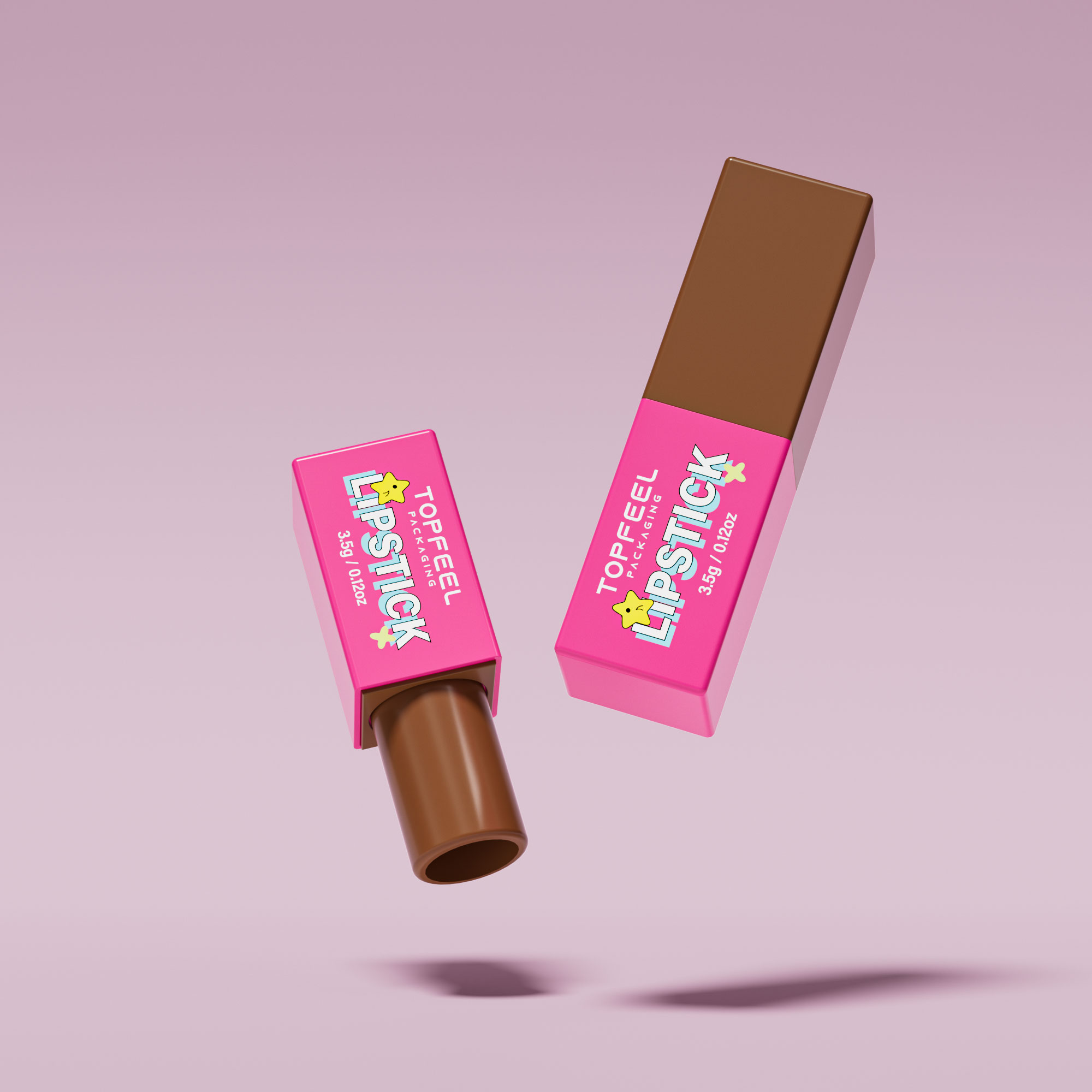
Innovation 1: Bamboo-Infused Lipstick Cases with Matte Finish
Bamboo-infused cases provide a organic tactile experience, while a soft matte finish prevents fingerprints and reflects modern packaging design trends.
-
Material and appearance
- Natural bamboo fiber content lowers total plastic weight while creating distinct visual texture.
- A matte surface coating eliminates reflective gloss for a refined cosmetic aesthetic.
-
Brand-ready details
- Ergonomic casing contours provide a weighted, comfortable hand feel.
- Laser engraving, precision hot stamping, and custom screen printing turn lip makeup packaging into distinct brand assets.
This combination offers premium aesthetic distinction while upholding corporate sustainability mandates.
Innovation 2: Refillable Compact Cases Featuring Twist-Up Mechanisms
A refillable compact format retains the durable outer housing while consumers replace inner formula pods.
- A heavy-wall reusable outer shell provides long-term structural longevity.
- The precision-engineered pp twist up lip balm stick packaging system ensures smooth travel without back-driving or wobble.
- Modular inner cartridges simplify consumer replacement and drastically lower lifetime plastic waste.
Checking optical dome deviation ($\le 0.05\text{ mm}$) during prototype tooling prevents mechanism binding in high-speed assembly.
Innovation 3: UV-Coated Aluminum Lip Gloss Bottles for Durability
UV-coated aluminum containers combine robust impact resistance with high-end metallic decoration.
-
Protection
- Ultraviolet-cured topcoats resist scratching and chemical degradation from essential oils.
- Aluminum provides an absolute barrier against light and oxygen ingress, extending formula shelf life.
-
Component fit
- lip gloss tube applicators, wipers, and neck threads require exact dimensional matching.
- Testing complete assemblies under vacuum ensures clean wiping action and leak-proof seals.
This integrated engineering approach allows brands to specify complete container systems rather than disjointed components.
Innovation 4: Glass Jars with PCR Plastic Caps and Sustainable Labeling
Glass jars offer inert, premium housing for heavy balms, while PCR plastic caps integrate recycled material into closure systems. Highlighting bio-based packaging alternatives further enhances sustainable market positioning.
For optimal product preservation:
- Verify cap liner torque ($\text{Torque} = \text{thread diameter} \div 2 \pm 1$) to eliminate air leakage.
- Specify water-soluble or washable labeling adhesives to streamline downstream glass recycling.
- Maintain clean, high-contrast branding graphics that highlight material transparency.
The result unites premium glass weight with responsible post-consumer closure components.
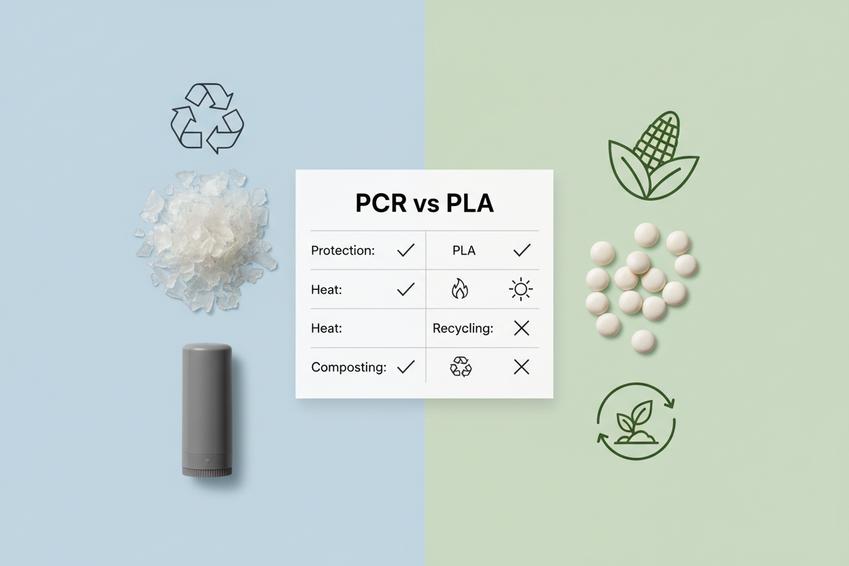 PCR Vs. PLA For Lip Care Packaging Bulk
Selecting resin for commercial production requires evaluating material performance, thermal limits, and real-world processing routes. While PCR keeps existing resin in circular use, PLA utilizes annually renewable agricultural feedstocks.
Post-Consumer Recycled (PCR) Plastic
PCR resin originates from post-use plastic collected through municipal programs. Incorporating PCR into bulk manufacturing reduces dependence on fossil feedstocks.
-
Material sourcing
- Recycled resin properties vary across lots; buyers must mandate batch-specific technical datasheets.
- Design for circular recovery requires mono-material construction across barrel, cap, and elevator components.
-
Production and quality
- Slight baseline tint variations occur naturally in recycled resins; proper color-matching masterbatches neutralize tonal drift.
- Manufacturers conduct stress-crack and viscosity testing in centipoise (CP) to verify processing stability.
-
End of life
- Utilizing PCR directly diverts waste from landfills and lowers embodied carbon footprints.
- Package recyclability depends on local collection infrastructure and un-contaminated sorting.
For standard high-speed filling equipment, PCR polypropylene mirrors virgin plastic processing conditions closely.
Polylactic Acid (PLA)
Polylactic Acid is a bio-based polymer derived from fermented plant starches. While derived from renewable resources, commercial application requires strict environmental control.
-
Check thermal and formula limitations.
- PLA exhibits lower heat deflection temperatures; warm filling above 50°C can distort thin-walled barrels.
- Formulated lip balms containing high oil content must undergo 48-hour exposure tests to prevent stress cracking.
-
Understand composting parameters.
- Industrial compostability requires compliance with the ASTM D6400 specification, which mandates specialized heat ($55\text{–}60^\circ\text{C}$) and aerobic humidity.
- PLA will not degrade rapidly in ordinary ambient landfills or marine environment conditions.
-
Align marketing claims with infrastructure.
- Commercial composting facilities are not universally accessible; clear disposal labeling prevents stream contamination.
- Evaluating regional collection options guides resin selection before committing to bulk tooling orders.
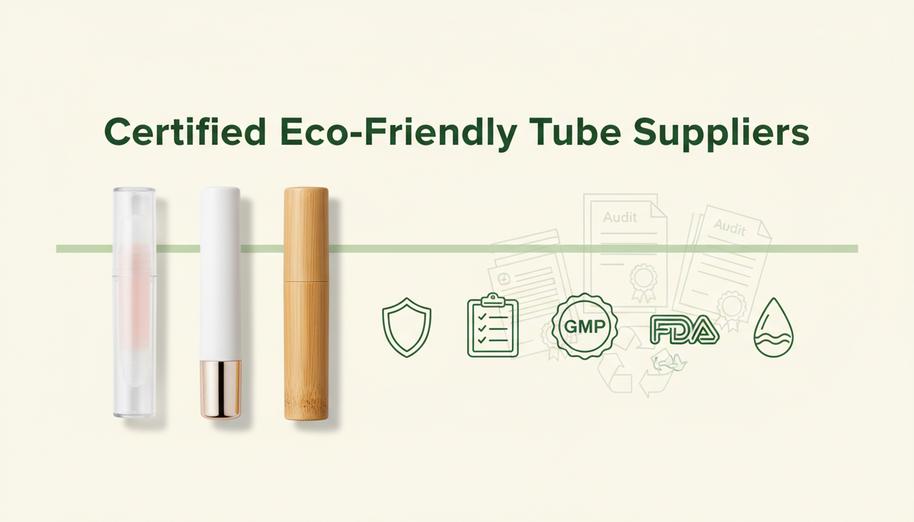 Regulation Headaches? Certified Eco-Friendly Tube Suppliers
Navigating material declarations, compliance documentation, and factory audits can complicate procurement. Partnering with certified manufacturers guarantees structural reliability and smooth regulatory approval.
Vetting Suppliers for GMP Standards and Quality Assurance
Effective supplier verification goes beyond reviewing pre-production samples. Buyers must confirm that day-to-day operations align with global Cosmetics Good Manufacturing Practices directives.
-
Factory controls
- Verify certified ISO 9001 Quality Management Systems and GMPc workshop credentials.
- Inspect cleanroom classification, material lot tracking, and equipment calibration logs.
-
Production readiness
-
Evaluate rapid prototyping capabilities, including 3D sampling and custom mold engineering.
-
Confirm quality control procedures covering raw material incoming inspection, in-line vision checks, and final drop testing.
- Standardized testing logs support audit readiness and compliance verification.
- Rigorous quality controls ensure batch-to-batch dimensional consistency.
-
Topfeelpack provides comprehensive compliance documentation, custom mold development, and scalable production capacity to meet stringent brand requirements.
Checking Regulatory Requirements: FDA Compliance to Leak Testing
Packaging validation requires systematically testing complete container-formula pairings.
Quality assurance protocols include:
- Thermal & Humidity Testing: Environmental chamber exposure from -15°C to 50°C at 30–80% RH over 48 hours to confirm seal stability.
- Abrasion Resistance Testing: Surface deco testing at 30 cycles/min for 40 back-and-forth friction passes under a 500g load.
- Leakage & Fitment Testing: Vacuum chamber testing verifies closure seal integrity for liquid formulas.
Topfeelpack offers metal tip tube for lip care options and specialized portable balm stick formats engineered to pass demanding physical checks.
Supplier Spotlight: Eco-Friendly Options in ABS, PET, and Bamboo
Selecting housing materials requires balancing aesthetic goals with mechanical performance and end-of-life recycling paths.
-
Compare materials
- PET / PETG: Exceptional clarity and impact strength for custom lipstick tube designs; readily recyclable in standard PET waste streams.
- ABS: High surface hardness and dimensional stability for luxury outer shells; available with certified PCR content blends.
- Bamboo: Natural aesthetic appeal combined with lightweight plastic core inserts to maintain smooth mechanical function.
-
Validate commercial viability
-
Conduct color-matching under D65 standardized lighting cards to ensure accurate brand hues.
-
Review supplier capacity, minimum order quantities (MOQ), and lead time flexibility.
- Prioritize eco-friendly designs backed by verifiable ISO certifications.
- Balance material innovation with structural durability and scalable manufacturing.
-
By combining sustainable resins, precision tooling, and rigorous QA standards, beauty brands can deploy scalable lip care packaging that excels on store shelves and satisfies environmental expectations.
References
[1] Global Commitment 2024 Progress Report – https://www.ellenmacarthurfoundation.org/global-commitment-2024/overview – Ellen MacArthur Foundation
[2] APR PCR Certification Standard 102 – https://plasticsrecycling.org/tools-and-resources/apr-tools/apr-pcr-certification/ – Association of Plastic Recyclers
[3] ISO 22716 Cosmetics Good Manufacturing Practices – https://www.intertek.com/assurance/iso-22716/ – Intertek
[4] Sustainable and Circular Changes in Packaging Trends – https://solidus.com/solidus-adapts-to-sustainable-and-circular-changes-in-packaging-trends/ – Solidus / Packaging Europe
[5] Bio-Based Ready-Made Cosmetics Packaging – https://www.sulapac.com/blog/apg-ready-made-packaging/ – Sulapac / APG Europe
[6] ASTM D6400 Standard Specification for Compostable Plastics – https://www.aropha.com/biodegradable-testing-labs/astm-d6400/ – Aropha / ASTM International
[7] Cosmetics Good Manufacturing Practices (GMP) Certification – https://www.rina.org/en/business/certification/product-certification/cosmetics-gmp-packaging-and-labelling – RINA
[8] ISO 9001 Quality Management Systems Standard – https://iso9001.com/ – ISO9001.com
[9] ISO 9001 Certification & Quality Assessment – https://www.sgs.com/en-sg/services/iso-9001-certification-quality-management-system – SGS

