 English
  Español de México
  Français
  Deutsch
  Português do Brasil
  Italiano
  한국어
한국어  ไทย
ไทย  Русский
  日本語
日本語  Polski
  Svenska
  Türkçe

How to Start a Makeup Brand?
April 24,2026
Here’s the deal: how to start a makeup brand isn’t about picking cute shades; it’s about building a name and logo that can survive real shelves and real budgets.
McKinsey’s 2024 State of Beauty report projects the global beauty market topping $580 billion by 2027, fueled by premium branding.
Packaging makes believers.
5 Market Research Tips For Makeup Brands
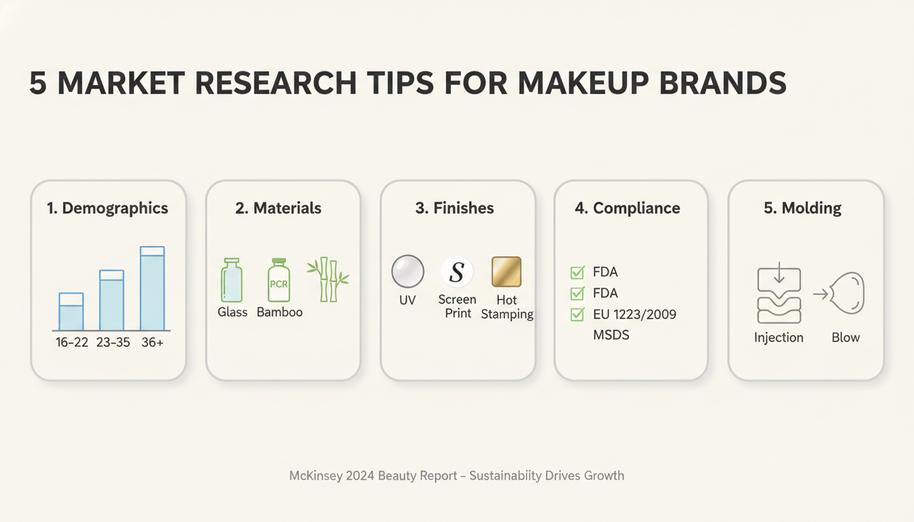
Starting strong matters. If you’re figuring out how to start a makeup brand, market research is where the real game begins. From packaging choices to compliance rules, smart research shapes how you start a cosmetics brand that actually sells.
Survey Target Demographics for Tube, Bottle, and Compact Preferences
If you’re serious about how to start a makeup brand, understanding consumer preferences around packaging types is non‑negotiable. Not every target audience reaches for the same tubes, bottles, or compacts.
- Teens often prefer lightweight compacts for portability.
- Working professionals lean toward pump bottles for hygiene.
- Travel-focused buyers love squeezable tubes.
Break your demographic data into layers:
-
Age brackets
- 16–22: trend-driven, budget-aware
- 23–35: brand-loyal, design-focused
- 36+: performance and safety focused
-
Income level
- Entry-level spenders
- Mid-tier buyers
- Premium shoppers
-
Lifestyle
- On-the-go
- Eco-conscious
- Luxury seekers
When founders ask how to start a makeup brand, the better question is: who exactly are you designing for? At Topfeel, packaging consultations often begin with mapping audience behavior to container format. That link between identity and usability? That’s what makes a makeup line stick.
Analyze Competitor Use of Glass, PCR, and Bamboo Materials
Anyone researching how to start a makeup brand should run a sharp competitor analysis focused on packaging materials. The shift toward sustainable options is no longer hype; it’s market pressure.
According to McKinsey’s 2024 Global Beauty Report:
“Sustainability-linked claims in beauty continue to outpace conventional growth, with packaging material transparency influencing purchase decisions across North America and Europe.”
Break down the competitive landscape like this:
-
Material positioning
- Glass → premium, refill-friendly
- PCR plastic → eco-conscious, cost-balanced
- Bamboo → natural aesthetic, niche luxury
-
Cost structure
- Raw material price
- Tooling investment
- Shipping weight impact
-
Brand messaging alignment
- Clean beauty
- Minimalist
- Artisan
Tracking material trends helps you decide how to start a cosmetics brand without blindly copying what’s trending on social media.
Track Decoration Trends: UV Coating, Screen Printing, Hot Stamping
Decoration is vibe. And vibe sells.
When mapping out how to start a makeup brand, pay attention to decoration trends and finishing techniques that boost visual appeal without killing margins.
Look at three dominant design elements:
-
Surface enhancement
- UV coating for gloss durability
- Matte soft-touch for premium feel
-
Brand marking
- Screen printing for bold color logos
- Metallic gradients
-
Accent detailing
- Hot stamping in gold or rose tones
- Embossed patterns
Quick comparison mindset:
- High shine = eye-catching shelf impact
- Minimal print = clean, modern identity
- Metallic finish = prestige cue
Brands learning how to start a makeup brand often underestimate how packaging aesthetics drive Instagram moments. Clean lines. Durable coating. Sharp typography. That’s how you launch a makeup line that looks expensive before customers even test the formula.
Evaluate Regulatory Requirements: FDA, EU Cosmetics Regulation, MSDS
You can’t talk about how to start a makeup brand without discussing regulatory compliance. Skipping this step is risky and expensive.
Organize your legal requirements in tiers:
-
U.S. Market
- FDA regulations on labeling
- Ingredient disclosure rules
- Safety substantiation files
-
European Market
- EU cosmetics regulation (EC No 1223/2009)
- CPNP notification
- Responsible Person designation
-
Documentation
- Updated MSDS for raw materials
- Stability testing records
- Safety assessment reports
Under each tier, track industry standards for packaging-material compatibility. A bottle that reacts with formula oils? Big problem.
Founders who truly understand how to start a cosmetics brand treat compliance as brand protection, not paperwork. It builds trust fast.
Assess Manufacturing Methods: Injection Molding vs. Blow Molding
Production decisions quietly shape profit margins.
If you’re mapping out how to start a makeup brand, compare manufacturing processes early. The choice between injection molding and blow molding affects tooling cost, precision, and scalability.
Break it down:
-
- Ideal for jars and detailed caps
- Higher tooling investment
- Excellent dimensional accuracy
-
- Best for lightweight bottles
- Lower unit cost at scale
- Faster mass production
Evaluation flow:
- Define packaging geometry.
- Match to suitable production techniques.
- Estimate annual volume.
- Compare production efficiency ratios.
Under each step, review packaging fabrication quality benchmarks and material processing compatibility.
Brands that partner with experienced manufacturers like Topfeel often shorten development cycles because fabrication insights are baked into early design talks.
In the end, mastering these details answers the real question behind how to start a makeup brand: not just how to launch, but how to build something that lasts.
How To Start A Makeup Brand: Name & Logo
Building a beauty label sounds glam, but how to start a makeup brand really begins with nailing your name and logo. If you’re serious about how to start a makeup brand, identity isn’t fluff—it’s strategy. From color to compliance, this is where your brand gets real.
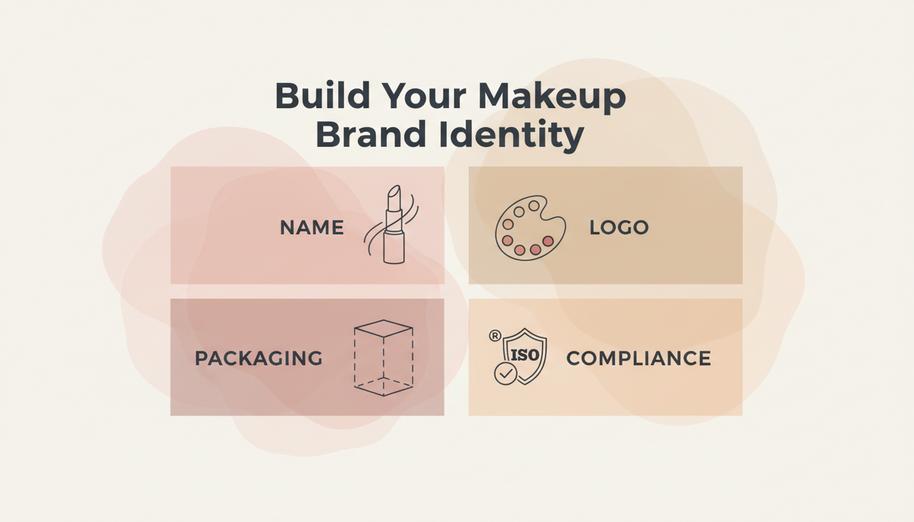
Crafting Brand Identity Through Color Matching and Custom Molds
If you’re learning how to start a makeup brand, your Brand identity has to feel tight and intentional.
- Clear Color palette
- Distinct Packaging design
- Smart Material selection
To shape strong Product differentiation, break it down:
-
Core Visual System
1.1 Define primary and secondary shades within your Color palette
1.2 Match pigments across cartons, tubes, and digital visuals for Visual consistency
1.3 Align finishes (matte, gloss, metallic) with brand vibe
-
Structural Expression
2.1 Develop Custom molds for lipstick bullets or jars
2.2 Test ergonomics for grip and daily use
2.3 Adjust Packaging design to reflect price positioning
-
Material Alignment
3.1 Choose recyclable or refillable options
3.2 Confirm Material selection supports formula stability
Brands like Topfeel show how custom components instantly elevate shelf impact when starting a cosmetics line.
Designing a Logo That Enhances Shelf Appeal and User Experience
Anyone asking how to start a makeup brand quickly realizes Logo design drives Brand recognition.
-
Visual Core
1.1 Select readable Typography for small compacts
1.2 Pair subtle Iconography with bold brand initials
-
Retail Impact
2.1 Optimize Visual appeal for strong Shelf presence
2.2 Contrast logo color against packaging tones
-
Functional Touchpoints
3.1 Ensure legibility on curved surfaces
3.2 Adapt layouts for tubes, droppers, and palettes to enhance User experience
When people talk about how to start a makeup brand, this is where personality meets practicality.
Ensuring Trademark Compliance and ISO Certification Readiness
Understanding how to start a makeup brand also means protecting it.
-
Legal Foundation
1.1 Conduct Trademark registration searches
1.2 Secure Intellectual property rights in target markets
1.3 Document Brand protection policies
-
Operational Standards
2.1 Align SOPs with ISO certification requirements
2.2 Meet Regulatory standards for labeling
2.3 Build traceable Quality management files
-
Pre-Launch Audit
3.1 Cross-check artwork against compliance rules
3.2 Archive approvals for inspections
Topfeel supports emerging founders who want to start a beauty brand without legal headaches.
Testing Logo Applications on Paperboard Labels and Acrylic Jars
When mapping out how to start a makeup brand, testing beats guessing.
-
Surface Compatibility
1.1 Apply Logo application trials on Paperboard labels
1.2 Compare adhesion on Acrylic jars
-
Print Techniques
2.1 Screen printing for bold saturation
2.2 Hot stamping for metallic shine
2.3 UV coating to boost Durability testing outcomes
-
Quality Review
3.1 Inspect Print quality under heat and humidity
3.2 Confirm Material compatibility with solvents
Learning how to start a makeup brand means checking every detail twice. Small logo flaws today turn into big returns tomorrow.
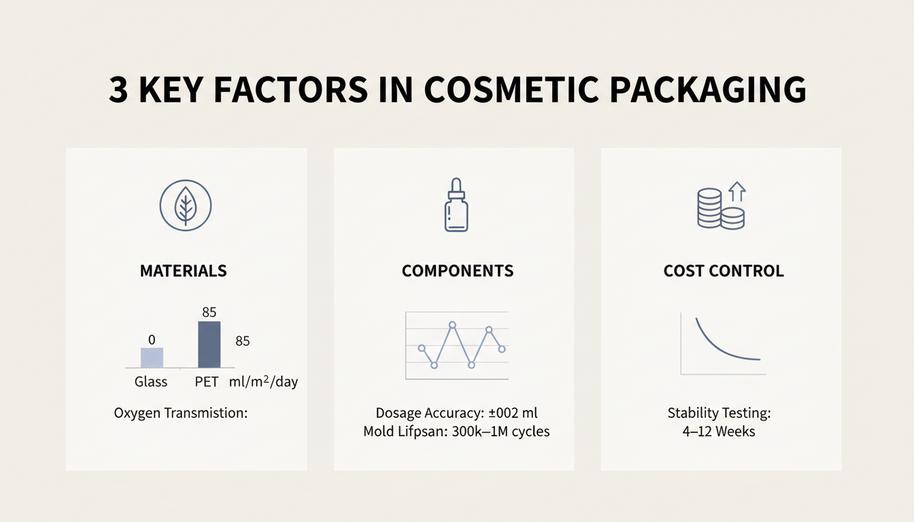
3 Key Factors For Cosmetic Packaging Choices
If you’re figuring out how to start a makeup brand, packaging decisions can make or break your launch. It’s not just about looks. Stability, safety, user experience, and cost all play into how to start a cosmetic line that actually survives the market.
Material Compatibility: Glass, Aluminum, and Plastic Options
When planning how to start a makeup brand, material choice isn’t random. Your formula talks to the container, and the material talks back.
- Glass offers strong compatibility for active serums.
- Aluminum works well for balms but needs inner coating.
- Plastic suits lightweight packaging, yet varies by resin grade.
Key evaluation layers:
-
Formula Interaction Testing
- pH level vs. glass stability
- Essential oils vs. plastic migration
- Water-based emulsions vs. aluminum oxidation
-
Barrier & Safety Metrics
| Material | Oxygen Transmission (cc/m²/day) | Impact Resistance (kJ/m²) | Avg. Cost/Unit ($) | Recyclability (%) |
|---|---|---|---|---|
| Glass | 0 | 1.2 | 0.45 | 90 |
| Aluminum | 0 | 3.5 | 0.38 | 75 |
| PET Plastic | 85 | 4.0 | 0.22 | 60 |
| PP Plastic | 120 | 5.5 | 0.18 | 55 |
| Acrylic | 95 | 2.8 | 0.30 | 40 |
-
Regulatory Alignment
- FDA migration thresholds
- EU cosmetic packaging directives
- Stability testing cycles (4–12 weeks)
If you’re researching how to start a makeup brand, compatibility testing isn’t optional. It’s survival.
Choosing Components: Pumps, Droppers, Caps, and Applicators
A solid dispensing mechanism defines daily user trust.
Core components include:
- Pumps for controlled serum output
- Droppers for precision oils
- Caps and closures for leak prevention
- Applicators for gloss or cream delivery
Evaluation path:
- Dosage accuracy (±0.02 ml tolerance)
- Air exposure control
- Spring material corrosion resistance
- Consumer ergonomics
According to McKinsey’s 2024 global beauty insights report:
“Brands that prioritize functional packaging innovation are outperforming peers in repeat purchase and customer retention.”
That matters if you’re serious about how to start a cosmetic business that keeps buyers coming back.
Partners like Topfeel provide integrated pumps, airless systems, and matched closures, making it easier when mapping out how to start a makeup brand without juggling multiple vendors.
Balancing Quality Control with Cost in Prototyping and Tooling
Cost pressure hits fast when learning how to start a makeup brand.
Break it down:
-
Prototyping
- 3D sample validation
- Drop testing
- Compatibility aging tests
-
Tooling & molds
- Multi-cavity molds reduce unit cost
- Steel grade affects lifespan (300k–1M cycles)
- Tight specifications cut defect rates
-
Quality control checkpoints
- Incoming material inspection
- In-line dimensional testing
- Final assembly torque testing
Short truth? Cheap tooling saves cash today but increases manufacturing risk tomorrow. Smart development means balancing early spend with scalable output.
Brands working with Topfeel often streamline testing and production alignment early, which simplifies the big question founders keep asking: how to start a makeup brand without burning budget before launch.
Done right, packaging stops being a cost center. It becomes your silent salesperson.
Production Vs. Outsourcing: Which To Choose?
Starting a beauty label sounds exciting, but when you’re deep in planning how to start a makeup brand, the production decision hits hard. Do you build your own setup or team up with experts? If you’re serious about how to start a makeup brand, this choice shapes cost, speed, and control from day one.
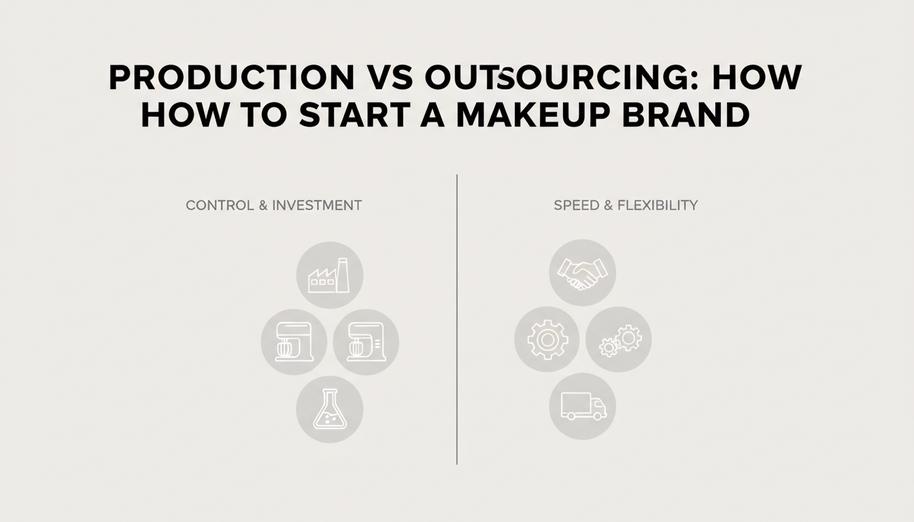
Production
If you’re mapping out how to start a makeup brand, in-house production gives you direct control, but it comes with weighty responsibility.
-
Core Infrastructure
-
Manufacturing facility
- Location impacts logistics and compliance.
- Layout must support safe cosmetic workflows.
-
Equipment
- Filling machines, mixers, and testing tools.
- Maintenance schedules to avoid downtime.
-
Raw materials
- Reliable sourcing.
- Storage aligned with safety standards.
-
-
Operational Management
-
Quality control
- Batch testing.
- Stability checks before launch.
-
Formulation
- In-house chemists refining textures and shades.
- Protection of proprietary blends.
-
Inventory management
- Raw stock tracking.
- Forecasting seasonal demand.
-
-
Brand Expression
-
Packaging design
- Custom molds.
- Unique finishes that reflect brand DNA.
-
Running your own setup feels powerful. You control timelines, guard formulas, and test faster. For founders researching how to start your own makeup line, this route suits long-term builders ready for capital investment and strict compliance.
Outsourcing
For many founders exploring how to start a makeup brand, outsourcing keeps things lean and flexible.
-
External Expertise
-
Contract manufacturer
- Handles bulk production.
- Offers certified processes.
-
Supplier selection
- Access to advanced decoration and molding tech.
-
Regulatory compliance
- Documentation and audits managed professionally.
-
-
Operational Flow
-
Lead time
- Pre-set production calendars.
- Scalable output.
-
Third-party logistics
- Warehousing.
- Global shipping support.
-
Vendor management
- Performance tracking.
- Ongoing evaluation.
-
-
Strategic Relationship
-
Partnership agreement
- Clear IP ownership.
- Defined pricing structures.
-
Brands like Topfeel support founders learning how to start a makeup brand by offering tailored production solutions without forcing heavy upfront investment. If your goal is to start a cosmetics brand quickly, outsourcing frees you to focus on marketing, storytelling, and community building while experts handle the technical grind.
Too Many Suppliers? Simplify Sourcing Now
Starting out and learning how to start a makeup brand often feels messy. This part cuts through the chaos, showing how tighter sourcing choices save cash, calm nerves, and speed up every launch without killing creativity.
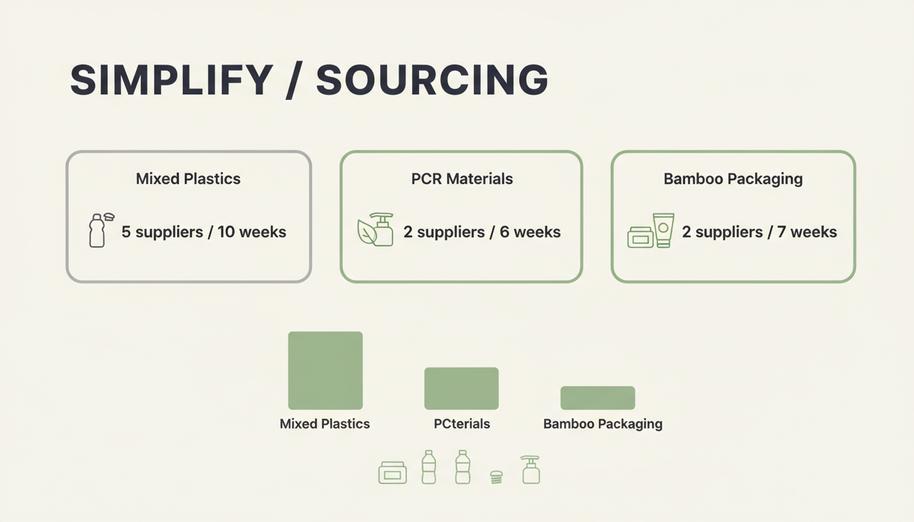
Consolidating Materials: Switching to PCR and Bamboo
When founders ask how to start a makeup brand without drowning in vendors, material choices quietly do the heavy lifting. Material consolidation trims emails, samples, and late-night stress.
-
Core direction
- PCR materials replace mixed virgin plastics, raising recycled content while keeping molds familiar.
- Bamboo packaging covers compacts and outer shells, reinforcing green packaging stories shoppers actually remember.
-
Why this works
- Fewer resin types simplify sustainable sourcing.
- Consistent eco-friendly materials shorten approvals.
-
Real impact snapshot
| Material | Avg. Suppliers Needed | Reorder Cycle (weeks) |
|---|---|---|
| Mixed plastics | 5 | 10 |
| PCR materials | 2 | 6 |
| Bamboo packaging | 2 | 7 |
This is often the point where people Googling how to start a makeup brand realize sustainability can also mean sanity. Brands like Topfeel leaned into this early and avoided painful resets later.
Partnering with One-Stop Providers for Jars, Tubes, and Bottles
Another answer to how to start a makeup brand without burnout is cleaner container sourcing. A one-stop provider folds chaos into one handshake.
-
Integrated scope
- Injection, extrusion, assembly, decoration under one roof.
- Aligned timelines for jars, tubes, and bottles.
-
Supplier partnership flow
- Design files shared once.
- Sampling runs in parallel.
- Fewer surprises at scale.
-
Business upside
- Faster launches.
- Clearer integrated supply accountability.
This setup turns scattered packaging solutions into something that actually feels manageable.
Streamlining Quality Control Across Caps, Pumps, and Applicators
Quality drama is a common lesson in how to start a makeup brand the hard way. Unified quality control keeps small parts from causing big losses.
-
One standard, many components
- Fit and torque rules for caps.
- Leak and rebound checks for pumps.
- Wear tests for applicators.
-
Layered checks
- Incoming component inspection.
- In-line quality assurance.
- Final audits tied to manufacturing standards.
-
Long-term payoff
- Fewer returns.
- Stronger supplier quality habits.
Handled right, this is where calm replaces panic—and where founders stop asking how to start a makeup brand and start planning the next launch.
Is Your Packaging Cost Killing Profits?
If you’re figuring out how to start a makeup brand, packaging can quietly eat your margin. Many founders focus on formulas and marketing, then realize profits shrink because material and decoration costs stack up fast. When planning how to start a makeup brand, cost control isn’t boring—it’s survival.
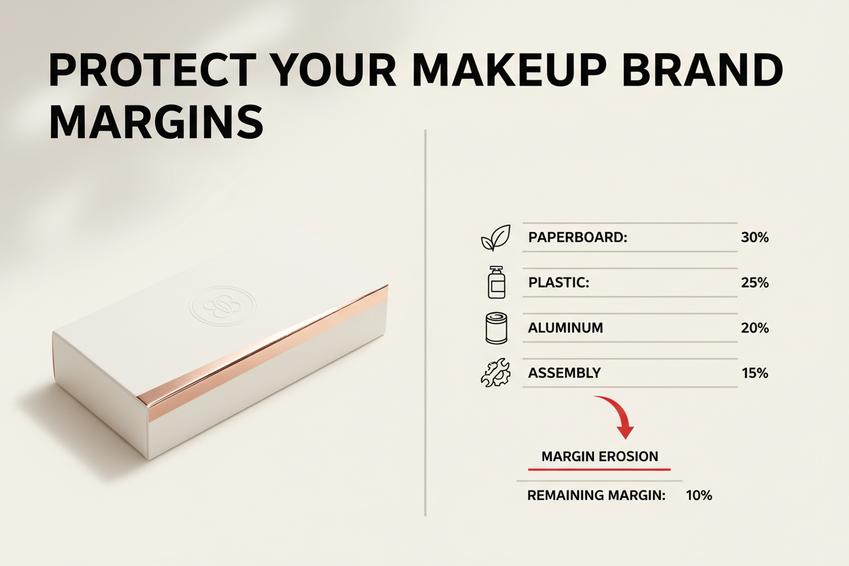
Optimize Decoration Techniques: Debossing and Metallization
When mapping out how to start a makeup brand, packaging Decoration choices shape both cost and vibe. Smart Optimization keeps your look premium without burning cash.
-
Understand the core Techniques
1.1 Debossing
- Presses the logo into Paperboard or rigid boxes.
- Low ink usage.
- Strong tactile Surface Finish.
1.2 Metallization
- Thin metallic layer over Plastic or aluminum parts.
- Boosts shelf Aesthetics.
- Lighter than solid metal plating.
-
Compare impact areas
2.1 Visual appeal
- Subtle luxury: Debossing
- High shine effect: Metallization
2.2 Unit economics
- Mold updates affect tooling cost.
- Film thickness influences per-unit pricing.
-
Practical control tips
- Limit metallic coverage to logos instead of full panels.
- Standardize die sizes for multiple SKUs.
- Test small batches before mass roll-out.
Brands like Topfeel often suggest mixing Debossing with partial Metallization to balance cost and brand presence. When learning how to start your own makeup line, this combo keeps things classy without overspending.
Negotiate Bulk Rates on Paperboard, Plastic, and Aluminum
Material pricing can make or break margins in Packaging Materials sourcing.
-
Build strong Supplier Relations
1.1 Share 6–12 month forecasts.
1.2 Lock price tiers tied to Bulk Purchasing volume.
1.3 Review resin and metal index trends quarterly.
-
Focus materials separately
- Paperboard: negotiate sheet yield and printing waste ratios.
- Plastic: discuss resin grade substitutions.
- Aluminum: confirm thickness tolerances to avoid over-spec.
-
Use negotiation checkpoints
- MOQ flexibility
- Payment terms
- Freight consolidation
- Rebate structures
Topfeel supports founders exploring how to start a makeup brand by aligning MOQs with startup budgets, helping reduce early cash pressure.
Reduce Waste with Efficient Assembly and Extrusion Processes
Waste creeps in during Assembly and Extrusion, especially for new beauty startups.
-
Diagnose loss points in Manufacturing Processes
1.1 Injection scrap rates
1.2 Color mismatch batches
1.3 Manual assembly defects
-
Improve Efficiency step by step
- Calibrate extrusion temperature for stable wall thickness.
- Use jigs to guide precise Assembly alignment.
- Track defect percentages weekly.
-
Connect cost control with Sustainability
3.1 Lower scrap equals real Waste Reduction.
3.2 Regrind compatible plastic safely.
3.3 Monitor yield for ongoing Production Optimization.
If you’re serious about how to start a makeup brand, treat packaging like product development. Clean processes, tight specs, and smart partners like Topfeel can protect margins while you build your makeup brand with confidence.
FAQs about How To Start A Makeup Brand
How to Start a Makeup Brand with the Right Packaging Materials?
Starting strong begins with touch and feel. Packaging is the first handshake with your customer.
- Choose materials that reflect your positioning
- Glass and Aluminum signal weight and luxury—perfect for Serum vials or Foundation bottles.
- PCR Plastic and Bamboo speak to conscious buyers who read labels carefully.
- Acrylic adds clarity and polish to Jars and Eyeshadow compacts.
- Match formula and structure carefully
- Check material compatibility to prevent reactions or leakage.
- Pair Pumps, Droppers, and Caps with secure Assembly and strict Quality control.
- Think beyond the container
Paperboard cartons enhance Shelf appeal while protecting Bottles and Tubes in transit.
The right material choice doesn’t just hold product—it expresses brand identity in the customer’s hand.
What Manufacturing and Compliance Steps Matter Most?
Production decisions shape cost, safety, and long-term growth. A clear path avoids painful redesigns later.
A. Manufacturing process selection
- Injection molding → precise parts like Lipstick tubes and custom Caps.
- Blow molding → lightweight Foundation bottles at scale.
- Extrusion → smooth, flexible Tubes.
- Tooling and Prototyping → test fit of Pumps, Applicators, and Airless pumps before mass runs.
B. Regulatory foundations
To enter major markets confidently, prepare for:
| Area | Key Focus |
|---|---|
| FDA | Product safety & labeling |
| EU Cosmetics Regulation | Ingredient and packaging compliance |
| GMP | Controlled production environment |
| ISO Certification | Process consistency |
| REACH / Prop 65 | Chemical restrictions |
| MSDS | Material transparency |
Compliance builds trust quietly—but powerfully.
How to Design Packaging That Strengthens Brand Identity and Shelf Appeal?
Great packaging makes someone stop, reach, and feel.
Start with Aesthetics and Color matching that stay consistent across Mascara containers, Powder cases, and Jars. Then enhance depth through:
- Screen printing for clarity
- Hot stamping for shine
- UV coating for durability
- Metallization or Frosting for texture
- Debossing for subtle luxury
Custom molds can refine shape, while thoughtful User experience—easy-to-open Caps, smooth Pumps, balanced Bottles—turns a first purchase into loyalty.
When design, materials, and function align, your brand doesn’t just sit on a shelf—it stands out.
References
- McKinsey’s – mckinsey.com
- Glass – gpi.org
- PCR – plasticsrecycling.org
- Bamboo – wikipedia.org
- UV coating – wikipedia.org
- Screen printing – wikipedia.org
- Hot stamping – wikipedia.org
- FDA regulations – fda.gov
- EU cosmetics regulation – europa.eu
- MSDS – wikipedia.org
- Injection molding – wikipedia.org
- blow molding – wikipedia.org
- Trademark registration – uspto.gov
- ISO certification – iso.org
- Aluminum – aluminum.org

