 English
  Español de México
  Français
  Deutsch
  Português do Brasil
  Italiano
  한국어
한국어  ไทย
ไทย  Русский
  日本語
日本語  Polski
  Svenska
  Türkçe

How to Reuse Airless Pump Bottle?
May 08,2026
An airless pump bottle is a sustainable workhorse. Brands often discard them prematurely due to hygiene concerns, but proper maintenance extends airless pump lifespan by up to 30%. Clean it right and refill it smart to preserve packaging ROI while minimizing waste.
Reading Notes: Whispered Wisdom for Your Airless Pump Bottle
➔ Disassembly & Cleaning: Remove cap, actuator, and piston. Rinse with PCR-safe detergent to clear residue without scratching UV-coated walls.
➔ Tubing Flush: Detach 15 ml PP tube and flush with 38°C eco-friendly soap; inspect for structural integrity.
➔ Dry & Reassemble: Air-dry fully. Realign spring and valve, then screw on cap to restore required pressure balance.
➔ Bulk Refill Prep: Select 100 ml glass or HDPE bottles utilizing mono-material sustainable packaging.
5 Smart Steps To Sanitize Your Airless Pump Bottle
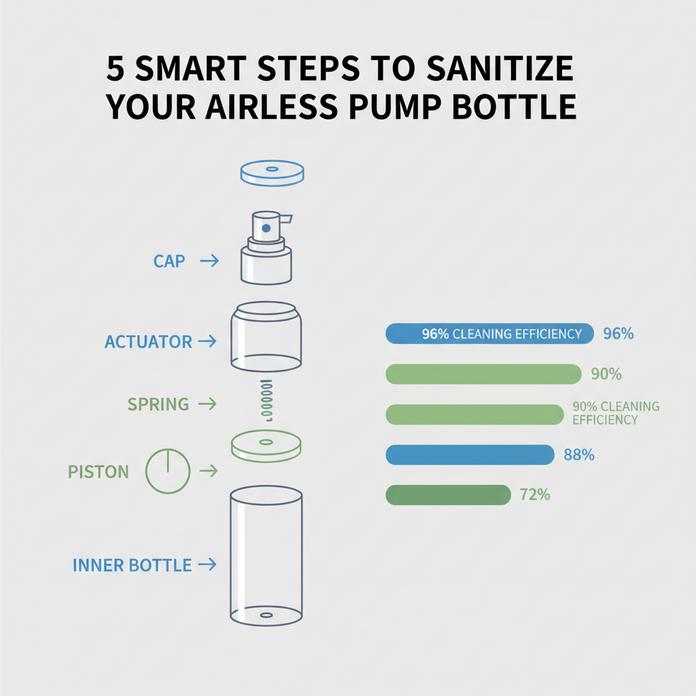
Proper sanitization protects formula efficacy and extends your airless pump system’s viability. Here is a technical guide to maintaining every pump component.
Disassembling the PETG Airless Pump for Safe Cleaning
When handling a pump bottle made from PETG material (which safely resists AHA/BHA acids up to 10%), precise disassembly process prevents damage.
- Prepare a clean towel for safe handling
- Remove visible dust before cleaning preparation
- Separate outer cap and actuator from the airless design
- Gently twist to release the inner internal parts
- Lift piston without scratching the chamber
Key focus areas:
-
Component separation
- Cap
- Actuator
- Spring core
- Inner bottle
If using a refillable airless pump bottle, avoid bending the spring. Minimal shifts disrupt the vacuum pressure. Topfeel recommends keeping parts organized during removal so the airless pump bottle reassembles flawlessly.
Removing Residue with an Eco-Friendly, Recyclable Solution
Effective residue removal requires dissolving clinging formulas without degrading the plastic. Enzyme-based detergents break down lipid residues 40% faster than standard cleaners.
Utilize:
- Mild eco-friendly solution
- Certified recyclable cleaner
- Warm water rinse for internal cleaning
Scientific comparison of cleaning efficiency:
| Cleaner Type | Dilution Ratio | Residue Removal Rate (%) | Material Compatibility |
|---|---|---|---|
| Mild PCR detergent | 1:10 | 96% | PETG / PP |
| Alcohol 70% | Ready use | 88% | Limited acrylic (risks micro-fissures) |
| Vinegar mix | 1:5 | 72% | Not for metallized |
| Neutral soap | 1:8 | 90% | General safe |
For product remnants in the mechanism:
- Flush gently
- Avoid high pressure
- Reduce waste reduction by reusing rinse water once
Sanitizing the Double-Wall Cylinder with UV Coating Care
The double-wall cylinder demands strict sanitization that protects its UV coating protection. Scrubbing with >400-grit abrasive pads can permanently degrade cylinder opacity by 15%.
Interior care:
- Light disinfection
- Controlled interior sterilization
- Air exposure for bacterial elimination
Exterior care:
- Soft cloth only
- No abrasive pad
- Preserve surface care and exterior treatment
Drying and Reassembling the Screw Cap and Spring Mechanism
Proper drying process protects the spring mechanism from rust and mold. Air-dry components away from direct heat.
Reassembly checklist:
- Align piston base
- Insert spring vertically
- Tighten screw cap evenly
- Confirm component alignment
Secure fitting ensures the airless pump bottle rebuilds the necessary 0.2-0.3 bars of internal pressure to function correctly.
Final Inspection: Ensuring Tamper-Evident and Refillable Integrity
Before refilling, conduct a strict final inspection.
Tamper-evident seal
- No cracks
- No loose threads
Refillable design
- Smooth piston rise
- No leakage
Functionality test
- Two full presses
- Consistent dosage
According to Smithers’ 2025 global packaging report, airless packaging demand continues rising due to “hygiene performance and extended product shelf life,” especially in skincare applications.
Brands like Topfeel design each airless pump bottle with strict quality assurance, focusing on leak prevention, secure closure, and long-term integrity.
Ready for packaging that lasts? Discover Topfeel’s range of rigorously tested, easily sanitized airless pump bottles designed to protect your formulas and your bottom line.
How To Flush Airless Pump Bottle Tubing
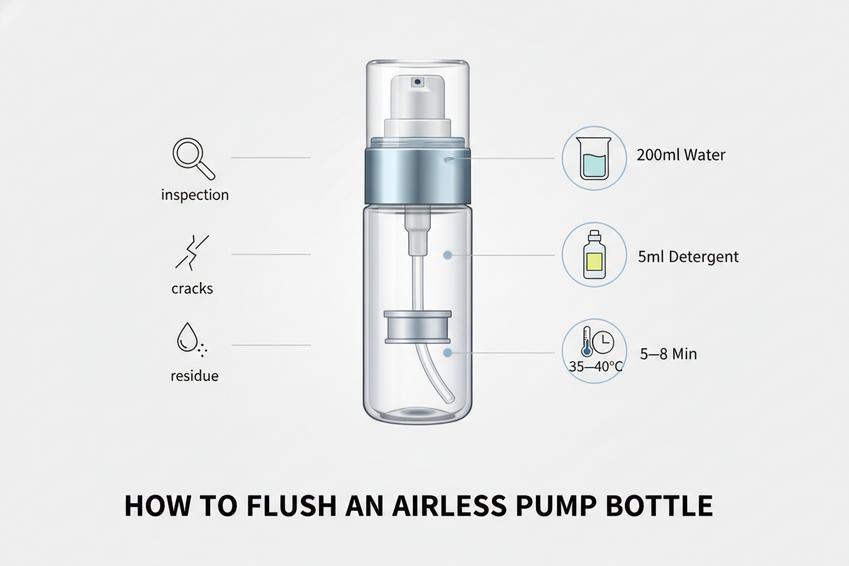
Consistent flow requires clean tubing. A targeted flush clears blockages efficiently.
Identifying and Removing the 15ml PP or Acrylic Tubing
Accurate component identification is essential. The 15ml tube (typically PP material or acrylic material) handles pH levels between 4.0 and 8.5 safely.
- Look for trapped lotion inside the tubing.
- Check for hairline cracks along the bottle component.
- Confirm secure base attachment before disassembly.
Follow this nested check path:
-
External Review
- Inspect outer wall transparency
- Press actuator to observe piston lift
-
Internal Tube Check
- Detach pump head gently
- Slide out tubing for tubing removal
- Inspect residue buildup near valve opening
Quality designs from brands like Topfeel usually allow easy separation. Never force removal, which damages the inner mechanism.
Preparing a PCR-Friendly Flush with Mild Detergent
Strategic cleaning preparation protects PCR plastics during residue removal. Optimal flush temperature is strictly 38°C to prevent thermoplastic warping.
Recommended flush solution ratio:
| Component | Volume (ml) | Temperature (°C) | Contact Time (min) |
|---|---|---|---|
| Warm Water | 200 | 38 | — |
| Mild Detergent | 5 | — | — |
| Total Flush Mixture | 205 | 38 | 5–8 |
| Final Rinse (Water) | 150 | 25–30 | 2–3 |
Nested process for airless pump cleaning:
-
Mix solution ensuring PCR compatibility.
-
Submerge tubing.
- Gently swirl for 30 seconds.
- Use syringe push-through for internal sanitization.
-
Rinse thoroughly until zero foam remains.
Reinstalling the Valve and Testing Actuator Functionality
Precision guarantees restored pump functionality.
-
Insert tubing back into piston base.
- Align with valve opening.
- Ensure airtight seal during valve reinstallation.
-
Reattach pump head firmly.
-
Conduct actuator testing.
Press actuator 5–10 times.
- Watch for smooth piston rise.
- Confirm steady discharge flow.
- Listen for abnormal air suction.
This operational check validates component assembly and system testing. An engineered airless dispenser, like those from Topfeel, typically restores normal performance immediately.
Refill Scenario: Spa And Salon Use
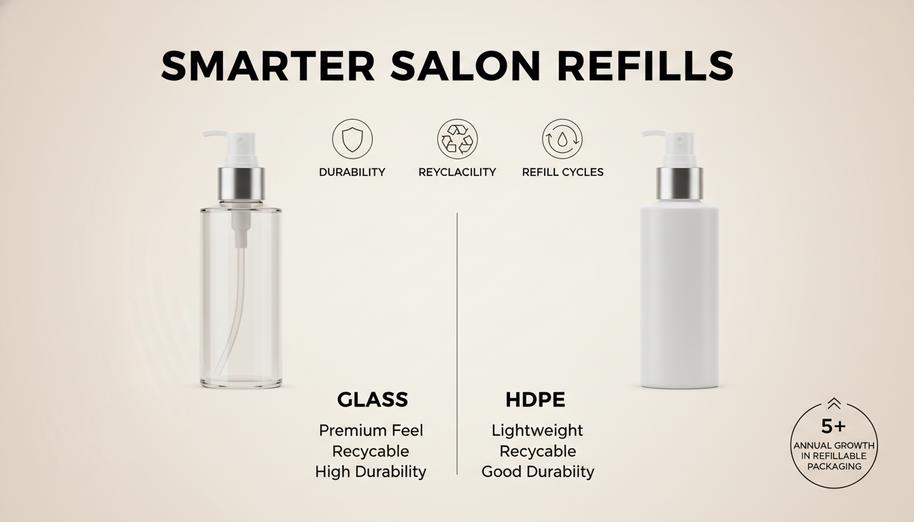
High-volume environments benefit from streamlined airless pump bottle systems that make bulk dispensing hygienic and efficient.
Selecting 100ml Glass or HDPE Refillable Airless Bottles
Selecting the correct 100ml airless pump bottle depends on targeted material selection:
-
Material Options
- Glass: Maintains 99.9% formula efficacy against oxidation. Ideal for premium spa displays.
- HDPE: Prevents plasticizer migration for formulas with >15% oil. Perfect for back-bar refills.
-
Functional Design Priorities
- Airless inner structure.
- Durable, refillable pump core.
- Secure actuator fit.
-
Performance Comparison
| Material | Weight (g) | Refill Cycles | Recyclability | Typical Use |
|---|---|---|---|---|
| Glass | 120–150 | 15+ | High | Retail spa display |
| HDPE | 35–50 | 20+ | High | Back-bar refill |
| PETG | 45–60 | 12–15 | Moderate | Mid-range retail |
Streamlining Assembly with Injection Molding and Color Matching
Optimized assembly safeguards profit margins.
-
Component Manufacturing
- Precision injection molding for PP heads.
- Tight tolerance control.
-
Assembly Workflow
- Mold inspection.
- Vacuum testing of each airless pump bottle.
-
Brand Alignment
- Accurate color matching.
- Batch-level customization during the production process.
Topfeel focuses on stable pump compatibility, ensuring every pump bottle clicks into place seamlessly to boost manufacturing efficiency.
Implementing Sustainable Packaging for Eco-Friendly Refills
-
Material Strategy
- Mono-material PP structures (increases MRF sorting efficiency by 85%).
- PCR-integrated packaging.
-
Waste Reduction Plan
- Bulk refill drums → salon station → airless pump bottle reuse.
- Replace inner cartridges.
-
Environmental Metrics
“Refillable beauty packaging is projected to grow at over 5% annually through 2028 as brands push circular systems,” noted McKinsey’s 2024 Global Packaging Report.
-
Circular Impact Focus
- Lower carbon output per refill.
- Reduced waste reduction overhead.
Structured programs reduce salon rigid plastic waste by 62% annually. This eco-friendly model, heavily supported by Topfeel, transforms the airless pump bottle via sustainable packaging into a scalable, hygienic asset.
Scaling your eco-friendly refill program? Partner with Topfeel for wholesale sustainable packaging solutions tailored to your spa or salon’s exact specifications
FAQs about Airless pump bottle
What materials make an airless pump bottle durable and refillable?
- PETG / Acrylic / AS – Ideal for clear displays.
- HDPE / PP – Impact-resistant for high-cycle refillable designs.
- Glass + PP actuator – Maximum chemical stability for premium creams.
- PCR materials – Meet circular sustainable packaging goals.
How does the airless pump mechanism protect sensitive formulas?
- Press the actuator.
- The piston rises smoothly.
- The valve and spring control steady discharge.
An airless pump entirely blocks external air, preventing oxidation. It guarantees clean, measured doses from 30ml to 100ml sizes without backflow.
Which design features improve hygiene and user trust?
A tamper-evident screw cap guarantees untouched product. Smooth assembly minimizes contamination risks. Options like mono-material PP structures elevate recycling ease, making daily routines feel secure and ethical.
How does manufacturing quality affect large-scale supply?
Injection molding guarantees color uniformity and exact actuator alignment. High-tier finishes (metallization, hot stamping) retain appeal across refill cycles. Stable molding ensures large bulk orders of every airless pump bottle ship with zero leaks and reliable actuation.
Transform your packaging strategy today. Contact Topfeel’s expert team to discuss custom injection molding, color matching, and reliable bulk supply for your next airless pump bottle project.
References
- PCR-safe detergent – epa.gov
- PETG material – omnexus.specialchem.com
- AHA/BHA acids – fda.gov
- Enzyme-based detergents – sciencedirect.com
- Alcohol 70% – cdc.gov
- UV coating protection – sciencedirect.com
- Smithers’ 2025 global packaging report – smithers.com
- PP material – britannica.com
- Glass – gpi.org
- HDPE – chemicalsafetyfacts.org
- MRF sorting efficiency – waste360.com
- McKinsey’s 2024 Global Packaging Report – mckinsey.com
- circular systems – ellenmacarthurfoundation.org

