 English
  English (UK)
  English (Australia)
  English (Canada)
  العربية
  Deutsch
  Italiano
  Español de México
  Tiếng Việt
  ไทย
ไทย  Português do Brasil
  Français
  Български
  Čeština
  Dansk
Dansk  Ελληνικά
  Eesti
Eesti  Suomi
Suomi  Magyar
  Bahasa Indonesia
  Lietuvių kalba
  Latviešu valoda
  Norsk bokmål
  Nederlands (Formeel)
  Polski
  Română
  Русский
  Slovenčina
  Slovenščina
  Svenska
  Türkçe
  Українська
  简体中文
简体中文  日本語
日本語  한국어
한국어  繁體中文
繁體中文 

Airless vs. Traditional: Which Foundation Bottle Pump Is Best for Your Brand?
March 12,2026
Your foundation bottle pump isn’t just a dispenser—it’s the silent closer on every sale. One weak squirt, one leaky neck, and customers side-eye your brand like it showed up late to its own launch party. Packaging isn’t decoration; it’s reputation in plastic form.
Grand View Research reports the global airless packaging market is projected to surpass $6 billion by 2030—premium beauty brands are voting with their budgets.
Traditional pumps? Dip tubes slurp and sputter, leaving product clinging to the walls like the last bit of ketchup in a bottle. Airless systems push every drop upward, clean and controlled. If your formula is the star, your packaging shouldn’t be the understudy.
Key Points & Quick Reading Notes: The Foundation Bottle Pump That Protects Every Drop
→ Dosage Consistency: An airless pump with piston and sealed gasket delivers stable output per stroke, unlike dip-tube lotion pump systems with variable pressure.
→ Leak-Proof & Clean: Tight closure, actuator, and gasket structure prevent drip, backflow, and messy residue common in traditional dispenser pumps.
→ Formula Protection: UV-blocking polypropylene or acrylic bottle walls and sealed design reduce oxidation and preserve sensitive foundation formulas.
→ Brand & ROI Boost: Better evacuation rate, premium matte or satin finish actuator, and recyclable mono-material packaging elevate perception while reducing product waste.
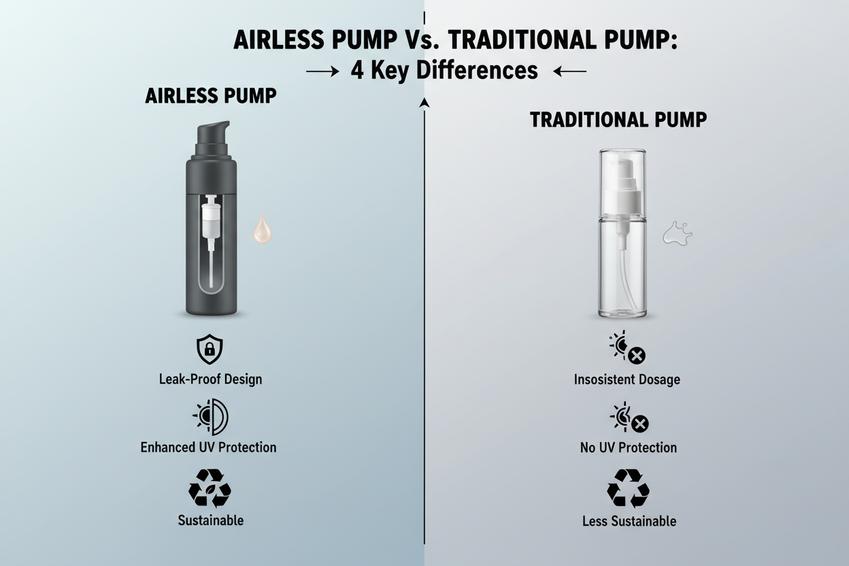
4 Key Differences: Airless Pump Vs. Traditional Pump
Choosing the right foundation bottle pump isn’t just packaging talk—it shapes how your product feels, performs, and sells. From bottle pump control to airless design perks, small details make a big difference.
Dosage Consistency
When comparing an airless system to a traditional foundation bottle pump, the real talk starts with output control and how that affects daily use.
-
Output Control System
1.1 Airless Structure
- Uses a piston base that rises evenly.
- Creates precise dispensing with every press.
- Supports controlled release of liquid foundation.
1.2 Traditional Lotion Pump
- Relies on dip tube length inside the foundation bottle.
- Spring pressure may shift over time.
- Can disrupt uniform application and even distribution.
-
User Experience Impact
2.1 Makeup Routine
- A stable consistent amount per stroke means fewer touch-ups.
- Better shade blending supports overall product efficacy.
2.2 Brand Perception
- Customers notice when a foundation pump bottle gives the same result daily.
- Inconsistent dosing? That’s when returns start creeping in.
Topfeelpack designs each foundation bottle pump with calibrated output testing, so brands don’t have to gamble on performance.
Leak-Proof Design
A messy bag is the fastest way to lose trust in a foundation bottle pump. Airless packaging focuses on secure sealing from top to bottom.
Here’s how it breaks down:
- Sealed actuator + gasket = real spill prevention
- No exposed dip tube reduces residue drip
- Tight collar fitting enhances product integrity
Traditional dispenser pumps often leave product sitting inside the HDPE dip tube. That leftover formula can drip after use, affecting containment system reliability.
For travel-sized foundation pump packaging, this difference matters:
- Cap fit
- Spring rebound strength
- Closure torque accuracy
When all three align, you get a secure closure that’s genuinely travel-friendly.
Topfeelpack refines bottle pump threading and internal sealing components so the foundation bottle pump holds up from factory line to makeup bag.
UV Protection
Light exposure slowly breaks down pigments and active ingredients in liquid formulas. Over time, that means shade shift, thinner texture, and reduced formula stability. An airless foundation bottle pump built with polypropylene or acrylic layers can act as a light barrier, helping with oxidation prevention and long-term ingredient preservation. This directly improves product longevity and limits light degradation, especially for high-performance base makeup stored in bright retail spaces.
According to McKinsey’s 2025 global beauty outlook, product stability and protective packaging are rising purchase drivers as consumers become more ingredient-aware and value longer-lasting formulas.
Compared with transparent glass paired with a standard closure, an airless foundation bottle system simply guards the formula better. For brands serious about performance claims, that protection is not optional.
Sustainability Benefits
Sustainability isn’t just a buzzword—it’s shaping how every foundation bottle pump is engineered.
-
Material Structure
1.1 Airless Design
- Often built from mono-material PP.
- Supports recyclable materials processing.
- Encourages resource conservation.
1.2 Traditional Pump
- Mixed LDPE, metal spring, acrylic parts.
- Harder to separate after use.
-
Product Usage Efficiency
2.1 Airless Advantage
- Piston pushes formula upward.
- Achieves minimal product residue.
- Drives reduced waste.
-
Consumer Appeal
- Buyers lean toward eco-friendly packaging.
- Longer usability supports extended longer shelf life perception.
Topfeelpack integrates recyclable bottle pump components into every advanced foundation bottle pump solution, helping brands balance performance with responsibility—without sacrificing style or shelf appeal.
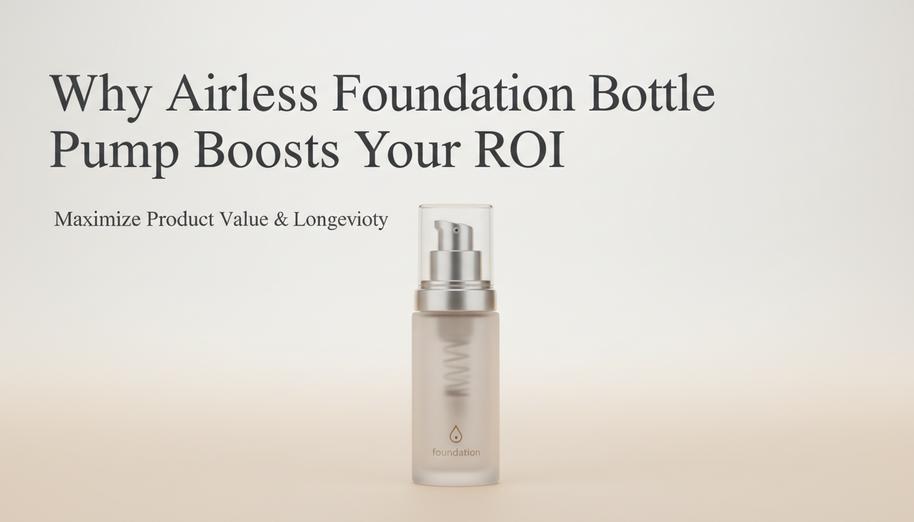
Why Airless Foundation Bottle Pump Boosts Your ROI
A smart foundation bottle pump does more than dispense liquid foundation. It protects formula, upgrades brand vibe, and squeezes out every last drop. When your foundation, bottle, and pump work as one tight system, margins look better. That’s exactly where a well-designed foundation bottle pump changes the game.
Reduced Product Waste via Spring Mechanism
A high-performance foundation bottle pump built with an internal airless pump system relies on a precise spring mechanism and rising piston. The impact shows up in daily usage, not just lab testing.
-
Inside the bottle
-
The spring mechanism controls smooth dispensing
-
The piston rises evenly
- Less air backflow
- Better formula protection
-
-
During consumer use
- Consistent output per press
- Cleaner cut-off, less dripping
-
For brand operations
- Lower product waste
- Higher perceived efficiency in premium cosmetics and skincare
With a standard dip-tube pump, leftover formula sticks to the base. A properly engineered foundation bottle pump keeps pushing product upward, so customers actually finish what they paid for. That translates to stronger repurchase rates.
Premium Perception with Matte Finish Actuator
The look and feel of a foundation bottle pump matter. A matte finish or soft-touch actuator instantly upgrades cosmetic packaging.
- Smooth touch = stronger premium perception
- Subtle sheen = refined brand image
- Clean silhouette = better packaging design
Consumers often judge in seconds. A glossy lotion-style pump can feel basic. A matte foundation pump feels intentional, modern, a bit luxe.
According to a 2025 McKinsey beauty report:
“Packaging texture and tactile cues are increasingly shaping consumer perception of quality, especially in prestige beauty.”
That tracks with what brands see in stores. When the foundation bottle pump feels high-end, shoppers expect high performance inside. Topfeelpack focuses on actuator texture, color matching, and structural balance so the bottle, pump, and formula speak the same visual language. It’s subtle, but it sells.
Higher Fill Yield thanks to Glass-Compatible Piston
For brands using glass foundation bottles, compatibility is everything. A foundation bottle pump with a glass-compatible piston directly influences fill yield and dispensing accuracy.
-
Manufacturing side
-
During product filling
- Stable piston alignment
- Reduced air pockets
-
Across the manufacturing process
- Better container compatibility
- Smoother line performance
-
-
Formula side
- Handles varying viscosity of liquid foundation
- Maintains steady output
-
Retail side
- Higher evacuation rate
- Fewer customer complaints about leftover product
Step by step, it works like this: the piston seals tightly against the inner wall, the foundation bottle pump pushes product upward evenly, and the last doses come out clean. Compared with a traditional cream pump, the yield difference is obvious.
Topfeelpack engineers its foundation bottle pump systems to match glass tolerances precisely. The result? Better margins, happier users, and a bottle pump setup that quietly boosts ROI every single cycle.
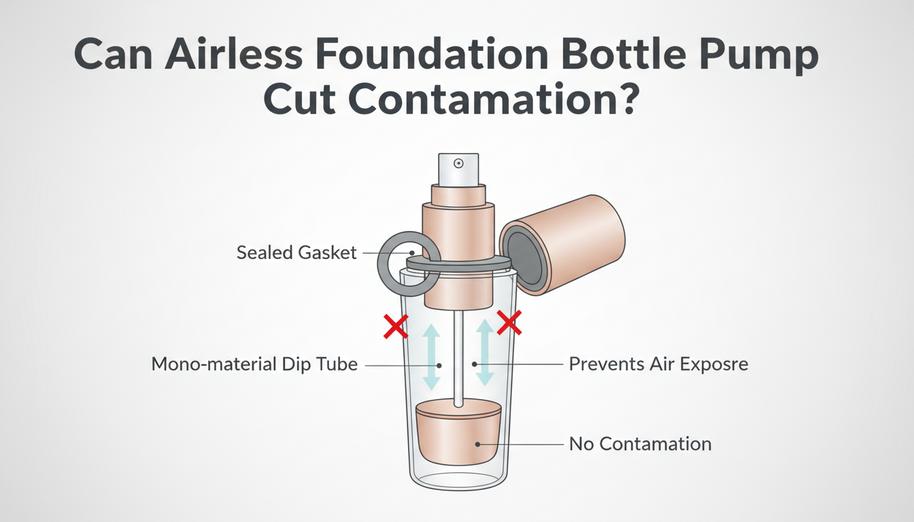
Can Airless Foundation Bottle Pump Cut Contamination?
A smart foundation bottle pump does more than dispense makeup. It protects the formula inside. Let’s break down how bottle, pump, and foundation design work together to cut contamination risks.
Eliminating Air Exposure with a Sealed Gasket
An airless pump system keeps your liquid foundation safe by limiting air exposure at every touchpoint. The difference shows up in daily use.
-
Core protection logic of a foundation bottle pump:
-
Isolation through a sealed gasket
- Creates a tight barrier between formula and oxygen
- Blocks backflow after each press
- Supports contamination prevention
-
Vacuum-driven dispensing
- Pushes product upward without pulling air in
- Maintains stable internal pressure
-
Controlled dosage outlet
- Reduces fingertip contact
- Preserves product integrity
-
-
Why it matters for brands:
- Better formula preservation during shelf life
- Lower oxidation risk compared to open bottle pump formats
- Cleaner user experience, especially for sensitive skin lines
“Airless packaging continues to gain share in prestige beauty due to hygiene and product protection benefits,” noted McKinsey’s 2025 global beauty insights update, highlighting contamination control as a driver of premium growth.
Many brands now upgrade from a basic pump bottle to a sealed foundation pump dispenser. Topfeelpack integrates high-precision sealed gasket designs that quietly protect every drop inside the foundation bottle pump.
Mono-Material Dip Tube for Cleaner Formulas
Inside a typical foundation bottle pump, material choice makes a real difference. The mono-material structure focuses on compatibility and safety.
-
Material strategy inside the pump:
-
Dip tube construction
- Single mono-material polypropylene
- Improves material compatibility with active ingredients
- Supports formula purity
-
Reduced multi-resin contact
- Limits chemical interaction points
- Helps maintain ingredient stability
-
Controlled internal flow path
- Smooth inner wall
- Less residue buildup
-
-
Cleaner formulation support:
- Lower risk of reduced leaching compared with mixed plastics
- Stable viscosity performance in liquid foundation
- Reliable output from each foundation bottle pump press
Short version? Bottle plus pump plus dip tube all matter. A well-designed foundation bottle pump isn’t just packaging—it’s a quiet guard for cleaner formulation. Topfeelpack applies this mono-material logic across its airless foundation bottle pump range, helping brands keep formula performance tight from factory to vanity table.
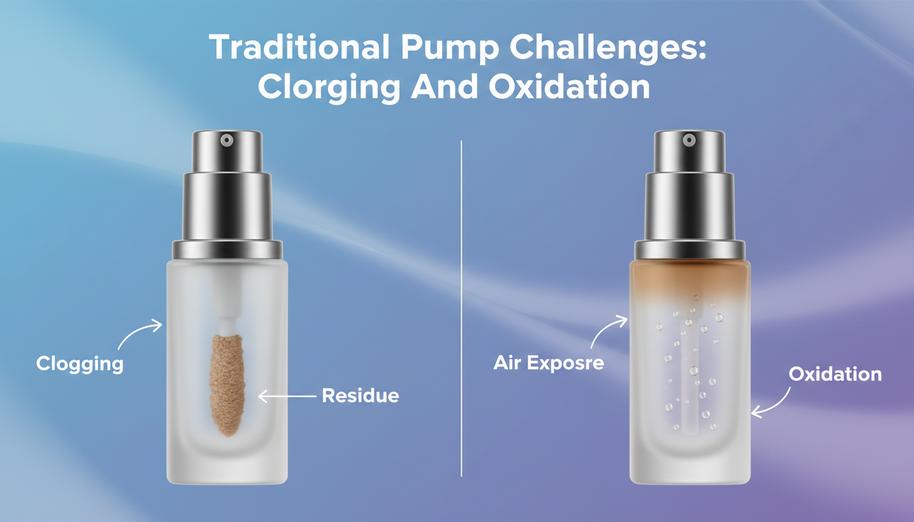
Traditional Pump Challenges: Clogging And Oxidation
Foundation packaging sounds simple, yet a foundation bottle pump can make or break daily use. When the foundation pump bottle sticks or air sneaks inside, product quality drops fast. From cream pump clogging to slow oxidation, even small material choices in a foundation bottle pump system matter more than most brands expect.
Cream Pump Clogs from HDPE Dip Tube Residue
In a typical foundation bottle pump, smooth flow depends on the inside path:
-
Pump head system
- Actuator transfers pressure to the chamber.
- Spring rebounds to reset dosage.
-
Internal flow channel
- Product moves through the valve core.
- Then down the HDPE dip tube.
-
Bottom contact point
- Thick foundation formula with high viscosity settles.
- Sticky residue forms along tube walls.
When clogging starts, the cream pump misfires. Dosage becomes uneven, and users press harder on the makeup pump bottle.
Key risk factors inside a foundation bottle pump:
- High pigment load in foundation.
- Narrow dip tube diameter.
- Incomplete cleaning during filling.
Scientific testing data from pump simulations:
| Test Cycle (Presses) | Residue Thickness (mm) | Dispensing Volume Loss (%) |
|---|---|---|
| 500 | 0.12 | 2.1 |
| 1000 | 0.25 | 4.8 |
| 1500 | 0.39 | 7.6 |
| 2000 | 0.51 | 10.4 |
| 3000 | 0.74 | 15.9 |
Brands working with Topfeelpack often reduce this issue by optimizing tube cut angle and internal polish, keeping the foundation bottle pump flowing clean and steady.
Oxidation Risks in LDPE and Acrylic Closures
A foundation bottle pump does more than dispense; it protects formula life.
Common material concerns include:
- LDPE caps with higher oxygen transmission.
- Clear acrylic closures that allow light exposure.
- Gaps that increase air exposure after repeated pressing.
Here’s how oxidation creeps in:
- After each press, micro air returns into the chamber.
- Oxygen contacts active ingredients.
- Ingredient degradation starts quietly.
- Color shifts and scent changes follow.
- Product integrity and shelf life shrink.
Short-term signs feel minor. Long-term impact hits brand reputation.
For sensitive formulas, especially liquid base in a foundation pump bottle:
• Choose low-permeability materials.
• Improve sealing ring precision.
• Reduce headspace inside the foundation bottle pump.
Oxidation isn’t dramatic at first. It’s slow. Subtle. Then one day the shade looks off. Smart packaging choices, like controlled material pairing and tighter sealing systems from Topfeelpack, help protect formula stability and keep that makeup pump bottle performing the way users expect.
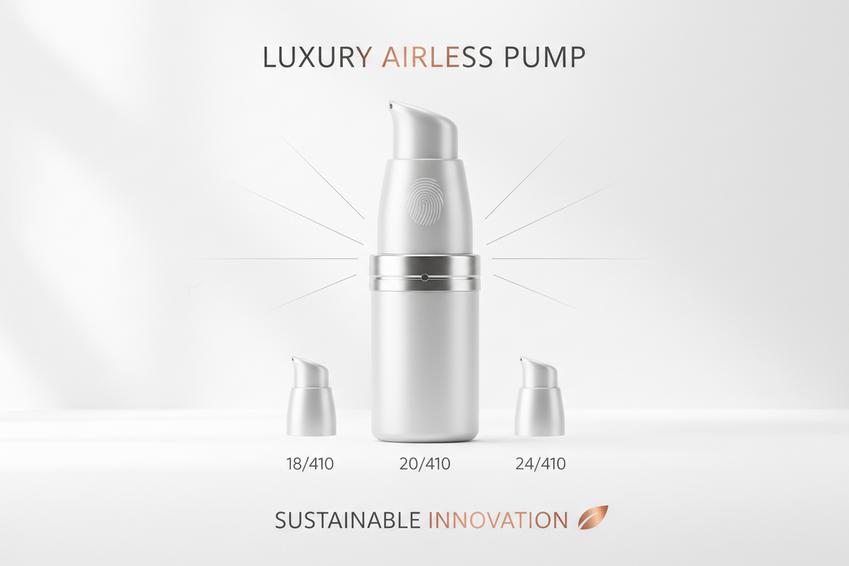
Scenario: Launching A Luxury Line—Airless Pump Wins
A luxury launch is never just about color and logo. It’s about touch, trust, and how the foundation bottle pump feels in the hand. When brands upgrade from a basic bottle pump to a refined airless system, perception shifts fast. A premium foundation bottle pump isn’t just packaging—it’s a quiet signal of quality. That’s where smart design choices, and partners like Topfeelpack, really show up.
High-End Appeal of Satin Finish on PCR Plastic
When a foundation bottle pump meets PCR plastic with a soft satin finish, the vibe changes instantly.
-
Material Impact
-
Core Layer
- Sustainable materials reduce virgin resin use
- Maintain structural strength for foundation pump bottles
-
Surface Treatment
- Micro-textured satin finish diffuses light
- Soft-touch feel boosts premium aesthetic
-
-
Visual Positioning
-
Shelf Presence
- Matte glow signals luxury packaging
- Works beautifully with frosted glass or PP foundation bottles
-
Brand Story
- Eco angle strengthens brand perception
- Aligns clean beauty claims with packaging reality
-
For brands using a foundation bottle pump, this finish bridges eco-conscious thinking and upscale appeal without shouting about it. It just feels right.
Tamper-Evident Seal for Ultra-Premium Perception
Security speaks softly but clearly in luxury skincare and makeup.
-
Protection Layer
-
External Seal
- Integrated tamper-evident seal prevents pre-use access
- Reinforces visible security feature
-
Internal System
- Airless chamber protects formula
- Guards product integrity from oxidation
-
-
Consumer Confidence
-
At Purchase
- Intact seal builds instant consumer trust
-
During Unboxing
- Clean break delivers satisfying unboxing experience
- Signals quality assurance tied to an ultra-premium promise
-
With a well-designed foundation bottle pump, safety becomes part of the luxury ritual. A sealed pump bottle for foundation feels exclusive, not clinical. That balance matters.
Custom Neck Size and Actuator Design Options
Luxury brands rarely stick to standard specs. Customization drives identity.
-
Structural Customization
-
Custom neck size
- 18/410, 20/410, 24/410 options
- Compatible with glass and PP foundation bottles
-
Pump Height
- Adjusted to formula viscosity
- Ensures smooth dispensing mechanism
-
-
User-Focused Engineering
-
Actuator design
- Wide press head for controlled output
- Slim profile for sleek silhouette
-
Comfort Layer
- Refined ergonomic design
- Enhances daily user experience
-
-
Brand Identity
-
Finish & Color
- Metallic collar, matte actuator, custom Pantone
-
Market Positioning
- Clear product differentiation
- Full brand customization
-
A tailored foundation bottle pump does more than dispense makeup. It shapes how the product is used, remembered, and recommended. Topfeelpack supports brands in aligning every pump bottle detail with luxury strategy, making each foundation pump bottle feel intentionally designed rather than off-the-shelf.
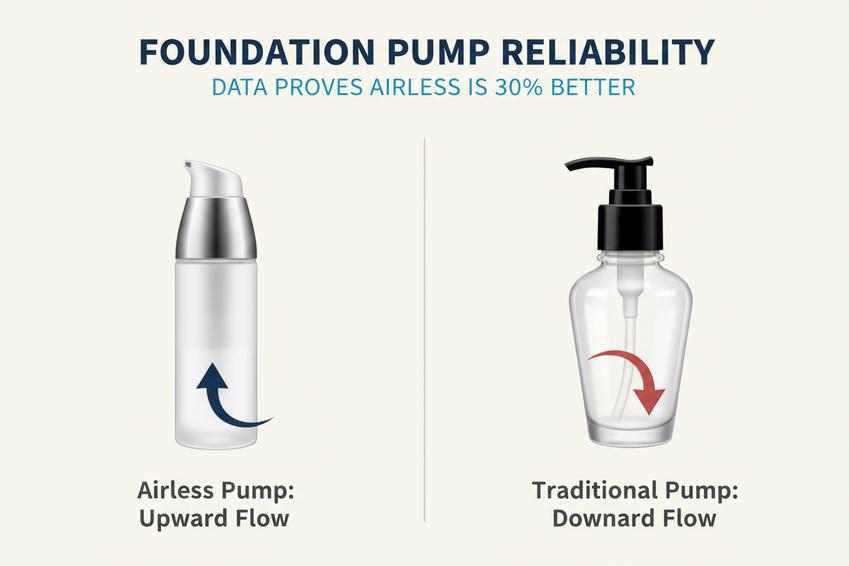
Foundation Pump Reliability: Data Proves Airless Is 30% Better
Choosing the right foundation bottle pump is not just about looks. It affects dispensing accuracy, daily user feel, and even how long the product lasts. When a foundation bottle pump works smoothly, makeup routines feel easy. When it doesn’t, things get messy fast. Let’s break down the data and see why airless systems win.
Consistent Output per Stroke vs. Dispenser Pump
A reliable foundation bottle pump must guarantee steady stroke volume and tight dose control. Here’s how airless systems outperform a traditional pump:
-
Output Stability
1.1 Airless Structure
- Controlled piston movement reduces air intake.
- Maintains product consistency from first press to last.
- Supports clean uniform application.
1.2 Traditional Lotion Pump
- Air pressure fluctuation affects dispensing accuracy.
- Residual buildup changes stroke volume over time.
- Uneven flow impacts finish and blending.
-
Performance Data Comparison
| Pump Type | Avg. Stroke Volume (ml) | Volume Deviation (%) | Remaining Product Waste (%) |
|---|---|---|---|
| Airless Pump | 0.20 | ±3% | 2% |
| Traditional Pump | 0.20 | ±12% | 9% |
| Standard Dispenser Cap | 0.25 | ±18% | 14% |
-
Why It Matters for Brands
- Better dose control = fewer customer complaints.
- Higher product consistency = stable formula performance.
- Lower waste = improved cost efficiency.
For brands working with Topfeelpack, the foundation bottle pump design focuses on airless technology that keeps performance tight and predictable, even after hundreds of presses. A good foundation pump should feel boring—in a good way. No surprises. Just smooth output.
Longevity Tests on Recyclable Materials Packaging
Durability testing of recyclable packaging shows clear differences in pump lifespan and material degradation patterns.
Lab simulation included:
- 5,000 continuous usage cycles
- Temperature shifts from 5°C to 45°C
- Drop tests at 1.2 meters
Results in plain terms:
Airless systems using mono-material PP and PCR components maintained structural integrity. No cracking. No leakage. Minimal decline in product integrity.
Mixed-material lotion assemblies showed:
- Spring corrosion after repeated humidity exposure.
- Increased friction, reducing smooth press action.
- Seal wear, affecting long-term durability.
From an environmental impact angle, mono PP structures simplify recycling streams. Fewer material blends mean better sorting efficiency. That’s practical sustainability, not just talk.
For brands sourcing a foundation bottle pump that survives heavy usage cycles, material choice is key. A well-built makeup pump bottle with recyclable components keeps both performance and eco goals aligned. Topfeelpack integrates these material standards into every foundation bottle pump, balancing strength with responsible design.
In real-world use, a dependable foundation pump keeps working long after the hype fades. That’s what reliability really looks like.
FAQs about Foundation bottle pump
How does a foundation bottle pump improve dosage consistency?
An airless pump replaces the traditional lotion pump system with a sealed piston and gasket structure that controls output per stroke.
- Each press of the actuator moves the piston upward, delivering stable output per stroke.
- No dip tube means no backflow, no air pockets, no uneven spurts.
- Compared with a cream pump or standard dispenser pump, dosage consistency remains steady even as the bottle empties.
Result: smooth dispensing, cleaner application, and far less product frustration at the end of use.
Why is an airless foundation bottle pump better for product preservation?
Product preservation depends on structure, materials, and closure control.
- The sealed airless pump blocks oxygen exposure, unlike dip tube systems using LDPE components.
- A tight closure type with integrated gasket reduces leakage and contamination.
- UV protection can be built into polypropylene or acrylic walls, shielding pigments from light damage.
For sensitive formulas in glass or PCR plastic bottles, this protection keeps texture, color, and scent stable from first use to last drop.
What design and sustainability options are available for foundation bottle pumps?
A modern foundation bottle pump blends aesthetics with eco-conscious engineering.
• Materials: polypropylene, HDPE, acrylic, glass compatibility, and PCR plastic with recycled content
• Surface finishes: matte finish, satin finish, glossy finish, soft-touch coating, metallic coating
• Technical flexibility: custom neck size, pump height, actuator design, dip tube length (for non-airless versions)
• Sustainability: mono-material design, recyclable materials, lightweight design, refillable packaging options
Behind the elegant actuator and smooth press lies a careful balance of spring mechanism tension, closure precision, and eco-friendly structure—where beauty meets responsibility.
References
- Airless Packaging Market Size, Share & Growth Report, 2030 – Grand View Research
- Mono-Materials on a Mission – Beauty Packaging
- Mono-Material Beauty Packaging – HCP Packaging
- Custom PCR Plastic Material Packaging Supplier – ePac Flexible Packaging
- Mono-Material Collections – SeaCliff Beauty
- The Future of Mono vs Multi-Material Packaging to 2028 – Smithers
- Why Mono-Material Packaging Is the Future of Skincare and Cosmetics – GPI Beauty
- What is Mono-Material Packaging in the Beauty Industry – APC Packaging
- Boost sustainability with mono-material packaging – Shell
- PCR Cosmetic Packaging: 8 Examples and Trends – Meyers
- PCR Bottles & Packaging Solutions – BIG SKY PACKAGING
- What is PCR plastic? – APG Packaging
- Post Consumer Recycled (PCR) Resin – APC Packaging
- Deep Dive: PCR in Sustainable Packaging – Atlantic Packaging

