 English
  English (UK)
  English (Australia)
  English (Canada)
  العربية
  Deutsch
  Italiano
  Español de México
  Tiếng Việt
  ไทย
ไทย  Português do Brasil
  Français
  Български
  Čeština
  Dansk
Dansk  Ελληνικά
  Eesti
Eesti  Suomi
Suomi  Magyar
  Bahasa Indonesia
  Lietuvių kalba
  Latviešu valoda
  Norsk bokmål
  Nederlands (Formeel)
  Polski
  Română
  Русский
  Slovenčina
  Slovenščina
  Svenska
  Türkçe
  Українська
  简体中文
简体中文  日本語
日本語  한국어
한국어  繁體中文
繁體中文 

The Trends in Eco-Friendly Empty Foam Pump Bottles for 2026
March 12,2026
Empty foam pump bottles are no longer the wallflowers of the packaging world—they’re stealing the spotlight. In 2026, brands aren’t just hunting for containers; they’re chasing lighter footprints, cleaner formulas, and packaging that doesn’t scream “landfill.” If your current supplier still feels stuck in 2019, that sting hits hard.
Consumers notice the little things. A silky foam. A bottle that feels sturdy, not flimsy. A label that says recycled and means it. According to a 2025 Smithers packaging report, sustainability now drives purchasing decisions across beauty aisles.
“Design must earn its place on the shelf and in the recycling bin,” says a Topfeelpack product manager.
That’s where the plot thickens.
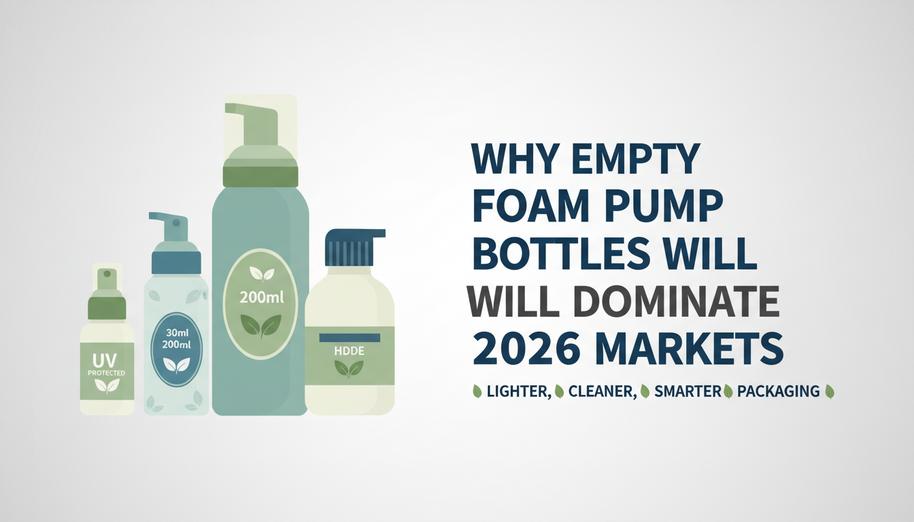
Why Empty Foam Pump Bottles Will Dominate 2026 Markets
The buzz around empty foam pump bottles isn’t random hype. Brands want lighter, cleaner, and smarter packaging. Consumers want less mess and less waste. Split the phrase into empty, foam, pump, and bottles, and you get a simple truth: ready-to-fill, airy dispensing, controlled output, practical packaging. That combo is hard to beat in 2026.
30ml PCR Plastic Bottles for Travel-Size Facial Cleansers
When it comes to travel, 30ml is the sweet spot. These PCR plastic bottles aren’t just small; they’re strategic.
-
Travel-size advantage
- Carry-on friendly
- Easy sampling for facial cleansers
- Ideal format for eco-friendly packaging
-
Material edge
- post-consumer recycled resin reduces virgin input
- Lightweight body lowers shipping cost
- Leak-resistant neck fits foam pump bottles securely
-
Why brands switch to empty foam pump bottles in 30ml
- Air-to-liquid ratio creates rich foam with less formula
- “Empty” format allows flexible filling lines
- Compact foam pump bottles boost perceived value
In 2025, Smithers noted that sustainable small-format packaging continues gaining traction in personal care, especially refill-ready designs. That’s exactly where empty foam pump bottles shine.
Topfeelpack refines these mini formats so indie skincare labels can launch fast without blowing the budget.
Cylindrical PP Bottles with Foaming Pump for Hand Soap
Clean hands matter. Presentation matters too.
Here’s why cylindrical PP bottles paired with a foaming pump are winning in hand soap and personal care:
- Controlled output reduces waste.
- Smooth wall design fits modern sinks.
- Durable dispenser heads resist frequent pressing.
- The foam spreads quicker.
- Less liquid goes down the drain.
- Refills become easier with empty foam pump bottles ready for bulk filling.
Consumers like the soft cloud feel. Retailers like the shelf stability. Brands like that PP is recyclable and supports sustainable goals.
Topfeelpack supplies empty foam pump bottles that balance durability and smooth actuation, so daily use doesn’t turn into daily frustration.
Custom Mold Designs Elevating 200ml Lotion Pumps
The custom mold game is where brands flex identity. A 200ml format sits right between travel and family size, making it perfect for cosmetics and bath lines.
-
Design strategy
- Unique shoulder curves
- Embossed logos
- Matte or glossy finishes
-
Pump pairing
- Smooth lotion pumps
- Foam-compatible neck options
- Secure locking mechanisms
-
Branding impact
- Distinct shelf silhouette
- Higher recall
- Premium feel without glass weight
Empty foam pump bottles in a 200ml custom shape give that “designed just for us” vibe. It’s not just packaging; it’s unique packaging that talks before the label does. With the right mold tweaks, even standard PET can feel upscale.
UV-Coated HDPE Bottles in Bulk Shampoo Packaging
For shampoo and hair care, light exposure can mess with formulas. That’s where UV-coated HDPE bottles step in.
-
Protection layer
- Shields against light degradation
- Extends shelf life
- Maintains fragrance stability
-
Bulk packaging logic
- 250ml to family sizes
- Strong walls resist bathroom drops
- Compatible with refillable systems
-
Why foam matters here
- Empty foam pump bottles adapt to sulfate-free shampoos
- Air infusion improves spreadability
- Controlled pumps reduce overuse
Durability counts. So does refill culture. HDPE bottles with UV coating support both, while keeping the structure tough and the look clean.
In 2026, the shift is clear: empty foam pump bottles aren’t a trend spike. Empty pump bottles, foam dispensers, and refill-ready formats are becoming the norm. Brands that move early, especially with partners like Topfeelpack, won’t just keep up. They’ll set the pace.
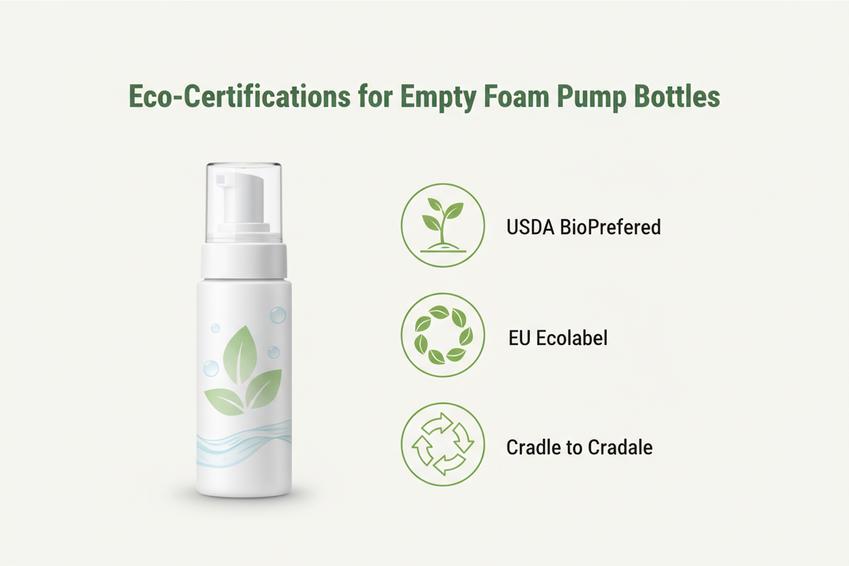
Which Eco-Certifications Should Empty Foam Pump Bottles Obtain?
Choosing eco labels for empty foam pump bottles is not just a badge game. Brands selling foam pump bottle packaging for cleanser or sanitizer want proof that materials are clean, safe, and circular. Smart certification builds trust and keeps your empty foaming bottles market-ready.
USDA BioPreferred for PCR Plastic and Glass Options
For brands sourcing empty foam pump bottles, this certification focuses on bio-based content and renewable resources. It matters when using PCR plastic or even glass components.
-
Material Sourcing
- Verify percentage of plant-based or recycled feedstock.
- Document material sourcing transparency.
-
Compliance Path
- Lab testing for bio-based carbon content.
- Submission under official USDA BioPreferred portal.
- Annual renewal and audit review.
-
Business Impact
- Supports sustainability claims in foam soap bottles.
- Aligns with U.S. federal procurement preferences.
Topfeelpack works closely with resin suppliers to help empty foaming pump bottles meet these criteria without inflating costs.
EU Ecolabel: Requirements for PET and PP Foaming Bottles
For PET bottles and PP bottles, the EU Ecolabel checks the full life cycle assessment.
-
Environmental Impact
- Reduced energy consumption during molding.
- Lower transport emissions.
-
Chemical Safety
- Restricted substances screening.
- Safer additives for pump springs and closures.
-
End-of-Life
- Design for recyclability of foam pump bottle units.
This label pushes empty foam pump bottles toward measurable cuts in footprint, not just marketing talk.
Cradle to Cradle: Ensuring Recyclability and Reuse
The Cradle to Cradle framework centers on material health and the circular economy.
-
Product Design
- Mono-material PP or HDPE bodies.
- Easy pump removal for design for disassembly.
-
Product Stewardship
- Take-back planning.
- Clear resin identification marks.
-
Recyclability & Reuse
- Encourages refill-ready empty foam pump bottles.
By aligning empty foam pump bottles with reuse logic, Topfeelpack helps brands move from single-use habits to real circular action.
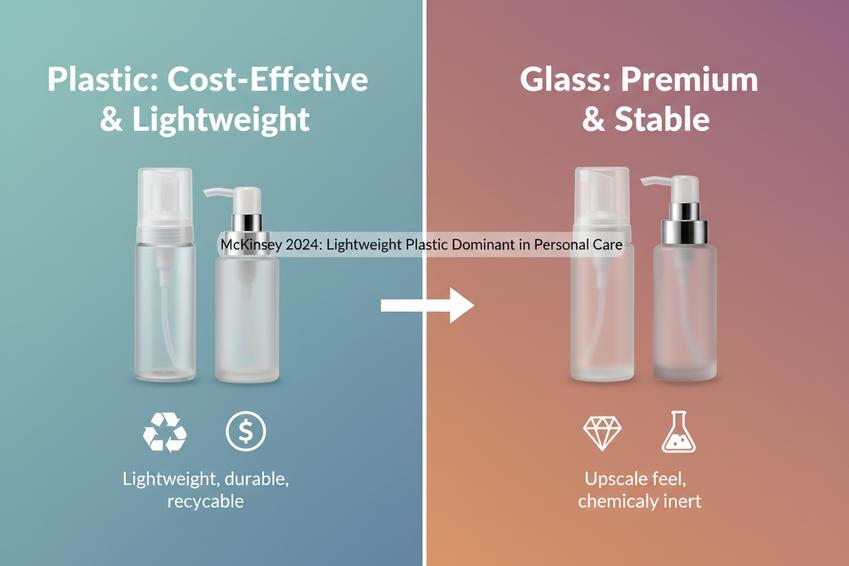
Plastic Vs. Glass Foam Pump Bottles
Choosing between plastic and glass for empty foam pump bottles can feel like picking between sneakers and dress shoes—both work, but the vibe is different. From daily-use foam bottles to upscale cosmetic foam dispensers, material shapes cost, weight, and user experience in real life.
Plastic
When brands source empty foam pump bottles in plastic, decision paths usually unfold like this:
-
Material Selection
1.1 PET Options
- Recycled PET supports sustainability goals.
- Added PCR content reduces virgin resin use.
1.2 PP and HDPE
- Strong Durability for travel-size foam bottles.
- Stable with surfactant-based cleansers.
-
Performance Priorities
2.1 Design Logic
- Lightweight design lowers freight costs for bulk empty foam pump bottles.
- Good match for foaming pumps and airless systems.
2.2 Budget Fit
- Clear Cost-effectiveness in mass production runs.
-
Sustainability Angle
3.1 Innovation Track
- Trials with Biodegradable polymers are growing.
3.2 Recycling Stream
- PET and HDPE widely collected in many regions.
McKinsey’s 2024 global packaging outlook noted that lightweight plastic formats remain dominant in personal care due to cost control and carbon efficiency during transport.
For everyday hand wash or facial cleanser, plastic foam pump bottles just make life easier. Less weight. Less worry.
Glass
Glass empty foam pump bottles follow a different logic tree, usually tied to image and formula safety:
-
Brand Positioning
1.1 Shelf Impact
- Strong Premium feel in skincare lines.
- Heavier Weight signals value to some buyers.
-
Formula Compatibility
2.1 Ingredient Stability
- High Chemical inertness protects sensitive makeup remover blends.
- Low interaction risk with essential oils.
-
Circular Thinking
3.1 End-of-Life
- Fully Recyclable material in most urban systems.
3.2 Reuse Models
- Growing demand for Refillable options using the same foam bottle shell.
-
Risk Awareness
4.1 Handling
- Obvious Breakability concerns in wet bathrooms.
4.2 Packaging Add-ons
- Often paired with overcap or screw cap closures for safety.
For luxury cosmetic foam dispensers, glass feels serious and refined. For high-traffic bathrooms, plastic still wins on practicality. Both types of empty foam pump bottles earn their place—it just depends on how the product wants to show up.
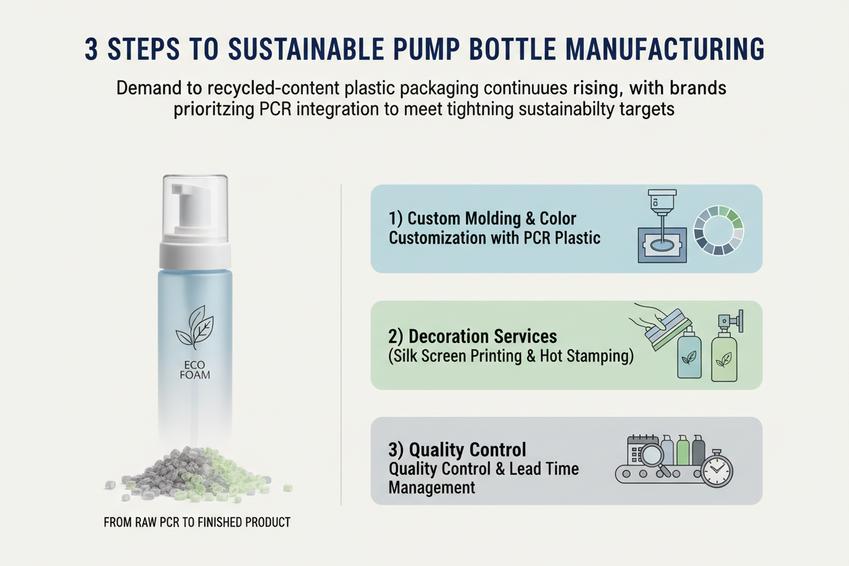
3 Steps To Sustainable Pump Bottle Manufacturing
Sustainability in packaging is not just talk anymore—it’s shaping how empty foam pump bottles, foam pump bottles, and refillable foam containers are designed and delivered. From foam and pump mechanisms to the bottle body itself, every detail counts. Brands sourcing empty foam pump bottles today want smart design, stable supply, and real eco progress without cutting corners.
Step 1: Custom Molding and Color Customization in PCR Plastic
Creating empty foam pump bottles with PCR plastic starts at the design table and runs deep into tooling precision.
-
Material Sourcing
-
Selection of certified eco-friendly materials
- Post-consumer resin grades
- Verified recycled content ratios
-
Supplier audits supporting sustainable manufacturing
-
-
Custom Molding
-
Mold development aligned with bottle design
- Cylindrical foam bottles
- Square pump bottles
- Oval empty foam bottles
-
Wall thickness calibration for durability and weight balance
-
-
Color Customization
- Pantone-based color customization
- Masterbatch blending for PCR consistency
- Shade testing under multiple lighting conditions
According to Smithers’ 2025 packaging outlook, demand for recycled-content plastic packaging continues rising, with brands prioritizing PCR integration to meet tightening sustainability targets.
At Topfeelpack, tight control over custom molding and recycled resin flow ensures empty foam pump bottles stay consistent in look and feel—even when PCR batches vary slightly.
Step 2: Decoration Services—Silk Screen Printing & Hot Stamping
When it comes to surface decoration, details sell.
- Clean, sharp silk screen printing for bold branding
- Metallic hot stamping for premium logo application
- Pressure-sensitive labeling for flexible SKUs
Here’s how decoration choices typically stack up for foam pump bottles:
-
Silk screen printing
- Works well on HDPE and PET
- High abrasion resistance
-
Hot stamping
- Strong shelf impact
- Ideal for logo application on empty foam pump bottles
-
Custom printing + frosting
- Soft-touch feel
- Enhances brand texture
A quick comparison for branding durability:
- Ink adhesion: stable on treated PET
- Foil retention: strong under humidity
- Label bonding: reliable with correct surface energy
Topfeelpack aligns branding, labeling, and custom printing with eco goals, keeping decoration compatible with recyclable streams. No flashy gimmicks—just practical design that holds up in daily use.
Step 3: Quality Control and Lead Time Management
Reliable empty foam pump bottles depend on disciplined quality control and realistic lead time management.
-
Manufacturing Process Oversight
-
Incoming material inspection
- PCR melt flow testing
- Color deviation checks
-
In-line monitoring
- Pump stroke cycle testing
- Leak resistance under pressure
-
-
Product Inspection
- Closure torque validation
- Foam output consistency checks
- Drop testing for filled foam bottles
-
Supply Chain & Delivery Schedule
- Production planning buffers
- Transparent export documentation
- Confirmed global shipping timelines
Good production efficiency doesn’t mean rushing. It means aligning tooling, inspection, and shipping so empty foam pump bottles arrive ready for filling, not fixing.
Topfeelpack keeps the supply chain tight, balancing inspection standards with dependable delivery schedules. That’s how sustainable manufacturing actually works—steady, practical, and built to last.
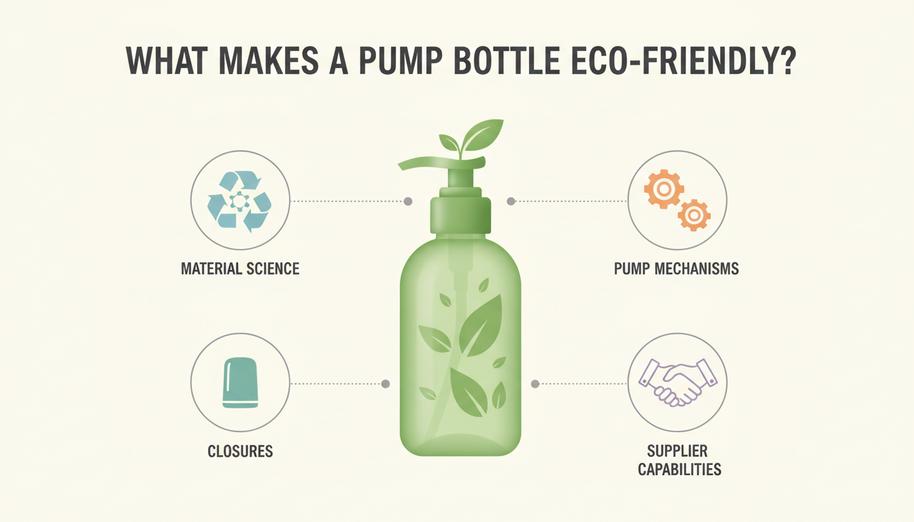
What Makes A Pump Bottle Eco-Friendly?
Choosing eco packaging is not just a trend; it’s smart business. From empty foam pump bottles to refill-ready containers, brands now care about materials, waste, and long-term impact. Let’s break down what truly makes pump packaging greener and practical.
Material Matters: HDPE, PET, PP and Recycled Content
When sourcing empty foam pump bottles, material choice shapes recyclability and carbon impact.
-
Plastic Types & Material Composition
- HDPE: strong, widely recycled, ideal for foam pump bottles.
- PET: clear appearance, good barrier, common in cosmetic pump bottles.
- PP: flexible, often used in pump heads and closures.
-
Recycled Content Integration
- PCR in bottle body
- PCR in pump components
- Mono-material preference for easier sorting
-
Performance Snapshot
| Material | Recycling Rate (%) | Typical PCR Use (%) | Carbon Footprint (kg CO₂/kg) |
|---|---|---|---|
| HDPE | 30–35 | 25–100 | 1.7–2.0 |
| PET | 20–30 | 25–100 | 2.1–2.5 |
| PP | 10–15 | 10–50 | 1.9–2.3 |
| rHDPE | — | 100 | 1.2–1.5 |
-
Biodegradable Materials?
- Limited pump compatibility
- Stability concerns with liquid soap
- Cost still higher
For brands ordering empty foam pump bottles, balancing durability and recycled input keeps both regulators and customers happy.
Pump Mechanism Choice: Airless Pump vs. Foaming Pump Efficiency
Efficiency starts with the Dispensing Mechanism. Not all pumps behave the same.
-
Airless Pump
- Protects formula from oxidation
- Improves Product Delivery accuracy
- Reduces residue waste
-
Foaming Pump
- Uses air infusion for Foam Generation
- Cuts liquid formula use by up to 30–50%
- Ideal for facial cleansers and hand wash
From a Mechanism Design angle:
- Airless = product preservation
- Foaming = consumption reduction
For brands buying empty foam pump bottles, the foaming system often wins in sustainability because less liquid per use means fewer refills and lower shipping weight.
Topfeelpack offers both systems with optimized Pump Efficiency, making foam pump packaging smarter, not just greener.
Closure Selections—Flip-top Cap and Snap-on Cap Waste Reduction
Closures quietly affect waste.
-
Closure Design
- Flip-top Cap: controlled dispensing, easy reseal
- Snap-on Cap: simple, lightweight
-
Waste Reduction Logic
- Smaller orifice limits over-pouring
- Matching Cap Material (PP with PP bottle) improves recyclability
- Tight Sealing Mechanism prevents leaks during transport
-
Ease of Use Matters
Good user flow reduces product waste at home. Less dripping. Less mess. More control.
For refillable or reusable empty foam pump bottles, mono-material cap pairing keeps recycling straightforward.
Supplier Capabilities: Sample Provision and End-to-End Sustainability Support
A green bottle is only as reliable as its supplier.
-
Manufacturing Capabilities
- In-house molding
- PCR processing control
- Quality inspection systems
-
Sample Provision
- Rapid prototype for foam pump bottle testing
- Formula compatibility checks
- Drop and leak validation
-
Sustainability Backbone
- Ethical Sourcing audits
- Supply Chain Transparency
- Lifecycle analysis support
-
Technical Assistance Flow
- Material consultation
- Pump compatibility review
- Decoration planning
- Mass production alignment
Topfeelpack supports brands from concept to shipment, offering Sustainability Support and dependable Supplier Reliability.
When choosing empty foam pump bottles, foam pump containers, or bulk foam dispenser bottles, the eco story isn’t just about plastic. It’s about smart Material Composition, efficient pumps, practical closures, and a supplier that actually shows up.
FAQs about Empty Foam Pump Bottles
Why are empty foam pump bottles in such high demand right now?
Demand rises from daily life pressure—people want clean, controlled, portable care.
- Travel & daily convenience
- 30ml, 50ml for sanitizer and makeup remover
- 100ml–200ml for facial cleanser and hand soap
- Material shift toward responsibility
- HDPE plastic, PET plastic, PP plastic
- PCR plastic for reduced virgin resin use
- Glass for premium refill lines
- Pump experience matters
- Foaming pump for airy texture
- Airless pump for formula protection
Lightweight bodies, leak-resistant screw cap or overcap designs make shipping safer and less stressful for global brands.
Which materials and pump mechanisms work best together?
Choosing the right pairing protects formula texture and user comfort.
• For facial cleanser & body wash
- Bottle: PET plastic or HDPE plastic
- Pump: Foaming pump
- Closure: Dust cap or overcap
• For shampoo or sanitizer
- Bottle: PP plastic or PCR plastic
- Pump: Lotion pump or spray pump
- Closure: Flip-top cap or snap-on cap
• For premium skincare lines
- Bottle: Acrylic or glass
- Pump: Airless pump or treatment pump
Balanced structure prevents leakage, keeps foam dense, and maintains a smooth press every time.
How can custom designs make a brand unforgettable?
Shape and finish create the first emotional connection.
-
Shape identity
- Cylindrical – classic and easy to grip
- Square or rectangular – bold shelf presence
- Oval – softer, skin-focused feel
- Custom mold – exclusive silhouette
-
Surface storytelling
- Silk screen printing for durable logos
- Hot stamping for metallic accents
- Frosting for a gentle touch
- UV coating and color matching for strong visual tone
A 150ml or 200ml bottle with thoughtful decoration often speaks louder than advertising.
What should buyers look for in a reliable supplier?
Behind every smooth pump is disciplined production.
Short checklist with impact:
| Capability | Why It Matters |
|---|---|
| Custom molding | Unique square or cylindrical formats |
| Color customization | Exact brand consistency |
| Decoration services | Integrated labeling, silk screen printing |
| Quality control | Leak testing, pump cycle checks |
| Sample provision | Confident bulk approval |
| Lead time management | Stable delivery for global orders |
Strong suppliers protect both product performance and reputation—especially for high-volume 100ml, 200ml, or 250ml empty foam pump bottles used in hand soap and body wash lines.
References
- Smithers packaging report – https://www.google.com/search?q=smithers.com/Smithers
- post-consumer recycled resin – epa.gov/EPA
- PP is recyclable – recycleacrossamerica.org/Recycle Across America
- light degradation – https://www.google.com/search?q=sciencedirect.com/ScienceDirect
- HDPE bottles – https://www.google.com/search?q=thomasnet.com/ThomasNet
- USDA BioPreferred – biopreferred.gov/USDA
- bio-based content – energy.gov/Department of Energy
- EU Ecolabel – environment.ec.europa.eu/European Commission
- life cycle assessment – epa.gov/EPA
- Cradle to Cradle – c2ccertified.org/Cradle to Cradle Products Innovation Institute
- circular economy – ellenmacarthurfoundation.org/Ellen MacArthur Foundation
- McKinsey’s 2024 global packaging outlook – https://www.google.com/search?q=mckinsey.com/McKinsey & Company
- Biodegradable polymers – https://www.google.com/search?q=nature.com/Nature
- silk screen printing – tate.org.uk/Tate
- carbon impact – mit.edu/MIT Climate Portal

