 English
  Español de México
  Français
  Deutsch
  Português do Brasil
  Italiano
  한국어
한국어  ไทย
ไทย  Русский
  日本語
日本語  Polski
  Svenska
  Türkçe

How to Choose the Perfect Empty Loose Powder Container
April 21,2026
Choosing the right empty loose powder container isn’t just picking a jar off a shelf—it’s picking the outfit your product wears to the party. If the lid cracks in transit or the sifter dumps powder like a salt shaker gone wild, customers notice. And not in a cute way. In a market where packaging can make or break repeat sales, that little container carries a lot of weight.
Buyers feel the squeeze: balance cost, durability, shelf appeal, and shipping sanity. Go too cheap and it scuffs. Go too fancy and freight eats your margin. It’s like packing eggs for a road trip—one wrong move and it’s a mess.
As Topfeel’s senior packaging engineer noted in a 2025 client briefing, “Structure determines experience.” Smart brands treat container choice as strategy, not afterthought.
Key Notes: Empty Loose Powder Container Essentials
➔ Material Matters: Select Plastic, Glass, bamboo or aluminum for durability, weight and finish compatibility.
➔ Shape & Capacity: Match round, square or custom silhouettes with sizes from 5g to 100g for branding and use.
➔ Closure & Sifter: Balance screw caps, dome lids or flip-tops with mesh, star or rotary sifters for secure, controlled dispensing.
➔ Shipping Strategy: Stack jars efficiently, add bubble wrap, inner lids and tamper seals; label, palletize and manage moisture.
5 Factors To Evaluate Your Empty Loose Powder Container
Choosing the right empty loose powder container is not just about looks. It’s about how the empty jar holds loose powder, how the container feels in hand, and how your brand shows up on the shelf. A smart pick keeps product safe, easy to use, and ready to sell.
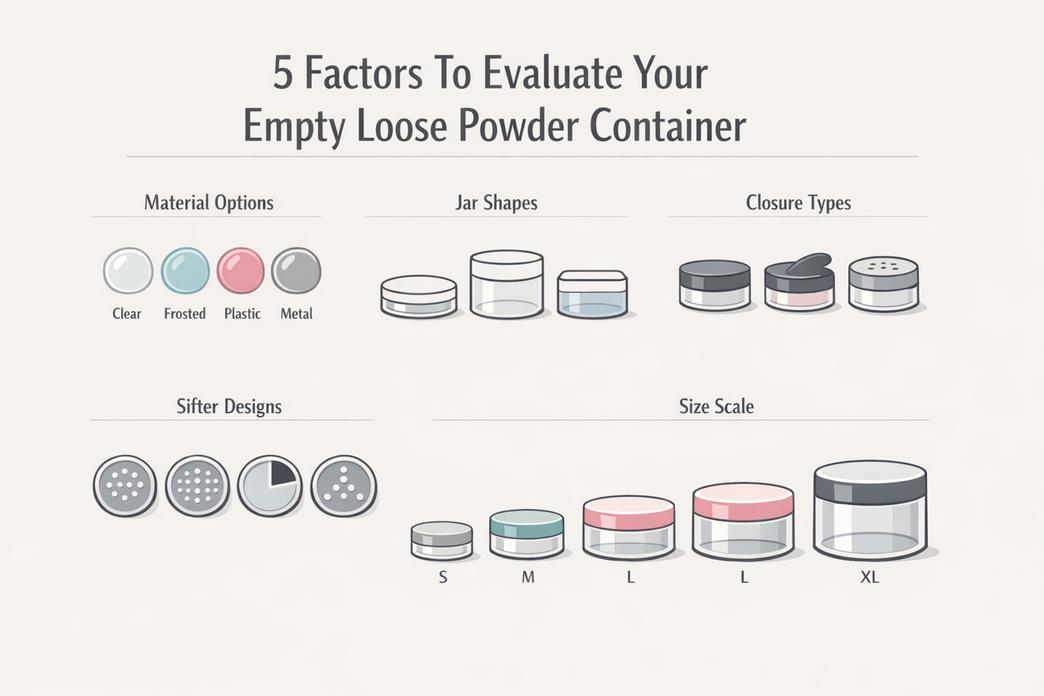
Material Options: Plastic, Glass, Bamboo & Aluminum
When selecting material, think in layers:
-
Core performance
- Plastic (PET, PP) → lightweight, cost-friendly, strong durability
- Glass → premium feel, heavier, highly recyclable
- Aluminum → sleek, protective, modern edge
- Bamboo → natural vibe, clearly eco-friendly
-
Brand positioning
- Luxury lines often prefer Glass or Aluminum
- Clean beauty brands lean toward Bamboo
- Mass retail favors high-quality Plastic
For an empty loose powder container, material impacts weight, shipping cost, and long-term storage. A good loose powder jar should protect formula freshness while matching your story. Topfeel offers flexible material solutions that balance style and function.
Shape Selection: Round, Square, Oval or Custom Silhouettes
Shape defines shelf presence and user comfort.
- Round: classic, smooth grip, easy labeling.
- Square: space-saving, modern design lines.
- Oval: softer aesthetic, ergonomic hold.
- Custom silhouette: bold branding move.
For an empty loose powder container, shape also affects filling lines and packing efficiency. A well-planned powder container keeps things tidy in bags and display trays.
Closure Types: Screw Cap, Dome Lid, Flip-Top & Push-Button
Think about daily use and seal performance.
-
Screw Cap
- Reliable security
- Tight closure for travel
-
Dome Lid
- Elevated look
- Smooth lid contour
-
Flip-Top / Push-Button
- Quick access
- Controlled dispensing
A loose powder container must prevent spills. A strong seal keeps your empty loose powder container safe during shipping and in handbags.
Sifter Styles: Mesh, Star & Rotary Removable Options
Control is everything with loose powder.
-
Mesh sifter
- Fine, even application
- Soft finish
-
Star hole design
- Balanced powder flow
- Simple daily control
-
Rotary or removable dispenser
- Adjustable output
- Easy cleaning
For a smart empty loose powder container, pairing the right sifter with the right closure avoids mess and improves user experience.
Capacity Choices: From 5g to 100g for Every Need
Capacity shapes your sales plan.
-
Small size (5g–10g)
- Travel-friendly
- compact storage
-
Medium volume (20g–30g)
- Standard retail
- Balanced quantity
-
Large grams range (50g–100g)
- Pro use
- Bulk storage
An empty loose powder container in the right Capacity keeps costs aligned with target markets. From compact to large, smart sizing makes your powder container practical and profitable.
Material Matters: Plastic Vs. Glass Containers
Choosing the right material for an empty loose powder container is not just about looks. It affects cost, safety, shipping, and how your loose powder feels in hand.
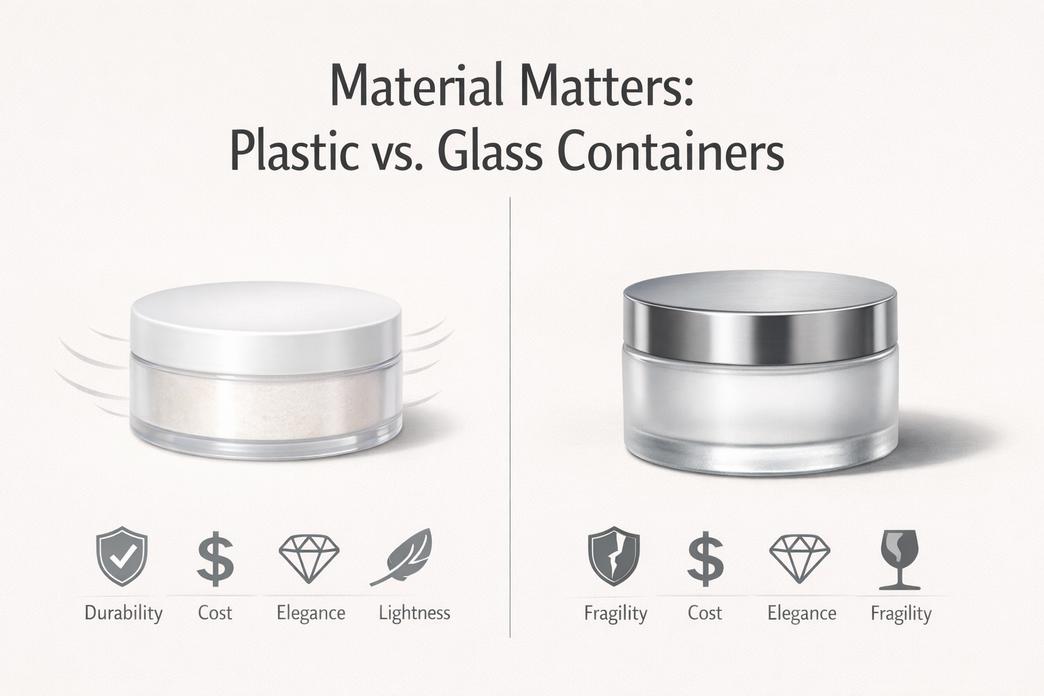
Plastic Containers
When brands design an empty loose powder container, plastic often becomes the go-to for practical reasons.
-
Core Performance
-
lightweight build
- lowers shipping fees
- makes each loose powder container easy to carry in a makeup bag
-
durable structure
- handles drops better than glass
- keeps the powder container intact during transit
-
shatterproof safety
- reduces return rates
- ideal for travel kits
-
-
Commercial Advantages
-
cost-effective production
- supports mass runs of empty powder packaging
- flexible mold designs for sifters and lids
-
portable and travel-friendly
- suits mini empty loose powder container sizes
- fits modern on-the-go lifestyles
-
-
Functional Traits
- flexible design options
- non-reactive compatibility with most loose powder formulas
Topfeel often recommends plastic for brands launching starter lines, especially when balancing budget and durability.
Glass Containers
Glass changes the vibe of an empty loose powder container instantly.
-
Sensory & Visual Appeal
-
elegant finish
- clear or frosted walls
- pairs well with metallic caps
-
premium weight
- feels substantial in hand
- signals high-end positioning
-
-
Material Strengths
-
non-porous surface
- protects powder purity
- enhances chemical resistance
-
strong aesthetic presence
- ideal for luxurious cosmetic collections
-
-
Trade-Offs
- heavy in shipping
- more fragile during long transport routes
For prestige beauty lines, Topfeel frequently develops glass empty loose powder container options that highlight brand value while keeping functionality tight.
How To Stack And Ship Containers Safely
Shipping an empty loose powder container sounds simple, yet small mistakes can lead to cracks, leaks, or dusty returns. When you’re moving bulk orders of empty powder jars or a full batch of empty loose powder container units, smart stacking and packing matter. Brands like Topfeel focus on safe transit from factory to shelf, and that mindset makes all the difference.
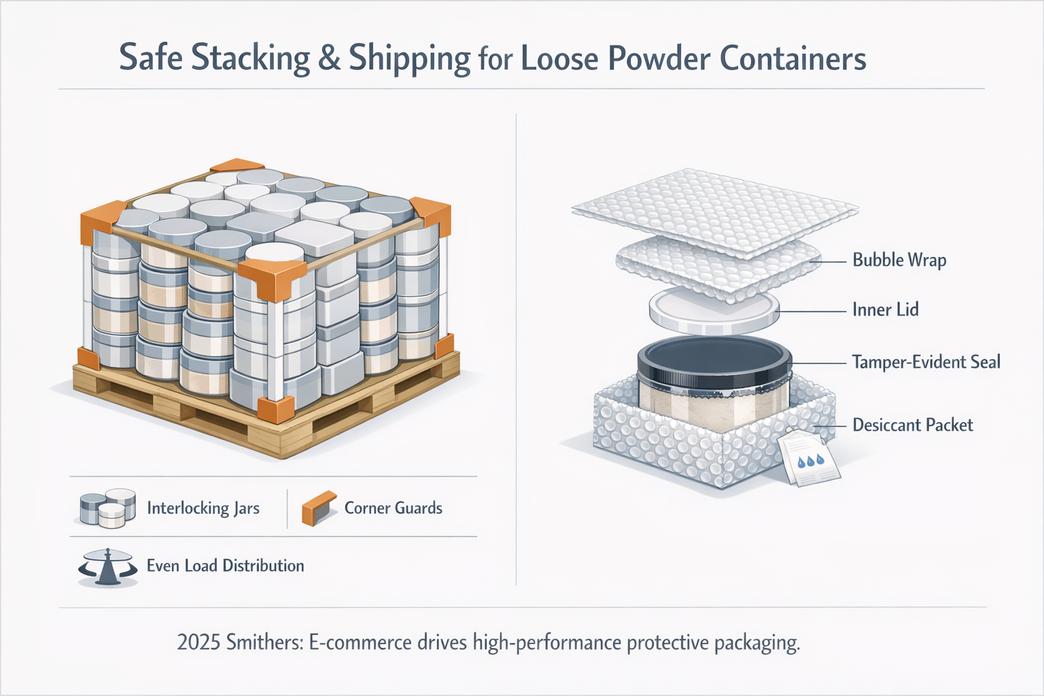
Optimal Stacking Patterns for Cylindrical and Square Jars
Strong stacking patterns protect every empty loose powder container during storage and transit. Stability starts at the base and builds upward with care.
-
For cylindrical jars
- Use interlocking rows to improve container stability.
- Offset each layer slightly to balance load distribution.
- Add corner guards during palletizing to reduce roll pressure.
-
For square jars
- Align edges flush for tighter interlocking.
- Keep weight evenly spread to avoid tilt.
- Maximize pallet footprint without overhang.
-
Mixed formats
- Place heavier powder container units at the bottom.
- Keep empty powder jars centered for shock control.
Topfeel recommends testing pallet stacks before mass shipment; a quick drop test can reveal weak stacking patterns fast.
Protective Packaging: Bubble Wrap, Inner Lid & Tamper-Evident Seals
Protection is more than tossing in some wrap and hoping for the best.
-
Cushioning layer:
- Use thick bubble wrap as a primary cushioning material.
- Add paper dividers between each empty loose powder container.
-
Internal protection:
- Secure an inner lid tightly to prevent powder dust escape.
- Apply reliable tamper-evident seals for visible container security.
-
Surface care:
- Scratch guards for glossy lids.
- Tight sealing methods to stop leakage during vibration.
A 2025 Smithers packaging outlook noted:
“E-commerce growth continues to push cosmetic brands toward higher-performance protective packaging, especially for refillable and loose powder formats.”
That’s why Topfeel integrates layered protective packaging solutions into every empty loose powder container order, keeping both bulk empty powder container shipments and small custom runs safe and clean.
Shipping Tips: Labeling, Pallets & Moisture Control
Transport success relies on clear shipping labels and smart handling.
-
Identification system
- Print clear container identification codes.
- Add batch numbers to each empty loose powder container carton.
- Scan-ready barcodes for smoother transport logistics.
-
Pallet preparation
- Use standard pallets with stretch wrap.
- Keep edges aligned to protect square jars and cylindrical units alike.
-
Climate care
- Insert desiccants inside cartons.
- Add liners for better moisture control.
- Monitor warehouse humidity regulation.
Loose powder packaging hates damp air. A dry route keeps every empty loose powder container crisp, clean, and retail-ready. Topfeel builds its shipping plan around that simple truth: protect the jar, protect the brand.
FAQs about Empty Loose Powder Container
What materials and shapes work best for an empty loose powder container?
Choosing the right combination shapes how customers feel the moment they hold it.
-
Materials:
- Plastic (PET, PP, ABS, PS) – lightweight and budget-friendly for bulk orders
- Acrylic or SAN – clear, glass-like shine with less weight
- Glass – premium, stable, ideal for frosted or metallic finishes
- Aluminum – durable, recyclable, great with UV coating
- Bamboo – natural look for eco-focused lines
-
Shapes:
- Round and cylindrical for classic cosmetic shelves
- Square or rectangular for tight pallet packing
- Oval or custom irregular designs for a unique signature
Surface choices like matte, glossy, soft-touch, hot stamping, or silk screening complete the emotional appeal.
How do I choose the right capacity and closure type?
Capacity affects daily use comfort; closure defines control.
-
Capacity options: 5g, 10g, 15g for samples or travel; 20g, 30g for retail; 50g–100g for professional kits. Volumes can be marked in ml or oz for global markets.
-
Closure styles:
- Screw cap or twist-off for secure transit
- Flip-top or snap-on for quick access
- Dome lid or push-button for visual impact
-
Inner protection: Add an inner lid or seal to prevent leakage during shipping.
A good balance keeps powder fresh while making daily application effortless.
What sifter and accessories improve user experience?
The sifter controls the story of every tap.
-
Sifter types:
- Mesh sifter – soft, even dusting
- Plastic or star sifter – stronger flow control
- Multiple hole or single hole sifter – adjust release intensity
- Rotary or removable sifter – easy cleaning and refill
Pair with thoughtful accessories: puff, sponge, brush, mirror, spatula, or tamper-evident seal. A clear or frosted empty loose powder container with a soft-touch finish and a smooth sifter turns routine makeup into a small, satisfying ritual.
References
- market – Grand View Research
- shelf appeal – NielsenIQ
- Plastic – Plastics News
- Glass – Glass Packaging Institute
- PP – British Plastics Federation
- recyclable – Ellen MacArthur Foundation
- Aluminum – The Aluminum Association
- target markets – McKinsey & Company
- shipping fees – FreightWaves
- luxurious – Packaging Digest
- stacking patterns – ThomasNet
- Smithers packaging outlook – Smithers
- protective packaging – Sustainable Packaging Coalition
- transport logistics – Logistics Management
- desiccants – ScienceDirect

