 English
  Español de México
  Français
  Deutsch
  Português do Brasil
  Italiano
  한국어
한국어  ไทย
ไทย  Русский
  日本語
日本語  Polski
  Svenska
  Türkçe

A Complete Guide to Cosmetic Glass Jars: Types, Uses & Benefits
April 16,2026
This guide gets into the jars themselves—the shapes that flatter creams, the benefits buyers bank on, and the bulk-buy headaches that keep teams up at night. If packaging decisions feel like walking a tightrope, you’re in the right place. The curtain’s about to rise.
Types Of Cosmetic Glass Jars By Shape
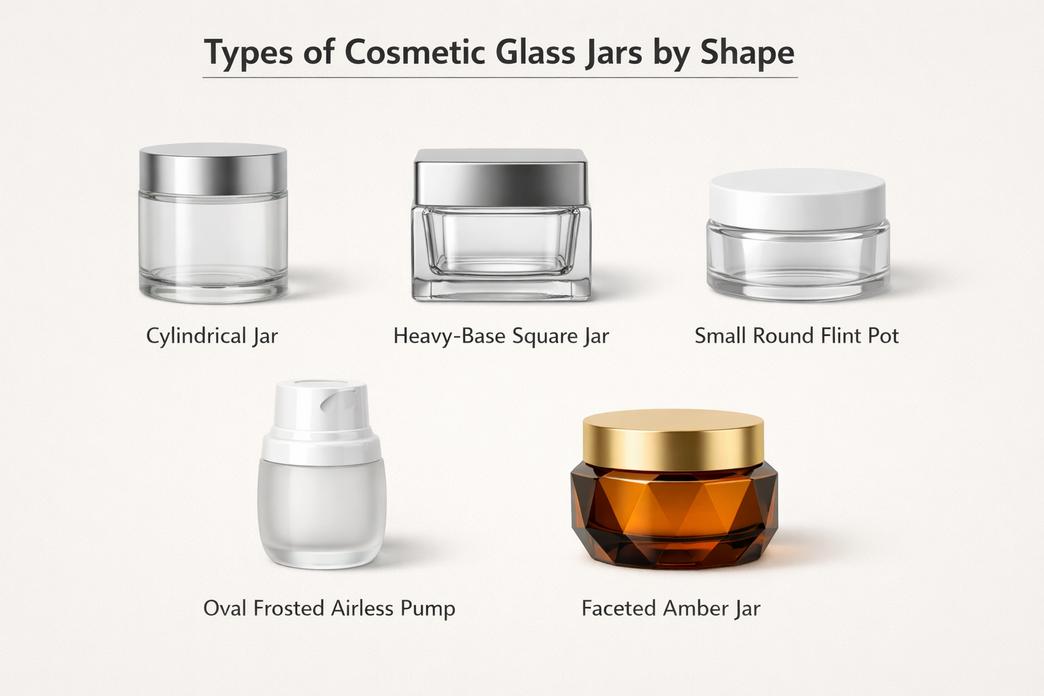
Choosing the right cosmetic glass jars isn’t just about looks. Shape affects stability, dosing, shelf vibe, and even how your cream feels in hand. From classic round glass jars to bold faceted bottles, smart glass packaging makes skincare stand out fast.
Cylindrical jars for creams and moisturizers
When it comes to daily-use cosmetic glass jars, the cylindrical shape stays popular for good reason.
-
Core design features
- Smooth vertical walls support clean labeling
- Balanced thickness for safe filling
- Compatible with screw caps and inner lids
-
Why brands love this format
- Easy integration into automated filling lines
- Works for both luxury and mass-market cream packaging
- Ideal for 30ml–50ml moisturizer containers
For brands working with Topfeel, customization often includes frosted finishes, UV coating, or color spraying. These glass containers feel solid in hand, and customers trust that weight. In the busy world of cosmetic glass jars, simple can still look high-end.
Square glass containers with heavy-base stability
Square formats bring attitude. These square shape designs in cosmetic glass jars often feature a heavy base, giving stable containers that don’t wobble on retail shelves.
-
Structural advantages
-
Thick-bottom construction
- Improves balance
- Adds a premium feel
-
Straight edges
- Clean stacking
- Sharp branding alignment
-
-
Best use cases
- Facial masks
- Balm formulas
- High-end skincare jars
Topfeel refines these cosmetic packaging solutions with precise mold control, ensuring every corner looks crisp. For brands wanting bold skincare jars, square glass bottles make a strong visual statement without going over the top.
Round flint glass pots ideal for eye creams
Small but mighty, these round shape flint glass pots are made for precision.
- Compact 5ml–15ml capacity suits eye cream pots.
- Smooth rims protect delicate formulas.
- Inner lids reduce contamination.
These small jars often pair with mini spatulas for neat application. In luxury skincare packaging, clarity matters. Flint glass shows the formula’s texture clearly, which builds trust. Among all cosmetic glass jars, this style feels refined and practical at the same time.
Oval frosted glass jars with airless pumps
Not every jar is basic. Some mix jar aesthetics with pump efficiency.
-
Design highlights
- Elegant oval shape
- Soft-touch frosted glass
- Integrated airless pump
The benefit goes beyond looks. Airless systems reduce oxidation and limit formula waste. For travel-size cosmetic jars, controlled dispensing keeps things tidy. Many brands choose Topfeel for this hybrid skincare packaging, blending modern style with functional protection in high-performance glass jars.
Faceted amber glass bottles for high-end gels
For active gels and light-sensitive formulas, amber glass makes sense.
-
Protective function
- Blocks UV exposure
- Extends product stability
-
Visual identity
-
Sharp faceted design
- Reflects light beautifully
- Enhances shelf appeal
-
Supports hot stamping and metallization
-
These premium bottles turn standard gel packaging into collector-level presentation. In the expanding market of cosmetic glass jars, specialty jars like this help brands stand out while keeping formulas safe.
4 Key Benefits Of Cosmetic Glass Jars
Cosmetic glass jars are not just good-looking containers. From UV defense to premium shelf appeal, the right glass cosmetic jar protects formulas and upgrades brand vibe. Let’s break down why cosmetic glass jars stay popular in skincare packaging.

UV protection from amber and opaque glass
When formulas contain retinol, vitamin C, or botanical extracts, light sensitivity becomes a real issue. That’s where UV protection from amber glass and opaque glass steps in.
-
Core Protection Logic
-
Light Exposure Risks
- Direct sunlight accelerates product degradation
- Indoor UV still affects active ingredients
-
Barrier Function
- Amber glass filters blue and UV light
- Opaque glass blocks visible light almost completely
-
-
Preservation Mechanism
- Reduced oxidation rate
- Improved ingredient stability
- Extended shelf life
For brands using cosmetic glass jars for serums or creams, this protection directly supports preservation goals. Glass jars cosmetic lines that focus on natural or active-heavy formulas often choose darker tones for this reason. It’s not just style—it’s science working quietly in the background.
Leak-proof screw cap and tamper-evident seal
A cream jar that leaks? Total nightmare. Good cosmetic glass jars avoid that with smart closure systems built around leak-proof engineering.
Here’s what usually matters:
- Precision-thread screw cap for tight sealing
- Inner lid to reduce air contact and maintain freshness
- Tamper-evident seal to protect product integrity
- Gasket layer for added security and spillage prevention
At the same time, packaging has to feel smooth in daily use. No one wants to wrestle with a lid at 7 a.m.
-
Functional benefits:
- Cleaner transport
- Lower return rates
- Stronger consumer trust
Glass cosmetic jars with secure caps are especially useful for masks and balms with thicker textures. Brands working with Topfeel often request customized closures to match formula density and filling temperature, keeping cosmetic glass jars practical and safe from factory to vanity shelf.
Double-wall and thick-bottom design boosts durability
Durability isn’t only about dropping the jar. It’s about long-term longevity, impact resistance, and everyday handling.
-
Structural Design
-
Outer Layer
- Shields against minor collisions
-
Inner Layer
- Holds the formula securely
-
Thick bottom
- Adds weight
- Improves balance on shelves
-
-
Performance Advantages
- Enhanced durability
- Improved protection during shipping
- Better thermal buffering
Below is a simplified comparison of structural performance in cosmetic glass jars:
| Structure Type | Average Wall Thickness (mm) | Drop Resistance Height (cm) | Thermal Stability Range (°C) | Weight Increase (%) |
|---|---|---|---|---|
| Single Wall Standard | 2.5 | 40 | -5 to 60 | 0 |
| Thick Bottom Only | 2.5 / 6 bottom | 55 | -5 to 65 | 8 |
| Double-Wall Light | 2.0 + 2.0 | 65 | -10 to 70 | 12 |
| Double-Wall Heavy | 2.5 + 2.5 | 80 | -15 to 75 | 18 |
| Reinforced Premium | 3.0 + 3.0 | 95 | -20 to 80 | 25 |
For high-end cosmetic glass jars, that extra structure signals quality the moment someone picks it up. It feels solid. And that feeling matters.
Clear glass with metallization for premium branding
Sometimes brands want formulas on display. Clear glass makes texture and color visible, boosting visual display and buyer confidence.
Add finishing touches, and things level up fast:
- Metallization for reflective shine
- Screen printing for sharp logos
- Hot stamping for bold accents
This mix enhances aesthetic appeal and strengthens brand image without hiding the product inside. For luxury skincare, premium branding often depends on that balance between transparency and decoration.
A well-designed glass cosmetic jar doesn’t scream for attention. It just looks expensive. That subtle confidence is why cosmetic glass jars remain a top pick for upscale collections—and why brands like Topfeel keep refining decoration techniques to meet rising expectations.
In the end, cosmetic glass jars combine protection, function, strength, and style in one neat package. Not bad for something that just sits on a shelf, right?
3 Pain Points In Bulk Jar Purchasing
Bulk buying cosmetic glass jars sounds simple, yet real-life sourcing gets messy fast. From small glass jars for trial creams to full-scale cosmetic packaging runs, brands hit friction. Let’s break down what really slows down bulk procurement of cosmetic glass jars.
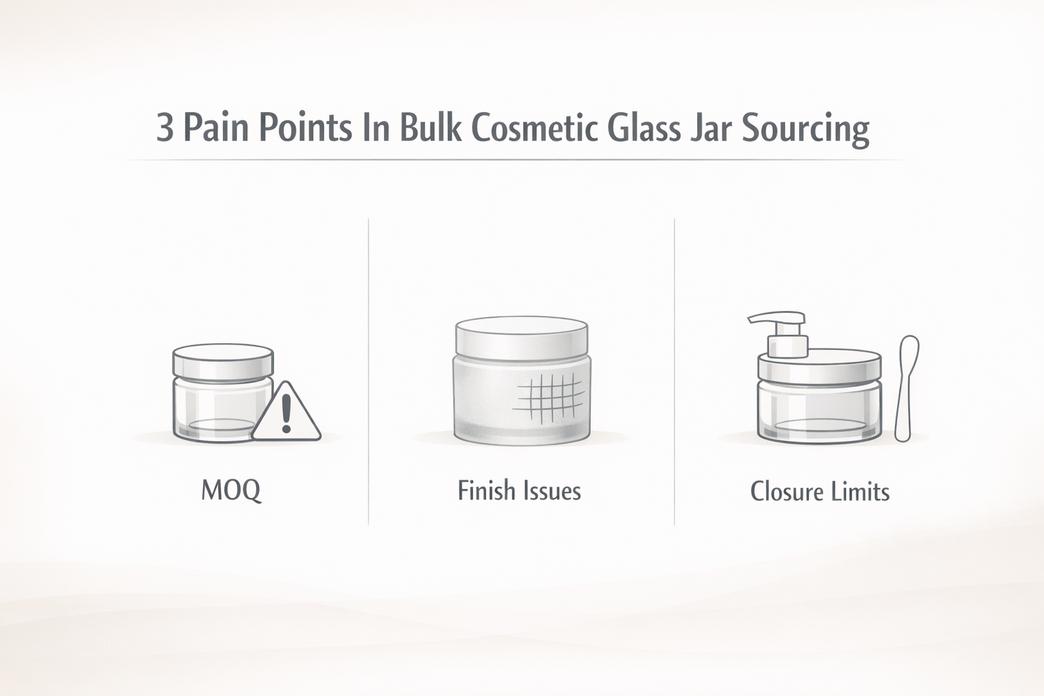
MOQ challenges for travel-size 5ml–15ml jars
When sourcing small volume jars for eye creams or gels, brands often face:
-
Supplier MOQ Barriers
1.1 High minimums on 5ml–15ml skincare containers
1.2 Limited flexibility for sample sizes
1.3 Extra cost pressure during bulk procurement testing
-
Production Constraints
2.1 Molds optimized for standard travel-friendly packaging
2.2 Short runs increasing per-unit cost of cosmetic glass jars
2.3 Inventory risk for startups
-
Brand Impact
3.1 Cash tied up in slow-moving stock
3.2 Reduced agility in new product launches
Topfeel supports brands by offering flexible MOQs for cosmetic glass jars, helping balance trial launches with scalable growth.
Inconsistent surface finishes: frosting vs. screen printing
Surface details can make or break premium glass jar finishes.
-
Frosted Glass Issues
1.1 Uneven texture in frosted glass batches
1.2 Tone variation affecting aesthetic appeal
1.3 Surface flaws impacting branding elements
-
Printing Challenges
2.1 Misaligned screen printing on curved jars
2.2 Color drift during large-volume runs
2.3 Adhesion issues after repeated handling
-
Customization Gaps
3.1 Inconsistent surface treatment specs
3.2 Limited real-time QC updates
With strict QC systems, Topfeel aligns frosting and printing standards across every lot of cosmetic glass jars, keeping branding sharp and consistent.
Limited closure options: sourcing airless pumps or spatulas
Matching jars with the right jar closures often means juggling suppliers.
-
Functional Compatibility
1.1 Sizing mismatch with airless pumps
1.2 Thread inconsistencies across dispensing mechanisms
1.3 Seal failures in refillable glass containers
-
Accessory Coordination
2.1 Delays sourcing spatulas
2.2 Separate tooling for packaging accessories
2.3 Increased freight costs
-
Operational Complexity
3.1 Longer lead times
3.2 Split quality accountability
3.3 Higher procurement stress
By integrating functional packaging components with cosmetic glass jars, Topfeel reduces supplier juggling and keeps production timelines on track.
FAQs about Cosmetic Glass Jars
What types of cosmetic glass jars are most popular for skincare products?
The choice often reflects both formula texture and brand personality.
- Cylindrical & round jars (30ml, 50ml) – classic for cream and moisturizer; usually in clear glass or frosted glass with a screw cap and inner lid.
- Square or faceted heavy-base jars (50ml, 100ml) – thick-bottom design adds weight and luxury for mask and balm lines.
- Mini 5ml–15ml round or oval pots – perfect for eye cream and travel-size sets, often paired with a spatula.
- Tapered or rectangular amber glass jars – crafted for gel formulas that need UV protection.
Each shape quietly signals how the product should feel in the hand.
How do amber and opaque glass jars protect cosmetic formulas?
Light can quietly weaken an active cream or gel. Amber glass and opaque glass create a protective barrier with built‑in UV protection, helping preserve:
- Sensitive eye cream in 10ml or 15ml sizes
- Vitamin-rich moisturizer in 30ml or 50ml jars
- Botanical balm stored in 100ml containers
Combined with a leak-proof screw cap or airless pump, the formula stays stable, fresh, and visually refined on the shelf.
What closure options work best for different cosmetic products?
Closures shape daily user experience as much as the jar itself.
| Cosmetic Product | Recommended Closure | Functional Benefit |
|---|---|---|
| Cream / Moisturizer | Screw cap + inner lid | Leak-proof, clean storage |
| Eye cream (5ml–10ml) | Screw cap + spatula | Hygienic application |
| Gel | Airless pump | Airless protection, reduced oxidation |
| Balm / Mask | Snap-on lid or tamper-evident seal | Secure during transport |
The right match prevents spills, protects texture, and builds trust from first twist to last scoop.
Why do premium brands prefer thick-bottom or double-wall cosmetic glass jars?
Luxury is often felt before it is seen.
- A thick-bottom or heavy-base square or faceted jar adds visual depth.
- Double-wall construction improves impact resistance and insulation.
- Surface finishes—frosting, UV coating, metallization, hot stamping, or screen printing—elevate clear glass or flint glass into statement packaging.
- Soda-lime glass or recycled glass options maintain chemical resistance while supporting sustainability goals.
In the hand, the weight feels deliberate. On the vanity, it feels permanent.
References
- All About Filling Machines – thomasnet.com
- The Evolution of Airless Packaging – beautypackaging.com
- Amber Glass Overview – sciencedirect.com
- Vitamin C Stability in Cosmetics – ncbi.nlm.nih.gov
- Cosmetics Shelf Life & Expiration Dating – fda.gov
- Tamper-Evident Packaging Requirements – fda.gov
- Impact Strength of Plastics & Materials – matweb.com
- Thermal Stability Explained – sciencedirect.com
- Vacuum Metallizing for Cosmetics Packaging – pfonline.com
- All About Hot Stamping – thomasnet.com
- Screen Printing Process – wikipedia.org
- Soda-Lime Glass Manufacture – britannica.com
- Glass Material-Specific Data – epa.gov

