 English
  Español de México
  Français
  Deutsch
  Português do Brasil
  Italiano
  한국어
한국어  ไทย
ไทย  Русский
  日本語
日本語  Polski
  Svenska
  Türkçe

Eco-Friendly Concealer Packaging You Can Trust
March 25,2026
Concealer Packaging isn’t just a plastic shell—it’s the silent wingman of your beauty brand. Customers spot it before they ever swipe a wand. If it feels flimsy or wasteful, that’s game over. In today’s market, eco-claims get side‑eyed fast, and retailers are cracking down on excess plastic like it’s last season’s trend.
Sourcing sustainable packaging can feel like dating apps for procurement—lots of promises, not enough follow‑through. Recycled content that flakes. Certifications that sound fancy but say nothing. Lead times that stretch longer than a Monday morning.
This is where smart design meets straight talk: materials that cut waste, certifications that stand up to scrutiny, and production that doesn’t miss deadlines. Because your brand deserves packaging that walks the talk—and ships on time.
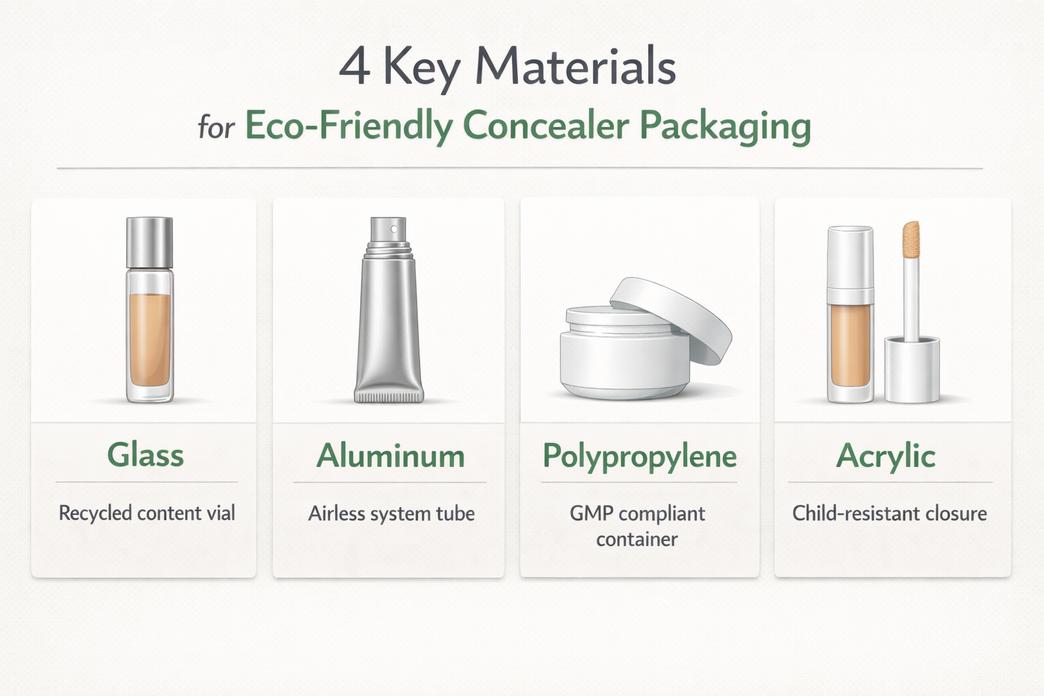
4 Key Materials for Eco-Friendly Concealer Packaging
Sustainable Concealer Packaging is not just about looking good on a shelf. It’s about smart material choices, safe formulas, and lower carbon footprints. From eco glass to refillable plastic, today’s concealer packaging blends style with science. Let’s break down what really works in modern concealer containers.
Glass vial with recycled content and sleek profile
When it comes to premium Concealer Packaging, a glass vial made with recycled content sets the tone. It feels solid in hand. Clean. Honest.
Under the hood, performance matters:
-
Material Composition
- Post-consumer recycled glass (PCR % varies by batch)
- High chemical stability for active concealer formulas
- Non-reactive interior surface
-
Design Features
- Slim sleek profile for luxury positioning
- Compatible with dropper caps or pump dispensers
- Clear or frosted finish options
-
Sustainability Impact
- Lower virgin raw material demand
- Fully recyclable cosmetic container
- Reduced long-term landfill waste
Here’s a quick data snapshot often reviewed during packaging development for beauty brands and partners like Topfeelpack:
| Property | Standard Glass | 30% Recycled Content | 50% Recycled Content | Testing Standard | Result Type |
|---|---|---|---|---|---|
| Chemical Resistance (pH 3–8) | High | High | High | ISO 4802 | Pass |
| Average Weight (g/10ml) | 28g | 26g | 25g | Internal Lab | Measured |
| Carbon Emission (kg CO₂/t) | 850 | 720 | 640 | LCA Model | Estimated |
| Recyclability Rate (%) | 100% | 100% | 100% | Local System | Verified |
| Breakage Resistance (Drop) | 0.8m | 0.8m | 0.75m | ASTM D2463 | Pass |
For brands focused on eco-friendly material choices in Concealer Packaging, glass remains a strong, stylish contender.
Aluminum tube using an airless system and bulk shipping efficiency
An aluminum** tube** brings serious function to concealer packaging design. Light. Tough. Recyclable.
Inside, the airless system protects product preservation by limiting oxygen exposure. That means:
- Less contamination risk
- Longer shelf life
- More stable pigment performance
From a logistics angle, this metal packaging format shines:
- Lightweight walls reduce freight weight
- Collapsible body minimizes leftover product waste
- Compact shape supports bulk shipping efficiency
For global beauty brands, packaging efficiency matters as much as aesthetics. Aluminum tubes stack neatly in cartons, cut dead space, and move smoothly through freight forwarding and warehouse handling. That translates into fewer shipments and lower fuel use.
As a practical Concealer Packaging solution, aluminum balances sustainability with real-world distribution needs.
Polypropylene container made via injection molding, meeting GMP standards
A polypropylene container produced through injection molding remains one of the most adaptable options in concealer containers today.
Here’s how it typically comes together:
-
Raw Material Control
- Food-grade or cosmetic-grade durable plastic
- Verified supplier documentation
-
Manufacturing Process
- High-precision injection molding machines
- Automated cavity inspection
- In-line weight and dimension checks
-
Compliance & Safety
- Production aligned with GMP standards
- Clean-room filling compatibility
- Traceable batch coding
Short and simple: it’s hygienic packaging that works.
Twist-up bases? Easy.
Sponge tips? No problem.
Refillable design? Absolutely doable.
Because polypropylene is lightweight and impact-resistant, it handles daily drops in makeup bags without drama. For brands scaling fast, this type of Concealer Packaging keeps costs steady while maintaining quality control.
Acrylic applicator wand featuring a child-resistant closure
The acrylic applicator isn’t just about looks. It’s about grip, glide, and safety.
In modern Concealer Packaging, the applicator wand connects formula to skin. A smooth stem. A balanced brush. A precise dispensing mechanism that controls product flow.
Now add protection:
- Child-safe cap torque design
- Certified child-resistant closure system
- Tamper-evident outer seal
These safety features matter, especially in markets aligned with EU cosmetics directives. Automated assembly lines integrate brush insertion, torque testing, and seal verification in one continuous flow.
Acrylic offers clarity and rigidity, making the cosmetic tool visually appealing while maintaining structural strength. Paired with sustainable primary packaging, it completes a thoughtful Concealer Packaging system that feels premium yet responsible.
Smart materials. Smart design. Better beauty packaging, without overcomplicating it.
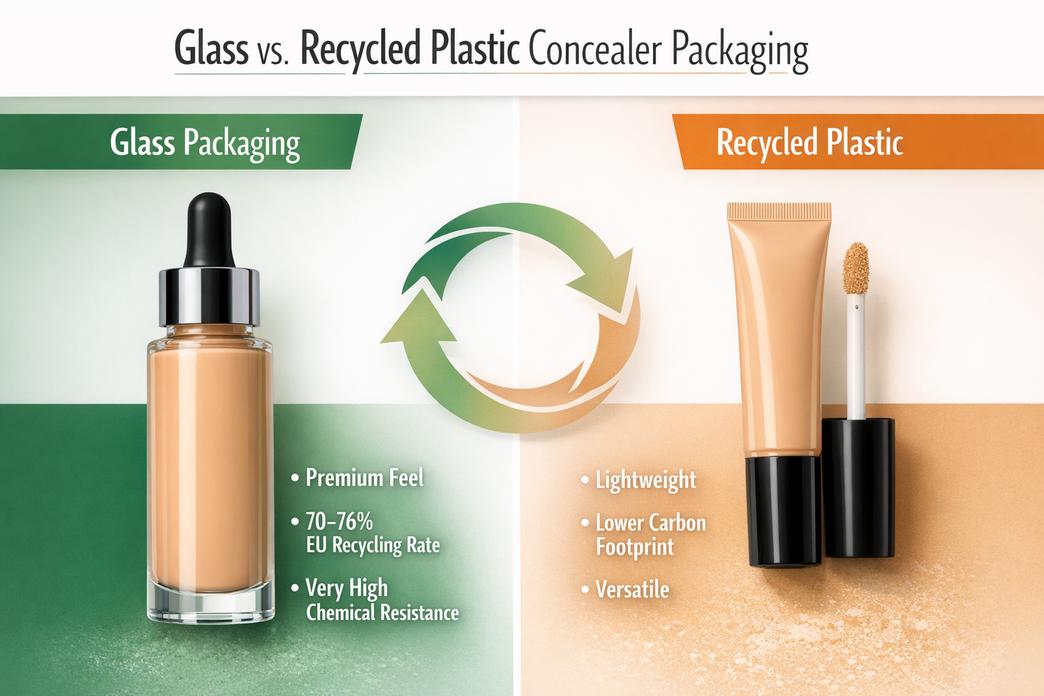
Glass vs. Recycled Plastic Concealer Packaging
Choosing the right Concealer Packaging is not just about looks. It affects formula safety, shipping costs, and how customers feel when holding the product. Let’s break down how glass and recycled plastic packaging really compare in daily business.
Glass
In high-performance Concealer Packaging, glass stands out for technical and brand-driven reasons.
-
Material Performance
1.1 Barrier Strength
- High inertness keeps active ingredients stable.
- Strong light barrier options protect vitamin-based formulas.
1.2 Structural Quality
- Excellent durability under normal cosmetic use.
- Noticeable weight gives a premium feel in luxury concealer containers.
-
Sustainability Profile
2.1 End-of-Life Value
- Infinite-loop recyclability without quality loss.
2.2 Waste Sorting Compatibility
- Widely accepted in municipal recycling streams.
-
Operational Considerations
| Property | Glass Packaging | Impact on Concealer Packaging |
|---|---|---|
| Average Weight (g) | 40–120 | Higher freight cost |
| Recycling Rate (EU %) | 70–76 | Strong circular potential |
| Chemical Resistance | Very High | Ideal for active formulas |
For brands working with Topfeelpack, glass Concealer Packaging often suits prestige concealer packaging lines where formula protection and visual clarity matter most.
Recycled Plastic
Recycled resin changes the conversation around Concealer Packaging in a practical way.
• Supports reduced waste targets
• Promotes a circular economy approach
• Maintains compliance with REACH and heavy metal standards
In daily logistics, recycled plastic wins on lightweight handling and strong impact resistance. That means fewer breakages during shipping of concealer containers.
- Production flexibility
- Blow molding enables creative shapes.
- Lower MOQs help indie brands launch faster.
- Environmental angle
- Lower carbon footprint compared with virgin resin.
- Encourages refill-ready cosmetic packaging formats.
Because of its versatility, recycled plastic Concealer Packaging works well for mass-market makeup packaging and refillable concealer packaging programs.
At Topfeelpack, brands often mix materials—glass for flagship lines, recycled plastic for high-volume SKUs—keeping their Concealer Packaging strategy both stylish and practical.
How Can You Verify Eco Certification Seals?
Choosing Concealer Packaging today is not just about looks. It’s about safety, proof, and real eco claims. If a supplier says their concealer container is certified and green, you’ll want receipts, not vibes. Here’s how to check smartly.
Check ISO certification: ensuring REACH compliance
When reviewing Concealer Packaging, start with documentation tied to ISO certification and REACH compliance. For cosmetic concealer packaging, paperwork tells the real story.
-
ISO Certification Review
1.1 Validate certificate number
- Confirm issuing body accreditation
- Cross-check expiration date
1.2 Audit Scope
- Ensure it covers chemical safety in packaging production
- Match factory address with actual supplier site
-
REACH Compliance Verification
2.1 Substance Registration
- Review records for restricted substances under environmental regulations
2.2 SVHC Screening
- Confirm testing against updated candidate lists
2.3 Declaration of Conformity
- Signed and stamped by compliance officer
-
Regulatory Alignment for Product Safety
3.1 Compare with EU and FDA cosmetic contact standards
3.2 Request audit history for at least 2 years
3.3 Confirm traceability system for raw resin batches
For brands sourcing concealer tube packaging, Topfeelpack provides full compliance files with clear audit trails. That saves time and avoids back-and-forth emails. Clean documents mean fewer launch delays.
Review material safety data sheet and heavy metal testing results
A legit material safety data sheet (MSDS) backs up every safe claim in Concealer Packaging.
-
Substance Analysis Check
1.1 Verify chemical composition of PP, PET, or PCR resin
1.2 Confirm absence of banned plasticizers
-
Heavy Metal Testing Validation
2.1 Request third-party heavy metal testing report
2.2 Review testing results for lead (Pb), cadmium (Cd), mercury (Hg), chromium (Cr)
2.3 Match batch number to production lot
-
Toxicology and Product Safety Data Review
| Test Item | Standard Limit (ppm) | Result (ppm) | Compliance Status |
|---|---|---|---|
| Lead (Pb) | ≤10 | 2.1 | Pass |
| Cadmium (Cd) | ≤5 | 0.8 | Pass |
| Mercury (Hg) | ≤1 | 0.2 | Pass |
| Chromium (Cr) | ≤10 | 3.4 | Pass |
For packaging for concealer used near the eye area, clean toxicology reports matter. A reliable supplier will explain the numbers in plain language, not hide behind lab jargon. Topfeelpack shares batch-based safety data for each concealer container shipment, which keeps brand compliance teams relaxed.
Confirm supplier sustainability practices and lead time measurements
Eco claims in Concealer Packaging should connect to real supplier sustainability systems and measurable lead time performance.
-
Sustainability Practices Review
1.1 Raw Material Sourcing
- % of PCR or bio-based resin
- Proof of ethical sourcing
1.2 Factory Operations
- Energy consumption tracking
- Waste recycling rate
1.3 Environmental Impact Reporting
- Annual carbon disclosure
“Sustainability is now a competitive advantage in beauty packaging, with brands expected to demand traceable materials and transparent reporting across the value chain.” — McKinsey & Company, The State of Fashion & Beauty 2024 update
-
Supply Chain & Production Efficiency Check
2.1 Average production cycle (days)
2.2 On-time shipment rate (%)
2.3 MOQ flexibility for new concealer packaging designs
-
Lead Time Stability for Global Distribution
3.1 Regional warehouse support
3.2 Buffer stock strategy
3.3 Emergency reorder capability
For fast-moving cosmetic concealer packaging projects, stable lead time can make or break a launch. Topfeelpack aligns eco-certified concealer tube packaging with tight production schedules, helping brands stay green and stay on shelf.
FAQs about Concealer Packaging
What eco-friendly materials work best for Concealer Packaging?
Selecting materials is a balance between safety, look, and sustainability:
- Glass vial with recycled content — stable formulas, sleek profile, easy compliance with FDA regulations.
- Aluminum tube with airless system — shields product from oxygen, ideal for bulk shipping.
- Polypropylene (PP) made through injection molding — lightweight, refillable design potential.
- Plastic resin with recycled content — lowers carbon impact while meeting REACH compliance.
Each option can pass heavy metal testing and align with the EU cosmetics directive when sourced from ISO-certified suppliers.
Why do global brands prefer airless aluminum tubes?
Airless aluminum tubes combine protection and logistics efficiency.
- The airless system reduces contamination and extends shelf life.
- Lightweight structure cuts freight forwarding costs during global distribution.
- Consistent tube dimensions simplify warehousing solutions and inventory management.
When paired with GMP standards and strong quality control on the assembly line, the result is stable performance across long lead times.
Which components can be customized in Concealer Packaging?
Customization shapes user experience and brand identity.
➤ Applicator wand: brush applicator, sponge tip, or ergonomic shape for precision.
➤ Closure systems: child-resistant closure or tamper-evident seal for safety.
➤ Dispensing options: dropper cap, pump dispenser, or twist-up mechanism for dosage control.
➤ Surface finish: decoration techniques on acrylic or glass vial for a refined look.
Suppliers often support low minimum order quantity with flexible customization options and technical support throughout automated production.
How can buyers confirm compliance and supplier reliability?
Trust is built through documentation and process transparency.
A reliable supplier provides ISO certification, material safety data sheet documentation, and proof of REACH compliance. Production should follow GMP standards with strict quality control from blow molding or injection molding to final assembly line checks.
Strong sustainability practices, clear lead time commitments, and just-in-time delivery programs ensure Concealer Packaging arrives ready for market without delays.
References
- recycled content – epa.gov / Environmental Protection Agency
- carbon footprints – nature.org / The Nature Conservancy
- ISO 4802 – iso.org / International Organization for Standardization
- ASTM D2463 – astm.org / ASTM International
- aluminum – aluminum.org / The Aluminum Association
- injection molding – wikipedia.org / Wikipedia
- GMP standards – ispe.org / ISPE
- child-resistant closure – cpsc.gov / Consumer Product Safety Commission
- EU cosmetics directives – europa.eu / European Commission
- circular economy – ellenmacarthurfoundation.org / Ellen MacArthur Foundation
- ISO certification – iso.org / International Organization for Standardization
- REACH compliance – echa.europa.eu / European Chemicals Agency
- material safety data sheet – osha.gov / OSHA
- heavy metal testing – fda.gov / FDA
- McKinsey & Company, The State of Fashion & Beauty 2024 update – mckinsey.com / McKinsey & Company

