 English
  Español de México
  Français
  Deutsch
  Português do Brasil
  Italiano
  한국어
한국어  ไทย
ไทย  Русский
  日本語
日本語  Polski
  Svenska
  Türkçe

Why Quality Chapstick Empty Tubes Matter?
April 23,2026
Quality chapstick empty tubes make or break your lip balm brand, plain and simple. If the tube cracks, sticks, or pops open, customers blame you.
Smooth twist, snug cap, sturdy plastic—small details, big consequences. Get packaging right, and your product feels premium before it touches lips.
Harmonic Key Points for Chapstick Empty Tubes
➔ Material & Mechanism: Choose sturdy Polypropylene or ABS with precision injection molding and smooth twist-up action to ensure a premium feel.
➔ Inspection Essentials: Check finish, cap fit, and plunger movement—confirm secure closure, no backflow, and reliable retraction.
➔ Durability & Sustainability: Opt for resilient plastics or refillable designs, balance wall thickness for drop resistance, and consider mono-material recycling or PCR content.
Quality vs. Cost: Empty Tubes Examined
Choosing the right chapstick empty tubes can feel simple, but the details tell a different story. From lip balm tubes to empty chapstick containers, every small design choice affects brand image and user vibe. Let’s break down how Quality and Cost shape decisions around chapstick empty tubes in real-world production.
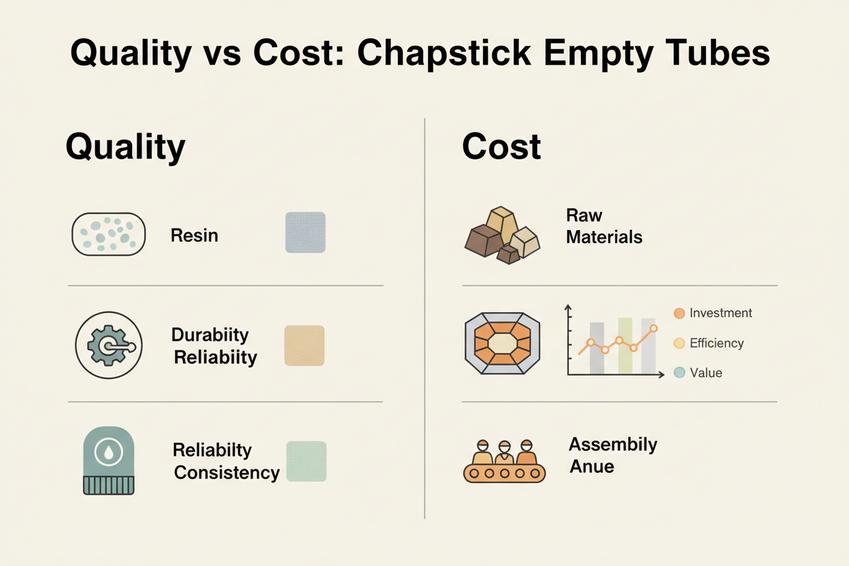
Quality
When evaluating chapstick empty tubes, quality starts with core structure and moves outward.
-
Material Foundation
1.1 Resin Selection
- Polypropylene for balanced Durability and lightweight feel
- Polyethylene for soft squeeze and daily Functionality
- ABS for rigid Design impact and added Reliability
1.2 Material Performance
- Resistance to cracking
- Stable wall thickness
- Clean inner surface for balm filling
-
Structural Engineering
2.1 Twist Mechanism
- Smooth rotation without backflow
- Stable lift platform for consistent balm rise
- Tested for long-term Consistency
2.2 Leak-proof System
- Tight cap fit
- Inner seal precision
- Reduced product waste
-
Surface & Branding Finish
3.1 Decoration Options
- Silk screen printing
- Hot stamping
- Matte or glossy coating
3.2 Quality Control
- Batch sampling
- Torque testing
- Visual inspection
For brands sourcing lip balm empty tubes or custom chapstick tubes, Topfeel focuses on steady Reliability and refined Design, so every batch of chapstick empty tubes feels dependable in hand and on shelf.
Cost
Cost is not just about price tags on chapstick empty tubes. It’s about smart Investment and long-term Value.
Material grade drives base Expense. Higher resin purity improves Durability, yet increases Manufacturing input. Tooling is another big factor. Precision molds raise upfront Investment, but boost Production Efficiency over time.
Here’s how cost usually unfolds:
- Raw material selection
- Mold development
- Assembly complexity
- Decoration process
- Order volume scaling
Small runs of chapstick containers cost more per unit. Larger orders of chapstick empty tubes reduce unit Expense and improve overall Budget planning.
Sustainability also shifts numbers. PCR plastic or mono-material lip balm tubes support eco goals, though initial Production costs may climb. Still, the long-term Value in brand trust often outweighs short-term savings.
Balancing Quality and Cost is the real game. With Topfeel, brands sourcing empty lip balm tubes or bulk chapstick empty tubes can fine-tune Budget, protect Consistency, and keep Manufacturing efficient without cutting corners.
2 Simple Steps to Inspect Tube Quality
Buying chapstick empty tubes shouldn’t feel like a gamble. A quick hands-on check saves messy returns, wasted filling time, and brand headaches—especially when empty chapstick tubes head straight to production lines.
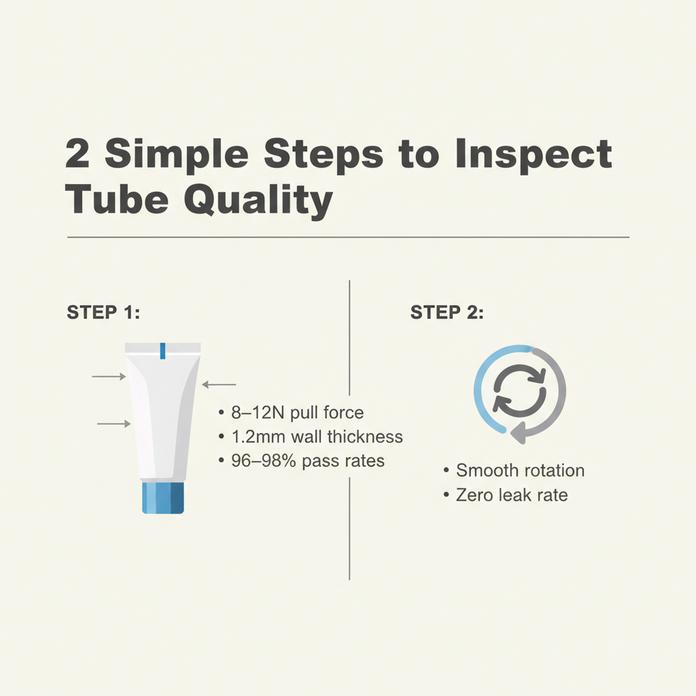
Step 1 – Check Material Finish and Cap Fit
A tube tells on itself fast if you slow down and really look. Start with material composition and surface texture. Gloss, matte, or frosted finishes should look even, not cloudy or patchy. When handling chapstick empty tubes, your fingers usually catch flaws before your eyes do.
Key checks tend to stack like this:
-
Tube integrity
- Wall thickness stays consistent when gently squeezed
- No soft spots near the shoulder or base
-
Closure alignment
- Cap drops straight without forcing
- No wobble once seated
-
Cap security
- Audible click or firm stop
- Consistent pull-off force across samples
-
Sealing performance
- No light leaks when capped
- Formula-safe closure for lip balm tubes and empty chapstick tubes
Factories supplying Topfeel often log these details during incoming inspections because loose caps on chapstick empty tubes can wreck shipping cartons fast.
A simple comparison table used by QC teams helps spot problems early:
| Inspection Item | Target Range | Acceptable Variance | Test Method | Pass Rate (%) |
|---|---|---|---|---|
| Cap Pull Force (N) | 8–12 | ±1.5 | Manual gauge | 96 |
| Wall Thickness (mm) | 1.2 | ±0.1 | Micrometer | 94 |
| Cap Alignment (°) | 0 | ≤1 | Visual jig | 97 |
| Surface Defect Rate (%) | 0 | ≤2 | Visual scan | 95 |
| Seal Leak Rate (%) | 0 | 0 | Light test | 98 |
Step 2 – Test Twist-up Mechanism and Plunger Action
This part separates decent empty chapstick tubes from the ones that jam halfway through filling. The twist mechanism should feel calm, not crunchy. Slow turns expose issues in internal gearing fast.
What experienced operators watch for:
• Smooth rotation without clicks
• Plunger function that lifts evenly
• Dispensing consistency with no tilt
• Retraction reliability after full extension
Now the deeper breakdown used on stick lines:
-
Operational feel
- Resistance stays even from start to top
- No sudden torque jumps
-
Mechanical test
- Dry twist test
- Filled simulation with warm formula
-
Backflow control
- No drop after release
- Stable base lock
Brands like Topfeel test chapstick empty tubes this way because customers notice when a concealer stick sinks back. Empty tubes that pass here usually behave just as well once filled, boxed, and shipped.
Empty Tube Durability: Why It Matters
Empty tubes might look simple, yet the life of chapstick empty tubes depends on material strength, smart structure, and daily handling. From factory floor to pocket drop, durability decides brand trust.
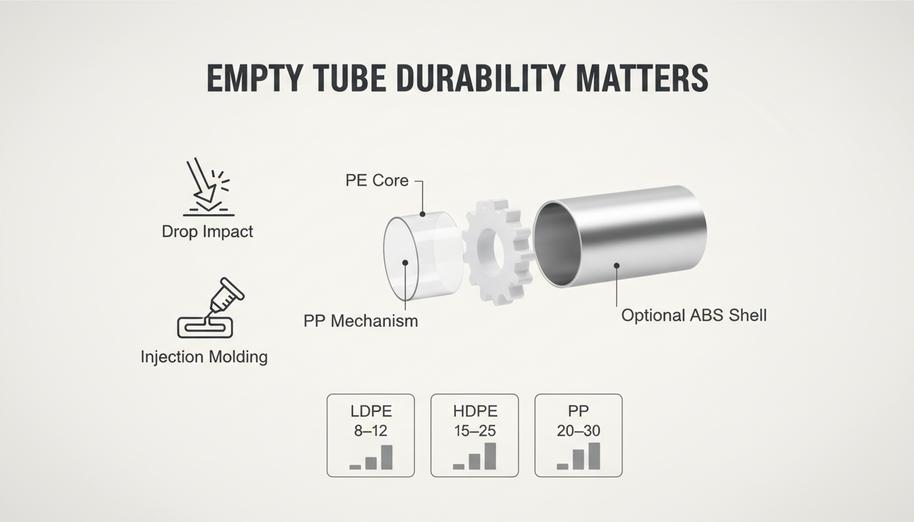
Injection molding and Polyethylene resilience
When producing chapstick empty tubes, durability starts with Injection molding and the science behind polymers.
-
Material foundation
-
Polyethylene in Polymer science
- High molecular density improves Material resilience
- Flexible chains reduce cracking under stress
-
Polypropylene alternatives
- Higher heat tolerance
- Suitable for hot-fill lip balm sticks
-
-
Molding process control
- Melt temperature balance
- Cooling rate precision
- Gate design in the Molding process
-
Performance comparison in Plastic durability
| Material Type | Impact Strength (kJ/m²) | Flexural Modulus (MPa) | Common Use in chapstick empty tubes |
|---|---|---|---|
| LDPE | 8–12 | 200–400 | Soft squeeze balm tube |
| HDPE | 15–25 | 800–1200 | Standard lip balm container |
| PP | 20–30 | 1200–1700 | Twist-up empty lip balm tubes |
| ABS | 18–22 | 1500–2500 | Outer decorative shell |
High-quality Manufacturing techniques reduce weak weld lines, helping chapstick empty tubes survive shipping bumps and warehouse stacking. Brands like Topfeel apply tight cycle control so empty lip balm tubes keep shape, even after rough transit.
Ergonomics in stick packaging for drop resistance
Good Ergonomic design feels natural in hand. That grip matters.
- Balanced wall thickness supports Structural integrity
- Rounded shoulders soften Drop impact
- Textured surfaces improve User handling
In real life, Stick packaging falls from desks, pockets, and car seats. So impact tests simulate waist‑height drops onto steel plates. ABS shells add Impact resistance, while inner PP cores protect the balm.
-
Design focus
- Center of gravity alignment
- Reinforced base ring
-
Testing
- 1.2 m vertical drop
- Repeated corner impact
Smart Durability engineering means chapstick empty tubes don’t crack after one bad fall. Topfeel refines packaging form details so chap stick containers last longer and look clean, not beat up.
Refillable packaging versus disposable tube lifespan
The debate around Refillable packaging and Disposable tubes links directly to Product lifespan and Sustainability.
-
Refillable models
-
Outer shell
- ABS or aluminum for Packaging longevity
-
Inner cartridge
- Replaceable PE core
-
Benefits
- Lower Environmental footprint
- Supports Reuse models
-
-
Disposable chapstick empty tubes
- Mono‑material PE
- Lightweight for easier Waste management
- Lower tooling cost
Refillable empty chapstick tubes stay in use for years, while single-use chapstick empty tubes focus on simple recycling streams. The smart move depends on brand positioning, cost target, and how long you want that tube hanging around in someone’s pocket.
FAQs about Chapstick empty tubes
What affects quality when ordering chapstick empty tubes in bulk?
Quality is shaped long before production runs.
- Material choice
- Plastic (Polypropylene, Polyethylene) for daily durability
- ABS plastic for higher impact strength
- Aluminum for a premium metal touch
- PCR plastic for eco-focused lines
- Manufacturing accuracy
- Injection molding precision defines wall thickness and cap fit
- Tooling consistency prevents misalignment
- Decoration details
Hot stamping, silk screening, metallization, or frosting elevate aesthetics and brand identity. A small flaw in finish can weaken shelf appeal instantly.
How can twist-up performance be tested before mass production?
Twist failure is every brand’s nightmare. Testing must feel real.
- Rotate the twist-up mechanism 50–100 cycles to observe resistance.
- Check plunger lift stability; product should rise evenly.
- Confirm smooth retraction without wobbling.
- Inspect caps for secure closure after repeated use.
Functionality defines user experience. If the motion feels rough, customers notice.
Why does material selection impact durability and appearance?
Material is not only structure — it shapes emotion.
| Material | Visual Effect | Durability | Typical Use |
|---|---|---|---|
| Polypropylene | Clean, smooth | Flexible | Lip balm tubes |
| ABS plastic | Glossy, solid | Strong impact resistance | Stick packaging |
| Aluminum | Cool metallic finish | Dent-resistant | Premium lines |
| PCR plastic | Natural matte tone | Moderate | Recyclable packaging |
Material finish influences ergonomics, grip comfort, and how safe the product feels in hand.
How should quality control be handled before confirming orders?
Quality control is the last defense before market exposure.
Inspection usually covers:
- Surface finish: scratches, uneven frosting, poor labeling
- Component fit: caps, liners, plungers
- Assembly alignment: straight twist core, stable applicators
- Batch consistency after extrusion and injection molding
A single weak batch can damage brand trust more than a delayed launch.
What cost factors influence chapstick empty tube pricing?
Pricing builds from layers:
- Tooling investment for custom molds
- Material grade (standard plastic vs. PCR plastic or ABS)
- Decoration technique such as pad printing or silk screening
- Assembly complexity of stick packaging components
- Order volume and packaging format comparisons with jars or cosmetic bottles
Cost control should never erase functionality or aesthetics.
Are refillable chapstick tubes better for sustainable branding?
Refillable packaging sends a strong message.
- Replaceable inner cartridges reduce waste
- Mono-material design simplifies recycling
- Lightweight design lowers shipping impact
- Biodegradable materials appeal to green consumers
Compared with disposable lip balm tubes, refill systems connect sustainability with long-term user loyalty — a practical step beyond trend-driven claims.
References
- Polypropylene Packaging Material – Munot Plastics
- What Is ABS Plastic Benefits, Uses & Why It’s Ideal for Electronic Enclosures – Polycase
- Injection moulding – Wikipedia
- Everything You Need to Know About PCR Material in Cosmetic Packaging – Topfeelpack
- Everything you need to know about PP plastic – Essentra Components US
- ABS Plastic: Advantages, Disadvantages, and Applications – Protolabs
- Recycled Plastic Content Requirements – Association of Plastic Recyclers (APR)
- Guide to the Plastic Injection Molding Process – The Plastek Group
- FAQ and Properties of ABS Plastic – Laird Plastics
- Polypropylene (PP): Understand the Key Benefits and Applications – Protolabs
- ABS vs Polypropylene: Structural Strength Guide – Sales Plastics
- HCP support the use of PCR – Post Consumer Recycled Packaging – HCP Packaging
- How Plastic Tubes Are Made – The Tube Council
- Learn More About your Packaging Materials: 7 Facts About ABS Plastic – Impact Plastics
- PCR Cosmetic Packaging: 8 Examples and Trends – Meyers Printing

