 English
  Español de México
  Français
  Deutsch
  Português do Brasil
  Italiano
  한국어
한국어  ไทย
ไทย  Русский
  日本語
日本語  Polski
  Svenska
  Türkçe

What Is Bottle Silk Screen Printing?
April 28,2026
Bottle silk screen printing is the difference between packaging that whispers and packaging that owns the shelf. If your cosmetic line still relies on peeling labels, you’re leaving money and credibility on the table. Customers notice that stuff.
Direct ink cured onto glass or plastic doesn’t flake, fade, or play games in transit. It looks sharp, feels premium, and keeps your production line moving without extra label drama. That’s the edge, smart.
Key Highlights of Bottle Silk Screen
➔ Definition & Scope: Direct ink transfer on glass, plastic, aluminum, and eco-friendly PCR or bamboo containers for lasting, label-free graphics.
➔ Surface Prep & Mesh: Flame or plasma treatment boosts adhesion; higher mesh counts enable fine detail on smooth surfaces, lower counts for opaque coverage.
➔ Durability & Design: UV- or heat-cured inks resist friction, chemicals, and transport, while adapting to ergonomic shapes and tamper-evident cues.
➔ Brand Impact: Precise Pantone matching and refillable-friendly printing elevate premium perception, streamline lead times, and reduce inventory complexity.
What Is Bottle Silk Screen Printing?
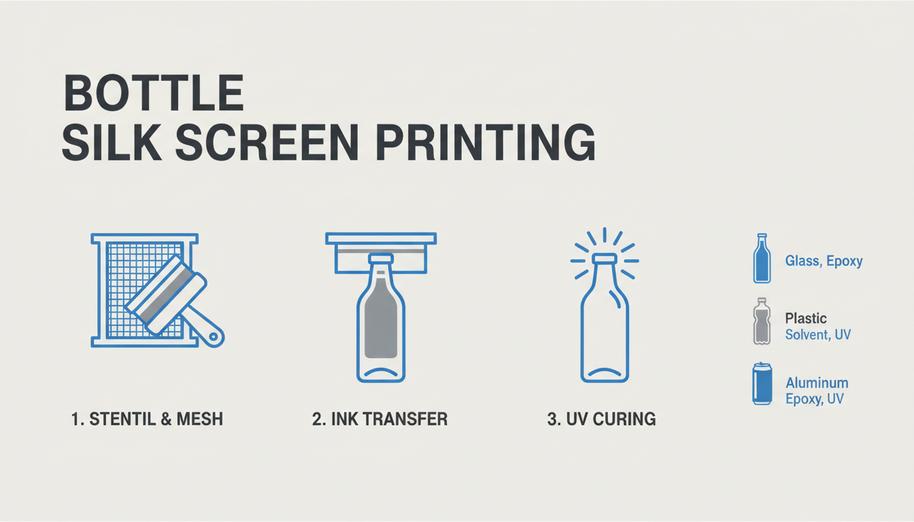
Bottle silk screen sounds technical, yet it’s simply a smart way to decorate containers directly. From cosmetics to beverages, bottle silk screen printing gives brands sharp, lasting graphics. If you’ve ever run your fingers over printed glass and felt nothing peeling off, that’s bottle + silk + screen done right.
Definition and Process Overview
At its core, silk screen printing is a direct printing process built around control and pressure.
-
Stencil creation
- A design is burned onto a mesh stencil.
- Open areas allow ink application.
-
Ink transfer
- A squeegee pushes ink across the mesh.
- Ink passes through onto the bottle substrate.
-
Curing
- UV or heat curing locks the graphic in place.
In bottle silk screen production, this sequence repeats with tight alignment to ensure crisp bottle printing. The result? Clean edges, solid color blocks, and long-term durability. Brands like Topfeel rely on bottle silk screen methods because direct screen printing bonds ink straight to the surface—no lifting corners, no bubbles.
Key Materials: From Glass to Plastic Bottles
Not all bottles behave the same during bottle silk screen work. Material choice shapes ink, mesh, and prep.
- Glass bottles: need surface cleaning and high-temp curing.
- Plastic bottles: may require flame or plasma treatment.
- Aluminum containers: demand specialty ink types.
Printing substrates and screen mesh selection must match the printing medium.
| Bottle Materials | Surface Treatment | Typical Ink Type |
|---|---|---|
| Glass bottles | Flame treatment | UV ink |
| Plastic bottles | Plasma treatment | Solvent ink |
| Aluminum | Chemical prep | Epoxy ink |
Topfeel tests bottle silk screen adhesion against abrasion and chemical exposure, keeping decoration sharp even after daily use.
Differences from Labeling and Hot Stamping
Decoration methods vary, and the vibe changes with each one.
- Silk screen printing: direct printing, ink bonds to surface.
- Labeling: applies adhesive labels, risk of peeling.
- Hot stamping: uses foil application for metallic shine.
With bottle silk screen printing, there’s no extra layer sitting on top. The design becomes part of the container. That means better durability, smoother handling, and easier pairing with frosting or UV coating. For brands chasing a premium feel without flashy foil, bottle silk screen often wins on both cost control and long-term wear.
Core Principles of Silk Screen on Bottles
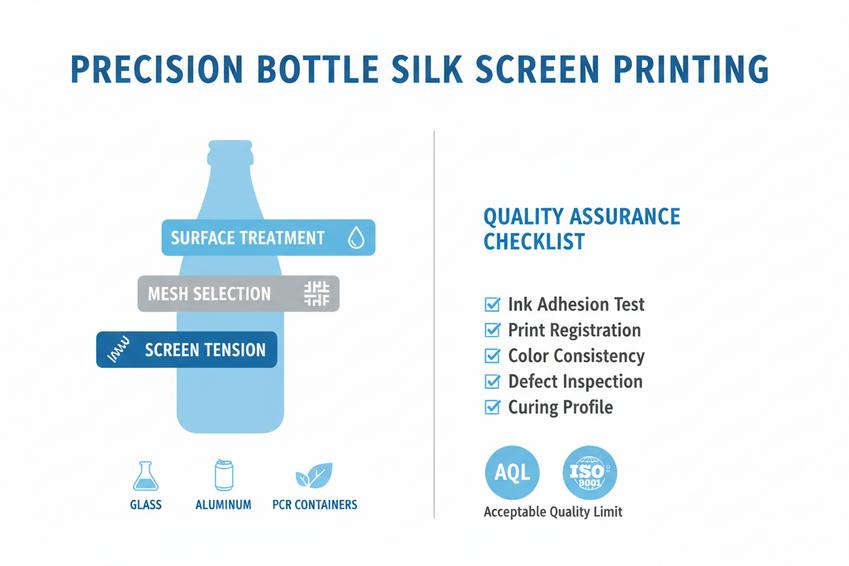
Bottle silk screen printing sounds simple, yet getting clean graphics on curved packaging takes real control. From surface prep to inspection, every bottle silk screen detail shapes durability, color pop, and brand vibe.
Ink Adhesion and Surface Treatment
Strong ink performance starts with real surface treatment on the substrate.
- Surface energy matters for bottle silk screen bonding.
- Poor pre-treatment leads to weak adhesion.
- Controlled curing locks in long-term bonding.
-
Material Check
- Plastic → flame or plasma boosts surface energy.
- Aluminum → light oxidation removal improves ink grip.
- Glass → cleaning ensures direct ink-to-surface contact.
-
Adhesion Control
- Adjust ink viscosity.
- Match curing temperature to substrate limits.
- Run tape tests after bottle silk screen printing.
-
Durability Verification
- Chemical resistance test
- Scratch resistance rub
- Environmental aging cycle
At Topfeel, bottle silk screen processes are tuned for cosmetic packaging, so prints stay sharp even after daily handling.
Mesh Selection for Glass, Aluminum, and PCR Containers
Choosing the right mesh or screen fabric changes everything in bottle silk screen quality.
- High mesh count → fine detail on glass containers.
- Medium thread count → balance for aluminum containers.
- Lower mesh → thicker ink film on PCR containers.
-
Graphic Requirement
- Small text → 120–150 mesh.
- Bold logo → 80–100 mesh.
-
Ink Deposit
- Thin layer for clarity.
- Heavy deposit for opacity.
-
Sustainability Angle
- PCR resin absorbs ink differently.
- Adjust thread tension for stable bottle silk screen coverage.
Topfeel aligns bottle silk screen settings with container material, so branding stays crisp without wasting ink.
Screen Tension and Image Resolution
Stable screen tension keeps image resolution tight during bottle silk screen runs.
- Low tension → blur and dot gain.
- Correct off-contact distance → cleaner release.
- Consistent squeegee pressure → uniform ink spread.
-
Tension Calibration
- Measure in N/cm before production.
- Recheck after long runs.
-
Curved Bottle Control
- Adjust fixture alignment.
- Maintain equal mesh stretch across arc.
-
Print Quality Review
- Inspect edges.
- Compare color density.
- Confirm repeatability.
Clean tension equals sharp bottle silk screen graphics. Simple as that.
Quality Assurance with AQL and Sustainability Standards
Serious bottle silk screen work lives or dies by quality assurance.
- Follow AQL (Acceptable Quality Limit) sampling.
- Track defect rates per batch.
- Maintain inspection logs.
-
Compliance
-
Sustainability
- Low-VOC ink systems
- Certified eco-friendly materials
- Waste reduction tracking under current sustainability standards
-
Final Check
- Adhesion test
- Color match approval
- Packaging audit
Bottle silk screen printing isn’t just decoration; it’s brand identity on glass and plastic. With controlled processes and disciplined QA, bottle silk screen results stay consistent, scalable, and ready for the market.
3 Advantages of Bottle Silk Screen Printing
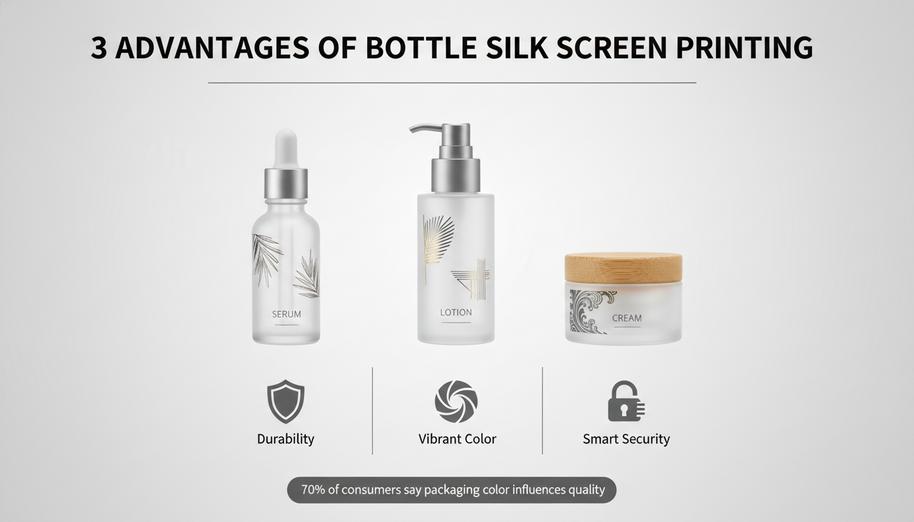
Bottle silk screen printing isn’t just ink on glass or plastic. It’s how a bottle, a silk mesh, and a precise screen process come together to create branding that sticks—literally. From skincare droppers to bamboo jars, bottle silk screen decoration keeps design sharp, practical, and built for real-world use.
Enhanced Durability on Dropper and Pump Bottles
When it comes to bottle silk screen applications on droppers and pumps, durability is the real MVP.
-
Material Interaction
-
Glass serum bottles
- Strong ink adhesion after curing
- High resistance to alcohol-based formulas
-
PET and PP pump bottles
- Flexible ink layers
- Reduced cracking under pressure
-
-
Daily Wear Factors
- Repeated finger friction on pump heads
- Oil contact from skincare routines
- Logistics shaking and carton compression
Each layer of bottle silk screen ink bonds directly to the substrate, boosting longevity far beyond pressure labels. Topfeel fine-tunes mesh tension and curing cycles so every dropper and pump design stays crisp after months on a vanity.
Vibrant Color Matching on Acrylic and Bamboo Jars
Color sells. A clean bottle silk screen pass can deliver ultra vibrant tones on acrylic and bamboo jars without foil stamping.
- Opaque white base layers
- Metallic ink blends
- Precise Pantone color matching
On clear acrylic, back-printing through silk screen bottle methods boosts aesthetics with depth. On bamboo, controlled ink absorption keeps tones even.
McKinsey’s 2024 global beauty packaging update notes that over 70% of consumers say packaging color strongly influences perceived product quality.
That’s why Topfeel treats every bottle silk screen project like brand DNA in physical form.
Custom Ergonomics and Tamper-Evident Designs
Smart design goes beyond looks.
-
Functional Integration
- Grip markers aligned with ergonomics
- Dosage lines printed directly via bottle silk screen
-
Security Layer
- Micro-text for tamper-evident cues
- Break indicators around caps
-
Unique Packaging Features
- Refill arrows
- Safety icons
- Batch trace marks
Instead of extra labels, silk screen printing on bottles builds security and custom cues straight into the surface. The result? Unique packaging features that feel intentional, clean, and hard to fake.
How Bottle Silk Screen Boosts Brand Image
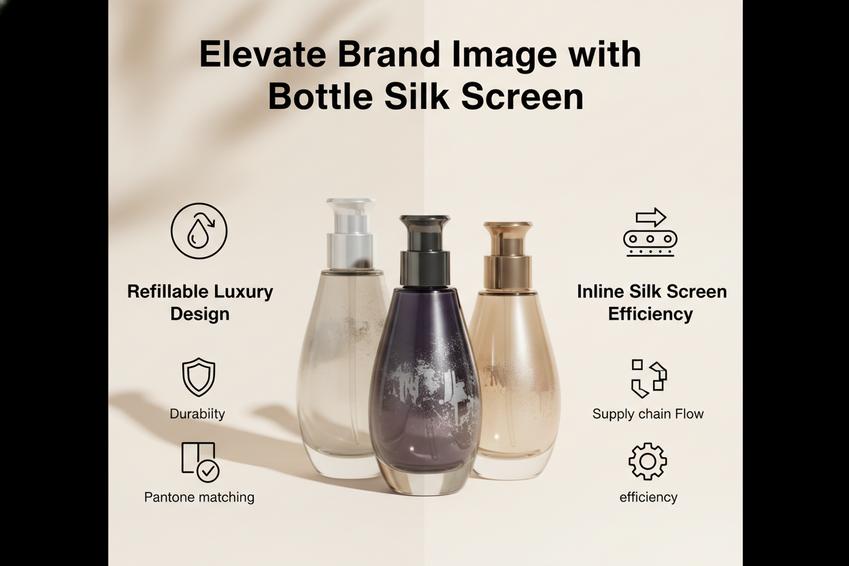
Bottle silk screen printing has become a go-to move for brands that want their packaging to speak louder without shouting. From luxury serums to daily cleansers, bottle silk screen graphics lock color, texture, and identity right onto the surface. Done right, a bottle silk screen turns simple packaging into a brand statement customers remember.
Premium Perception through Refillable Design
A smart bottle silk screen strategy pairs beautifully with luxury packaging and sustainable design. Refillable formats are not just trendy—they feel responsible and high-end at the same time.
-
Refillable system built around:
-
Reusable bottles
- Thick-wall PET or glass for weight and grip
- Long-cycle silk screen on bottle durability
-
Direct bottle silk screen printing
- No peeling labels
- Clean, seamless premium aesthetics
-
-
Value impact:
-
Stronger consumer experience
- Smooth touch, no label edges
- Visual depth from layered ink
-
Clear product differentiation
- Matte vs. gloss contrast
- Minimalist logo placement
-
With Topfeel, brands combine bottle silk screen precision and refill structure in one production flow, keeping the look upscale while staying proudly eco-conscious.
Consistent Color Matching for Stronger Recognition
Color is memory. A precise bottle silk screen locks in brand identity across foundation bottles, cleansers, and lipstick tubes.
- Pantone matching controls tone.
- High-grade ink boosts color accuracy.
- Controlled curing secures visual consistency.
- Final inspection protects graphic reproduction.
Under the hood:
-
Ink system
- Stable pigment ratio
- High ink quality
-
Equipment calibration
- Screen tension check
- Alignment for repeatable bottle screen printing
Topfeel fine-tunes every silk screen printing on bottles project so global launches keep tight brand recognition, shelf after shelf.
Streamlined Supply Chain: Lead Time and Inventory Management
When bottle silk screen printing happens inline, things move faster.
-
Production layer:
-
Integrated printing + molding
- Fewer transfers
- Lower breakage
-
Faster drying cycles
- Real lead time reduction
-
-
Operations layer:
-
Centralized logistics management
-
Cleaner inventory control
- No separate label stock
- Reduced SKU complexity
-
The result is smoother supply chain optimization, sharper production efficiency, and less stress on the manufacturing process. A well-managed bottle silk screen program doesn’t just look good—it keeps the business side tight and efficient.
Bottle Silk Screen in Cosmetic Packaging
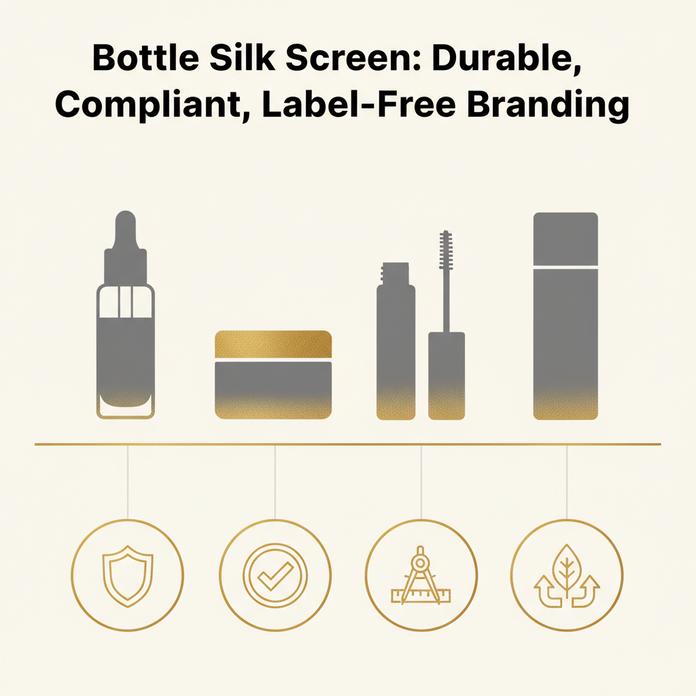
Great packaging isn’t just about color; it’s about how the print feels in your hand and how long it lasts on the shelf. Bottle silk screen technology keeps branding sharp on glass, plastic, and refillable formats. From serum droppers to mascara tubes, silk screen printing on bottles gives cosmetic brands a clean, label-free edge that just looks right.
Silk Screen on Serum Bottles Ensuring FDA Compliance
When working with serum bottles, precision matters. A solid bottle silk screen process balances design and FDA expectations without slowing production.
-
Regulatory Alignment
-
Materials
- Ink systems selected for safety and low migration
- Compatibility with glass droppers and pumps
-
Compliance
- Production under GMP conditions
- Documentation aligned with current regulations
-
-
Printing Control
- Mesh selection for clean logo edges
- Cure testing to secure adhesion on coated glass
- Abrasion checks for long-term durability
-
Brand Execution
- Fine-detail silk screen printing keeps dosage marks readable.
- Metallic accents remain stable after alcohol contact.
At Topfeel, bottle screen printing is engineered to meet both branding goals and strict compliance demands, so your printing doesn’t just look good—it stays compliant.
High-End Cream Jar Graphics for Powder Compacts
Luxury beauty buyers notice detail fast. On cream jars and powder compacts, decoration is not random; it’s layered and intentional.
-
Aesthetic Direction
- Frosted finishes paired with bold graphics
- Debossed lids enhanced by precise bottle silk screen logos
-
Technical Setup
- Fine mesh screens for small serif fonts
- UV-curable inks for scratch resistance
- Accurate registration on thick-walled jars
-
Design Impact
- High-opacity white underlayers
- Gold or matte black overprints
- Sharp alignment across curved shoulders
Silk screen printing on bottles keeps the design tight and elevated, avoiding sticker edges or peeling labels. Topfeel supports high-end decoration that matches luxury positioning without pushing costs out of control. The result feels premium, clean, and intentional.
Mascara Tube Printing: Balancing Shape and Ergonomics
Mascara tubes are tricky. The shape curves, tapers, sometimes twists. Good printing respects that form while protecting ergonomics and user grip.
-
Surface Analysis
- Diameter shifts along the tube
- Text placement zones that avoid finger contact
-
Tooling Development
- Custom fixtures to stabilize curved surfaces
- Screen tension control for even ink deposit
-
Application Control
- Rotation speed calibration
- Multi-pass silk screen layers
- Adhesion testing after repeated handling
Bottle silk screen methods adapt to slim profiles without distorting logos. That’s key for bold branding on glossy black or metallic tubes. Topfeel fine-tunes bottle silk screen alignment so text stays readable even when the tube narrows toward the wand cap.
Label-Free Branding with Refillable Container Solutions
Sustainability is more than hype. Label-free decoration using direct bottle silk screen printing cuts waste and keeps refillable containers looking sharp after multiple uses.
-
Eco Strategy
- Removal of adhesive labels
- Reduced secondary material use
- Support for eco-friendly goals
-
Material Compatibility
- Glass and PET suited for repeated cleaning
- Ink systems aligned with REACH standards
- Adhesion maintained after refill cycles
-
Reusability Design
- Permanent brand marks
- Minimal fading
- Clean edges after washing
Direct screen printing on bottles supports long-term packaging reusability. The decoration becomes part of the container, not an add-on. For brands aiming at sustainable shelves, Topfeel combines bottle screen printing expertise with refill-focused engineering, helping branding stay bold while waste drops down.
FAQs about Bottle Silk Screen
What makes bottle silk screen different from traditional labeling?
Bottle silk screen printing applies ink directly onto a Glass, Plastic, Aluminum, or PCR Bottle, creating decoration that becomes part of the surface rather than sitting on it.
- No edge lifting like Labeling on a Serum bottle or Cleanser bottle
- Higher scratch resistance than paperboard labels
- Works beautifully with curved shapes and tight Ergonomics
- Supports long-term Color matching under daily handling
The result feels crafted, not attached—ideal for premium Foundation packaging or a refined Cream jar.
Why do cosmetic brands choose bottle silk screen for high-end packaging?
Brands seeking tactile elegance often combine:
- Silk screen printing on Acrylic or Bamboo Jar
- Subtle Hot stamping accents on a Cap
- Matte Frosting or UV coating for contrast
This layered approach enhances Shape definition while meeting GMP, FDA compliance, and REACH compliance requirements. It signals care in both design and Material safety—something customers sense the moment they hold a Lipstick tube or Mascara wand.
How does surface treatment affect print durability on bottles and containers?
Good adhesion begins before ink touches the surface.
- Flame or plasma Surface treatment strengthens bonding after Blow molding or Injection molding
- Prevents peeling on Pump or Dropper assemblies
- Protects graphics during shipping and Warehousing solutions
Quality teams then apply AQL standards and ISO 9001–based Quality assurance checks. The outcome: stable print, strong Leak resistance, and reliable Tamper evidence on every Container.
Can bottle silk screen help reduce lead time in production?
Yes—especially when decoration is integrated into the Assembly line.
Instead of sending Bottles out for secondary Labeling, printing happens right after molding and Tooling development adjustments. This shortens:
- Logistics coordination steps
- Inventory management complexity
- Customs clearance delays
For brands planning a Refillable design or new Dispensing mechanism, tighter control over the Procurement strategy keeps timelines predictable—and shelves stocked without stress.
References
- Screen printing – Wikipedia (https://en.wikipedia.org/wiki/Screen_printing)
- Flame treatment – ScienceDirect (https://www.sciencedirect.com/topics/engineering/flame-treatment)
- Plasma treatment – TWI Global (https://www.twi-global.com/technical-knowledge/faqs/what-is-plasma-treatment)
- Surface energy – Wikipedia (https://en.wikipedia.org/wiki/Surface_energy)
- Curing (chemistry) – Wikipedia (https://en.wikipedia.org/wiki/Curing_(chemistry))
- Plastic recycling – Wikipedia (https://en.wikipedia.org/wiki/Plastic_recycling)
- Dot gain – Wikipedia (https://en.wikipedia.org/wiki/Dot_gain)
- Acceptable Quality Limit (AQL) – Investopedia (https://www.investopedia.com/terms/a/acceptable-quality-level-aql.asp)
- ISO 9001 Quality Management – ISO (https://www.iso.org/iso-9001-quality-management.html)
- Understanding REACH – ECHA (https://echa.europa.eu/regulations/reach/understanding-reach)
- Volatile Organic Compounds’ Impact on Indoor Air Quality – EPA (https://www.epa.gov/indoor-air-quality-iaq/volatile-organic-compounds-impact-on-indoor-air-quality)
- The State of Fashion: Beauty – McKinsey (https://www.mckinsey.com/industries/consumer-packaged-goods/our-insights/the-state-of-fashion-beauty)
- Pantone Color Systems Explained – Pantone (https://www.pantone.com/color-systems/pantone-color-systems-explained)
- Cosmetics Laws & Regulations – FDA (https://www.fda.gov/cosmetics/cosmetics-laws-regulations)
- What is GMP? – ISPE (https://www.ispe.org/initiatives/regulatory-resources/gmp/what-is-gmp)

