 English
  English (UK)
  English (Australia)
  English (Canada)
  العربية
  Deutsch
  Italiano
  Español de México
  Tiếng Việt
  ไทย
ไทย  Português do Brasil
  Français
  Български
  Čeština
  Dansk
Dansk  Ελληνικά
  Eesti
Eesti  Suomi
Suomi  Magyar
  Bahasa Indonesia
  Lietuvių kalba
  Latviešu valoda
  Norsk bokmål
  Nederlands (Formeel)
  Polski
  Română
  Русский
  Slovenčina
  Slovenščina
  Svenska
  Türkçe
  Українська
  简体中文
简体中文  日本語
日本語  한국어
한국어  繁體中文
繁體中文 
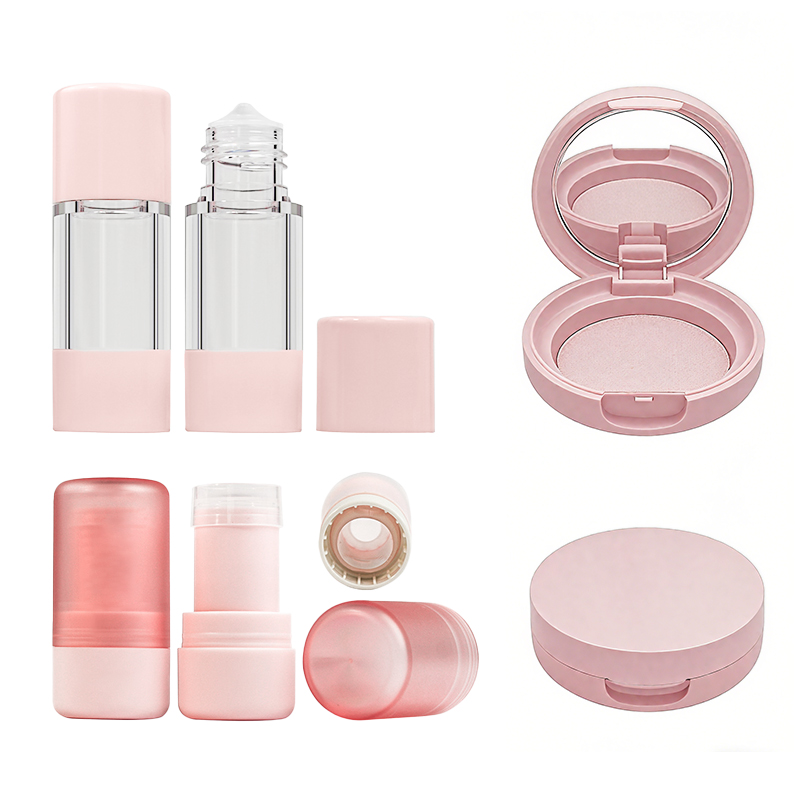
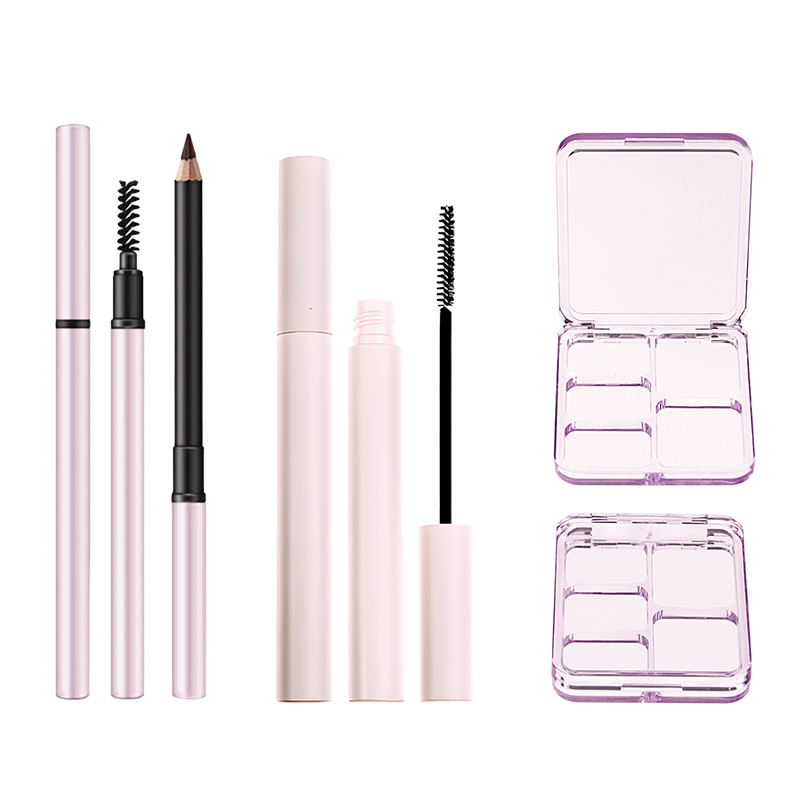
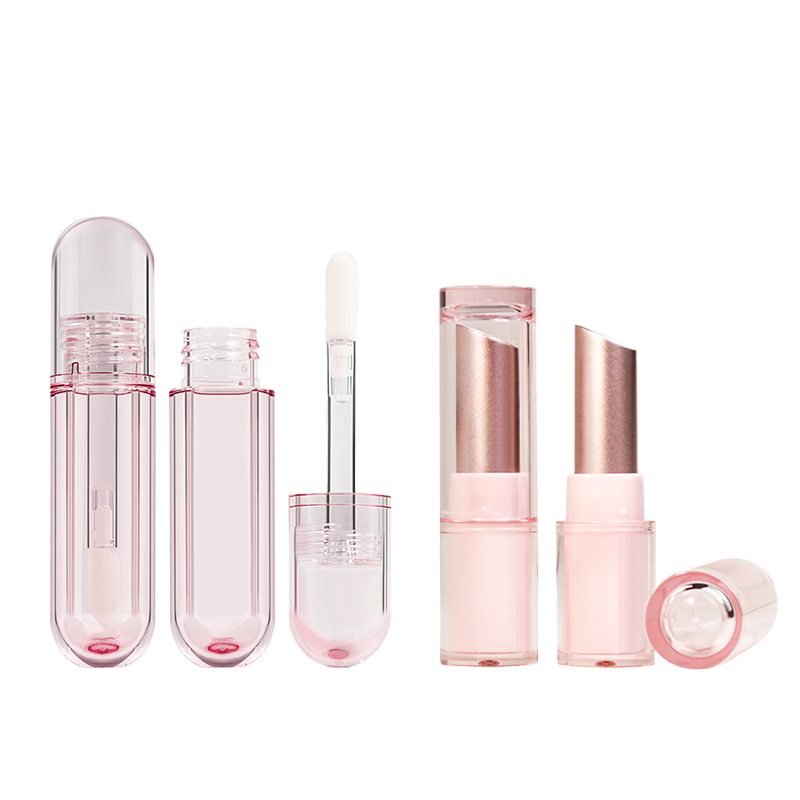

Effective lip oil container strategies for scalable production
March 02,2026
A lip oil container can make or break your product faster than a bad TikTok review. One minute your formula is glossy perfection, the next it’s leaking in transit or jamming on the filling line. For growing beauty brands, packaging isn’t just a pretty face—it’s the engine under the hood. If it sputters, your whole launch stalls.
Scaling production feels a lot like hosting Thanksgiving for the first time. Cooking for four? Easy. Cooking for forty? That’s logistics, timing, and zero room for rookie mistakes. The same goes for mold precision, closure torque, and decoration alignment. A sleek tube that can’t keep up with automated filling is just expensive décor.
“Scalable design starts with manufacturing reality, not just aesthetics,” says a senior Topfeel packaging engineer in a 2025 client briefing. That’s the heartbeat of this guide: smart structure, smart materials, and systems built to grow with you—without drama on the factory floor.
Quick Answers & Reading Notes: The Scalable Symphony of the Lip Oil Container
- Container Types That Fit the Formula: From lip gloss tube and wand systems with doe-foot applicators to squeeze tubes, rollerball bottles, and dropper bottles, each lip oil container format (3ml–20ml) must match viscosity, usage experience, and brand positioning.
- Material Strategy Drives Performance: PETG plastic delivers clarity and durability, AS plastic provides rigidity, PP plastic supports squeezable designs, while glass and acrylic elevate premium appeal. Recycled and biodegradable plastics add scalable sustainability without sacrificing compatibility.
- Precision Mold Development: Custom mold engineering for 3ml–15ml formats ensures ergonomic design, compact size control, stable neck dimensions, and seamless integration with applicators and closures—preventing filling inefficiencies at scale.
- Closure & Seal Reliability: Precision screw cap systems, snap-on caps, child-resistant caps, and tamper-evident seals reduce leakage, improve torque consistency, and minimize assembly rework—critical for high-volume production.
- Decoration That Scales Cleanly: Standardizing silk screen printing, hot stamping, labeling, offset printing, and custom color matching ensures consistent matte or glossy finishes across batches while reducing downtime and setup waste.
- Assembly Line Compatibility: A scalable lip oil container must align with automated filling systems, maintaining stable 5ml–10ml dosing accuracy and leak resistance during high-speed capping.
- Downtime Reduction Tactics: Optimize thread tolerances, refine internal geometry, pre-approve artwork, and standardize labeling workflows to eliminate bottlenecks that stall product launches.
- In-House vs. Outsourced Strategy: In-house molding supports tight quality control for acrylic and glass containers, while outsourcing PETG and biodegradable plastic manufacturing enables cost-efficient, high-volume scalability.
- Scalability Starts with Reality: A beautiful lip oil container is only successful if it performs on the factory floor—true growth begins where design, materials, and manufacturing systems align.
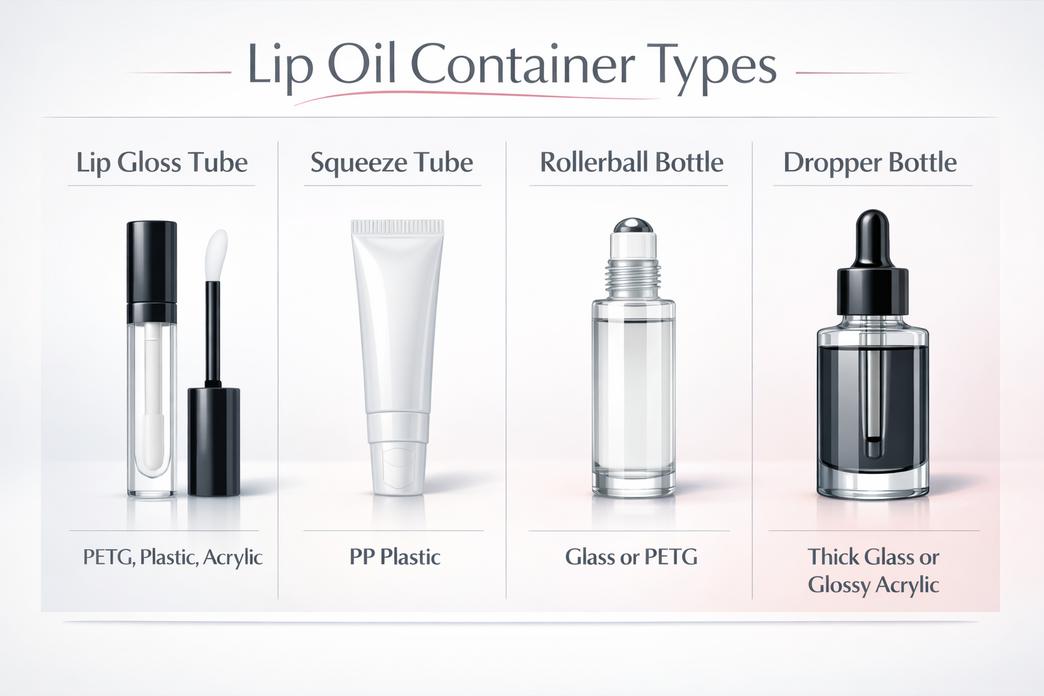
Types of Lip Oil Containers
Lip oil container choices shape texture, vibe, and daily use. From glossy tubes to glass droppers, each lip oil container format serves a different crowd.
Lip Gloss Tube & Wand Tube with Doe-foot Applicator
Within a classic lip oil container, this style breaks down into:
- Tube body
- Materials: PETG, plastic, sometimes acrylic
- Capacity: 3ml–10ml
- Applicator system
- doe-foot or soft brush
- Focus on precision and smooth application
- Closure
- screw cap with inner stopper
- Built for leak-proof and airtight wear in bags
As a lip oil packaging staple, it balances clear walls, bold branding, and easy customization, making the lip oil container feel both practical and polished.
Squeeze Tube in PP Plastic with Silicone Tip
This lip oil container leans casual and travel-ready. Built from PP plastic, it supports:
- 5ml–15ml fill range
- Soft silicone tip for cleaner hygiene
- Flexible body formed by extrusion
Structure logic works like this:
- Tube compression → controlled flow
- Angled tip → targeted application
- Tight closure → better durability
For thicker formulas, this oil container for lips keeps mess low. Lightweight design also reduces material use, supporting recyclable goals and smarter lip oil packaging decisions.
Rollerball Bottle with Snap-on Cap
A roller-style lip oil container focuses on glide.
Core layers include:
-
Bottle body
- glass or PETG
- Clear or frosted finish
-
Rolling system
- Stainless or plastic rollerball
- Even spread, improved hygiene
-
Cap structure
- snap-on top
- Secure, semi-airtight seal
The round motion boosts sensory appeal. Smaller 5ml–10ml sizing fits pockets, while smooth shape and subtle color shifts lift the overall visual appeal of the lip oil container.
Dropper Bottle & Vial for 10ml–20ml Treatments
Treatment-focused lip oil containers move upscale through layered detailing:
- Outer presence
- Thick glass or glossy acrylic
- Weighted base for perceived durability
- Dosing system
- Pipette dropper for sharp precision
- Optional tamper-evident ring
- Cap options
- Standard screw cap
- Child-resistant variant
Fill volumes from 10ml–20ml suit intensive care oils. This lip oil container format pairs well with ingredient-led branding, where clarity and measured drops signal serious skincare energy.
Glass vs. PETG Plastic Containers with Clear Packaging
Material choice defines the lip oil container mood.
-
Glass
- Premium weight
- Strong chemical stability
- Higher perceived value
-
PETG plastic
- Impact-resistant
- Lightweight, lower shipping load
- Supports automation in injection molding
Decision flow often follows:
- Target market
- Sustainability goals like recycled content or lightweight builds
- Desired finish—clear, frosted, silk print
Both materials allow transparent lip oil packaging, but the right lip oil container depends on balance between sustainable thinking and everyday convenience.
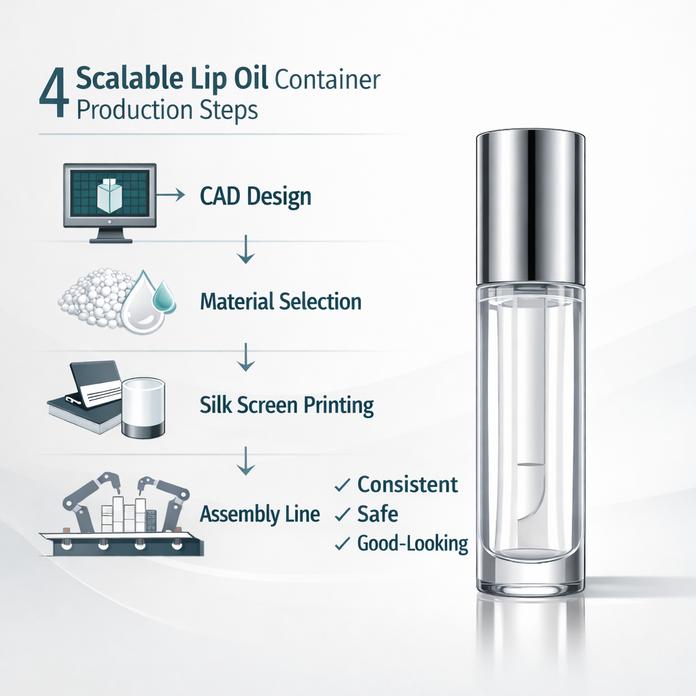
4 Scalable Lip Oil Container Production Steps
Smart scaling keeps every lip oil container consistent, safe, and good-looking while meeting rising demand for lip oil packaging.
Step 1: Custom Mold Development for 3ml–15ml Lip Gloss Tube
A scalable lip oil container begins with layered development:
-
Core build: CAD design → 3D printing → mold creation → pilot sampling.
-
Engineering checks:
- Neck finish tolerance
- Thread depth accuracy
- Wand alignment
-
Fine-tuning focuses on:
- ergonomics
- aesthetic appeal
- leak prevention
Grouped validation keeps the lip oil packaging stable:
• Size families (3ml / 5ml / 10ml / 15ml)
◦ cavity pressure balance
◦ cooling time control
• Applicator fit
◦ various applicator types
◦ dip tube length match
A tight mold means every lip oil container snaps shut cleanly. No wobble. No mess.
Step 2: Material Selection — PETG Plastic, AS Plastic, or Recycled Content Plastic
Material drives durability and vibe for each lip oil container.
Key evaluation layers:
- Visual clarity → PETG suits transparent lip oil packaging.
- Strength profile → AS improves durability.
- Eco angle → recycled resin boosts recyclability.
Compatibility review includes:
- Oil formula stability
- Fragrance interaction
- Heat exposure during shipping
Nested checks:
• Barrier needs
◦ light-sensitive oils require UV protection
• Structure types
◦ comparison with glass vials
◦ lightweight plastic tubes
When scaling production, resin flow rate must align with injection molding parameters. A stable lip oil container material keeps gloss texture pure and shelf-ready.
Step 3: Decoration Scaling with Silk Screen Printing and Hot Stamping
Brand impact matters. A lip oil container should pop in-store and online.
Decoration scaling stack:
- Surface prep
- Color calibration
- Mass print validation
Grouped production control:
• Print methods
◦ silk screen
◦ hot stamping
◦ pressure labeling
• Finish options
◦ matte coat
◦ gloss varnish
• Batch alignment
◦ Pantone verification
◦ abrasion testing
Strong quality control inside automated assembly lines prevents logo distortion. Clean branding turns simple lip oil packaging into a premium lip gloss container buyers remember. Topfeel refines decoration flow so each lip oil container keeps color sharp across thousands of units.
Step 4: Assembly Line Integration with Screw Cap and Tamper-evident Seal
Scaling a lip oil container means syncing filling, capping, and sealing without chaos.
Process grouping:
- Filling accuracy calibration
- Torque testing for screw caps
- Seal integrity inspection
Layered integration:
• Automation core
◦ sensor-guided capping
◦ conveyor speed balance
• Safety layer
◦ tamper band lock
◦ leak pressure test
• Output flow
◦ packed in retail-ready cartons
◦ routed through distribution networks
Behind the scenes, solid inventory management and tight lead times planning keep the lip oil container supply steady. Smooth logistics turn production wins into real shelf presence.
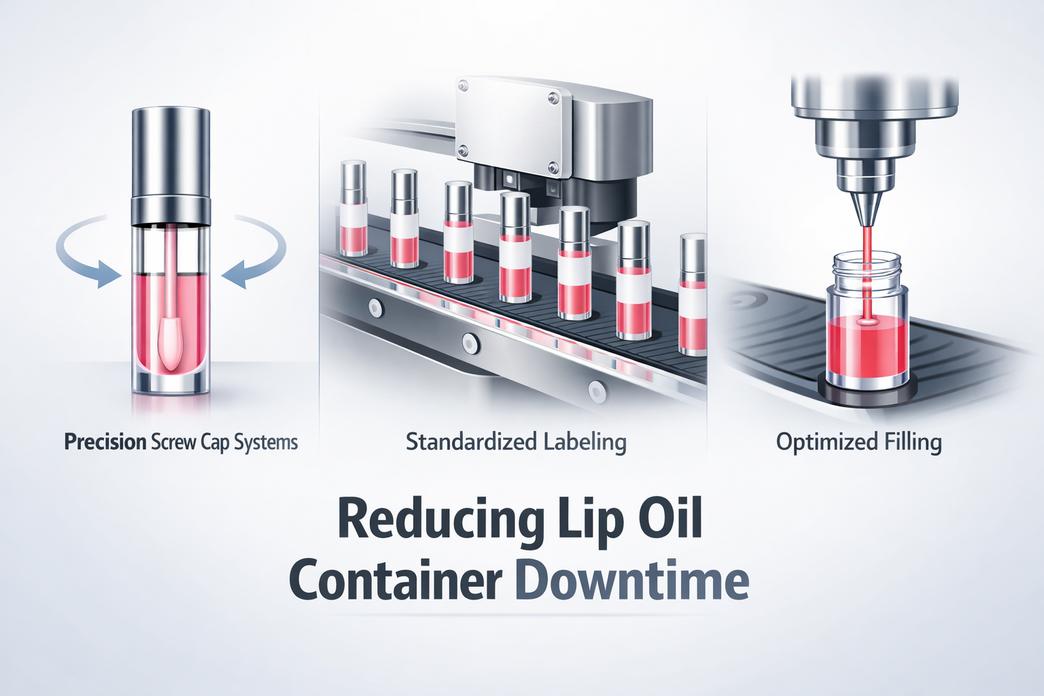
What Reduces Lip Oil Container Downtime?
Small tweaks in a lip oil container line can save hours. Tight fit, clean print, steady fill—keep the lip oil bottle moving.
Unstable Closure Fit? Upgrade to Precision Screw Cap Systems
Downtime often starts at the cap. A loose lip oil container closure throws off the whole lip oil bottle run.
- Thread Control
- Calibrate dimensional accuracy
- Monitor material consistency
- Run routine leak testing
- Cap System Upgrade
- Switch to precision screw systems
- Add child-resistant options
- Align with quality standards
- Assembly Monitoring
- Use sensor checks
- Track rejection rates
- Improve defect detection
A tighter seal keeps every lip oil container stable, cutting rework and messy leaks.
Decoration Delays? Standardize Labeling and Offset Printing Processes
When a lip oil container waits on artwork, the line slows down—simple as that.
• Lock artwork files early
• Sync color proofs with visual inspection teams
• Align conveyor systems with print stations
- Pre-approve Pantone shades.
- Match label size to lip oil bottle curves.
- Test adhesion before bulk runs.
Then tighten flow:
- Calibrate container alignment
- Reduce jams with better feed mechanisms
- Support smooth line integration
Clean, repeatable decoration keeps every lip oil container and lip oil tube on schedule without last-minute scrambling.
Inconsistent 5ml–10ml Filling? Optimize Ergonomic Design and Compact Size Molds
Fill swings between 5ml and 10ml usually trace back to mold or machine setup in the lip oil container line.
I. Mold & Geometry
A. Refine neck finish
-
Improve nozzle design fit
-
Control viscosity control variables
B. Stabilize base shape
-
Ensure steady container alignment
-
Reduce tilt during filling machinery cycles
II. Equipment Discipline
A. Set a clear maintenance schedule
-
Check equipment calibration
-
Replace worn wear parts
B. Keep spare parts inventory ready
III. Operator Focus
A. Build operator training plans
- Practice troubleshooting skills
- Follow standard operating procedures
Dialed-in molds plus smart handling make every lip oil container hit accurate fill levels, boost production speed, and keep automation smooth.
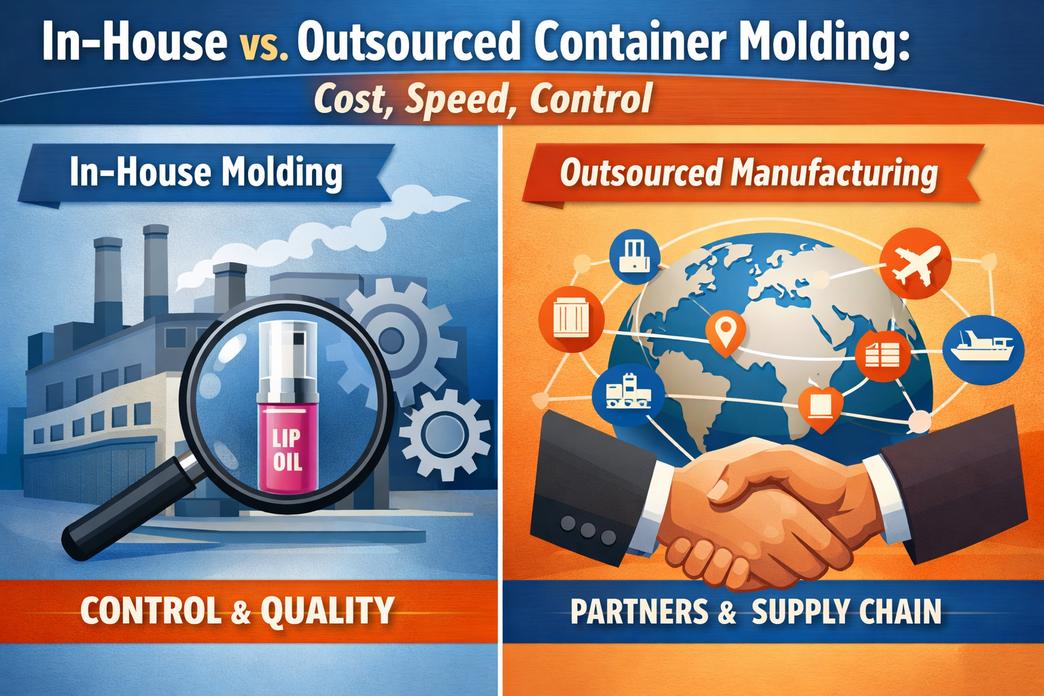
In-House vs. Outsourced Container Molding
Choosing how to produce a lip oil container shapes cost, speed, and long-term control.
In-House Custom Mold Production for Acrylic and Glass Lip Oil Containers
Managing a lip oil container line internally centers on tight control and calculated investment.
-
Cost-Benefit Analysis of In-House Molding
- Investment layer
- tooling investment for custom acrylic or glass molds
- tracking amortization across projected production volume
- Operating layer
- skilled labor costs
- fixed overhead expenses
- Performance layer
- reduced lead times
- stricter quality control
-
Quality Control and Consistency Considerations
- Define material specifications for each lip oil bottle
- Monitor tolerance levels and defect rates
- Standardize inspection procedures and testing protocols
- Maintain batch consistency and regulatory compliance
-
Scalability and Future Expansion Planning
- Assess production scalability
- Plan automation potential
- Align with market demand
For premium lip gloss tube or lip oil container formats, in-house molding keeps finishes crisp and branding sharp.
Outsourced PETG Plastic and Biodegradable Plastic Container Manufacturing
Outsourcing a lip oil container program shifts focus from machines to partnerships.
-
Evaluating Outsourced Molding Partners
- Screening stage
- detailed supplier vetting
- review of production capacity
- Agreement stage
- structured contract manufacturing terms
- defined intellectual property protection
- Operational stage
- clear communication protocols
- ongoing quality assurance
-
Impact on Supply Chain and Inventory Management
- Supply stability
- stronger supply chain resilience
- diversified locations for lip oil packaging
- Stock control
- balanced inventory levels
- planned buffer stock
- improved forecasting accuracy
- Cost flow
- optimized transportation costs
- efficient warehousing
- practical risk mitigation
For high-volume plastic lip oil container runs—especially PETG or eco resin—outsourcing supports flexibility while keeping the lip oil container pipeline moving.
FAQs about Lip Oil Container
What lip oil container designs are most popular for bulk cosmetic lines?
Brands usually group choices by usage feel and formula texture:
-
Daily gloss formats
- Lip gloss tube or wand tube
- Doe-foot applicator or flocked applicator
- 3ml–7ml compact size with screw cap
Ideal for clear packaging and quick retail turnover.
-
Thicker oil formulas
- Squeeze tube in PP plastic
- Silicone tip or spatula applicator
- 5ml–10ml ergonomic design
-
Treatment-style oils
- Rollerball bottle with snap-on cap
- Dropper bottle or vial in Glass
- 10ml–20ml premium positioning
Each structure supports a different hand feel, shelf impact, and user ritual.
How does custom mold development improve lip oil container consistency?
A custom mold controls three critical layers of stability:
- Dimensional accuracy → consistent 3ml, 5ml, or 10ml fill levels
- Closure compatibility → screw cap, child-resistant cap, or tamper-evident seal fit tightly
- Ergonomic design → balanced weight in PETG plastic, AS plastic, or Acrylic
When molds are precise, filling lines run calmly. Caps align. Applicators seat correctly. Leakage complaints drop sharply.
Which materials are best for durable and clear lip oil containers?
Material choice often shapes brand personality and performance expectations:
- PETG plastic: lightweight, transparent finish, impact resistant
- AS plastic: rigid walls with glossy finish
- Glass: strong barrier, luxury weight, ideal for dropper bottle formats
- Recycled content plastic / Biodegradable plastic: sustainability-driven positioning
For brands wanting clear packaging with color visibility, PETG plastic remains a favorite. For skincare-grade oils with higher value perception, Glass stands firm.
How can bulk buyers reduce production downtime?
Downtime usually hides in small details. Smart buyers focus on:
- Pre-tested screw cap or twist-off cap threading
- Pre-approved silk screen printing or offset printing artwork
- Matched applicator systems—brush applicator, rollerball, or doe-foot applicator
- Compact molds that reduce cooling time in 5ml–15ml runs
When decoration, closure, and container type are aligned early, mass assembly flows without last-minute rework.
What decoration options enhance lip oil container shelf appeal?
Decoration turns a simple lip oil container into a brand signature.
- Silk screen printing for bold logos
- Hot stamping for metallic accents
- Frosting to soften a transparent finish
- Labeling for quick SKU updates
- Custom color matching for caps in PP plastic or Acrylic
A matte finish paired with a clear body creates contrast. A glossy finish with gold hot stamping signals luxury. The right detail makes a 7ml tube feel unforgettable in a customer’s hand.
References
- [PETG Plastic: Properties and Applications – Canyon Components – https://www.canyoncomponents.com/post/petg-plastic-properties-and-applications]
- [Why PCR Cosmetic Packaging is Essential for a Greener and More Sustainable Cosmetics Industry – https://apackaginggroup.com/blogs/news/why-pcr-cosmetic-packaging-is-essential-for-a-greener-and-more-sustainable-cosmetics-industry]
- [The Evolution Of Injection Molding In Packaging: Current Advantages And Future Trends – https://www.lamarpackagingsystems.com/injection-molding-in-packaging/]
- [PCR Packaging: Types, Benefits, Applications – Meyers Printing – https://meyers.com/meyers-blog/what-is-pcr-packaging-types-benefits-applications/]

