 English
  English (UK)
  English (Australia)
  English (Canada)
  العربية
  Deutsch
  Italiano
  Español de México
  Tiếng Việt
  ไทย
ไทย  Português do Brasil
  Français
  Български
  Čeština
  Dansk
Dansk  Ελληνικά
  Eesti
Eesti  Suomi
Suomi  Magyar
  Bahasa Indonesia
  Lietuvių kalba
  Latviešu valoda
  Norsk bokmål
  Nederlands (Formeel)
  Polski
  Română
  Русский
  Slovenčina
  Slovenščina
  Svenska
  Türkçe
  Українська
  简体中文
简体中文  日本語
日本語  한국어
한국어  繁體中文
繁體中文 

Why Pump Moisturizers Are the Future of Skin Care in 2026
March 02,2026
The humble pump moisturizer is having its main-character moment. Once overshadowed by glossy jars on department store shelves, it’s now the clean, sharp-suited hero brands can’t ignore. Consumers aren’t dipping fingers into creams like it’s 2005—they want precision, hygiene, and zero mess on the bathroom counter. And if your packaging still whispers “old school,” shoppers will scroll right past it.
Here’s the kicker: packaging isn’t just pretty wrapping—it’s profit protection. McKinsey reports that over 60% of consumers are willing to pay more for products with sustainable packaging (McKinsey & Company, 2020). Add e-commerce into the mix—where leaks mean refunds—and suddenly that airless pump isn’t a design choice. It’s risk management.
As one Euromonitor beauty analyst put it, “Functionality now defines premium.”
So the question isn’t if pumps are the future. It’s how fast your brand plans to catch up.
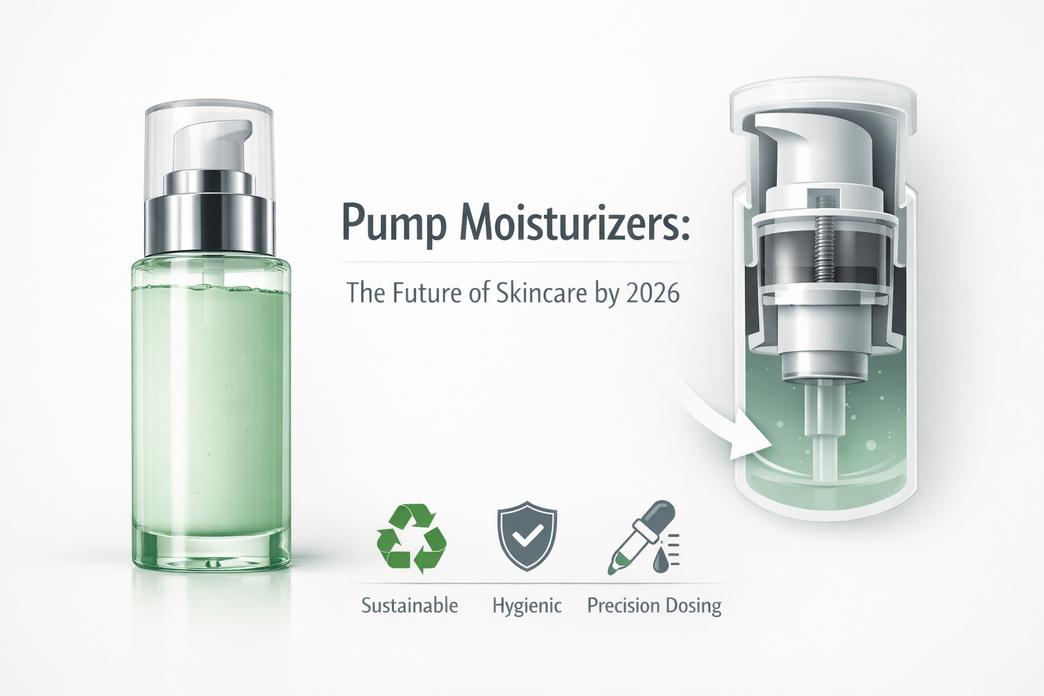
Why Pump Moisturizers Will Dominate Skin Care By 2026
Pump moisturizer is no longer a small upgrade; it’s shaping how people store, protect, and apply daily skin care.
Recycled PETG Pump Bottles for Sustainable Skin Care
A pump moisturizer built in recycled PETG speaks to shifting consumer preference and evolving skin care trends. People want smart moisturizer packaging, not extra waste.
- Lightweight yet tough
- Crystal-clear for shelf appeal
- Compatible with pump dispensers
- Lower carbon footprint
- Refillable potential
- Easy sorting in recycling streams
Within this shift:
-
Material choice
- Recycled PETG resin
- Reduced virgin plastic use
-
Design flexibility
- Works with lotion pumps
- Supports silk screen branding
-
Daily use impact
- Cleaner sinks
- Less product exposure
The modern pump moisturizer feels practical, looks sharp, and keeps sustainability from sounding like empty talk.
Airless Pump Actuators Enhance Hygiene Standards
The rise of airless pump moisturizer systems is tied directly to stricter expectations around hygiene and product preservation.
At the core:
-
Sealed actuator
- Limits oxygen entry
- Reduces oxidation
-
Internal piston
- Pushes formula upward
- Cuts residue waste
-
No finger dipping
- Lower contamination risk
- Longer shelf stability
A jar invites air. A pump moisturizer blocks it.
“Airless and sealed dispensing systems are expected to outpace traditional jars as consumers prioritize hygiene and formula stability,” noted Mintel’s 2025 Global Beauty Packaging Insights.
For brands tracking skin care trends, airless pump dispensers are becoming the safe bet. Cleaner dosing, tighter seals, fewer worries.
Treatment Pump Pistons and Dip Tubes Deliver Precision Dosing
Precision turns a regular moisturizer pump into a treatment-grade pump moisturizer.
Think in layers:
-
Dispensing control
- Calibrated piston stroke
- 0.2–0.5 ml per press
- Consistent output each time
-
Internal components
- Dip tubes matched to bottle height
- Secure gaskets preventing leaks
-
User experience
- One press, exact dose
- No over-application
In real life, that means less waste and better routine discipline. A pump moisturizer supports smarter application methods, cleaner counters, and tighter control over active ingredients. Even high-potency formulas feel easier to manage in well-designed moisturizer packaging. Precision isn’t fancy anymore. It’s expected.
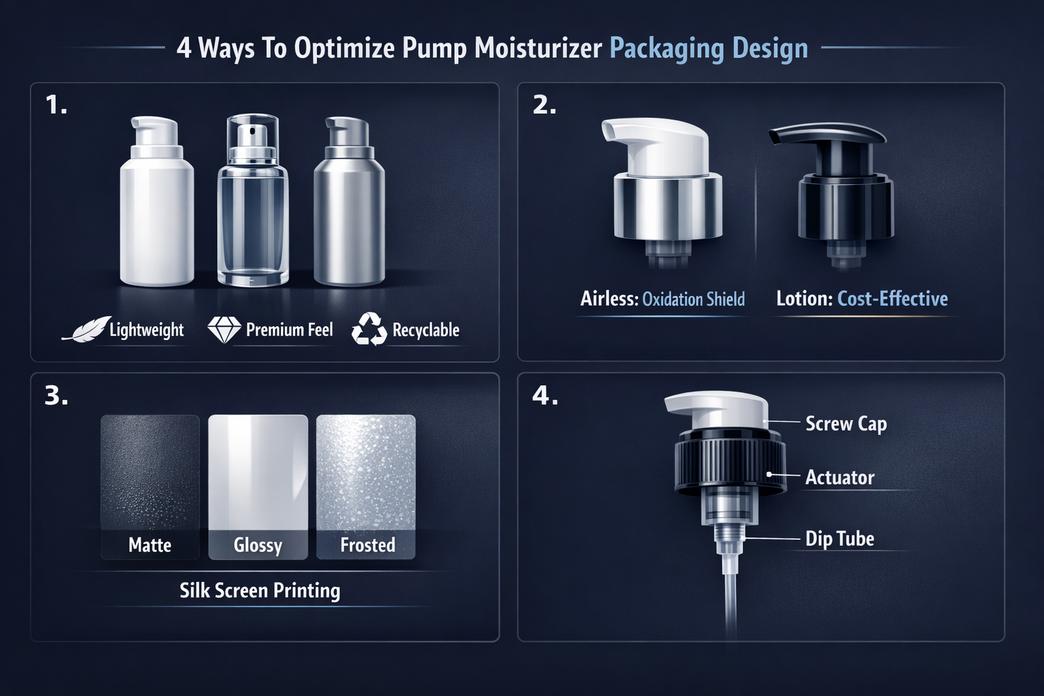
4 Ways To Optimize Pump Moisturizer Packaging Design
Smart pump moisturizer packaging shapes how people see, use, and trust your moisturizer pump product every single day.
Selecting Plastic, Glass or Aluminum Pump Bottles
Choosing a bottle for a pump moisturizer starts with material logic:
-
Plastic
1.1 Lightweight for daily moisturizer pump use
1.2 Works well with sustainable materials blends
1.3 Easy pairing with UV protection packaging
-
2.1 Premium feel for high-end pump lotion lines
2.2 Strong chemical stability
2.3 Heavier, so shipping costs rise
-
Aluminum
3.1 Sleek look for modern pump cream formats
3.2 High recyclability
3.3 Great barrier against light and air
Match bottle weight, refill plans, and ergonomic design goals before locking the mold.
Comparing Airless Pump and Lotion Pump Mechanisms
For a pump moisturizer, dispensing style changes user experience.
-
Airless system
1.1 Uses airless pump technology with internal piston
1.2 Boosts dispensing accuracy
1.3 Shields formula from oxidation
1.4 Ideal for active-rich moisturizer pump products
-
Lotion pump
2.1 Dip tube draws formula upward
2.2 Budget-friendly for mass pump lotion lines
2.3 Simple repairs and part swaps
If your pump moisturizer formula is sensitive, airless wins. If volume matters most, lotion pumps keep costs steady and practical.
Combining Matte, Glossy or Frosted Finishes with Silk Screen Printing
Surface feel can quietly upgrade a pump moisturizer.
• Matte: soft grip, subtle luxury
• Glossy: bold shine for shelf pop
• Frosted: clean, skincare-clinic vibe
Now layer branding:
- Silk screen printing for sharp logos
- Hot stamping for metallic accents
- Color matching for batch consistency
When finish meets ergonomic design, users notice. A frosted pump moisturizer bottle with tight print alignment feels trustworthy. Add UV protection packaging coatings if the moisturizer pump formula is light-sensitive. Small texture tweaks can change how a pump cream bottle sits in the hand—less slip, more control.
Integrating Screw Caps, Actuators and Dip Tubes
A pump moisturizer fails fast if components clash.
-
Closure system
1.1 Screw caps sized to neck finish
1.2 Add tamper-evident seals for retail safety
-
Actuator
2.1 Shape supports ergonomic design
2.2 Controls output for better dispensing accuracy
-
Internal parts
3.1 Dip tube length trimmed to bottle height
3.2 Spring material compatible with formula
Check alignment in stages:
Step 1 – Measure neck and thread.
Step 2 – Test pump lotion output rate.
Step 3 – Run leak and drop trials.
When every layer clicks, your pump moisturizer works smoothly to the last drop.
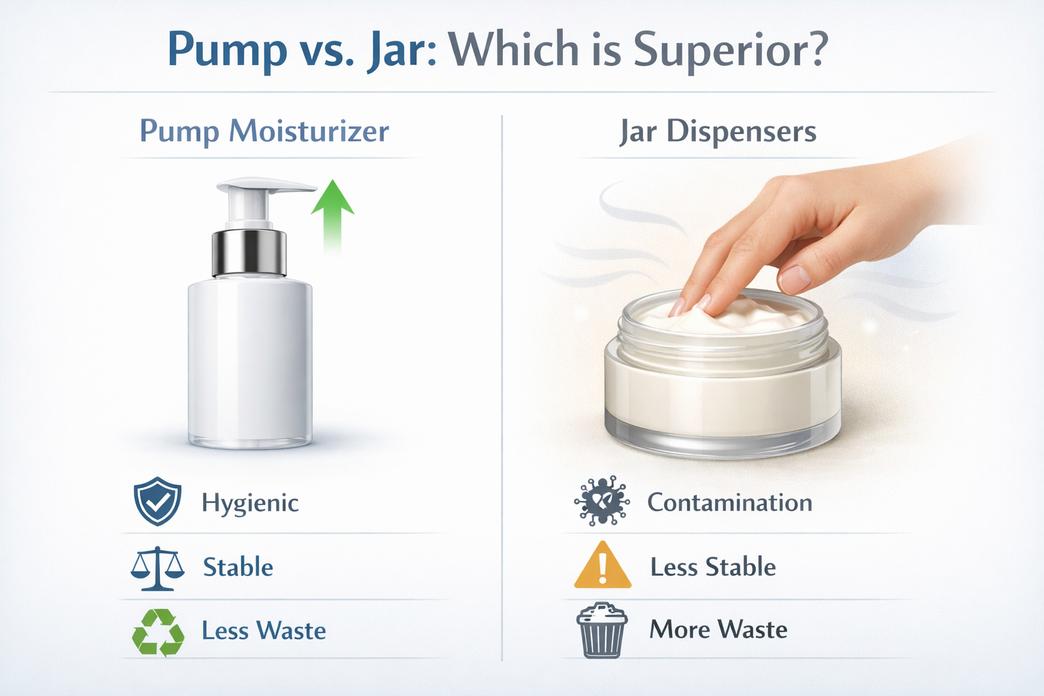
Pump Moisturizer Vs. Jar Dispensers: Which Is Superior?
Quick breakdown of pump moisturizer vs. jar packaging—clean hands, stable formulas, and real-life user vibes.
Pump Moisturizers
A pump moisturizer works through a controlled dispensing mechanism, and that tiny detail changes everything.
-
Hygiene Control
1.1 Sealed nozzle reduces product contamination.
1.2 Limited air exposure protects ingredient stability.
1.3 No finger dipping, better overall hygiene.
-
Smart Usage Flow
2.1 One press = measured dose, lowering product waste.
2.2 Airless pump moisturizer designs push product upward, minimizing leftovers.
2.3 Travel caps prevent leaks in your gym bag.
-
Everyday Experience
3.1 A face pump moisturizer feels quick and tidy.
3.2 Pump lotion moisturizer formats suit busy mornings.
3.3 Brands like Topfeel refine pump + moisturizer packaging for smoother user experience.
If you use a pump moisturizer daily, consistency becomes effortless. Less mess. More control.
Jar Dispensers
A jar moisturizer offers full access, but the trade-offs sit right on the surface.
-
Open Access Format
1.1 Wide mouth design allows total product reach.
1.2 Easy scooping improves short-term user experience.
1.3 Thick creams feel luxurious in glass jars.
-
Exposure Factors
2.1 Frequent opening increases air exposure.
2.2 Oxygen contact may weaken ingredient stability over time.
2.3 Repeated dipping raises product contamination risk.
-
Usage Reality
3.1 No fixed dispensing mechanism, so dosing varies.
3.2 Over-scooping can increase product waste.
3.3 Screw caps help, yet hygiene depends on habits.
Some people love the tactile feel of jars. Still, compared with a pump moisturizer or airless pump moisturizer, the open design demands extra care.
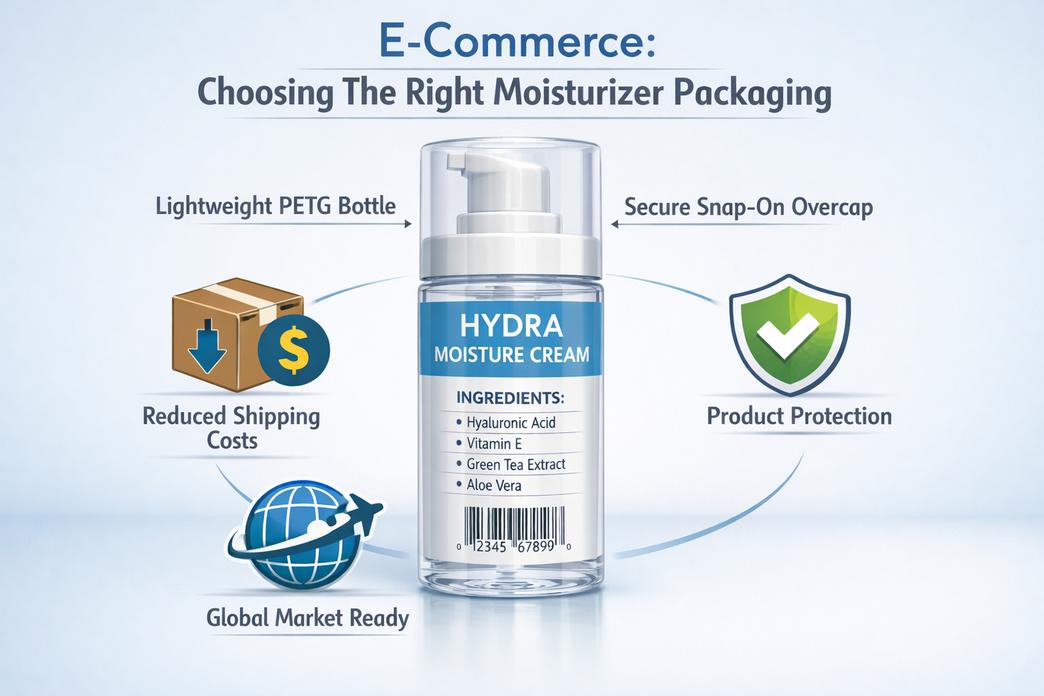
E-Commerce: Choosing The Right Moisturizer Packaging
Selling a pump moisturizer online sounds simple, yet the right bottle, cap, and print choices decide returns, reviews, and repeat buys.
Lightweight PETG Pump Bottles to Reduce Shipping Costs
When shipping a pump moisturizer, weight drives profit. Smart material selection keeps costs low without hurting product protection.
-
Why PETG works
- Lower freight weight than glass
- High clarity for strong shelf appeal
- Good match with lotion pump and airless pump
-
Cost logic
- Lighter pump bottle → lower courier tier
- Lower tier → better margin per moisturizer pump
- Better margin → room for improved packaging design
-
User angle
- Easy squeeze
- Clean pump moisturizer dosing
- Solid user experience
A lightweight pump moisturizer bottle simply makes online math work.
Secure Snap-On Overcaps Prevent Leakage during Transit
A pump moisturizer in transit faces bumps, drops, and pressure shifts. No one likes opening a box to find lotion everywhere.
Key fixes for a moisturizer pump setup:
- Snap-on overcaps that lock tight
- Shielded dispenser type to avoid accidental pressing
- Airless pump heads for thicker pump moisturizer formulas
Simple flow:
- Fill pump moisturizer bottle
- Seal with lotion pump
- Add overcap
- Test for tilt and shake
Small detail, big payoff. Secure caps protect product protection, cut refunds, and keep your pump moisturizer looking store-ready.
Compliant Offset Printing and Labeling for Global Markets
Selling pump moisturizer across borders means your packaging design must speak many languages and follow strict rules.
-
Print compliance
- Ingredient list accuracy
- Batch coding visibility
- Claims aligned with cosmetic law
-
Visual alignment
- Consistent color via offset printing
- Clear logo placement for stronger shelf appeal
- Durable labels that resist oil from pump moisturizer handling
-
Market readiness
- Multilingual panels
- Recycling marks supporting sustainability
- Barcode clarity for e-commerce scans
A compliant pump moisturizer package avoids customs delays and builds trust fast. One well-labeled moisturizer pump bottle can travel far without trouble.
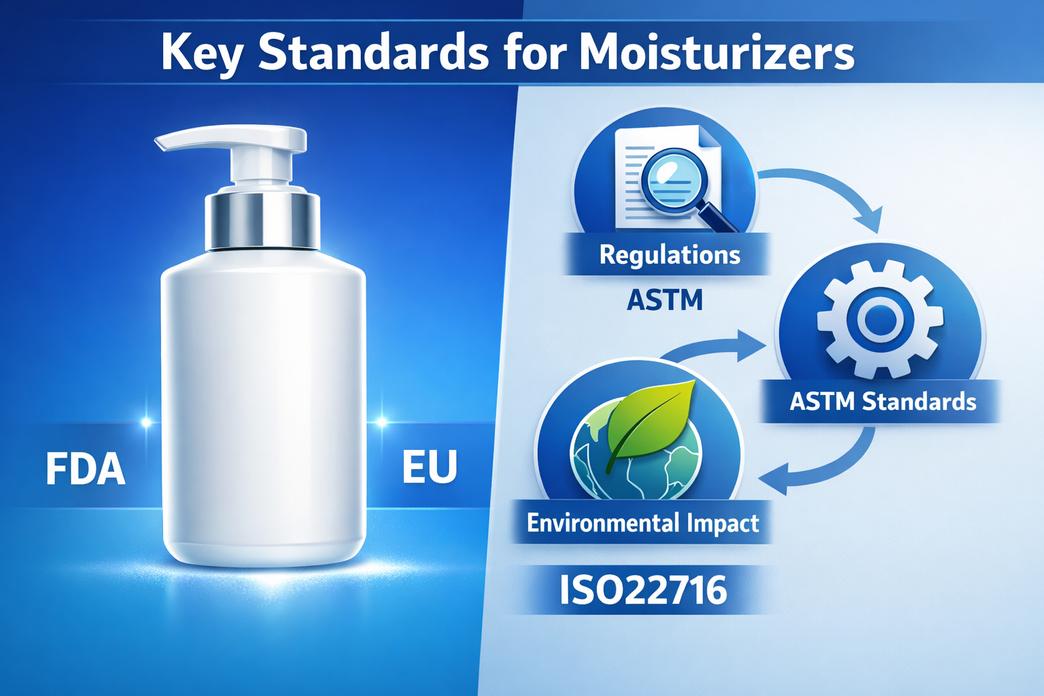
Key Standards For Moisturizers
Safe, reliable packaging keeps every pump moisturizer fresh, stable, and easy to use without stress.
FDA and EU Cosmetic Regulations for Bottles and Cream Jars
For any pump moisturizer, compliance starts with material approval and ends with labeling clarity. Regulations focus on:
- migration limits for plastics
- heavy metal control in glass and aluminum
- closure integrity for moisturizer pump bottle systems
- Raw material review
- Compatibility testing with ingredient efficacy claims
- Stability validation for formulation stability
- Final labeling audit
In grouped practice:
A. Material Safety
a. FDA food-grade polymer checks
b. EU REACH substance screening
B. Product Safety
a. Leak tests on pump lotion packs
b. Microbial resistance for face pump moisturizer jars
These steps protect product safety, preserve formulation stability, and reduce environmental impact.
ASTM Standards for Pump Gaskets and Actuator Performance
ASTM testing keeps every cream pump dispenser working smoothly. A pump moisturizer must deliver the right dose without clogging or dripping. Key checks include:
- actuator force consistency
- gasket swelling resistance
- long-cycle durability
Grouped validation looks like this:
A. Mechanical Performance
a. 5,000–10,000 press endurance tests
b. Drop resistance for moisturizer pump bottle units
B. Chemical Compatibility
a. Reaction with active ingredients
b. Seal integrity under temperature shifts
C. User Experience
a. Smooth rebound speed
b. Clean cut-off to avoid mess
Strong standards boost user experience, support ingredient efficacy, and push smart packaging innovation in every pump moisturizer design.
ISO22716 Good Manufacturing Practices for Packaging Materials
ISO22716 ties hygiene to daily production. For pump moisturizer lines, it covers bottles, pistons, and closures from molding to storage.
Core controls:
- cleanroom monitoring
- batch traceability
- documented sanitation routines
Process flow:
- Incoming inspection of pump lotion parts
- Controlled assembly of cream pump dispenser systems
- Sealed storage before filling
- Transport under humidity limits
Nested oversight keeps things tight:
A. Hygiene Benefits
a. Surface microbial testing
b. Operator training logs
B. Environmental Impact
a. Waste sorting
b. Recyclable resin tracking
With ISO22716, every pump moisturizer and face pump moisturizer reaches shelves backed by steady hygiene benefits, stronger product safety, and measurable environmental impact.
FAQs about Pump Moisturizer
Why are pump moisturizers becoming the preferred packaging choice for skincare brands?
Pump moisturizer packaging answers a simple fear: contamination and waste.
-
Hygiene & protection
- Sealed airless pump systems use an internal piston instead of an exposed dip tube.
- Less air contact than a traditional jar or cream jar.
-
User control
- A calibrated actuator dispenses a steady dose—no messy scooping.
- Works smoothly in a bottle or airless bottle format.
-
Travel security
- Paired with a snap-on cap or overcap to prevent accidental pressing.
- A tight collar and gasket reduce leakage risk in transit.
The result feels clean, precise, and reassuring in daily routines.
What packaging materials are best for large-scale pump moisturizer production?
Material choice shapes cost, weight, and brand emotion.
- PETG: lightweight, clear, easy for bulk production; balances clarity and durability.
- Plastic (polypropylene): flexible, budget-friendly, ideal for high-volume lotion pump bottles.
- Glass: premium feel, heavier shipping load, often paired with glossy or frosted finishes.
- Aluminum: recyclable, modern look, good barrier properties.
- Acrylic: upscale appearance for luxury lines.
Each material supports different closures—screw cap, disc top cap, or pump assembly—depending on how the moisturizer is dispensed.
How do airless pump bottles enhance product preservation?
Airless systems are built for formulas that demand stability.
① A rising piston pushes product upward without drawing air inside.
② No exposed dip tube, reducing oxidation risk.
③ Controlled output from the actuator ensures full evacuation with minimal residue.
For natural or preservative-light creams, an airless bottle often outperforms a standard lotion pump or sprayer format. The texture stays true from first press to last drop.
Can pump moisturizer bottles be customized for stronger brand identity?
Yes—and customization carries emotional weight on the shelf.
Surface finish options:
- Matte for softness
- Glossy for vibrancy
- Frosted for elegance
- Clear for formula visibility
- Pearlized for a subtle glow
Decoration methods bring it to life:
- Silk screen printing for durability
- Hot stamping for metallic accents
- Offset printing for detailed graphics
- Labeling for flexible design changes
- Precise color matching across caps, bottles, and pumps
A thoughtfully finished pump moisturizer bottle turns routine skincare into a tactile, visual experience customers remember.
References
- [Sustainability in packaging: Inside the minds of US consumers – https://www.mckinsey.com/industries/packaging-and-paper/our-insights/sustainability-in-packaging-inside-the-minds-of-us-consumers]
- [Consumer Perceptions of Premium Beauty – https://www.euromonitor.com/article/consumer-perceptions-of-premium-beauty]
- [Effective Closure Options for Empty Cream Containers – https://www.topfeelpack.com/news/effective-closure-options-for-empty-cream-containers/]

