 English
  English (UK)
  English (Australia)
  English (Canada)
  العربية
  Deutsch
  Italiano
  Español de México
  Tiếng Việt
  ไทย
ไทย  Português do Brasil
  Français
  Български
  Čeština
  Dansk
Dansk  Ελληνικά
  Eesti
Eesti  Suomi
Suomi  Magyar
  Bahasa Indonesia
  Lietuvių kalba
  Latviešu valoda
  Norsk bokmål
  Nederlands (Formeel)
  Polski
  Română
  Русский
  Slovenčina
  Slovenščina
  Svenska
  Türkçe
  Українська
  简体中文
简体中文  日本語
日本語  한국어
한국어  繁體中文
繁體中文 

What to Consider When Buying an Empty Bottle for Hand Sanitizer
March 02,2026
Choosing the right empty bottle for hand sanitizer isn’t just a packaging chore—it’s the difference between a product that flies off shelves and one that gathers dust. The bottle is your silent salesperson. Too flimsy? Customers squeeze and scowl. Too bulky? Shipping costs creep up and margins shrink. It’s like showing up to a job interview in wrinkled clothes—details matter.
In a market where hygiene is second nature, buyers want durability, smart dispensing, and a look that says “trust me” at first glance. Get the size, material, and closure right, and your brand feels polished. Get it wrong, and it’s money down the drain.
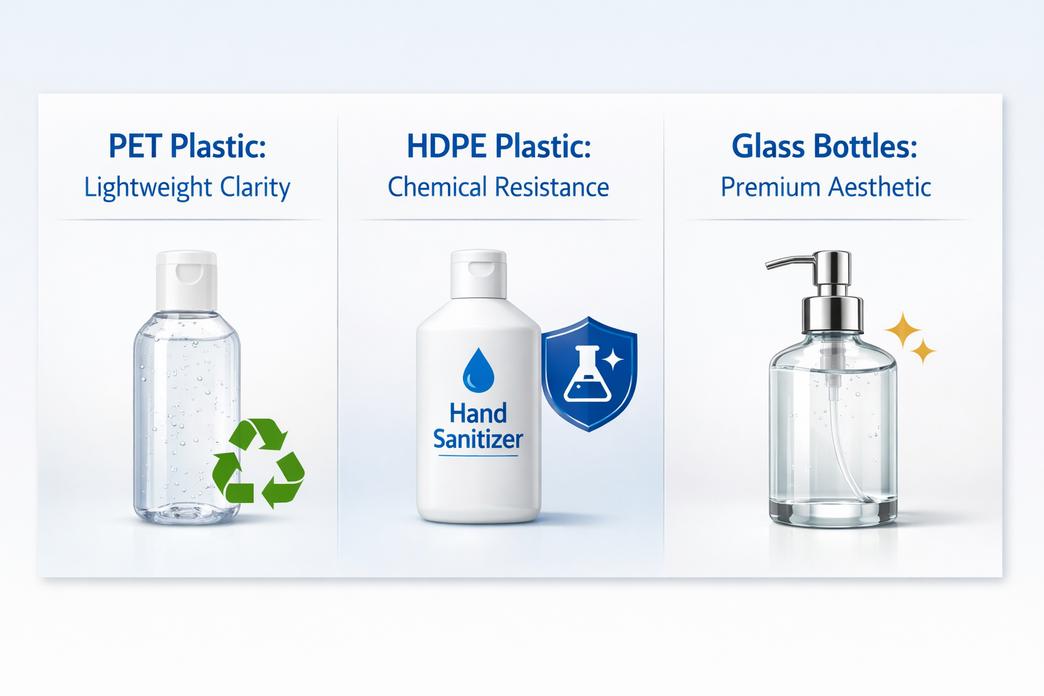
Top 3 Materials For Empty Bottles For Hand Sanitizer
Picking the right empty bottle for hand sanitizer keeps your gel safe, stable, and easy to use on the go.
PET Plastic – Lightweight clarity with full recyclability
When choosing an empty bottle for hand sanitizer, polyethylene terephthalate stands out:
- Core material traits
- lightweight feel lowers shipping cost
- High clarity and transparency show gel level clearly
- Strong barrier properties help protect alcohol content
- Practical packaging fit
- Works for pocket-size hand sanitizer empty bottle
- Common in 50ml–300ml empty sanitizer bottle formats
- Often paired with pump or flip cap
- Sustainability notes
- Fully recyclable
- Naturally shatterproof, safer than glass in travel kits
For brands wanting a clear empty bottle for hand sanitizer that looks clean and modern, PET keeps things simple and efficient.
HDPE Plastic for ultimate chemical resistance and durability
For higher alcohol formulas, a plastic bottle for sanitizer made from high-density polyethylene performs reliably.
Main advantages:
• Strong chemical resistance against 60–75% alcohol
• Long-term durability in daily handling
• Extra impact resistance for gym bags or car storage
Grouped selection logic:
-
Material behavior
- Slightly flexible body reduces cracking
- Opaque surface protects light-sensitive blends
-
Capacity pairing
- 500ml refill empty bottle for hand sanitizer
- 1000ml bulk empty sanitizer bottle for clinics
-
Cost control
- Widely seen as cost-effective in mass production
Grand View Research (2025) notes that HDPE remains a leading resin in personal care packaging due to its “consistent chemical stability and price efficiency across high-volume applications.”
If you need a tough hand sanitizer bottle empty option for refilling stations, HDPE keeps it low-drama.
Glass Bottles: premium aesthetic meets sterile packaging
A glass empty bottle for hand sanitizer sends a different vibe—clean, upscale, serious.
Material profile:
- Structure
- non-porous and inert, so it won’t react with alcohol
- Naturally sterile surface
- Visual impact
- Clear or frosted premium aesthetic
- Easy to decorate with silk print
- Can add light UV protection coating
- Usage considerations
- Reusable and refill-friendly
- More fragile, so better for desktops than backpacks
For boutiques or hotel counters, a glass hand sanitizer bottle empty design elevates the look while keeping the formula stable inside every empty bottle for hand sanitizer.
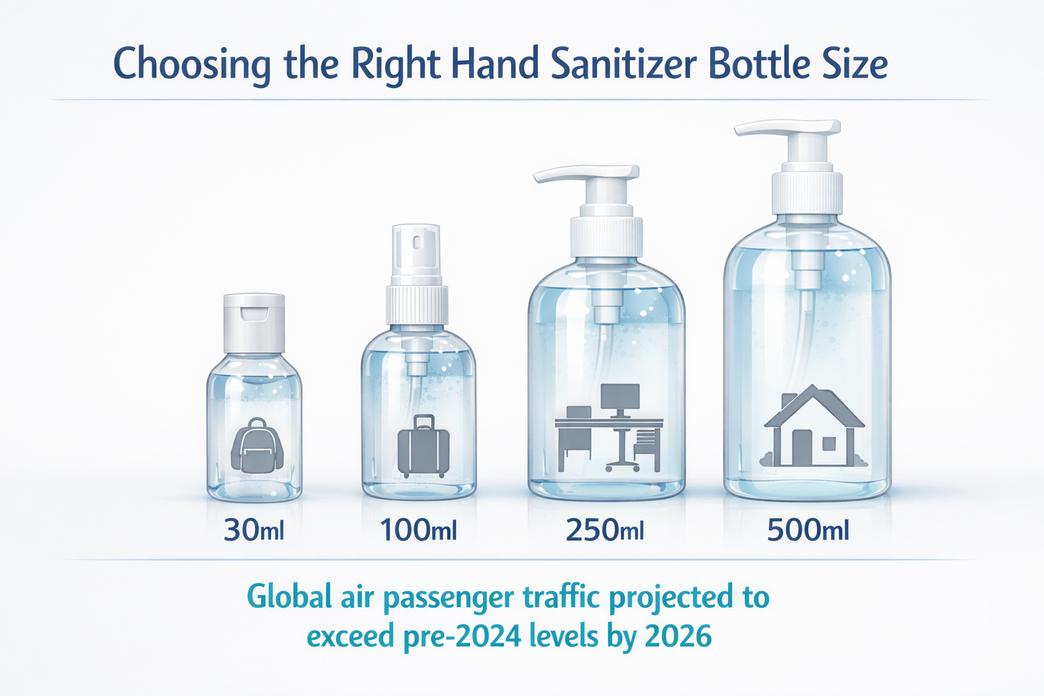
How To Choose The Right Size For Hand Sanitizer Bottles
Picking the right empty bottle for hand sanitizer keeps life simple—no spills, no waste, just the right fit for your routine.
30ml pocket-size bottle for daily carry
Choosing a 30ml empty bottle for hand sanitizer works best for:
- portable daily routines
- personal use moments
- quick on-the-go cleaning
-
Size logic
- small capacity avoids bulk
- fits jeans, clutch, or jacket
- some add keychain attachment loops
-
Design picks
- slim cylinder
- flat oval
- tight flip-cap
A compact empty bottle for hand sanitizer should be refillable, light, and easy to squeeze. Think grab-and-go, no drama.
100ml TSA-friendly travel sanitizer container
A 100ml empty bottle for hand sanitizer suits flights and long trips.
-
Travel checklist
- travel compliant sizing
- labeled for airline approved carry
- secure lid for security checkpoint scans
-
Material matters
- PET for clarity
- HDPE for impact resistance
- true leak-proof seal
For any journey, this travel compliant hand sanitizer empty bottle fits carry-on rules and avoids suitcase spills. Smart travelers keep one ready before every vacation.
“Global air passenger traffic is projected to exceed pre-2024 levels by 2026, increasing demand for compliant carry-on liquid containers,” reported IATA’s 2025 industry outlook.
That’s why a 100ml empty hand sanitizer bottle just makes sense.
250ml office desk dispenser for regular use
A 250ml empty bottle for hand sanitizer fits shared work zones.
-
Workspace match
- sits well on a workstation
- easy reach in shared space
- supports frequent use
-
Function focus
- smooth pump dispenser
- steady output
- medium capacity balance
For teams, a hand sanitizer empty bottle in 250ml avoids constant refills but won’t hog the desktop. It’s practical, tidy, and keeps convenient access front and center.
500ml refill-ready bottle for home and workplace
When traffic is heavy, go bigger with a 500ml empty bottle for hand sanitizer.
-
High-demand spots
- kitchens
- entryways
- high traffic areas
-
Value thinking
- supports bulk storage
- feels economical
- ideal for family use
-
Long-term plan
- choose thick HDPE
- confirm strong pump
- keep it refill-ready
A large capacity hand sanitizer empty bottle lowers cost per refill and suits communal settings. Brands like Topfeel offer durable options that stay cost-effective without looking industrial. For homes or offices, this empty bottle for hand sanitizer handles daily demand with zero fuss.
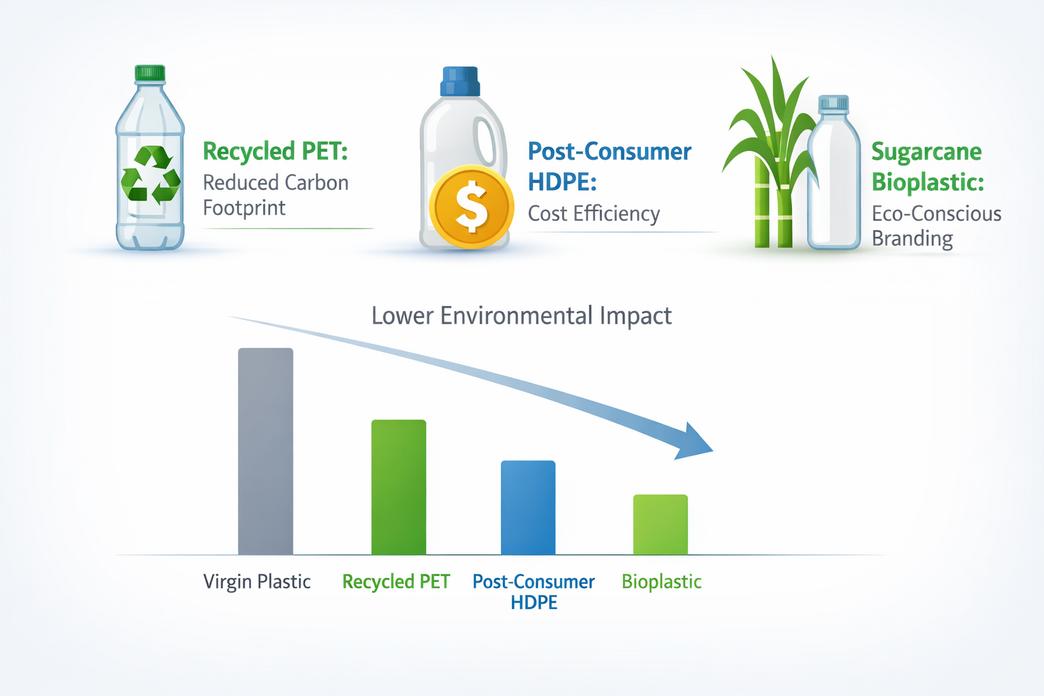
Why You Should Consider Recycled Plastic For Hand Sanitizer Bottles
Smart packaging choices shape how every empty bottle for hand sanitizer performs, sells, and feels in hand.
Reduced carbon footprint with recycled PET packaging
When choosing an empty bottle for hand sanitizer, recycled PET makes sense for brands that care about sustainability and real numbers.
- Material impact
- Uses recycled content and post-consumer resin.
- Cuts virgin resin demand.
- Supports resource conservation goals.
- Environmental performance
- Lower environmental impact confirmed by lifecycle assessment data.
- Clear finish maintained with PCR PET.
- Practical fit
- Works for a refillable empty hand sanitizer bottle.
- Compatible with pumps, labels, silk print.
“Post-consumer resin adoption is accelerating as brands seek measurable carbon reductions,” notes McKinsey’s 2025 sustainable packaging outlook.
For an empty bottle for hand sanitizer, that’s progress you can see.
Cost efficiency of post-consumer HDPE bottles
Cost matters. So does performance. A smart empty bottle for hand sanitizer built from HDPE material balances both.
A. Material sourcing
- Recycled plastic lowers input cost.
- Stable supply chain improves forecasting.
- Efficient manufacturing process reduces scrap.
B. Operational gains
- Chemical resistance for alcohol formulas.
- Opaque 500ml and 1000ml formats.
- Screw cap or disc top cap options.
C. Business results
- Real operational savings.
- Built-in waste reduction.
Brands looking for an affordable empty sanitizer bottle often move to post-consumer HDPE because it simply works, especially for bulk empty bottle for hand sanitizer orders.
Sugarcane bioplastic for eco-conscious branding
Some buyers want more than recycled—they want renewable. A sugarcane-based empty bottle for hand sanitizer speaks directly to that crowd.
• Made from plant-based plastic and other renewable resources.
• Classified as advanced biomaterial within sustainable packaging programs.
• Boosts brand image and shapes positive consumer perception.
Grouped decision path:
- Brand positioning
- Eco-focused messaging
- Visual storytelling on-pack
- Packaging design
- Cylindrical or custom molded bottle
- Works as refillable empty bottle for hand sanitizer
- Market response
- Appeals to buyers seeking eco-friendly and even biodegradable options
For brands like Topfeel, offering a sugarcane-based empty bottle for hand sanitizer isn’t hype—it’s strategy. And in a shelf full of lookalike containers, that edge counts.
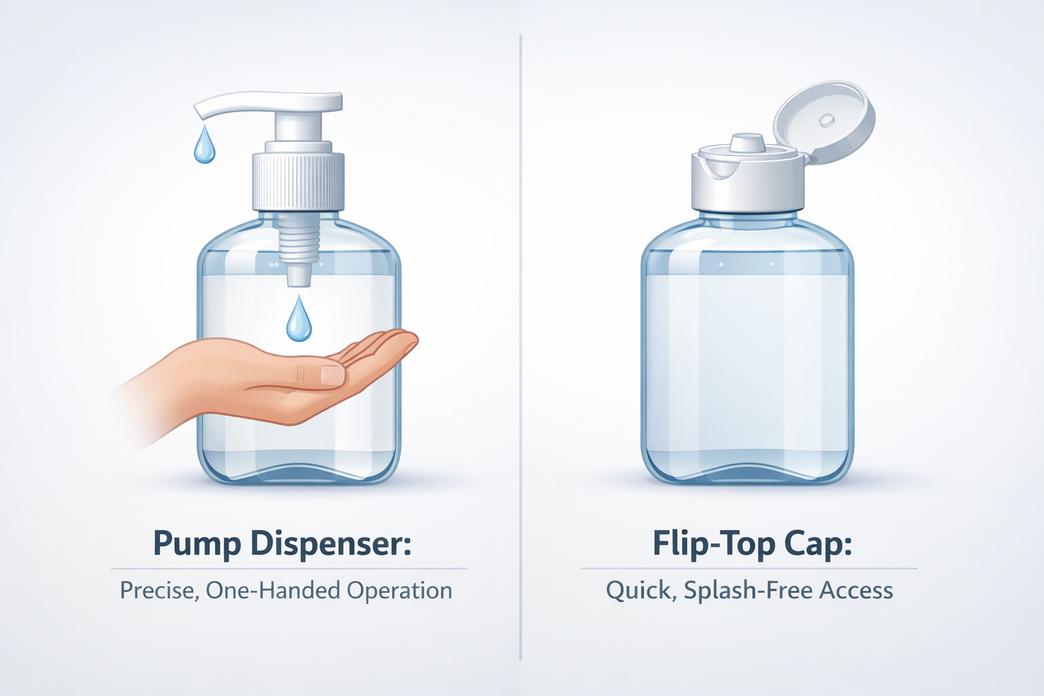
How Cap Design Influences Hand Sanitizer Dispensing
Choosing the right cap changes how an empty bottle for hand sanitizer works in daily life, from desk use to travel bags.
Pump dispenser for precise, one-handed operation
A pump turns an empty bottle for hand sanitizer into a smooth, low-mess tool.
-
Core working system
- Pump mechanism controls dispensing volume.
- Balanced actuation force supports single-hand use.
- Smart nozzle design ensures controlled dosage.
-
User benefits
- Steady output for refillable sanitizer bottle setups.
- Less dripping in a hand sanitizer container on busy counters.
For offices using a bulk-filled empty bottle for hand sanitizer, this style keeps things tidy and predictable.
Flip-top cap for quick, splash-free access
Flip-top designs suit a pocket-size empty bottle for hand sanitizer.
-
Structural elements
- Durable hinged cap with tight snap closure.
- Optimized orifice size for spill prevention.
- Built-in splash guard.
-
Everyday rhythm
- Pop open with a one-finger opening.
- Squeeze, apply, close, go.
For a small empty hand sanitizer bottle in a gym bag, that fast click matters.
Fine mist sprayer enabling light, even coverage
When coverage matters, the sprayer upgrades an empty bottle for hand sanitizer.
-
Spray science
- Precision atomizer shapes the spray pattern.
- Narrow nozzle aperture creates fine particles.
- Stable mist consistency improves even distribution.
-
Practical flow
- Wider coverage area with less liquid.
- Ideal for transparent refillable sanitizer bottle formats.
A mist-style empty bottle for hand sanitizer feels lighter on skin and reduces overuse.
Screw cap ensuring leak-proof storage
For transport, a sealed empty bottle for hand sanitizer is key.
-
Closure build
- Deep threaded closure for tight fit.
- Inner gasket supports seal integrity.
- Designed for leak prevention and transport safety.
-
Use cases
- Travel-size sanitizer bottle in luggage.
- Large refill hand sanitizer container in storage.
This style keeps an empty bottle for hand sanitizer secure until refill time.
Disc top cap for controlled single-drop release
Disc tops balance access and hygiene in an empty bottle for hand sanitizer.
-
Functional design
- Smooth disc mechanism activated by finger press.
- Tight orifice control for single-drop dispensing.
- Supports precision release and reduced waste.
-
User vibe
- Clean surface, less exposure.
- Works well on oval or square empty bottle for hand sanitizer designs.
Brands like Topfeel often match cap style to bottle form, helping each empty bottle for hand sanitizer feel purpose-built rather than generic.
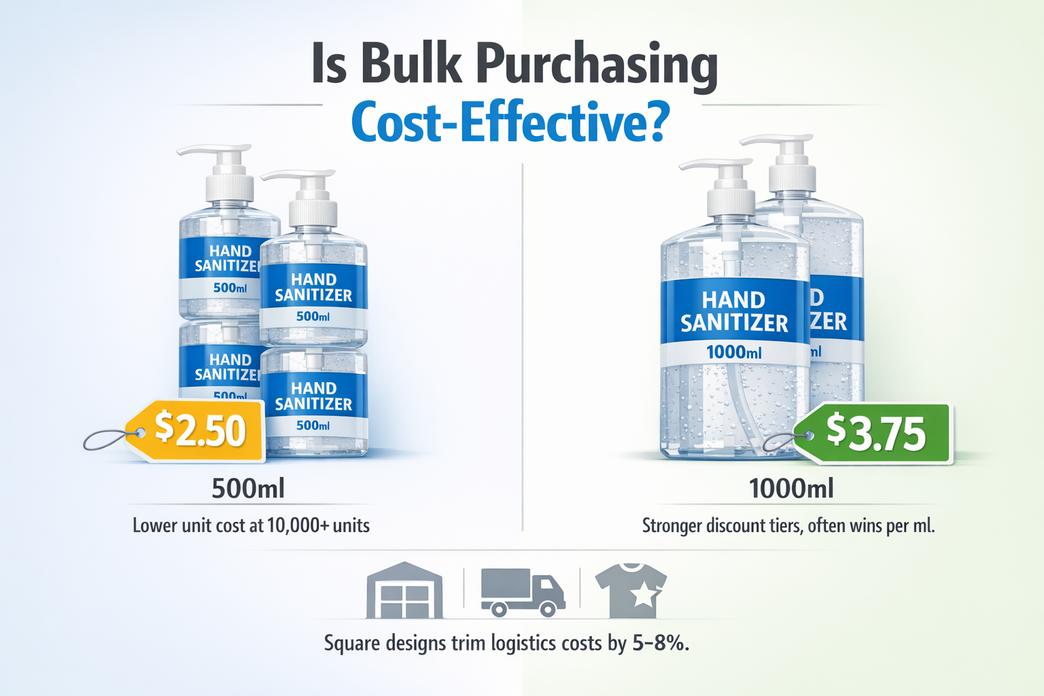
Is Bulk Purchasing Of Hand Sanitizer Bottles Cost-Effective?
Buying an empty bottle for hand sanitizer in bulk sounds simple, yet real savings hide in the details.
Evaluating volume discounts for 500ml and 1000ml bottles
When sourcing an empty bottle for hand sanitizer, cost drops as purchase volume rises, but the math shifts by bottle capacity and material cost.
- By bottle size
- 500ml
- Lower unit cost at 10,000+ units
- Better packaging efficiency for retail shelves
- 1000ml
- Fewer units per order
- Higher resin usage, but stronger discount tiers
- By material
- PET: clear look, slightly higher material cost
- HDPE: tough, budget-friendly
An empty bottle for hand sanitizer at 1000ml may look pricier upfront, yet per ml it often wins.
For brands scaling fast, locking in bulk rates for an empty hand sanitizer bottle keeps margins steady.
Calculating storage and shipping costs by shape
Shape affects more than looks. It hits freight charges, warehouse space, and overall transport efficiency for every empty bottle for hand sanitizer order.
• Square designs improve stackability and tight palletization.
• Round bottles increase unused container volume.
• Slim profiles reduce wasted bottle dimensions in cartons.
Step-by-step cost view:
- Measure carton count per pallet.
- Check height limits in storage racks.
- Compare shipping quotes by cubic meter.
A square empty bottle for hand sanitizer often trims logistics costs by 5–8%. That matters when thousands of hand sanitizer empty bottle units move monthly. Even a slight tweak in bottle dimensions can free up serious floor space.
Impact of decoration methods on unit pricing
Decoration adds personality, yet every upgrade changes production complexity and final unit cost of an empty bottle for hand sanitizer.
A) Method selection
- Labeling
- Low setup cost
- Works across most material type options
- Printing (silk screen, pad)
- Clean branding
- Moderate customization fees
- Finishing (hot stamping, UV)
- Strong aesthetic appeal
- Higher reject rates
B) Volume impact
- Large runs dilute tooling cost
- Small batches raise per-piece pricing
Choosing simple labeling for an empty sanitizer bottle keeps pricing lean. Brands like Topfeel often guide buyers toward balanced decoration plans, so each empty bottle for hand sanitizer stays eye-catching without crushing profit.
FAQs about Empty Bottle For Hand Sanitizer
What materials work best for an empty bottle for hand sanitizer?
Choosing the right material shapes safety, cost, and brand feel:
-
Plastic Options
1.1 PET plastic – Lightweight with a transparent finish, ideal for 30ml bottle, 50ml bottle, and 100ml bottle travel sizes.
1.2 HDPE plastic – Strong alcohol resistance, perfect for 250ml bottle, 500ml bottle, or 1000ml bottle bulk packaging.
1.3 PP plastic – Often used for caps and pump dispenser systems.
-
Premium Materials
2.1 Glass – Clear or frosted finish for upscale presentation.
2.2 Aluminum – Durable, modern look with metallic coating.
2.3 Acrylic – Crystal-clear appearance for display-focused lines.
2.4 Sugarcane bioplastic – A softer environmental footprint.
The right choice balances durability, visual appeal, and how the bottle feels in the hand.
Which bottle size and shape are ideal for different uses?
Usage defines both volume and silhouette:
- On-the-go: 30ml bottle or 50ml bottle in a flat oval bottle or cylindrical bottle fits pockets and bags.
- Retail shelves: 100ml bottle or 200ml bottle in a Boston round bottle or square bottle offers familiarity and stability.
- Workplaces & public spaces: 500ml bottle or 1000ml bottle in a rectangular bottle improves storage efficiency.
- Brand statement: A custom molded shape or oval bottle builds instant recognition.
A well-proportioned shape reduces shipping waste and makes daily use effortless.
What closure types ensure safe and comfortable dispensing?
Dispensing style changes the user experience dramatically:
-
Controlled flow systems
- Pump dispenser for offices and healthcare counters.
- Disc top cap for quick press-and-go access.
-
Compact solutions
- Flip-top cap or screw cap for small PET plastic or HDPE plastic containers.
-
Specialized application
- Fine mist sprayer for even coverage.
- Dropper for precise output.
- Roll-on applicator for targeted use.
The closure must match viscosity and daily habits—comfort builds loyalty.
How can decoration enhance branding on sanitizer bottles?
A strong visual identity turns a simple cleanser bottle into a signature product.
-
Surface finishes
1.1 Matte finish for a refined touch.
1.2 Glossy finish for vibrancy.
1.3 Frosted finish or soft touch coating for a gentle feel.
1.4 Transparent finish or opaque finish depending on formula visibility.
-
Decoration methods
2.1 Silk screen printing for durability.
2.2 Hot stamping for metallic accents.
2.3 Labeling or decal application for flexibility.
2.4 Offset printing and UV coating for bold graphics.
Design details often mirror cosmetic lines like lotion bottle, serum bottle, toner bottle, foundation bottle, essence bottle, or hair care bottle packaging—bringing emotion and trust into everyday hygiene.
References
- [Advanced HDPE Resins Market Size | Industry Report, 2033 – Grand View Research – https://www.grandviewresearch.com/industry-analysis/advanced-high-density-polyethylene-hdpe-resins-market-report]
- [Strong 2025 Passenger Demand Masks Ongoing Capacity Constraints – IATA – https://www.iata.org/en/pressroom/2026-releases/2026-01-29-02/]
- [Sustainable packaging 2025: Top barriers for packaging purchasers – McKinsey – https://www.mckinsey.com/industries/packaging-and-paper/our-insights/sustainable-packaging-2025-top-barriers-for-packaging-purchasers]

