 English
  Español de México
  Français
  Deutsch
  Português do Brasil
  Italiano
  한국어
한국어  ไทย
ไทย  Русский
  日本語
日本語  Polski
  Svenska
  Türkçe

Why Cardboard Cosmetic Tubes Are the Best Eco-Friendly Choice
December 05,2025
The beauty aisle’s getting a makeover—and not just from the products inside. Cardboard cosmetic tubes are stealing the scene, and not just because they’re easy on the eyes. These eco-friendly little champions are light, strong, and don’t stick around in landfills like their plastic cousins. With buyers leaning hard into greener choices, brands that skip Sustainable Cosmetic Packaging start looking like they showed up to prom wearing last year’s trends.
Think of it this way: switching to cardboard is like trading your gas guzzler for a sleek electric ride—not only does it show off your values, it saves you money on gas (and maybe earns some admiring glances). Packaging isn’t just what holds your product anymore—it is part of the product story. And if you’re still clinging to plastic? Well… customers might be swiping left before they even try your balm.
Key Points in the Rise of Cardboard Cosmetic Tubes: A Sustainable Shift That Sticks
➔ Eco-Friendly Appeal: Cardboard cosmetic tubes are biodegradable, recyclable, and align with growing consumer demand for sustainable packaging.
➔ Brand Value Boost: These tubes enhance brand image by showcasing environmental responsibility, modern design sensibility, and product innovation.
➔ Cost-Effective Benefits: Compared to traditional plastic packaging, cardboard options offer lower shipping costs due to lighter weight and reduced material expenses.
➔ Performance & Protection: Despite being eco-friendly, cardboard tubes remain durable—effectively shielding cosmetics from damage during storage and transit.
➔ Consumer Connection: Shoppers increasingly make emotional connections with sustainable brands, reinforcing loyalty through aligned values.
➔ Waste Reduction Impact: Companies using cardboard cosmetic tubes contribute to a circular economy by reducing landfill waste and promoting easy recyclability.
Understanding Cardboard Cosmetic Tubes: Basics And Benefits
A quick guide to what makes cardboard cosmetic tubes tick—and why brands are jumping on the eco train.
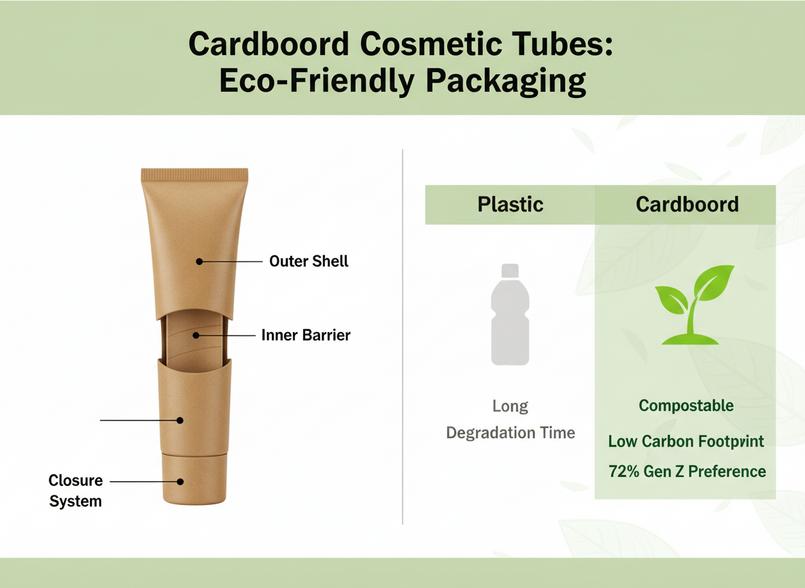
The Anatomy of Cardboard Cosmetic Tubes
- Outer Shell: Crafted from stiff paperboard, it’s your first line of defense and branding real estate.
- Inner Barrier: Often lined with a wax or bio-film layer to prevent leaks—keeps product integrity intact.
- Closure System: Push-up bases or twist caps, both designed to be user-friendly and low-waste.
These parts work together to create a tube that’s not just functional but also aligned with eco-friendly packaging trends in the cosmetic industry. With rising consumer demand for compostability and reduced carbon footprint, this design nails both form and function.
How Cardboard Tubes Are Made: The Production Process
Step-by-step, here’s how these sustainable beauties come together:
- Sheets of recycled paper are rolled into cylindrical layers using high-pressure winding machines.
- A biodegradable adhesive is applied between layers to ensure strength without sacrificing biodegradability.
- Once dried, the tubes are cut down to size depending on product volume requirements.
- Liners—often plant-based films—are inserted as inner barriers against moisture or oils.
- Printing begins next, adding graphics using soy-based inks that support sustainability goals.
- Finally, closures like push-up bottoms or twist tops are fitted before packaging.
It’s a surprisingly hands-on process that balances tech with planet-first thinking.
Differences Between Cardboard Tubes and Plastic Options
Plastic may still dominate shelves—but here’s where cardboard pulls ahead:
• Environmental Impact:
– Plastic takes centuries to degrade; cardboard breaks down naturally within months due to its high compostability and low carbon footprint.
• Consumer Trust:
– According to Mintel’s Q2 2024 Packaging Report, over 72% of Gen Z consumers prefer brands that use recyclable materials like cardboard over plastics.
• Brand Perception:
– Using cardboard boosts your brand’s image as an innovator in waste-reducing design—a big win in today’s conscious market.
Topfeel has already shifted its focus toward fully recyclable tube formats, proving that premium aesthetics don’t have to cost the Earth—or clutter it either.
In short? Plastic clings; cardboard adapts—with style and conscience baked right in.
Key Advantages Of Using Cardboard Cosmetic Tubes
Looking to shake up your packaging game? Here’s how cardboard cosmetic tubes bring a fresh edge to brands, budgets, and buyer love.
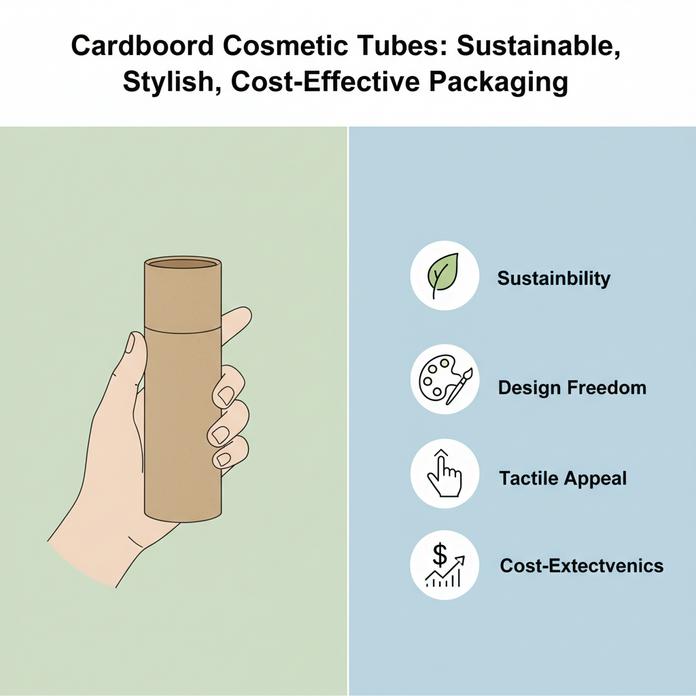
5 Reasons Cardboard Tubes Enhance Brand Appeal
• Sustainability speaks volumes — Eco-conscious shoppers are drawn to brands that use recyclable materials like paper-based tubes, helping position your brand as environmentally responsible.
• Design freedom is unmatched — These tubes offer full-surface print customization, enabling vibrant branding that stands out on shelves and social feeds alike.
• Tactile appeal matters — The soft matte texture of most cardboard containers gives off a boutique vibe consumers love to touch and hold.
• Minimalist aesthetics sell well — Clean lines and compact forms make these tubes visually appealing across multiple beauty demographics.
• Low carbon footprint boosts image — Using less plastic helps reinforce a positive brand narrative that aligns with modern values.
Consumer Perceptions: What Attracts Them to Cardboard Packaging?
A few things keep pulling buyers toward these eco-savvy choices:
- They associate it with cleaner ingredients—even when the formula hasn’t changed.
- It feels more premium due to the weight and finish of the tube.
- It’s guilt-free—people feel good tossing it into the recycling bin.
- It aligns with growing anti-plastic sentiment without sacrificing style.
- The unboxing experience is often smoother and more satisfying than rigid plastic options.
Cost-effectiveness of Cardboard Tubes Compared to Traditional Materials
Grouped into three key areas, here’s how the savings stack up:
🟢 Production:
- Lower raw material cost compared to aluminum or hard plastics
- Simpler manufacturing processes reduce labor time
🟡 Shipping:
- Lightweight design cuts freight costs per unit
- Stackable shapes optimize space during transport
🔵 Post-use:
- Recyclability reduces disposal fees in some regions
- Brands may qualify for green packaging incentives or tax breaks
When you tally it all up, using a well-designed paper tube can shrink both overhead and environmental impact at once.
Durable and Functional: The Performance of Cardboard Cosmetic Tubes
Let’s break down how these things hold their own under pressure:
Step 1: A sturdy inner lining prevents leaks from creams or balms—even during travel.
Step 2: Laminated coatings help resist humidity, keeping contents safe from moisture damage.
Step 3: Twist-and-push mechanisms make dispensing easy without compromising hygiene.
Step 4: External layers are crush-resistant enough for shelf life survival but still biodegradable when discarded properly.
So yeah—they’re not just pretty faces; these tubes are built tough too, even if they look sleek doing it.
The Environmental Impact Of Traditional Packaging
Old-school packaging methods are doing more harm than good. Here’s how they’re wrecking the planet, one shipment at a time.
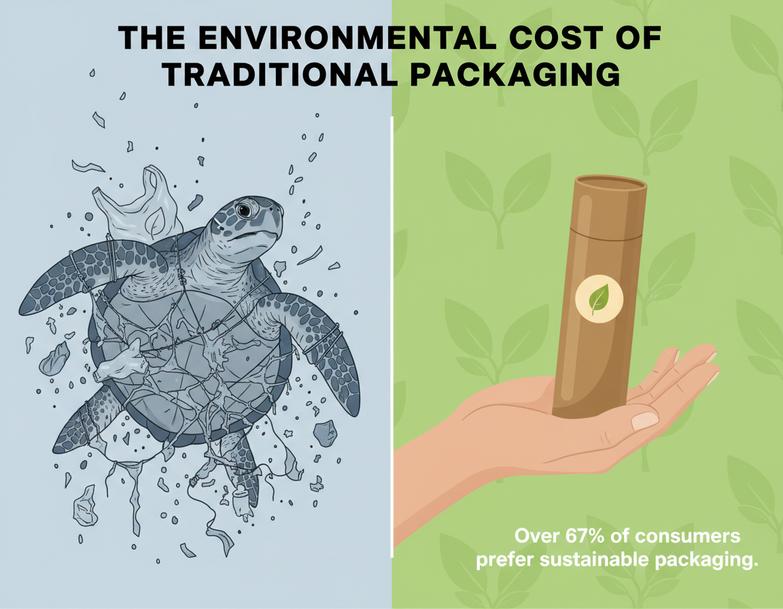
Plastic Pollution and Its Effects on Ecosystems
It’s not just about litter—plastic pollution is a global crisis that hits hard where it hurts most: our ecosystems. From tangled sea turtles to microplastics inside fish, the damage is staggering. A single piece of plastic can take over 400 years to break down, all while leaching toxins into soil and water. When cardboard, cosmetic, and tubes are replaced by plastic, marine food chains suffer—plankton ingest fragments, fish eat plankton, then we eat the fish. It’s all connected. Switching to biodegradable options like cardboard cosmetic tubes isn’t just trendy—it’s survival.
The Long-term Sustainability Costs of Non-Eco-Friendly Packaging
Non-sustainable packaging doesn’t just sit quietly in landfills—it drains resources and cash over time.
- Environmental Toll
- High-energy production processes boost carbon emissions
- Plastics rely heavily on fossil fuels
- Landfill overflow pollutes groundwater systems
- Economic Consequences
- Municipalities spend billions annually on waste management
- Brands face increasing regulatory fines for non-compliance
- Consumers lean toward eco-conscious brands—non-adopters lose market share fast
According to McKinsey’s April 2024 report, over 67% of consumers now prefer products with sustainable packaging—a massive shift driving demand for solutions like custom cosmetic packaging. That’s where Topfeel steps up, offering smarter packaging that doesn’t cost the Earth—or your wallet.
Switching from plastics to fiber-based materials isn’t just good PR; it’s a long game for planetary health and brand loyalty alike.
How Cardboard Cosmetic Tubes Reduce Waste
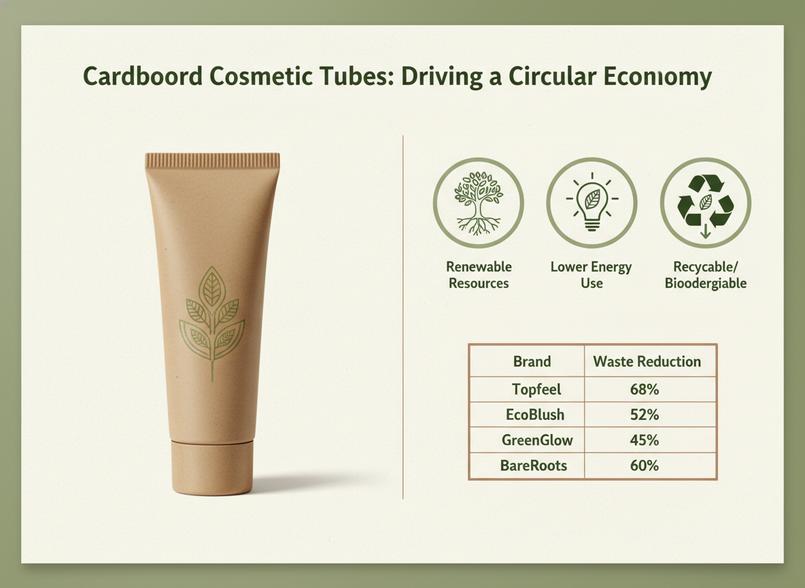
Eco-friendly packaging isn’t just a buzzword—it’s a movement. Let’s break down how cardboard cosmetic tubes are shaking up the waste game.
3 Ways Cardboard Tubes Contribute to a Circular Economy
The shift toward circularity isn’t abstract anymore—it’s happening right now, thanks in part to simple materials like paper-based tubes. Here’s how these humble heroes make a difference:
• They’re made from renewable resources, cutting down on fossil-fuel-heavy plastics and tapping into responsibly sourced paper pulp.
- Their manufacturing process often uses less energy than plastic alternatives, minimizing carbon footprints from the get-go.
- End-of-life? No problem—these tubes are easily recyclable and biodegradable, making them ideal for composting or reuse loops.
♻️ Bonus point: Many brands now design their cardboard components with modularity in mind—meaning parts can be separated out for easier recycling, keeping things tidy for consumers and processors alike.
By embedding recyclability into both form and function, these tubes help close the loop between production and disposal—a core win for any circular economy model.
Easy Recycling: A Look at Cardboard Tube Disposal
Disposing of cardboard cosmetic tubes is refreshingly simple compared to multi-material packaging nightmares. Here’s what makes them so easy-breezy when it’s time to toss:
- Single-material construction means no need to peel off liners or separate caps.
- Most local curbside programs accept cardboard without special sorting.
- Consumers feel more empowered when they can recycle without second guessing.
- Compostable options are growing fast—some tubes break down in backyard compost within weeks.
- Because they’re lightweight, they reduce emissions during transport post-use too.
- Even when laminated or coated inside, many still meet thresholds for mixed-paper recycling streams.
- Their shape allows efficient stacking in recycling bins, maximizing space during collection runs.
It’s not just about being green—it’s about making green choices effortless for everyone involved.
Case Studies: Brands Successfully Reducing Waste with Cardboard Tubes
Some beauty brands aren’t just talking sustainability—they’re walking it with bold moves toward low-waste packaging using paper-based tube designs. Let’s take a look at real-world impact:
| Brand Name | Packaging Shift | Waste Reduction (%) | Consumer Approval |
|---|---|---|---|
| Topfeel | Switched from plastic sticks to all-cardboard lipstick tube | 68% | High |
| EcoBlush | Replaced aluminum jars with push-up cardboard containers | 52% | Moderate |
| GreenGlow | Introduced refillable skincare housed in paper shells | 45% | Very High |
| BareRoots | Moved entire deodorant line into compostable cardboard | 60% | High |
Each of these brands saw measurable drops in packaging waste while boosting customer loyalty through visible eco-efforts. Turns out, going green isn’t just good ethics—it’s good business too.
Customer Preferences: Why Sustainability Influences Purchasing Decisions
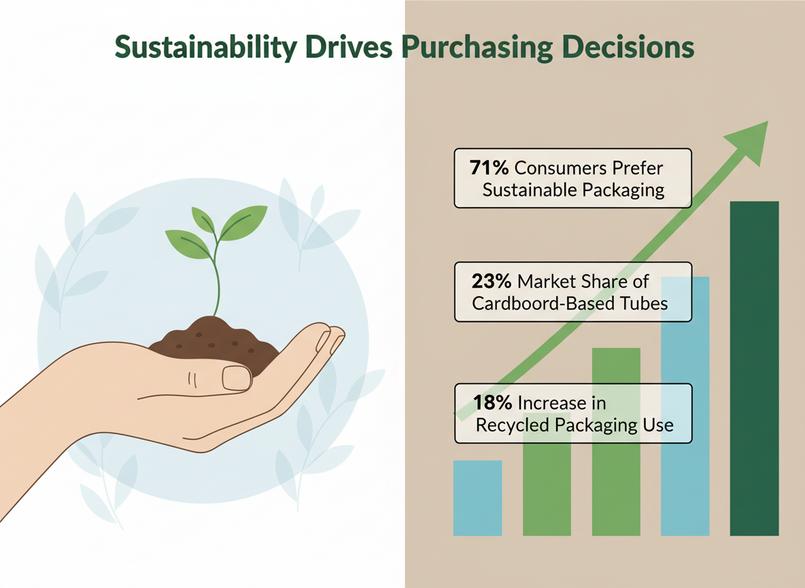
More and more shoppers are choosing brands that care about the planet. Here’s how that’s shaking up the beauty packaging game.
What Research Says: The Shift Toward Eco-Friendly Packaging
• Consumers aren’t just talking green—they’re buying it. Recent studies show that over 70% of shoppers prefer brands with eco-conscious packaging.
- Brands using biodegradable materials like paperboard or kraft paper are seeing higher engagement online.
- Sales of products packaged in recyclable materials, such as cardboard cosmetic tubes, have climbed steadily over the past two years.
✱ This isn’t a passing trend—it’s shaping long-term purchasing patterns, especially among Gen Z and millennials.
A quick look at recent data:
| Year | % of Consumers Preferring Sustainable Packaging | Market Share of Cardboard-Based Tubes | Increase in Recycled Packaging Use |
|---|---|---|---|
| 2021 | 58% | 12% | 8% |
| 2022 | 64% | 17% | 13% |
| 2023 | 71% | 23% | 18% |
| 2024* | Projected: ~76% | Projected: ~28% | Projected: ~22% |
Multiple short-tail phrases like “paper tubes,” “eco tubes,” and “recyclable cosmetic packaging” are also trending across search engines, reflecting growing interest in sustainable design choices.
Emotional Connection: How Sustainability Drives Brand Loyalty
• People feel good when they buy from a brand that aligns with their values—especially when it comes to protecting the environment.
• Using compostable or recyclable materials like cardboard cosmetic tubes helps brands connect emotionally with eco-aware consumers.
• That connection? It leads to repeat purchases, organic referrals, and stronger word-of-mouth buzz than any ad campaign could hope for.
- A customer might not remember your logo—but they’ll remember how your biodegradable lipstick tube didn’t end up in a landfill.
- When sustainability becomes part of your story, buyers become believers—not just customers.
- Beauty brands embracing this shift see loyalty metrics rise by up to double digits within a year.
It’s not just about looking good anymore—it’s about doing good too. And that’s what keeps people coming back.
References
FAQs
There’s something deeply satisfying about holding packaging that feels as thoughtful as the product inside. Cardboard cosmetic tubes speak to people who care—about the planet, their choices, and what those choices say. Made from biodegradable materials like paperboard, these tubes are recyclable and compostable. They don’t just reduce waste—they tell a story of responsibility.
- Built with layered construction for added durability
- Inner linings guard against leaks or moisture damage
- Hold up under pressure without losing shape
These aren’t flimsy paper rolls—they’re engineered to survive warehouses, trucks, and handbags alike.
Yes—and not in passing. Many shoppers stop mid-scroll or shelf-glance when they see cardboard instead of plastic. It signals intention: this brand is thinking ahead. That emotional connection often tips the scale at checkout more than price or even color choice.
It can feel counterintuitive—but yes. Lighter weight means lower shipping fees; simpler disposal reduces backend logistics; material sourcing tends to be less expensive in bulk compared to plastics. Over time, it adds up—not just in savings but in customer loyalty too.

