 English
  Español de México
  Français
  Deutsch
  Português do Brasil
  Italiano
  한국어
한국어  ไทย
ไทย  Русский
  日本語
日本語  Polski
  Svenska
  Türkçe

How to Select the Perfect Foundation Bottle for Different Formula Viscosities?
July 09,2026
A foundation bottle is not simply a decorative shell. Its pump, flow path, neck size, material, and internal structure must work with the formula inside. A mismatch can cause clogging, leakage, irregular dosing, or product left at the bottom.
The right approach is to select packaging according to how the foundation actually flows—not only how thick it appears in a laboratory beaker.
Why Formula Viscosity Matters in Foundation Packaging
How Foundation Ingredients Affect Product Flow
Viscosity describes a formula’s resistance to flow, but foundation behavior is more complex than one viscosity number. Pigments, oils, silicones, film formers, powders, and temperature can all change dispensing performance.
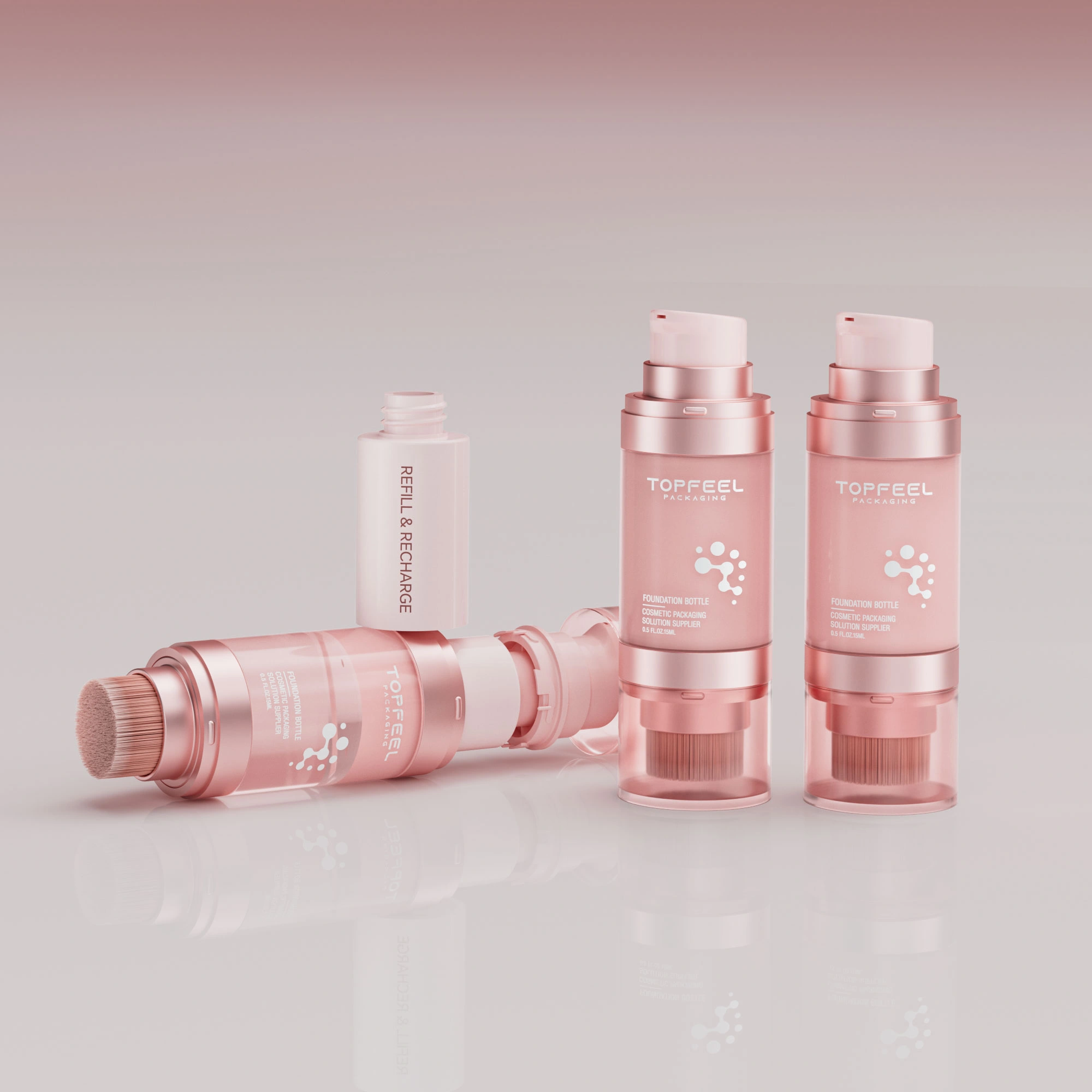
Many foundations are also shear-thinning. They become easier to move when shaken, mixed, or pushed through a pump. Therefore, a formula that appears thick at rest may still dispense smoothly through a properly designed system.
Before selecting packaging, evaluate:
- Viscosity at filling temperature
- Viscosity after cooling
- Pigment and powder concentration
- Formula sensitivity to air
- Expected dosage per application
Signs of a Formula-Packaging Mismatch
Common warning signs include:
- The pump requires repeated presses to start
- The nozzle releases the foundation unevenly
- The thick formula accumulates around the outlet
- The thin foundation leaks through the closure
- Each press delivers a different amount
- Too much foundation remains inside the bottle
These problems cannot always be solved by choosing a “stronger” pump. The pump chamber, valve, nozzle, dip tube, and bottle shape must work as one dispensing system.
Which Foundation Bottle Works for Each Viscosity?
Low-Viscosity Foundation and Skin Tint
Fluid foundations move quickly and can easily release too much product. They usually need a small outlet or low-output pump that gives users better control.
Suitable characteristics include:
- Narrow dispensing channels
- Low-dose pump output
- Secure sealing components
- Controlled, splash-resistant nozzles
A squeezable foundation bottle may also work, but the wall flexibility must be tested to prevent accidental over-dispensing.
Medium-Viscosity Liquid Foundation
Standard liquid foundation often works well with a treatment pump, dip-tube pump, or compatible airless system. This category offers the widest packaging flexibility, but pump output still needs to match the intended application.
A full-face foundation may require a larger dose, while a concentrated formula may need a smaller, more precise amount.
High-Viscosity and Pigment-Rich Foundation
Thicker formulas need sufficient force and a wider flow path. A narrow nozzle or undersized pump chamber may cause slow recovery or clogging.
Important considerations include:
- Larger internal passages
- Suitable valve resistance
- Strong pump recovery
- Shorter or wider product pathways
- Compatibility with pigment particles
An airless bottle should not be selected automatically. Some thick foundations perform well in airless packaging, while others require a different pump structure. Filled-sample testing remains essential.
How to Match the Pump and Bottle Material
Traditional Pumps vs Airless Foundation Bottles
A traditional pump draws foundation through a dip tube. Its performance depends on the tube diameter, cut angle, bottle base, and formula flow.
An airless system normally moves the formula upward as the product is dispensed. This can reduce direct air exposure and help evacuate more product, but it does not guarantee compatibility with every viscosity.
Ask a Foundation Bottle Manufacturer to evaluate:
- Pump dosage per stroke
- Number of presses required for priming
- Output consistency after repeated use
- Formula residue at the end of use
- Pump recovery after storage
Glass Foundation Bottles With Pump
Glass offers a substantial feel, strong barrier performance, and good visual clarity. However, the bottleneck and pump must have compatible tolerances to maintain sealing and dosing performance.
The MB-48 Glass Pump Bottle for Foundation Wholesale is a 30 ml option made with a glass bottle, PP pump, and ABS cap. It supports screen printing, hot stamping, coating, and custom colors. Its controlled pump structure is designed for liquid foundation, but the actual formula should still be tested before production.
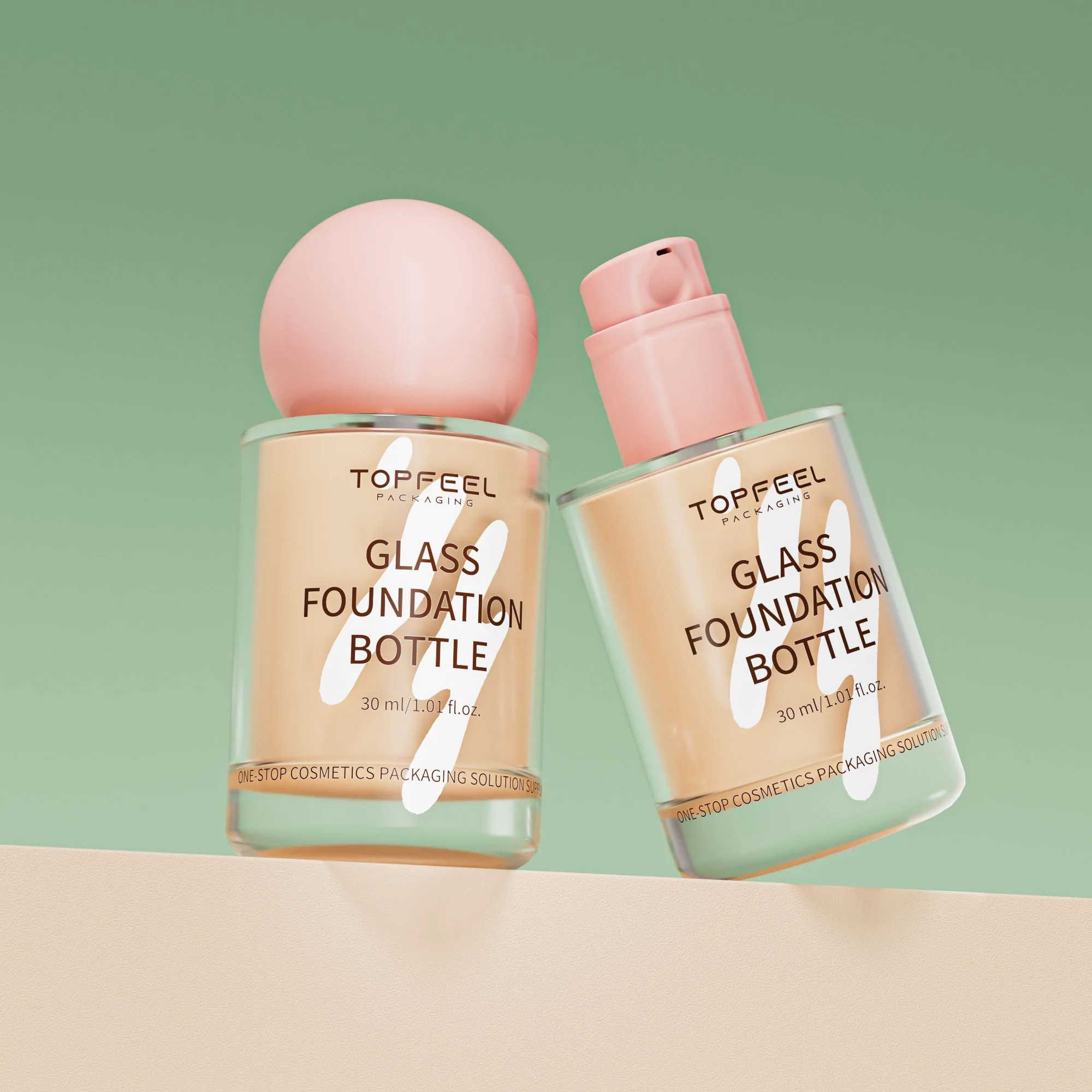
Plastic foundation bottles may offer lower weight, better impact resistance, and greater structural flexibility. The final choice should consider formula compatibility, transport conditions, filling equipment, and the desired user experience—not appearance alone.
Sustainable Material Claims
PCR plastics, refillable components, glass, and mono-material structures can support more responsible packaging strategies. Topfeelpack provides material-dependent PCR options and refillable foundation packaging structures.
Environmental claims should be specific and verifiable. ISO 14021 establishes requirements for self-declared environmental statements, including terms related to recycled content and recyclability. Brands should therefore avoid unsupported claims such as “fully sustainable” and state the actual material composition instead.
How to Test Foundation Bottles Before Production
Formula Compatibility Tests
A reliable test program should examine:
- Viscosity changes during storage
- Discoloration or odor changes
- Separation around the pump components
- Swelling, cracking, or deformation
- Formula interaction with seals and internal parts
Pump and Transport Tests
At Topfeelpack, we combine packaging selection with sample evaluation and quality testing. Relevant checks include pump output, leakage, closure torque, abrasion resistance, mechanical performance, and high- and low-temperature stability.
Testing should use the actual foundation formula whenever possible. Water or generic test liquids cannot accurately reproduce the behavior of pigments, oils, and film-forming ingredients.
What to Discuss With a Foundation Bottle Manufacturer
For an efficient wholesale liquid foundation packaging project, provide:
- Formula viscosity or a filled sample
- Ingredient and pigment information
- Filling temperature
- Required bottle capacity
- Target dose per press
- Expected storage conditions
- Preferred decoration and color
- Sustainability requirements
At Topfeelpack, we support packaging design, mold development, sampling, surface decoration, assembly, and quality inspection. Our available processes include spray coating, silkscreen printing, hot stamping, UV coating, and other custom finishes.
Before confirming mass production, review the technical drawing, filled sample, pump specification, decoration sample, and pre-production sample.
Final Foundation Bottle Selection Checklist
Select the packaging in this order:
- Understand the formula’s flow behavior
- Choose a suitable dispensing mechanism
- Compare glass and plastic structures
- Test the formula with the complete package
- Confirm dosage, leakage, and product evacuation
- Approve decoration only after functional validation
FAQ
Q: How does a Foundation Bottle Manufacturer match a pump to viscosity?
A: The manufacturer evaluates formula thickness, pigment load, pump chamber size, nozzle design, priming performance, and target dosage. Filled-formula testing is necessary before final approval.
Q: Are glass foundation bottles with a pump suitable for thick foundation?
A: They can be, provided the pump has a sufficiently wide flow path and suitable output force. Bottle material alone does not determine compatibility.
Q: What tests should wholesale liquid foundation packaging pass?
A: Recommended tests include formula compatibility, dosage consistency, priming, clogging, leakage, closure torque, drop resistance, temperature stability, and transport simulation.
Q: Can a Foundation Bottle Manufacturer customize pump dosage?
A: Pump dosage may be adjusted by selecting an appropriate pump mechanism, chamber volume, actuator, and nozzle. Availability depends on the selected bottle and pump structure.
Q: How can sustainable wholesale liquid foundation packaging be verified?
A: Review the exact material composition, PCR percentage, recyclability conditions, and supporting documentation. Environmental claims should follow recognized guidance such as ISO 14021.

