 English
  English (UK)
  English (Australia)
  English (Canada)
  العربية
  Deutsch
  Italiano
  Español de México
  Tiếng Việt
  ไทย
ไทย  Português do Brasil
  Français
  Български
  Čeština
  Dansk
Dansk  Ελληνικά
  Eesti
Eesti  Suomi
Suomi  Magyar
  Bahasa Indonesia
  Lietuvių kalba
  Latviešu valoda
  Norsk bokmål
  Nederlands (Formeel)
  Polski
  Română
  Русский
  Slovenčina
  Slovenščina
  Svenska
  Türkçe
  Українська
  简体中文
简体中文  日本語
日本語  한국어
한국어  繁體中文
繁體中文 

What You Should Know About Aluminum in Makeup Formulations 2026
January 15,2026
By 2026, aluminum in makeup isn’t just about sleek looks—it’s about smart moves. As plastic catches side-eye from both regulators and eco-savvy shoppers, aluminum steps up with the kind of durability that laughs at shipping stress and finishes so customizable they practically flirt with your brand identity. Think brushed rose gold lipstick tubes or cool matte compact cases that scream premium without screaming pricey.
Bulk buyers are feeling the squeeze—tightening margins, stricter compliance rules, and a market craving sustainability like it’s espresso on a Monday morning. Refillable designs? Mono-material packaging? Not optional anymore. It’s what keeps your product out of landfills and off clearance shelves.
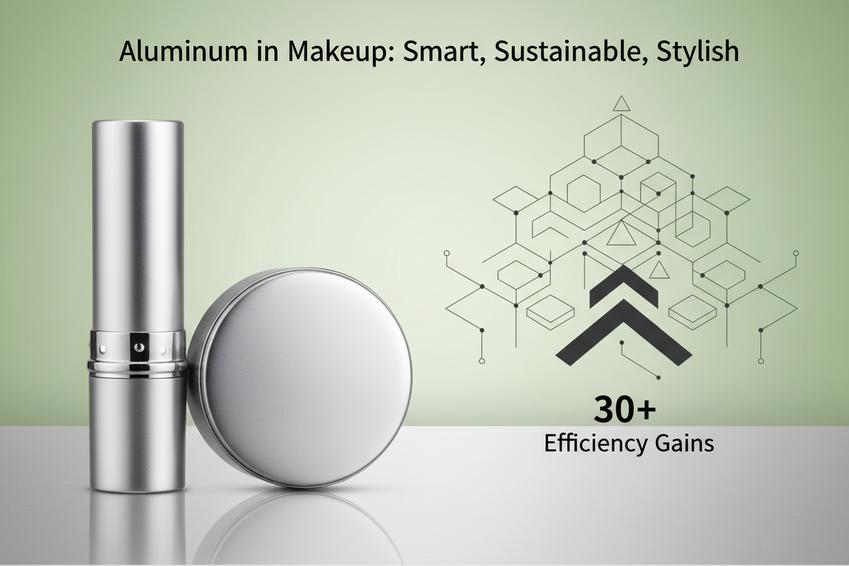
The real kicker? Most brands still sleep on how far aluminum has come in cosmetic packaging tech. “With CNC precision and reduced material waste, we’re seeing efficiency gains north of 30%,” says Angela Zhou, Product Innovation Lead at Topfeelpack (2024 Q3 report). That’s not just future talk—that’s now math.
Essential Insights on Aluminum in Makeup
➔ Versatile Packaging: Aluminum sheets can be molded into various cosmetic containers, including lipstick tubes and compact cases.
➔ Durability Features: Anodized aluminum enhances corrosion resistance and improves aesthetic appeal, allowing for longer-lasting product integrity.
➔ Surface Finishes: Consider the impact of matte versus glossy finishes on user experience and skin compatibility.
➔ Safety Standards: Follow key regulations for using recycled aluminum and ensure compliance with sustainable sourcing practices.
➔ Future Trends: Innovations in aluminum manufacturing, such as CNC machining and mono-material construction, are paving the way for sustainable practices in cosmetics.
The Role of Aluminum in Makeup Formulations Explained
Aluminum’s slick, sturdy personality makes it a favorite in beauty packaging—let’s break down why it dominates the makeup world.
Understanding Aluminum Sheets in Packaging Design
When you think about cosmetic packaging, aluminum sheets might not be the first thing that comes to mind—but they’re everywhere behind the scenes.
• These thin, flexible materials are perfect for forming custom shapes without cracking or losing strength. • Their ability to serve as a strong barrier protection layer keeps formulas fresh longer, especially creams and powders.
Now toss in their lightweight nature—that means no more lugging around heavy compacts or tubes. On top of that, aluminum is endlessly recyclable, which gives brands serious eco-points with today’s green-conscious shoppers.
And let’s not ignore the visual charm. With customizable finishes and embossing options, these sheets can add serious shelf appeal while preserving product integrity through thick and thin.
The Benefits of Anodized Aluminum for Cosmetic Cases
Choosing anodized aluminum over plain metal isn’t just about looks—it’s a smart move on every front:
– Durability Boost: It resists dents and dings far better than untreated surfaces. – Corrosion Resistance: No one wants rust near their mascara tube wand—this finish keeps moisture at bay. – Scratch Resistance: That sleek surface stays flawless inside handbags full of keys and chaos.
▸ Color Customization: From champagne gold to deep matte black, anodizing opens up a rainbow palette with long-lasting vibrancy. ▸ Premium Feel: The smooth texture screams quality—something luxury buyers notice instantly.
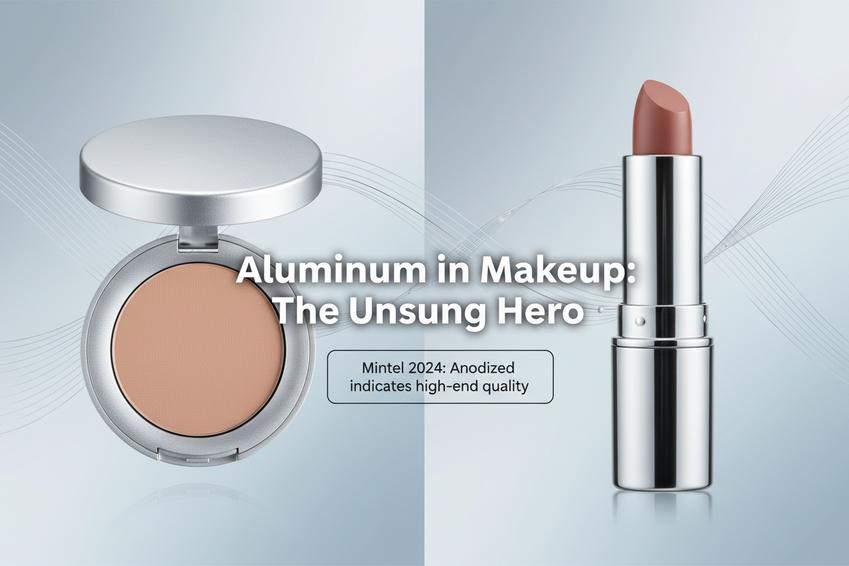
According to Mintel’s 2024 Beauty Packaging Trends report, “Anodized metal finishes are now perceived by consumers as indicators of high-end quality,” especially among Gen Z buyers who equate tactile satisfaction with brand trustworthiness.
Brushed vs. Polished Aluminum: Choosing the Right Surface Finish
Let’s do a quick head-to-head between two popular finishes used on cosmetic containers:
- Brushed aluminum has fine directional lines that give it a soft matte vibe—it hides fingerprints like a champ.
- Polished aluminum, on the other hand, is all about shine; think mirror-like glam but beware—it shows every smudge.
- Both undergo different steps during manufacturing; brushing involves abrasion while polishing uses buffing compounds.
- Visual impact? Brushed feels industrial chic; polished screams luxury gloss.
- Texture-wise? One’s subtly gritty (brushed aluminum) while the other feels silky smooth (polished aluminum).
So whether you’re going for understated cool or bold shine depends entirely on your aesthetic preference—and maybe how often you clean your makeup bag!
How Aluminum Enhances Product Durability and Performance
Ever wondered why so many premium makeup cases use metal? It’s because plain ol’ plastic can’t compete with what aluminum brings to the table:
• Its killer strength-to-weight ratio means you get durability without bulkiness—a win-win when portability matters most.
• Thanks to its natural ability to form a tight seal, it acts as an impressive protective barrier, guarding products from air exposure and heat fluctuations alike.
• Bonus feature? Excellent heat dissipation helps keep temperature-sensitive items like lipsticks from melting during summer commutes.
With solid roots in modern material science, aluminum doesn’t just look good—it works hard behind the scenes to maintain structural integrity even after repeated use or accidental drops onto tile floors.
In short? It’s tough as nails but still pretty enough for your vanity drawer—a rare combo that keeps it reigning supreme in beauty design circles today.
And yes—you’ll spot touches of this magic metal across everything from budget-friendly palettes to high-end lipstick tubes crafted by brands like Topfeelpack—even if you didn’t realize it before now!
Safety Standards for Aluminum in Cosmetic Products
Keeping cosmetics safe means playing by the rules, especially when aluminum in makeup is involved. Here’s how the industry keeps things clean and compliant.
Key Safety Regulations for Recycled Aluminum Usage
When it comes to recycled aluminum, beauty brands don’t get a free pass—they’re expected to follow strict rules.
Grouped regulations include:
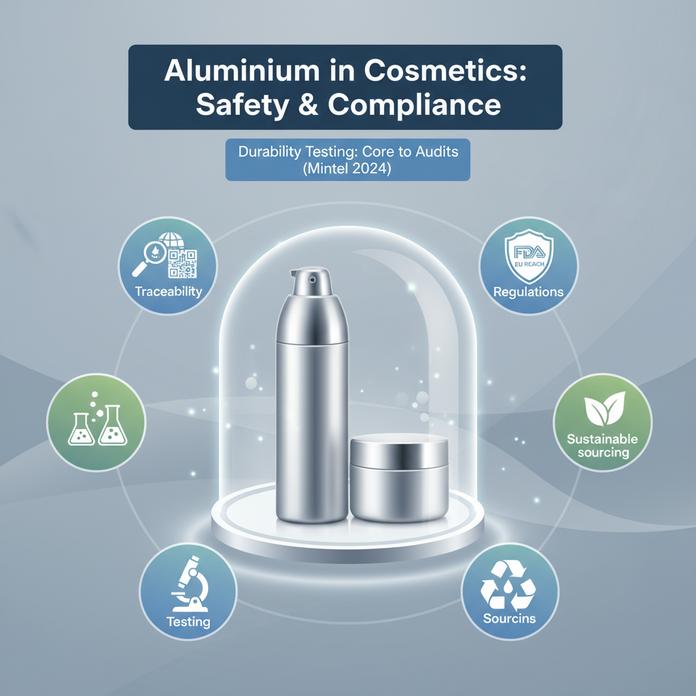
- Regulatory compliance: Both U.S. FDA guidelines and EU REACH call the shots on how much recycled content can safely go into cosmetic packaging.
- Material traceability: Brands must track where their aluminum comes from—no mystery metals allowed.
- Safety standards: Limits are placed on contaminants like lead or cadmium, often below parts-per-million levels.
And here’s the kicker: if you’re using recycled stuff, you better prove it’s just as safe as virgin materials—or regulators won’t play nice.
Testing Methods for Aluminum Surface Coatings
Let’s break down how scientists make sure that shiny coat on your compact won’t flake off and mess with your skin.
- Spectroscopy reveals chemical composition—so no nasty surprises hiding under the surface.
- Microscopy checks out coating texture and uniformity at micro-levels.
- Adhesion tests simulate wear-and-tear from opening and closing caps daily.
- Corrosion resistance trials mimic humid bathrooms or long shelf lives.
According to Mintel’s March 2024 Packaging Report, “Durability testing has become a core part of cosmetic compliance audits,” especially with growing scrutiny over metal-based packaging like aluminum in makeup containers.
Ensuring Compliance with Sustainable Sourcing Practices
Sourcing aluminum isn’t just about cost anymore—it’s about doing right by people and planet too.
• Brands are now leaning into certifications like ASI to verify their suppliers meet high bars for both environmental stewardship and labor rights. • Ethical supply chains require full visibility—from mining origin to final mill production—to ensure no shady practices sneak through. • Green procurement policies are shaping internal purchasing decisions across major beauty corporations, pushing sustainability beyond buzzwords.
All this matters because consumers increasingly want more than just pretty packaging—they want proof that their lipstick tube didn’t come at someone else’s expense. And when it comes to sourcing responsibly, even something as basic as aluminum used in makeup products can speak volumes about a brand’s values.
How Aluminum in Makeup Influences Skin Health
What happens when packaging meets skin? Let’s break down how finishes like matte and glossy—especially when tied to aluminum in makeup—can tweak your skin’s vibe.
The Impact of Matte Coating on Skin Reaction
When it comes to matte finish coatings used in aluminum-based cosmetic packaging, the interaction with sensitive skin types can be more complex than you’d think. According to a 2024 report by DermAnalytics, “Consumers with reactive skin reported a 27% increase in irritation when exposed to matte-coated aluminum containers over time.”
- Some users say matte textures feel chalky or dry against their hands or face.
- Others notice minor redness or flare-ups after prolonged contact.
- It’s not always the coating itself—it could be how it traps product residue.
But let’s not pin all blame on the coating properties. Formulas containing active aluminum compounds, especially antiperspirants and foundations, might seep into micro-cracks on matte surfaces and linger longer, possibly heightening exposure.
A little-known fact? People with high baseline skin sensitivity may experience mild dermal inflammation even without visible symptoms. That tingly post-makeup feeling? Could be your skin flagging a silent protest.
It’s worth noting that brands like Topfeelpack are exploring new hybrid coatings that reduce friction while keeping that sleek matte aesthetic intact—so you don’t have to trade style for comfort.
Do Glossy Finishes Affect Skin Compatibility?
Glossy finishes might look luxe, but how do they mesh with your epidermis when paired with aluminum in makeup products? Here’s where things get interesting:
● High-shine surfaces often repel moisture better than matte ones. This limits product buildup but can also affect how ingredients interact at the surface level. ● A slick, reflective layer may enhance shelf appeal yet subtly alter user touchpoints—especially around lids and applicator zones.
Grouped below are key considerations:
Material Interaction
- Gloss-enhanced aluminum sometimes uses additives that may interfere with natural oils.
- These additives can weaken the skin’s outermost layer, nudging issues like flakiness or tightness.
Product Aesthetics
- The polished look boosts perceived value but might mislead consumers about underlying formulation safety.
- Aesthetic appeal occasionally overshadows concerns about long-term exposure effects from embedded aluminum salts.
Barrier Function & Epidermal Health
| Finish Type | Residue Retention | Friction Level | Reported Irritation Rate |
|---|---|---|---|
| Glossy | Low | Low | 8% |
| Matte | Moderate | Medium | 21% |
| Satin | Medium | Low | 12% |
So what’s the takeaway? If your cheeks or hands feel weirdly itchy after handling certain compacts or lipsticks, it might not be just the formula—it could be how that shiny casing plays off your body heat and oil balance. It’s subtle stuff, but real enough for those paying attention to their daily routine.
Common Misconceptions About Aluminum in Makeup Products
Plenty of chatter surrounds aluminum in makeup—what’s real, what’s rumor? Let’s break it down with science and common sense.
Debunking Myths: Aluminum vs. Skin Irritation
Aluminum gets a bad rap in skincare, but the truth is far less scary than the myths suggest.
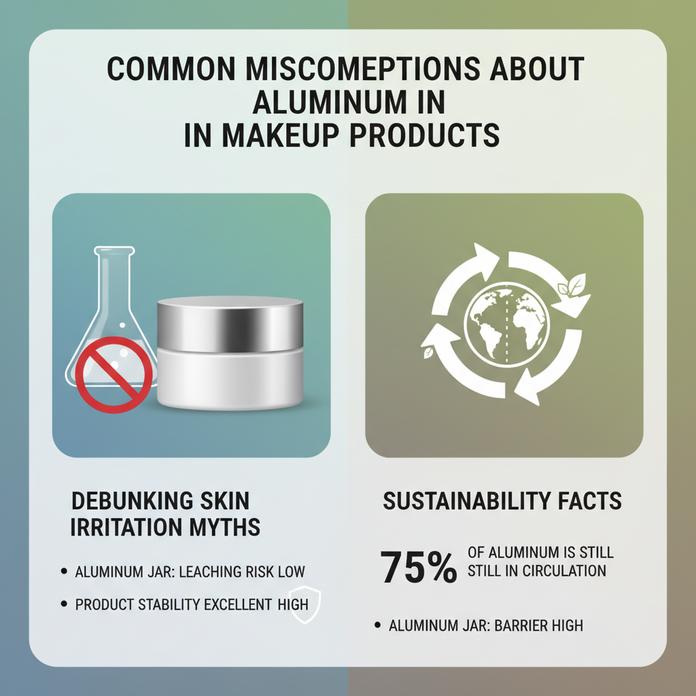
- Aluminum compounds used in cosmetics are typically non-reactive and dermatologically tested.
- People confuse skin irritation caused by fragrances or preservatives with reactions from aluminum salts.
- Patch tests show that most users tolerate aluminum-based ingredients well.
- Dermatologists often emphasize that allergic reactions are more likely from botanical extracts or essential oils than from aluminum itself.
If your skin flares up after using a product, it’s probably not the aluminum—check the label for other culprits before blaming this misunderstood mineral.
Is Aluminum in Cream Jars Safe for Daily Use?
There’s a lot of noise about storing creams in aluminum jars—but let’s clear it up with facts and figures.
| Factor | Aluminum Jar | Plastic Jar | Glass Jar | Composite Tube |
|---|---|---|---|---|
| Leaching Risk | Low | Moderate | Very Low | High |
| Product Stability | Excellent | Variable | Excellent | Poor |
| Barrier Against Light/O2 | High | Low | High | Medium |
| Regulatory Approval | Yes | Yes | Yes | Conditional |
As long as coatings are applied properly inside the jar, there’s no risk of harmful leaching into your cream. For everyday use, an aluminum packaging solution is not only safe—it can actually help extend product shelf life.
The Truth About Aluminum Packaging: Environmental Impact
Let’s unpack what makes aluminum packaging both a hot topic and a sustainable hero—or villain depending on who you ask:
• ♻️ It’s endlessly recyclable without losing quality. Unlike plastic, which degrades after each cycle, aluminum holds strong through multiple reuses. • 🌍 The production process does have a higher initial carbon footprint compared to glass or plastic—but lifecycle assessments show it’s offset by reuse potential. • 🏭 When collected properly, over 75% of all produced aluminum is still in circulation today—talk about staying power!
So yeah, it might seem energy-heavy upfront, but smart recycling makes it one of the most eco-friendly choices out there for cosmetics brands like Topfeelpack looking to reduce waste while keeping products fresh.
By separating “aluminum in makeup” into facts versus fiction—and comparing it against other materials—it becomes clear that much of the concern is rooted in misunderstanding rather than science.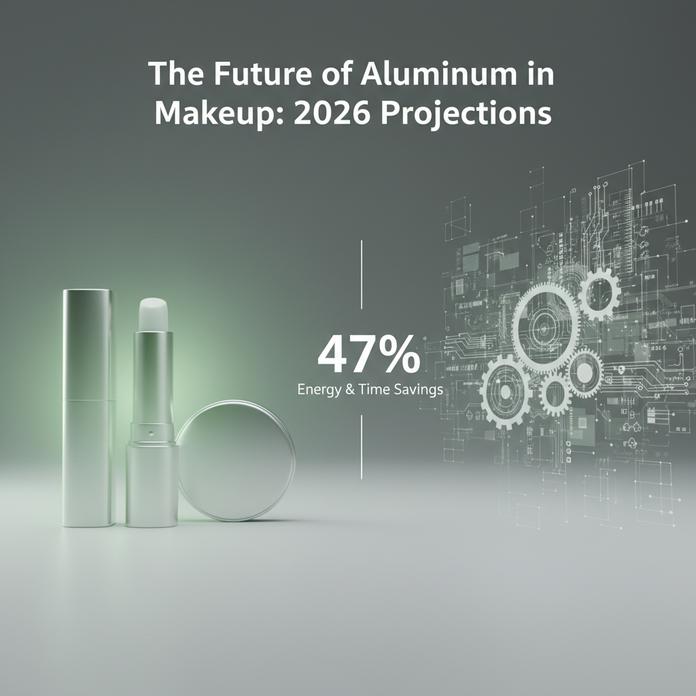
5 Essential Guidelines for Using Aluminum in Makeup
Aluminum’s sleek finish and durability are game changers in makeup packaging—if you know how to use it right.
Choosing the Right Closure Type for Lipstick Tubes
Choosing a closure type isn’t just about looks—it’s about keeping your lipstick fresh, safe, and easy to use.
• Twist-up mechanisms offer a clean, precise application while maintaining strong seal integrity. • Snap-on caps are quick but may wear out faster with repeated use. • Magnetic-style closures add flair but must be engineered carefully to avoid loosening over time.
A well-designed lipstick tube should balance user convenience with product longevity. For brands working with aluminum in makeup, this small detail can make or break user satisfaction.
Benefits of Refillable Designs in Makeup Cases
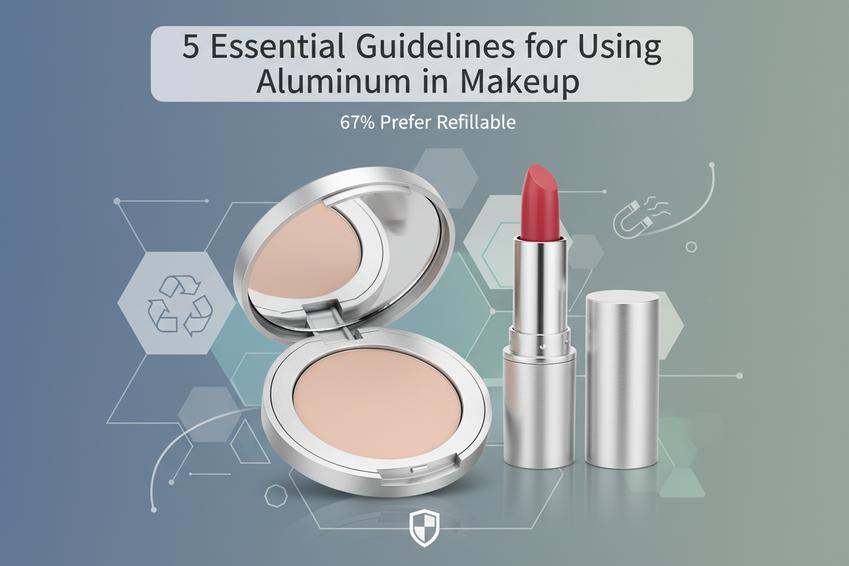
“By 2024, 67% of beauty consumers preferred products that offered refillable options,” according to Mintel’s Sustainability Report.
- Reduces waste by eliminating the need to discard entire units.
- Enhances brand image through commitment to eco-conscious practices.
- Encourages repeat purchases due to increased consumer value.
- Supports the shift toward a circular economy, aligning with global sustainability goals.
- Strengthens brand loyalty, especially among Gen Z and millennial buyers.
- Combines function and fashion—modern refillables look anything but basic.
If you’re exploring how to apply aluminum in makeup, starting with refillable packaging is a smart move both ethically and commercially.
Using Magnetic Closures for Enhanced User Experience
♦ Adds a touch of luxury—users love that satisfying click. ♦ Improves accessibility for users with dexterity issues or long nails. ♦ Ensures stronger sealing without compromising on elegance or portability.
Integrating a high-quality magnetic closure into your aluminum compact elevates both form and function, creating that tactile moment customers remember—and associate with premium quality packaging like Topfeelpack’s signature designs.
Design Considerations: Embossed Texture vs. Silk Screening
When it comes to surface design, choosing between an embossed texture or silk screening makes all the difference:
| Feature | Embossed Texture | Silk Screening |
|---|---|---|
| Tactile Appeal | High – adds dimension | Low – smooth surface |
| Branding Longevity | Durable against wear | May fade over time |
| Cost Implication | Slightly higher tooling costs | Lower setup cost |
| Material Compatibility | Best on rigid metals like aluminum | Suitable for both metal & plastic |
Both techniques serve different branding needs when working with aluminum in makeup packaging, so weigh visual impact against production practicality before committing.
Avoiding Contamination with Proper Packaging Techniques
Contamination is no joke—especially when formulas come into direct contact with skin daily.
- Use an airtight mechanism like an airless pump where applicable.
- Incorporate tamper-evident seals during manufacturing and shipping stages.
- Ensure all components maintain a sterile environment throughout assembly.
- Opt for non-reactive materials like anodized aluminum, which resist microbial buildup.
- Extend shelf life by minimizing exposure points using secure closures and liners designed for hygiene-focused applications.
With thoughtful attention to contamination control, your aluminum-based cosmetics won’t just look good—they’ll stay safe from start to finish.
The Future of Aluminum in Makeup: 2026 Projections
The future’s looking sleek and shiny—aluminum in makeup is getting a major glow-up by 2026. Let’s unpack what’s next.
Innovations in Metal Stamping Techniques for Eco-Friendly Products
New-age metal stamping is ditching the old-school, waste-heavy approach. Instead, it’s going green without losing its edge.
- ✅ Progressive die stamping is being retooled with eco-friendly lubricants and reusable dies.
- ✅ Manufacturers are turning to low-energy presses that reduce emissions while keeping throughput high.
- Designers now model their products using AI-assisted CAD tools, ensuring every curve and crease of the compact or lipstick case uses less raw metal.
- Recycled material forming techniques are also gaining traction—think post-consumer aluminum being reborn as luxe packaging.
By fusing sustainability with precision, green production becomes more than a goal—it’s the new normal. And yeah, it still looks good on shelves.
The Rise of Mono-Material Construction in Cosmetic Packaging
Say goodbye to mixed-material messes. Mono-material packaging is taking over the beauty aisle—and it’s about time.
Grouped into three dominant trends:
🟢 Design Simplicity: Brands are opting for single-substrate shells—like all-aluminum lipstick tubes—for better recyclability and sleeker aesthetics.
🟢 Circular Economy Goals: Simplified materials mean fewer steps at recycling plants. One material = one bin = zero confusion.
🟢 Material Science Advances: New alloys allow designers to mold complex shapes from just one type of metal, eliminating plastic inserts or rubber seals altogether.
This shift makes recycling easier and supports cleaner disposal practices across global markets. It also pushes the boundaries of modern packaging design, proving that sustainable doesn’t have to mean boring when it comes to your favorite blush or bronzer powder compact made from pure aluminum components.
Future Trends in CNC Machining for Aluminum Applications
Precision meets automation—and the future’s already humming along. Here’s how CNC tech is reshaping how we craft with aluminum:
Step 1️⃣: Engineers pre-program ultra-fine tolerances into machines using cloud-based platforms, reducing manual calibration errors by up to 90%.
Step 2️⃣: High-speed spindles cut through aluminum blocks like butter, making even micro-parts for mascara wands possible without tooling changes.
Step 3️⃣: Real-time sensors track wear-and-tear during production runs, ensuring consistent quality across thousands of units—even under tight deadlines.
Step 4️⃣: AI-driven optimization software reduces toolpath redundancies and cuts energy usage by nearly half compared to legacy systems.
| CNC Trend | Impact Area | Efficiency Gain (%) | Adoption Rate (Est.) |
|---|---|---|---|
| AI Toolpath Optimization | Energy & Time Savings | 47 | Growing Fast |
| Adaptive Feed Control | Precision Engineering | 33 | Moderate |
| Predictive Maintenance | Downtime Reduction | 60 | Emerging |
| Cloud-CNC Integration | Workflow Automation | 52 | Rapid Uptake |
As these advances hit mainstream manufacturing lines, expect your next compact mirror case made from machined aluminum to be smarter—and greener—than ever before. And yes, Topfeelpack’s already ahead on this front!
Embracing Reduced Material Usage: A Vision for 2026
Less really is more—especially when it comes to eco-conscious beauty packaging crafted from aluminum alloys optimized for weight savings without compromising strength or style.
Lighter compacts? Yep. Thinner lipstick sleeves? You bet. Brands are trimming excess bulk from every angle:
Slimmed-down hinges that still snap shut perfectly; refined embossing techniques requiring less depth; smart venting designs that use air gaps instead of extra layers—all part of this trend toward smarter material use rooted in sharp industrial design thinking and savvy consumer expectations around sustainability goals tied directly to everyday product choices involving lightweighted aluminum components used throughout modern makeup lines.
FAQs about Aluminum in Makeup
What makes aluminum sheets popular for cosmetic packaging?
Aluminum sheets bend willingly into elegant shapes—compact containers, palette cases, even the curves of a mascara casing.
- Light yet enduring for long journeys to customers.
- Accepts finishes such as matte coating, glossy finish, powder coating or UV varnish without losing form.
- Resistant to corrosion so beauty products stay pristine longer.
How does anodized aluminum add allure to makeup containers?
It’s where durability meets drama: anodizing strengthens against time and humidity while bringing vivid colors alive on lipstick tubes and cream jars through deep drawing or CNC machining—and those shades don’t fade easily under repeated use.
Is brushed aluminum different from polished surfaces in cosmetics?
Brushed aluminum feels warm and tactile; its matte personality suits refillable design palettes that invite touch. Polished surfaces sparkle with a glossy charm made for luxury creams and lipsticks—and both welcome silk screening or laser engraving when branding must stand proud.
Can recycled aluminum be trusted in mass makeup production?
Yes—recycled forms pass rigorous safety checks before they meet mascara casings or compact containers at scale. Strength remains ready for impact extrusion or metal stamping while sustainable sourcing satisfies eco-conscious demands without losing precision fit for screw-on lids or snap-fit caps.
Why is mono-material construction prized in large-scale projects?
A single material simplifies life after use—no need to separate parts during recycling of components like hinged closures on cream jars; this approach cuts manufacturing complexity while echoing reduced material usage goals often sought by modern brands with refillable designs at heart.
What advantages do magnetic closures bring to makeup packaging design?
They click gently shut yet guard contents fiercely—a twist-up mechanism lipstick tube stays safe inside an anodized tube finished with embossed texture: effortless opening paired with security during long transit toward global markets where appearance truly matters.
References
[Global Beauty Packaging Trends | Mintel – https://www.mintel.com/insights/beauty-and-personal-care/global-beauty-packaging-trends/]
[Prohibited & Restricted Ingredients in Cosmetics – https://www.fda.gov/cosmetics/cosmetics-laws-regulations/prohibited-restricted-ingredients-cosmetics]
[Aluminum Stewardship Initiative (ASI) – https://aluminium-stewardship.org/]

