 English
  Español de México
  Français
  Deutsch
  Português do Brasil
  Italiano
  한국어
한국어  ไทย
ไทย  Русский
  日本語
日本語  Polski
  Svenska
  Türkçe

How to Choose Magnetic Makeup Palettes?
July 23,2026
A magnetic makeup palette should be evaluated as a complete working system, not simply as an attractive empty case. The shell, magnetic layer, pans, closure, and refill process must work together. If one component is incompatible with the others, the pans may slide, the lid may touch the formula, or users may struggle to remove a refill without damaging it.
For beauty brands and professional buyers, the best starting point is a list of measurable requirements. The following framework turns a broad packaging search into a practical evaluation process.
Start with the Intended Refill System, Not the Case Appearance
Define who will use the magnetic makeup palette
A studio palette and a retail compact solve different problems. A makeup artist may value a large open magnetic area that accepts different pan sizes, while a retail customer may prefer a small grid that makes each shade position easy to identify.
Define the primary use before comparing samples:
- Daily retail use:Compact size, intuitive pan removal, clean edges, and a secure closure.
- Travel:Low weight, protected corners, minimal internal movement, and adequate lid clearance.
- Professional kits:High capacity, easy cleaning, quick shade identification, and flexible layouts.
- Private-label collections:Consistent dimensions, sufficient decoration space, reliable refills, and scalable assembly.
Choose between an empty magnetic palette and a fixed refill grid
An open magnetic base allows users to arrange compatible pans freely. This format works well when customization is more important than maintaining a perfectly aligned grid. A molded or die-cut insert creates a more controlled presentation, but it limits the shapes and sizes of the pans that will fit.
Ask three questions:
- Will users rearrange the shades frequently?
- Must the palette accept multiple pan sizes?
- Does the brand need every refill to remain in a fixed, retail-ready position?
The answers will help determine whether an open, empty magnetic palette or a structured refill system is more suitable.
Translate the use case into size and capacity requirements
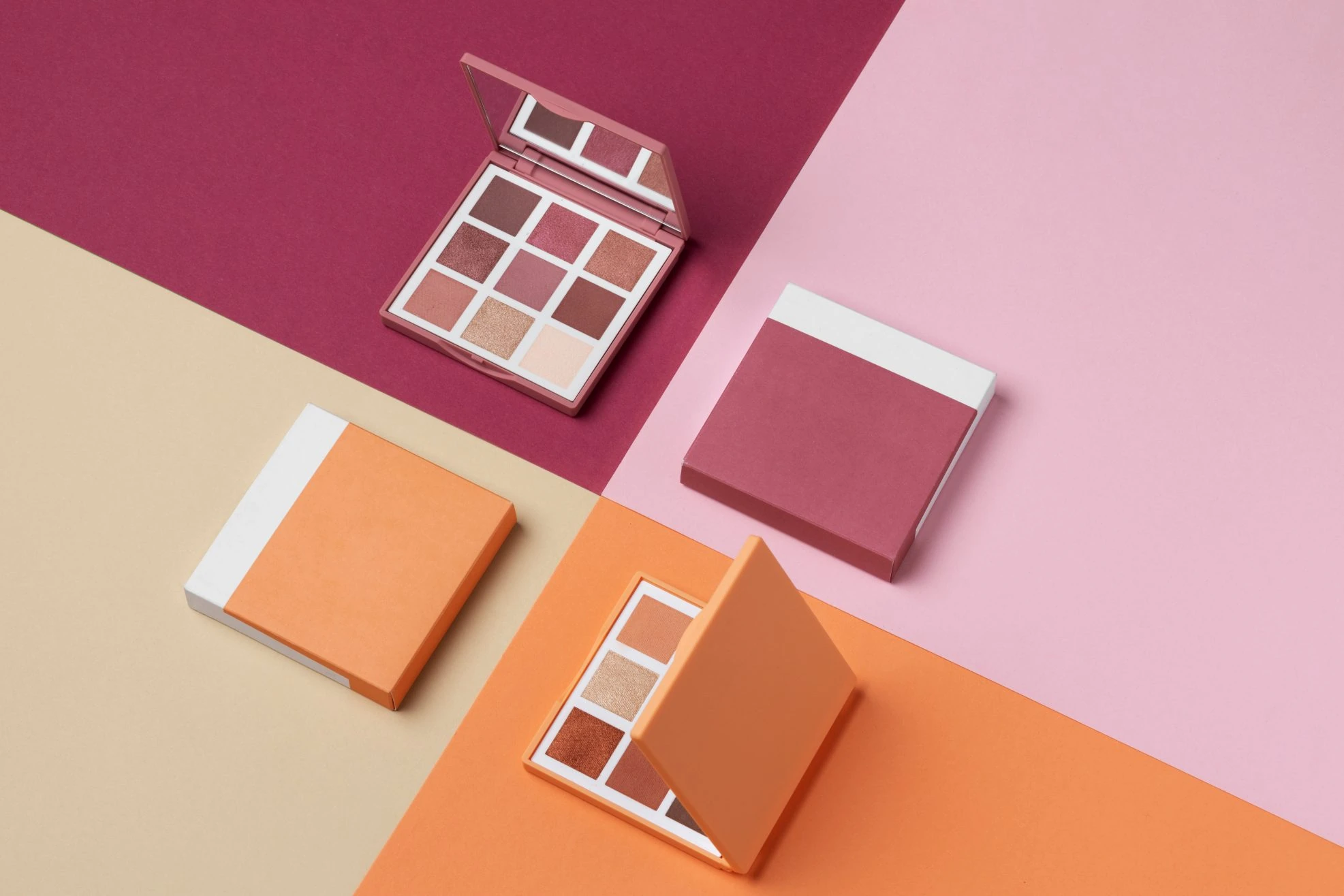
Do not select a palette by pan count alone. Record the usable internal length, width, and depth; the maximum pan dimensions; the spacing between pans; and the clearance beneath the lid or mirror.
A nominal twelve-pan case may hold fewer pans if the selected refills are wider or deeper or require additional removal space.
Verify Pan Compatibility and Magnetic Retention
Confirm that the refillable makeup palette fits the intended pans
Measure actual production pans instead of relying only on a supplier’s nominal dimensions. Coatings, folded rims, and manufacturing tolerances can change the final size.
Test the tallest filled pan because insufficient lid clearance may press against the powder and transfer product onto the mirror or lid.
A compatibility check should cover:
- Pan diameter or side length
- Pan depth and filled-product height
- Rim shape and corner radius
- Space for a fingertip or removal tool
- Clearance between the formula surface and the closed lid
Check the pan material before assuming magnetic compatibility
A magnet does not attract every metal. Steel and tinplate pans generally respond to a magnetic base, while aluminum pans require a ferrous backing disc or plate. Plastic pans also need a separate magnetic or ferrous component.
Before approving the system, test the exact decorated production pan. If a backing disc is required, include its thickness and adhesive performance in the evaluation. The additional layer can affect pan height, flatness, and long-term stability.
Balance secure retention with safe pan removal
A stronger magnetic hold is not automatically better. The pan should resist sliding when the closed case is moved, but users should not have to bend the pan or scrape the case to remove it.
Evaluate retention in several directions and repeat the removal process multiple times.
Useful checks include:
- Gentle shake tests in horizontal and vertical positions
- A controlled drop test from a specified height
- Repeated insertion and removal cycles
- Inspection for rattling, tilting, chipped powder, or damaged coatings
- Removal using the intended notch, tool, or finger-access point
Compare Case Construction for Real-World Use
Match the shell material to the handling environment
Rigid plastic can provide precise molding, clear windows, and consistent hinge geometry. Metal can offer greater stiffness and a premium feel, but it may also increase the overall weight. Paperboard provides a large printable surface, although its edges, moisture resistance, and mixed-material construction require careful evaluation.
At Topfeelpack, we evaluate material choices through testing rather than appearance alone. Buyers should test the chosen construction under their own filling, transportation, storage, and retail conditions.
Inspect the hinge, closure, lid, and mirror as one system
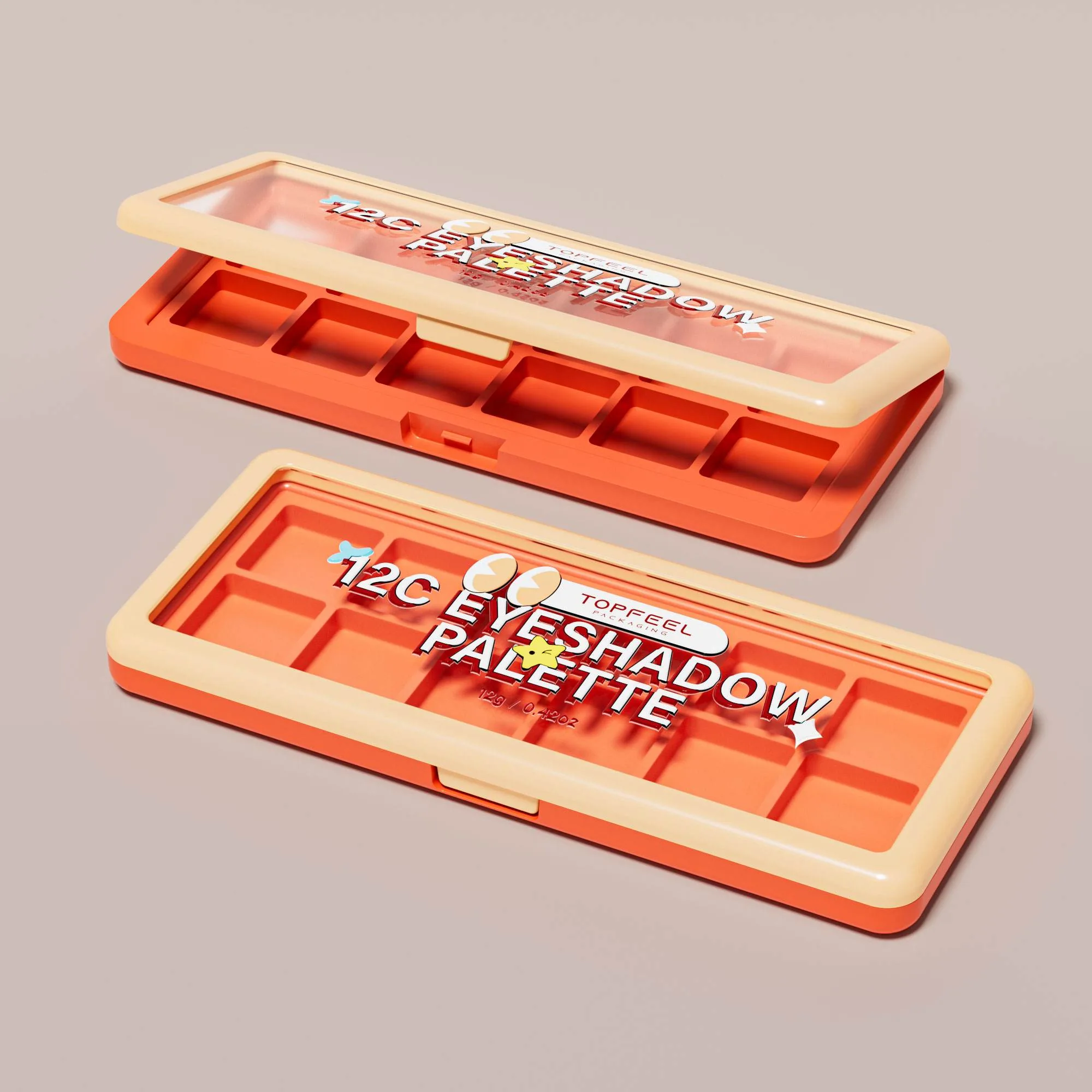
Open and close the sample repeatedly. Inspect the hinge pin or folding joint, the front clasp, and any magnetic closure.
The closure should resist accidental opening without requiring excessive force. Check whether the lid remains open at a practical angle and whether a mirror provides enough value to justify its added weight, breakage risk, and assembly complexity.
Evaluate surface durability and cleaning access
High-contact surfaces should withstand routine wiping and resist obvious marks from fingerprints and powder dust. Look for narrow corners where product can accumulate, coatings that scratch easily, and decorative layers that may wear around the opening point.
A clear lid makes shade identification faster, while an opaque lid provides more space for branding. Neither option is universally better; the decision depends on how the palette will be displayed and used.
Evaluate Sustainability Claims with Verifiable Evidence
Compare reuse life and end-of-life design
A refillable makeup palette is not automatically a lower-impact choice. Its environmental performance depends on whether the outer case is actually reused, whether compatible refills remain available, and whether worn components can be separated or replaced.
Evaluate the following questions:
- Can users replace one pan without discarding the case?
- Are the refill dimensions likely to remain consistent?
- Can the magnets, mirror, inserts, and shell be separated?
- Is the case durable enough to complete multiple refill cycles?
- Are the disposal instructions practical in the target market?
Verify PCR and recycled-content claims
For PCR plastic or other recycled-content claims, request the claimed percentage, calculation method, material specification, and supporting supplier documentation.
ISO 14021:2026 establishes principles and requirements for self-declared environmental claims, including the evidence used to assess them. A statement such as “contains recycled material” should not be treated as proof that an entire multi-material palette is recyclable.
Require evidence for FSC paperboard claims
For paperboard cases, ask which component is certified and request valid chain-of-custody documentation.
FSC chain-of-custody certification is used to track eligible forest-based materials through manufacturing and distribution. The use of paperboard alone does not authorize an FSC claim or the display of an FSC logo.
Validate Customizable Magnetic Cases Before Wholesale Production
Build a pass-or-fail sample checklist
When comparing magnetic makeup palette wholesale offers, treat a decorated sample as a test unit rather than merely as a color reference.
Use written acceptance criteria:
- Measure the case and every pan position.
- Load pans at the minimum and maximum expected fill weights.
- Test retention, removal, lid clearance, and closure force.
- Repeat opening, cleaning, and refill cycles.
- Check printed, sprayed, plated, and soft-touch surfaces for wear.
- Pack the samples in the proposed inner tray and shipping carton, simulate transportation, and inspect them again.
The goal is not simply to prove that a sample looks attractive. The purpose is to establish whether production units can be evaluated consistently.
Set limits for customizable magnetic cases
Customization can affect performance. A thicker coating may tighten a clasp, a deeply embossed logo may weaken a thin wall, and a revised insert may change the final pan height.
For example, the MB-55 dual-pan palette platform can support snap-fit or magnetic pan trays. This illustrates why the insert specification must be finalized before production.
When reviewing empty palette packaging options, distinguish between cosmetic changes and modifications that affect the functional structure.
Confirm the following before tooling or mass production:
- Approved drawings and dimensional tolerances
- Pan and backing-plate specifications
- Magnet or magnetic-sheet placement
- Insert material and assembly method
- Decoration limits around hinges and closures
- Golden-sample approval and change-control procedures
Compare offers beyond the unit price
A complete quotation should identify the material grade, included components, sampling process, tooling ownership, quality checks, packing method, lead time, and minimum order quantity.
Ask how the supplier controls magnetic retention and dimensional variation from one production batch to another. For additional information about retention and structural testing, refer to this high-strength magnetic empty eyeshadow palette guide.
The right choice is a palette that remains compatible and testable after decoration, filling, shipping, and repeated refilling, not simply the case with the strongest magnet or the lowest quoted price.
FAQ
Q: How can buyers determine whether a magnetic makeup palette will hold their pans?
A: Buyers should test the exact production pans in a decorated sample. They should confirm that the pan material responds to the magnetic base and then check for sliding, tilting, removal access, and adequate lid clearance at the expected product fill level.
Q: What makes an empty magnetic palette suitable for travel?
A: A travel-ready case needs secure pan retention, a closure that resists accidental opening, protected corners, reasonable weight, and enough lid clearance to prevent contact with filled powders. Controlled movement and drop tests provide more useful evidence than appearance alone.
Q: Is every refillable makeup palette magnetic?
A: No. Some refillable systems use snap-fit pods, fixed wells, removable trays, or mechanical clips. A magnetic system is only one option and should be selected when the pan material and replacement process are compatible with it.
Q: Can customizable magnetic cases use PCR plastic or FSC-certified paperboard?
A: Yes, subject to material availability and structural requirements. Buyers should request recycled-content documentation for PCR claims and valid chain-of-custody evidence for FSC claims instead of relying on unsupported sustainability descriptions.
Q: What should buyers test before placing a wholesale order for magnetic makeup palettes?
A: Buyers should test dimensions, pan compatibility, magnetic retention, removal force, lid clearance, hinge and closure durability, decoration wear, cleaning access, and performance after simulated transportation. The approved acceptance criteria should be included in the purchasing and quality documents.

