 English
  Español de México
  Français
  Deutsch
  Português do Brasil
  Italiano
  한국어
한국어  ไทย
ไทย  Русский
  日本語
日本語  Polski
  Svenska
  Türkçe

Sustainable Trends in Liquid Foundation Bottle Manufacturing
April 29,2026
Your liquid foundation bottle isn’t just packaging; it’s brand survival in disguise on crowded shelves.
Consumers clock waste fast, and buyers feel the heat from retailers chasing greener margins daily.
Topfeel engineers state in 2025 briefs that refillable, lightweight designs now anchor cosmetic strategy worldwide.
Why Sustainable Packaging Matters For Liquid Foundation Bottles
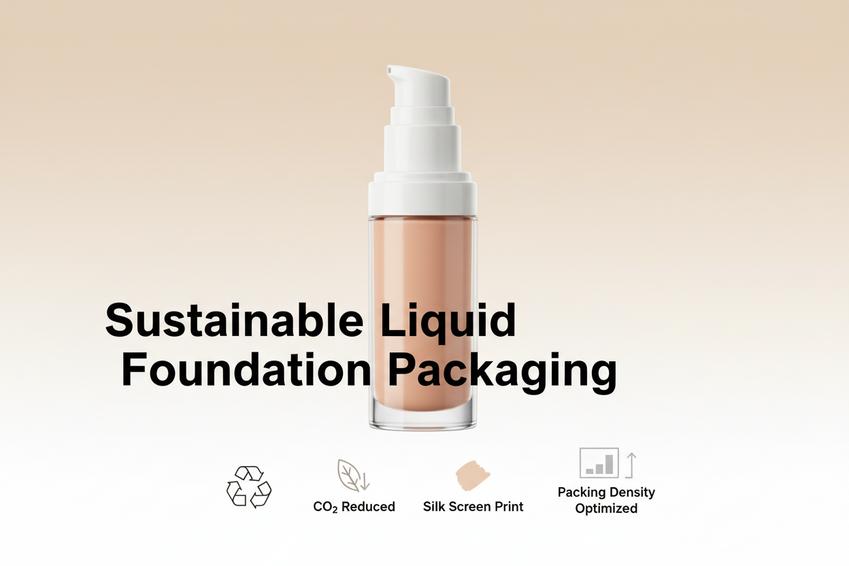
Sustainable choices are reshaping how every liquid foundation bottle is designed, produced, and branded. From material swaps to lighter forms, smart updates turn a basic foundation bottle into a greener beauty essential.
Meeting consumer demand with recyclable PETG and PP
The shift toward sustainable packaging is driven by rising consumer preference for smarter material choices in every liquid foundation bottle. Beauty buyers now check labels as closely as shade ranges.
-
Core material direction
-
Recyclable materials
-
Material innovation
- Mono-material pump systems to support easier recycling.
- Simplified bottle structure to match eco-design goals.
-
-
Production alignment
- Injection molding for precise neck finishes.
- Blow molding for consistent cylindrical foundation bottle bodies.
A well-designed liquid makeup bottle today must balance durability with responsibility. Topfeel focuses on PETG and PP solutions that meet global recycling trends while keeping the liquid foundation bottle sleek, standard-sized, and shelf-ready.
Reducing carbon footprint via lightweight cylindrical bottles
Lowering the carbon footprint of each liquid foundation bottle starts with smart lightweighting and thoughtful cylindrical design.
-
Design optimization
-
Material reduction
- Thinner yet durable walls through material optimization.
- Compact pump systems to cut excess resin.
-
Shape efficiency
- Cylindrical forms improve packing density.
- Better carton fit means energy reduction during shipping.
-
-
Production improvements
- Streamlined molding cycles support sustainable production.
- Reduced resin usage increases eco-efficiency without harming leak-proof performance.
A lighter foundation bottle doesn’t feel cheap when engineered correctly. It feels modern. For brands working with Topfeel, every liquid foundation bottle is refined to use less plastic while protecting the formula inside.
Enhancing brand image through sustainable silk screen labeling
Branding is no longer just about looks; it shapes brand reputation and consumer engagement. A thoughtfully decorated liquid foundation bottle can signal serious green branding values.
-
Decoration strategy
-
Direct silk screen printing
- Eliminates separate plastic labels.
- Improves recyclability of the liquid foundation bottle.
-
Eco-friendly inks
- Low-VOC options.
- Durable finishes with strong visual appeal.
-
-
Brand impact layers
- Sustainable labeling builds trust.
- Clean design boosts shelf presence.
- Consistent eco messaging strengthens repeat purchase intent.
A glossy or matte liquid foundation bottle with printed branding feels intentional, not excessive. Topfeel supports custom silk screen solutions that align sustainable labeling with premium positioning, turning every liquid foundation bottle into a quiet statement about responsibility and style.
5 Eco-Friendly Materials For Liquid Foundation Bottles
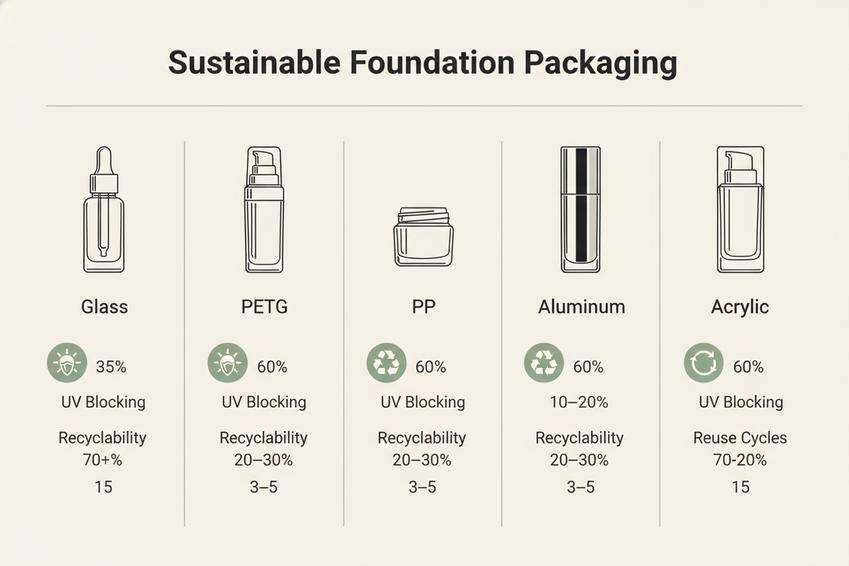
Choosing the right liquid foundation bottle isn’t just about looks. It shapes product safety, shelf life, and brand vibe. Let’s break down smart, eco-friendly picks that balance style and sustainability.
Glass: Durable, UV protection with frosted finish
When it comes to Glass as a Bottle material, performance and aesthetics align neatly.
-
Core strengths of this Sustainable packaging option:
- High Durability under daily handling
- Natural UV protection for formula stability
- Premium Transparency or soft Frosted finish
- Raw materials are melted and molded.
- Controlled cooling boosts strength.
- Surface frosting improves grip and shelf appeal.
For brands refining a high-end liquid foundation bottle, glass works especially well for active formulas sensitive to light.
| Property | Clear Glass | Frosted Glass | Industry Avg. Plastic |
|---|---|---|---|
| UV Blocking (%) | 35 | 60 | 10–20 |
| Recyclability Rate % | 70+ | 70+ | 20–30 |
| Reuse Cycles | 15 | 15 | 3–5 |
Topfeel often recommends glass for luxury liquid foundation packaging aimed at long-term reuse.
PETG: Recyclable cylindrical bottles with matte coating
PETG hits that sweet spot between style and function.
-
As Plastic packaging, it offers:
- High Recyclable value
- Impact resistance
- Lightweight transport savings
Cylindrical bottles feel classic, easy to label, and pump-friendly. Add a Matte coating, and the bottle feels smooth, not slippery. For a modern liquid foundation bottle, PETG keeps things clean and minimal. It’s a go-to Eco-friendly material when brands want clarity without glass weight.
PP: Chemical-resistant oval bottles featuring spray painting
PP (or Polypropylene) stands out for Chemical resistance, which matters in long-wear formulas.
-
Production logic:
- Injection molding shapes consistent Oval bottles.
- Surface Spray painting upgrades shelf appeal.
- Silk printing locks in brand visuals.
For everyday liquid foundation bottle designs, PP reduces risk of formula interaction. As a trusted Packaging material, it balances cost and durability, especially for mass-market lines.
Aluminum: Airtight round bottles with hot stamping
If oxidation is the enemy, Aluminum steps up.
-
Material benefits:
- Strong Barrier properties
- Reliable Airtight seal
- Lightweight Metal packaging
In practice:
- Form the Round bottles.
- Apply internal coating.
- Finish with Hot stamping for bold branding.
This style of foundation bottle suits clean-beauty lines that want minimal light and air exposure.
Acrylic: Reusable geometric bottles with UV coating
Acrylic focuses on vibe and reuse.
-
Why brands like it:
- High clarity
- Easy shaping into Geometric bottles
- Long-term Reusable potential
Add UV coating and surface scratches drop noticeably. As a modern Plastic material, acrylic supports eye-catching Bottle aesthetics while aligning with Sustainable design goals.
For brands working with Topfeel, acrylic options often shine in travel-size liquid foundation bottle collections that need durability without sacrificing that luxe look.
Lightweight Vs. Reusable Bottles: A Comparison
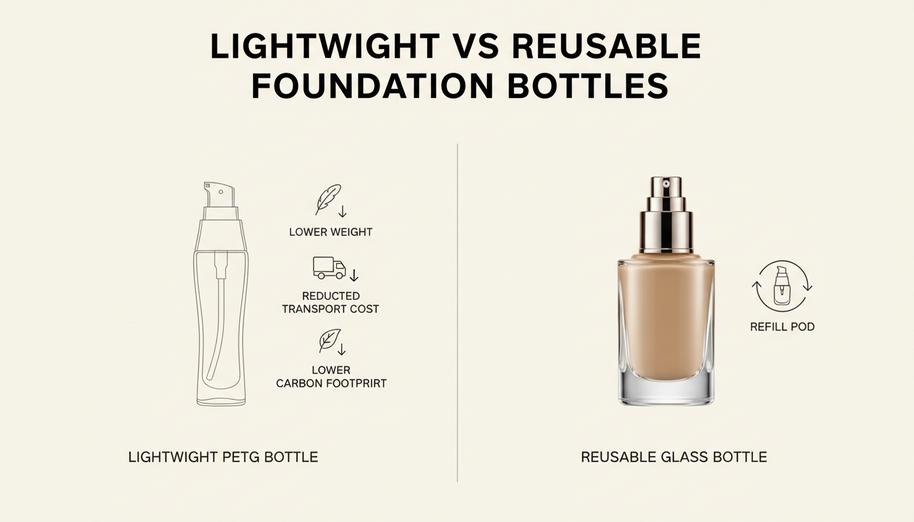
Choosing the right liquid foundation bottle isn’t just about looks. It affects cost, waste, and how your brand feels in someone’s hand. From lightweight packaging to refill-ready designs, every foundation bottle choice shapes performance and impact.
Lightweight Bottles
A lightweight liquid foundation bottle often focuses on cutting excess while keeping performance tight and practical.
-
Core design priorities
-
Material strategy
- Use of PETG or PP to support material reduction
- Thin-wall engineering to lower packaging weight
-
Production efficiency
- Blow molding processes that reduce energy consumption
- Optimized molds that trim scrap rates
-
Logistics impact
- Lower transportation costs due to reduced mass
- Decreased carbon emissions across distribution routes
-
-
Supply chain considerations
-
Eco-focused development
- Adoption of eco-design principles during bottle and pump planning
-
Operational gains
- Improved supply chain efficiency from lighter pallet loads
- Easier bulk handling for large runs of liquid foundation bottles
-
In daily use, a lighter foundation bottle simply feels easy. It ships faster, stacks better, and keeps budgets under control. For mass-market liquid foundation packaging, that balance between cost and function matters a lot.
Reusable Bottles
A reusable liquid foundation bottle shifts attention from short-term savings to long-term value.
-
Lifecycle framework
-
Circular model
- Designed for the circular economy with refill-ready formats
- Integration into branded refill systems
-
Durability standards
- Glass or acrylic bodies built for durability
- Reinforced pumps supporting repeated use
-
-
Operational structure
-
User participation
- Encouraging consumer adoption through simple refill steps
- Clear cleaning protocols to maintain hygiene
-
Environmental metrics
- Measurable waste reduction over multiple cycles
- Documented lifecycle assessment benchmarks
-
Reverse flow
- Coordinated return logistics for refill or reuse programs
-
A refillable liquid foundation bottle may cost more upfront, yet over time it supports lower waste and stronger brand loyalty. For premium liquid foundation packaging, that long game can feel like a smart move.
FAQs about Liquid Foundation Bottle
What makes recyclable materials ideal for a liquid foundation bottle?
A liquid foundation bottle must protect delicate formulas while meeting eco-expectations. The right material creates that balance:
- PETG / PP (Plastic): Recyclable, lightweight, formed through injection molding or blow molding for Cylindrical or Oval bottle body designs. Strong chemical resistance keeps formulas stable.
- Glass: Produced by glass forming and annealing, offering UV protection and a premium Frosted or Glossy finish.
- Aluminum: Airtight, durable, and highly recyclable—ideal for refill or Bulk size systems.
Each option supports sustainable goals without sacrificing Leak-proof performance.
Why is the pump dispenser the dominant closure for liquid foundation bottles?
Precision defines daily makeup use. A well-designed Pump dispenser ensures controlled output and hygiene.
- Pump mechanism + Actuator: Dispenses consistent dosage.
- Dip tube + Gasket: Maintains Airtight sealing and prevents contamination.
- Overcap or Snap-on cap: Protects the Collar during travel.
For higher protection, an Airless pump eliminates air exposure, extending formula life in Standard size and Travel size packaging.
How do shape and structure influence user experience?
The form of a liquid foundation bottle shapes emotion and comfort:
- Cylindrical and Oval designs feel balanced in hand.
- Square or Rectangular bottles stand firmly on retail shelves.
- Ergonomic or Custom Geometric bodies enhance grip and visual identity.
Glass, Acrylic, or AS bottle body materials can be paired with Spray painting or Matte Coating, turning simple Assembly into a tactile statement.
Which surface finishes elevate a brand image without harming recyclability?
Luxury lives in detail, not excess.
Silk screen printing directly on PETG or Glass reduces Labeling waste. Hot stamping on a Cap or UV coating on an Acrylic bottle body adds refined shine. Frosted finishes achieved through Polishing soften light while maintaining Recyclable integrity.
Beauty feels elevated, yet the structure remains Sustainable.
What size options suit different market demands?
A liquid foundation bottle must match lifestyle and distribution strategy.
| Capacity Type | Common Pairing | Typical Use |
|---|---|---|
| Sample size / Small volume | Orifice reducer + Screw cap | Promotions, trial kits |
| Travel size / Medium volume | Pump dispenser + Overcap | Daily carry |
| Standard size | Pump mechanism + Collar | Retail core line |
| Bulk size / Large volume | Airless pump system | Salon or refill station |
From compact Plastic PP designs to Durable Glass refill systems, each format balances Chemical resistance, Leak-proof security, and real-world convenience.
References
- Sustainable Packaging – Wikipedia (https://en.wikipedia.org/wiki/Sustainable_packaging)
- Polyethylene Terephthalate – Wikipedia (https://en.wikipedia.org/wiki/Polyethylene_terephthalate)
- Polypropylene – Wikipedia (https://en.wikipedia.org/wiki/Polypropylene)
- Ecological Design – Wikipedia (https://en.wikipedia.org/wiki/Ecological_design)
- Injection Moulding – Wikipedia (https://en.wikipedia.org/wiki/Injection_moulding)
- Blow Molding – Wikipedia (https://en.wikipedia.org/wiki/Blow_molding)
- Carbon Footprint – Wikipedia (https://en.wikipedia.org/wiki/Carbon_footprint)
- Screen Printing – Wikipedia (https://en.wikipedia.org/wiki/Screen_printing)
- Volatile Organic Compounds’ Impact on Indoor Air Quality – EPA (https://www.epa.gov/indoor-air-quality-iaq/volatile-organic-compounds-impact-on-indoor-air-quality)
- UV Degradation – Wikipedia (https://en.wikipedia.org/wiki/UV_degradation)
- Aluminium – Wikipedia (https://en.wikipedia.org/wiki/Aluminium)
- Poly(methyl methacrylate) (Acrylic) – Wikipedia (https://en.wikipedia.org/wiki/Poly(methyl_methacrylate))
- Circular Economy Introduction – Ellen MacArthur Foundation (https://www.ellenmacarthurfoundation.org/topics/circular-economy-introduction/overview)
- Life-Cycle Assessment – Wikipedia (https://en.wikipedia.org/wiki/Life-cycle_assessment)
- Reverse Logistics – Wikipedia (https://en.wikipedia.org/wiki/Reverse_logistics)

