 English
  Español de México
  Français
  Deutsch
  Português do Brasil
  Italiano
  한국어
한국어  ไทย
ไทย  Русский
  日本語
日本語  Polski
  Svenska
  Türkçe
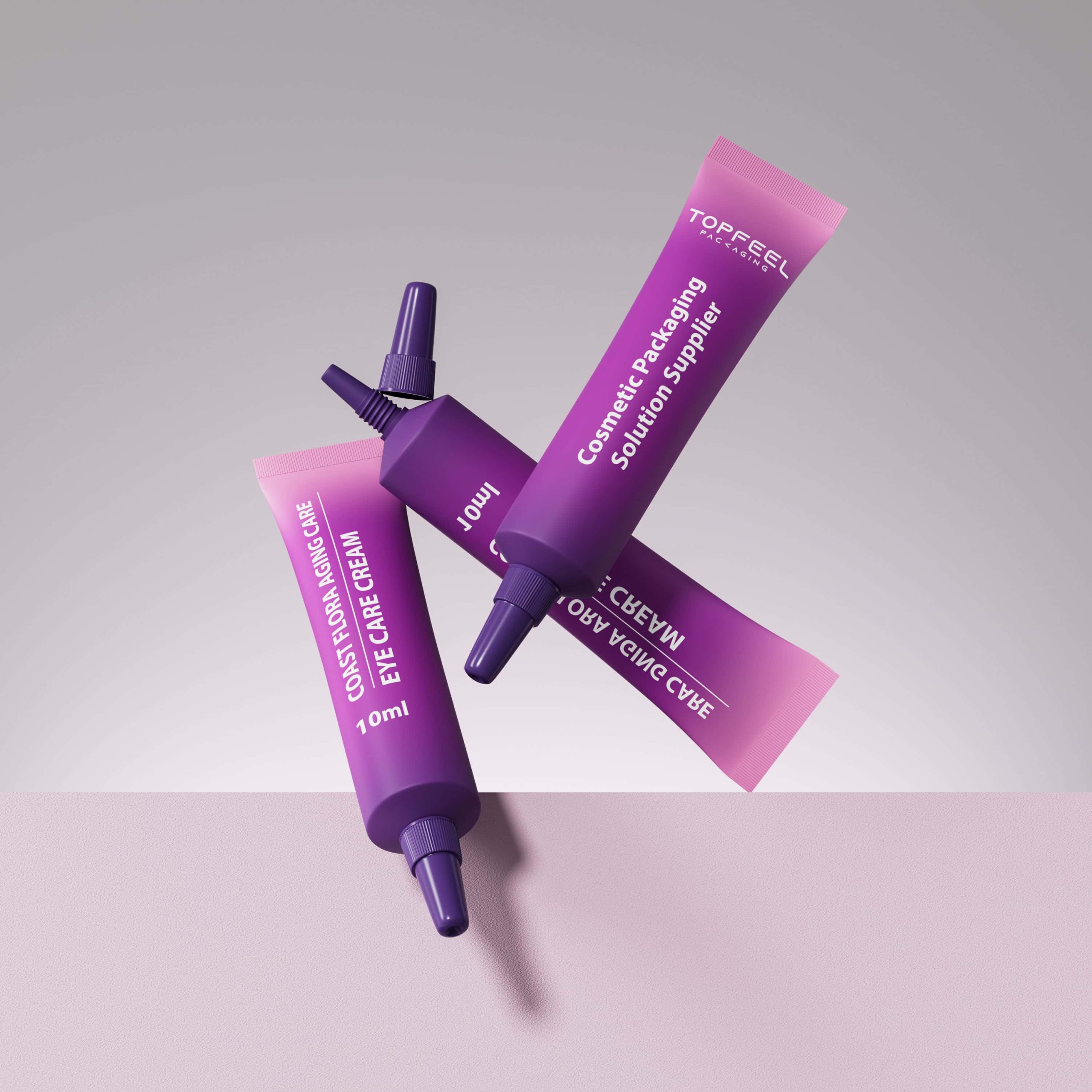

A Complete Guide to Selecting Premium Plastic Cosmetic Tubes
April 23,2026
Plastic cosmetic tubes can make or break your product, and that’s the bottom line.
A leaky seal, flimsy wall, or cheap resin doesn’t just look bad—it costs you shelf space, customer trust, and serious cash.
Grand View Research reports sustained growth in sustainable cosmetic packaging demand through 2025, raising sourcing standards industrywide globally.
Reading Notes on Plastic Cosmetic Tubes
➔ Material Match: Choose between LDPE flexibility and PP rigidity based on formula viscosity and filling process.
➔ Barrier & Sustainability: Integrate EVOH for oxygen and fragrance retention, verify PCR, biodegradable or sugarcane resin sources.
➔ Seal & Closure: Ensure consistent wall thickness, optimize orifice diameter, and pair with flip-top, disc-top, or airless pump for leak-free dispensing.
4 Steps To Evaluate Tube Material Quality
Choosing the right plastic cosmetic tubes isn’t just about looks. It’s about safety, durability, and how well the tube protects your formula. Here’s how to size up material quality without overthinking it.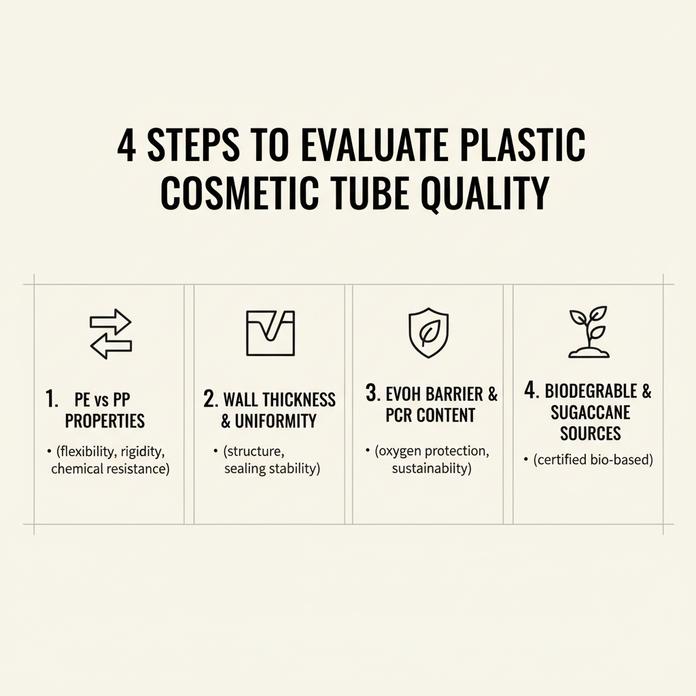
Step 1: Assess Polyethylene (PE) vs. Polypropylene (PP) Properties
When comparing materials for plastic cosmetic tubes, focus on core material properties that affect daily use and filling performance.
-
Material Type Comparison
-
Polyethylene (PE)
- Includes LDPE variants known for strong flexibility
- Ideal for squeezable cosmetic tubes like cleanser or hair mask packaging
- Good compatibility with emulsion-based formulas
-
Polypropylene (PP)
- Higher rigidity and shape retention
- Strong chemical resistance
- Better for structured caps and thicker wall designs
-
-
Performance Factors
- Impact strength during transport
- Sealing stability in extrusion molding
- Reaction to alcohol-based sunscreen or foundation
Brands sourcing plastic cosmetic tubes from Topfeel often test both PE and PP to balance user feel and formula safety.
Step 2 – Measure Wall Thickness and Tube Body Uniformity
Quality cosmetic tube packaging depends heavily on structure.
-
Tube Body Inspection
- Check wall thickness consistency across the tube body
- Confirm diameter and length meet manufacturing tolerance
- Review uniformity to prevent paneling or dents
-
Structural Control Layers
- Shoulder transition
- Cap fit alignment
- Sealing edge stability
Poor consistency affects structural integrity, leading to leakage in plastic cosmetic tubes. Topfeel controls dimensional dimensions tightly, helping brands avoid messy returns.
Step 3: Analyze EVOH Barrier and PCR Content Performance
Barrier performance is critical for skincare and sunscreen formulas stored in plastic tubes.
-
Barrier Structure
-
Inner layer with EVOH barrier
- Reduces oxygen permeability
- Maintains fragrance retention
- Enhances overall barrier properties
-
-
Sustainability Layer
- Verified PCR content percentage
- Use of post-consumer recycled resin
- Maintained material performance after recycling
Well-designed plastic cosmetic tubes protect actives while supporting sustainability goals. This is where high-grade cosmetic packaging stands out from generic cosmetic tubes.
Step 4 – Verify Biodegradable and Sugarcane Plastic Sources
Eco claims need proof.
-
Source Verification
- Certified biodegradable plastic
- Traceable sugarcane plastic
- Documented bio-based materials origin
-
Environmental Review
- Assessment of renewable sources
- Measured environmental impact
- Third-party material verification
-
Design Compatibility
- Mono-material structure for recycling
- Printing compatibility
- Compliance with sustainability standards
Smart brands don’t just buy plastic tubes; they invest in responsible plastic cosmetic tubes. Topfeel supports traceable sourcing so your cosmetic packaging stays aligned with real-world eco expectations.
Airless Vs. Standard Tubes
Picking between airless and standard options isn’t just packaging talk. For plastic cosmetic tubes, it affects product feel, shelf life, and how users squeeze out that last drop without getting annoyed.
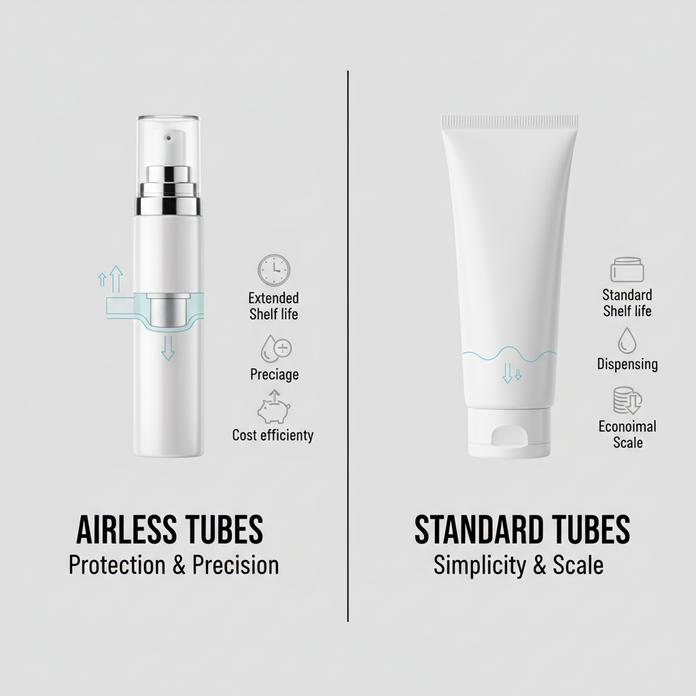
Airless Tubes
Airless formats tend to attract brands that worry about formulas acting up over time. Within plastic cosmetic tubes, this design leans technical but pays off in daily use.
-
Core mechanics
- Vacuum pump systems lift product upward instead of pulling air inside
- Built-in contamination barrier keeps fingers and bathroom air out
-
Formula care
- Reduced oxygen contact supports oxidation prevention
- Less stress on actives leads to shelf life extension
- Brands often push preservative reduction, which customers notice
-
User experience
- Consistent output thanks to dosage control
- Nearly zero leftovers, even with thicker creams
-
Brand and market fit
- Often chosen for eye care or treatment lines using plastic cosmetic tubes
- Works well when premium feel matters more than unit cost
For cosmetic plastic tubes aimed at sensitive formulas, airless designs signal product protection without shouting about it. That quiet reliability is why suppliers like Topfeel keep refining this style for modern skincare.
Standard Tubes
Standard designs are familiar for a reason. Plastic cosmetic tubes with classic squeeze formats stay popular because they’re easy to make and easier to use.
-
Structural basics
- Simple squeeze mechanism pushes product through an orifice
- Simple design keeps tooling and testing straightforward
-
Manufacturing advantages
- Cost-effective for large runs
- Easy filling on high-speed lines
- Broad material flexibility, from soft PE to laminated layers
-
Daily practicality
- Caps vary, flip-top or screw, both widely accepted
- Lightweight and wide availability across global markets
-
Best-use scenarios
- Cleansers, masks, and everyday creams
- Plastic cosmetic tubes that value speed and price balance
Plastic tubes for cosmetics don’t always need complexity. Sometimes, standard tubes hit the sweet spot, especially when fast launches and familiar handling matter most.
Leaks Complaints? Achieve Seal Integrity
Leak complaints with plastic cosmetic tubes can drain brand trust fast. A tiny drip from a cosmetic tube, plastic squeeze tube, or beauty packaging tube feels small, yet customers notice. From head design to cap torque, every detail in plastic cosmetic tubes matters. Let’s tighten things up and keep plastic cosmetic tubes clean, neat, and leak-free.
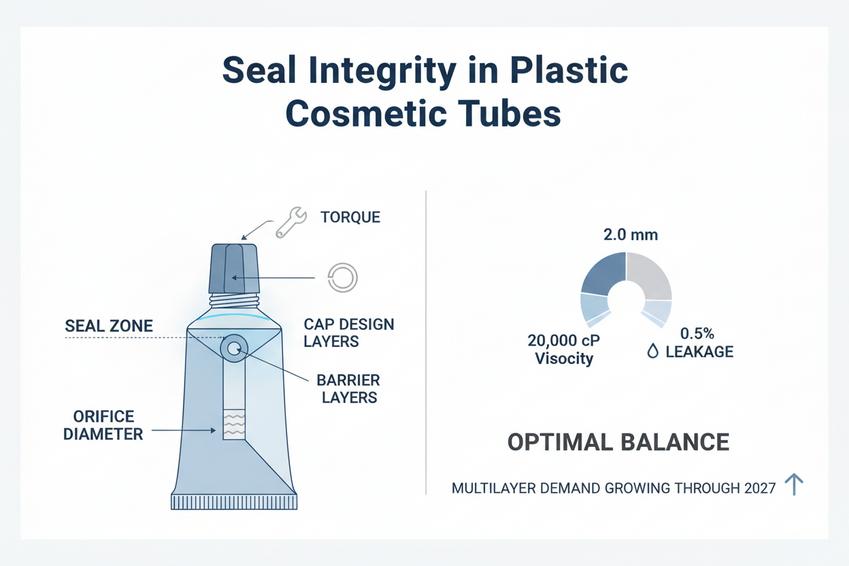
Optimizing the Seal Area and Orifice Diameter
When working with plastic cosmetic tubes, leak control starts at the seal area and the orifice diameter. Small tweaks in tube design can seriously upgrade leakage prevention and dispensing control.
-
Seal Area Engineering
-
Material Match
- Check material compatibility between tube body and head.
- Align resin shrinkage rates in cosmetic squeeze tubes.
-
Heat Parameters
- Calibrate sealing temperature and dwell time.
- Monitor cooling pressure for stable weld lines.
-
Dimensional Control
- Maintain tight dimensional tolerance.
- Audit closure fit after capping torque tests.
-
-
Orifice Diameter Balance
-
Flow vs. Control
- Smaller orifice diameter improves dispensing control for sunscreen.
- Larger openings suit thick hand cream in plastic cosmetic tubes.
-
User Behavior
- One-hand squeeze? Adjust flow rate.
- Travel-size tube? Reduce burst risk.
-
Seal & Flow Test Data for Plastic Cosmetic Tubes
| Orifice Diameter (mm) | Viscosity (cP) | Leakage Rate (%) | Drop Weight (g) |
|---|---|---|---|
| 1.5 | 25,000 | 0.8 | 0.12 |
| 2.0 | 20,000 | 0.5 | 0.18 |
| 2.5 | 15,000 | 1.6 | 0.26 |
| 3.0 | 10,000 | 2.4 | 0.35 |
A tighter system feels better in hand. Plastic cosmetic tubes should dispense smoothly, not splatter.
Injection Molding vs. Co-extrusion in Tube Forming
Choosing between injection molding and co-extrusion shapes how plastic cosmetic tubes perform long term.
Here’s the quick breakdown:
-
Injection molding
- Sharp head geometry.
- Precise shoulders for better seal type alignment.
- Strong consistency in tube manufacturing.
-
Co-extrusion
- Multiple material layers.
- EVOH boosts barrier properties.
- Flexible process selection for oxygen-sensitive creams.
Key considerations
- Resin choice: HDPE, LDPE, or blended plastic resins.
- Wall thickness control.
- Compatibility with cosmetic tube filling lines.
In 2025, Smithers reported that global demand for multilayer cosmetic packaging continues rising as brands aim for longer shelf life and lower return rates.
“Multilayer plastic packaging demand in personal care is expected to maintain steady growth through 2027, driven by performance and barrier requirements.” — Smithers, 2025 Packaging Market Outlook
For brands that want dependable plastic cosmetic tubes without drama, Topfeel aligns production techniques with real product viscosity and storage needs. That’s how plastic cosmetic tubes stay stable from factory to bathroom shelf.
Selecting Closures: Disc Top Cap to Snap-on Cap
Even well-made plastic cosmetic tubes fail if the cap choice is off. Matching closure types to tube heads is non-negotiable.
-
Screw Cap Systems
-
Thread Precision
- Match head diameter and pitch.
- Validate torque range.
-
Seal Type
- Add inner plug for watery lotion.
- Use liner for extra compression.
-
-
Flip-top Cap & Disc Top Cap
-
Controlled dispensing mechanism
- Ideal for daily-use plastic cosmetic tubes.
- One-click closure reduces spills.
-
Cap Material
- PP for durability.
- Softer blends for comfort touch.
-
-
Snap-on Cap
- Travel-friendly.
- Lower cost.
- Requires strict closure fit validation.
Quick checklist before mass production:
- ✓ Cap-thread match confirmed
- ✓ Drop test passed
- ✓ Inverted storage test 48h
- ✓ Torque retention stable
With the right cap material, correct seal type, and smart head design, plastic cosmetic tubes stay sealed and user-friendly. Topfeel keeps closure pairing tight, so your cosmetic squeeze tubes don’t just look good—they stay leak-free.
FAQs about Plastic cosmetic tubes
How can I identify high-quality plastic cosmetic tubes for foundation or sunscreen products?
Quality in plastic cosmetic tubes shows up in the details people rarely see but always feel.
-
Material match
- LDPE or flexible Polyethylene (PE) suits a Sunscreen tube or Hand cream tube that needs gentle squeeze control.
- Polypropylene (PP) or PETG adds rigidity for a Foundation tube with thicker texture.
-
Structure precision
- Even wall thickness across the tube body prevents dents.
- Clean shoulder alignment and a tight seal area stop leaks after extrusion molding and sealing process.
- Accurate orifice diameter ensures smooth flow, not sudden bursts.
-
Barrier & finish
- EVOH barrier in co-extrusion protects fragrance and active ingredients.
- Silk screen printing, hot stamping, or a matte finish should look crisp, never blurred.
When the head, applicator tip, and closure close with a soft click, you can feel the craftsmanship.
What makes airless tubes better for premium skincare like eye cream?
Airless plastic cosmetic tubes protect delicate formulas and reduce waste.
• A pump dispenser or internal piston limits air contact, keeping Eye cream tube formulas stable.
• Controlled dispensing through a refined orifice or applicator tip avoids overuse.
• Less residue stays inside the tube body, improving real volume capacity usage.
For high-value serums or foundations, that clean, vacuum-like push builds trust with every press.
How do different closure types influence user experience and production efficiency?
Closure design affects both factory rhythm and daily comfort.
- Screw cap → strong sealing for travel-size Lip gloss tube or Sunscreen tube.
- Flip-top cap → quick one-hand use for Hand cream tube.
- Disc top cap → better dosage control via calibrated orifice diameter.
- Snap-on cap → faster assembly during injection molding and tube forming.
- Rollerball applicator → smooth, cooling touch for targeted skincare.
A well-fitted head diameter and closure reduce leakage risk and simplify large-volume production runs.
What sustainable options exist for plastic cosmetic tubes today?
Sustainability now shapes buying decisions as much as design.
-
Material upgrades
- PCR (Post-Consumer Recycled) content lowers virgin plastic use.
- Sugarcane plastic and biodegradable plastic reduce fossil dependence.
- Mono-material design improves recyclable material sorting.
-
Design strategy
- Lightweighting cuts material weight without shrinking volume capacity.
- Refillable packaging extends tube life cycles.
-
Manufacturing balance
- Co-extrusion with EVOH barrier can still align with recyclable goals when structure is simplified.
- Decoration methods like offset printing or labeling should support recycling streams.
Modern plastic cosmetic tubes can feel premium, look glossy or matte, and still respect environmental limits.
References
- Cosmetic Packaging Market Size & Trends – Grand View Research
- Polyethylene (PE) Plastic: Properties, Uses & Structure – BPF
- All About Polypropylene (PP) Plastic – Creative Mechanisms
- Ethylene Vinyl Alcohol (EVOH) Plastic – Omnexus
- PCR Certification Program – Association of Plastic Recyclers (APR)
- What are bioplastics? – European Bioplastics
- I’m green™ bio-based – Braskem
- Injection Molding Basics – Xometry
- Extrusion – Wikipedia
- Packaging Market Reports – Smithers
- High Density Polyethylene (HDPE) – Omnexus
- Low Density Polyethylene (LDPE) – Omnexus
- What is PETG? – TWI Global
- The mono-material trend: What, why, and how? – Packaging Europe
- Offset Lithography – Printing.org

