 English
  Español de México
  Français
  Deutsch
  Português do Brasil
  Italiano
  한국어
한국어  ไทย
ไทย  Русский
  日本語
日本語  Polski
  Svenska
  Türkçe

Can You Still Use a Vintage Loose Powder Container Today?
April 22,2026
A vintage loose powder container can feel like a little time machine—crystal knobs, brushed brass rims, that satisfying click when it shuts. But here’s the rub: charm doesn’t always equal compliance. If you’re sourcing packaging for a modern beauty line, the question isn’t just “Does it look fabulous?” It’s “Will it keep product fresh, safe, and sellable?” Nostalgia may win hearts, yet poor seals and aging materials can wreck margins fast.
The global cosmetic packaging market was valued at over $36 billion in 2023, according to Grand View Research—proof that packaging isn’t decoration; it’s strategy. As one industry analyst put it, “Packaging is part of the product promise.”
So before you stock up on antique finds or commission replicas, it pays to know where elegance ends and liability begins.
Key Notes for Vintage Loose Powder Container Care
➔ Inspect Seals and Surfaces: Check glass, porcelain, brass, and tin for cracks, corrosion, or pitting around screw tops, hinge lids, and sifter openings.
➔ Clean Gently and Thoroughly: Disassemble closures, soak non-gilded pieces, and use soft brushes and swabs on decorative finishes and inner lids.
➔ Reassemble and Compare: Air-dry all components, test airtight fit, and weigh vintage charm against modern hygienic standards before regular use.
Is Your Vintage Loose Powder Container Still Safe?
That vintage loose powder container on your vanity may look charming, but safety matters more than style. Before reusing any vintage loose powder container, give it a careful check so your skin stays happy.
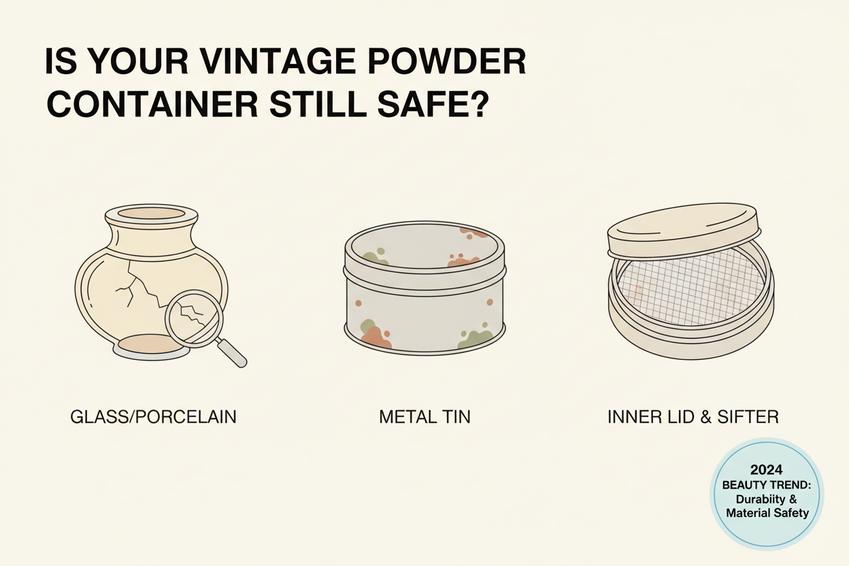
Inspecting Glass and Porcelain Cracks
When reviewing a vintage loose powder container made of glass or porcelain, focus on structural weak points that affect integrity.
-
Surface Review
- Scan for visible cracks and fine fissures along the base.
- Tilt under light to reveal hidden damage.
-
Stress Areas
- Examine screw tops for spider lines.
- Check hinge lids where tension builds over time.
-
Moisture Traps
- Inspect chipped rims.
- Run a cotton swab along seams; snagging hints at micro-cracks.
Even tiny fractures in a powder case can trap residue, weakening overall integrity and turning a collectible into a hygiene risk.
Evaluating Metal, Brass, and Tin Corrosion
A metal vintage loose powder container needs a different vibe check. Look for:
- Reddish rust on tin edges
- Green oxidation on brass
- Flaking finish showing deep corrosion
If pitting feels rough to the touch, internal degradation may already be active.
- Wipe with a dry cloth.
- Check hinges and snap closures.
- Smell for metallic sharpness inside.
McKinsey’s 2024 global beauty packaging outlook noted that consumers increasingly prioritize “durability and material safety in refillable and heritage-style containers.”
Brands like Topfeel respond with treated metal finishes that resist corrosion, keeping your vintage loose powder container safer for modern use.
Checking Inner Lid and Sifter Integrity
Inside your vintage loose powder container, the inner lid and sifter matter just as much as the shell.
-
Fit & Seal
- Press the inner lid gently.
- Confirm tight seal without wobble.
-
Fabric or Mesh Sifter
- Check for tears in the sifter.
- Shake lightly to test functionality.
-
Contamination Control
- Ensure powder flows evenly.
- Watch for clumps signaling moisture or contamination.
A loose sieve ruins the charm fast. For collectors upgrading safely, Topfeel offers modern inserts compatible with a classic powder container or antique powder box, blending vintage style with real integrity.
Worried About Contamination? Vintage Jar Cleaning Tips
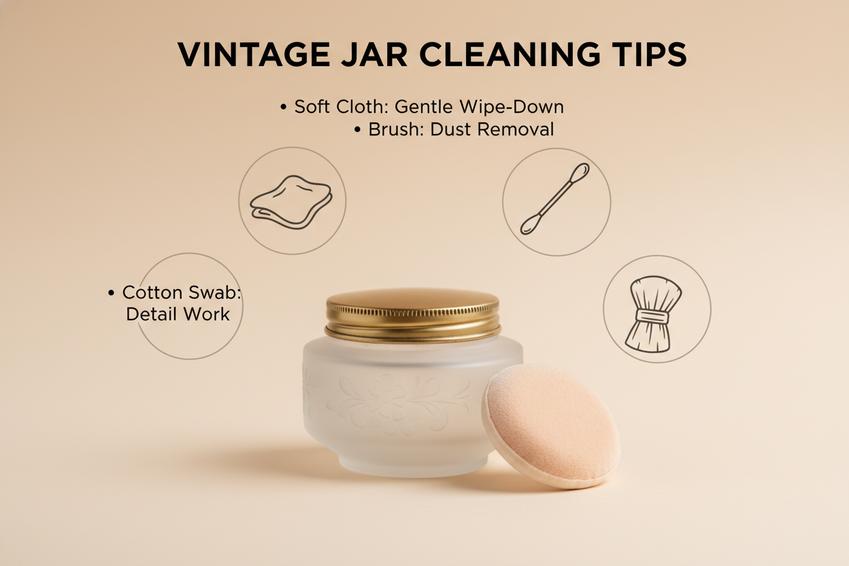
A vintage loose powder container carries charm, but it can also trap old residue, dust, and bacteria. If your vintage loose powder container has been sitting in storage, cleaning it the right way keeps the look while protecting your skin. Let’s break it down in a practical, no-fuss way.
Gentle Care for Gilded and Enameled Finishes
Your vintage loose powder container may feature a gilded finish or an enameled surface that scratches easily. Treat it like fragile jewelry, not kitchenware.
-
For surface prep:
-
Use a soft cloth
- Slightly dampened with a mild solution
- No soaking, no scrubbing
-
Focus on light wiping, not pressure
-
-
For detailed decoration on a vintage container:
-
Around embossed trim:
- Dab gently
-
On filigree edges:
- Use cotton wrapped around a toothpick
-
On hand-painted areas:
- Pat dry immediately for better preservation
-
Delicate cleaning keeps gold tones bright and prevents fading. A vintage loose powder container from Topfeel is crafted with durability in mind, but even the best finish needs a gentle touch.
Removing Powder Puffs and Velvet Pouches Safely
Inside many vintage loose powder container pieces, you’ll find a powder puff or a velvet pouch. Cute? Yes. Hygienic? Not really.
• Check the fabric for odor or discoloration
• Place old textile items in a sealed bag
• Dispose of them through safe removal practices
- Do not wash and reuse antique vintage accessory textiles.
- Avoid mixing them with daily laundry.
- Clean the empty interior using a dry cloth before applying a gentle cleaning method.
Short truth: old fabric holds bacteria.
Quick tip: swap it with a fresh, washable puff.
Smart move: keep hygiene front and center.
A clean vintage loose powder container feels safer and looks better on your vanity.
Cleaning Hinged Lids and Snap Closures
The tricky part of a vintage loose powder container is the hinged lid and snap closure. Those tiny metal components collect grime fast.
-
Inspect the mechanism:
-
Check for:
- Dust buildup
- Sticky residue
- Early rust spots
-
-
For grime removal:
-
Use precise cleaning tools
- Cotton swabs
- Soft brushes
-
Dip lightly in mild cleaner
-
Dry fully to support rust prevention
-
-
Protect the mechanism:
- Open and close gently
- Avoid overextending the hinge
- Store in a dry space to preserve vintage hardware
A well-maintained vintage loose powder container opens smoothly and feels satisfying every time. Brands like Topfeel design modern takes inspired by the classic loose powder box, blending beauty with practical care—so your vintage powder container stays stylish, not sketchy.
4 Steps to Sanitize a Vintage Container
A well-loved vintage loose powder container carries charm, but it can also hide years of trapped residue. If you collect antique vanity pieces or just scored a retro find, cleaning it right keeps both the look and the function intact. This guide walks through caring for your vintage loose powder container without ruining its vibe.
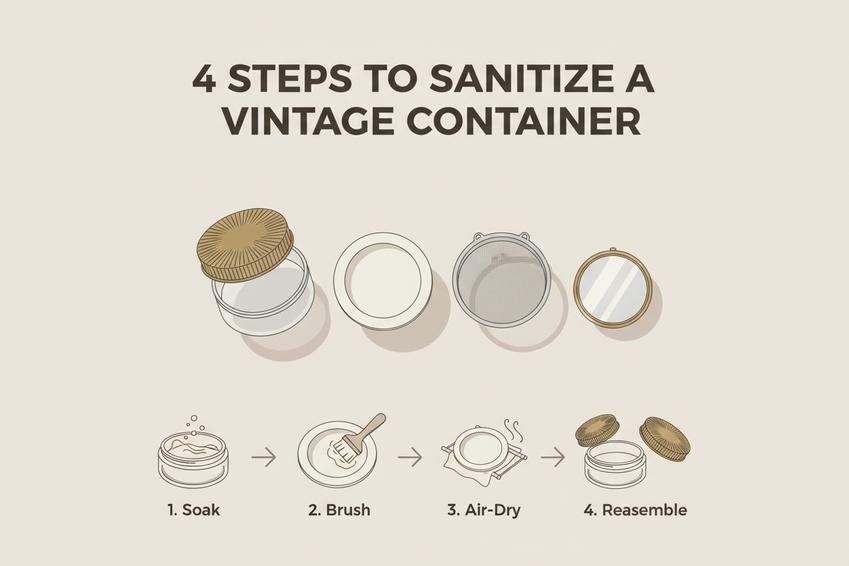
Step 1: Disassemble Screw-Top and Twist-Lock Parts
Working on a vintage loose powder container starts with careful disassembly of every visible and hidden component. Slow and steady wins here.
-
Exterior removal
- Gently unscrew the screw-top from the container.
- If there’s a twist-lock mechanism, rotate until it releases without forcing it.
-
Interior access
- Lift the lid and check for a secondary insert.
- Ease apart friction-held parts to expose trapped powder inside the vintage item.
-
Inspection phase
- Look for buildup around threads.
- Check small ridges where the mechanism connects.
Taking apart your vintage loose powder container like this makes hidden residue easier to tackle later.
Step 2: Soak Blown Glass and Cast Porcelain Pieces
Different materials in a vintage loose powder container need different care.
-
For glass sections
- Place blown glass into warm water mixed with mild cleaning solution.
- Let the pieces sit briefly—no long soaking.
-
For porcelain parts
- Submerge cast porcelain in lukewarm water inside a separate container.
- Avoid harsh chemicals that may damage painted details on the vintage object.
-
Surface protection
- Keep gilded trim above the soaking line.
- Pat dry edges if splashed.
Handled gently, your vintage powder box keeps its shine.
Step 3: Scrub Sifter, Mirror, and Inner Lid
Now focus on detail work inside the vintage loose powder container.
-
Fine cleaning
- Use a soft brush with light cleaning agent on the sifter.
- Sweep through tiny sieve holes where residue clings.
-
Reflective areas
- Wipe around the mirror edge without soaking the backing.
- Clean the surface in small circles to avoid streaks.
-
Groove care
- Run the brush along the inner lid rim.
- Target pressed patterns where old powder hides.
This stage gives your vintage loose powder container that fresh-but-still-retro feel.
Step 4: Air-Dry Components and Reassemble Friction Fit
Drying matters more than people think.
-
Air circulation
- Lay all components on a clean towel.
- Allow full air-drying before touching the parts again.
-
Reassembly
- Align each fitting carefully.
- Press friction fit pieces back into the container without forcing them.
- Secure the screw top once the drying process is complete.
When reassembled, your vintage loose powder container should open smoothly, close snugly, and look ready for another decade of use.
Vintage vs. Modern Powder Containers: What’s Safer?
Loose face powder has been around forever, and the vintage loose powder container still turns heads today. But style isn’t everything. From old-school vanity jars to sleek compacts, safety depends on material, design, and daily hygiene habits. Let’s break down how a vintage loose powder container compares to modern options.
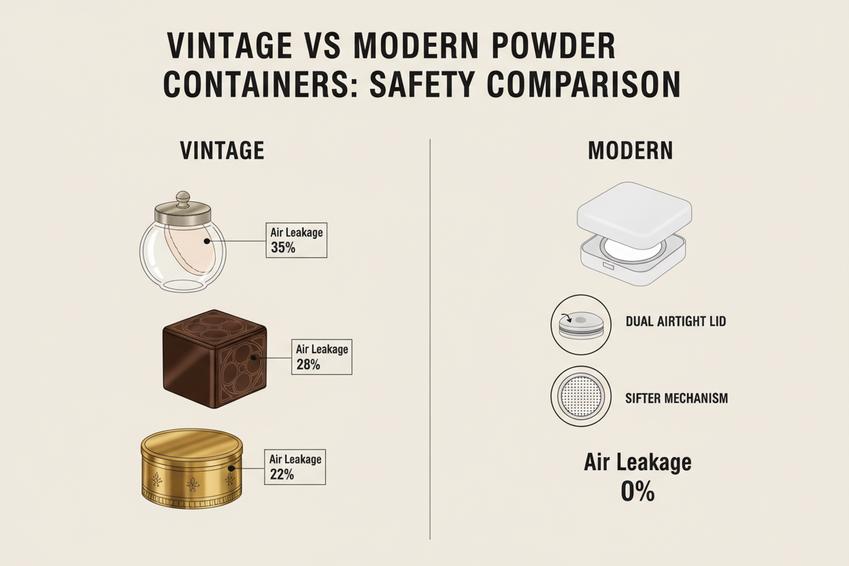
Vintage Container
A classic vintage loose powder container often highlights charm over compliance. When reviewing one, focus on layered safety factors:
-
Material Risks
- Glass and brass may contain trace lead in decorative paints.
- Early plastics like celluloid can release toxins as degradation sets in.
- Porous surfaces increase contamination if cleaning is skipped.
-
Design & Condition Check
- Loose lids without tight seals affect hygiene.
- Worn hinges or cracked rims worsen product exposure.
- Aging powder residue sticks to inner walls.
-
Safety Snapshot
| Factor | 1930s Glass Jar | 1950s Bakelite | 1960s Brass | Risk Level |
|---|---|---|---|---|
| Seal Type | Loose lid | Press fit | Screw top | Medium |
| Air Leakage (%) | 35 | 28 | 22 | Moderate |
| Cleaning Ease | Low | Medium | Medium | Variable |
| Chemical Stability | High | Medium | High | Mixed |
| Long-term Safety | Fair | Fair | Good | Case-by-case |
That dreamy powder box looks sweet, but a vintage loose powder container needs careful inspection before daily use.
Modern Container
Modern loose powder packaging flips the script. Safety starts at the core.
-
Material Standards
- BPA-free, non-toxic plastics tested under cosmetic regulations.
- Sealed metal shells with coated interiors to prevent contamination.
-
Design Improvements
- Dual airtight lids reduce moisture.
- Built-in sifter systems control product flow.
- Snap closures designed for repeat use without wear.
-
Hygiene Layering
- Outer cap shields dust.
- Inner seal locks loose powder in place.
- Smooth surfaces simplify washing.
Brands like Topfeel build each modern loose powder case with upgraded material testing and precise design standards. Compared with a vintage loose powder container, today’s version simply handles daily life better.
If you love retro vibes, keep that antique cosmetic jar on display. For everyday skin contact, a modern vintage loose powder container-inspired design from Topfeel delivers the look—minus the safety gamble.
Buyers: Procuring Vintage Loose Powder Container Stock
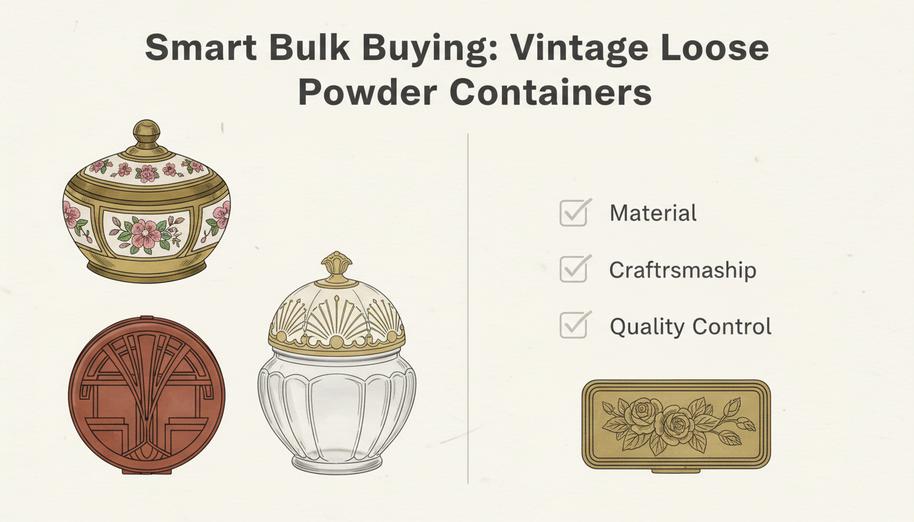
Bulk sourcing a vintage loose powder container isn’t just about grabbing old stock and calling it a day. Smart buyers break down materials, eras, and craftsmanship before committing to any vintage loose powder container deal.
Sourcing Art Deco and Victorian Celluloid Lots
When evaluating lots from Art Deco and Victorian Historical eras, focus on three core layers:
-
Design styles
- Ornate floral engraving typical of Victorian taste
- Geometric symmetry linked to Art Deco flair
-
Material sourcing
- Aged Celluloid tone consistency
- Glass clarity and rim integrity
-
Vintage lots assessment
- Matching lids across batches
- Uniform patina on each vintage loose powder container
Within each lot of vintage loose powder container stock:
- Inspect closure snap or screw fit.
- Check for warping from age.
- Compare color fading across pieces.
A reliable vintage powder case from these periods should feel cohesive, not randomly mixed. Many bulk buyers working with Topfeel align sourcing standards with verified era markers to avoid mismatched inventory.
Evaluating Molded, Pressed, and Hand-Finished Batches
Quality checks depend on Manufacturing techniques:
-
Molding
- Surface seam lines
- Edge consistency
-
Pressing
- Depth of embossed logos
- Alignment of decorative patterns
-
Hand-finishing
- Engraving sharpness
- Craftsmanship marks
For each production batch of vintage loose powder container pieces:
- Compare weight consistency.
- Confirm hinge smoothness.
- Test lid balance when opened.
A true Quality evaluation balances artistry and function. Loose powder container lids should close with a soft click, not a grind. That’s the difference between decorative clutter and a resale-ready vintage loose powder container.
Negotiating with Brass, Bakelite, and Metal Wholesalers
Bulk deals with Wholesale suppliers require layered review:
-
Brass
- Tarnish level
- Hinge durability
-
Bakelite
- Authentic resin scent
- No hairline cracking
-
Metal
- Rust spots
- Thread alignment on screw tops
Negotiation steps inside supplier talks:
- Verify raw material origin.
- Request mixed-batch samples.
- Lock pricing based on defect rate.
Smart buyers cross-check Material vendors and push for transparency in Supplier negotiation. A strong vintage loose powder container contract protects margin and reputation. That’s how experienced teams, including partners like Topfeel, keep bulk sourcing smooth and profitable.
FAQs about Vintage Loose Powder Container
How can buyers check the condition of a vintage loose powder container before bulk purchase?
A careful inspection protects both reputation and resale value.
- Examine the body material
- Glass or Blown Porcelain: look for hairline cracks along the rim of a Screw top or Inner lid.
- Brass, Tin, or other Metal: check for corrosion near a Hinge lid or Snap closure.
- Bakelite or Celluloid: watch for warping in Molded or Pressed edges.
- Test the closure system
- Twist-lock and Friction fit lids should align smoothly.
- An Inner lid or Sifter must sit flat to prevent powder leakage.
- Study the finish
Embossed, Engraved, or Gilded details should remain sharp. Excessive wear around Filigree or Lacquered trims often signals heavy prior use.
Why do some resellers choose modern containers over antique ones?
Antique charm is powerful, yet practical concerns shape decisions.
Modern containers often feature airtight Inner lid systems and hygienic Sifter designs that reduce leakage. In contrast, a Victorian Glass jar with a Hinge lid or an Art Deco Brass compact with a Mirror may carry beauty but limited sealing strength.
For luxury branding, a Round Porcelain piece with Enameled or Lithographed decoration offers storytelling value. For daily cosmetic lines, sealed Metal or molded plastic versions feel safer and simpler to manage.
How should decorative finishes on vintage loose powder containers be cleaned safely?
Decorative surfaces demand patience, not force.
• Gilded or Enameled finishes: use mild soap and a soft cloth; avoid soaking.
• Engraved Brass or Stamped Tin: clean gently with cotton swabs around hinge joints.
• Lacquered or Hand-finished Art Nouveau pieces: no abrasive tools near Filigree patterns.
Brief soaking suits Blown Glass or Cast Porcelain only—never Celluloid or Bakelite. A rushed cleaning can erase decades of character in minutes.
Which materials and styles hold the strongest resale appeal?
Demand often follows material, era, and silhouette.
-
High collector interest:
- Brass or Metal Art Deco containers with Twist-lock closures
- Engraved or Embossed Octagonal and Cylindrical shapes
-
Luxury presentation value:
- Porcelain or Glass, Round or Oval
- Gilded, Enameled, or Hand-finished surfaces
- Complete interiors with Sieve, Mirror, or original Velvet pouch
-
Niche retro markets:
- Bakelite or Celluloid Mid-Century or Retro designs
- Square or Rectangular forms with Snap closure
The strongest pieces combine intact closure, preserved decorative finish, and a clear link to Victorian, Edwardian, or Art Deco style—where function and romance still meet.
References
- Grand View Research – grandviewresearch.com
- strategy – packagingdigest.com
- oxidation – canada.ca
- beauty packaging outlook – mckinsey.com
- removal practices – epa.gov
- glass – cmog.org
- lead – fda.gov
- degradation – si.edu
- contamination – cdc.gov
- regulations – fda.gov
- design – beautypackaging.com
- Historical eras – metmuseum.org
- Quality evaluation – iso.org
- Wholesale suppliers – thomasnet.com

