 English
  Español de México
  Français
  Deutsch
  Português do Brasil
  Italiano
  한국어
한국어  ไทย
ไทย  Русский
  日本語
日本語  Polski
  Svenska
  Türkçe

Complete Empty Foam Bottle Buying Guide 2026
March 16,2026
An empty foam bottle looks simple—until your cleanser leaks, your pump clogs, or your supplier ghosts you right before launch. In 2026, packaging isn’t just a container; it’s your first handshake with the customer. Pick wrong, and it’s like showing up to a black‑tie event in flip‑flops. Pick right, and your product feels premium before it even touches skin.
The global cosmetic packaging market is projected to keep climbing through 2026, driven by refill systems and sustainability mandates (Smithers, 2024). As one Topfeelpack senior engineer puts it, “Foam performance lives or dies on material compatibility and pump precision.” Short sentence. Big truth.
This guide cuts straight to the headaches—material matchups, cost brackets, decoration options, and suppliers who can actually scale. No fluff. Just what keeps your launch on track and your margins intact.
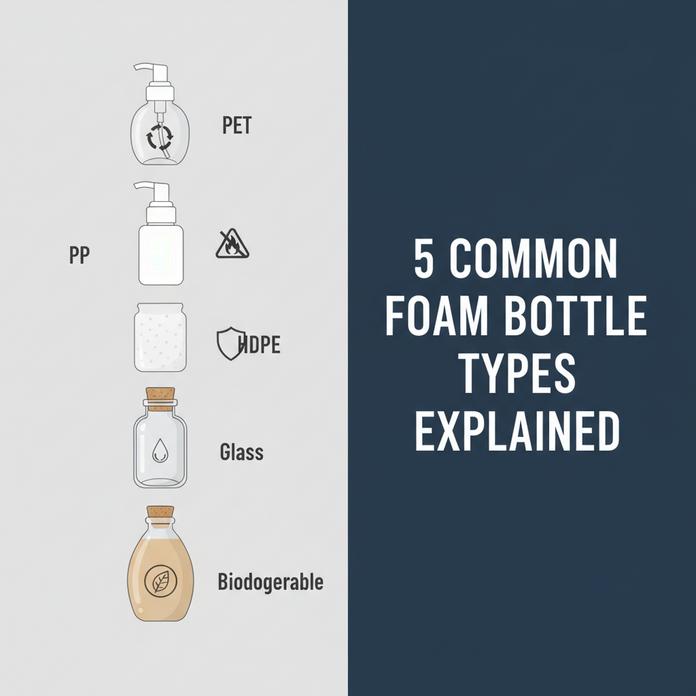
5 Common Foam Bottle Types Explained
Finding the right empty foam bottle can feel confusing when every material claims to be the best. From a simple foam pump bottle for face wash to a premium empty foaming bottle for skincare, details matter. Below is a straight‑talk breakdown to help you choose smartly and keep costs in check.
PET Plastic Bottle with Pump Dispenser and Ergonomic Design
When brands look for a lightweight empty foam bottle, PET is often the go‑to.
-
Core Material
-
PET plastic
- Clear clear bottle body improves formula visibility
- High recyclability for refill programs
-
-
Dispensing System
-
Pump dispenser
- Smooth actuator output
- Stable foam density
-
-
User Experience
-
Ergonomic design
- Comfortable grip
- Ideal for daily face cleansers
-
Why it works: PET keeps the empty foam pump bottle light, which cuts shipping costs. Many startups ordering from Topfeelpack prefer this option for travel-size personal care lines. It’s refillable, practical, and easy to brand.
Short take: light, transparent, refill-friendly.
PP Plastic Foam Bottle Featuring a Spring-Actuated Foaming Mechanism
A PP plastic foam pump bottle focuses on durability.
-
Structure
- Bottle body: thick-wall opaque finish
- Pump core: spring-actuated system
-
Performance
- Stable foaming mechanism
- Consistent output ratio
-
Compatibility
- Strong chemical resistance
- Suitable for active cleansers
This type of empty foam bottle is common in antibacterial and salon-use products. The durable body handles high-frequency pressing without cracking. If your formula is slightly aggressive, PP gives peace of mind. Many brands working with Topfeelpack pick PP for long production runs because the foam pump stays reliable.
Quick summary: tough, stable, cost-efficient.
HDPE Bottle Equipped with UV Protection and Leak-Proof Seal
For light-sensitive formulas, HDPE is the quiet hero. An HDPE bottle is usually opaque, slightly flexible, and built for safety.
Key technical comparison:
| Property | PET Bottle | PP Bottle | HDPE Bottle | Glass Bottle |
|---|---|---|---|---|
| UV Protection Level | Low | Medium | High | Very High |
| Impact Resistance (1–5) | 3 | 4 | 5 | 2 |
| Chemical Resistance | Medium | High | High | Very High |
| Weight (200ml, grams) | 28g | 30g | 32g | 180g |
Highlights of this empty foam bottle option:
- Built-in UV protection
- Strong leak-proof seal
- Excellent chemical resistance
For outdoor or medical cleansers, this empty foaming bottle prevents degradation. It’s practical and safe. Brands that need bulk transport often lean toward HDPE through Topfeelpack supply channels.
Glass Foam Bottle with Overcap and Dip Tube for Premium Formulas
Luxury lines often skip plastic and go straight to a glass bottle.
Main configuration:
-
Body
- Thick inert material glass
- Clear or frosted finish
-
Dispensing
- Precision dip tube
- Protective overcap
-
Positioning
- Targeted at premium formulas
- Strong shelf appeal with elegant appearance
This style of empty foam pump bottle supports sterilization and keeps reactive ingredients stable. It feels heavier in hand. That weight signals value. If branding matters more than freight cost, glass makes sense.
Short note: upscale look, high stability, higher shipping weight.
Biodegradable Polymer Container with Customizable Shape
Sustainability is no longer optional. A biodegradable polymer container offers a fresh angle for the eco-aware market.
Development flow:
- Material Selection
-
Material Selection
- Plant-based resin
- Certified eco-friendly composition
-
Design Stage
- Customizable shape for brand identity
- Unique design for shelf impact
-
Production
- Controlled injection molding
- Foam pump compatibility testing
-
End-of-Life
- Reduced carbon footprint
- Supports sustainable disposal paths
This type of empty foam bottle attracts younger consumers who care about waste reduction. It keeps the function of a standard foam pump bottle while lowering environmental stress. Many green beauty labels source this format from Topfeelpack to balance sustainability and performance.
Simple truth: good foam, less guilt.
Material Breakdown: Polyethylene, PET, and PP Bottles
Choosing the right material for an empty foam bottle is not just technical talk—it shapes durability, safety, and shelf vibe. From chemical resistance to heat tolerance, each resin behaves differently. If you’re sourcing an empty foam pump bottle or planning a refill line, knowing these material basics keeps costs steady and customers happy.
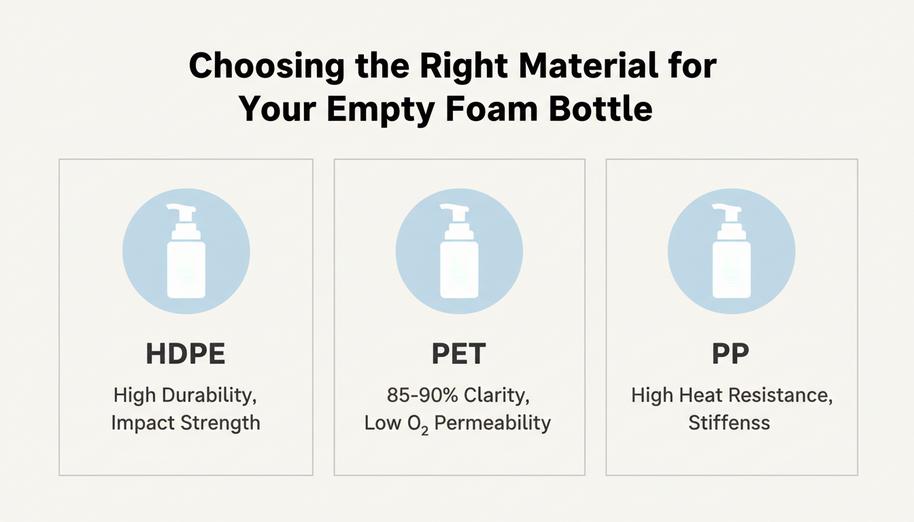
Polyethylene (HDPE) Plastic Bottles
When an empty foam bottle needs toughness, HDPE usually steps up.
-
Core Material Traits
-
Mechanical Profile
- High durability
- Strong impact strength
-
Visual Options
- Naturally opaque
- Can shift to translucent finishes
-
-
Functional Strengths
- Resistant to moisture and chemical resistance factors
- Maintains shape with moderate flexibility
- Works smoothly in blow molding for foam bottle empty designs
-
Commercial Fit
- Refillable household cleaners
- Bulk personal care packaging
- Trusted by Topfeelpack for stable empty foam bottle production runs
HDPE keeps things simple, practical, and cost-friendly.
PET Plastic Foam Containers
PET fits brands that care about looks and barrier control, especially for a premium empty foam bottle line.
| Property | PET Value Range | Application Impact | Packaging Benefit |
|---|---|---|---|
| Clarity | 85–90% light transmission | Product visibility | Premium shelf appeal |
| Barrier properties | Low O₂ permeability | Protects formulas | Longer shelf life |
| Density | 1.38 g/cm³ | Lightweight | Lower shipping cost |
| Recycling Code | #1 | High recyclability | Eco positioning |
Material Highlights:
- Excellent food grade compliance
- Common in beverage containers
- Strong yet lightweight structure
For brands wanting a crystal-clear empty foam pump bottle, PET makes the product pop without adding bulk.
PP Plastic Foam Bottles
PP works best when heat and mechanics matter.
-
Structural Advantages
- High heat resistance
- Reliable stiffness
- Excellent hinge properties for pump parts
-
Safety & Compatibility
- Approved for food contact safety
- Strong solvent resistance
- Optional semi-transparency
-
Performance in Foam Systems
- Maintains spring action in foam pump bottle designs
- Handles hot-fill better than many plastics
- Extends lifecycle of every empty foam bottle in repeated use
Topfeelpack often recommends PP for technical formulas where stress, temperature, and repeated pumping matter. If you need an empty foam bottle that survives real-world handling, PP rarely disappoints.
Which Empty Foam Bottle Suits Your Formula?
Choosing the right empty foam bottle is not just about looks. It’s about matching your formula’s mood, thickness, and sensitivity with the right foaming pump, material, and container design. From cosmetic mousse to facial cleanser, every empty bottle tells a performance story. Let’s break it down in a practical way.
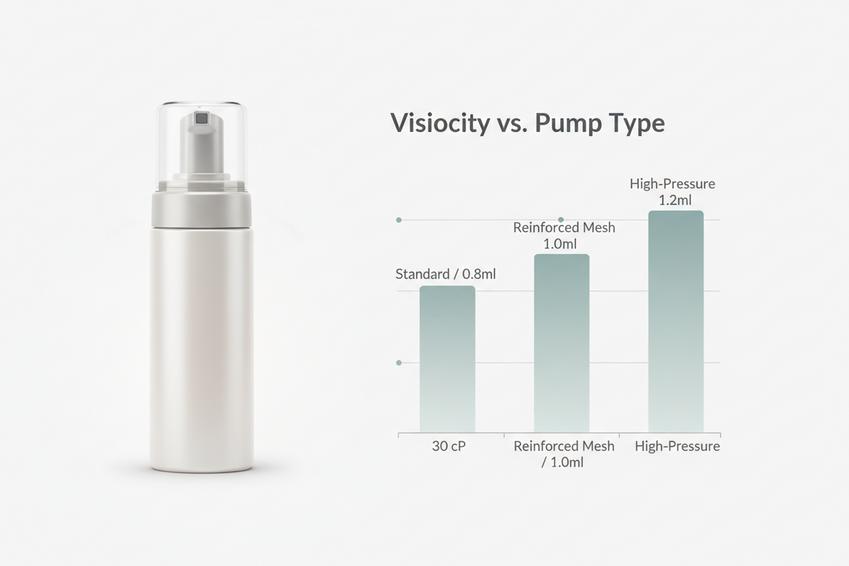
Matching Viscosity: Choosing the Right Foaming Mechanism
When picking an empty foam bottle, viscosity drives everything.
- Low-viscosity liquids need lighter spring strength.
- Medium viscosity works best with balanced air-liquid ratio systems.
- Thick formulas demand reinforced foaming pumps.
- 0–50 cP: Standard pump core
- 50–150 cP: Medium-density mesh
- 150–300 cP: High-pressure actuator
For brands working with Topfeelpack, customization often starts here:
-
Foam Pump Assembly
-
Spring System
- Stainless steel 304 for daily skincare
- Stainless steel 316 for active-rich formulas
-
Mesh Density
- Fine mesh → dense foam
- Standard mesh → light foam
-
A quick lab reference:
| Viscosity (cP) | Recommended Pump Type | Output Volume (ml/stroke) |
|---|---|---|
| 30 | Standard Foam Pump | 0.8 |
| 120 | Reinforced Mesh Pump | 1.0 |
| 250 | High-Pressure Pump | 1.2 |
If your empty foam bottle struggles with clogging, viscosity mismatch is usually the culprit.
pH-Sensitive Formulas and UV-Protected Bottles
Some formulas are chill. Others are picky.
Acidic cleansers with pH 4.5–5.5 need stable HDPE bottles. Vitamin-rich blends hate sunlight. That’s where UV-protected PET or tinted packaging steps in.
For light-sensitive products inside an empty foam bottle:
- ☑ Amber PET reduces UV penetration
- ☑ UV-coated HDPE improves shelf life
- ☑ Opaque finishes protect botanical extracts
A foam bottle isn’t just a container. It shields your formula from oxidation, discoloration, and breakdown. Smart material choice keeps that fresh-from-the-lab vibe longer.
Active Ingredients: Materials Compatibility Guide
Actives can be aggressive. Retinol, AHA, essential oils—some react with standard plastics.
Compatibility check usually follows this path:
- Identify concentration of active ingredients.
- Run stress-crack resistance testing on PET, PP, HDPE, or glass bottle samples.
- Conduct 30–60 day accelerated stability testing.
Material pairing inside an empty foam bottle matters:
-
PET
- Good clarity
- Not ideal for high alcohol formulas
-
HDPE
- Strong chemical resistance
- Slightly lower transparency
-
PP Components
- Stable for pump housing
- Lightweight and cost-friendly
A well-matched foam pump bottle prevents leaching and odor shifts. That’s peace of mind for both brand and end user.
Sterilization Needs: Glass vs. Plastic Options
Some brands require strict sterilization. Clinical skincare, baby wash, medical mousse—no shortcuts allowed.
Glass offers:
- High-temperature tolerance
- Strong chemical resistance
- Premium feel
Plastic options like HDPE or PET foam bottle solutions require controlled sterilization such as EO or gamma methods to protect the foaming mechanism.
With Topfeelpack, brands often weigh:
- Heat resistance
- Cost control
- Transportation safety
- Recyclability
A glass empty foam bottle screams luxury but increases weight and freight cost. A plastic empty bottle keeps logistics smooth and still performs when paired with the right pump system.
In the end, picking the right empty foam bottle is about balance—formula chemistry, user feel, shelf life, and brand positioning all working together.
4 Steps to Vet Foam Bottle Suppliers Effectively
Choosing the right partner for your empty foam bottle supply can make or break your product line. A good foam bottle looks simple, yet behind every reliable empty foam bottle sits material science, decoration skill, and tight production control.
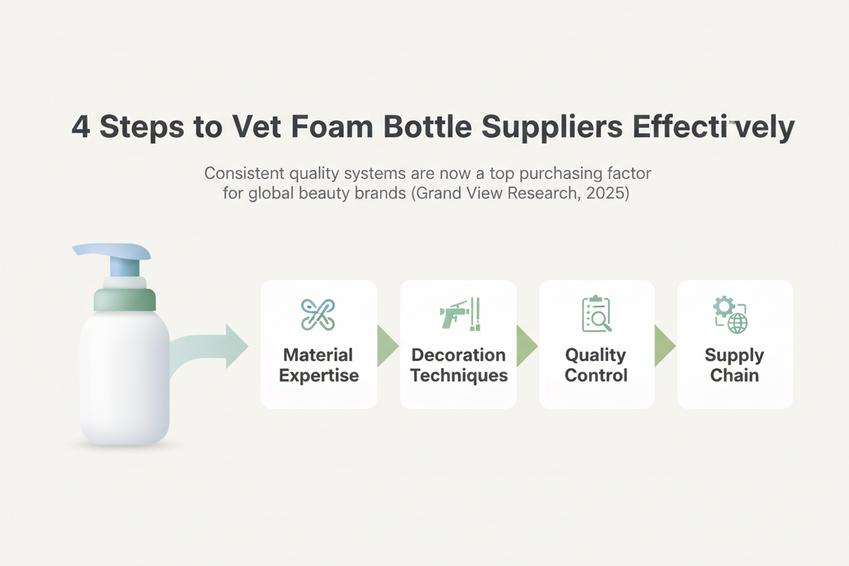
Assess Material Expertise and Injection/Blow Molding Capabilities
When sourcing an empty foam bottle, start with materials and forming technology.
-
Material compatibility
-
Review supported Plastic resin types
- PETG for clarity and premium feel
- HDPE for chemical resistance
- Polypropylene for durable pump systems
-
Confirm testing for formula stability inside each foam container
-
-
Processing capability
-
Core methods:
- Injection molding for precise neck finishes
- Blow molding for uniform wall thickness
-
Tooling depth:
- Custom molds
- Rapid prototyping
- Scalable Bottle manufacturing
-
A seasoned supplier should explain how each empty foam bottle design matches resin flow, cooling time, and pump fit—no vague answers.
Verify Decoration Techniques: Silk Screening to Metallization
Branding turns a plain empty foam bottle into shelf candy.
-
Printing methods
- Silk screening
- Hot stamping
- Labeling
- Metallization
-
Customization options
- Frosted finish
- Gradient coating
- Logo embossing
A sharp supplier aligns decoration with your Branding plan and keeps adhesion strong even on curved foam bottle surfaces. Topfeelpack, for example, coordinates surface treatment and pump assembly so the final empty foam bottle doesn’t scratch or fade during shipping.
Evaluate Quality Control, Sterilization, and Assembly Line Processes
Quality isn’t just talk; it’s daily discipline around every empty foam bottle.
-
Quality assurance
- In-house Product inspection
- Monitored Defect rates
- Traceable batch coding
-
Certifications and standards
- Valid ISO certification
- Controlled Cleanroom standards
- Verified Sterilization methods
Grand View Research noted in a 2025 packaging outlook that consistent quality systems are now a top purchasing factor for global beauty brands.
-
Production flow
- Automated pumps on the Assembly line efficiency
- Leak testing for each foam dispenser bottle
A dependable foam container supplier should welcome audits, not dodge them.
Confirm Supply Chain Management and Technical Support Services
Supply can’t stall when demand spikes for your empty foam bottle line.
-
Logistics
- Stable Inventory management
- Clear Lead times
- Flexible Shipping routes
-
Service layer
- Responsive Technical assistance
- Ongoing Product development support
- Reliable After-sales service
Topfeelpack backs its empty foam bottle programs with steady global distribution and hands-on engineering feedback, helping brands scale from startup trials to full container loads without drama.
High-Volume Orders: Foam Bottle Pricing Tiers
Ordering an empty foam bottle in bulk isn’t just about bigger numbers—it’s about smarter math. From startup trials to serious scale-ups, pricing shifts with volume, specs, and how you manage your foam pump bottle supply chain.
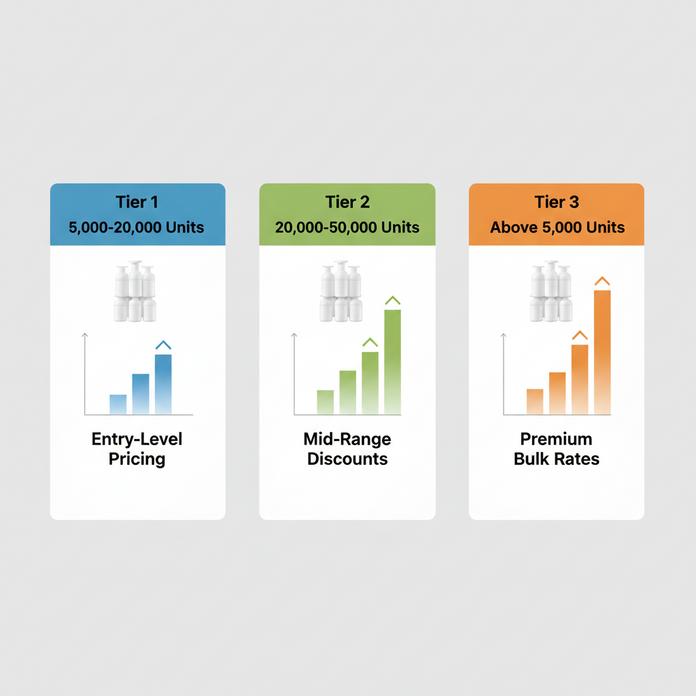
Tier 1: Entry-Level Pricing for 5,000–20,000 Units
At this range, brands test the waters with an empty foam bottle run that keeps unit cost under control while limiting initial investment.
-
Cost Structure Basics
- Manufacturing cost stays predictable due to standard molds.
- Production scale remains moderate, so tooling changes are minimal.
- Supplier quotes often reflect stable resin pricing.
-
What You Typically Get
- Standard white or clear foam bottle bodies
- Basic pump compatibility
- Simple silk printing
-
Cost-Effectiveness Drivers
- Limited decoration lowers risk.
- Streamlined QC keeps rejection rates low.
For indie brands, this empty bottle strategy balances cost-effectiveness with manageable exposure. Topfeelpack supports this tier with ready molds, making small-batch foam pump bottle sourcing feel less stressful and more doable.
Tier 2: Mid-Range Discounts at 20,000–50,000 Units
This is where things start to click.
- Volume discounts kick in.
- Negotiated rates improve as order frequency increases.
- Economies of scale reduce per-unit overhead.
Now brands often explore:
- Custom color matching
- Hot stamping logos
- Partial PCR content for eco claims
The shift isn’t only price—it’s positioning. Supply chain efficiency improves because bulk purchasing stabilizes material flow. With smarter cost optimization, each empty foam bottle becomes more competitive on shelf. Many growing labels choose Topfeelpack here to align foam bottle design with branding goals while maintaining margin comfort.
Tier 3: Premium Bulk Rates Above 50,000 Units
At this level, scale transforms everything.
-
Strategic Cost Advantages
- Access to wholesale pricing through long runs
- Preferential resin allocation via long-term contracts
- Expanded manufacturing capacity scheduling
-
Operational Edge
- Integrated distribution channels reduce transit lag
- Stronger logistical advantages in container planning
- Direct collaboration builds strategic partnerships
Advanced lightweighting trims grams off every empty foam bottle. Over tens of thousands of foam pump bottle units, that difference adds up fast.
Brands locking in annual projections for an empty foam bottle program often secure stable supply and sharper margins. With Topfeelpack managing planning and output, scaling an empty bottle line above 50k units feels less like a gamble—and more like a calculated move.
Scale Your Brand: Bulk Empty Foam Bottle Buying Tips
Bulk buying an empty foam bottle isn’t just about price. It’s about shaping foam bottle packaging that feels right in hand, looks sharp on shelf, and scales without drama.
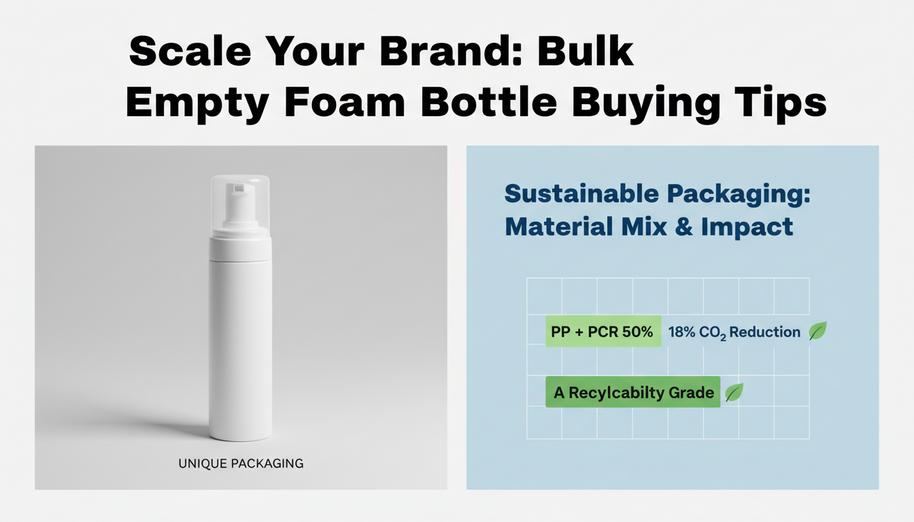
Optimize Custom Tooling and Prototyping for Unique Packaging
When planning a standout empty foam bottle, smart brands focus on layered execution:
-
Concept & Design Iteration
- Define brand cues tied to unique packaging
- Sketch ergonomic grip zones
- Test pump force for foam consistency
-
Engineering & Mold Development
- Conduct a feasibility study on wall thickness
- Align material selection with formula compatibility
- Refine mold development for repeat accuracy
-
Prototype Validation
- Short-run prototyping for stress tests
- Drop and leak trials
- User handling feedback
A reliable partner like Topfeelpack streamlines custom tooling so your empty foam bottles move from sketch to shelf fast, without endless rework.
Leverage Post-Consumer Resin and Lightweighting for Sustainability
Sustainability is now a buying trigger for every foam pump bottle line.
-
Material Strategy
- Integrate post-consumer resin
- Increase resource efficiency
- Ensure recyclable packaging compliance
-
Structural Optimization
- Apply lightweighting without pump failure
- Reduce resin per empty foam bottle
- Lower total carbon footprint
“Sustainable packaging remains one of the fastest-growing investment priorities through 2025,” notes McKinsey’s 2024 Global Packaging Survey.
| Material Mix | PCR % | Weight (g) | CO₂ Reduction % | Recyclability Grade |
|---|---|---|---|---|
| Virgin PP | 0 | 28 | 0 | B |
| PP + PCR | 30 | 26 | 12 | A- |
| PP + PCR | 50 | 24 | 18 | A |
| HDPE Blend | 40 | 25 | 15 | A- |
| Lightweight PP | 30 | 22 | 22 | A |
Topfeelpack supports eco-friendly materials that keep your empty foam bottle competitive and clean.
Streamline Labeling, Offset Printing, and Hot Stamping Workflows
Decoration drives shelf pull for any empty foam bottle.
- Align artwork integration with mold curves.
- Match labeling solutions to application speed.
- Sync offset printing color proofing with bulk output.
- Lock in premium accents via hot stamping and other decoration techniques.
Under one roof:
- Pre-press checks
- Automated application process
- Final finishing options review
That tight coordination keeps foam bottle packaging consistent across thousands of empty foam bottles.
Build Long-Term Relationships with Global Distribution Partners
Scaling an empty foam bottle program takes structure.
-
Supply Chain Management
- Demand forecasting
- Safety stock planning
- Quality audits
-
Logistics & Access
- Trusted logistics partners
- Stable international shipping lanes
- Flexible warehousing solutions
-
Vendor Relationships
- Transparent contracts
- Technical upgrades
- Broader market access
Topfeelpack strengthens global distribution ties so your empty foam bottles arrive on time, every time, without last-minute headaches.
FAQs about Empty Foam Bottle
What should I check before choosing an empty foam bottle supplier?
Choosing the right partner shapes your product’s feel in the customer’s hand. Look beyond price:
-
Manufacturing strength
- Injection molding and blow molding expertise for PET plastic, PP plastic, or HDPE plastic
- Stable assembly line for pump dispenser, foaming mechanism, dip tube, and spring fitting
-
Quality & safety
- Strict quality control for leak-proof seal performance
- Sterilization standards for skincare and cosmetic formulas
-
Service depth
- Custom tooling and prototyping for customizable shape and ergonomic design
- Large-scale production, global distribution, and responsive technical support
A capable supplier protects both your formula and your brand reputation.
Which material is best for an empty foam bottle in cosmetics?
Material choice changes texture, shelf life, and shelf appeal.
- PET plastic: Transparent finish, strong recyclability, ideal for showcasing liquid clarity.
- PP plastic: Excellent chemical resistance, reliable with active formulas.
- HDPE plastic: Added UV protection and durability for light-sensitive blends.
- Glass: Premium weight, high chemical stability, pairs well with frosting or metallization.
- Eco options: Recycled content like post-consumer resin (PCR) or biodegradable polymer reduces carbon footprint and supports eco-friendly materials goals.
Match the bottle to your formula’s pH, viscosity, and desired brand image.
How can I customize an empty foam bottle for stronger brand impact?
Design is where function meets emotion.
Structure & components
- Adjustable actuator and spring for smooth foam output
- Overcap design for travel safety
- Refillable packaging options to support sustainability
Visual identity through decoration techniques
- Silk screening for clean, lasting logos
- Hot stamping for metallic accents
- Labeling or offset printing for detailed artwork
- Matte finish, transparent finish, or full metallization for shelf drama
Balanced decoration techniques, thoughtful lightweighting, and smart supply chain management turn a simple empty foam bottle into a signature piece customers remember.
References
- [The Future of Global Packaging to 2028 – Smithers – https://www.smithers.com/services/market-reports/packaging/the-future-of-global-packaging-to-2028]
- [Cosmetic Packaging Market Size | Industry Report, 2030 – Grand View Research – https://www.grandviewresearch.com/industry-analysis/cosmetic-packaging-market]
- [Sustainability in packaging 2025: Inside the minds of global consumers – McKinsey – https://www.mckinsey.com/industries/packaging-and-paper/our-insights/sustainability-in-packaging-2025-inside-the-minds-of-global-consumers]

