 English
  Español de México
  Français
  Deutsch
  Português do Brasil
  Italiano
  한국어
한국어  ไทย
ไทย  Русский
  日本語
日本語  Polski
  Svenska
  Türkçe

Creative Packaging: Unique Lip Balm Jars to Make Your Brand Pop
August 20,2026
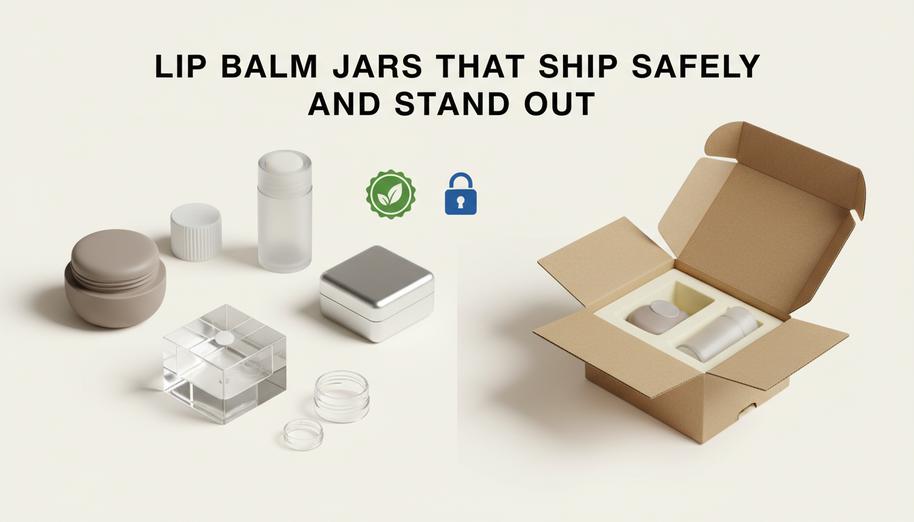 “Small balm containers create large sourcing decisions. Appearance must work with material, capacity, closure, decoration, filling, and shipping.
This guide connects packaging aesthetics with practical selection and transit protection.”
Key Highlights for Lip Balm Jars
- Material Choices: compare polypropylene, glass, aluminum, and acrylic by weight, finish, and compatibility.
- Capacity & Closure: match the fill size, neck, and lid.
- Decoration & Compliance: plan decoration and request market-specific documentation.
- Transit Protection: limit movement with cartons, inserts, dividers, or wrap.
 4 Key Materials For Premium Lip Balm Jars
 4 Key Materials For Premium Lip Balm Jars
Review material, capacity, compatibility, decoration, filling, and daily handling with the wider packaging aesthetics plan for commercial production.
Polypropylene Jars with Matte Coating (Five Gram Capacity)
A polypropylene plastic jar is lightweight, while a matte coating adds a satin texture.
- For a five gram cosmetic container:
- the small body travels easily;
- the muted surface looks clean and modern;
- everyday handling suits the lightweight plastic body.
Topfeel Makeup works with PP and customized surface treatments.
Glass Containers Featuring Frosted Texture (Ten Milliliter)
A glass container gives a ten milliliter jar noticeable weight.
- Frosted texture softens the normally transparent appearance.
- That finish supports a luxury packaging style.
- Glass can support an eco-friendly brief when refill and recovery routes are evaluated.
Aluminum Tins with Soft Touch Finish (Fifteen Gram)
An aluminum tin suits portable balm.
- Portability
- Fifteen gram capacity provides product volume.
- Travel-friendly sizing limits bulk.
- Handling
- A soft touch finish warms the metal packaging feel.
- A secure lid protects solid formulas.
Confirm the material grade, decoration, and design implications for recovery.
Acrylic Jars Boasting Glossy Finish (Thirty Milliliter)
An acrylic jar creates a glass-like appearance. Its crystal clear body and glossy finish emphasize color.
A thirty milliliter format provides decoration area. Check double-wall construction for handling and recovery requirements rather than relying on a broad environmental claim.
Bulleted Guide: 4 Steps To Jar Branding
Plan artwork, treatment, documentation, and shipping as one branding workflow.
Step 1 – Design Your Logo for Silk Screen Printing
- Build the artwork as a Vector graphic so resizing stays clean.
- Keep Typography readable on small balm jars.
- Use practical lines and a Transparent background.
- Lock down print details early.
- Specify each Pantone color.
- Test Ink adhesion and Print resolution. Topfeel Makeup can match decoration with geometry.
Step 2 – Choose a UV Coating or Metallized Plating
A UV Surface treatment can create a Gloss finish; test the decorated component.
- For a premium look:
- Electroplating creates reflective accents and Visual aesthetics.
- For softer styling:
- A Matte texture cuts shine and feels smooth in hand.
Choose the finish within a small-business packaging plan covering color, artwork, geometry, and handling.
Step 3 – Ensure FDA Compliant and BPA Free Materials
- Check the base material.
- Polypropylene is available for cosmetic packaging.
- Confirm any Food-grade plastic or Non-toxic polymer claim with supplier documentation.
- Check compliance.
- Review the applicable FDA Regulatory standard.
- Request relevant BPA-free and Chemical safety records for Consumer health review.
Topfeel Makeup provides specifications and samples for cosmetic packaging for a small business.
Step 4 – Pack in Master Carton with Foam Insert
- Start with a sturdy Corrugated box.
- Add Custom cushioning for placement.
- Use foam or dividers for Impact absorption.
- Secure the packed balm containers.
- Shrink wrap improves Product security.
- Good Shipping protection limits rubbing and movement, improving Transit safety.
🎨 Turn artwork into a system: Coordinate logo scale, surface treatment, material documentation, and transit protection before tooling. Topfeel Makeup supports 1-day design and 3-day 3D prototyping, helping teams review the branded pack before production commitments.
🔍 Compare the lip packaging collection and design guidance to prepare a finish-and-structure brief.
 Jar Vs. Tube: Which Suits Your Brand?
 Jar Vs. Tube: Which Suits Your Brand?
Compare jars and tubes by application, portability, decoration, formula, filling, and sales channel.
Jar
Jars provide a wide opening and broad decoration area.
- Packaging character
- A wide opening gives direct access to thicker balm.
- Glass material adds weight and clarity for a luxury aesthetic.
- A screw-on lid keeps routine use familiar.
- A wide opening gives direct access to thicker balm.
- Brand presentation
- The surface provides space for a custom label or print.
- Their compact size works in bags and gift sets.
- Still, finger application makes cleanliness part of format preference.
- The surface provides space for a custom label or print.
Tube
Tubes prioritize direct, portable application.
- For squeezable balm
- A squeeze design with an applicator tip avoids finger dipping.
- This supports hygienic dispensing and control.
- Lightweight plastic material keeps packaging portable.
- A squeeze design with an applicator tip avoids finger dipping.
- For solid balm
- A twist mechanism raises the stick as needed.
- The format is pocket friendly for travel convenience.
- Compared with jars, tubes trade decoration space for direct dispensing; compare tube packaging principles and wholesale tube considerations.
- A twist mechanism raises the stick as needed.
💄 Choose by user behavior: Compare application before appearance.
🧭 Topfeel Makeup develops PP packaging and custom molds for format-specific decisions. Review the balm tube range and twist-up structure to compare dispensing, portability, decoration area, and formula fit before approving the format.
Packaging Pain? Creative Lip Balm Jar Fixes
 Packaging Pain? Creative Lip Balm Jar Fixes
Treat closure fit, branding, documentation, and shipping as connected packaging decisions.
Leaky Lids? Switch to Tamper Evident Screw Caps
For lip balm jars, closure fit matters as much as appearance.
- Closure setup:
- Pair tamper evident caps and screw caps with the exact thread design of the plastic jars.
- Test filled jars.
- Check leakproof seals at several angles.
- Confirm safety bands break visibly while retaining secure closures.
| Test | Sample condition | Typical check |
|---|---|---|
| Upright hold | 24 h | 0 leaks |
| Inverted hold | 24 h | 0 leaks |
| Drop test | 1 m | 0 openings |
| Torque check | 10 jars | 100% recorded |
These figures are practical test targets, not universal regulatory limits.
Bland Appearance? Add Hot Stamping or Laser Engraving
A plain jar can gain identity without changing shape.
- Hot stamping
- Apply metallic foil for a custom finish.
- Place a brand logo away from wear.
- Laser engraving
- Create surface decoration.
- Use fine detailing for a restrained aesthetic design.
Regulatory Worries? Opt for ISO Certified, REACH Compliant Options
Collect documentation before approving the specification.
- Supplier checks:
- Confirm the manufacturer’s ISO certified scope.
- Request evidence for REACH compliant material claims.
- Material checks:
- Review material safety records and safety standards.
- Verify cosmetic grade, regulatory compliance, and eco-friendly materials claims.
Damage in Transit? Use Protective Divider and Shrink Wrap
Use protective dividers or fitted packaging inserts to separate components.
- Add shrink wrap for tighter unit control.
- Match cartons to load weight for transit safety.
- Add shock absorption where drops are likely.
- Finish with stable pallet loads and secure packaging, then select relevant transit test procedures for shipping protection.
🧪 Resolve connected packaging risks: Tamper-evident caps, hot stamping, documentation, and transit protection should follow one approval path rather than separate late-stage fixes.
📋 Topfeel Makeup provides detailed test reports and final packaging inspection. Use the lip packaging collection and small-business packaging guide to assemble the four-part specification, then submit requirements for sampling and review.
References
- Facts About Glass — gpi.org
- Four Keys to Circular Recycling — aluminum.org
- Pantone Color Systems Explained — pantone.com
- Regulations Related to Cosmetics from Title 21 of the Code of Federal Regulations — fda.gov
- ISO Certification — iso.org
- REACH Regulation — environment.ec.europa.eu
- Environmental Claims: Summary of the Green Guides — ftc.gov
- Test Procedures — ista.org

