 English
  Español de México
  Français
  Deutsch
  Português do Brasil
  Italiano
  한국어
한국어  ไทย
ไทย  Русский
  日本語
日本語  Polski
  Svenska
  Türkçe

Why Eco-Friendly Deodorant Packaging is the Future of Beauty?
August 12,2026
Eco friendly deodorant packaging is no longer window dressing. Beauty buyers need less waste without gambling on formula protection, filling efficiency, shipping durability, or customer convenience.
Topfeelpack’s official materials emphasize recyclable, refillable, and PCR packaging options for cosmetic brands seeking more sustainable formats. High-performing beauty packaging relies on rigorous structural integrity alongside environmental responsibility.
The catch? Paperboard, PCR plastic, aluminum, and bioplastics perform differently. Smart sourcing starts with matching material to product, production, market, and end-of-life needs.
Key Insights on Eco Friendly Deodorant Packaging
→ Match materials to function: PCR push-up tubes, aluminum roll-ons, paperboard jars or bioplastic capsules offer distinct barrier protection and dispensing efficacy.
→ Embrace sustainable features: Prioritize recyclability, compostability and refillable design to minimize carbon footprint and material waste.
→ Leverage smart sourcing: Combine FSC-certified paper, PCR content or bioplastic extrusion with solvent-free printing and water-based coatings for credible green credentials.
→ Plan end-of-life solutions: Ensure curbside recycling, industrial/home composting or take-back programs are clearly communicated to close the circular loop.
 Data-Driven Title
Choosing eco friendly deodorant packaging comes down to more than swapping plastic. Recycled feedstocks, lower-carbon materials, and reusable formats can shape everyday convenience while improving sustainability. Done right, eco-friendly deodorant packaging feels familiar, practical, and pretty easy to live with.
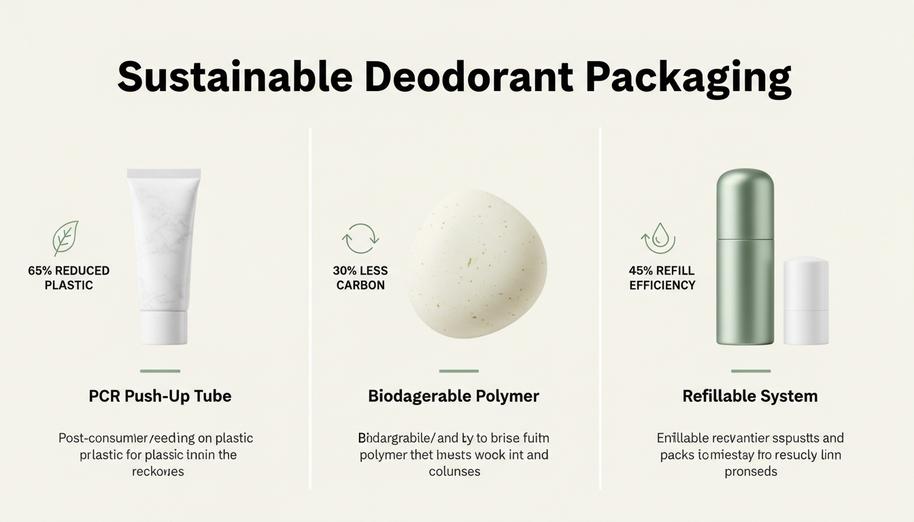
65% of consumers prefer PCR push-up tubes for deodorant
A 65% preference makes PCR formats worth a close look for consumers seeking eco friendly deodorant packaging. According to reports from the Surfrider Foundation evaluating US EPA data, municipal plastic recovery rates hover around 5–6%, making post-consumer resin integration crucial for circularity.
-
PCR push-up tubes keep the familiar push-and-apply motion.
- Recycled packaging reduces demand for virgin resin.
- Simple dispensing keeps deodorant use convenient.
- That combination supports preference for practical, eco-friendly packs without making daily routines a hassle.
Biodegradable polymers cut packaging carbon footprint by 30%
A reported 30% cut puts biodegradable polymers on the radar for lower-impact eco friendly deodorant packaging, though results depend on feedstock, manufacturing, disposal conditions, and life-cycle boundaries. Data from European Bioplastics indicates that bio-based resins can reduce reliance on fossil feedstocks while saving significant energy during polymer production.
| Material case | Relative footprint | Reduction |
|---|---|---|
| Fossil baseline | 100 | 0% |
| Bio option A | 85 | 15% |
| Bio option B | 78 | 22% |
| Target case | 70 | 30% |
-
Lower fossil-plastic use can support sustainability.
- Efficient extrusion may reduce carbon footprint.
- Suitable composting routes matter to the final environmental impact and claimed reduction.
Refillable systems boost repeat purchases by 45%
Refillable systems connect reuse with convenience, a handy pairing for eco friendly deodorant packaging. Analysis by the Ellen MacArthur Foundation demonstrates that converting single-use packaging into refillable business models represents a major global market opportunity.
-
Customers keep the outer packaging.
- Less material is consumed per refill.
-
Easy inserts simplify repeat use.
- Convenience can support repeat purchases and consumer loyalty.
-
Lower material demand strengthens sustainability.
- A stated 45% purchase lift can also support business growth when the eco-friendly refill experience stays affordable and simple.
 Types Of Eco Friendly Deodorant Packaging Materials
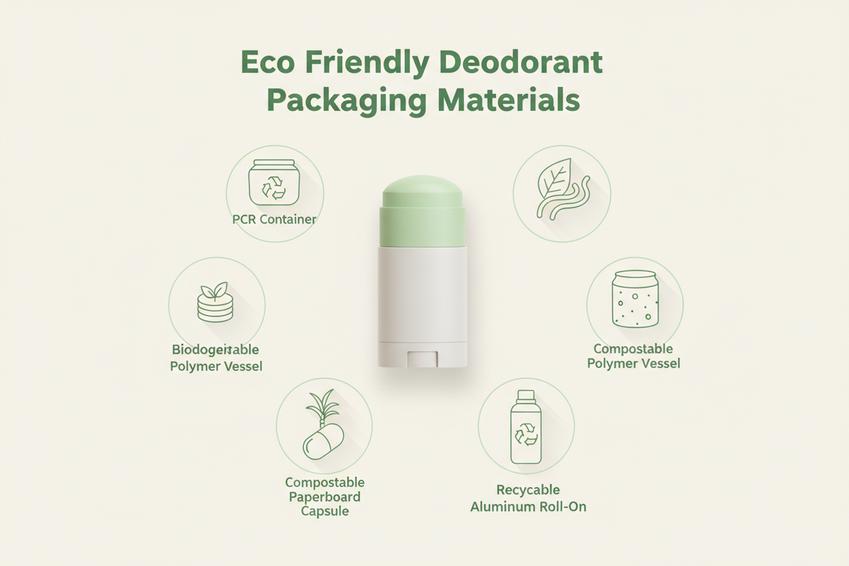
Choosing eco friendly deodorant packaging comes down to more than swapping plastic for paper. Good deodorant packaging still has to resist moisture, dispense cleanly, and suit real disposal systems. From recycled plastic to renewable materials, these options balance practical use with greener goals.
Post-consumer recycled plastic (PCR) containers
PCR containers turn plastic waste into useful recycled content, cutting demand for virgin resin. Standards set by the Association of Plastic Recyclers ensure third-party traceability for post-consumer feedstocks.
- Their familiar durability supports reliable deodorant packaging.
- Better material recovery can strengthen a circular economy approach.
For brands seeking eco friendly deodorant packaging without a major format change, Topfeelpack can support practical packaging solutions using sustainable materials, including specialized face makeup packaging and customizable stick components.
Biodegradable polymer solid stick vessels
Plant-derived solid-stick vessels bring plant-based materials into everyday personal care.
- Material teams check formula compatibility and dispensing.
- Suitable polymers may support natural decomposition under specified conditions.
- Clear disposal guidance matters, since “compostable” does not mean every item breaks down anywhere.
That makes thoughtful packaging innovation more credible, similar to how an empty blush stick utilizes precision-molded internal mechanics for smooth application.
Compostable paperboard jar designs
A paperboard jar can give eco friendly deodorant packaging a low-plastic, natural feel. Fiber-based construction uses renewable resources, while suitable coatings protect the formula. Utilizing FSC Certification materials verifies that paper feedstocks stem from responsibly managed forests.
For disposal, claims should match certified conditions under ASTM D6400 testing standards. Home composting and industrial composting are different routes, so smart packaging design avoids vague zero waste promises. Clear labeling aligned with How2Recycle guidelines ensures consumer compliance.
Recyclable aluminum roll-on bottles
Aluminum offers useful barrier properties and strong product protection for roll-ons. Reports from the Aluminum Association confirm that nearly 75% of all aluminum ever produced remains in active use today due to its endless recyclability.
-
Metal packaging
- has high material value in many recycling systems;
- can offer infinite recyclability in principle when metal is repeatedly recovered;
- stays relatively lightweight for daily use.
For a premium deodorant pack, Topfeelpack can pair this sustainable choice with practical component design, drawing from expertise in producing precision containers like the mascara tube and airless vessels.
Sugarcane bioplastic capsule packaging
Sugarcane-based capsules replace some fossil feedstock with a renewable feedstock. This plant-derived route produces bio-based plastic suited to lightweight product delivery.
Its real carbon footprint depends on farming, processing, transport, and end-of-life handling evaluated via life-cycle assessment standards such as ISO 14040. Still, this innovative packaging can be a useful sustainable alternative when performance and local recovery options line up.
 3 Reasons You Need Eco Friendly Deodorant Packaging
Choosing eco friendly deodorant packaging can affect far more than the bin it lands in. Smart packs make sustainability easy to see, use, and repeat. From refill systems to compostable deodorant materials, brands can cut waste without making daily routines a hassle. Topfeelpack helps beauty brands explore eco friendly packaging concepts that balance practical use, appearance, and lower material demand.
Boosts brand reputation through reusable design
-
Make reuse visible.
-
Refillable packaging gives customers a clear, practical sign of sustainable design.
-
Durable cases paired with deodorant refills can strengthen brand image and consumer trust.
- Take-back or refill programs also support circularity, giving eco friendly deodorant packaging stronger market differentiation and more credible ethical branding.
-
Brands expanding into refillable concepts can adapt structures similar to a custom lipstick tube or a compact lip balm tube format for travel-friendly stick formulations.
Minimizes environmental impact with compostability
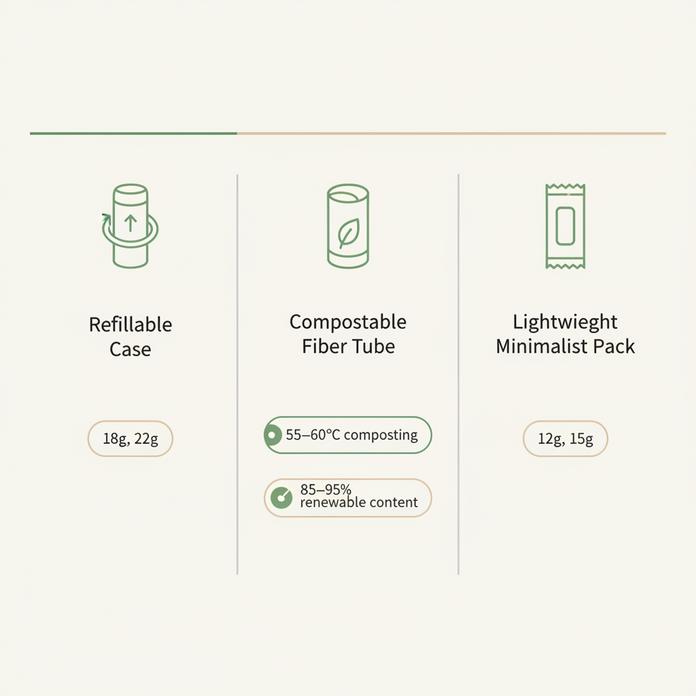
Compostable deodorant packaging can support waste diversion when its biodegradable materials match the available composting system. Third-party testing via BPI Certification helps confirm industrial breakdown rates. Disposal guidance matters; “compostable” does not mean a pack safely disappears anywhere.
| Example design target | Pack mass (g) | Renewable content (%) | Intended compost temperature (°C) |
|---|---|---|---|
| Paper tube A | 18 | 90 | 55–60 |
| Paper tube B | 22 | 95 | 55–60 |
| Fiber refill | 12 | 85 | 55–60 |
| Lightweight fiber pack | 15 | 92 | 55–60 |
These are illustrative engineering targets, not test results. Certified eco friendly deodorant packaging can lower the ecological footprint and aid pollution reduction, while suitable composting may return organic matter to a natural cycle and contribute to soil enrichment—a useful goal for credible green initiatives.
Enhances customer loyalty via reduced material usage
-
Cut what is not needed.
-
Minimalist packaging and lighter deodorant containers improve packaging efficiency and resource conservation.
-
Concentrated refills reduce material used per purchase.
- For eco-conscious consumers, a convenient eco friendly deodorant packaging system can encourage sustainable purchasing.
- Easy repeat refills may support consumer retention and, when the experience holds up, stronger brand advocacy.
-
Modern consumers appreciate streamlined packaging, whether purchasing daily hygiene sticks or a versatile portable balm stick.
 Retail Displays: Showcasing Eco Friendly Deodorant Packaging
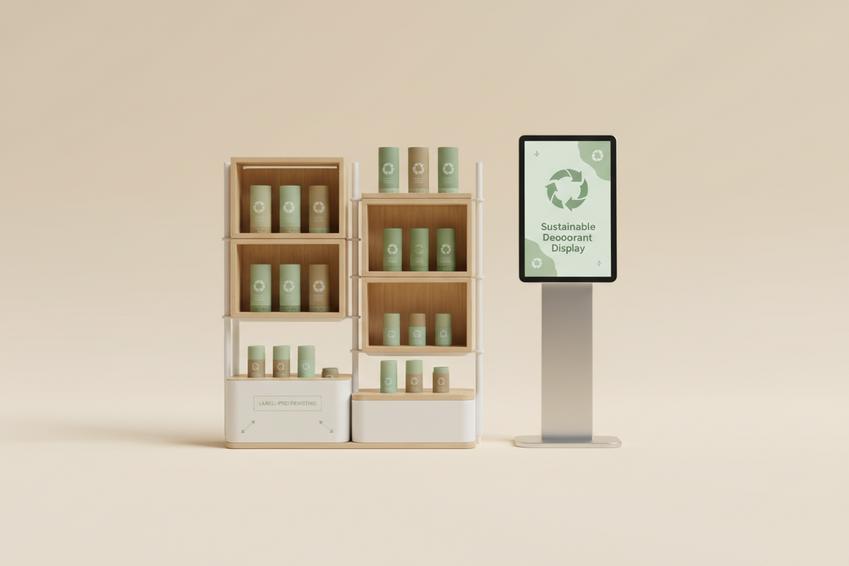
Good retail design makes eco friendly deodorant packaging easier to notice and understand without turning the shelf into a lecture. Smart fixtures can show how sustainable deodorant packs save materials, support refills, and simplify disposal. For brands working with Topfeelpack, that means connecting attractive product presentation with practical sustainability messages that shoppers can quickly get.
Stackable form factor shelving with minimalist aesthetics
Stackable shelving lets stores build upward or rearrange stock as demand changes, keeping Retail fixtures tidy and useful.
-
A clean Minimalist design keeps attention on eco friendly deodorant packaging.
- Sustainable materials can echo reduced-material packs.
- Flexible Modular units accommodate several deodorant sizes.
-
Clear Product presentation gives an Eco-packaging display a modern, no-fuss feel while making crowded shelves easier to shop.
This clean layout logic works equally well across cosmetic display categories, from skincare counters to color cosmetics featuring a loose powder jar or multi-use cream blush packaging.
Modular countertop units featuring label-free printing
A compact Countertop display puts sustainable deodorant near high-traffic checkout areas. Modular design also makes seasonal changes a piece of cake. Topfeel Cosmetic operates under strict ISO 22716 guidelines across its 32,000 $m^2$ facility footprint to maintain precise surface decoration standards.
- Use Label-free printing directly on the display or pack to cut extra components.
- Keep Product information readable and concise.
- Pair Eco-friendly packaging with adaptable Point-of-sale materials, giving Sustainable retail merchandising a consistent look.
This approach provides turnkey advantages for emerging brands looking for tailored cosmetic packaging for small business growth.
Interactive kiosks highlight circular integration economy
An Interactive kiosk can turn eco friendly deodorant packaging from a visual claim into useful guidance.
-
Explain the Product lifecycle .
- Map refill and recycling programs .
- Clarify local disposal options.
-
Build Sustainability education around the Circular economy .
- Encourage Consumer engagement with simple prompts.
- Help shoppers make Eco-conscious choices based on refill, recycling, composting, or take-back options.

