 English
  Español de México
  Français
  Deutsch
  Português do Brasil
  Italiano
  한국어
한국어  ไทย
ไทย  Русский
  日本語
日本語  Polski
  Svenska
  Türkçe

Comparing Materials: Which Cosmetic Tube Packaging Fits Your Product?
August 04,2026
In cosmetic tube packaging, one wrong material choice can quietly wreck your product—textures shift, scents fade, and suddenly your brand feels off before it even hits the shelf.
At scale, that slip costs real money and credibility. Smart buyers cut through the noise and match formula, barrier strength, and brand vibe from day one, locking in performance, shelf life, and a look customers trust without second guessing every shipment that arrives.
Reading Notes: Cosmetic Tube Packaging Essentials
➔ Material Match : Align PE, PP, PETG or laminated plastic to your formula’s flexibility, barrier needs and aesthetic.
➔ Structure Selection : Choose monolayer for cost-efficiency, co-extruded for EVOH barrier strength, or airtight designs for prolonged shelf life.
➔ Sustainability Check : Weigh PCR, bio-resin or sugarcane plastics against longevity and recyclability goals for eco-friendly brand appeal.
 Cosmetic Tube Packaging Demystified: Key Material Differences
Cosmetic, tube, and packaging choices can feel confusing, but it’s really about matching formula needs with the right build. Understanding the key material differences between HDPE and PET across resin density, layer construction, and thermal tolerances allows procurement teams to make smarter, long-term decisions for cosmetic packaging for small business or enterprise-level rollouts.
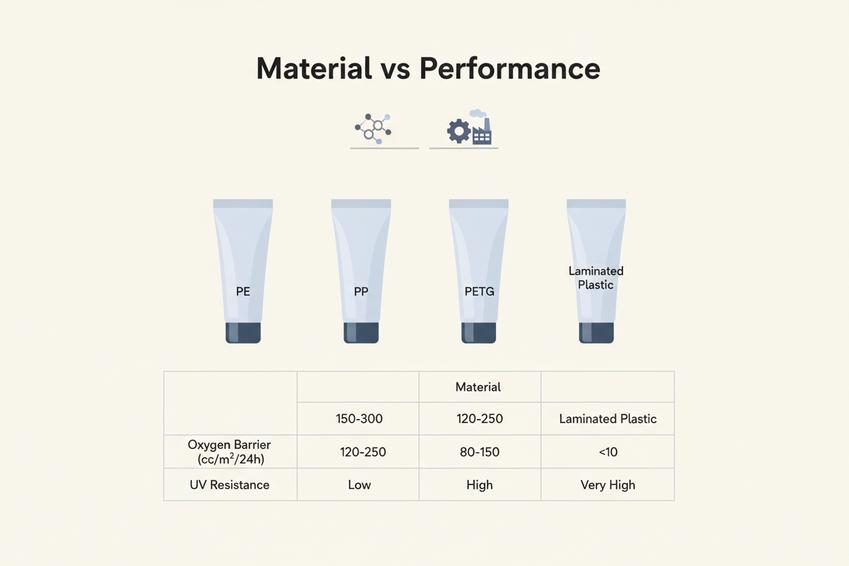
Material Composition Breakdown: PE, PP, PETG, and Laminated Plastic
-
Core resins in cosmetic tube packaging :
- PE : soft squeeze, great for creams
- PP : firmer walls, stronger chemical resistance
- PETG : clear look, solid UV stability
- Laminated Plastic : layered polymer + aluminum for barrier
- How selection flows
- Formula sensitivity → pick resin
- Shelf life goals → add barrier layer
- Visual needs → choose clarity vs opacity
Quick data snapshot:
| Material | Oxygen Barrier (cc/m²/day) | UV Resistance |
|---|---|---|
| PE | 150–300 | Low |
| PP | 120–250 | Medium |
| PETG | 80–150 | High |
| Laminated Plastic | <10 | Very high |
Tube Structure Varieties: Monolayer, Co-extruded, and Airtight Designs
-
Structure drives performance in cosmetic tube packaging :
- Monolayer → simple, budget-friendly
- Co-extruded ( multi-layer ) → adds EVOH barrier tube protection
- Airtight Designs → keeps air out, boosts formula life
- Build logic
- Base layer ( tube structure )
- Barrier core
- Outer aesthetic layer
- ✦ Result: better tube design without overbuilding cost
Functional Properties Explained: Barrier Protection and UV Stability
Short takes that matter in daily use:
- Barrier Protection blocks oxygen, slows oxidation
- Moisture barrier keeps texture stable
- Light protection supports actives
- Chemical resistance avoids interaction with packaging
In cosmetic tube packaging, gels and serums benefit most. Utilizing multi-layer structures backed by the high-barrier films market trends ensures formula longevity. A tighter oxygen barrier + solid UV Stability means fewer preservatives and longer freshness. Simple, but it changes performance a lot.
Manufacturing Elements: Extrusion Process, Mold Design, and Neck Finish
- Production flow inside cosmetic tube packaging
-
Extrusion Process forms the body
- controls wall thickness
- sets flexibility
-
Mold Design shapes shoulder
- defines strength
- aligns tube head geometry
-
Neck Finish standardization
- ensures cap fit
- supports applicators
- Small tweaks in manufacturing or tooling can shift feel from flimsy to premium. That’s why good production planning matters as much as material choice. Topfeel subjects all custom mold necks to strict optical image tests, where any dome deviation exceeding $0.05\text{ mm}$ results in rejection.
 Which Tube Material Suits Your Formula?
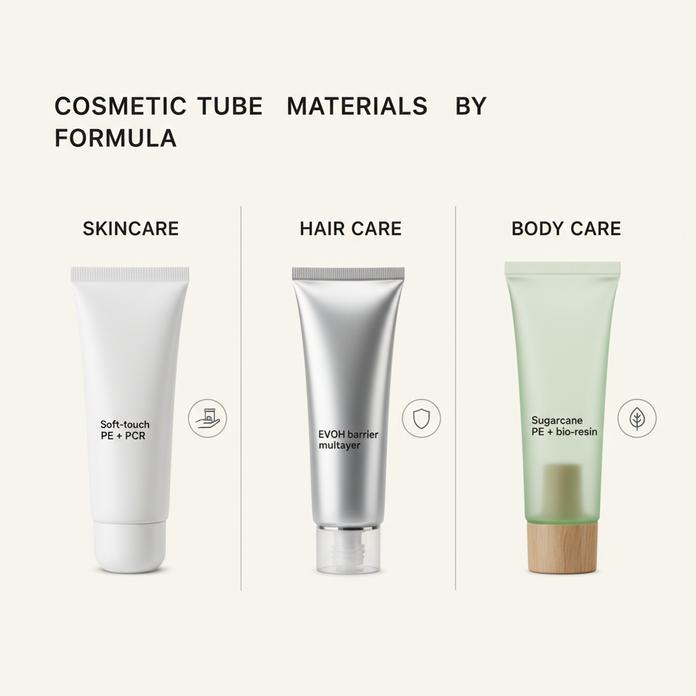
Picking the right cosmetic tube packaging isn’t just about looks; it’s how your formula survives, feels, and sells. From soft-touch finishes to barrier tech, each material shifts performance. Here’s a friendly breakdown so your cosmetic tube, tube packaging, and cosmetic packaging tube choices actually match your product vibe.
For Skincare Products: Soft-touch PE vs. PCR Material Options
-
Core picks for Skincare in cosmetic tube packaging:
-
Polyethylene soft-touch tubes
- Finish: Soft-touch feel improves grip for Lotion and Serum
- Function: controlled squeeze, less product waste
- Fit: premium daily routines with tactile appeal
-
Post-consumer Recycled PCR blends
- Impact: more Sustainable, lowers virgin plastic use
- Trade-off: slightly varied color, still solid durability
- Fit: eco-focused lines that still need reliable cosmetic tube packaging
-
-
How Topfeelmakeup aligns:
-
Material tuning
- Outer layer: smooth PE for feel
- Inner layer: PCR ratio adjusted for strength
-
Branding finish
- Matte vs. satin tuned for shelf pop
-
Brands developing premium emulsions frequently combine tactile PE shells with a customized lip serum tube portable or dedicated face makeup packaging format to maintain formula purity.
Hair Care Solutions: EVOH Barrier Multilayer Tubes for Preservation
-
Problem path
- Shampoo and Conditioner lose actives via Oxidation
-
Material answer
-
Multilayer structure with EVOH Barrier
- Oxygen ingress ↓
- Shelf-life ↑
-
-
Build logic in cosmetic tube packaging
- Outer PE → print + squeeze
- Middle EVOH → protection
- Inner layer → formula compatibility
-
Result
- Fragrance stays true; actives last longer
Topfeelmakeup dials barrier thickness so performance meets cost—no overkill, no shortcuts. Incorporating grade-specific EVOH resin specifications with density ranges between $1.10\text{–}1.22\text{ g/cm}^3$ guarantees oxygen transmission rates drop to $0.01\text{–}0.05\text{ cc/m}^2\text{/day}$.
Body Care Items: Sugarcane Plastic and Bio-resin Sustainability
-
Quick view for Body Lotion in cosmetic tube packaging:
-
Sugarcane PE
- Plant-based, Renewable, lowers Carbon footprint
-
Bio-resin blends
- Eco-friendly with familiar handling
-
-
Decision flow
-
If brand story = green-first
- choose sugarcane content ≥ mid ratio
-
If cost-sensitive
- blend bio-resin with standard PE
-
-
Finish notes
- Texture and color can be tuned so the cosmetic packaging tube still looks premium
Topfeelmakeup keeps these options practical, so your cosmetic tube packaging hits sustainability goals without messing up performance.
 3 Reasons PET Tubes Outperform HDPE Alternatives
When choosing cosmetic tube packaging, small material differences can quietly decide product success. From texture safety to shelf appeal, PET keeps showing up as the smarter pick for modern cosmetic tubes and tube packaging lines.
Superior Chemical Resistance for Cosmetic Formulations
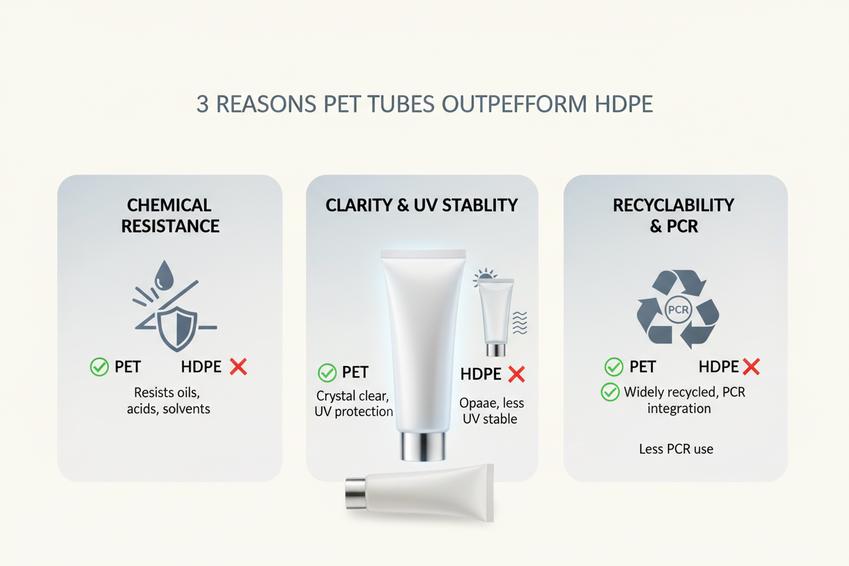
- At the core of cosmetic tube packaging performance sits chemical resistance, and PET handles complex cosmetic formulations without breaking a sweat.
- HDPE can interact with actives; PET maintains product integrity and long-term stability.
-
Material interaction path:
- a. Formula meets packaging material
- b. Compatibility defines shelf life
- c. Poor match → discoloration or leakage
- d. PET avoids this chain reaction
For brands like Topfeelmakeup, switching tube packaging to PET means fewer surprises during storage, shipping, and daily use. Verifying material chemical resistance and inertness ensures full compliance with FDA cosmetic safety guidelines. Short version? Better material compatibility, less risk.
Enhanced Clarity and UV Stability with PETG
- Clear cosmetic tubes matter. PETG delivers standout clarity and reliable transparency.
Key layered advantages:
-
Visual layer
- High-end look boosts shelf appeal
-
Protection layer
- Built-in UV stability supports light protection
-
Formula safety
- Preserves sensitive gels in cosmetic tube packaging
Topfeelmakeup often leans on PETG when brands want cosmetic tube packaging that feels premium but still practical. Exploring detailed thermoformed plastic properties demonstrates why PETG resists impact during shipping while showcasing colored formulations, whether used for lip makeup packaging like lip gloss tubes or specialized mascara tubes.
Recyclability Benefits: PCR Material Integration
♻ Sustainability isn’t a buzzword here—it’s measurable.
- PET supports strong recyclability
- Easy blending with PCR material
- Enables sustainable packaging without losing strength
Step-by-flow inside a circular system:
-
Collection
- Used plastic tubes enter recycling streams
-
Processing
- Converted into recycled content
-
Reintegration
- Back into new cosmetic tube packaging
Topfeelmakeup taps into this loop, aligning with the circular economy while keeping cosmetic tube packaging durable and clean-looking. Adhering to the APR Design Guide for Plastics Recyclability ensures post-consumer resins pass stream sorting without degradation.
 Sustainability vs. Durability: Choosing Tube Materials
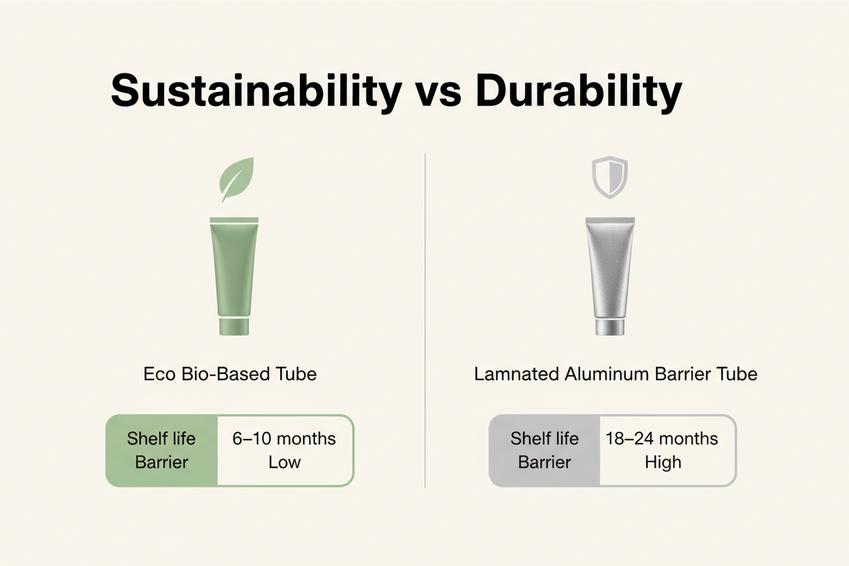
A quick reality check: picking materials for cosmetic tube packaging isn’t just vibes—it’s a trade between shelf life and eco goals. From cosmetic tube packaging choices to how cosmetic tubes packaging performs in heat or light, the material decides a lot. Let’s break it down in a way that actually helps.
Sugarcane Plastic and Bio-resin: Green Appeal and Recyclability
- plant-based direction feels right, but performance still matters
- renewable sources cut fossil dependence
- recyclable streams vary by region
- Start with sugarcane feedstock → processed into bio-plastic
- Blend into bio-resin → mold into cosmetic tube packaging
- Test durability → daily-use ready
Short notes that stick: Eco vibe? yes. Heavy barrier? not really. Brand story? strong.
Nested view:
-
Material base
- eco-friendly inputs
- plant-based origin
-
Performance
- moderate squeeze strength
- suitable for creams, cleansers
-
Packaging fit
- cosmetic tube packaging for low-sensitivity formulas
- cosmetic tubes packaging with greener appeal
Evaluating bio-resins through formal Life Cycle Assessments (LCA) under ISO 14040/14044 guidelines confirms significant carbon footprint reductions. Topfeelmakeup taps this route when brands want cosmetic packaging tubes—including eco-conscious lipstick tubes and facial care containers—that talk sustainability without overpromising performance.
Aluminum Barrier and Laminated Plastic: Ultimate Product Preservation
Symbol snapshot: • high protection • strong stability • longer preservation
Deep dive with structure:
-
Core build
-
multi-layer system
- outer plastic
- middle aluminum barrier
- inner safe-contact layer
-
-
Functional gains
- blocks oxygen, UV
- protects actives
-
Best use
- serums, SPF, pharma-grade cosmetic tube packaging
Data view:
| Property | Standard Plastic | Laminated Tube | Aluminum Barrier Tube | Bio-based Tube |
|---|---|---|---|---|
| Oxygen Barrier | Low | Medium | High | Low |
| Light Protection | Low | Medium | High | Low |
| Shelf Life (months) | 6–12 | 12–18 | 18–24 | 6–10 |
| Recyclability | Medium | Low | Low-Medium | Medium-High |
| Cost Level | Low | Medium | High | Medium |
Wrap it tight: If formula stability rules, go layered. If eco messaging leads, rethink. Aligning with regional Extended Producer Responsibility (EPR) policies helps brands balance fees against durability. Smart cosmetic tube packaging balances both—and Topfeelmakeup often blends laminated plastic with a custom airless tube for foundation or a metal tip tube for lip care to stretch performance without ignoring sustainability.
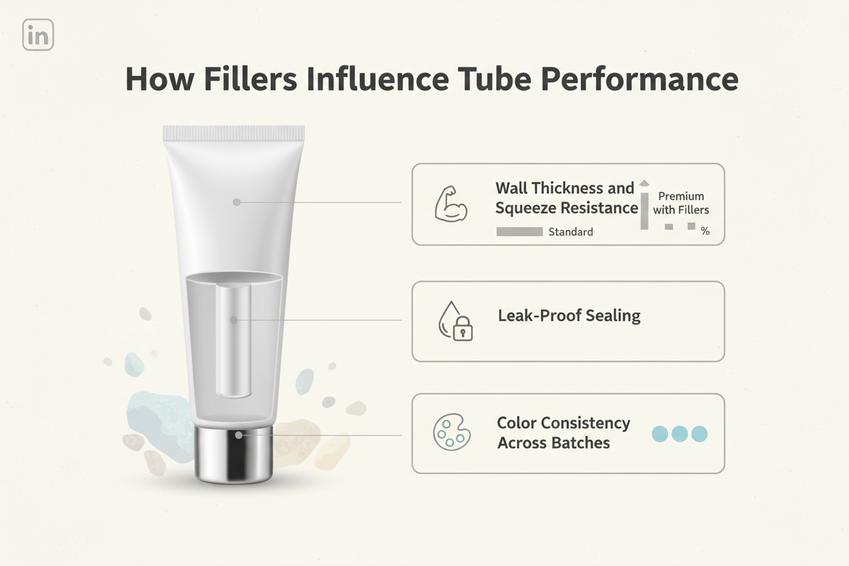 How Fillers Influence Tube Material Performance
A quick heads-up: in cosmetic tube packaging, fillers quietly shape feel, strength, and look. From squeeze to seal to shade, these tweaks matter more than people think, especially for cosmetic tubes and tube packaging used in daily routines.
Impact on Wall Thickness and Squeeze Resistance
- Small shifts in filler content change wall thickness and material stiffness fast
- Users notice it as grip, rebound, and tube flexibility
- Core effects
- material properties rise with mineral load
- higher mechanical strength, lower elasticity
- balance defines squeeze resistance
- Practical tuning in cosmetic packaging tubes
- adjust filler % → target feel
- tweak layer design → keep durability
- validate drop + squeeze cycles
Topfeelmakeup often tunes blends so cosmetic tube packaging feels soft yet controlled, not flimsy. Every batch undergoes 48-hour thermal and humidity testing (50°C to –15°C) and 40-cycle abrasion testing under 500g loads to confirm physical integrity.
Effects on Filling Compatibility and Leak-proof Reliability
Short notes that matter:
- filling compatibility depends on resin–product match
- weak sealing integrity invites leaks
- chemical resistance protection formulas
Process flow:
- screen product interaction risks
- test material porosity and seams
- verify barrier properties under heat
| Factor | Low Filler | Medium | High |
|---|---|---|---|
| Seal strength | High | Stable | Variable |
| Leak rate | Low | Low | Medium |
| Barrier | Medium | High | High |
| Flex fatigue | High | Medium | Low |
| Fill speed | Fast | Stable | Slower |
In cosmetic tube packaging, small mismatches can snowball into returns. Topfeel packaging testing incorporates torque calculation where $\text{Torque} = \text{Thread Diameter} \div 2 \ (\pm 1)$, guaranteeing leak-proof seals on full automated filling lines.
Color Matching Challenges in Custom Tooling and Decoration
Nested view:
-
Color system in tube packaging
-
base resin tone
-
filler pigments shift hue
-
material opacity affects coverage
- thin walls show through
- thick walls mute vibrancy
-
-
Finishing stack
- inks + surface finish (matte, gloss, UV)
- curing impacts color stability
-
Output control
- tooling calibration for custom tooling
- batch checks for aesthetic consistency
Topfeelmakeup keeps cosmetic tube packaging shades tight across runs using D65 light source two-color lamp calibration cards. Meeting FDA cosmetic labeling regulations and contributing to the broader European circular plastics framework allows brands to scale global eye makeup packaging collections effortlessly while staying strictly compliant.
References
- High Barrier Film Materials Market Research Report 2034 – dataintelo.com/Dataintelo
- EVOH RESIN Technical Specifications – vichem.vn/VICHEM
- What Are the Key Differences Between HDPE and PET in Cosmetic Packaging? – jccosmopack.com/JC Cosmopack
- Is PET Plastic Safe? Plastic Safety in Packaging – somewang.com/Somewang
- How to Choose the Right Plastic for Your Thermoformed Packaging – rohrer.com/Rohrer Corporation
- Life Cycle Assessments for Sugar Ingredients – ragus.co.uk/Ragus
- APR Design Guide for Plastics Recyclability – netzerocompare.com/Association of Plastic Recyclers
- Circularity – The Shift to a Circular Economy for Plastics – plasticseurope.org/Plastics Europe
- Extended Producer Responsibility – SPC’s Guide – sustainablepackaging.org/Sustainable Packaging Coalition

