 English
  Español de México
  Français
  Deutsch
  Português do Brasil
  Italiano
  한국어
한국어  ไทย
ไทย  Русский
  日本語
日本語  Polski
  Svenska
  Türkçe

Is Sustainable Makeup Packaging the New Standard for Cosmetics?
July 28,2026
Sustainable makeup packaging is no longer a cute add-on; it’s the line between shelf appeal and getting dropped by retailers.
Costs creep, suppliers stall, and eco claims get side-eyed—buyers need options that actually ship, stack, and survive reality.
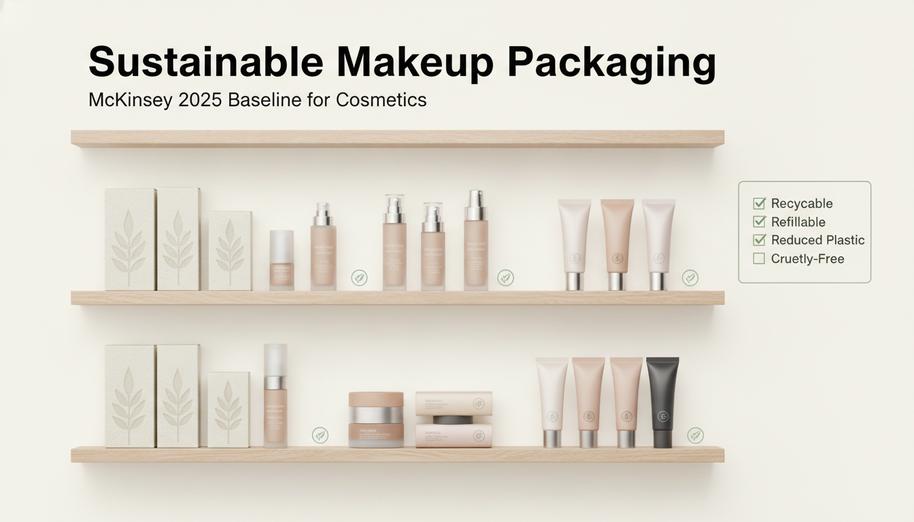
McKinsey 2025 notes sustainability now baseline purchasing criteria, with 51% of consumers treating environmental footprint as a primary buying driver.
Harmonic Highlights: Sustainable Makeup Packaging
➔ Eco-Friendly Materials : Opt for recycled plastics, aluminum, glass, bamboo or paperboard—each balancing recyclability, lightweight design and compostability.
➔ Circular Design : Embrace refillable airless containers, pulp-molded palettes and reduced material usage to extend product life and engage consumers.
➔ End-of-Life Solutions : Integrate take-back schemes, TerraCycle programs, industrial or home composting and robust recycling infrastructure.
➔ Verified Credibility : Pursue certifications like Cradle to Cradle, ISO 14001, FSC and Global Recycled Standard to back eco-claims.
 What Truly Makes Packaging Sustainable In Cosmetics?
A quick reality check: sustainable makeup packaging isn’t just a cute label—it’s material choice, weight, end-of-life, and real-world recycling. Mix smart design with honest sourcing and you get eco friendly cosmetic packaging that actually works. Brands like Topfeelmakeup keep it practical, not preachy, while pushing green beauty packaging forward across makeup face packaging solutions.
Recycled plastic and glass: Balancing recyclable and lightweight designs
- Core idea: keep recycled plastic and glass packaging in the loop while cutting grams per unit for low carbon transport .
- Material stream
- rPET bottles
- cullet-rich glass
- Design tweaks
- thinner walls via injection molding
- compact shapes for blow molding lines
- End of life
- curbside compatibility
- label/adhesive choices that don’t mess up material recovery facilities
“Lightweighting paired with high PCR content delivers measurable emissions cuts without sacrificing recyclability.” — 2025 industry outlook from a global packaging research group in Mintel beauty insights.
Short notes: lighter packs ship cheaper; less breakage; still counts as sustainable makeup packaging when streams stay clean. Topfeelmakeup applies this balance across jars and pumps, including their glass pump bottle collections.
Bamboo and paperboard brands embracing compostable compact cases
- Inputs
- bamboo fiber , FSC paperboard
- Build
- snap-fit compacts, minimal metal
- Use
- Refill pans, easy separation
4. End
- home or industrial compost (where available)
Small bits: clean inks matter. Moisture resistance needs coatings that won’t block composting. This lane fits biodegradable makeup packaging and boosts sustainable makeup packaging claims when disposal is clear, especially for a multi-use empty palette design.
Bioplastics and sugarcane pulp for biodegradable makeup palettes
• bioplastics (PLA blends meeting FDA-compliant safety)
• sugarcane pulp via pulp molding
• thermoformed trays with decent rigidity
◦ industrial composting preferred
Quick take: strong story for sustainable makeup packaging , but only if users know where it goes.
Post-consumer recycled content in bottles and jars
Nested view:
-
PCR strategy
- post-consumer recycled (PCR) targets (30–100%)
- supplier certification (Global Recycled Standard)
-
Performance
- Color shift control
- odor management
-
Market fit
- luxury: tinted glass with high cullet
- mass: rPET bottles, refill packs
-
Ops
- stable sourcing contracts
- QA for batch consistency
Wrap it up: higher PCR = real circularity, less virgin resin, stronger sustainable makeup packaging story. Topfeelmakeup keeps PCR practical across SKUs, including their custom lip gloss tube line, making sustainable makeup packaging feel normal, not niche.
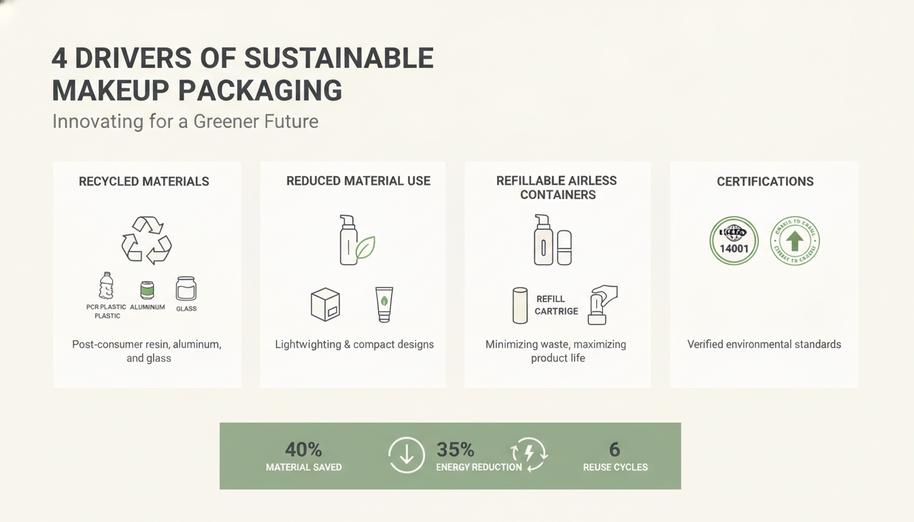 4 Key Factors Driving Sustainable Makeup Packaging Adoption
Sustainable cosmetic packaging is picking up real momentum, and not just for show. Brands are rethinking materials, waste, and user habits, pushing sustainable cosmetic packaging into everyday routines with smarter design and sourcing choices.
Sustainable Materials: Recycled plastic, aluminum, and glass sourcing
-
Core material choices shaping sustainable makeup packaging :
-
Recycled plastic
- Includes Post-consumer recycled ( PCR ) inputs
- Cuts virgin resin demand in Sourcing chains
-
Aluminum
- Near-infinite recyclability
- Lower lifecycle emissions vs. single-use plastics
-
Glass
- High reuse potential
- Compatible with premium sustainable materials
-
Impact layers in sustainable cosmetic packaging:
- Material Origin Transparency
- Energy intensity during processing
- End-of-life recyclability
Short take: smarter sourcing = less waste, better trust.
Reduced material usage through pulp molding and closed-loop manufacturing
-
Design tactics for sustainable makeup packaging :
- Lightweighting through Eco-design
- Switching to Pulp molding
- Integrating Closed-loop manufacturing
-
Process flow:
- Raw input reduction
- Production waste capture
- Reintroduction into system
Key economic metrics shaping Waste reduction and circular outcomes:
| Method | Material Saved (%) | Energy Reduction (%) | Waste Output (%) | Reuse Cycles |
|---|---|---|---|---|
| Pulp molding | 30 | 25 | 15 | 3 |
| Lightweighting | 20 | 18 | 10 | 2 |
| Closed-loop systems | 40 | 35 | 5 | 6 |
| Hybrid eco-design | 28 | twenty two | 12 | 4 |
| Recycled input mixing | 35 | 30 | 8 | 5 |
Less material, less hassle—it’s that simple.
Refillable and reusable airless containers for consumer engagement
-
Innovation inside sustainable makeup packaging :
-
Refillable containers
- Snap-in cartridges
- Easy user swap systems
-
Reusable packaging
- Durable shells
- Long-term product lifecycle
-
Airless pumps
- Better hygiene
- Less product waste
-
-
Engagement loop:
- Purchase durable base
- Refill regularly
- Reduce disposal
Small shift, big impact. Consumers stick with it when it’s easy.
ISO 14001 and Cradle to Cradle certifications boosting brand credibility
-
Trust signals in sustainable makeup packaging :
-
- Tracks environmental systems
- Ensures ongoing compliance
-
- Focus on safe materials
- Full Sustainability assessment
-
Why it matters:
- Strong brand credibility
- Verified Environmental standards
- Clear Eco-label communication
In short bursts:
Certified → trusted
Transparent → chosen
Verified → repeated purchase
That’s how sustainable cosmetic packaging earns real loyalty, whether used for a sleek custom lipstick tube or an ergonomic powder compact case .
 Refillable Vs. Single-Use Makeup Packaging
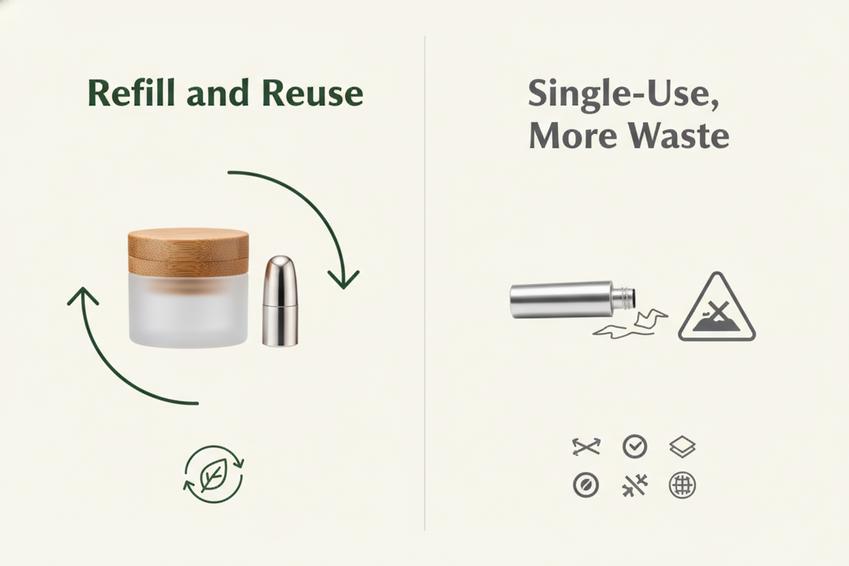
Sustainable makeup packaging keeps popping up in everyday chats, not just boardrooms. People want less trash, longer use, and smarter design. From refill pods to throwaway tubes, choices shape waste. This quick guide breaks down refillable vs disposable systems while weaving in eco makeup packaging, green beauty packaging, and sustainable cosmetic packaging ideas.
Refillable Packaging
- Core idea: Reusable containers built for Longevity and repeat use
- Outcome: real Waste reduction with visible Environmental benefits
- Feel: practical, a bit premium, and rooted in Eco-conscious design
-
System design
-
1.1 Shells
- durable jars, pumps, airless bottles
- designed for easy cleaning and swap
-
1.2 Inserts
- snap-in cartridges for creams, foundations
- standardized sizes to support Consumer refill systems
-
-
Materials & Innovation
-
2.1 Choices
- glass, mono-material plastics, aluminum
-
2.2 Upgrades
- Material innovation like PCR resins and lighter walls
-
-
Operations
-
3.1 Reverse flow
- take-back, sorting, refill loops
-
3.2 Retail touchpoints
- in-store refill bars or mail-back kits
-
-
User journey
- 4.1 Buy once, refill many times
- 4.2 Cost evens out, loyalty grows
Brands like Topfeelmakeup keep pushing sustainable makeup packaging with refill pods that fit cleanly into eco makeup packaging goals while still looking sleek. It’s beauty packaging that doesn’t feel like a compromise.
Single-Use Packaging
Short and honest: Disposable containers win on the Convenience factor , but stack up Waste generation and Landfill contribution fast. That’s the trade.
-
Pros
- quick to produce ( production efficiency )
- tamper-evident, easy for Hygiene concerns
-
Cons
- mixed materials raise material consumption and block recycling
- classic Traditional models don’t loop back into use
A closer look shows why sustainable cosmetic packaging keeps steering away from single-use. Complex pumps and multi-layer tubes, such as a traditional mascara tube , rarely get recovered in municipal streams without proper design for circularity.
“Refill and reuse formats are gaining share as brands chase circularity targets and consumers respond to visible waste cuts,” notes a 2025 industry report on circular packaging trends verified by Plastics Europe .
Topfeelmakeup still offers select single-use formats where safety or stability matters, but pairs them with clearer material choices and guidance. That blend nudges everyday buyers toward sustainable makeup packaging without making routines harder.
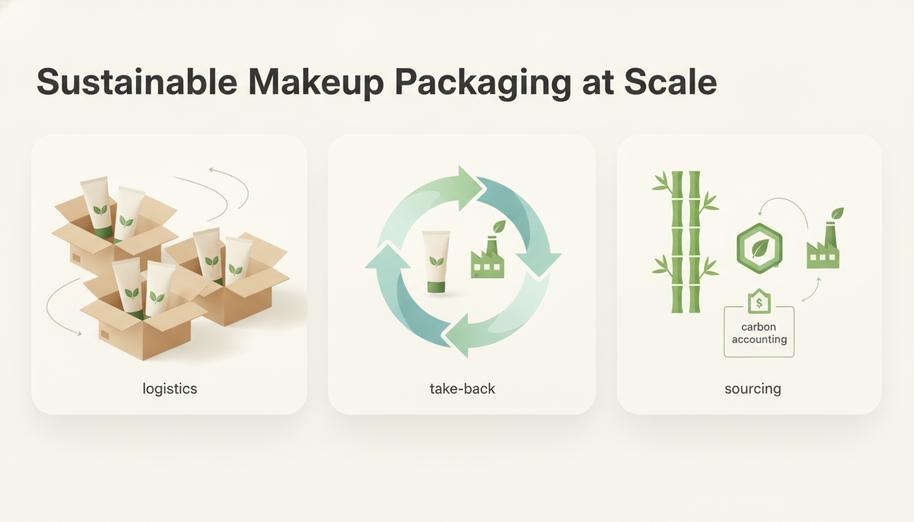 The Supply-Chain Challenges Behind Large-Scale Sustainable Makeup Packaging Adoption
Sustainable makeup packaging is getting real traction, but scaling it is messy. From shipping eco tubes to sourcing bamboo, every step tests cost, speed, and consistency. Brands like Topfeelmakeup keep pushing sustainable cosmetic packaging forward, offering flexible cosmetic packaging for small business startups even as makeup packaging sustainability bumps into supply chain limits and real-world tradeoffs.
Carbon footprint reduction hurdles in bulk shipping of eco-friendly tubes
-
Key tension points in sustainable makeup packaging logistics:
- Logistics optimization vs fragile materials
- Packaging weight vs durability in transit
- Freight routes vs low-emission options
-
Core flow of eco makeup packaging shipping:
-
Material prep
- Lightweight tube molding tied to Supply chain efficiency
- Early-stage Emissions tracking for carbon accounting
-
Transport phase
- Mode selection: sea freight reduces impact, but delays stock
- Shift toward Sustainable transport corridors
-
Distribution nodes
- Warehousing tuned for volume consolidation
- Route recalibration to reduce empty miles
• Even with sustainable packaging, poor routing can cancel out gains in liquid makeup packaging shipments.
Short bursts:
- lighter tubes help
- longer routes hurt
- Data fixes gaps
Topfeelmakeup works within these constraints, balancing sustainable makeup packaging goals with real shipping math tied to Carbon accounting and evolving fuel standards tracked in Packaging Digest.
Reverse logistics and take-back schemes for empty makeup containers
-
Return ecosystem layers in sustainable cosmetic packaging:
- Container collection via retail drop-offs
- Sorting tied to Waste stream management
- Processing inside Recycling infrastructure
-
How take-back loops function:
-
Consumer stage
- Incentives boost Consumer participation
- Clear labeling improves return accuracy
-
Collection stage
- Regional hubs gather volume for Material recovery
-
Processing stage
- Sorting tech separates mixed plastics
- Feeds into End-of-life solutions pipelines managed with partners like TerraCycle
Multiple quick notes:
- convenience drives returns
- confusion kills participation
- contamination raises cost
Sustainable makeup packaging only works long-term if return programs feel easy, not like homework.
Sourcing challenges for local bioplastics and sustainable bamboo supplies
-
Material sourcing pressure points:
- Raw material sourcing inconsistency
- Certification tied to Material traceability
- Cost spikes in Local supply chains
-
Supply chain build-out:
-
-
Bioplastics
- Feedstock variability affects Bioplastic feedstock quality
- Regional gaps slow scale-up
-
Bamboo inputs
- Harvest cycles impact Bamboo harvesting stability
- Certification demands strict Supplier vetting adhering to REACH regulatory compliance and verified factory audit standards such as ISO 9001 certification
-
-
Integration
- Matching materials to product specs
- Aligning sustainability claims with audits
Short segments:
- Local isn’t always stable
- certified means slower
- Scaling takes patience
Sustainable makeup packaging depends on steady inputs, and brands like Topfeelmakeup keep refining sourcing strategies so eco-friendly makeup packaging doesn’t stall before it reaches shelves.

