 English (UK)
  English
  English (Australia)
  English (Canada)
  العربية
  Deutsch
  Italiano
  Español de México
  Tiếng Việt
  ไทย
ไทย  Português do Brasil
  Français
  Български
  Čeština
  Dansk
Dansk  Ελληνικά
  Eesti
Eesti  Suomi
Suomi  Magyar
  Bahasa Indonesia
  Lietuvių kalba
  Latviešu valoda
  Norsk bokmål
  Nederlands (Formeel)
  Polski
  Română
  Русский
  Slovenčina
  Slovenščina
  Svenska
  Türkçe
  Українська
  简体中文
简体中文  日本語
日本語  한국어
한국어  繁體中文
繁體中文 
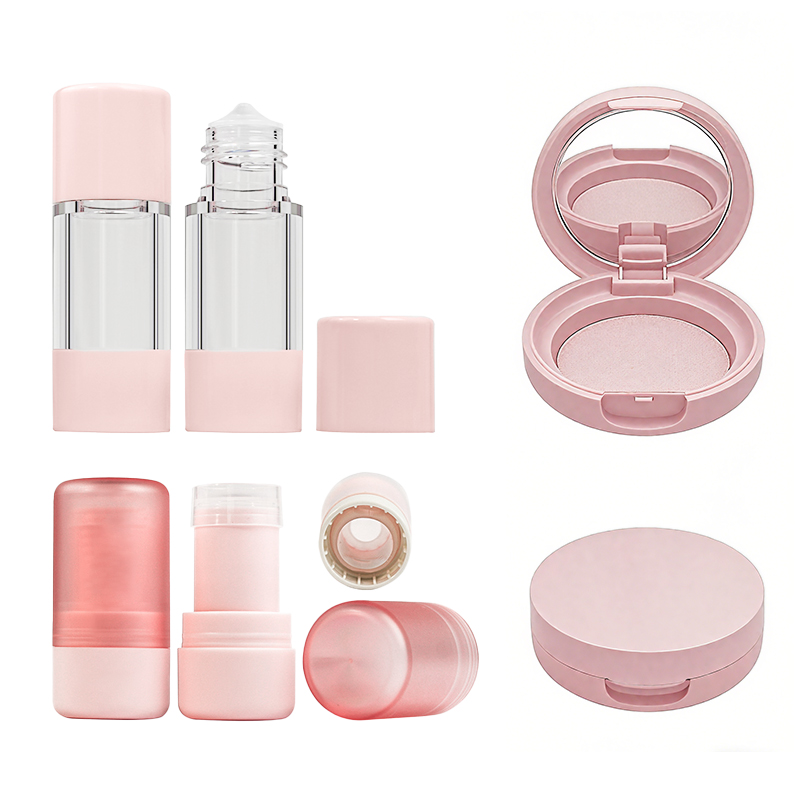
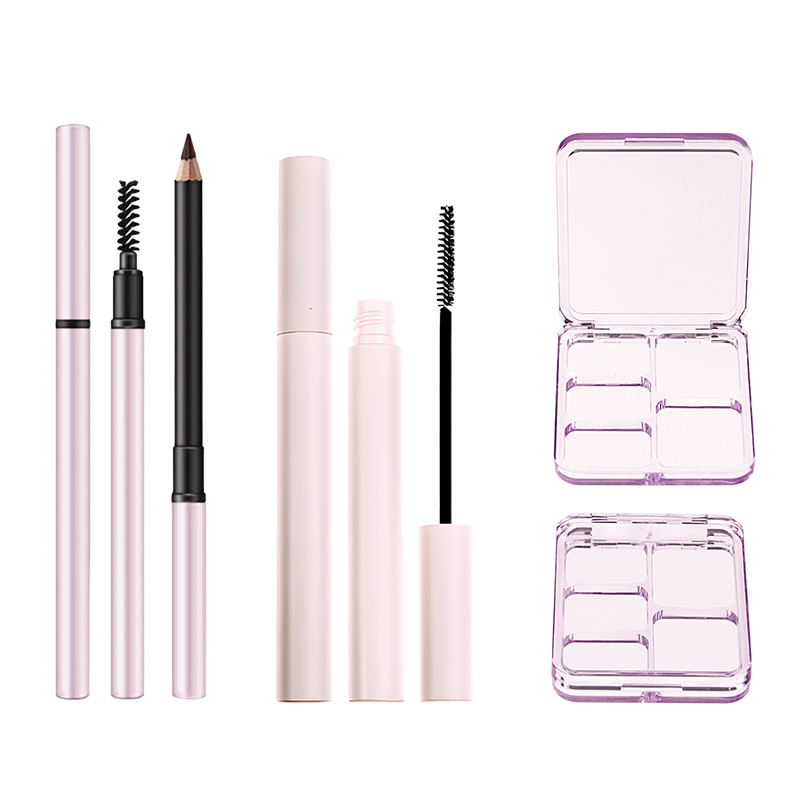
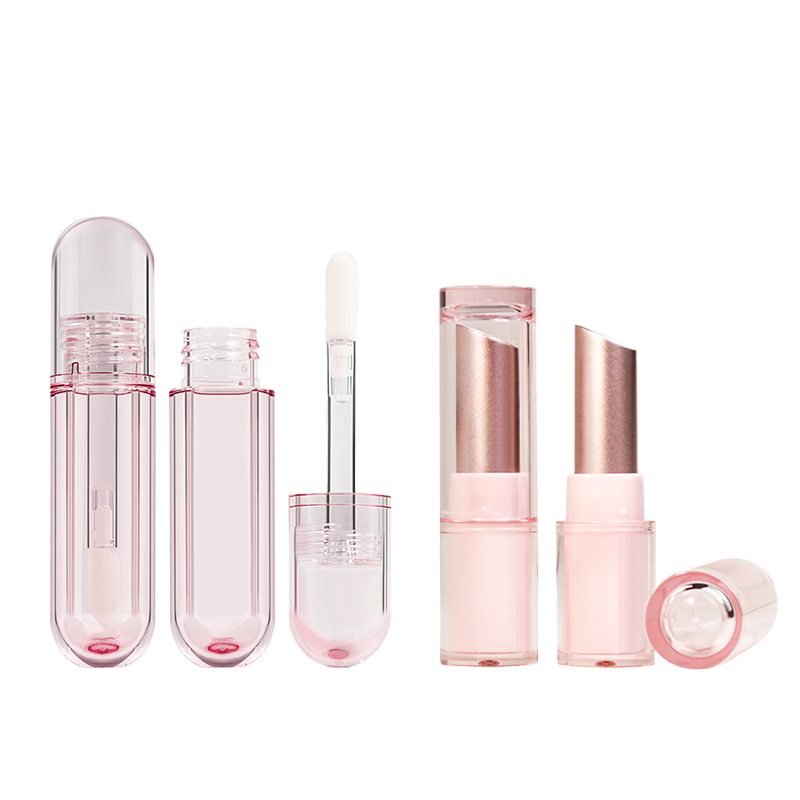

What is PCTA Material?
February 05,2026
It’s no secret—cosmetic packaging has been stuck in a bit of a rut. Glass looks stunning but breaks if you so much as sneeze near it, and acrylic? Gorgeous on shelves, nightmare for recyclers. Enter PCTA material: the underdog plastic that checks all the boxes—crystal-clear like high tea glassware, tough as nails, and way easier to ship without racking up freight bills or customer complaints.
Bulk buyers are catching on fast because this stuff isn’t just another pretty face—it plays nice with makeup actives and doesn’t warp under heat or pressure. Lightweight, luxe-looking, eco-aware… it’s about time packaging got smarter without losing its shine.
Reading Notes: PCTA Material’s Path to Premium Packaging
➔ Clarity & Durability: PCTA material delivers glass-like transparency in a lightweight, impact-resistant form, cutting breakage and shipping costs.
➔ Design Versatility: Excels in both injection and blow molding for bottles, compact cases, tubes, and pump dispensers with intricate shapes.
➔ Chemical & Thermal Stability: Withstands makeup actives and heat without warping or discoloration, safeguarding foundations, lipsticks, and creams.
➔ Decoration-Friendly: Fully compatible with screen printing, hot stamping, UV coating, metallization, and more for standout branding.
➔ Recyclable & Eco-Aware: Easier to recycle than acrylic and lighter than glass, supporting sustainable packaging initiatives.
➔ Closure Precision: Maintains tight tolerances for secure screw caps, dropper caps, and snap-on lids, ensuring leak-proof performance.
Why PCTA Material Is Shaping Cosmetic Packaging Future
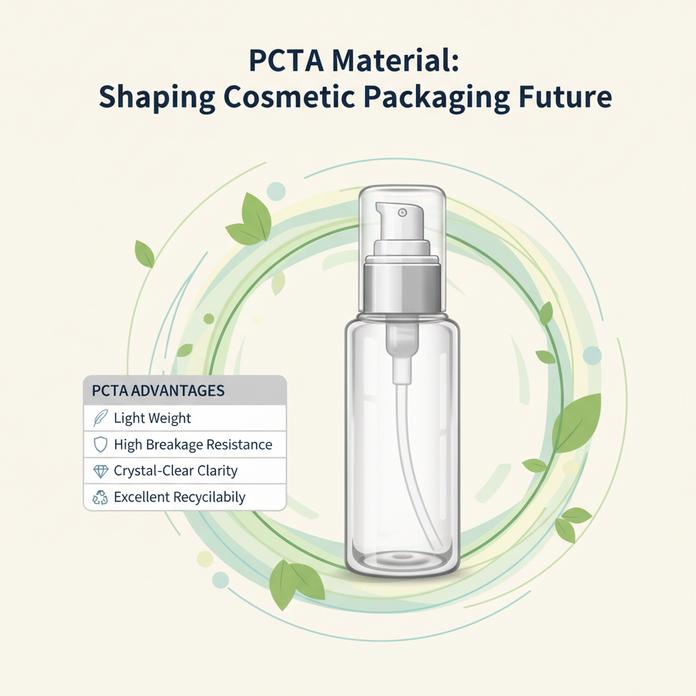
The beauty world’s ditching glass and acrylic. Say hello to PCTA material—clear, light, tough, and oh-so-recyclable.
Replacing Glass and Acrylic: Why Brands Shift to PCTA Plastic Packaging
The switch to PCTA plastic is more than just trend-hopping—it’s practical, smart, and eco-conscious. Here’s how it stacks up:
Material Comparison Table
| Property | Glass | Acrylic | PCTA Material |
|---|---|---|---|
| Weight | Heavy | Moderate | Light |
| Breakage Resistance | Low | Medium | High |
| Clarity | High | Medium-high | Crystal-clear |
| Recyclability | Limited | Poor | Excellent |
Big brands are swapping out heavy glass jars and brittle acrylic tubes for durable, shatter-resistant, and fully recyclable packaging material like PCTA. It checks all the boxes without sacrificing that luxe vibe. Plus, it plays nice with refill systems—something consumers are really into lately.
From Bottles to Compact Cases: PCTA’s Role in Modern Makeup Formats
Here’s where things get interesting—PCTA material isn’t just a one-trick pony. It flexes across formats like a champ:
- In bottles? Keeps serums safe without weighing down your shelf.
- In compacts? Offers sleek edges with none of the fragility.
- In mascara tube? Delivers that smooth twist-and-click feel every time.
Let’s break it down further:
- Versatility wins: Whether it’s foundation droppers or eyeshadow pans, brands love the design flexibility of this makeup packaging solution.
- Uniformity matters: Using the same base material across product lines creates a cohesive brand look—no mismatched textures or tones.
- Sustainability sells: Consumers notice when their favorite powder compact case feels premium but doesn’t pollute.
From highlighters to lip gloss tubes, modern formats demand materials that can do it all—and that’s where this adaptable hero shines.
Premium Look Without the Weight: PCTA for Foundation, Lipstick, and Blush
Creating a premium vibe without going overboard on weight or cost? That’s where things get clever with this next-gen plastic:
Step-by-step breakdown of how PCTA material enhances cosmetic products:
→ Step 1: Aesthetic appeal – The high-gloss finish mimics glass so well that most folks can’t tell the difference at first glance. Great news for lipstick lovers who want glam without bulk.
→ Step 2: Lightweight edge – No more carrying heavy compacts in your purse; blushes made from this stuff feel featherlight but still look fancy.
→ Step 3: Durability factor – Unlike traditional containers that chip or crack easily, these hold their shape even after multiple drops.
→ Step 4: Eco-forward design – Brands can mold intricate shapes while staying within sustainable boundaries thanks to this flexible yet strong option.
In short bursts:
• Looks expensive—but isn’t heavy.
• Feels sturdy—but won’t shatter.
• Stays glossy—but is better for recycling bins than acrylic ever was.
Cosmetic giants from indie startups to players like Topfeel have started leaning into this high-performance game changer because it balances form with function—and does so beautifully across categories like foundation, lipstick tube, and cream blush packaging alike.
4 Key Attributes Of PCTA Material
PCTA material brings together clarity, toughness, and creative freedom—making it a smart choice for beauty packaging that needs both style and substance.
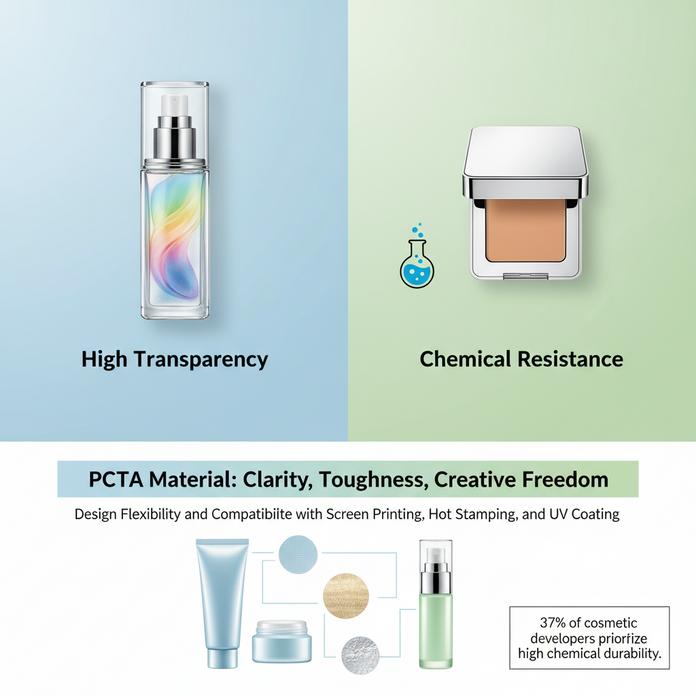
High Transparency Comparable to Glass and PETG
- High-end look without the fragility of glass
- Matches the optical properties of PETG for clear serum bottles
- Perfect for showing off tinted or glittery formulas
- PCTA’s transparency makes it ideal for showcasing colorful or translucent cosmetics like lip glosses and liquid blushes.
- The material mimics the clarity of high-grade glass while being lightweight and shatter-resistant.
- It enhances product visibility on retail shelves—an edge in competitive beauty aisles.
✦ Great for minimalist brands that want their formula to shine through without flashy packaging.
With a smooth surface finish and excellent light transmission, PCTA lets your product do the talking. It doesn’t dull or yellow over time, which means your packaging stays fresh-looking longer—even under store lighting.
Short bursts of info:
- Looks like glass, handles like plastic
- Doesn’t fog up over time
- Maintains its shine even after months on display
Chemical Resistance for Foundation, Concealer, and Highlighter
- Keeps creamy highlighters from reacting with the container walls
- Prevents cracking caused by volatile ingredients in foundations
- Holds up against oils used in concealers
PCTA’s strong chemical resistance means it won’t warp or discolor when exposed to active makeup formulas. Unlike some plastics that degrade quickly with contact, this one keeps its shape—and your brand reputation—intact.
💡 Beauty chemists love it because they don’t have to reformulate just to match the packaging’s limits.
“Recent data from Mintel’s 2024 Global Packaging Trends shows 37% of cosmetic developers now prioritize materials with high chemical durability due to rising demand for long-wear formulations.”
Design Flexibility for Jars, Tubes, and Pump Dispensers
A) Jars:
- Custom contours are easy thanks to superior moldability
- Thick-walled designs possible without sacrificing clarity
B) Tubes:
- Slim profiles or wide mouths? Both work great with this flexible material
- Easy integration with applicator tips or brush heads
C) Pump Dispensers:
- Durable enough for repeated use without stress cracks forming around necks or threads
- Allows unique shapes like angular housings or asymmetrical grips
All this adds up to major wins in product differentiation—especially in crowded categories like foundation jars or BB cream tubes where shelf presence matters most.
You can go bold with curves or keep things sleek and geometric; either way, PCTA gives you room to experiment without blowing your mold budget.
Compatibility with Screen Printing, Hot Stamping, and UV Coating
• Works beautifully with direct decoration techniques like screen printing, giving clean lines on curved surfaces
• Takes well to foil finishes via hot stamping, adding a luxe touch
• Accepts glossy layers from UV coating, boosting visual depth
- You can skip labels entirely—the surface handles ink adhesion really well.
- Brands looking for premium finishes will love how smoothly metallic accents apply.
- Even complex graphics hold sharp detail without smudging during production runs.
Want branding that pops? This is how you get there—no peeling labels or muddy prints after a few weeks on shelves.
It’s not just about looks either; these decoration techniques bond tightly with the material surface so they last through handling, shipping, even bathroom humidity.
That kind of durability combined with aesthetic flexibility is rare—and exactly why more beauty brands are switching over to PCTA-based solutions today.
How Does PCTA Material Perform?
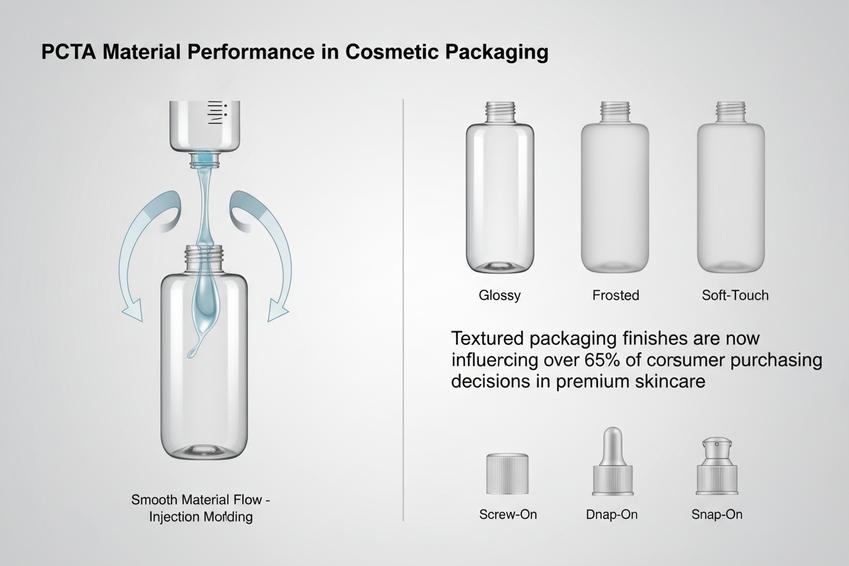
From molding to closure fit, let’s break down how pcta material handles the real-world demands of cosmetic packaging.
Injection Molding and Blow Molding Performance in Cosmetic Packaging
- PCTA material flows smoothly during both injection molding and blow molding, which means fewer defects and more consistent shapes.
- It’s ideal for making everything from sleek bottles to intricate cosmetic packaging components like pumps or applicators.
- The material holds its form well even when molded into thin-walled containers.
- High temperature resistance = no warping or deformation under pressure.
- Excellent melt strength = better process control during bottle blowing.
- Quick cycle times = faster production without compromising quality.
• Great clarity is another bonus—it gives a premium look without needing extra coatings.
Even with complex molds, the material performance of pcta stays on point. It doesn’t shrink unpredictably or crack under pressure like some other plastics might.
It’s easy to see why manufacturers love it: fast processing, low reject rates, and smooth finishes make it a go-to for high-end beauty brands.
Surface Finishes Explained: Glossy, Frosted, and Soft Touch Effects
You can really play with aesthetics using pcta material, thanks to its compatibility with various surface finishes.
— A high-gloss finish? No problem—it reflects light beautifully on lip gloss tube or serum bottles.
— Prefer a muted vibe? The frosted effect gives off that soft-focus luxury feel many skincare brands crave.
— Want something tactile? The soft touch effect adds grip while feeling velvety smooth in hand.
According to Mintel’s 2024 Global Beauty Packaging Review: “Textured packaging finishes are now influencing over 65% of consumer purchasing decisions in premium skincare.”
This makes surface customization not just a design choice—but also a strategic move to boost shelf appeal.
Different textures also help users differentiate products by feel alone—a subtle but powerful user experience upgrade.
Whether you’re going bold with gloss or subtle with matte, pcta plays nice with coating techniques that enhance both durability and style.
Closure System Fit: Screw Cap, Dropper Cap, and Snap-On Cap Stability
Let’s talk about fit—because nobody wants their serum leaking in their bag. Thankfully, pcta material brings excellent dimensional accuracy that ensures secure closures every time.
Step 1: During molding, the tight tolerance control keeps threads sharp for perfect alignment on a screw cap.
Step 2: That same precision helps dropper caps seal snugly without air gaps or leakage risk.
Step 3: With snap-on caps? Flexibility meets firmness—the cap clicks into place yet stays removable without stress cracking the neck area.
Grouped by closure type:
-
Screw Caps:
- Maintains thread integrity
- Prevents cross-threading
- Ensures repeatable sealing cycles
-
Dropper Caps:
- Smooth insertion fit
- No bulging under pressure
- Airtight seals preserve formula freshness
-
Snap-On Caps:
- Consistent retention force
- Easy open-close usability
- Stress-free engagement even after multiple uses
All this comes down to one thing—reliability. Whether you’re bottling oils or lotions, pcta delivers consistent results across all major closure styles used in beauty packaging today.
FAQs
Why are cosmetic brands gravitating toward PCTA for packaging?
Glass may look stately, acrylic offers dazzle, but PCTA blends these qualities with a human touch — lighter than PETG or SAN, guarding your foundation or lipstick against leaks and scratches. Less freight strain from bottles and jars means fewer broken hearts on unpacking day. Its recyclability turns every cosmetic container with applicator or compact case into a quiet nod to sustainability.
Can PCTA be adapted for both skincare bottles and makeup compacts?
From injection‑molded compact cases that cradle eyeshadow palette pans to blow‑molded serum bottles topped with screw caps or droppers — the same resin flows faithfully through differing shapes. This consistency lets blush jars match mascara tube in style; your line feels like one extended family across shelf displays.
What surface finishes come alive on PCTA packaging?
- Glossy: Foundation bottles that gleam under store lights
- Frosted: Softly lit moisturizers whispering elegance
- Soft Touch: Lipstick tubes comforting fingertips in winter air
Pair with hot stamping for metallic drama or UV coating before metallization to deepen reflections while keeping each jar recyclable.
Does chemical resistance truly matter when choosing PCTA material?
Yes — it’s the silent guard within translucent pumps and snap‑on capped concealer tube sticks: shielding formulas rich in oils from warping their containers; holding highlighter sticks steady without yellowing; letting matte-finished lotion tubes stay dignified despite daily exposure to active ingredients.

