 English (UK)
  English
  English (Australia)
  English (Canada)
  العربية
  Deutsch
  Italiano
  Español de México
  Tiếng Việt
  ไทย
ไทย  Português do Brasil
  Français
  Български
  Čeština
  Dansk
Dansk  Ελληνικά
  Eesti
Eesti  Suomi
Suomi  Magyar
  Bahasa Indonesia
  Lietuvių kalba
  Latviešu valoda
  Norsk bokmål
  Nederlands (Formeel)
  Polski
  Română
  Русский
  Slovenčina
  Slovenščina
  Svenska
  Türkçe
  Українська
  简体中文
简体中文  日本語
日本語  한국어
한국어  繁體中文
繁體中文 
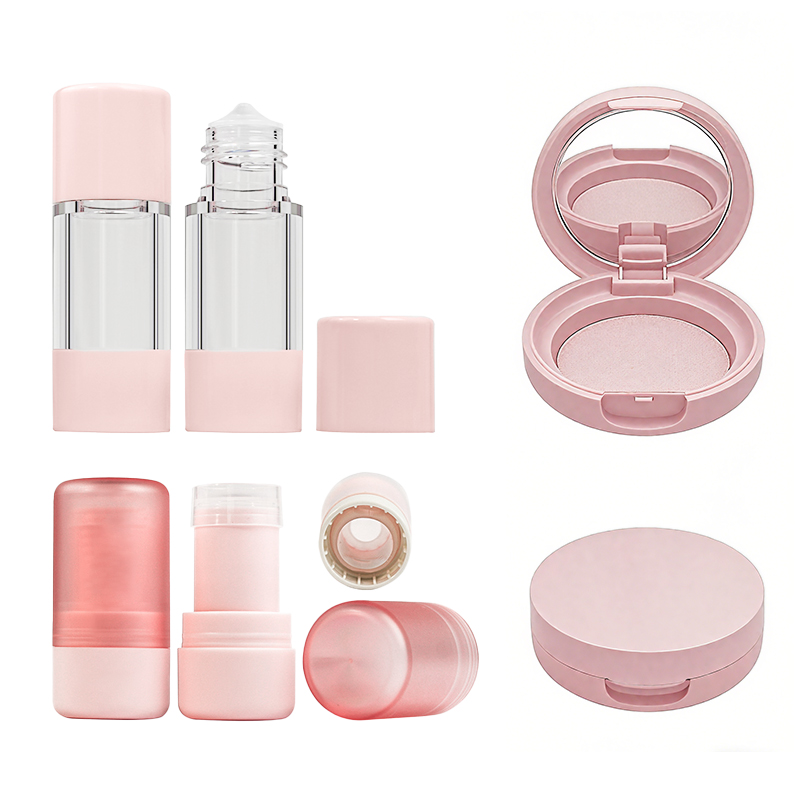
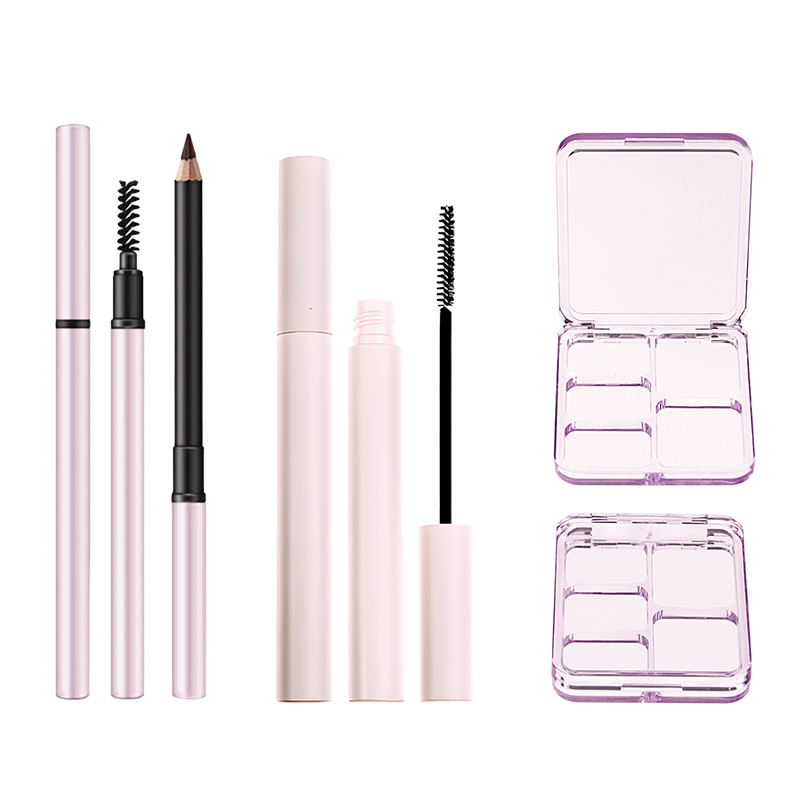
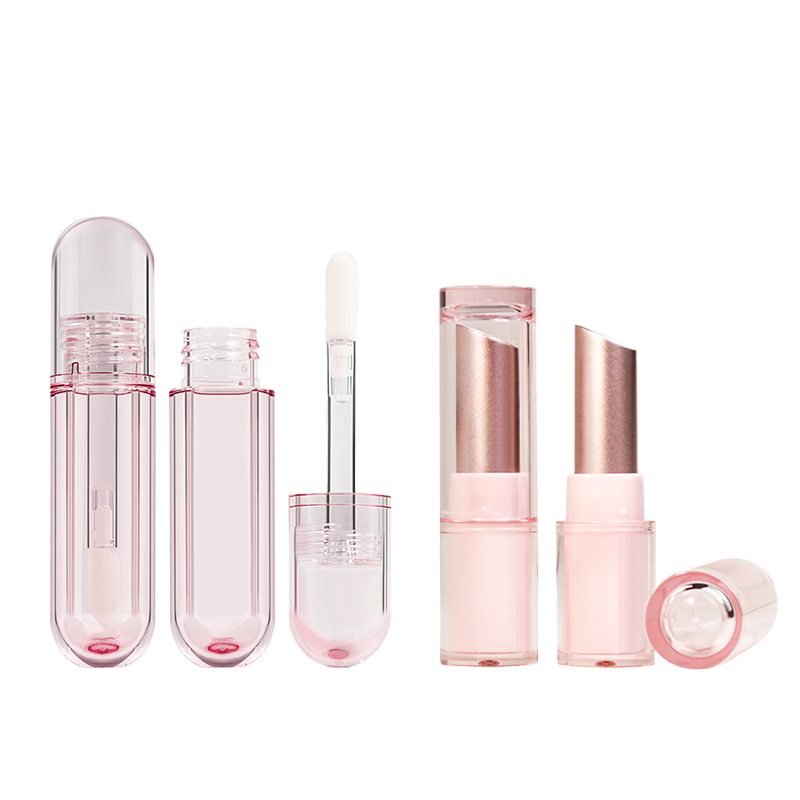

How PCR Plastic Enhances Eco-Friendly Packaging for Your Products
January 15,2026
You ever look at a lipstick tube and think, “Dang, how much plastic is in this thing?” Turns out, a whole lot—and most of it’s virgin plastic, straight from fossil fuels. But here’s the kicker: pcr plastic (post-consumer recycled) can do the same job without flipping Mother Nature the bird.
More than 67% of American beauty consumers say eco-friendly packaging influences their buying decisions. That stat comes from McKinsey & Co., not your Aunt Linda on Facebook. Translation? If you’re still bottling blush in yesterday’s materials, you’re leaving sales on the shelf.
Packaging buyers are feeling it—caught between corporate sustainability goals and designers begging for Pantone-perfect finishes that don’t scream “recycled trash.” You’re not alone if you’ve had sleepless nights over MOQ headaches and supply chain chaos.
The truth is: pcr isn’t second-rate anymore—it’s shapeshifting into sleek compacts, mascara tubes with attitude, and glossy bottles that walk the green talk without ditching performance or style.
Pivotal Insights: The Power of PCR Plastic in Packaging
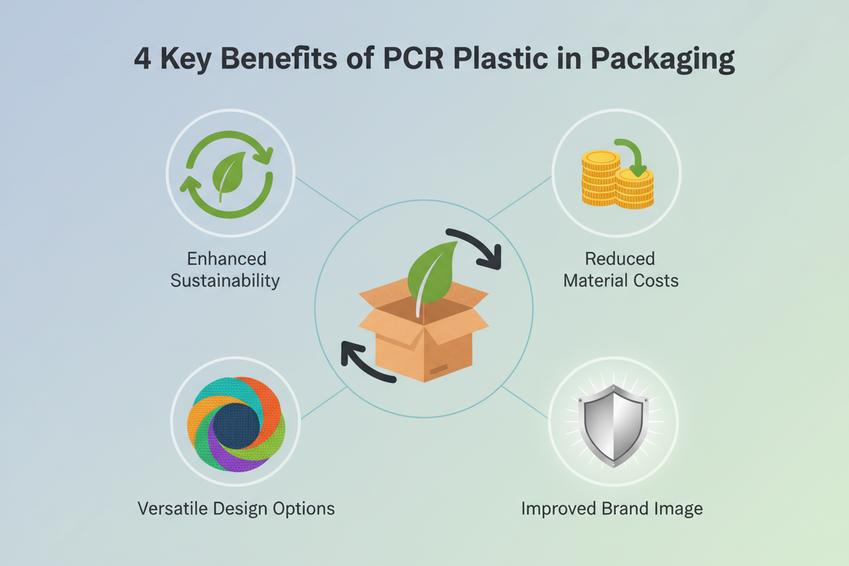
- Enhanced Sustainability: PCR plastic significantly lessens landfill waste, contributing to environmental conservation by repurposing post-consumer materials into new packaging.
- Reduced Material Costs: Utilizing PCR polypropylene not only cuts expenses but also maintains the durability and functionality required for effective packaging applications.
- Versatile Design Options: Brands can achieve custom Pantone color matching and varied finishes, allowing for unique aesthetics without compromising on sustainability.
- Improved Brand Image: Emphasizing eco-friendly plastic compounds can enhance brand perception and attract environmentally conscious consumers.
- Carbon Footprint Reduction: PCR plastic markedly decreases carbon emissions compared to virgin plastic, supporting corporate sustainability goals in the manufacturing process.
- Emerging Innovations: Many brands are leading the charge with eco-friendly cosmetic compact containers and lipstick tube housings made from sustainable plastic alternatives, setting a trend in the beauty industry.
4 Key Benefits of PCR Plastic in Packaging
From waste reduction to brand loyalty, here’s how using post-consumer recycled plastic gives packaging a serious glow-up.
Enhanced Sustainability: Switching to Post-Consumer Recycled Plastic
• Cuts down on plastic waste, keeping it out of landfills and oceans.
• Supports the circular economy by turning used materials into new packaging.
• Reduces demand for raw materials, easing pressure on natural resources.
♻️ Choosing pcr plastic helps curb the use of virgin plastic, making packaging more eco-responsible without compromising quality.
By repurposing post-use plastics, brands sidestep unnecessary resource depletion and contribute to meaningful environmental change. This isn’t just recycling—it’s smart, future-ready material sourcing.
Reduced Material Costs: The Economic Advantages of PCR Polypropylene
- Raw resin prices are rising—recycled input keeps budgets tighter.
- Pcr polypropylene maintains performance while costing less than new resin.
- Lower production costs mean better margins or more room for innovation.
💰 When you cut back on expensive new plastic, you’re not just saving pennies—you’re investing in long-term supply chain flexibility and cost control.
It’s a move that makes financial sense while aligning with sustainability goals—a win-win for both CFOs and conscious consumers.
Versatile Design Options: Custom Pantone Color Matching and Finishes
Grouped Benefits:
Color Freedom
- Match any Pantone shade with precision.
- Maintain consistent branding across product lines.
Finish Variety
- Matte, gloss, soft-touch—whatever fits your vibe.
- Add tactile appeal that enhances shelf presence.
Visual Impact
- Tailored designs elevate brand identity.
- Stand out from competitors stuck in generic looks.
With pcr plastic, you don’t sacrifice creativity for eco-friendliness—you get both. Designers can still custom cosmetic packaging that is eye-catching while sticking to sustainable choices.
Improved Brand Image: Emphasizing Eco-Friendly Plastic Compounds
Consumers aren’t just buying products—they’re buying values too. Using eco-friendly compounds made from pcr plastic signals a strong stance on sustainability that resonates with today’s market expectations.
This shift boosts your brand reputation, strengthens consumer perception, and builds trust among increasingly eco-conscious consumers who want their purchases to reflect their ethics. It’s also a great way to earn points for corporate responsibility initiatives and lock in long-term customer loyalty through shared values.
The Impact of PCR Plastic on Carbon Footprint Reduction
PCR plastic is more than just recycled—it’s a serious game-changer for cutting emissions and cleaning up manufacturing habits.
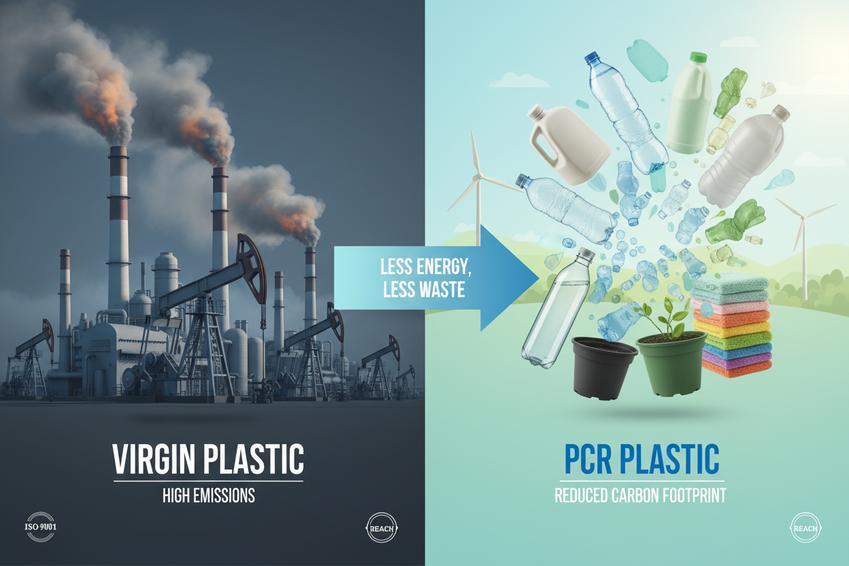
Comparisons That Matter: PCR Plastic vs. Virgin Plastic
- PCR plastic uses way less energy to produce than virgin materials—less heating, fewer extraction steps, and no need to create new polymers from scratch.
- Virgin plastics rely on fossil fuels, which means higher carbon emissions, more mining, and a heavier environmental toll.
- Using post-consumer resin helps cut back on waste from landfills while shrinking the carbon footprint of packaging lines.
You’re basically swapping out old habits for smarter ones when you choose recycled over raw plastic.
Significant Reduction: How Recycled PET Plastic Resin Lowers Emissions
- Collect used PET bottles from consumer waste streams.
- Clean, sort, and convert them into high-quality flakes.
- Reprocess those flakes into new resin using advanced reprocessing technologies.
- Replace traditional feedstock with this greener alternative in production lines.
This whole process drastically reduces the need for virgin materials—cutting down on both energy use and greenhouse gases in the supply chain.
Manufacturing Certifications That Support Sustainability Goals
♻️ ISO 9001 ensures consistent quality management during the transformation of waste into usable resin.
♻️ REACH compliance verifies that materials meet strict health and safety standards across Europe—no nasty surprises in your supply chain.
♻️ Certifications help companies hit their sustainability goals, especially when aiming for lower emissions or boosting their circular economy credentials.
These certifications aren’t just stamps—they’re proof that your packaging choices are part of a bigger environmental shift powered by smart sourcing and clean processes involving waste streams and responsible use of material science.
5 Examples of Successful Brands Using PCR Plastic
Plenty of beauty brands are stepping up their game by switching to sustainable packaging made from pcr plastic—and it’s not just a trend, it’s a movement.
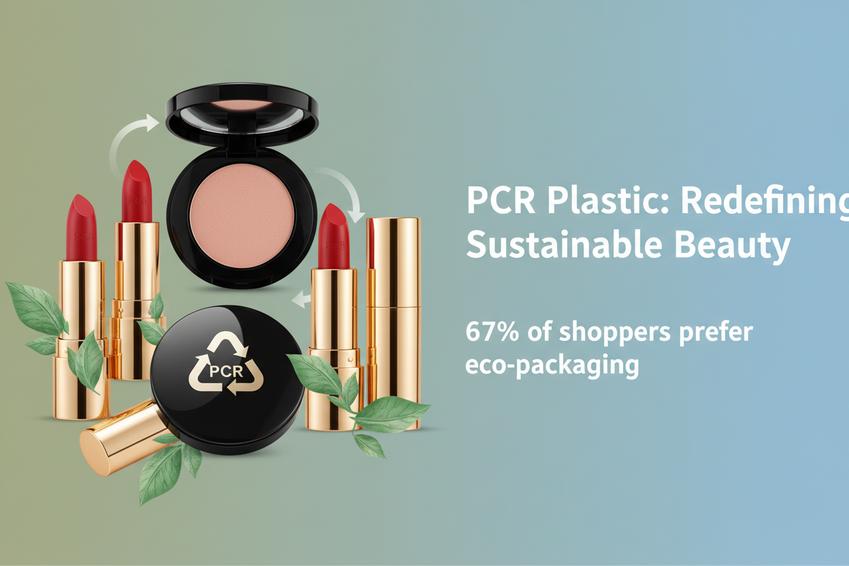
Cosmetic Compact Containers: Brands Leading the Way in Eco-Friendly Choices
- L’Oréal has incorporated up to 100% recycled content into its compact cases across several product lines, reducing its carbon footprint without sacrificing design.
- Estée Lauder Companies revamped their compacts using post-consumer resins, enhancing their green reputation and aligning with eco-conscious consumers.
- Shiseido’s refillable systems now feature containers made with partially recycled polymers, minimizing single-use waste and boosting long-term brand loyalty.
These companies aren’t just going green—they’re redefining what premium looks like in the age of sustainability. Their use of pcr plastic, especially in powder compact designs, reflects a fusion of luxury and environmental responsibility. The shift doesn’t go unnoticed either; NielsenIQ’s Beauty Sustainability Report from early 2024 found that over 67% of shoppers prefer brands that use visible signs of eco-packaging like recycled materials.
Lipstick Tube Housings: Innovative Designs with Sustainable Plastic Alternatives
- MAC Cosmetics uses vibrant lipstick tubes crafted from up to 50% post-consumer recycled plastic, maintaining bold aesthetics while reducing virgin material usage.
- Burt’s Bees has taken it even further—their minimalist lipstick shells are entirely recyclable and contain high levels of reused polymer blends.
- Topfeel‘s latest limited-edition lip line features sleek tubes molded from clear-colored PCR PETG—a nod to both transparency and sustainability goals.
- Hourglass Cosmetics integrates PCR polyolefins in its lipstick barrels, showcasing how luxury can coexist with low-impact sourcing.
Shorter production cycles, fewer emissions, and better consumer trust—that’s the ripple effect when brands switch to smart materials like pcr plastic. These tubes aren’t just pretty; they’re purpose-built too. As beauty becomes more aligned with climate action, expect these kinds of packaging for cosmetics innovations to become the new normal across the entire cosmetics industry.
FAQs
1. What Makes Post-Consumer Recycled Plastic Valuable for Cosmetic Packaging?
Post-Consumer Recycled Plastic adds meaning to a product’s design — it saves material and gives packaging a second life.
- ♻ Used in Cosmetic Compact Containers or Lipstick Tube Housings, it cuts down plastic waste while keeping durable structure intact.
- 💧 The tactile quality of Soft Touch Surface Finishing invites interaction, proving that sustainability can feel luxurious too.
2. How Does PCR Polypropylene Material Help Reduce Manufacturing Expenses?
A balance between economy and endurance:
- Uses recycled feedstock while delivering the same rigidity as virgin resin; ideal for Mascara Applicator Bottles.
- Shortens supply chain dependence on raw sources, lowering production costs naturally over time.
- Harmonizes with color control through both Custom Pantone Color Matching and quick-turnaround tones from a Standard Color Palette Selection.
3. Can Brands Still Achieve Premium Visual Design Using Recycled PET Plastic Resin?
Yes—sustainability doesn’t mean compromise, it means creativity reborn:
★ From translucent whisper tones to strong opaque hues, each batch welcomes artistry through
- Metallic Color Pigment Options adding elegance;
- Choice of surface moods like Matte Texture Coating Options or radiant gloss under a Smooth Surface Polish Technique.
The result feels boutique yet eco-conscious—a design story told in every reflection on the container wall.
4. Which Certifications Guarantee Quality and Safety with Eco-Friendly Plastic Compounds?
Trust is crafted by precision standards more than words on paper:
| Certification | Meaning for Your Product | Example Application |
|---|---|---|
| ISO 9001 Quality Management System | Ensures consistent manufacturing & inspection checks | Lipstick Tube Housings |
| GMPC Cosmetic Manufacturing Standard | Aligns facility hygiene & safety protocols | Foundation Cream Jars |
| REACH Compliance Certification / RoHS Environmental Standard Adherence / Sedex Ethical Manufacturing Audit | Confirms human-safe materials & ethical sourcing practice | Eyeliner Pencil Components |
These badges reassure buyers that your sustainable packaging upholds both care and conscience.
5. Are Global Shipping Solutions Available for Large Orders Made from Sustainable Plastic Alternatives?
Short answer—absolutely yes; but the real story lies in reliability:
- International Shipping Logistics Support coordinated with careful schedules;
- Protective Packaging Solutions Provided keep even delicate compact jars unharmed;
- Every box traceable through Shipment Tracking Information linked to clear Delivery Timeframe Guarantees Offered;
Together they form an invisible chain of trust connecting factory creation to beauty counter display across oceans.
References
- Sustainability in packaging 2025: Inside the minds of global consumers – mckinsey.com
- What Is PCR Plastic? The Pros and Cons of PCR Packaging – thecarycompany.com
- L’Oréal For The Future – Plastic Packaging Policy – loreal.com
- Plastics – The Estée Lauder Companies Inc. – elcompanies.com
- Clean Beauty is the New Chic: How Conscious Consumers Are Redefining Beauty Growth – nielseniq.com
- What does sustainability mean to M.A.C cosmetics? – re-sources.co

