 English (UK)
  English
  English (Australia)
  English (Canada)
  العربية
  Deutsch
  Italiano
  Español de México
  Tiếng Việt
  ไทย
ไทย  Português do Brasil
  Français
  Български
  Čeština
  Dansk
Dansk  Ελληνικά
  Eesti
Eesti  Suomi
Suomi  Magyar
  Bahasa Indonesia
  Lietuvių kalba
  Latviešu valoda
  Norsk bokmål
  Nederlands (Formeel)
  Polski
  Română
  Русский
  Slovenčina
  Slovenščina
  Svenska
  Türkçe
  Українська
  简体中文
简体中文  日本語
日本語  한국어
한국어  繁體中文
繁體中文 

What You Need to Know About Perfume for Perfume Bottles
March 04,2026
Choosing the right perfume for perfume bottles isn’t just a box-checking exercise—it’s the difference between “add to cart” and “hard pass.” A scent can whisper luxury, but if the bottle leaks, feels flimsy, or looks like it time-traveled from a discount bin, customers notice. Fast. In a 2026 market where shoppers judge with their eyes across hyper-visual social feeds before their noses ever experience the scent, packaging pulls the first punch. And if it misses? Your brand eats the cost.
Here’s the rub: buyers juggle beauty, budget, and bulk orders all at once. One wrong call on glass weight, atomizer quality, or compatibility, and margins shrink quicker than a cheap spray fades. Smart brands treat the bottle like a silent salesperson—sharp, reliable, and dressed to impress.
Quick Answers: Key Insights into Perfume for Perfume Bottles
- Scent-to-Pack Impact: The design of your perfume bottle shapes how customers perceive fragrance. Heavy glass conveys longevity, while minimalist styles suggest freshness.
- Bulk Orders & Packaging Choices: Balancing luxury with cost-effective packaging is crucial for bulk orders. Custom molds and intricate designs raise costs, so choosing wisely prevents margin erosion.
- Leakage and Performance: Ensure your bottle has high-quality sealing and atomizer performance to prevent leakage and evaporation. Testing compatibility is vital for preserving fragrance integrity, especially with modern complex formulas.
- Bottle Types for Different Needs: Spray bottles are ideal for everyday fragrances, roll-ons suit oils, and splash bottles provide a minimalist approach. Choose based on your market needs.
- Material Selection: Glass offers a premium feel, while advanced 2026 PET and PCR plastics are lighter and more cost-effective. Aluminum provides UV protection, and crystal-look materials give luxury vibes without full crystal costs.
- Shape and Ergonomics: Bottle shape impacts both visual appeal and user experience. Consider silhouette psychology, comfort, and digital shelf impact to make a lasting impression.
Why Perfume For Perfume Bottles Matters More Than You Think
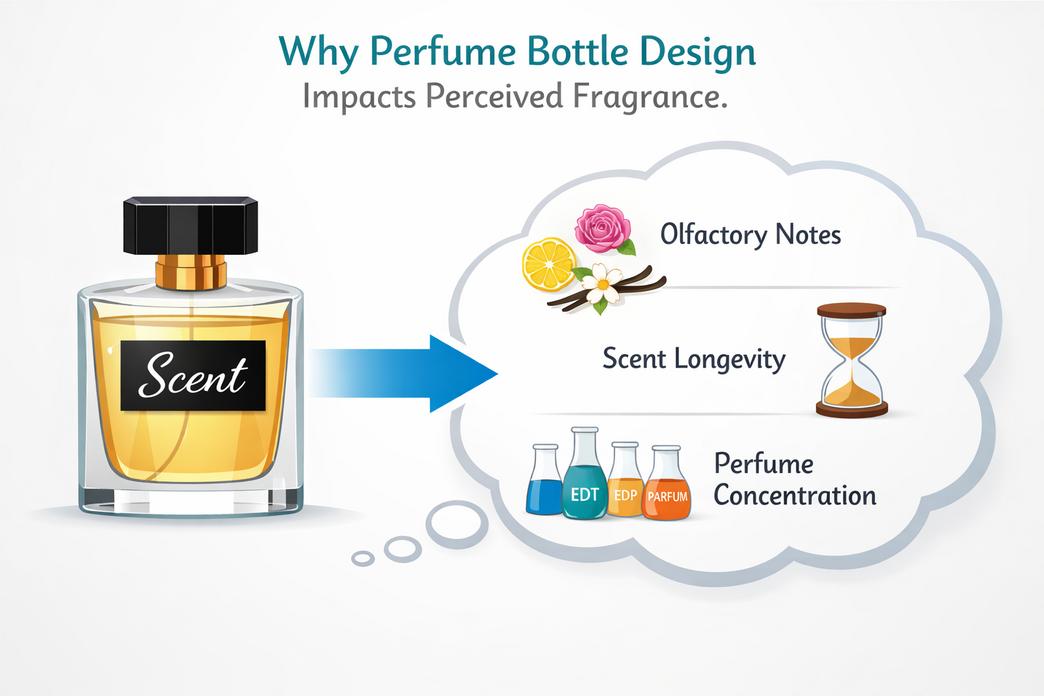
Perfume for perfume bottles sounds simple, right? Yet the match between scent and container can flip how buyers read olfactory notes, judge scent longevity, and even guess perfume concentration. When perfume, bottle, and perfume bottle design sync up, the whole vibe changes. Choosing the right perfume for perfume bottles isn’t extra work. It’s smart brand building.
The “Scent-to-Pack” Match: Why Bottle Design Changes Perceived Fragrance
When selecting perfume for perfume bottles, brands usually move through layered decisions:
- Visual Weight and Emotional Cue
-
Heavy base
- Signals depth in fragrance composition
- Suggests richer fragrance families like oriental or woody
-
Slim, light glass
- Hints at airy aroma profiles
- Connects with citrus or aquatic perfume for bottles
- Transparency and Color
-
Clear glass
- Highlights juice tone
- Reinforces natural ingredient sourcing stories
-
Frosted or tinted
- Softens sharp olfactory notes
- Elevates perceived perfume concentration
- Detailing and Texture
- Magnetic caps → feel premium in hand
- Minimal print → modern fragrance in bottle vibe
- Embossed logos → memory trigger at retail shelf
Perfume for perfume bottles works best when scent, story, and structure line up. A floral perfume bottle carrying a dark, resin-heavy blend confuses buyers. The reverse feels just as off. Brands like Topfeel often test multiple bottle weights and finishes before locking a final perfume bottle plan, making sure the fragrance for perfume bottles actually feels right in real life, not just on paper.
Premium Signal or Cost Trap? How Packaging Choices Affect Bulk Orders
Bulk perfume for perfume bottles orders can get pricey fast, especially with 2026’s shifting global supply chain dynamics. Here’s how costs stack up:
- Custom mold: higher tooling fee
- Thick glass: +8–15% unit cost
- Metalized caps: higher defect rate
- Complex decoration: longer lead time
- Tooling investment
- MOQ pressure
- Storage cost
- Freight weight impact
According to McKinsey’s 2026 global beauty insights, premium packaging remains a key driver of purchase intent, yet margin pressure is rising across indie fragrance brands as logistics costs fluctuate.
“Packaging is now one of the top three value signals in beauty, but brands must balance aspiration with extreme cost discipline.” — McKinsey Beauty Report, 2026
For perfume for perfume bottles, smart brands compare standard molds versus exclusive shapes, test atomizer compatibility early, and negotiate scalable runs. Topfeel, a specialized manufacturer with over a decade of experience and 277 patents, supports this by aligning bottle engineering with projected fragrance volume, utilizing automated 2026 production lines to reduce surprises in perfume bottle production.
The Hidden Dealbreaker: Leakage, Evaporation, and Atomizer Performance
Technical fit can make or break perfume for perfume bottles. Below is a performance comparison used during strict 2026 quality validation:
| Test Item | Standard Spec | Failure Rate (%) | Impact on Scent Longevity |
|---|---|---|---|
| Crimp Seal Tightness (N) | ≥120N | 2.1% | High if below standard |
| Evaporation Loss (30 days) | ≤3% | 3.4% | Reduces scent longevity |
| Atomizer Output (ml/spray) | 0.08–0.12ml | 4.0% | Alters aroma profiles |
| Gasket Compatibility Score | ≥95/100 | 1.8% | Protects fragrance composition |
Selection logic often follows this nested path:
A. Seal Integrity
- Crimp pressure
- Gasket material
- Rubber type
- Chemical resistance to fragrance composition
B. Spray System
- Pump engine
- Dip tube length
- Spray diffusion pattern
C. Transport Testing
- Drop test
- Temperature cycle
- Air pressure simulation
Perfume for perfume bottles must protect the juice inside. A tiny leak can ruin months of careful ingredient sourcing and balancing of fragrance families. Getting perfume in bottles safely to customers isn’t glamorous, yet it’s the quiet hero behind every successful perfume bottle launch.
Understanding The Different Perfume Bottle Types
Choosing the right bottle shape, material, and closure mechanism can totally change how perfume for perfume bottles performs on the shelf and in daily life. From bold retail displays to low-key travel sizes, perfume for perfume bottles isn’t just about scent—it’s about smart packaging that fits real modern habits.
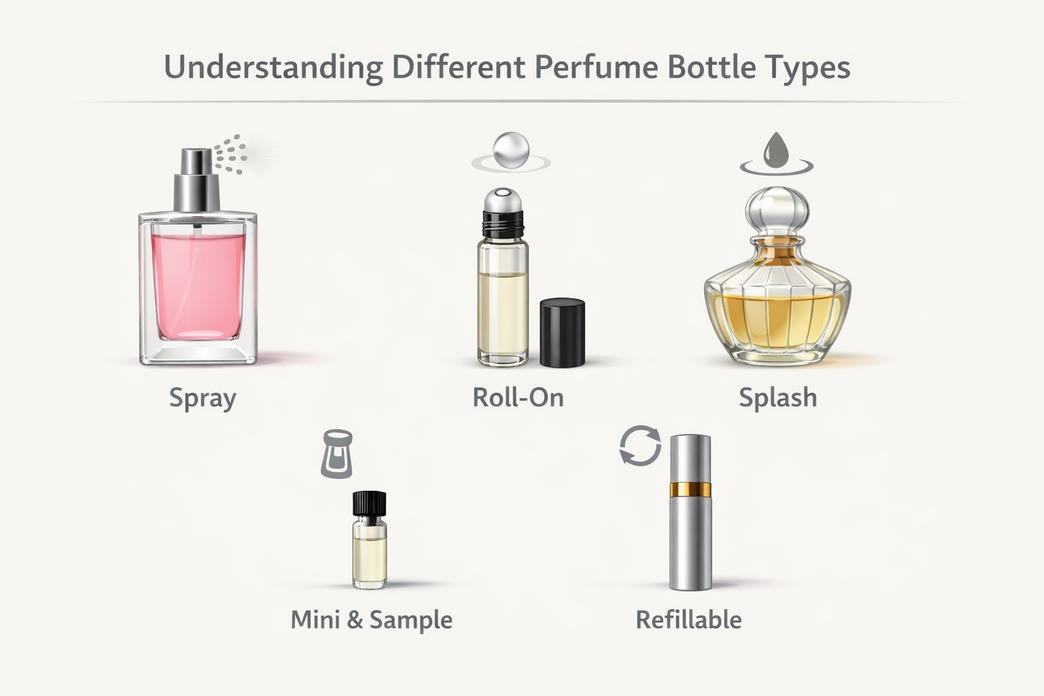
Spray Bottles (Fine Mist Atomizers) for Everyday Fragrances
When brands design perfume for perfume bottles using atomizers, the focus usually falls into three layers:
-
Core System
- Atomizer precision
- Fine mist distribution
- Controlled dosage
- Secure closure mechanism
- Crimp neck
- Screw pump
-
Visual Identity
- Striking bottle shape
- Premium decoration details
-
Functional Specs
- Practical volume capacity
- Glass or aluminum material
This setup works beautifully for alcohol-based perfume for perfume bottles, giving smooth projection without over-spraying. It’s the everyday go-to.
Roll-On Bottles for Oils and Travel Formats
Roll-ons keep things simple yet clever. The rounded applicator, paired with a tight closure mechanism, prevents leaks. Oil-based fragrance for bottles flows directly onto skin, no mist in the air.
Key perks include compact volume capacity, sturdy glass material, and minimalist design aesthetics. For purse-friendly perfume for perfume bottles, this format just makes sense in today’s highly mobile world.
Splash Bottles for Classic, Minimal Hardware Packaging
No pump. No fuss. Just a timeless bottle shape and a cap. Splash formats lower hardware cost and highlight the raw material itself.
Application feels personal. A drop in the palm, a dab on the neck. That ritual still appeals to loyal buyers of perfume for perfume bottles who enjoy tradition over tech.
Mini & Sample Vials for Discovery Sets and Promotions
- Small volume capacity encourages trial.
- Slim bottle shape fits kits and mailers.
- Simple decoration keeps branding clear.
- Lightweight material reduces shipping cost.
McKinsey’s 2026 beauty insights note that sampling remains a “high-impact conversion driver” in fragrance, particularly as direct-to-consumer digital acquisitions become more competitive.
Mini perfume for perfume bottles reduce risk while boosting curiosity.
Refillable Bottles for Sustainable, Subscription-Ready Lines
Sustainability now shapes buying decisions more than ever. Refillable perfume for perfume bottles often follow this structure:
-
Outer Shell
- Durable material
- Elevated design aesthetics
-
Inner Cartridge
- Replaceable core
- Measured volume capacity
-
Locking System
- Secure closure mechanism
- Leak-resistant atomizer
Brands like Topfeel support this shift with refill-ready solutions, utilizing next-generation eco-friendly materials like advanced PCR and biodegradable plastics, that balance style and compliance with emerging 2026 global waste reduction mandates. Reuse feels smart. And customers notice.
Materials For Perfume Bottles: Pros And Cons Of Each Option
Choosing the right material shapes how perfume for perfume bottles performs, feels, and sells. The interaction between fragrance preservation, durability, and aesthetics can make or break a launch. From classic glass to modern metal and smart plastic, each option shifts cost, weight, and vibe. Let’s break it down in plain terms.
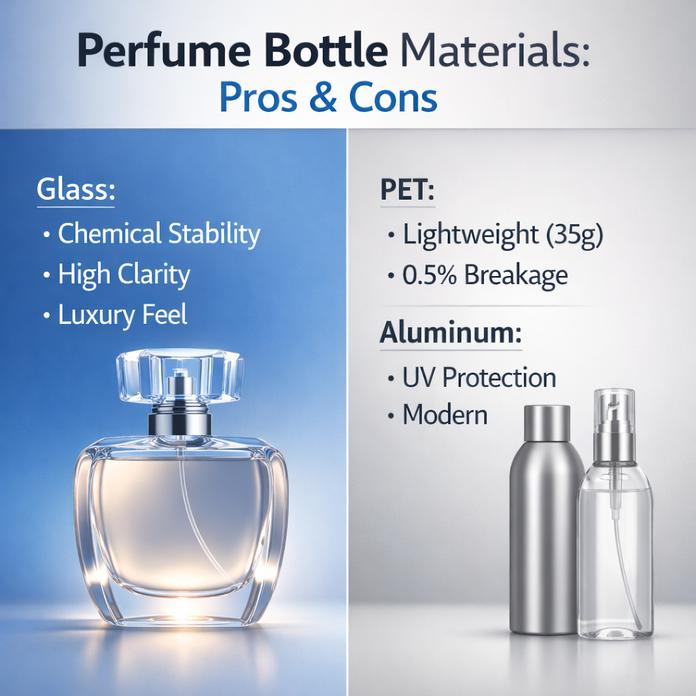
Glass Bottles for Fragrance Integrity and Shelf Prestige
When storing perfume for perfume bottles, glass remains the gold standard because it protects scent chemistry and signals quality.
-
Core strengths
- Chemical stability
- Non-reactive surface supports long-term fragrance preservation.
- Ideal for alcohol-based perfume in perfume bottles.
- Visual appeal
- High clarity boosts aesthetics.
- Works well for tinted or frosted finishes.
- Weight perception
- Heavier base = stronger luxury cue.
-
Trade-offs
- Breakage risk increases during shipping.
- Higher freight cost compared with plastic.
- Requires careful secondary packaging.
For brands focusing on premium perfume for perfume bottles, thick-base glass enhances both display value and scent stability. It simply feels right in hand.
PET Plastic Bottles for Lightweight Shipping and Lower MOQ
Plastic, especially PET plastic, works well for mass-market perfume for perfume bottles and travel sizes.
- Cost efficiency: lower production and tooling investment.
- Logistics edge: reduced weight cuts shipping fees.
- Impact resistance: improved durability in transit.
Here’s a quick comparison:
| Material | Avg Weight (50ml) | Breakage Rate (%) | Relative Cost Index |
|---|---|---|---|
| Glass | 180g | 3.5 | 1.00 |
| PET | 35g | 0.5 | 0.72 |
| Aluminum | 45g | 0.3 | 0.95 |
Downside? Long-term compatibility with certain oils may be limited. Also, high-end fragrance buyers sometimes associate plastic with lower prestige. Still, for affordable perfume for perfume bottles, it gets the job done.
Aluminum Bottles for UV Protection and Modern Minimalism
Metal, particularly aluminum, protects perfume for perfume bottles from light exposure.
-
Functional layer
- Total UV blockage supports sensitive notes.
- Strong structural durability.
-
Design layer
- Matte, brushed, or anodized finishes.
- Clean, minimal look that fits gender-neutral lines.
-
Operational layer
- Lightweight yet dent-resistant.
- Works well for refillable perfume in perfume bottles.
The trade-off sits in decoration limits. Complex transparency effects aren’t possible like with glass or crystal-style designs. Still, for active lifestyles, aluminum feels practical and cool.
Crystal-Look Materials for Luxury Feel Without Full Crystal Costs
True crystal looks stunning but adds serious weight and cost. Many brands choose enhanced glass or high-grade acrylic to mimic that sparkle.
-
Visual impact
- High refractive shine elevates shelf presence.
- Faceted cuts amplify aesthetics.
-
Cost balance
- Lower than full lead crystal.
- Easier molding for custom perfume for perfume bottles.
-
Performance considerations
- Acrylic reduces weight.
- Specialty glass keeps better fragrance preservation than standard plastic.
For luxury perfume for perfume bottles without extreme pricing, crystal-look materials hit a sweet spot. You get the shine. You avoid the headache of heavy freight and fragile handling.
The Impact Of Bottle Shape On Fragrance Appeal
Bottle shape does more than hold liquid; it quietly shapes fragrance perception and even nudges consumer preference. When shoppers scan shelves or scroll online, the outline of perfume bottles speaks before the scent does. From perfume for perfume bottles designed for romance to bold architectural forms, shape becomes part of the olfactory experience. Brands like Topfeel understand that smart bottle design can shift buying decisions fast.
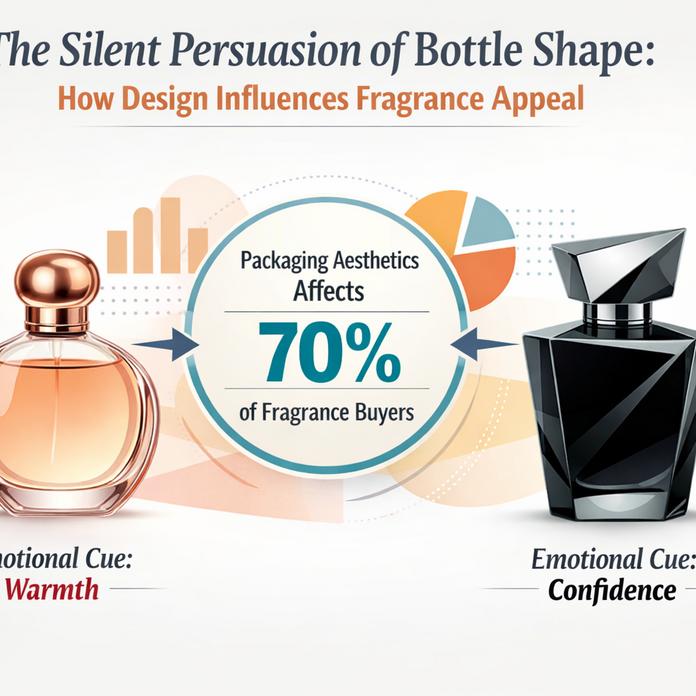
Silhouette Psychology: How Curves, Angles, and Symmetry “Sell” the Scent
- Curves often hint at softness.
- Angles project strength.
- Symmetry signals balance.
Within bottle design, shape works on three psychological layers:
-
Emotional Cue
- Rounded perfume bottles suggest warmth.
- Tall, sharp-edged perfume for perfume bottles suggest confidence.
-
Visual Expectation
- Slim forms imply light, airy perfume.
- Heavy bases suggest intense perfume for bottles with depth.
-
Brand Alignment
- Minimal symmetry aligns with modern aesthetic appeal.
- Decorative silhouettes enhance packaging influence.
McKinsey’s 2026 global beauty insights note that packaging aesthetics directly affect purchasing decisions for over 70% of fragrance buyers, especially as 3D digital retail and AR try-ons become standard.
Topfeel often crafts perfume for perfume bottles that mirror scent mood, reinforcing sensory evaluation before the first spray even lands.
Ergonomics Meets Aesthetics: Grip, Spray Control, and Daily Use Comfort
Comfort shapes loyalty.
-
Hand Fit
- Contoured sides help steady perfume bottles.
- Textured glass reduces slips.
-
Weight Balance
- Centered mass improves spray aim.
- Lightweight perfume for perfume bottles suit travel.
-
Spray Precision
- Even mist improves the overall perfume experience.
- Controlled pressure protects the olfactory experience.
When perfume for perfume bottles feels right in hand, daily use becomes effortless. That subtle comfort feeds long-term consumer preference.
Shelf Impact for Retail and E-commerce: What Shapes Photograph Best
Visual impact plays out in layers:
-
In-Store Presence
- Distinct silhouettes rise above crowded perfume bottles.
- Reflective surfaces amplify lighting.
-
Online Thumbnails
- Clean outlines sharpen image clarity on high-res mobile screens.
- Balanced symmetry strengthens aesthetic appeal in social commerce feeds.
-
Brand Recall
- Unique shapes anchor memory.
- Consistent packaging influence builds trust.
Topfeel designs perfume for perfume bottles that pop both on shelves and screens, proving that shape isn’t just style—it’s silent persuasion.
Glass Vs. Plastic Perfume Bottles: Which Is Best For Your Brand?
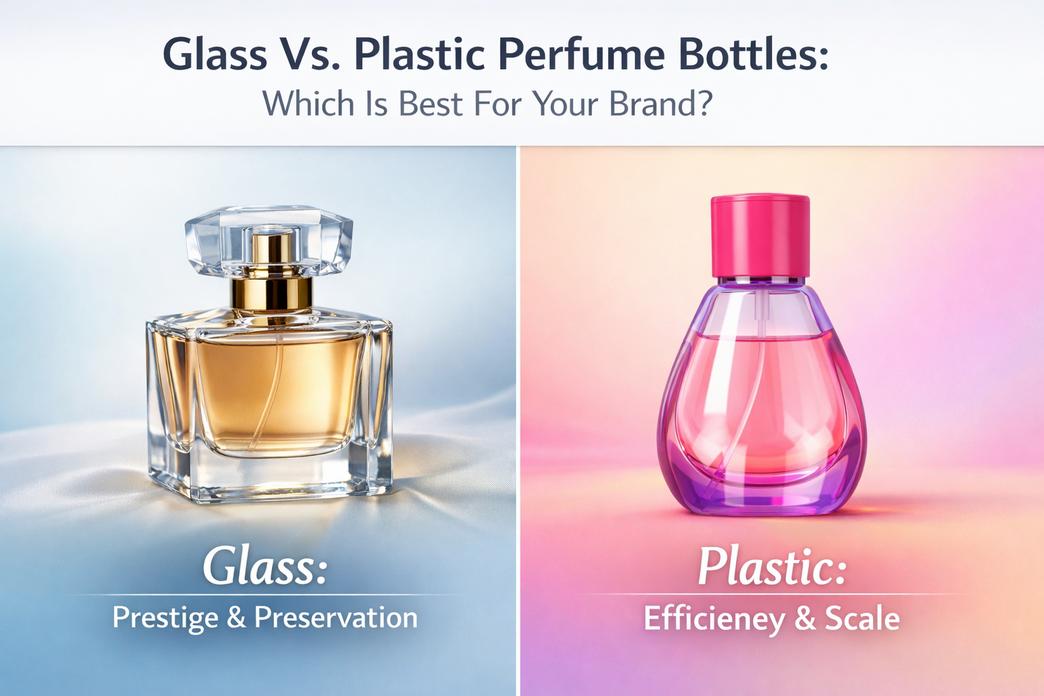
Choosing between glass and plastic isn’t just about looks. It shapes your material comparison, brand vibe, and even how well your perfume for perfume bottles stays fresh. When brands develop perfume, perfume bottles, and perfume bottle packaging together, small material details make a big difference in cost, feel, and long-term customer love.
Glass
When selecting glass for perfume for perfume bottles, brands often evaluate it through three connected lenses:
- Product Integrity and Preservation
1.1 Product preservation
- Glass is chemically inert.
- It prevents interaction between fragrance oils and packaging.
- Ideal for high-concentration perfume for perfume bottles.
1.2 Stability in the manufacturing process
- Handles alcohol-based formulas well.
- Maintains scent profile over time.
- Brand Image and Aesthetic Impact
2.1 Aesthetic appeal
- Thick bases signal luxury.
- Custom molding supports creative packaging options.
2.2 Weight perception
- Heavier feel = premium signal.
- Enhances shelf presence in perfume bottle packaging displays.
- Performance Metrics and Logistics
| Property | Glass Bottle | Impact on Brand |
|---|---|---|
| Average Weight (50ml) | 180–250 g | Higher shipping cost |
| Oxygen Permeability | 0 cc/m²/day | Strong scent retention |
| Breakage Rate (Transit %) | 2–5% | Risk management needed |
| Recyclability Rate (Global) | 70%+ | Supports sustainability goals |
For brands working on perfume for perfume bottles aimed at prestige markets, companies like Topfeel often recommend tailored glass solutions that balance design freedom with durability planning.
Glass speaks softly but carries weight—literally and symbolically.
Plastic
Plastic plays a different game. It wins on flexibility and scale.
• Lower unit cost for large runs
• Reduced freight expense due to lighter weight
• Higher drop resistance, improving durability
- Cost Efficiency
- Reduced raw material expense
- Faster manufacturing process cycles
- Ideal for mass perfume bottle packaging
- Market Positioning
- Works well for casual lines.
- Appeals to youth-focused perfume for perfume bottles collections.
- Supports bright colors and playful shapes.
-
Sustainability Conversation
★ High-grade Recycled PET options
★ Lightweight carbon savings
★ Still perceived as less premium than glass, though the gap is closing in 2026.
Plastic suits brands prioritizing volume and speed. Topfeel helps balance material comparison decisions so your perfume, perfume bottles, and overall packaging strategy align with audience expectations.
In short, glass builds prestige and preserves scent. Plastic drives efficiency and scale. The best choice depends on your brand story—and how you want your perfume for perfume bottles to be remembered.
4 Factors To Consider When Buying Perfume Bottles
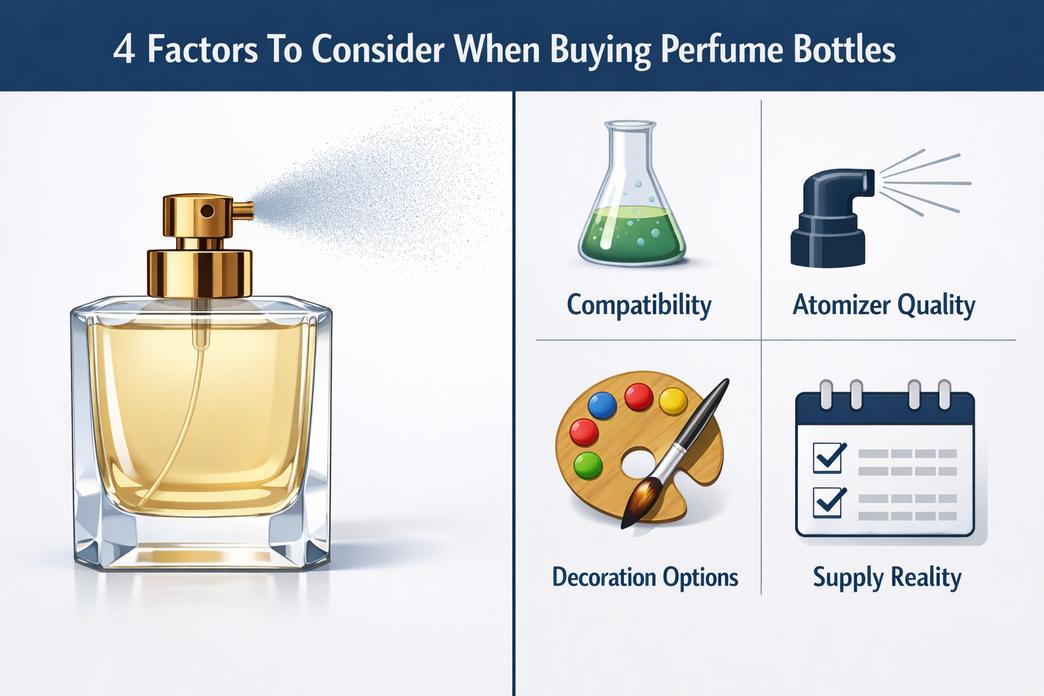
Choosing the right bottle for perfume for perfume bottles sounds simple, but small details can mess with scent quality and brand vibe. From material to spray feel, every choice shapes how perfume for perfume bottles performs on shelves and in hands.
Compatibility With Your Formula: Alcohol, Oils, and Cap Liners
When selecting a bottle for perfume for perfume bottles, compatibility sits at the core.
-
Material
-
Glass
- Soda-lime: budget friendly, standard for perfume for perfume bottles.
- High-flint: clearer, better for luxury perfume for perfume bottles.
-
Plastic
- PET: lighter, better portability, but may absorb oils.
-
-
Internal Components
- Gasket and liner inside the closure type
- PE liners resist alcohol-heavy perfume for perfume bottles.
- Rubber liners risk swelling with oil-based perfume for perfume bottles.
- Run a 30-day stability test.
- Store at 45°C and room temperature.
- Check discoloration, odor shift, and corrosion.
If your perfume for perfume bottles contains high oil content, test twice. A small reaction today becomes a big return problem later.
Atomizer Quality: Spray Pattern, Dosage, and Failure Rates
The atomizer defines user experience of perfume for perfume bottles.
-
Atomizer quality
- Spray pattern: fine mist vs. jet stream.
- Output rate: 0.08–0.12 ml per press is common.
- Failure rate: aim below 1% (achievable with advanced 2026 automated QC).
For perfume for perfume bottles targeting travel retail, stable dosage supports capacity control and cost tracking.
• Smooth press
• Even diffusion
• No leakage after 500 pumps
A weak atomizer ruins even premium perfume for perfume bottles. Test in bulk, not just samples.
Decoration Options: Frosting, Coating, Screen Printing, and Label Fit
Visual design sells perfume for perfume bottles before scent does.
-
Surface Treatment
- Frosted finish: hides fingerprints.
- UV coating: improves durability.
-
Branding Fit
- Screen printing alignment with bottle curve.
- Label size matched to capacity and shoulder angle.
Short checks help:
Clean rub test.
Alcohol wipe test.
Drop scratch test.
If decoration peels, perfume for perfume bottles looks cheap fast. That hurts repeat orders.
Supply Reality: MOQ, Lead Time, Packaging Tests, and Freight Risk
Behind every great perfume for perfume bottles sits supply math.
-
Order Planning
- MOQ tied to material and mold type.
- Custom design increases lead time to 35–45 days.
-
Quality Control
- Drop test from 1.2 meters.
- Carton compression strength for export.
-
Logistics
- Inner dividers protect durability.
- Compact shapes improve portability and freight efficiency.
Brands like Topfeel, which operates 32,000 ㎡ GMPc workshops to maintain strict international quality management, align closure type, atomizer testing, and freight cushioning in one workflow, keeping perfume for perfume bottles safe from factory to store shelf.
Get these four factors right, and your perfume for perfume bottles won’t just look good—it will last, spray clean, and arrive intact.
FAQs about Perfume For Perfume Bottles
How does bottle design influence how customers perceive the perfume for perfume bottles?
A customer judges in seconds—before a single spray touches skin.
- Weight & touch – Thick glass and balanced caps feel lasting and luxurious.
- Shape & symmetry – Clean lines suggest freshness; curved silhouettes hint at floral or romantic tones.
- Color tone – Deep amber aligns with woody bases, pale pastels whisper light citrus.
When perfume for perfume bottles visually mirrors its scent family, buyers sense harmony. That emotional alignment often decides bulk purchase orders faster than scent sampling.
What materials work best for large perfume bottle orders?
Material choice affects freight cost, shelf presence, and formula safety.
| Material | Strength | Limitation | Best Use |
|---|---|---|---|
| Glass | Premium feel, strong formula protection | Heavy shipping weight | Luxury retail lines |
| PET Plastic | Lightweight, cost-efficient | Lower prestige perception | Mass market launches |
| Aluminum | UV shielding, modern style | Higher unit cost | Niche or travel lines |
| Crystal-look composites | Brilliant appearance | Moderate durability | Gift collections |
Selecting material for perfume for perfume bottles is both financial and emotional—cost per unit meets brand identity.
Why must scent and packaging match in bulk perfume bottle supplies?
A mismatch creates doubt. A woody, intense fragrance inside a playful pastel bottle confuses buyers.
- Packaging signals price level.
- Design frames customer expectations.
- Visual unity builds trust across product lines.
When perfume for perfume bottles carries a consistent visual story, retailers position it faster, and customers return with confidence.
What causes leakage or evaporation during transport?
Breakage drama often begins in small technical oversights:
① Incompatible sealing liners reacting with alcohol bases.
② Loose atomizer fittings that shift during freight vibration.
③ Missing carton drop tests before shipment.
④ Heat fluctuations expanding liquid volume mid-transit.
In large perfume for perfume bottles shipments, one weak gasket can multiply into thousands of returns. Prevention costs less than replacement.
How should buyers evaluate atomizer quality at scale?
The atomizer defines the daily ritual.
- Mist consistency: fine and even, not heavy droplets.
- Dosage control: stable spray output each press.
- Endurance: repeated pumping without clogging.
A short stress test—continuous spraying cycles, pressure checks, and compatibility with alcohol blends—reveals hidden flaws.
For perfume for perfume bottles, a flawless spray is not a detail; it is the final promise delivered to the user.

