 English (UK)
  English
  English (Australia)
  English (Canada)
  العربية
  Deutsch
  Italiano
  Español de México
  Tiếng Việt
  ไทย
ไทย  Português do Brasil
  Français
  Български
  Čeština
  Dansk
Dansk  Ελληνικά
  Eesti
Eesti  Suomi
Suomi  Magyar
  Bahasa Indonesia
  Lietuvių kalba
  Latviešu valoda
  Norsk bokmål
  Nederlands (Formeel)
  Polski
  Română
  Русский
  Slovenčina
  Slovenščina
  Svenska
  Türkçe
  Українська
  简体中文
简体中文  日本語
日本語  한국어
한국어  繁體中文
繁體中文 
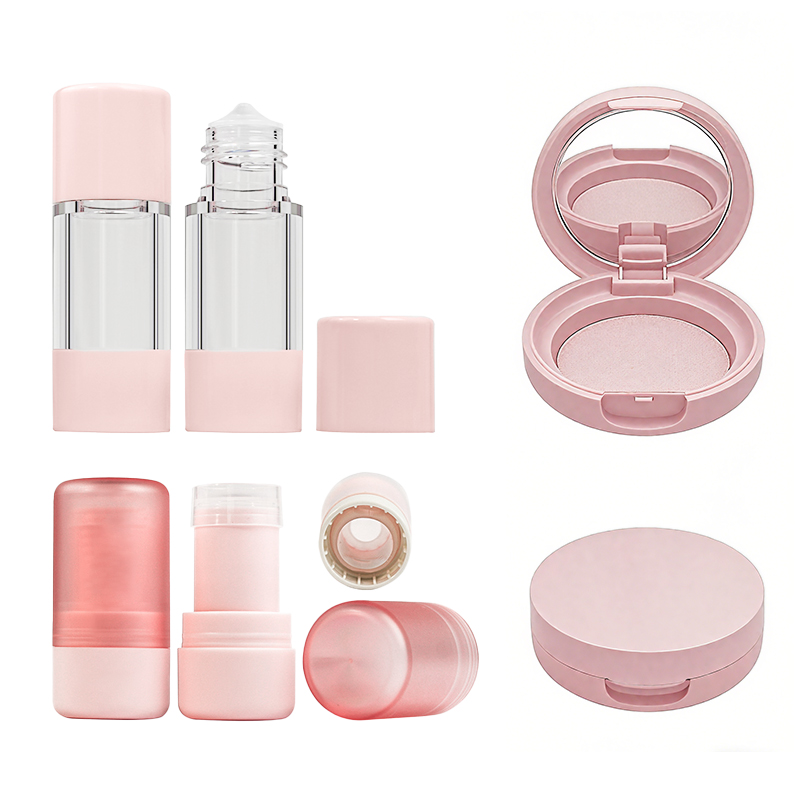
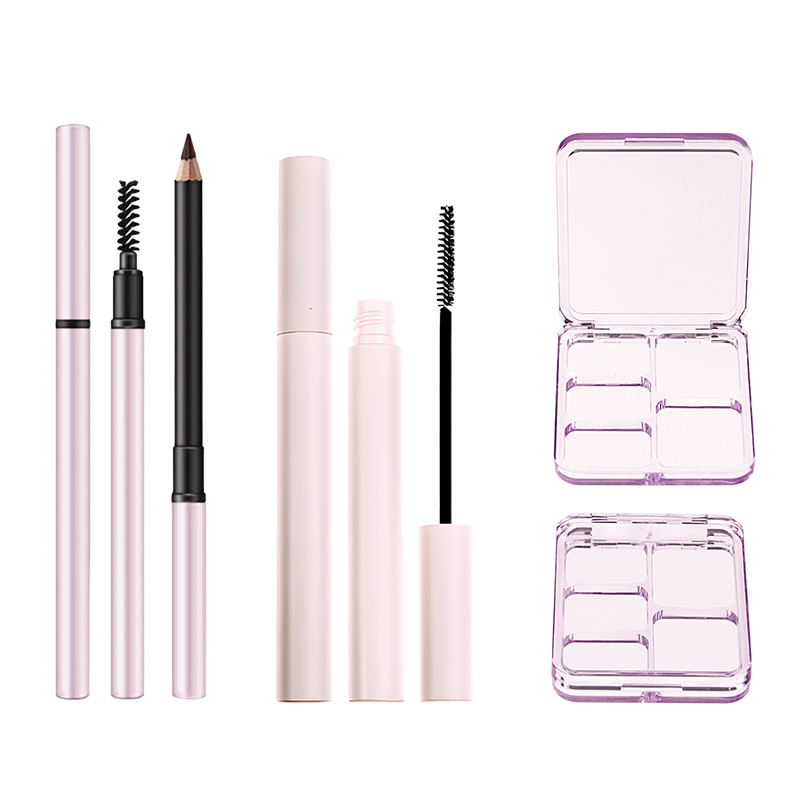
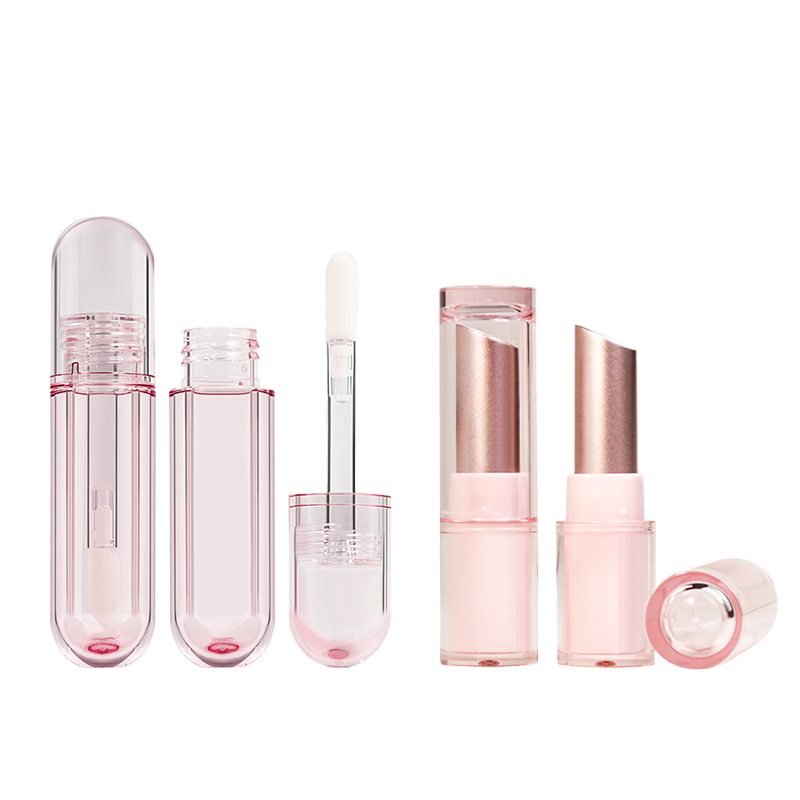

Best Eco-Friendly Options for Highlighter Packaging
March 26,2026
Highlighter packaging is having its main‑character moment. Beauty buyers aren’t just picking pretty compacts anymore—they’re juggling carbon footprints, refill systems, and cost per unit like it’s Wall Street in mascara. One wrong material choice, and suddenly your “clean” launch feels a little… not so clean.
McKinsey reports over 60% of U.S. consumers consider sustainability when buying beauty. That’s not a whisper—that’s a wake‑up call.
So here’s the rub: brands want eco cred without flimsy hinges, cloudy lids, or sky‑high MOQs. The sweet spot? Packaging that feels luxe in the hand, smart on paper, and responsible at scale.
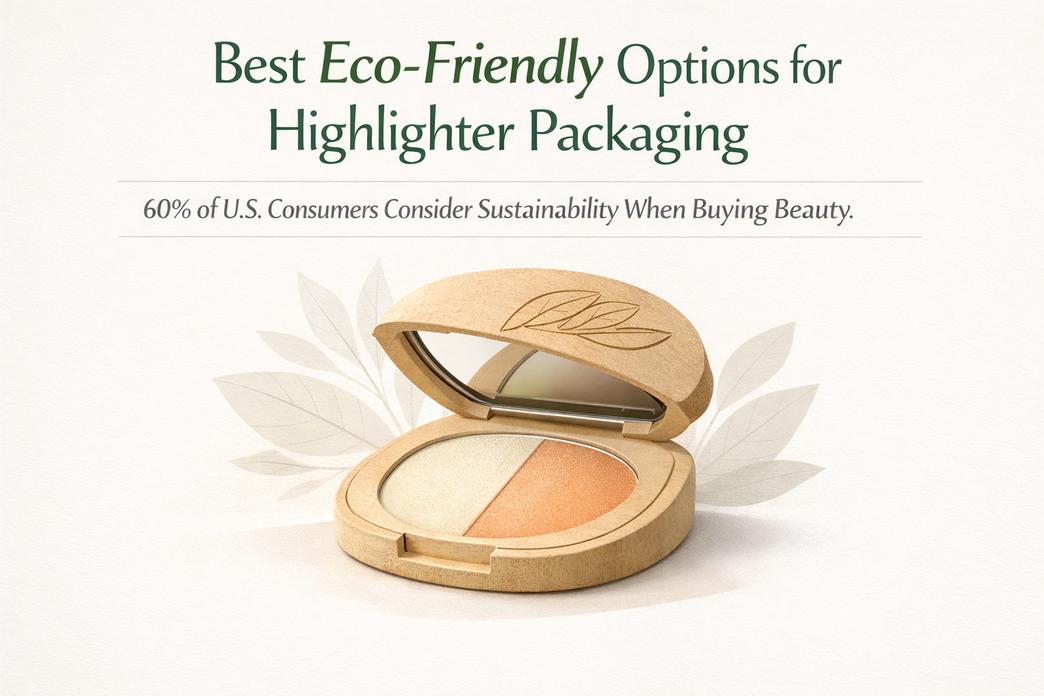
Eco-Friendly Plastic for Highlighter Packaging
Sustainability isn’t just hype in highlighter packaging right now—it’s numbers, supply chains, and real buying behavior. From highlighter caps to refill pans, brands are rethinking every layer of highlighter, packaging, and material sourcing. Here’s what current data says about highlighter packaging decisions and how smart brands like Topfeelpack turn insight into action.
78% of brands choosing PCR plastic for highlighter caps
-
Material shift in highlighter packaging
-
- Post-consumer sourcing reduces virgin resin demand
- Keeps molding stability for slim highlighter caps
-
Compatibility
- Works smoothly with automated filling lines
- Maintains color consistency for luxury highlighter packaging
-
-
Why brands prefer it
-
Cost balance
- Lower tooling adjustment costs
- Competitive pricing versus pure bio-resin
-
Market perception
- Signals eco-friendly materials commitment
- Aligns with rising demand for sustainable packaging
-
-
How Topfeelpack supports this move
-
In-house testing
- Drop resistance checks
- Cap torque control
-
Customization
- Frosted, glossy, or metallic finish on highlighter package designs
-
How 65% lower carbon footprint comes from bioplastic palettes
-
Emission comparison in bioplastic palettes
-
Feedstock origin
- Renewable plant-based inputs
- Reduced fossil fuel dependency
-
Production phase
- Efficient injection cycles
- Lower energy intensity
-
-
Lifecycle impact on carbon footprint
-
Transport weight
- Lightweight trays cut logistics emissions
-
End-of-life
- Improved recyclability in select streams
-
-
Packaging innovation in action
- Brands shifting from acrylic to sustainable materials
- Eco-focused collections upgrading cosmetic highlighter packaging
- Topfeelpack integrating bio-resin options into full packaging innovation programs
Data shows refillable design boosts repurchase by 40%
-
Consumer behavior trends
-
Cost awareness
- Lower refill price encourages repeat buys
-
Eco mindset
- Less waste, longer product lifecycle
-
-
Refillable design in highlighter packaging
-
Structural layout
- Magnetic pan system
- Easy snap-in replacement
- Secure fit during travel
- Durable outer shell
- Aluminum or reinforced PCR base
-
Visual continuity
- Same outer highlighter packaging
- Fresh refill pan inside
-
-
Packaging strategy results
- Higher repurchase rate
- Stronger loyalty among eco-conscious consumers
- Smarter long-term packaging strategy built around refillable sustainable packaging solutions
In today’s market, smart highlighter packaging isn’t loud—it’s data-backed, cost-aware, and built to last.
Highlighter packaging isn’t just about looks anymore. Brands now balance eco goals, shelf impact, and safety tests all at once. From material picks to decoration details, smart highlighter packaging shapes how beauty products feel, perform, and sell.
Types of eco-friendly highlighter materials
When choosing materials for highlighter packaging, brands often compare performance, cost, and eco impact side by side.
-
Paper-Based Solutions
-
recycled paperboard
- Used for outer cartons and refill cases
- Works well with plant-based inks
- Pairs naturally with cardboard inserts
-
-
Bio-Derived Options
-
- Common in caps or compact shells
- Lightweight yet sturdy
-
bioplastics
- Derived from renewable feedstock
- Compatible with certain refillable highlighter packaging formats
-
-
Reprocessed Plastics
-
recycled plastic (PCR PP, PCR PET)
- Keeps durability close to virgin resin
- Ideal for airtight highlighter container systems
-
| Material Type | Recyclability Rate (%) | Carbon Reduction (%) | Durability Score (1–5) |
|---|---|---|---|
| PCR PP | 95 | 30 | 4 |
| Bamboo Composite | 80 | 45 | 3 |
| Recycled Paperboard | 90 | 50 | 2 |
For brands working on next-gen highlighter packaging, Topfeelpack often blends recycled plastic with paper elements, keeping both form and footprint in check.
Sustainability features: Recycled content vs. biodegradable options
In the highlighter packaging world, the eco debate usually circles around two paths.
- post-consumer recycled content and pre-consumer recycled content boost the circular economy.
- biodegradable polymers and compostable materials aim for cleaner breakdown.
- Materials from renewable resources help lower the reduced carbon footprint of cosmetic packaging.
Here’s the catch. Recycled content depends on sorting systems in each region. Biodegradable materials sound great, yet not all break down in normal landfill conditions.
“Sustainable packaging innovation is accelerating, with recycled content remaining the most scalable near-term solution,” noted McKinsey & Company in its 2024 Global Packaging Report.
For highlighter packaging, recycled resin often wins on compatibility with powders and creams. Biodegradable options shine in secondary highlighter boxes or promotional packaging. Smart brands test both before locking in specs.
Decoration techniques: Silk screening and UV metallization
Decoration can make or break highlighter packaging on a crowded shelf.
-
Silk Screening
-
Ink Choices
- water-based inks for lower emissions
- low-VOC inks to reduce factory impact
-
Finish Control
- Works well on recycled plastic and glass
- Supports fine logo lines
-
-
UV Metallization
-
Coating System
- Uses UV-curable inks
- Delivers mirror shine with thinner layers
-
Alternative Effects
- metallic foil stamping for bold logos
- embossing and debossing for tactile branding
- Sealed with eco-friendly varnishes
-
Compared with traditional plating, UV metallization reduces metal waste. That’s a win for both vibe and volume production in highlighter packaging runs.
Quality standards: AQL, ISO certification, and leakage testing
Quality control in highlighter packaging goes deeper than surface shine.
-
Inspection Benchmarks
-
acceptable quality limit (AQL)
- Defines sampling size
- Sets defect tolerance levels
-
-
Factory Systems
-
Performance Validation
- leakage prevention checks for liquid highlighter pens
- durability testing for hinge strength and drop resistance
- Verification of material integrity and product safety
For global beauty brands, Topfeelpack integrates AQL inspections with stress testing before shipping any highlighter packaging batch. That means fewer surprises, tighter seals, and packaging that actually survives real-life makeup bags.
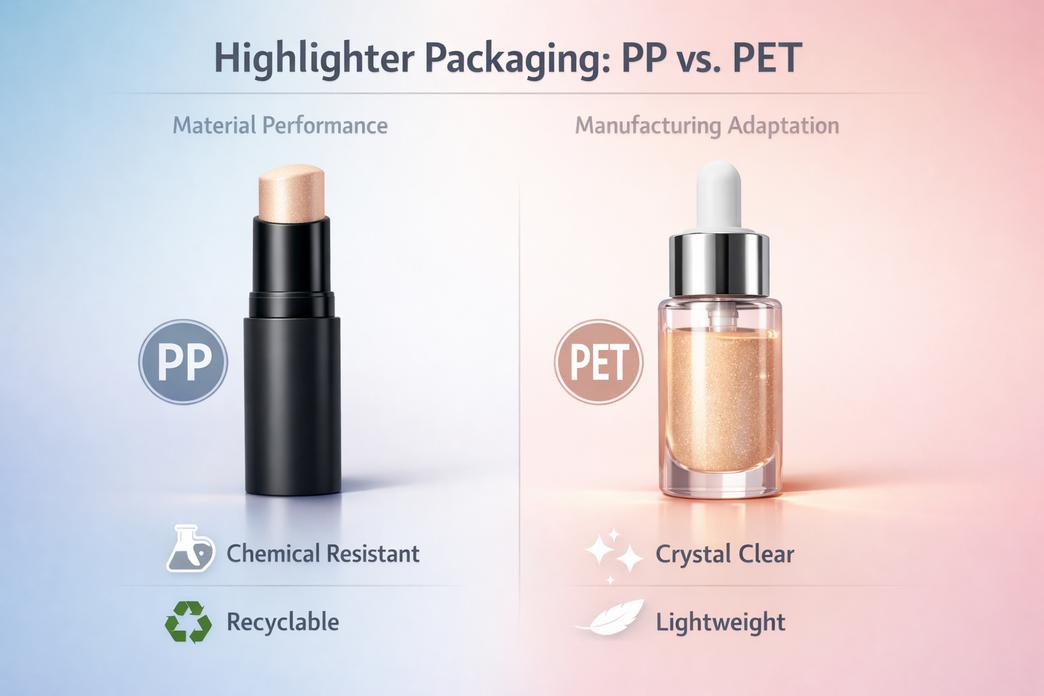
Great highlighter packaging is more than a cute tube on a shelf. It shapes how a glow product feels in hand, how safe the formula stays, and how easy refills become. From material picks to finish effects, every detail in highlighter packaging builds brand trust and everyday usability.
Step 1 – Selecting PP or PET highlighter bodies
When planning highlighter packaging, body material drives performance and vibe at the same time. The choice often comes down to Polypropylene (PP) and Polyethylene Terephthalate (PET).
-
Material Performance Layer
-
Polypropylene (PP)
- Known for strong chemical resistance
- Ideal for cream or liquid glow formulas
- Supports recyclable plastics streams
-
Polyethylene Terephthalate (PET)
- Offers crystal clarity for luminous shades
- Enhances gloss in transparent highlighter packaging
- Works well in lightweight construction
-
-
Manufacturing Adaptation
- Injection molding favors durable materials like PP for thick-wall sticks.
- Blow molding supports PET bottles used in liquid highlighter containers.
-
Brand Strategy Fit
- Mass market: focus on recyclable plastics and cost stability.
- Prestige line: highlight clarity, shine, and clean lines in highlighter containers.
This is where Topfeelpack aligns resin choice with formula testing, keeping highlighter packaging functional and good-looking without overcomplicating the build.
Step 2 – Adding a soft touch or metallic sheen finish
Surface finish changes how highlighter packaging feels before the cap even twists open.
-
Tactile Upgrade
- Apply soft-touch coating for a velvet grip.
- Create a smooth matte effect that feels modern.
- Add a subtle textured surface to prevent slipping.
-
Visual Impact
- Use spray layers for a metallic finish.
- UV metallization boosts glossy appearance on caps.
- Balanced contrast enhances overall aesthetic appeal.
-
Premium Positioning
- Combine metallic collars with soft bodies for a clear premium feel.
- Keep color harmony aligned with the glow shade inside.
“Premium packaging remains a key driver of value growth in beauty, with tactile finishes and refill options supporting higher unit prices,” noted Euromonitor International in its 2025 global beauty packaging outlook.
That insight shows how glow product packaging and surface details can directly influence shelf performance.
Step 3 – Integrating refillable mechanisms in lipstick tubes
Refill systems in stick-style highlighter packaging are no joke; precision matters.
-
Core Structure
- Outer shell built for component longevity
- Inner cartridge designed as a modular system
- Snap or twist lock for stable alignment
-
Sustainability Path
- Encourages refillable design
- Supports sustainable packaging
- Cuts impact through reduced waste
- Connects to circular economy goals
-
User Experience
- Smooth push-up motion
- Easy cartridge swap
- Strong user convenience
For brands wanting eco-forward highlighter containers, Topfeelpack develops tooling that keeps refills tight, clean, and frustration-free.
Step 4 – Ensuring compatibility testing for pumps and droppers
Liquid highlighter packaging often relies on pump dispensers or dropper mechanisms, and testing keeps everything drama-free.
-
Material Compatibility Check
- Confirm material compatibility between formula and spring.
- Review seal interaction to protect product integrity.
- Test for staining or swelling in gaskets.
-
Functional Reliability
- Measure dispensing accuracy across 500+ presses.
- Evaluate leak prevention during transport.
- Run repeated functional testing under heat cycles.
-
Lifecycle Assurance
- Simulate shipping vibration.
- Monitor color change over time.
- Record performance until end-of-life use.
When highlighter packaging passes these checks, glow products stay fresh, clean, and ready to shine—no messy surprises in the makeup bag.
Highlighter packaging is more than a cute outer shell. It shapes how a glow product feels in your hand, how long it lasts, and how easy it is to recycle. From compact cases to sleek highlighter containers, every material choice affects cost, vibe, and impact. Let’s break down what really matters.
Acrylic vs. Glass
When choosing materials for highlighter packaging, brands often compare acrylic and glass across practical layers:
-
Performance Basics
-
Weight
- Acrylic keeps highlighter containers light and travel-friendly.
- Glass adds noticeable heft, often linked to luxury.
-
Durability
- Acrylic resists cracks and drops.
- Glass can shatter, raising safety concerns.
-
-
Environmental Considerations
-
Recyclability
- Glass scores high in closed-loop systems.
- Acrylic recycling depends on local streams.
-
Production energy
- Glass furnaces demand high heat.
- Acrylic relies on petrochemical processing.
-
-
Product Integrity
-
Chemical inertness
- Glass offers strong chemical inertness, ideal for sensitive formulas.
- Acrylic performs well but may require compatibility testing.
-
Visual appeal
- Acrylic supports tinted, frosted highlighter cases.
- Glass delivers crystal-clear visual appeal.
-
In premium highlighter packaging, glass signals status. For mass-market glow packaging, acrylic often wins on flexibility and shipping efficiency.
Aluminum vs. Plastic
In highlighter packaging design, aluminum and plastic bring different strengths. Quick snapshot:
- Barrier properties: Aluminum blocks light and air extremely well. Plastic varies by resin type.
- Carbon footprint: Primary aluminum has high carbon footprint, but recycled aluminum lowers it sharply.
- Manufacturing process: Plastic molding allows complex shapes; aluminum forming suits sleek pans.
Now, a closer look:
- Resource depletion
Aluminum mining impacts land use. Plastic relies on fossil feedstock, raising long-term resource depletion concerns.
- End-of-life options
Plastic highlighter packaging may face sorting limits. Aluminum often enjoys established end-of-life options in recycling streams.
- Biodegradability
Traditional plastics lack biodegradability, while aluminum is endlessly recyclable but not biodegradable.
According to the OECD Global Plastics Outlook (updated 2024), plastic waste is projected to nearly triple by 2060 without stronger circular policies, pushing beauty brands to rethink material intensity.
For refillable highlighter cases, aluminum feels sturdy and cool to the touch. Plastic keeps tooling costs low and supports bold shapes in highlighter packaging collections.
Mono-material packaging vs. Mixed-material assemblies
In highlighter packaging, structure drives sustainability outcomes:
-
Recycling Flow
-
Ease of recycling
- Mono-material highlighter containers simplify sorting.
- Mixed parts reduce ease of recycling.
-
Separation challenges
- Glued mirrors and magnets create real separation challenges.
-
-
Design and Sourcing
-
Material sourcing
- Single-resin systems streamline material sourcing.
- Mixed assemblies require multiple suppliers.
-
Design flexibility
- Mixed builds unlock higher design flexibility for luxury highlighter packaging.
-
-
Use and Disposal
-
Performance characteristics
- Mixed formats can improve performance characteristics, like hinge strength.
-
Consumer disposal
- Simple packs guide better consumer disposal habits.
-
Mono-material glow packaging feels practical and future-ready. Mixed-material highlighter packaging still rules in high-end makeup packaging where drama and detail matter.
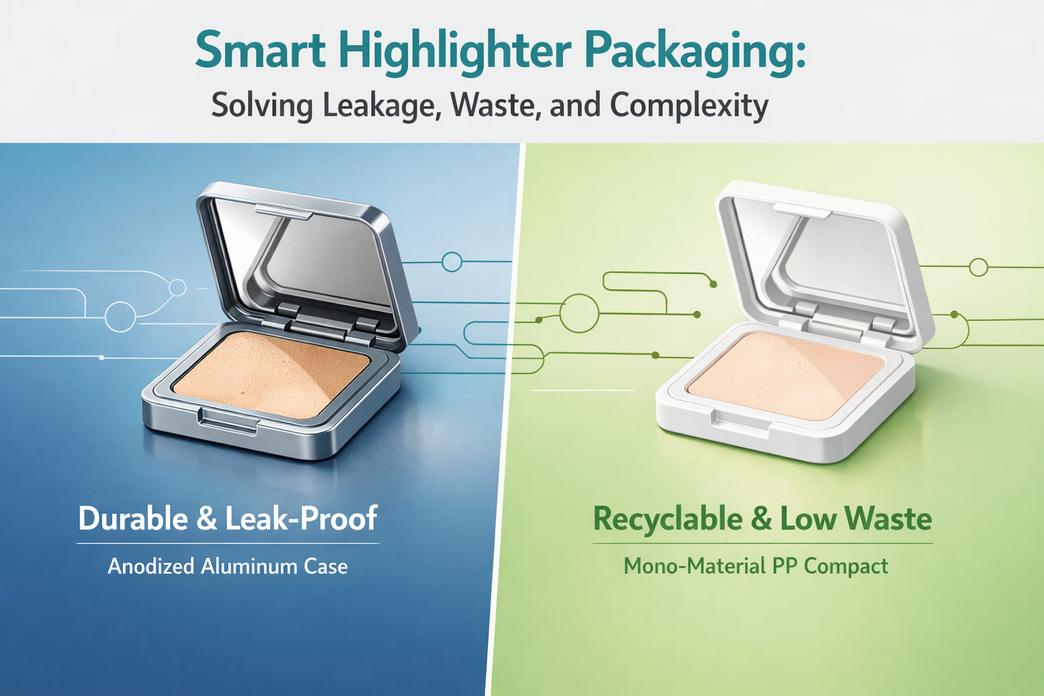
Great makeup deserves smart highlighter packaging. If your highlight makeup packaging keeps failing—leaking, wasting material, or slowing down assembly—it’s time for a fix. Let’s make your cosmetic highlighter packaging work harder, not louder.
Tired of leakage? Try anodized aluminum compact cases
Leakage in highlighter packaging usually comes down to structure and sealing. Here’s how anodized aluminum changes the game:
-
Sealing Performance
1.1 Precision-fit lids reduce product seepage.
1.2 Tight hinge tolerance supports long-term leakage prevention.
1.3 Oxidized surface improves closure stability.
-
Material Strength
2.1 Durable packaging resists drops during shipping.
2.2 Corrosion resistance protects cream or liquid formulas.
2.3 Ideal for reusable containers in refillable highlighter packaging lines.
-
Brand Impact
3.1 Metallic finish upgrades cosmetic packaging aesthetics.
3.2 Lightweight feel keeps highlight packaging portable.
According to Smithers’ 2025 beauty packaging outlook, metal-based cosmetic packs are seeing steady growth due to durability and refill compatibility.
For brands like Topfeelpack, pairing anodized aluminum with smart inner pans turns ordinary highlight packaging into reliable, shelf-ready compact cases.
High waste rates? Switch to mono-material PP designs
Waste problems in highlighter packaging often start at material mixing. Mono-material PP offers a cleaner route.
-
Recycling Efficiency
1.1 Single polypropylene stream simplifies sorting.
1.2 Supports recyclable packaging claims.
1.3 Cuts contamination in recovery systems.
-
Environmental Value
2.1 Lower reduced waste ratios in production.
2.2 Aligns with sustainable materials sourcing.
2.3 Fits circular economy goals in packaging design.
-
Practical Performance
3.1 Strong hinge flexibility for highlight packaging lids.
3.2 Smooth surface for decorative foil or spray.
Clean material logic means less scrap, better margins, and smarter cosmetic highlighter packaging overall.
Complex assembly? Simplify with blow-molded refillable palettes
Too many parts slow down highlighter packaging production. Blow-molded bodies fix that fast.
- Fewer components in refillable palettes
- Snapped-in metal pans for quick swaps
- Lower labor cost through simplified assembly
Manufacturing gets smoother.
Filling lines move quicker.
Your highlight packaging hits shelves sooner.
Add lifecycle thinking:
- Design for refill.
- Reduce virgin plastic.
- Extend product lifecycle through eco-conscious design.
When Topfeelpack develops cosmetic palettes, the focus stays simple: cleaner structure, faster output, and highlighter packaging that feels good in hand and in the market.
FAQs about Highlighter Packaging
Why is PCR plastic favored for highlighter caps today?
PCR (Post‑Consumer Recycled) plastic brings conscience and confidence into highlighter packaging.
- 78% brand adoption reflects trust in recycled content.
- Injection molding still delivers tight tolerances for Caps and Compact cases.
- Color consistency holds steady across large runs.
- Mono-material Plastic or PP designs ease recycling stress at the consumer’s hands.
How do PP and PET bodies change the look and feel of highlighters?
A small material choice shapes a daily ritual.
-
PP (Polypropylene):
▸ Matte finish or Frosted effect
▸ High resistance to oils and powders
▸ Ideal for refillable Palettes and Lipstick tubes
-
PET (Polyethylene Terephthalate):
▸ Glossy finish with glass‑like clarity
▸ Lightweight, formed by Blow molding
▸ Popular for Mascara containers
Both materials stay compatible with Assembly lines and eco goals.
How can compact cases feel premium without excess cost?
A short touch can change perception.
Decoration techniques add emotion without heavy tooling development:
| Technique | Visual Effect | Best Pairing |
|---|---|---|
| Silk screening | Precise logos | PP, Acrylic |
| UV metallization | Metallic sheen | Plastic, Surlyn |
| Hot stamping | Sharp contrast | Aluminum accents |
| Soft touch spray coating | Velvet grip | Compact cases |
The result feels intimate, not industrial.
What quality checks protect pumps and droppers during use?
Trust builds in quiet moments at the sink.
- AQL (Acceptable Quality Limit) inspections watch every batch.
- ISO certification keeps processes honest and repeatable.
- Leakage testing guards Pumps and Droppers through pressure swings.
- Compatibility testing confirms formulas stay calm inside Glass or Anodized Aluminum.
These standards keep highlighter packaging reliable long after purchase.
References
- Sustainability in packaging 2023 – McKinsey & Company
- Plastic recycling – Wikipedia
- Bioplastic – Wikipedia
- Greenhouse gas emissions – US EPA
- Bamboo – Wikipedia
- Circular economy introduction – Ellen MacArthur Foundation
- Ink – Wikipedia
- Acceptable quality limit – Wikipedia
- ISO 9001 Quality management – ISO
- ISO 14001 Environmental management – ISO
- Polypropylene – Wikipedia
- Polyethylene terephthalate – Wikipedia
- Beauty and Personal Care – Euromonitor International
- Plastics – OECD
- Market Reports – Smithers

