 English (UK)
  English
  English (Australia)
  English (Canada)
  العربية
  Deutsch
  Italiano
  Español de México
  Tiếng Việt
  ไทย
ไทย  Português do Brasil
  Français
  Български
  Čeština
  Dansk
Dansk  Ελληνικά
  Eesti
Eesti  Suomi
Suomi  Magyar
  Bahasa Indonesia
  Lietuvių kalba
  Latviešu valoda
  Norsk bokmål
  Nederlands (Formeel)
  Polski
  Română
  Русский
  Slovenčina
  Slovenščina
  Svenska
  Türkçe
  Українська
  简体中文
简体中文  日本語
日本語  한국어
한국어  繁體中文
繁體中文 
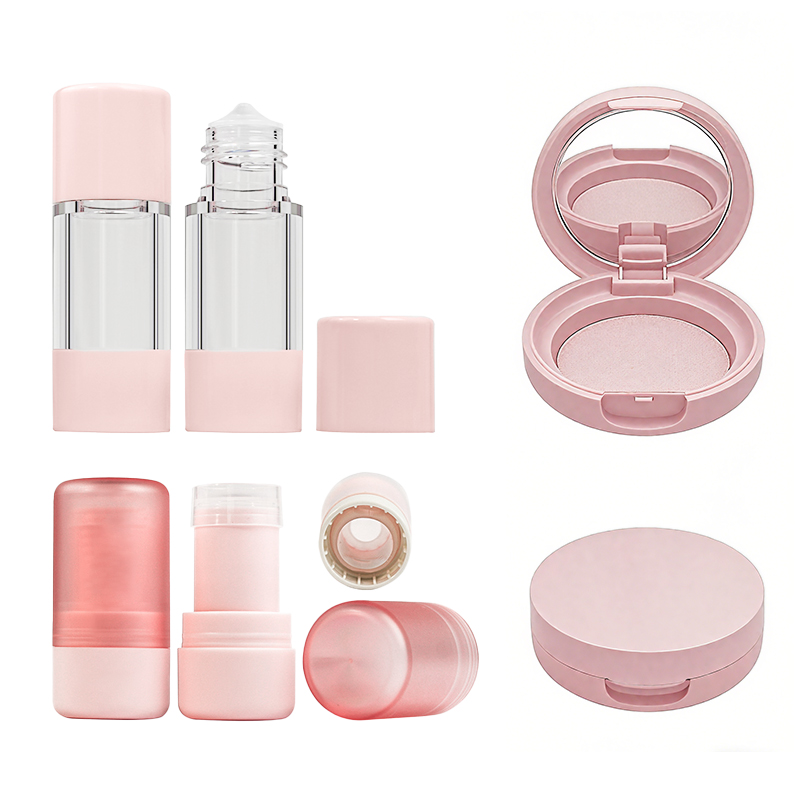
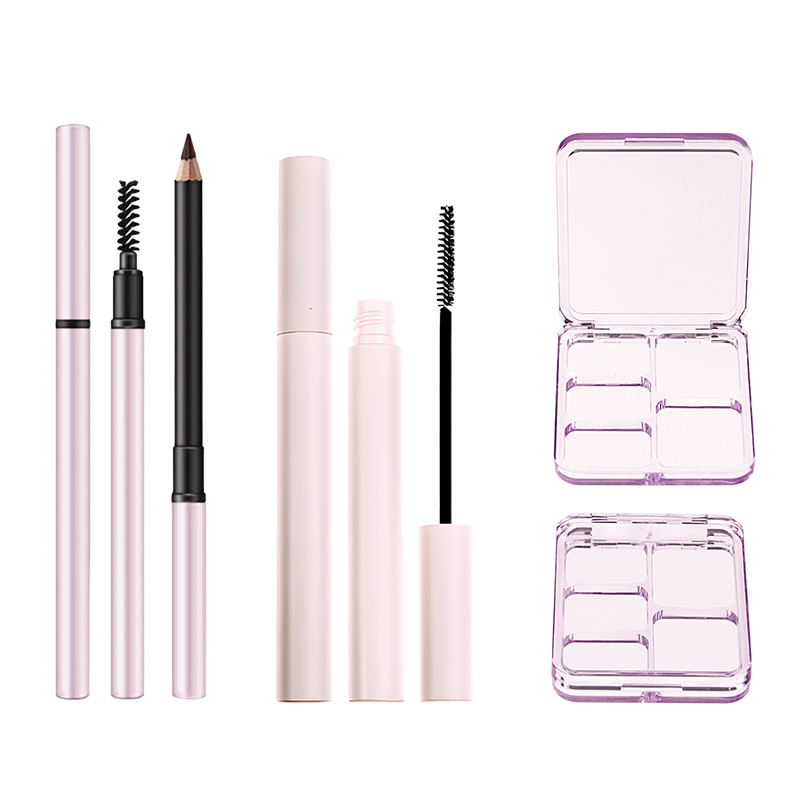
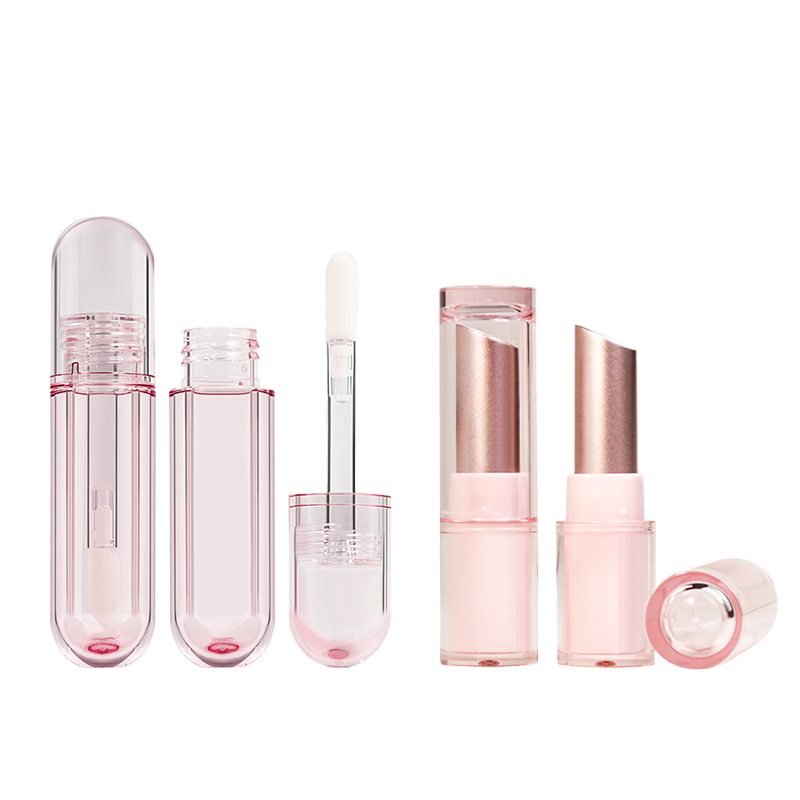

Cushion Foundation Compact Material Safety Update 2026
March 24,2026
The cushion foundation compact used to be a pretty face on the shelf. In 2026, it’s more like a backstage pass to global compliance. Buyers aren’t sweating shade ranges—they’re sweating resin grades, sponge toxicity, and ISO paperwork that can stall a shipment at the port. One bad material choice, and your million-unit run turns into an expensive paperweight.
Here’s the rub. According to Grand View Research, the global cosmetic packaging market was valued at over $49 billion in 2022, climbing steadily each year. That growth comes with sharper scrutiny. ABS, PP, PCR—every polymer now carries a paper trail. Refillable systems aren’t just trendy; they’re insurance policies against tightening waste rules.
Procurement teams feel it in their gut. Pick the wrong supplier, and compliance costs stack up fast. Pick the right one, and your product glides through testing like it owns the runway.
Why 2026 Matters For Cushion Foundation Compacts
In 2026, the cushion foundation compact is no longer just cute packaging. From ABS plastic compliance to refillable cushion case upgrades, every cushion compact, foundation compact, and compact foundation case is under new pressure—and new opportunity.
Regulatory Overhaul: ISO Certification Trends for ABS and SAN Plastic Shells
The 2026 shift in ISO certification rules is reshaping how every cushion foundation compact gets produced, tested, and shipped. For brands working with ABS plastic and SAN plastic shells, the game just got stricter.
-
Material Safety Standards
-
Raw Material Control
- Verified material safety standards documentation
- Batch-level traceability for plastic shells
-
Chemical Compliance
- Heavy metal restriction testing
- Migration limits aligned with 2026 regulations
-
Impact & Heat Resistance
- Drop testing for cushion compact durability
- Heat stability for foundation compact storage
-
-
Regulatory Compliance Documentation
- Injection molding trace logs
- Mold cavity ID tracking
- Supplier audit reporting
- Lifecycle data archiving
| Material Type | Impact Strength (kJ/m²) | Heat Resistance (°C) | Compliance Status 2026 | Recyclability Grade |
|---|---|---|---|---|
| ABS plastic | 15–20 | 85–100 | ISO aligned | Medium |
| SAN plastic | 12–16 | 70–90 | ISO aligned | Medium |
| PCR-ABS Blend | 13–18 | 80–95 | Conditional approval | Higher |
Manufacturers like Topfeelpack now integrate full-chain tracking into every cushion foundation compact program, ensuring that compact foundation tooling and outer shell molding align with updated regulatory compliance benchmarks. If a cushion case fails documentation, it simply doesn’t ship. No shortcuts.
Design Innovations in 2026: Refillable Systems and Magnetic Closures
Consumers are done with waste. The modern cushion foundation compact has to feel good in hand and on conscience.
- Refillable systems using PCR inserts
- Slimmer magnetic closures
- Enhanced sustainable packaging appeal
- Refill click-in systems reduce plastic use.
- Magnetic closures improve airtight sealing.
- Ergonomic curves upgrade daily touchpoints.
A refillable cushion compact isn’t just trendy—it keeps the foundation compact shell longer in rotation. Less landfill. More loyalty.
As Mintel noted in its 2025 global beauty packaging outlook:
“Refillable and reusable formats are shifting from niche to expectation, especially in prestige face makeup categories.”
That shift pushes compact innovation forward. Magnetic lids now snap shut with satisfying precision. Air cushion cases stay sealed, protecting formula moisture. The user experience feels smooth, almost addictive.
Topfeelpack aligns product design with these 2026 trends, balancing consumer experience and durability in each cushion foundation compact project. When the magnet clicks, customers feel quality instantly.
Supplier Capacity Surge: Logistics Support and Production Capacity
Demand for the cushion foundation compact keeps climbing, and suppliers are scaling fast.
-
Manufacturing Expansion
- New injection molding machines
- High-speed assembly lines
- Automated quality inspection
-
Material Sourcing Stability
- Diversified material sourcing contracts
- Localized supply chain warehousing
-
Operational Efficiency Upgrades
- Lean production systems
- Digital mold monitoring
- Real-time defect tracking
This surge in supplier capacity strengthens global logistics support. A cushion compact order that once took 60 days may now move in 35–45, depending on tooling readiness.
For brands launching a new cushion foundation compact, production capacity is no longer the bottleneck. With expanded mold making and higher production capacity, compact foundation lines can scale without chaos.
Topfeelpack supports this growth with synchronized tooling development and cross-border distribution planning, helping brands move from design sketch to finished cushion compact faster—and with fewer surprises.
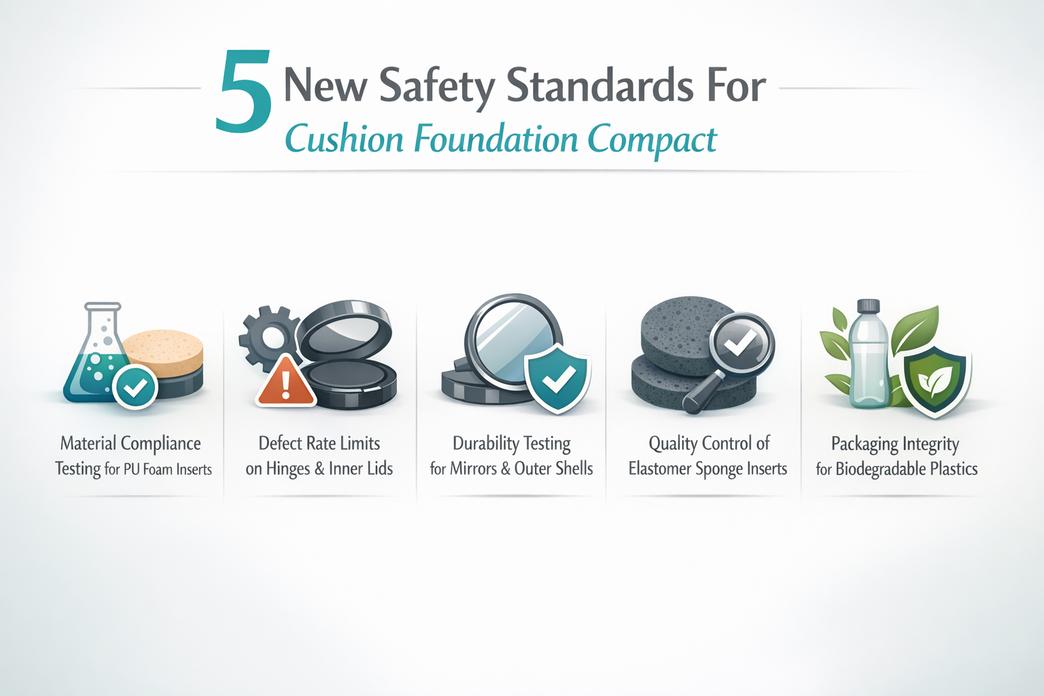
Wow! 5 New Safety Standards For Cushion Foundation Compact
Cushion foundation compact products look simple, yet every foundation compact hides tight safety rules. From foam to mirror, each cushion compact part shapes how safe your daily makeup feels.
Standard 1: Material Compliance Testing for Polyurethane Foam Inserts
In a cushion foundation compact, the Polyurethane Foam insert directly touches liquid foundation and skin, so Material Compliance is non‑negotiable.
-
Chemical Safety Review
1.1 Chemical Analysis screens for residual monomers and heavy metals.
1.2 VOC content must align with regional Regulatory Requirements.
1.3 Migration testing checks interaction between foundation and foam.
-
Physical Verification
2.1 Density and pore size measured under defined Testing Protocols.
2.2 Compression recovery tied to long-term Safety Standards.
2.3 Surface stability after soaking in formula for 72 hours.
-
Documentation Control
3.1 Batch traceability reports.
3.2 Supplier certification audits.
For brands working with Topfeelpack, every cushion foundation compact foam batch is logged and archived, keeping the foundation compact consistent from sample to mass production.
Standard 2: Defect Rate Limits on Hinge Mechanisms and Inner Lids
A loose hinge can ruin a good cushion compact fast. So Hinge Mechanisms and Inner Lids follow tight Manufacturing Standards.
Key checks include:
- Smooth open‑close cycles above 5,000 repetitions
- Seal pressure stability
- Visual crack inspection
Then comes Functional Testing:
- Snap-fit strength test
- Airtight silicone ring inspection
- Drop simulation for Durability Assessment
Factories set a maximum Defect Rate below 0.8% for hinge-related faults in each cushion foundation compact batch. Small number, big difference. When the foundation compact clicks shut cleanly, users feel it instantly.
Standard 3: Durability Testing Protocols for Mirror Plates and Outer Shells
The mirror and shell decide how long a cushion foundation compact survives daily toss‑and‑go life.
-
Mirror Plate Control
1.1 Mirror Plates undergo reflectivity measurement.
1.2 Coating adhesion tested after UV exposure.
1.3 Edge impact resistance checked at 1.2m drop height.
-
Shell Strength
2.1 Outer Shells molded in ABS tested for Impact Resistance.
2.2 Surface pencil hardness for Scratch Resistance.
2.3 Load compression for overall Material Strength.
| Test Item | Standard Value | Result Range |
|---|---|---|
| Drop Height | 1.2 m | Pass ≥95% |
| Pencil Hardness | 2H | 2H–3H |
| UV Exposure | 48 h | No peeling |
These Durability Testing rules extend Product Longevity, especially in refillable cushion foundation compact designs offered by Topfeelpack.
Standard 4: Strict Quality Control of Elastomer Sponge Cushion Inserts
The elastomer sponge shapes how the foundation spreads on skin. Control follows a clear path:
Step 1: Raw material screening for Material Purity.
Step 2: Lab check of Absorption Capacity using fixed‑volume liquid drops.
Step 3: Elastic rebound test to secure Texture Consistency.
Step 4: Microbial limit verification for hygiene.
Step 5: Final Performance Metrics review before assembly into the cushion foundation compact.
When every Elastomer Sponge and Cushion Inserts batch passes, the foundation compact delivers even pickup, not patchy mess.
Standard 5: Packaging Integrity Requirements for Biodegradable Plastics
Eco-friendly cushion compact packaging is trending, yet Packaging Integrity cannot slip.
Brands now test:
- Seal Strength after heat sealing
- Shape retention during 45°C storage
- Resistance to early Material Degradation
Recent outlooks highlight the shift:
“Sustainable cosmetic packaging is projected to grow steadily through 2025 as brands balance environmental impact with performance durability.” — Grand View Research, 2025 update
For Biodegradable Plastics, that means balancing Environmental Impact and Protection Level across the Supply Chain. A cushion foundation compact still needs to survive shipping bumps.
With smart engineering and steady QC, Topfeelpack keeps every cushion foundation compact, foundation compact case, and liquid foundation compact aligned with safety and style.
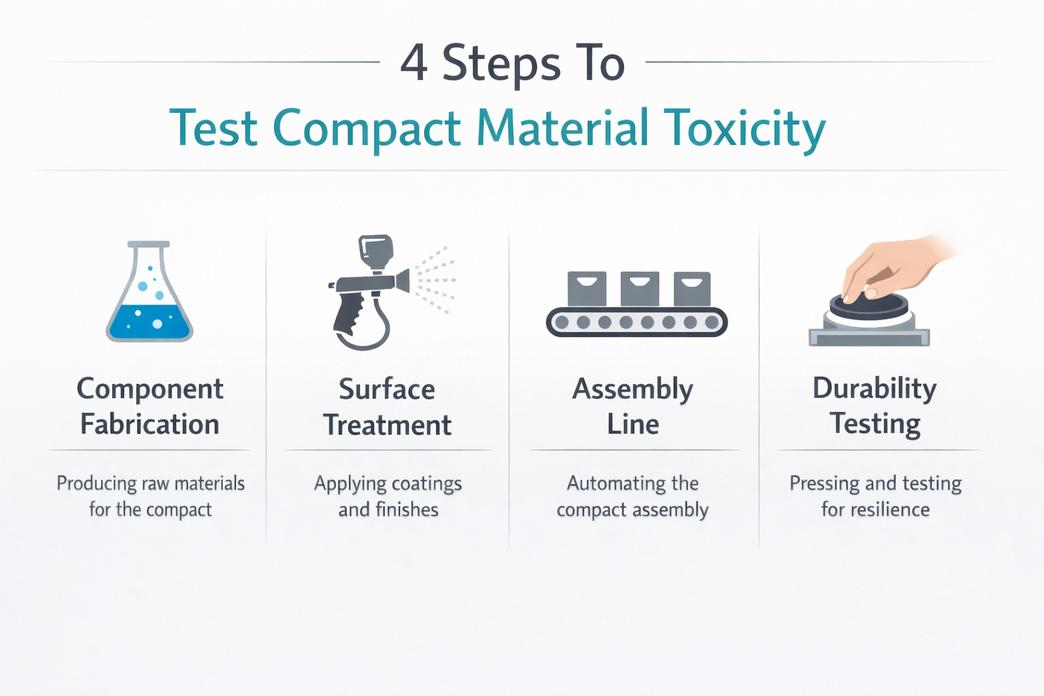
4 Steps To Test Compact Material Toxicity
A reliable cushion foundation compact starts with safe materials, tight process control, and real-world durability checks. From raw polypropylene plastic to the finished compact foundation case, every move counts. Let’s break down how a cushion compact stays safe and skin-friendly.
Step 1: Component Fabrication of PP Plastic Samples
The base shell of a cushion foundation compact begins with controlled molding of Polypropylene, a stable Plastic Material widely used in cosmetic Manufacturing.
-
Raw Material Control
- Resin grade verification
- Melt flow index testing
- Heavy metal pre-screening
-
Injection Molding Process
- Temperature calibration
- Mold cavity pressure monitoring
- Cooling time standardization
-
Sample Screening
- Laboratory toxicity scans
- Volatile substance detection
- Structural integrity checks
For a cushion case or compact foundation housing, even minor resin variation can affect migration levels. That’s why consistent Fabrication and traceable Component records matter. Brands like Topfeelpack keep batch data aligned with regulatory files so every foundation compact feels safe in hand.
Step 2: Surface Treatment Analysis via UV Metallization
After molding, the compact foundation shell often receives UV Metallization and decorative Coating.
-
Surface Treatment Verification
- Adhesion strength testing
- Cross-hatch tape inspection
- Solvent resistance review
-
Chemical Analysis
- Restricted substance screening
- Emission monitoring
- Spectroscopy validation
-
Durability Checkpoints
- Scratch testing
- Humidity chamber exposure
- Mirror plate bonding review
A 2025 Cosmetics Europe market update noted:
“Packaging safety and material transparency are now core purchasing drivers for beauty consumers across Asia and Europe.”
That trend pushes deeper Analysis of every metallized layer inside a cushion foundation compact.
Step 3: Assembly Line Quality Control and Defect Rate Recording
Once parts move to the Assembly Line, tight Quality Control keeps contamination risks low.
-
Hinge & Inner Lid Inspection
- Alignment measurement
- Torque resistance test
- Seal compression review
-
Airtight Structure Monitoring
- Vacuum retention test
- Leak simulation
- Silicone ring elasticity check
-
Defect Rate Recording
- Daily sampling logs
- Process deviation alerts
- Production trace coding
A well-built cushion compact protects the soaked sponge from air exposure. Clean Inspection, digital Recording, and steady Process Monitoring lower defect rates and help the foundation compact maintain product stability.
Step 4: Durability Testing of Applicator Puffs and Seals
The final safety check focuses on Applicator Puffs and Seals, parts that touch formula and skin daily.
-
Wear Resistance
- Repeated press simulation
- Surface fiber pull test
- Wash cycle evaluation
-
Material Integrity
- Chemical migration analysis
- Absorption rate measurement
- Shape recovery timing
-
Performance & Longevity
- 5,000+ open-close trials
- Heat exposure testing
- Drop impact review
A dependable cushion foundation compact isn’t just cute packaging. It protects formula, keeps the cushion fresh, and ensures safe skin contact. With controlled Durability Testing, brands like Topfeelpack deliver a cushion case that handles daily makeup routines without cutting corners.
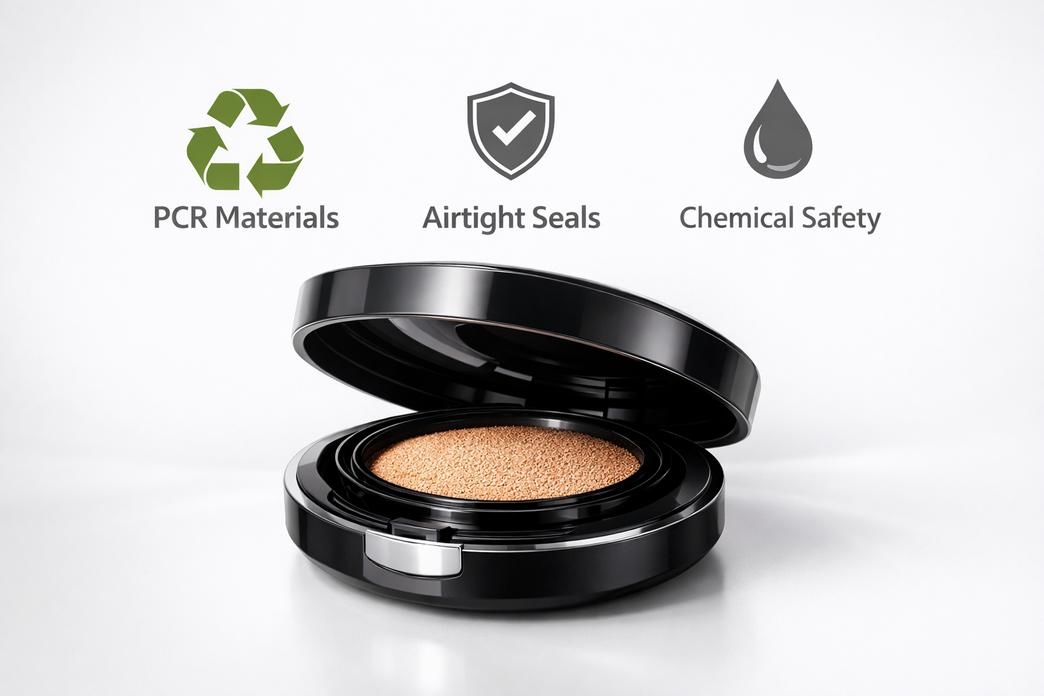
Can Your Compact Formula Meet New Regulations?
The cushion foundation compact market keeps moving fast, and rules are tightening just as quickly. From cushion inserts to inner lid seals and surface spray coating, every compact foundation case must meet fresh compliance checks. If your cushion compact isn’t aligned, delays and recalls can hit hard. Let’s break it down in a practical way.
Do Your Cushion Inserts Pass Material Compliance for PCR Materials?
For a cushion foundation compact, the heart lies in the Cushion Inserts. When PCR Materials enter the mix, compliance goes beyond basic sourcing.
-
Material Compliance
-
Regulatory alignment
- Regulatory Standards
- Verification of recycled origin
- Documentation of Recycled Content
- Supplier traceability audits
-
Lab validation
- Component Testing
- Density stability in elastomer sponge
- Compatibility with polyurethane foam
-
-
Sustainability Controls
-
Input screening
- Contaminant thresholds
-
Output assurance
- Long-term formula stability inside the cushion compact
-
A reliable cushion foundation compact should show clean paperwork and clean performance. Topfeelpack supports brands by aligning recycled inputs with strict compliance targets, so the foundation compact performs without drama.
Can Your Inner Lid’s Airtight Seals Withstand Durability Testing?
Inside every cushion foundation compact, the Inner Lid protects formula freshness.
-
Airtight Seals
-
Structural Design
- Compression ring accuracy
- Hinge tension balance
-
Material Control
- Resistance to Material Degradation
- Elastic recovery after pressure
-
-
Durability Testing
- Repeated opening cycles
- Drop and vibration checks
- Heat exposure review
-
Product Integrity
- Leakage Prevention
- Reduced evaporation
- Stable long-term performance
If the compact foundation case dries out after a few weeks, users notice. A tight seal keeps that cushion foundation feel fresh to the last tap.
Is Your Spray Coating Free of Restricted Chemicals?
The outer shell of a cushion foundation compact carries brand identity, yet Spray Coating must meet strict Chemical Safety rules.
-
Regulatory Compliance
-
Alignment with global restricted lists
- Restricted Chemicals
- Heavy metals screening
- Solvent residue control
-
Ongoing Ingredient Screening
-
-
Formulation Analysis
- Batch sampling
- Migration risk checks
-
Hazardous Substances Control
- Supplier declarations
- Third-party verification
A good-looking foundation compact should also be clean under the surface. Safe coating, stable color, zero nasty surprises. That’s how a cushion compact stays market-ready and stress-free.
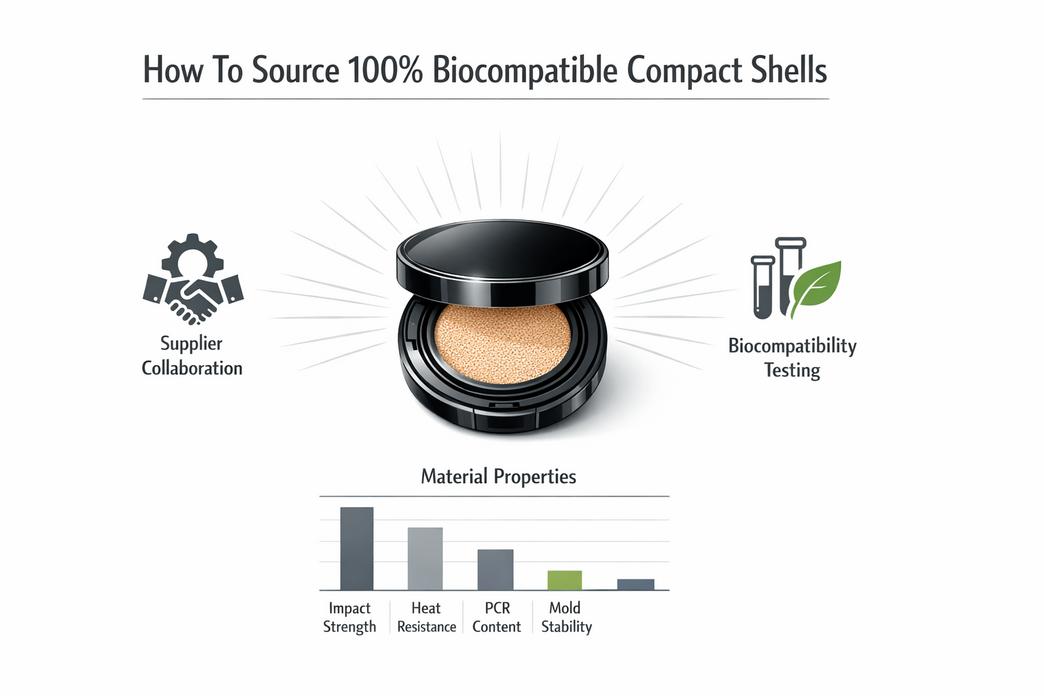
How To Source 100% Biocompatible Compact Shells
Choosing the right materials for a cushion foundation compact isn’t just about looks. It’s about safety, refill design, and long-term brand value. When building a reliable cushion foundation compact line, every compact shell, foundation compact case, and cushion compact component must meet strict standards while still feeling premium in hand.
Partnering with Suppliers for Mold Making and Material Sourcing
Creating a dependable cushion foundation compact starts with tight Supplier Collaboration and clear technical alignment.
-
Supplier Collaboration & Manufacturing Partners
- Shortlist experienced Manufacturing Partners with in-house tooling.
- Review prior cosmetic compact case projects.
- Confirm traceable Material Procurement systems.
-
Mold Development & Technical Control
- Submit detailed Technical Specifications (hinge torque, refill lock tolerance, wall thickness).
- Co-develop Mold Design drawings for the cushion compact base and lid.
- Run T0–T2 mold trials for the cushion foundation compact shell.
- Conduct drop tests and hinge cycle tests under Quality Assurance supervision.
-
Material Sourcing for Biocompatibility
- Verify FDA or EU cosmetic contact compliance.
- Confirm heavy metal and phthalate limits.
- Audit resin suppliers directly.
Topfeelpack supports brands by aligning mold flow analysis with certified ABS or PP sourcing, keeping each foundation compact stable in mass production without cutting corners.
Evaluating Biodegradable Plastics and PCR Materials Options
Sustainability isn’t hype anymore; it’s expected. A modern cushion foundation compact often uses Biodegradable Polymers or PCR (Post-Consumer Recycled) Materials, but performance still rules.
Material comparison for cushion compact shells:
| Material Type | Impact Strength (kJ/m²) | Heat Resistance (°C) | PCR Content (%) | Mold Stability Score (1–5) |
|---|---|---|---|---|
| Virgin PP | 3.5 | 100 | 0 | 5 |
| PCR PP 50% | 3.1 | 95 | 50 | 4 |
| PCR ABS 30% | 4.2 | 105 | 30 | 4 |
| PLA Blend | 2.4 | 60 | 0 | 3 |
| Bio-PE | 3.0 | 90 | 0 | 4 |
Key checks include:
- Material Properties under injection pressure.
- Long-term hinge fatigue.
- Biocompatibility Testing for skin-contact areas.
- Full Sustainability Assessment including carbon data.
“Sustainable packaging is now influencing purchasing decisions for over 60% of beauty consumers,” noted McKinsey’s 2024 global beauty insights report.
For refillable cushion foundation compact systems, PCR blends must still maintain snap-fit accuracy. A weak lock ruins user trust fast.
Ensuring Color Consistency through Pad Printing and Silk Screening
A flawless cushion foundation compact loses impact if the shade drifts between batches. Color control needs layered oversight.
-
Pre-Production Controls
- Confirm Pantone-based Color Standards.
- Test substrate after surface treatment (UV coating, matte spray).
-
Printing Execution
- For logos: optimize Pad Printing Process plate depth and silicone hardness.
- For large panels: refine Silk Screening Techniques mesh count and squeegee pressure.
- Adjust Ink Formulation for adhesion on PCR resin.
-
Post-Printing Quality Assurance
- Conduct ΔE color difference testing.
- Perform alcohol rub tests.
- Implement dual-stage Visual Inspection under D65 lighting.
Under tight Surface Treatment monitoring, even high-volume cushion compact production keeps tone uniform. That’s how a foundation compact feels high-end right out of the box—and why experienced partners like Topfeelpack stay ahead in competitive beauty packaging.
FAQs about Cushion Foundation Compact
What makes a supplier reliable for large-scale cushion foundation compact production?
A dependable cushion foundation compact supplier shows strength in both systems and details:
- ISO certification covering ABS plastic and SAN plastic compact cases
- In-house mold making, tooling development, and steady injection molding control
- Low defect rates on hinge mechanisms, mirror plates, and inner lids
- Stable production capacity supported by organized assembly lines
- Global logistics support that keeps outer shells and cushion inserts on schedule
Behind every smooth compact case is disciplined quality control and careful component fabrication.
How do refillable systems improve cushion foundation compact value?
Refillable systems balance beauty and responsibility.
- Replaceable cushion inserts reduce waste and extend compact cases life.
- PCR materials or biodegradable plastics support packaging integrity goals.
- Airtight seals protect elastomer sponge or polyurethane foam from drying out.
- Magnetic closures and ergonomic design enhance daily use comfort.
The result is a cushion foundation compact that feels thoughtful, not disposable.
Which material standards ensure safety for cushion inserts and foam components?
Safety lives in material compliance and testing discipline:
- ✔ Polyurethane foam and elastomer sponge tested for durability under product exposure
- ✔ Traceable material sourcing for PP plastic inner lids and ABS plastic outer shells
- ✔ Surface treatment checks after spray coating or UV metallization
- ✔ Ongoing durability testing to guard against deformation and contamination
Strict standards protect both skin contact and long-term packaging integrity.
Can suppliers maintain color consistency across large batch orders?
Color consistency depends on controlled surface treatment and skilled decoration techniques.
After injection molding and component fabrication, outer shells and compact cases undergo:
- Silk screening or pad printing for logo precision
- Hot stamping and UV metallization for metallic finishes
- Spray coating or water transfer printing for custom shapes
Quality control teams compare batch samples to master standards, ensuring mirror plates, applicator puffs trays, and shells present a unified visual identity.
How does supplier expansion accelerate delivery of cushion foundation compact orders?
Growth shows up in three clear ways:
• Expanded assembly lines increase daily output of compact cases and inner lids
• Advanced prototyping services shorten tooling development cycles
• Strong logistics support moves finished goods faster across regions
When design collaboration, mold making, and material sourcing align, the cushion foundation compact reaches shelves with speed and confidence.
References
- global cosmetic packaging market – Grand View Research
- ISO certification – ISO
- ABS plastic – JC Cosmopack
- heavy metal restriction – FDA
- sustainable packaging – Maker’s Row
- Mintel – Mintel
- Polyurethane Foam – CertiPUR-US
- Sustainable cosmetic packaging – SmartSolve Industries
- Polypropylene – British Plastics Federation
- Cosmetics Europe – Cosmetics Europe
- PCR Materials – Packnode
- global restricted lists – European Chemicals Agency (ECHA)
- Biocompatibility Testing – ISO
- McKinsey’s 2024 global beauty insights – McKinsey & Company

