 English (UK)
  English
  English (Australia)
  English (Canada)
  العربية
  Deutsch
  Italiano
  Español de México
  Tiếng Việt
  ไทย
ไทย  Português do Brasil
  Français
  Български
  Čeština
  Dansk
Dansk  Ελληνικά
  Eesti
Eesti  Suomi
Suomi  Magyar
  Bahasa Indonesia
  Lietuvių kalba
  Latviešu valoda
  Norsk bokmål
  Nederlands (Formeel)
  Polski
  Română
  Русский
  Slovenčina
  Slovenščina
  Svenska
  Türkçe
  Українська
  简体中文
简体中文  日本語
日本語  한국어
한국어  繁體中文
繁體中文 

Unveiling the Process: How Does Silk Screening Work Step-by-Step?
December 18,2025
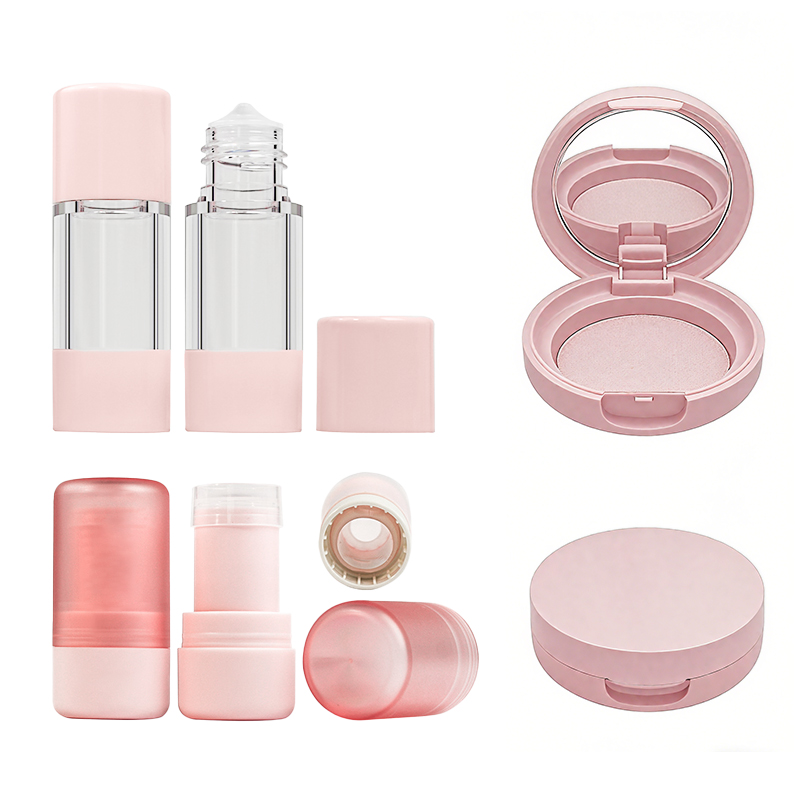
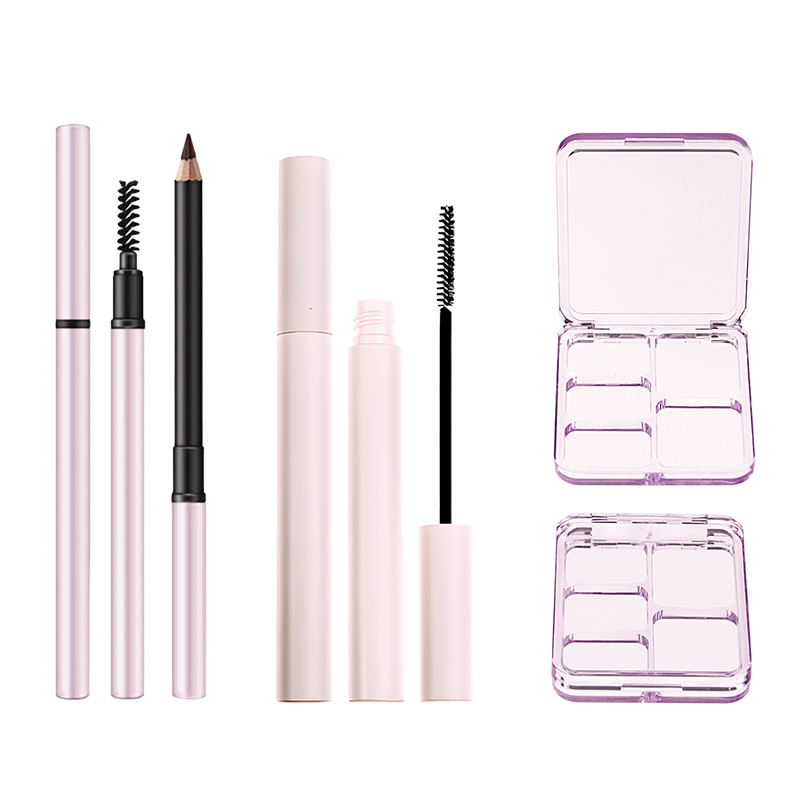
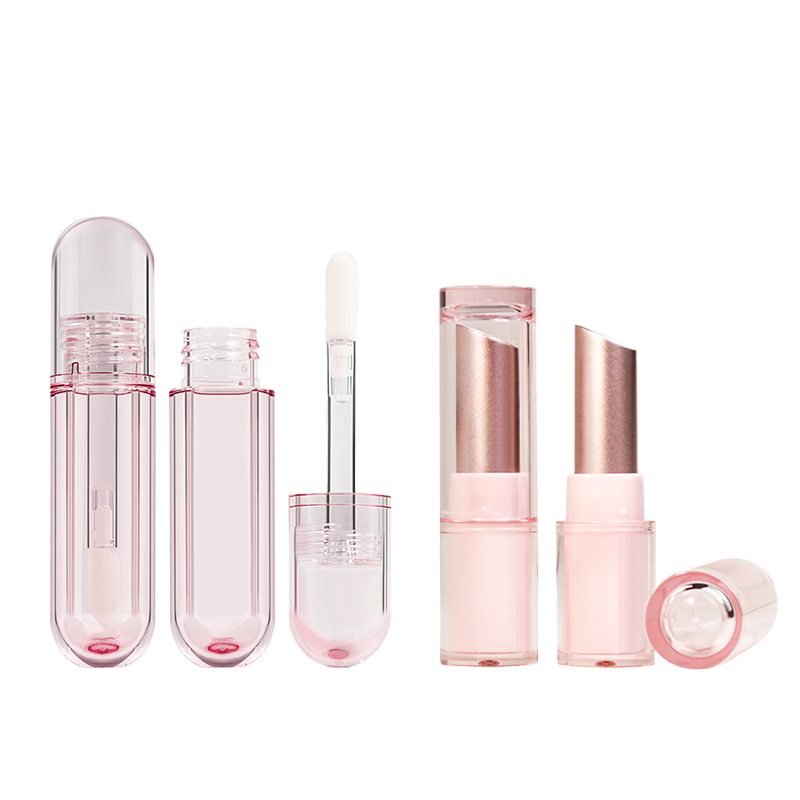
Ever wonder how those bold, smudge-proof logos end up on lipstick tubes or glass serum bottles without peeling off after three uses? That’s silk screening at work—more specifically, how does silk screening work when precision and polish are non-negotiable in high-volume cosmetic packaging. It’s not some slapdash sticker trick; we’re talking about a tactile ink transfer process that fuses branding directly onto the surface like it was born there. When your name’s going on 100,000 compacts, you want every single one to look like it just stepped out of hair and makeup.
In fact, according to Smithers’ Packaging Report 2023, 72% of consumers say they judge product quality based on packaging finish alone. Translation: if your design flakes? So does trust. Keep reading—we’re pulling back the curtain on this inky art form so you can source smarter and scale with style.
Key Insights on How Does Silk Screening Work
- Silk Screening Basics: Silk screening transfers ink through a mesh screen onto various surfaces, creating durable designs ideal for branding in cosmetic packaging.
- Emulsion Importance: Emulsions are vital for coating screens, allowing for precise stencil creation that defines the design being printed.
- Workspace Preparation: A clean and well-lit workspace with organized screens, inks, and tools is crucial for successful silk screening projects.
- Printing Process: The effective method starts with design transfer onto the screen, followed by ink application, pressing, and curing to achieve high-quality prints.
- Key Equipment: Essential tools for silk screening include screens, squeegees, inks, and printing presses, each contributing to the final product’s quality.
- Ink Selection: Choosing the right type of ink—water-based, plastisol, or discharge—depends on the fabrics used and the desired finish of the product.
- Mesh Count Knowledge: Understanding screen mesh counts is important; higher counts allow for finer details, while lower counts permit heavier ink deposits.
- Common Challenges: Issues like inconsistent ink transfer, screen clogging, color misalignment, and fading prints can be effectively managed with proper techniques and maintenance.
- Screen Cleaning: Regular cleaning and maintenance are essential for screen longevity, utilizing appropriate cleaning supplies and techniques to prevent ink buildup.
How Does Silk Screening Work? Step-by-Step Overview
Here’s your no-fluff playbook on how silk screen printing really works—tools, tricks, and all the good stuff.
Understanding the Silk Screening Process: A Quick Guide
Silk screening is like controlled chaos—art meets mechanics. You start with a mesh screen stretched tightly over a wooden or aluminum frame. A design is turned into a stencil that blocks out areas where you don’t want ink. Then comes the magic moment: using a rubbery tool called a squeegee, you press ink through open parts of the mesh onto your material. This creates clean, sharp lines. Whether you’re printing on tees or posters, this process is what gives it that bold, lasting look.
The Role of Emulsions in Silk Screening
Getting crisp designs starts with how well your screen holds up under light—and that’s where emulsions come into play.
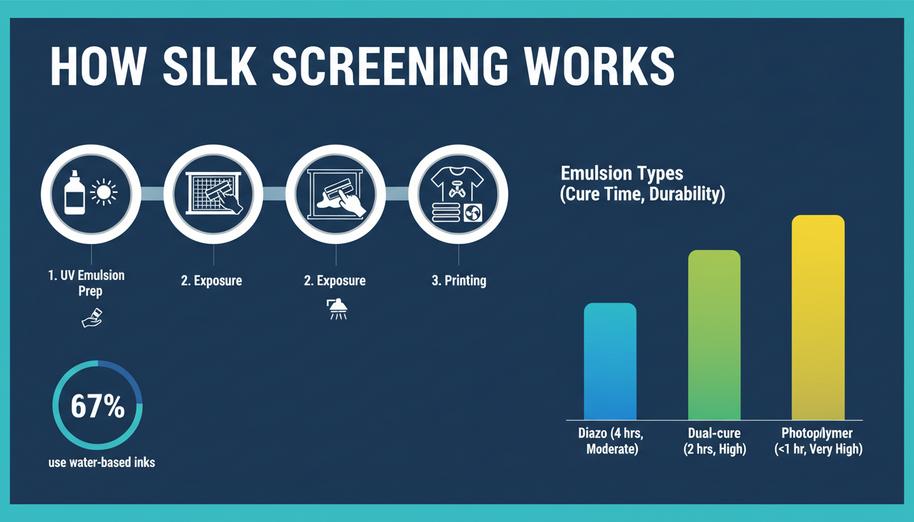
✔️ You coat your screen with a light-sensitive chemical called an emulsion
✔️ Let it dry completely before exposing it to UV light
✔️ Place your design on top and expose it—the light hardens everything but the covered part
✔️ Wash out the unexposed area, revealing your perfect stencil
| Emulsion Type | Dry Time | Ideal Use Case | Durability |
|---|---|---|---|
| Diazo | 4 hrs | Beginners & hobbyists | Moderate |
| Dual-cure | 2 hrs | High-detail prints | High |
| Photopolymer | <1 hr | Fast production cycles | Very High |
A solid emulsion layer ensures ink only flows through where you want—no more messy edges or ghosting.
Steps to Set Up Your Silk Screening Workspace
Getting set up right saves tons of headaches later. Here’s what needs sorting before any ink hits fabric:
-
🛠️ Essential Equipment:
- A sturdy table for pressing
- Clean, pre-stretched screens
- Multiple types of squeegees
- Quality inks suited for fabric type
-
🌬️ Environmental Setup:
- Proper airflow or exhaust fan for ventilation
- Blackout area or safe-light zone for working with photo-emulsions
- Drying racks or shelves for screens and printed items
-
🧯 Safety & Storage:
- Gloves and aprons to avoid skin contact
- Fire-safe storage for solvent-based inks
- Labelled bins for tools and chemicals
This setup helps keep your gear clean and ready while making sure you stay safe during every print session.
The Printing Method: From Design to Fabric
You’ve got everything prepped—now it’s go time. Here’s how silk screening goes from idea to wearable art:
- Burn your design onto an emulsion-coated screen using UV light.
- Align the screen above your chosen fabric substrate.
- Pour some plastisol or water-based ink at one end.
- Using firm pressure, pull the squeegee across once or twice.
- Lift carefully—your print should be bold and even.
- Cure it under heat so it bonds permanently with the fabric.
According to Printwear Insight Report Q2/2024, over 67% of custom apparel businesses now use water-based inks due to their eco-friendliness and soft-hand feel—a shift driven by increasing demand from Gen Z consumers.
Topfeel’s pro-grade kits make this whole process smoother than ever—from exposure units down to fast-curing inks designed specifically for DIY creators looking for commercial-level results without breaking their budget.
And just like that—you’re not just printing; you’re creating something worth wearing again and again.
Materials Needed: Essential Items For Silk Screening
Getting into silk screening? Here’s the lowdown on what gear, inks, and mesh specs you’ll need to make your prints pop.
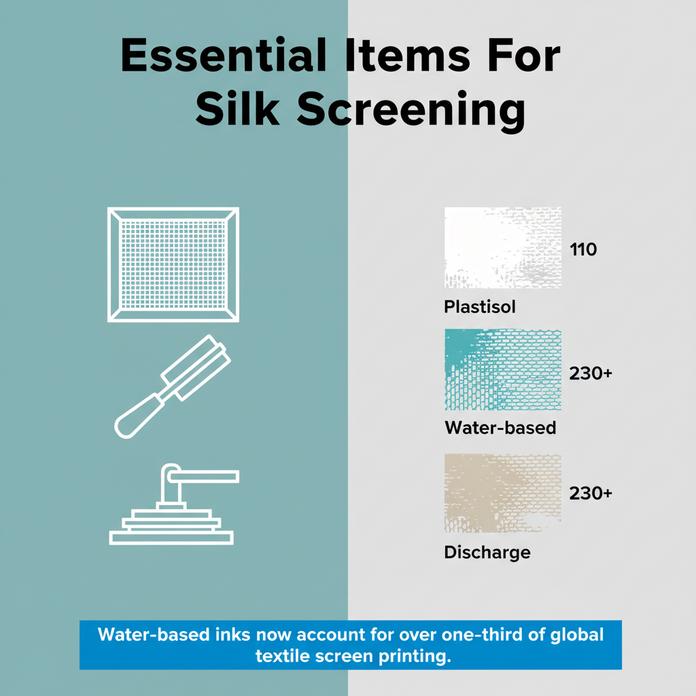
Must-Have Equipment for Silk Screening Success
To understand how does silk screening work, you’ve got to get your hands on the right tools. These essentials shape everything from ink flow to image clarity:
- Screen frame: Wooden or aluminum, this holds your mesh tight.
- Squeegee: Pushes ink across the screen evenly—blade stiffness matters.
- Emulsion: Light-sensitive liquid that captures your design when exposed.
- Exposure unit: Burns your artwork into the emulsion using UV light.
- Washout booth: Where you rinse out unexposed emulsion post-exposure.
- Drying rack: Keeps prints clean while drying without smudging them.
- Printing press: Speeds up multi-color jobs and keeps alignment sharp.
Without these, you’re basically flying blind. Each piece plays a role in how silk screening works at every stage—from prep to print.
Choosing the Right Inks: Types and Benefits
Let’s break down which inks are best depending on what vibe you’re going for:
-
Plastisol ink
- Thick and opaque; sits atop fabric for bold finishes.
- Doesn’t dry unless heat-cured—gives more working time.
-
Water-based ink
- Soaks into fabric fibers; soft feel but less vibrant on dark garments.
- Great for eco-conscious printing and breathable designs.
-
Discharge ink
- Removes dye from dark shirts before adding pigment back in.
- Best used with natural fabrics like cotton for vintage looks.
A recent report by Smithers Pira in early 2024 noted that “water-based inks now account for over one-third of global textile screen printing due to rising sustainability demands.” That shift is changing how silk screening works across industries.
Screen Mesh Counts: What You Need to Know
Mesh count can make or break your print quality—it determines how much ink gets through:
🟢 Low mesh counts (e.g., 110)
• Ideal for thick inks like plastisol ink
• Great when printing bold graphics on hoodies or tote bags
🟡 Medium mesh counts (e.g., 156–200)
• Balance between detail and coverage
• Often used in general T-shirt production
🔵 High mesh counts (230+)
• Perfect for fine lines, halftones, intricate logos
• Requires thinner inks like water-based ink
The finer the mesh, the more control you have—but it also means less room for error. Knowing this helps clarify how does silk screening work at different levels of detail.
| Mesh Count | Ink Compatibility | Detail Level | Common Use Case |
|---|---|---|---|
| 110 | Plastisol | Low | Hoodies & heavy fabric |
| 156 | Water-based | Medium | General T-shirts |
| 200 | Discharge | High | Soft blends |
| >230 | Water-based | Very High | Fine-line artwork |
Understanding these numbers makes all the difference when you’re figuring out how silk screening works in real-world applications.
Common Challenges In Silk Screening And Their Solutions
Silk screening’s got its quirks—especially when you’re chasing crisp, vibrant prints. Here’s how to dodge the usual headaches and keep your press humming.
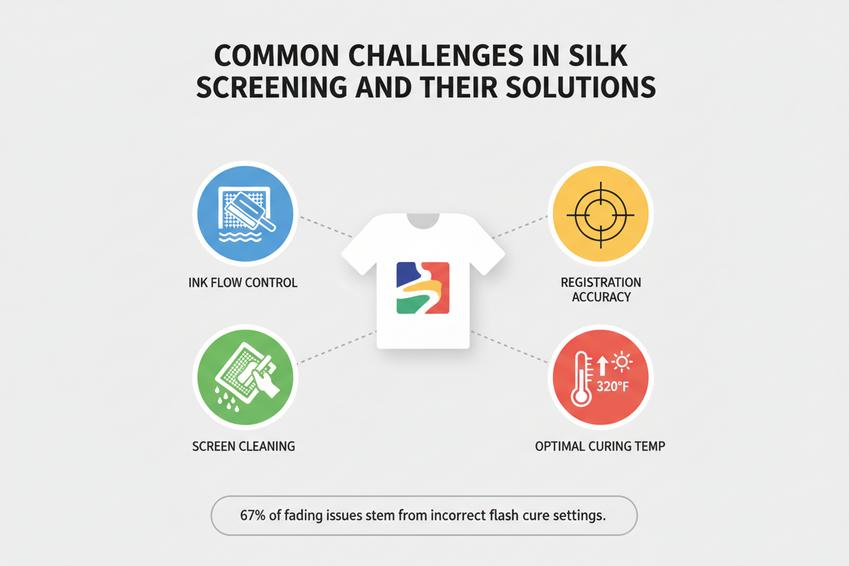
Troubleshooting Inconsistent Ink Transfer
When figuring out how does silk screening work, you’ll often hit snags with patchy prints or uneven coverage. That’s usually tied to these culprits:
- Uneven squeegee pressure across the print area
- Incorrect ink viscosity—too thick, and it won’t flow; too thin, and it bleeds
- Sloppy mesh tension causing ink skips or smudges
To fix it:
- Adjust your off-contact distance—that tiny gap between screen and fabric is everything.
- Test different substrates because the substrate type affects how well ink grabs.
- Use a sharp squeegee edge for even ink coverage every time.
If you’re still seeing print defects? Time to recalibrate that screen angle or swap out worn mesh.
Dealing with Screen Clogging Issues
Screen clogging is like the slow death of good printing—it creeps up on you mid-run and wrecks detail fast.
🟢 Prevention tactics:
- Keep screens moist between pulls; dry ink = clogs.
- Match your ink type to your mesh count—thicker inks need wider openings.
- Clean screens regularly using proper solvents and tools—no shortcuts here!
Humidity plays a sneaky role too: low moisture levels can speed up ink drying, especially under hot lights. Try slowing your squeegee speed, which reduces friction heat buildup and helps avoid premature drying inside the mesh.
Solutions for Color Misalignment Problems
If you’re wondering how does silk screening work with multiple colors, this one’s big: color misalignment turns slick designs into chaotic messes.
Here’s what usually goes wrong:
• Loose or inconsistent screen tension
• Poorly placed or missing registration marks
• Wobbly press arms causing subtle shifts during printing
Fixing it isn’t rocket science:
- Lock in tight registration using micro-adjustments (micro-registration) on each screen.
- Always double-check artwork separation before burning stencils—it ensures proper layer stacking.
- Minimize fabric shift by taping down edges or upgrading platen adhesives if needed.
A little tweak here saves hours of reprinting later—and keeps that color pop where it belongs.
Strategies to Combat Fading Prints
You nailed the design, but after two washes it looks ghosted? That means something went sideways in curing or material choice.
Grouped fixes by category:
🧪 Ink & Chemistry
- Use fade-resistant formulas like plastisol with high-grade pigments (ink type)
- Add UV stabilizers for outdoor durability (UV resistance)
🔥 Heat & Cure
- Check that your dryer hits target temps (320°F+ for most plastisols) — improper curing temperature kills longevity
- Run test swatches through wash cycles to confirm cure depth
👕 Fabric & Post-Care
| Substrate Material | Washability Rating | Recommended Ink | Longevity |
|---|---|---|---|
| 100% Cotton | High | Plastisol | Excellent |
| Cotton/Poly Blend | Medium | Discharge/Inks | Good |
| Nylon | Low | Solvent-based | Fair |
| Tri-blends | Medium | Water-based | Moderate |
“According to Printwear Industry Report Q1 2024, over 67% of fading issues stem from incorrect flash cure settings rather than poor ink quality.”
To keep things bold and lasting? Stick with tested materials—and let Topfeel’s pro-grade inks do their thing just once instead of twice.
How To Properly Clean And Maintain Your Screens
Keeping your screens clean and in top shape is key to getting crisp prints and avoiding costly do-overs. Here’s how to do it right.
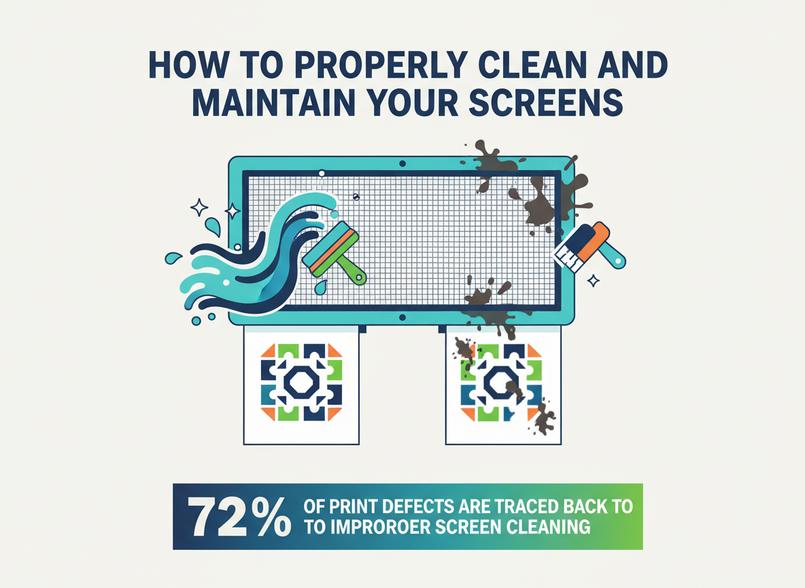
Cleaning Supplies: What Works Best for Screens?
To understand how does silk screening work, you’ve got to treat your tools with respect—starting with the right cleaning supplies. Here’s what you’ll want on deck:
🧼 Screen cleaner – Specifically formulated to break down ink without damaging mesh.
🧽 Degreaser – Essential for removing oils that can block emulsion adhesion.
🌫️ Emulsion remover – Safely strips old stencil layers without harming the screen frame.
🔮 Haze remover – Tackles ghost images left behind by stubborn inks.
🪥 Soft scrub brushes – Gentle enough not to rip mesh but tough on residue.
💦 Pressure washer – Speeds up removal of emulsion and ink, especially from large-format screens.
🧻 Clean rags, lint-free if possible, for wiping down frames and drying edges.
🚿 Plenty of clean water, preferably filtered, to rinse everything thoroughly between steps.
When you’re learning how silk screen printing works, this gear becomes your daily go-to. A dirty or poorly maintained screen messes with image clarity, no matter how good your stencil is.
According to the 2024 Print Industry Maintenance Report by InkWorld Analytics, over 72% of print defects are traced back to improper screen cleaning—more than any other single cause. So yeah, these tools matter more than you think.
Step-by-Step Guide to Screen Maintenance
Don’t let grime kill your next print run. Stick with this smart upkeep plan that keeps screens sharp and ready:
- Start by rinsing off loose ink immediately after printing—don’t wait.
- Apply a solid layer of degreaser, scrub gently with a soft-bristled brush.
- Rinse thoroughly again; leftover degreaser can ruin the next emulsion coat.
- Use an emulsion remover across both sides of the screen; let it sit briefly before scrubbing.
- Rinse under high pressure using a reliable pressure washer—watch out for mesh tears.
- If ghost images remain, apply a thin layer of haze remover, wait per instructions, then rinse again.
- Dry screens standing upright in a dust-free zone—air drying avoids heat warping.
- Once dry, inspect under bright light for pinholes or damage before reuse.
- Store vertically in racks where airflow can reach both sides evenly—no stacking!
Every pro who knows how silk screening works will tell you: maintenance isn’t optional—it’s survival mode for quality control.
| Maintenance Task | Recommended Frequency | Time Required (avg) | Supplies Needed |
|---|---|---|---|
| Degreasing | Before each coating | ~5 min | Degreaser, water |
| Emulsion Removal | After every reclaim | ~10 min | Emulsion remover, brush |
| Haze Removal | As needed | ~15 min | Haze remover, pressure wash |
| Final Inspection | Post-cleaning | ~2 min | Bright light source |
Regular upkeep not only extends mesh life but also gives better registration and sharper detail—which is basically everything when you’re trying to master how does silk screening work step-by-step (even though we’re not listing steps here).
References
FAQs
Ink meets mesh; the design breathes through a stencil that decides every curve and edge.
The screen kisses bottles, jars, and compacts—layer by layer—until colors stand proud.
- Mesh screens tuned to detail or boldness.
- Squeegees shaped for curves or flats.
- Inks chosen with intent: soft water-based tones or high-impact plastisol shades.
Like a secret mold on light’s canvas, emulsions define where ink flows and where it rests still—holding shapes so sharp they feel almost carved into glass or plastic surfaces.
High counts whisper precision onto lipstick tubes; low counts shout pigment onto opaque cream jars—a choice between intimacy of detail and strength of color presence.
Quick notes from the studio floor:
| Ink Type | Character | Best Use in Cosmetics |
|---|---|---|
| Water-based | Gentle touch | Eco-label sleeves |
| Plastisol | Bold permanence | Vibrant logo statements |
| Discharge | Feather-soft texture | Fabric makeup pouches |

