 English (UK)
  English
  English (Australia)
  English (Canada)
  العربية
  Deutsch
  Italiano
  Español de México
  Tiếng Việt
  ไทย
ไทย  Português do Brasil
  Français
  Български
  Čeština
  Dansk
Dansk  Ελληνικά
  Eesti
Eesti  Suomi
Suomi  Magyar
  Bahasa Indonesia
  Lietuvių kalba
  Latviešu valoda
  Norsk bokmål
  Nederlands (Formeel)
  Polski
  Română
  Русский
  Slovenčina
  Slovenščina
  Svenska
  Türkçe
  Українська
  简体中文
简体中文  日本語
日本語  한국어
한국어  繁體中文
繁體中文 

Comprehensive Guide to Packaging Solutions for Lotion-Based Cosmetics
February 26,2026
In the world of beauty and skincare, the product inside the bottle is only half the story. The other half is the packaging. For lotion-based cosmetics, which are among the most popular items on any bathroom shelf, the packaging is a silent protector. It ensures that the cream stays fresh, the active ingredients stay powerful, and the user has a great experience every morning and night.
In this guide, we will explore the definition of lotions, the different types of packaging solutions available, the logic behind design choices, and the critical points for procurement and quality control.
SECTION ONE: Understanding Lotion Cosmetics and Their Unique Traits
Before we talk about bottles and pumps, we must understand what a “lotion” actually is. In the chemistry of cosmetics, a lotion is a semi-liquid system created by mixing water and oil together through a process called emulsification.
1. The Definition of Lotion
If you imagine a spectrum of skincare products, you have “Toner/Water” at one end (very thin) and “Cream” at the other end (very thick). Lotions sit right in the middle.
- Viscosity: Scientists measure “thickness” using a unit called mPa·s. Toners are usually below 100 mPa·s, while heavy creams are over 100,000 mPa·s. A typical lotion falls between 1,000 and 50,000 mPa·s. This means it can flow, but it isn’t “runny” like water.
- Structure: Most lotions are either Oil-in-Water (O/W), which feels refreshing and light, or Water-in-Oil (W/O), which feels rich and moisturizing.
2. Why Does Packaging Matter for Lotions?
Because lotions contain both oil and water, they are naturally unstable. Without the right packaging, three major “failures” can happen:
- Separation: If the bottle is shaken too much or gets too hot, the oil and water might split.
- Oxidation: If oxygen gets inside, active ingredients (like Vitamin C or Retinol) will stop working and may even change color.
- Evaporation: If the seal isn’t tight, the water inside will vanish, leaving behind a sticky, dried-out mess.
SECTION TWO: Lotion Categories and Their Packaging Challenges
Different types of lotions have different needs. Let’s look at four common examples and the “headaches” they cause for packaging designers.
Table 1: Lotion Types and Challenges
| Category | Typical Products | Viscosity Range | Main Packaging Challenge |
|---|---|---|---|
| Face Lotion | Hydrating lotion, Sunscreen | 5,000–15,000 mPa·s | Needs UV protection and precise dosing. |
| High-Performance | Anti-aging serums, VC lotions | 10,000–30,000 mPa·s | Must be 100% airtight to protect active ingredients. |
| Body Lotion | Whitening or moisturizing body milk | 20,000–50,000 mPa·s | Too thick for normal straws; needs “heavy-duty” pumps. |
| Special Textures | Cleansing milk, Massage lotion | 8,000–40,000 mPa·s | Particles might clog pumps; needs wide-mouth access. |
SECTION THREE: Mainstream Packaging Solutions
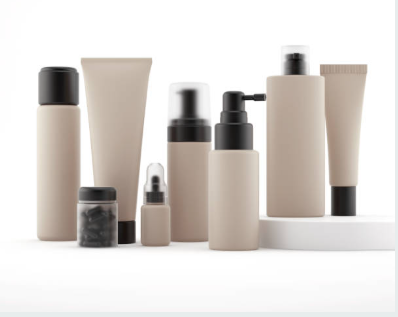
Now that we know the problems, let’s look at the solutions. There is no “one size fits all” bottle. Instead, engineers choose a container based on the product’s specific “personality.”
1. Airless Pump Bottles (The “Gold Standard”)
Airless pumps are the heroes of high-end skincare. Unlike a standard soap pump that uses a straw, an airless bottle has a small piston at the bottom. As you press the pump, the piston moves up, pushing the product out.
- Why choose it? It offers an Oxygen Barrier of over 99.9%. This is essential for expensive anti-aging lotions.
- The Downside: It is roughly 40% more expensive than a standard pump bottle.
2. Aluminum-Plastic Composite Tubes
You often see these for sunscreens or medical-grade lotions. They are made of multiple layers of plastic and a thin layer of metal.
- Why choose it? These tubes have an excellent Evacuation Rate (>95%), meaning you can squeeze almost every drop out. They also block light and moisture very well.
- The Downside: They can easily deform or get “crinkled” during shipping if not handled carefully.
3. Bag-in-Bottle (Airbag) Systems
Common for thick body lotions, this design features a flexible inner bag inside a rigid outer bottle.
- Why choose it? When you press the pump, the inner bag shrinks. This provides the “sucking power” needed to move very thick liquids that a regular straw simply couldn’t handle.
- The Downside: You must carefully test if the lotion is compatible with the inner bag material, or the plastic might “melt” into the cream.
4. Wide-Mouth Jars with Inner Seals
Usually made of glass or heavy plastic, these are for rich, W/O (Water-in-Oil) lotions.
- Why choose it? It allows the user to scoop out the product easily.
- The Downside: Every time you open the lid, the product is exposed to the air and your fingers, which increases the risk of secondary contamination (bacteria).
SECTION FOUR: The Logic of Technical Design
How does a brand decide which solution to use? They follow a logical path based on the formula’s needs.
- Scenario A: The “Oxygen Hater.” If you are selling a Vitamin C lotion, Vitamin C dies when it touches air. The solution? An Amber Glass Bottle (to block light) + an Airless Pump (to block oxygen).
- Scenario B: The “Gentle Giant.” For a large bottle of children’s lotion, safety and hygiene are key. The solution? An HDPE Bottle (strong and safe plastic) + a Non-Back-Suck Pump (which prevents dirty air from going back into the bottle after use).
- Scenario C: The “Eco-Warrior.” For a clean beauty brand, the environment matters most. The solution? A Sugarcane-based Plastic Bottle + an FSC Certified Paper Box.
SECTION FIVE: Procurement and Quality Control
For business owners and purchasing managers, buying the wrong packaging can be a million-dollar mistake. Here are the four “Rigid Indicators” that must be checked before a product goes to market.
1. Compatibility (The Most Important!)
You cannot just put any liquid in any plastic. Sometimes, the chemicals in the lotion react with the plastic bottle. This can cause the bottle to crack, or worse, toxic chemicals from the plastic can “migrate” into the lotion.
- Test: A 30-day “Stress Test” at 40°C.
- Risk: If you fail this, you could face massive legal fines and safety recalls.
2. Barrier Properties
This measures how well the package keeps “the good stuff in” and “the bad stuff out.”
- OTR (Oxygen Transmission Rate): How much oxygen leaks in?
- WVTR (Water Vapor Transmission Rate): How much moisture leaks out?
- Risk: If these numbers are too high, your product will change color or smell bad within months, leading to high return rates.
3. Mechanical Performance
How does it feel to use the product? If a pump is too hard to press, the customer will hate it.
- Standard: For thin lotions, the pressing force should be less than 3.5 Newtons. For thick lotions, it shouldn’t exceed 8 Newtons.
- Risk: Bad reviews and low “repurchase rates” (customers won’t buy it a second time).
4. Environmental Compliance
The world is changing. By 2030, the European Union will require many plastic packages to contain at least 30% PCR (Post-Consumer Recycled) material.
- Requirement: Suppliers must provide GRS (Global Recycled Standard) certification.
- Risk: Without this, your product might be banned from international markets.
Conclusion
Packaging a lotion is a delicate dance between science and art. You need the science to keep the formula stable and the art to make the bottle look beautiful on a shelf. Whether you are choosing an airless pump for a luxury serum or a recycled tube for a hand cream, the goal remains the same: to deliver the product to the consumer in perfect condition.
By understanding the viscosity, the chemical risks, and the technical requirements of different containers, brands can avoid expensive mistakes and build trust with their customers.

