 English
  English (UK)
  English (Australia)
  English (Canada)
  العربية
  Deutsch
  Italiano
  Español de México
  Tiếng Việt
  ไทย
ไทย  Português do Brasil
  Français
  Български
  Čeština
  Dansk
Dansk  Ελληνικά
  Eesti
Eesti  Suomi
Suomi  Magyar
  Bahasa Indonesia
  Lietuvių kalba
  Latviešu valoda
  Norsk bokmål
  Nederlands (Formeel)
  Polski
  Română
  Русский
  Slovenčina
  Slovenščina
  Svenska
  Türkçe
  Українська
  简体中文
简体中文  日本語
日本語  한국어
한국어  繁體中文
繁體中文 
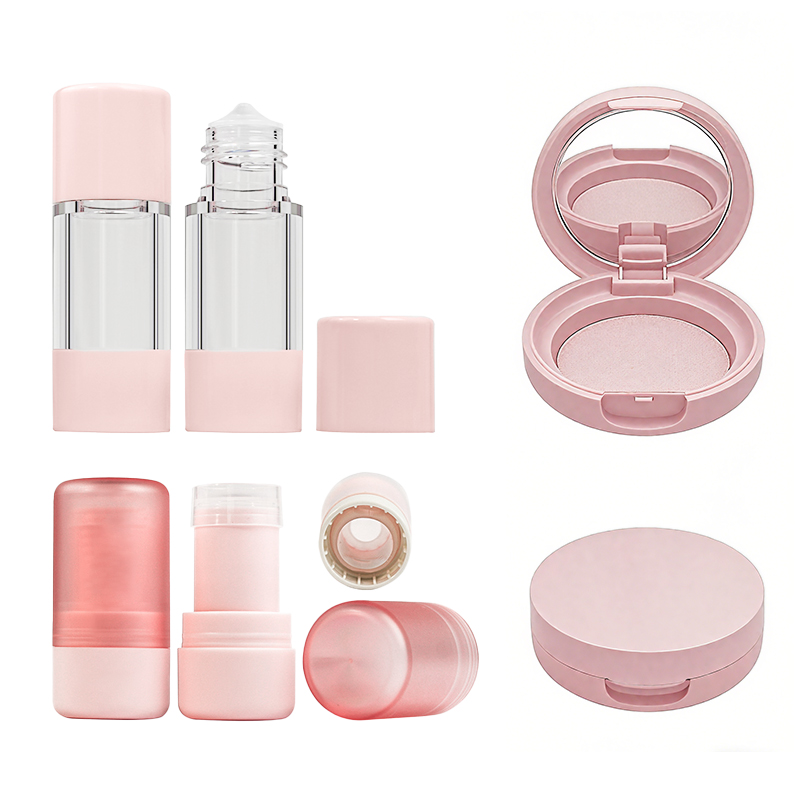
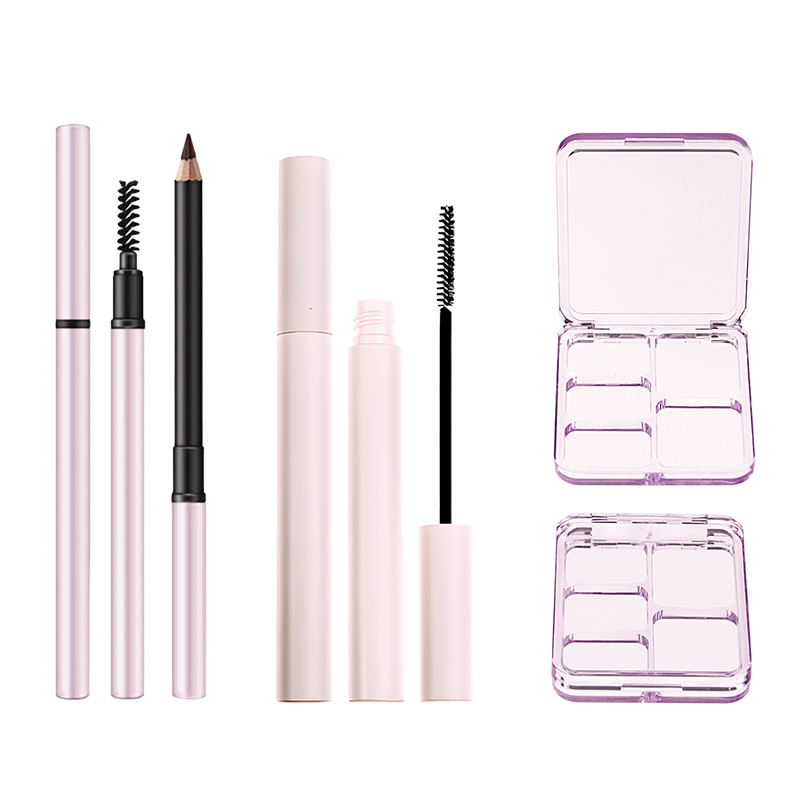
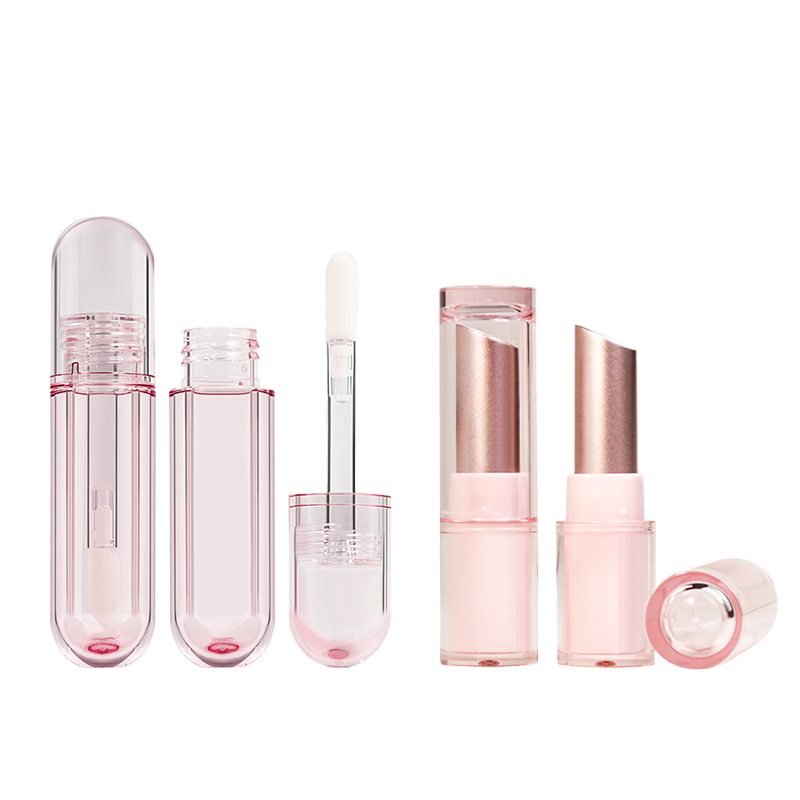

Why Container Cosmetic Packaging Matters for Your Beauty Brand
February 18,2026
It’s wild out there on the beauty shelves—every jar, tube, and bottle fighting for a glance. And in that split second of eye contact? Your container cosmetic packaging better show up like it owns the room. Because truth is, your product might be magic—but if it looks like an afterthought? It’s staying put.
Thing is, buyers don’t just shop with their wallets anymore—they shop with their values. Sustainability isn’t a buzzword; it’s a dealbreaker. A NielsenIQ study found that 78% of U.S. consumers say a sustainable lifestyle is important to them.* That means glass bottles over single-use plastic, refillable jars instead of toss-and-go tubes… and your brand needs to walk the talk or risk getting ghosted.
So yeah—packaging ain’t just packaging anymore. It’s strategy in disguise.
—*Source: NielsenIQ Global Sustainability Report
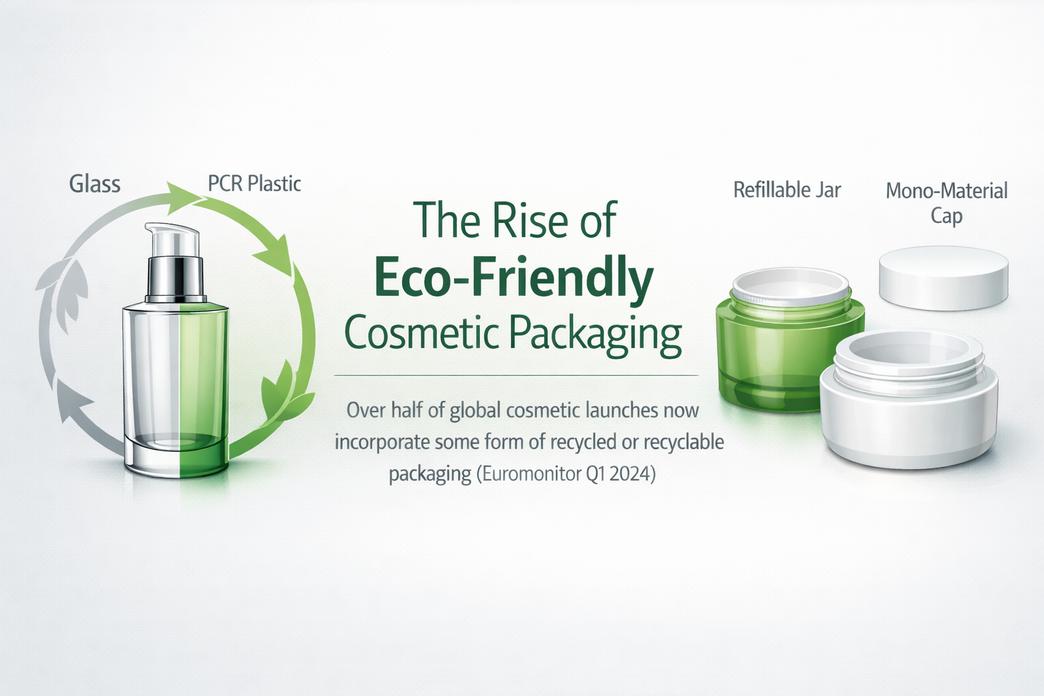
The Rise Of Eco-Friendly Container Cosmetic Packaging In 2024
Sustainable packaging is getting a serious glow-up in the world of beauty. Here’s how it’s reshaping the future of your favorite products.
From Recyclable Glass Bottles to PCR Plastic Tubes
Eco-forward brands are flipping the script on waste by swapping out traditional containers with smarter, greener options.
-
At the top of this shift are recyclable glass bottles, which can be reused endlessly without degrading quality.
- They’re not just pretty—they’re functional and endlessly sustainable.
- Their weight may be a downside, but their recyclability makes up for it.
-
Meanwhile, lightweight alternatives like tubes made from post-consumer recycled plastic, or PCR plastic, are gaining traction fast.
- These tubes cut down on virgin plastic use.
- They also support circular systems that keep materials in play longer.
This material innovation isn’t just hype—it’s happening across skincare, haircare, and other beauty categories where every gram counts. More cosmetic container brands are choosing formats that align with green values and consumer expectations.
“According to Euromonitor’s Beauty & Personal Care Sustainability report from Q1 2024, over half of global cosmetic launches now incorporate some form of recycled or recyclable packaging.”
Refillable Jars and Mono-Material Closures Redefining Sustainability
Short bursts of change are creating big waves:
• Brands are ditching single-use jars in favor of sleek, durable refillable jars, built to last.
• These pair perfectly with simplified lids made from a single substance—think fully recyclable plastics or metals—aka “mono-material closures“.
• This combo slashes waste while boosting recyclability since no sorting is needed at end-of-life.
You might’ve seen these popping up in moisturizers or balms lately. It’s all about smart design that doesn’t compromise on looks or function—and keeps your vanity clutter-free while supporting a more circular economy.
Lightweighting Through Injection Molding and Blow Molding Innovations
Lighter doesn’t mean weaker—it means smarter. Here’s how:
Step 1: Engineers refine product shapes to use less raw material without sacrificing strength.
Step 2: Using advanced techniques like high-efficiency injection molding, they cut down on wall thickness while maintaining durability.
Step 3: With precision-controlled air pressure, modern blow molding creates hollow containers that weigh less but hold strong under pressure.
Step 4: The result? Reduced shipping costs, smaller carbon footprints, and less strain on resources—all without compromising shelf appeal.
It’s not just about saving grams—it’s about rethinking how we make every single piece of a cosmetic container count toward sustainability goals.
Compostable Paperboard and Biodegradable Material for Secondary Packaging
Let’s break it down—literally—with packaging designed to disappear when you’re done with it:
A) Primary Layer:
• Your main product stays protected in durable jars or tubes—but what about the box it came in?
B) Secondary Layer:
• More companies now opt for outer cartons made from fully compostable paperboard, printed with soy-based inks.
• Others turn to plant-based films or molded fiber trays crafted from agricultural waste—100% biodegradable materials that vanish naturally over time.
C) Disposal Simplicity:
• Toss them into compost bins instead of landfills.
• Zero guilt—and zero microplastics left behind.
D) Real Impact:
• These eco-friendly upgrades reduce landfill-bound waste by tons annually when scaled across large product lines.
When paired with greener primary containers, this is one more step toward making every part of the cosmetic packaging lifecycle as clean as your skincare routine feels.
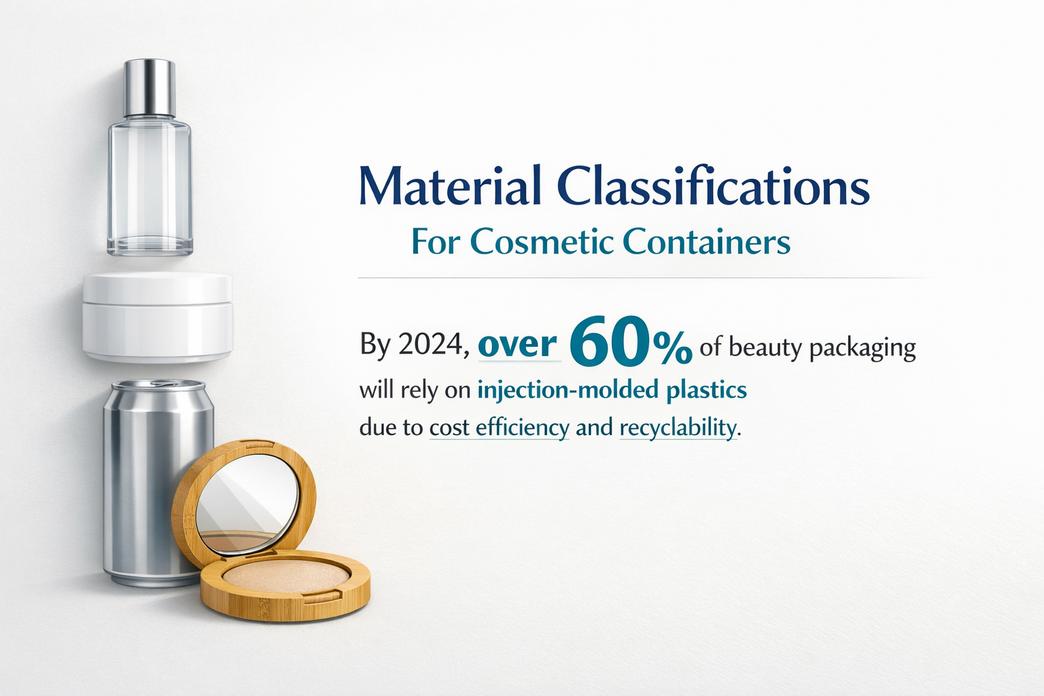
Material Classifications For Cosmetic Containers
From sleek glass to earthy bamboo, every cosmetic container material tells a story—of function, feel, and sustainability.
Glass Forming for Bottles and Droppers
- Molten glass is shaped at high heat using blowing or pressing techniques.
- The result? Durable bottles and droppers with a luxe vibe.
- Great for storing active serums due to low reactivity.
- Blowing: Air shapes the form inside a mold.
- Molding: External molds define structure and surface detail.
- Annealing: Slow cooling prevents cracks in the final product.
• Clear flint glass enhances shelf appeal while being endlessly recyclable.
The tactile weight of glass aligns well with premium skincare branding, especially for oils or tinctures that demand protection from contamination or UV exposure.
Short-run production lines often use semi-automatic machines to shape small-batch glass manufacturing, giving indie brands flexibility without sacrificing quality.
Plastic Injection Molding for Jars, Tubes, and Compacts
• Fast turnaround time with high precision using heated polymer resins
- Raw resin pellets are melted.
- Injected into custom steel molds.
- Cooled rapidly before ejection.
• Perfect for shaping lightweight jars or twist-up tubes used in everyday cosmetics like balms or foundations.
Textured finishes can be added during molding—think frosted matte HDPE jars or glossy compacts—all thanks to advanced tooling options available today.
“By 2024, over 60% of beauty packaging will rely on injection-molded plastics due to cost efficiency and recyclability,” reports Euromonitor International.
With recycled content options now common, even plastic-based container cosmetic designs can check the eco-friendly box when done right.
Aluminum Aerosol Cans and Metal Stamping Advantages
- Begin with flat rolled aluminum sheets
- Use deep drawing to form seamless cans
- Apply internal lacquering for chemical resistance
- Finish with decorative printing
• Lightweight yet strong—perfect for pressurized sprays like dry shampoos or setting mists
The real win? Its excellent barrier properties prevent contamination while maintaining product integrity over time.
Dimensional consistency comes from precision metal stamping, ensuring every cap fits like a glove—even at scale.
Aluminum’s high recycling rate makes it one of the greenest choices among cosmetic container materials today—plus it just feels cool in your hand!
Bamboo and Paperboard Palettes with Recycled Content
Natural vibes meet smart design in these eco-forward palettes:
– Crafted from fast-growing bamboo fibers, they’re both biodegradable and beautiful
– Reinforced by sturdy recycled paperboard, offering structure without plastic waste
Bamboo compacts bring warmth to makeup packaging that plastic just can’t replicate—and they compost naturally when their life’s up.
Meanwhile, paperboard palettes featuring magnetic pans have become cult favorites among zero-waste fans looking for refillable options in their cosmetic containers arsenal.
Eco doesn’t mean boring anymore—it means stylishly conscious choices that actually look good on your vanity too!
Hybrid Structures: Mono-Material vs. Multi-Component Assembly
Let’s break this down:
A) Mono-material builds:
- Use one recyclable substance throughout (like all-HDPE tubes)
- Easier sorting post-use = better recycling rates
- Often used in minimalist skincare lines prioritizing sustainability
B) Multi-component assemblies:
- Combine different materials (e.g., metal springs + plastic pumps)
- Offer more functionality but complicate separation
- Common in prestige products requiring precise dispensing
Example: A serum dropper might use a glass vial (bottles) + rubber bulb + plastic collar—great performance but tricky disposal unless disassembled manually.
When designing any container cosmetic, balance matters: mono-materials simplify end-of-life handling; multi-components enhance user experience but need smarter design thinking upfront.
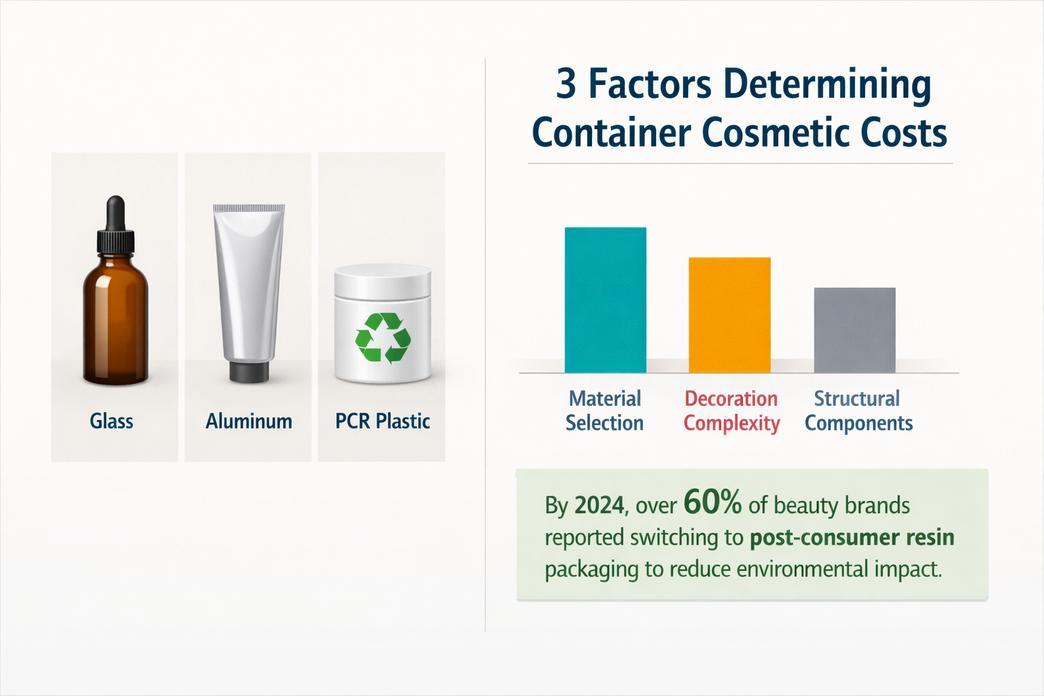
3 Factors Determining Container Cosmetic Costs
What makes a container cosmetic cost more or less? Here’s the scoop on what really drives pricing behind the scenes.
Material Selection: Glass, Aluminum, or PCR Plastic?
You’ve got three major players here—glass, aluminum, and PCR plastic—and each one brings its own baggage to the checkout counter.
- Glass looks luxe and feels solid, but it’s heavier and pricier to ship. You’re paying for elegance.
- Aluminum is sleek and tough, but watch out for those tooling fees—they can sneak up on you.
- PCR plastic, packed with recycled content, is easier on the planet and often on your wallet too.
“By 2024, over 60% of beauty brands reported switching to post-consumer resin packaging to reduce environmental impact,” according to Mintel’s Packaging Futures Report.
So when picking materials for your next round of cosmetic containers, think beyond just looks—think weight, sustainability cred, and how much you’re willing to spend.
Decoration Complexity: Silk Screening, Hot Stamping, or Digital Printing
The design game isn’t just about making it pretty—it’s about how you get that look onto the bottle or jar.
• Want a metallic shimmer? That’s where hot stamping shines—but it’ll cost more than basic prints.
• Need something bold but simple? Go with classic silk screening—clean results at a decent price.
• Short run with loads of colors? Then you’re looking at flexible yet pricey digital printing options.
Each method changes how your final product feels in hand—and in budget. So if your project calls for high-end vibes without high-end costs, balance between technique and volume is key.
Structural Components: Pumps, Closures, Inserts, and Assembly Efficiency
Let’s break down what goes inside (and on top of) your favorite creams and serums:
A. Dispensing Systems
- Basic screw caps = low cost
- Airless pumps = higher price tag due to precision parts
B. Functional Add-ons
- Droppers or spatulas add user-friendly value but raise labor time during assembly
C. Assembly Line Impact
- More parts mean slower line speed → higher labor costs
When designing a new line of skincare or makeup products using custom packaging formats like airless bottles or twist-up sticks, keep in mind that even tiny tweaks in components can snowball into big bucks fast. For brands scaling up their container cosmetic production runs, streamlining these parts can seriously boost efficiency—and margins too.
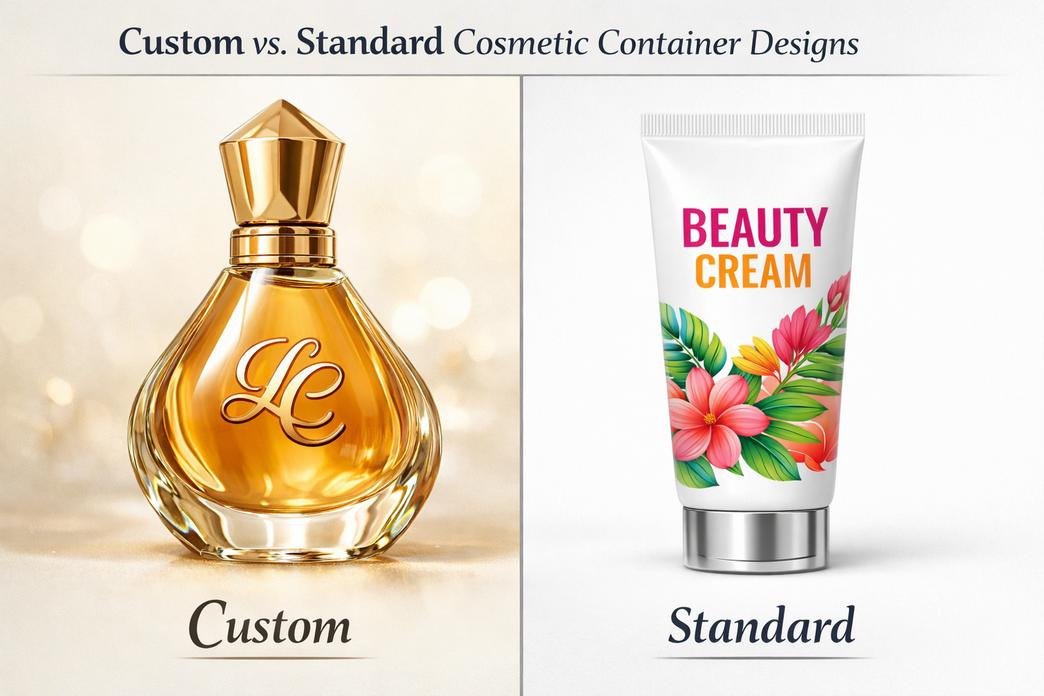
Custom Vs. Standard Container Designs
Picking the right container cosmetic solution can make or break your product’s first impression. Let’s break down two popular approaches.
Fully Custom Bottles and Jars with Embossed Metallic Finishes
Creating a standout product often starts with shaping its identity—literally.
I. Design Innovation & Brand Identity
- A custom mold gives you total freedom to form a bottle or jar that screams your brand.
- Think bold: unique curves, angular silhouettes, or even asymmetrical bodies.
- These shapes can’t be replicated by stock molds, offering exclusivity on-shelf.
II. Premium Detailing Techniques
-
Add depth through embossing techniques, where logos or text are raised from the surface.
- This tactile detail boosts perceived value instantly.
-
Use metallic coatings like gold foil or chrome to elevate appearance.
- Works especially well on high-end glass bottles and thick-walled acrylic jars.
III. Investment vs Impact
-
Tooling costs are higher upfront due to custom mold creation.
- But that investment pays off in brand recognition and shelf appeal.
-
Lead times stretch longer too, so planning ahead is essential.
Topfeelpack helps brands navigate these trade-offs by offering tailored solutions for premium packaging needs across various types of cosmetic containers.
Standard Tubes and Compacts with Labeling and Offset Printing
Sometimes speed matters more than sculptural flair—and that’s where standard formats shine.
• Stock options like standard compacts or squeeze-friendly stock tubes let you get to market faster without sacrificing style.
• You can still customize using smart print methods:
- Go bold with full-color offset printing, ideal for high-res graphics.
- Or keep it clean with minimalistic branding using silk-screened logos.
→ Add a pop of personality through pressure-sensitive labels—easy to change seasonally or between SKUs.
→ Tweak your look further by playing with cap styles, finishes, and materials without needing new molds.
In short bursts: fast production, low cost, flexible design paths—all while keeping your brand’s look intact on every shelf stocked with beauty goods in sleek little cosmetic containers.
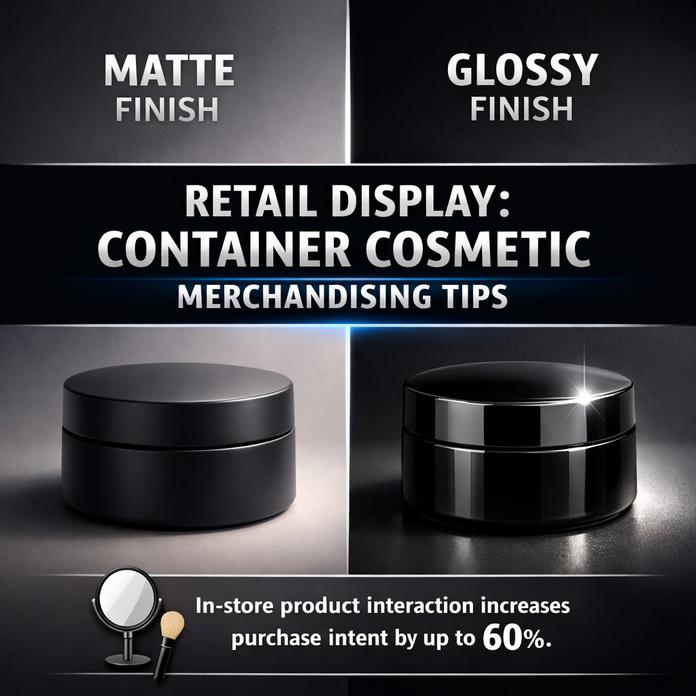
Retail Display: Container Cosmetic Merchandising Tips
How you present your container cosmetic products can make or break the sale—here’s how to do it right.
Matte vs. Glossy Surface Finishes for Shelf Impact
To stand out on a crowded shelf, the surface texture of your packaging must align with both brand tone and lighting conditions.
A. Visual Engagement Based on Finish
-
Matte finish
- Feels premium and tactile
- Minimizes fingerprints and smudging
- Works well under soft lighting
-
Glossy finish
- Reflects overhead light to attract attention
- Exudes vibrancy and shine
- Ideal for bold or youthful branding
B. Strategic Application by Product Type
- Skincare containers often benefit from a matte finish, suggesting softness.
- Lip gloss tubes or highlighter compacts thrive with a glossy finish, enhancing their radiant appeal.
C. Material Consideration
Choose the right material finish that won’t warp under heat or fade under lights—especially important in retail displays where durability meets aesthetics.
Topfeelpack offers customizable finishes that balance long-term shelf appeal with sleek modernity in every container cosmetic design.
Mirrors, Brushes, and Applicators Enhancing In-Store Experience
Want people to try before they buy? Make it easy—and memorable—with built-in tools that elevate the vibe instantly.
✔ Add compact-sized cosmetic mirrors to powder cases so shoppers can test shades without hunting for help.
✔ Include soft-touch makeup brushes that feel luxe even during quick demos at tester stations.
✔ Use clever snap-on or integrated applicator tools, especially for eye products where precision matters most.
💡 Pro tip: Arrange testers with intuitive layouts so users naturally reach for them—this boosts casual interaction without needing staff intervention.
“In-store product interaction increases purchase intent by up to 60%, especially when tactile elements like brushes or mirrors are involved,” according to Mintel Beauty Retail Insights Report Q2–2024.
Keep these features consistent across your product line so customers recognize your brand’s commitment to usability—and fun!
Coordinated Packaging Sets: Bottles, Jars, and Palettes with Unified Branding
Uniformity isn’t boring—it’s branding gold when done right across your full range of container cosmetic items.
A. Core Elements of Brand Consistency
-
Color palette:
- Use signature hues across all items—from large pump bottles to tiny lip balm jars.
-
Typography:
- Keep font weights identical on all labels.
-
Logo placement:
- Align logos consistently whether on flat lids or cylindrical tubes.
B. Product Line Integration Examples
-
For skincare:
- Match serums in glass dropper bottles with moisturizers in frosted acrylic jars.
-
For makeup lines:
- Pair bold-shadowed eyeshadow palettes, sleek lipstick tubes, and creamy blush pots using mirrored accents or metallic foils.
-
For travel sets:
- Mini versions should mirror full-size designs down to cap shape and label style.
This kind of visual cohesion builds trust fast—customers spot your lineup from across the aisle without reading a word.
Topfeelpack specializes in crafting full-scale coordinated packaging systems—from concept mockups to production-ready designs—that reinforce identity while making each piece pop individually within any retail setup for modern-day beauty brands pushing boundaries in the crowded world of container cosmetics today.
FAQs about Container Cosmetic
What sustainable options exist for large-scale container cosmetic packaging orders?
Glass bottles bring a weighty reassurance and endless recyclability, aluminum jars feel light yet enduring in the hand, PCR plastic tubes quietly trim environmental impact. Paperboard sleeves with biodegradable lining wrap fragrances like gifts whispered by nature. Bamboo caps or closures add an organic touch that customers often linger over — each choice balancing beauty with conscience.
How can retail-ready finishes enhance shelf visibility of cosmetic containers?
A frosted jar appears almost like morning mist trapped inside glass; metallic droppers catch light and cast it back into the aisle. Soft-touch matte compacts invite fingertips to explore, while glossy tubes shimmer under store lighting. Decoration runs from silk screening’s clean precision to hot stamping’s flash of foil edge — all designed to make pumps, sprayers or caps part of the visual story.
Which factors influence total assembly efficiency in bulk container deliveries?
Extra inserts or liners slow hands on the filling line; mono-material bodies let capping fly faster. Gaskets, stoppers and brushes require careful fit checks before sealing bottles or aerosol cans tight. Well-matched closures mean fewer pauses during production — each smooth movement stacking up into thousands more finished pieces ready for shelves without missing a single beat.

