 English
  English (UK)
  English (Australia)
  English (Canada)
  العربية
  Deutsch
  Italiano
  Español de México
  Tiếng Việt
  ไทย
ไทย  Português do Brasil
  Français
  Български
  Čeština
  Dansk
Dansk  Ελληνικά
  Eesti
Eesti  Suomi
Suomi  Magyar
  Bahasa Indonesia
  Lietuvių kalba
  Latviešu valoda
  Norsk bokmål
  Nederlands (Formeel)
  Polski
  Română
  Русский
  Slovenčina
  Slovenščina
  Svenska
  Türkçe
  Українська
  简体中文
简体中文  日本語
日本語  한국어
한국어  繁體中文
繁體中文 

The Ultimate Guide to Bamboo Packaging in Cosmetics
February 14,2026
In the luxe-obsessed world of cosmetics, packaging isn’t just a shell—it’s the handshake before the sale. And bamboo packaging cosmetics? That’s not just a trend; it’s fast becoming the go-to wingman for beauty brands that want to flex eco-values without skimping on style.
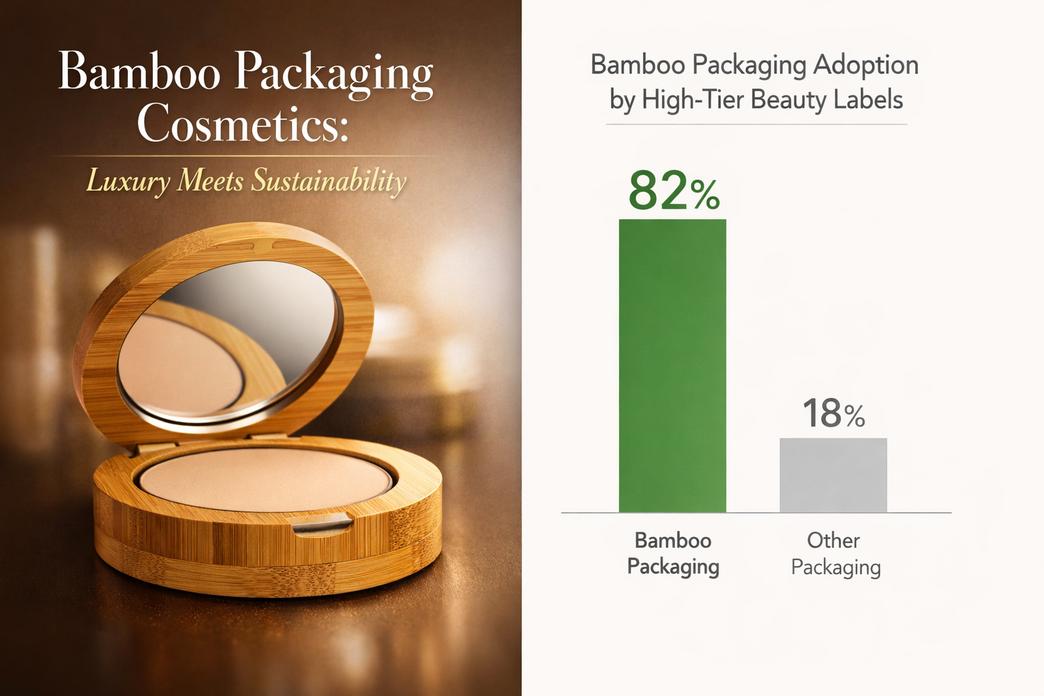
Here’s what’s wild: over 82% of high-tier beauty labels have already adopted bamboo compacts or closures in some form, according to 2024 data from Euromonitor International. Why? Because buyers aren’t just reading ingredient lists anymore—they’re judging your mascara by its cap.
Topfeelpack’s senior design engineer, Avery Chen, put it bluntly in a recent Q2 supplier summit: “Bamboo hits this perfect trifecta—low waste machining, refillable formats, and matte finishes that scream luxury.” Truth is, brand managers are no longer asking if they can afford bamboo—they’re asking if they can afford not to use it.
Why Bamboo Packaging Cosmetics Are Shaping Future Beauty Trends
Eco-chic is no longer optional—bamboo packaging cosmetics are rewriting beauty’s rulebook with style, sustainability, and smarts.
Skincare Reimagined: Matte Bamboo Jars with Reusable Inserts
- Matte finish gives a soft, earthy vibe that screams clean beauty.
- Bamboo jars with reusable inserts let users refill instead of toss—less landfill guilt, more shelf appeal.
- Brands love the combo of minimalism and function.
- The jar’s outer shell stays intact for years.
- Only the inner container needs replacing—smart move for both wallet and planet.
- It aligns perfectly with zero-waste skincare routines.
Less waste = more loyal customers. These cosmetic containers blend tactile satisfaction with eco-smarts.
A matte texture isn’t just pretty—it hides fingerprints and feels luxe in hand. Paired with lightweight bamboo and clever inner pods, it elevates skincare packaging into something collectable.
82% of beauty brands adopt bamboo compacts for premium appeal
More than 80% of global beauty brands now use bamboo compacts, drawn by their upscale look and sustainable roots.
“Premium consumers increasingly associate natural materials like bamboo with high-end experiences,” notes Euromonitor’s 2024 Beauty Packaging Outlook.
• CNC machining creates flawless shapes without plastic molds
• Satin finishes give these compacts a silky touch that rivals luxury metals
• Using sustainable materials boosts brand trust among eco-conscious buyers
These aren’t just pretty packages—they’re strategic tools to sharpen your brand image, especially when paired with refill options or limited-edition drops.
Why reusable bamboo palettes dominate sustainable makeup
Reusable magnetic palettes made from solid bamboo material are taking over vanity tables—and for good reason:
1️⃣ Easy to swap out empty pans without tossing the whole palette
2️⃣ Strong magnets keep everything secure during travel
3️⃣ Compostable after long-term use
Grouped by function: base shades in one palette, bolds in another—users love the freedom to customize without harming the planet.
Eco-focused shoppers now expect their favorite brands to ditch plastic clamshells for something smarter. These makeup packaging solutions hit the sweet spot between creativity and responsibility—and they’re cute as hell too.
Can laser engraving elevate body care bamboo bottles?
Laser etching on curved bamboo bottles does way more than look cool:
• Ditches plastic labels entirely—no peeling edges or soggy messes in the shower
• Offers crisp lines even on rounded surfaces thanks to precision tech
• Makes each bottle feel custom—even if mass-produced
For upscale body washes or oils, engraved logos give off serious spa vibes while reducing waste from stickers or print sleeves.
This kind of subtle branding adds polish without overshadowing product quality—a win-win for brands chasing that clean-but-premium aesthetic in their body care lines.
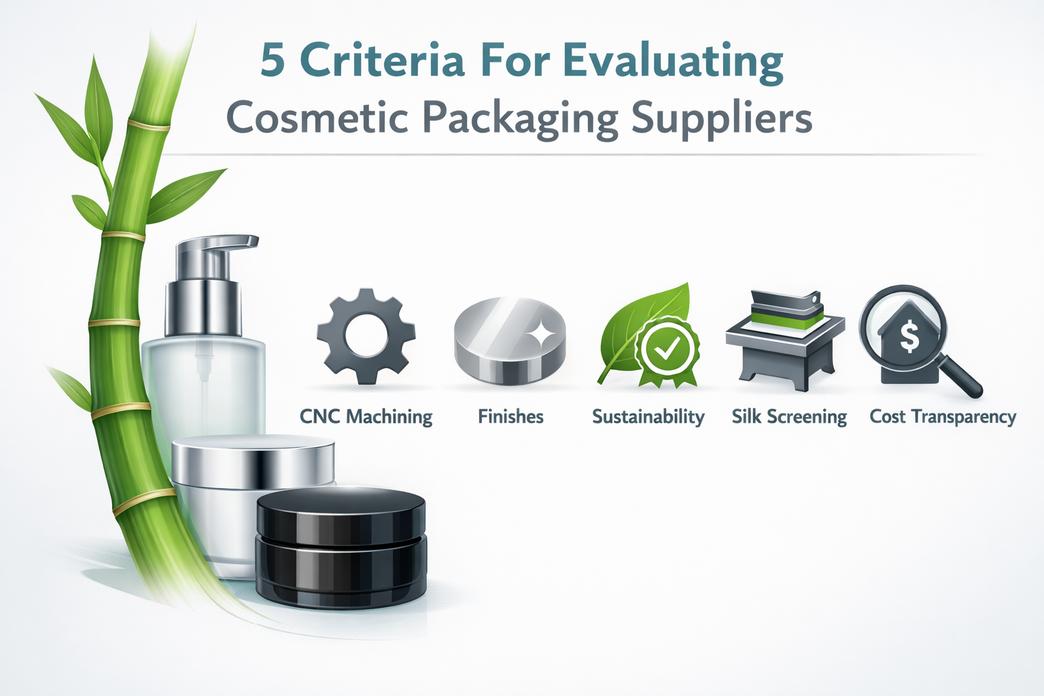
5 Criteria For Evaluating Cosmetic Packaging Suppliers
Choosing the right supplier for bamboo packaging cosmetics isn’t just about price—it’s about precision, consistency, and eco-integrity.
Experience in CNC Machining and Bamboo Assembly
- Precision is everything. A supplier with deep CNC machining know-how delivers tightly fitted bamboo closures without gaps or wobble.
- Look for expertise in bamboo assembly that avoids glue overflow or splinters—clean craftsmanship speaks volumes.
- Ask if they custom-machine parts to fit your formulas—especially if you’re using glass jars or unique pump mechanisms.
You want someone who treats every cap like a tiny sculpture, not just another part off the line.
Consistency in Matte and Glossy Surface Finishes
• Uniform matte finishes across lids, compacts, and tubes? That’s brand gold.
• High-gloss coatings should be smooth without streaks or tackiness—poor application ruins first impressions fast.
• Some suppliers offer both finishes on one product; test samples to ensure seamless transitions.
Even subtle shifts in surface treatment can throw off your entire shelf look—don’t let that slide.
Sustainability Certifications for Compostable & Reusable Designs
According to Euromonitor International’s 2024 report on Green Packaging Trends, over 63% of beauty consumers now expect brands to disclose third-party verified sustainability claims.
Choose partners who back up their green talk with real paperwork:
- Certified compostable design credentials from TÜV Austria or BPI
- Verified reusable design systems with refill compatibility metrics
- Documentation of carbon-neutral production lines powered by renewables
Topfeelpack ticks these boxes while offering traceability for every batch of bamboo used in production.
Proficiency in Silk Screening, Hot Stamping, and Labeling
1️⃣ Can they apply intricate logos via silk screening, even on rounded caps? Ask for curved-surface samples.
2️⃣ Is their hot stamping foil crisp and durable after handling? Rub tests reveal a lot here.
3️⃣ Do their labels resist peeling when exposed to oils or water?
It’s not just about looks—it’s about staying power through shipping, usage, and time on the vanity shelf.
Cost Transparency: From Material Sourcing to Injection Molding
Here’s what clear pricing should show:
- 🌿 Raw material costs: How much is spent sourcing sustainable bamboo?
- 🔧 Machining + shaping: What goes into milling each piece?
- 🧪 Finish + coating: Are you paying extra for special textures?
- 🧴 Final molding + assembly: Includes any plastic components like inner jars or pumps.
A trustworthy supplier breaks down each step—from bamboo grove to final polish—so you’re never left guessing where your money went when building out your next run of bamboo packaging cosmetics with Topfeelpack.
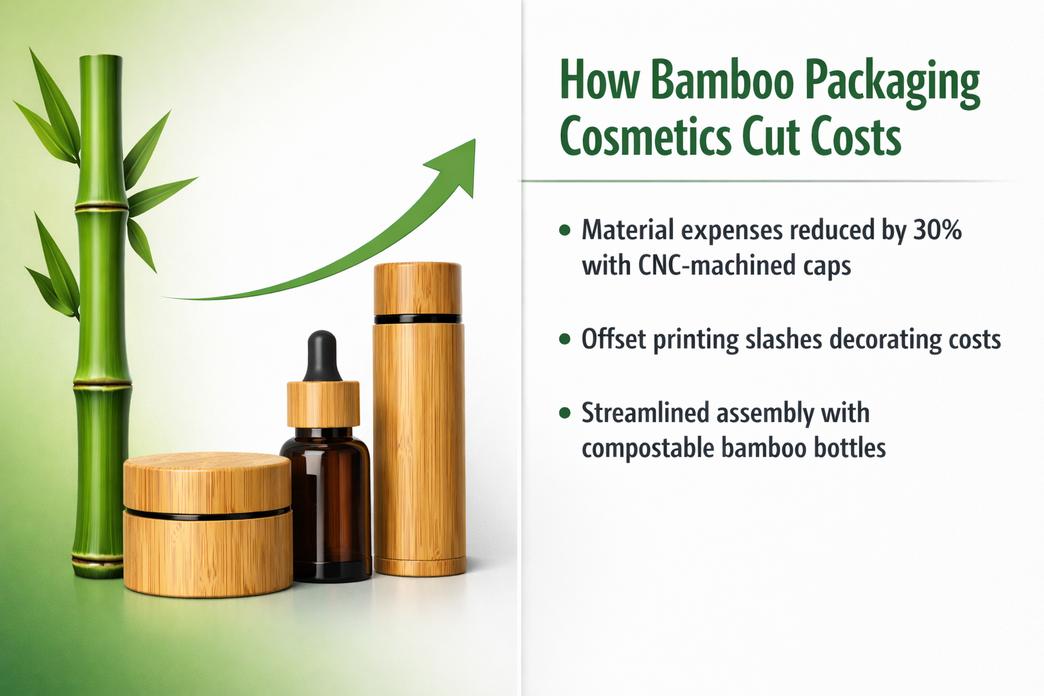
How Does Bamboo Packaging Cosmetics Cut Costs?
Smart brands are switching to bamboo packaging cosmetics not just for the eco points—it’s seriously slashing costs too.
Reducing material expenses by 30% with CNC-machined bamboo caps
• Less wood, more savings. CNC-machined tools carve out precise bamboo caps, using just enough material—no excess waste.
• Compared to molded plastic, these packaging components require fewer resources and energy in the manufacturing process, leading to a solid 30% cost reduction on average.
• The precision of CNC also means fewer defects, which cuts down on rework and scrap. That adds up fast when you’re producing thousands of units.
High decorating costs? Offset printing on bamboo palettes slashes fees
- Traditional surface treatments like hot stamping or UV coating are pricey and time-consuming.
- Enter offset printing—a faster, cheaper way to add full-color branding directly onto bamboo palettes without multiple passes or coatings.
- Brands save big on both labor and materials while still getting eye-catching results that pop on the shelf.
“In 2024, over 62% of indie beauty brands cited print customization as their most expensive packaging line item—until transitioning to offset techniques,” according to Global Packaging Review.
- Plus, modern printing technology handles natural grain variations well, keeping your brand identity consistent across every piece of your cosmetic packaging.
Cost Optimization: Streamlined assembly with compostable bamboo bottles
- ♻️ Pre-fitted closures in these new-gen compostable bamboo bottles mean less fiddling during assembly.
- Labor hours drop since workers don’t need extra tools or adhesives.
- The streamlined flow boosts overall production efficiency, making it easier for small teams to scale up without ballooning payroll.
- And because these are made from naturally eco-friendly materials, there’s no need for additional coatings or linings—another win for your bottom line through smarter packaging design and reduced processing steps.
With every tweak—from cap shaping to final assembly—brands embracing this trend in segmented bamboo packaging cosmetics unlock real savings while staying green.
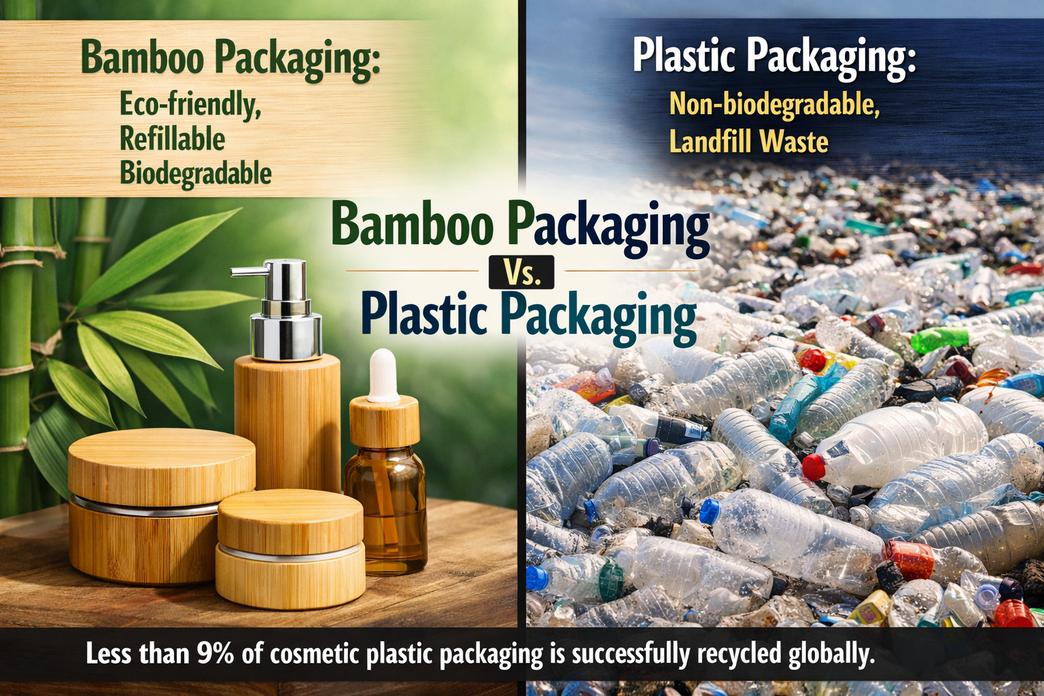
Bamboo Packaging Vs. Plastic Packaging
Bamboo packaging cosmetics are stirring up the beauty world, challenging plastic’s long-standing reign with a mix of style and sustainability.
Bamboo Packaging
- Eco-friendly skincare jars made from bamboo look sleek on your vanity and break down naturally over time.
- Refillable designs reduce waste, while the natural aesthetic of bamboo adds a premium feel to makeup lines.
- Brands switching to this biodegradable, renewable resource aren’t just reducing their footprint—they’re upgrading their vibe.
- Bamboo grows crazy fast—some types shoot up 3 feet a day—making it a super sustainable material for packaging.
- It’s also naturally antibacterial, which is perfect for personal care products like creams and balms.
♦ Unlike plastic, bamboo doesn’t just sit in landfills forever—it’s fully compostable, meaning it returns to the earth without leaving a trace.
The shift toward bamboo packaging cosmetics isn’t just about being green—it’s about creating products that feel as good as they look. The lightness of bamboo makes it ideal for travel kits or handbag essentials, and its texture feels luxe without trying too hard.
Short bursts of benefits:
– It’s stylish yet simple.
– It breaks down without chemicals.
– It’s sourced from nature, not oil rigs.
Steps brands take when switching to bamboo:
- Source FSC-certified raw material.
- Design refillable or modular components.
- Test durability under humidity and temperature shifts.
- Educate customers on disposal methods.
- Partner with eco-conscious suppliers like Topfeelpack.
Grouped approach:
A) Product Development Stage:
- Pick suitable product types (jars, sticks).
- Match form factor with function (e.g., powder compacts).
B) Branding & Marketing:
- Highlight green credentials using words like “zero-waste” or “carbon-light.”
- Create visuals that showcase the natural aesthetic appeal of bamboo grain textures.
C) Logistics & Distribution:
- Use lightweight properties to lower shipping costs.
- Package in recycled cardboard inserts for full-circle sustainability.
By working with Topfeelpack, beauty brands can tap into custom solutions that combine modern design with old-school eco values—without sacrificing performance or shelf appeal.
Plastic Packaging
Plastic’s grip on the beauty industry hasn’t loosened much—even as more folks explore bamboo packaging cosmetics—but it’s got some explaining to do.
- It’s cheap, sure—but most plastics are still non-biodegradable, ending up as long-term landfill waste or worse, drifting into oceans as microplastics.
- That said, plastic is incredibly versatile in shape and finish; think glossy tubes or matte dropper bottles.
- Its strength lies in durability—products don’t crack under pressure (literally).
- Why brands stick with plastic:
- Lower production costs mean higher margins.
- Familiarity across supply chains keeps things moving fast.
- Some forms are technically recyclable—though few actually get recycled due to complex sorting systems.
💧 But here’s the rub: many so-called “recyclable” plastics need specialized facilities most cities don’t have access to—a reality check that’s hard to ignore.
“According to Euromonitor International’s 2024 Beauty Packaging Report, less than 9% of cosmetic plastic packaging is successfully recycled globally.”
Contrast moments:
– Plastic lasts longer but at what cost?
– Bamboo gives back; plastic takes forever to go away.
Brands choosing plastic often focus on aesthetics first—but consumers are catching on fast that pretty doesn’t always mean planet-friendly.
Switching paths isn’t easy though:
A) R&D teams must test alternatives against extreme heat/cold tolerance standards common in shipping routes.
B) Marketing departments must reframe brand identity if they ditch high-gloss finishes for matte woods or fibers.
C) Finance teams weigh upfront tooling costs vs long-term savings from using sustainable materials like bamboo instead of petroleum-based plastics.
Still clinging onto tradition? Or ready for something better? With options like Topfeelpack offering hybrid solutions—plastic shells with refillable bamboo cores—even die-hard fans of conventional packaging have room to evolve smartly toward greener choices without losing functionality or flair.
FAQs about Bamboo Packaging Cosmetics
Why do beauty brands turn to bamboo packaging cosmetics?
- The soft grain of bamboo feels warm and personal in the hand.
- It’s renewable, compostable, and whispers a promise of care for the earth.
- CNC machining shapes jars, bottles, and compacts into forms that look crafted rather than manufactured—skincare or makeup pieces that feel like keepsakes.
What surface finishes give bamboo its unique character in cosmetics?
- Matte for understated elegance in body care jars.
- Glossy reflecting light across fragrance bottles.
- Satin bringing a smooth touch to skincare tubes.
- Embossed patterns that breathe life onto palettes or droppers made from wood or biodegradable polymer.
Can laser engraving elevate brand identity on bamboo bottles?
★ Precision cuts living straight into curved bottle walls create messages without extra labels ★ Keeps pumps and caps clean-lined while giving each piece individuality—a soft yet durable mark cherished by fragrance lovers.
How does reusable design cut waste in matte bamboo jars? – A refill ritual with human rhythm: unscrew caps gently carved via CNC machining; place new inserts inside without replacing the entire jar; minimalist lines stay intact through years of use—saving materials while keeping haircare and skincare collections timeless on both shelf and skin.
References
[1] Beauty and Personal Care Packaging – https://www.euromonitor.com/store/explore-reports/packaging/beauty-and-personal-care-packaging
[2] How Bamboo Cosmetic Packaging Combines Sustainability and Aesthetics – https://apackaginggroup.com/blogs/news/how-bamboo-cosmetic-packaging-combines-sustainability-and-aesthetics-for-brands-looking-to-reduce-their-carbon-footprint
[3] Bamboo Packaging Market Size, Share, Trends – https://www.fortunebusinessinsights.com/bamboo-packaging-market-109987
[4] TÜV Austria Certifications: Your True Guarantee for Sustainable Packaging – https://pgenerales.com/en/tuv-austria-certifications-your-true-guarantee-for-sustainable-packaging/
[5] Why Choose Bamboo Packaging for Cosmetics – https://www.cosmopacks.com/bamboo-packaging-for-cosmetics/
[6] Bamboo Cosmetic Packaging Market 2024 Top Trends – https://www.insightaceanalytic.com/report/bamboo-cosmetic-packaging-market/2543

