 English
  English (UK)
  English (Australia)
  English (Canada)
  العربية
  Deutsch
  Italiano
  Español de México
  Tiếng Việt
  ไทย
ไทย  Português do Brasil
  Français
  Български
  Čeština
  Dansk
Dansk  Ελληνικά
  Eesti
Eesti  Suomi
Suomi  Magyar
  Bahasa Indonesia
  Lietuvių kalba
  Latviešu valoda
  Norsk bokmål
  Nederlands (Formeel)
  Polski
  Română
  Русский
  Slovenčina
  Slovenščina
  Svenska
  Türkçe
  Українська
  简体中文
简体中文  日本語
日本語  한국어
한국어  繁體中文
繁體中文 

What to Look for in a High-Quality Mascara Container?
February 05,2026
Mascara container got you sweating bullets? You’re not alone. Between leaky tubes, flaky brushes, and packaging that cracks under pressure—literally—it’s enough to make a product manager cry off their eyeliner. When the shelf appeal fizzles or formula spoils mid-shipment, your bottom line takes a hit harder than a dropped compact.
“Airless mascara systems are now preferred by over 78% of cosmetic brands worldwide for formula preservation,” according to Mintel’s 2023 Packaging Insights Report. Translation: buyers are swiping left on outdated tubes.
Somewhere between supply chain chaos and consumer expectations lies the sweet spot—a container that delivers form, function, and flair without costing you sleep or sales.
So what makes a mascara vessel worth its weight in bulk orders? Buckle up—we’re breaking it down with zero fluff and all facts.
Data Shows 80% Of Brands Choose Airless Mascara Containers
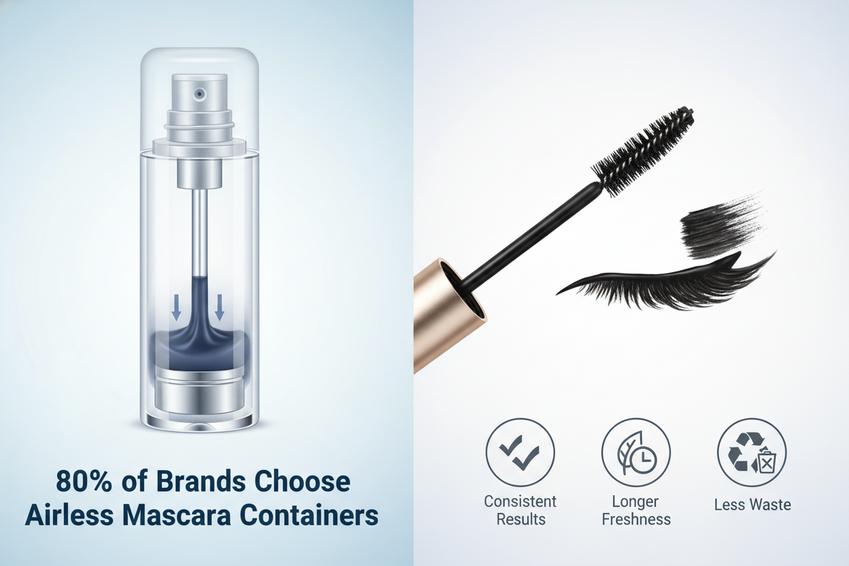
Turns out, there’s a solid reason so many brands are ditching the old-school mascara tube. Let’s break down what makes airless designs such a game-changer.
Why airless structures outperform traditional mascara container designs
- Airless pump tech creates a sealed environment that keeps oxygen out—no more dried-out formulas halfway through the tube.
- The vacuum seal prevents messy clumps and keeps every swipe smooth from day one to the last drop.
- Say goodbye to bacteria build-up. No double-dipping means less risk of bacterial contamination, keeping your lashes—and eyes—safer.
- Traditional tubes let air in with every use → oxidation kicks in fast.
- That oxidation messes with texture → formula dries out or separates.
- Airless containers? They skip all that → longer shelf life and better lash payoff.
✓ You get consistent results
✓ Your product stays fresh longer
✓ And you waste way less
The shift toward airless packaging isn’t just hype—it’s about real performance. With better product integrity, improved hygiene, and extended usability, these containers are built for modern beauty routines that don’t compromise.
Airless mascara containers and material safety data sheet compliance
• Every part of an airless system—from its pump to inner chamber—is crafted using FDA-compliant materials like PP plastic or SAN plastic, which means they’re safe for daily use on sensitive areas like eyes.
• These components also meet strict MSDS compliance standards, ensuring full transparency in chemical makeup and handling protocols.
-
Check compatibility between formula and container
- Some active ingredients require specific plastics
-
Confirm regulatory alignment
- FDA + MSDS rules must match up with packaging design
- Test for long-term stability
- No leaching, no weird reactions over time
“As of early 2024, over 92% of newly launched eye makeup packaging products adopted primary packaging compliant with updated MSDS guidelines,” according to Global Cosmetic Regulatory Insights.
So yeah—airless isn’t just about keeping your mascara creamy; it’s about being smart with safety too. When you’re dealing with cosmetic-grade chemicals near your eyes daily, that matters more than ever.
From sustainable design to inventory management advantages
• Built from modular parts, these containers simplify storage logistics—think fewer SKUs thanks to interchangeable components.
• Most designs now feature recyclable bodies made from eco-conscious materials like PCR plastics, pushing forward the trend toward true sustainable packaging without sacrificing style or function.
- Lower carbon footprint during production
- Less product waste due to full dispense mechanism
- Easier disassembly = better recycling rates post-use
Grouped benefits:
A) Sustainability Gains
– Use of eco-friendly materials like bioplastics or recycled resins
– Reduced emissions via lightweight shipping formats
B) Inventory Wins
– Better stacking = smarter warehouse use
– Interchangeable pumps cut down on overstock
C) Retail Efficiency
– More consistent sizing simplifies retail display setups
– Streamlined refills reduce restock delays
The switch to airless mascara systems is more than a packaging upgrade—it’s a move toward smarter supply chains and greener beauty habits wrapped into one sleek tube. Whether it’s reducing landfill waste or optimizing your stockroom shelves, this innovation hits all the right notes for modern brands trying to do more with less while still looking sharp on shelves.
And yes—for those wondering—brands like Topfeel have already started integrating these features into their latest launches… but they’re far from alone in this shift toward smarter design thinking around the humble yet mighty mascara container.
4 Key Features For Your Mascara Container
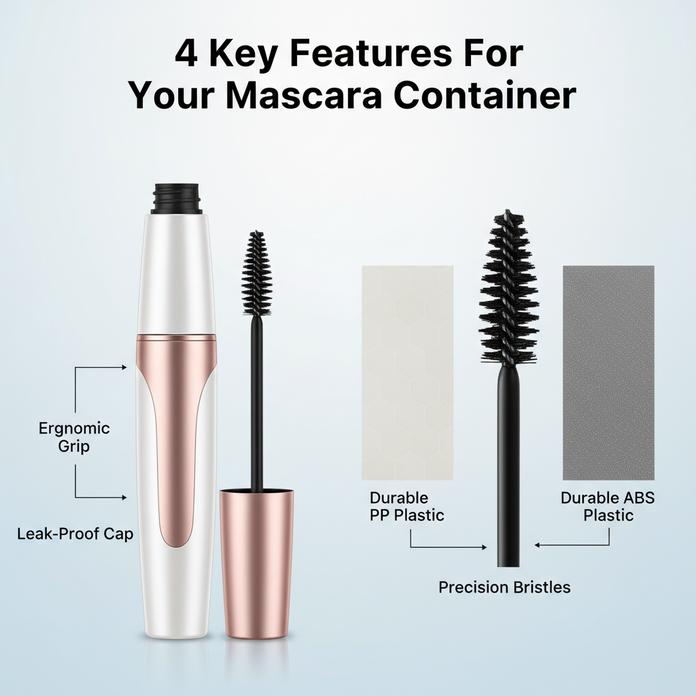
Nailing your mascara container design means balancing form, function, and aesthetics—right down to the grip and brush head.
Ergonomic grip with leak-proof cap closure design
A good container design isn’t just about looking sleek—it’s about keeping product where it belongs and making application feel natural.
- The ergonomic grip fits snugly in hand, reducing drop risk during use.
- A precision-engineered cap closure provides a tight seal that prevents leaks in transit or handbags.
- Thoughtful shaping boosts user comfort, especially for people applying mascara on the go.
“Consumers are more likely to repurchase beauty packaging that feels intuitive and leak-resistant,” according to Euromonitor’s 2024 Cosmetics Packaging Insight Report.
That combo of form and function? It’s what separates a drugstore fail from a luxury win.
Durable bottle body made from PP plastic and ABS plastic
You want your mascara container to survive more than just a few tosses into makeup bags or drops onto tile floors? Then let’s talk materials—because not all plastics are created equal.
Step-by-step breakdown:
- Choose between high-grade PP plastic or resilient ABS plastic, depending on whether you’re targeting mass-market or prestige lines.
- Test for real-world conditions like temperature shifts, handbag pressure, and shelf stacking.
- Confirm that the chosen material supports surface treatments like gloss coating or foil stamping without warping the bottle shape.
- Validate impact resistance through drop tests—especially at corners where cracks often start.
The result is a tough yet lightweight container body that keeps its shape—and your product safe—for months on end.
Applicator wand and brush head precision through tooling design
When someone swipes on mascara, they don’t think about how many hours went into tooling—but you should.
Grouped multi-level nested process:
- Tooling Design Phase
- CAD modeling ensures uniformity in every single mold cavity.
-
Simulations optimize flow lines for molten materials to reduce air pockets near the brush tip.
- Production Calibration
- Automated systems check each batch of applicator wands for length tolerance within ±0.05mm.
- Brush heads undergo bristle density testing using optical scanners to guarantee consistent lash separation performance.
- Softness calibration ensures no irritation around sensitive eye areas.
- Flexibility tests mimic real-life bending angles during application strokes.
Precision matters because even tiny inconsistencies can wreck user trust—and lead to massive product returns down the line.
Decoration techniques that ensure color consistency and shelf impact
What catches eyes on shelves isn’t just color—it’s consistency across batches and finishes that scream premium quality every time someone picks up your tube.
Mixed structural format combining short segments + steps:
• Begin with branding goals: Will this be bold neon or elegant matte black? That determines which finishing method works best—like UV coating vs soft-touch lamination.
• Next comes alignment: Hot stamping must sync perfectly with embossed logos; otherwise, it looks cheap instead of chic.
• Then test across lighting conditions: Store fluorescents vs daylight can distort colors if your decoration lacks stability.
From glossy prints to tactile finishes, these decoration techniques boost both visual appeal and brand recall without compromising production efficiency—or blowing out cost per unit targets for your next-gen mascara packaging line.
How To Avoid Leakage In Mascara Container?
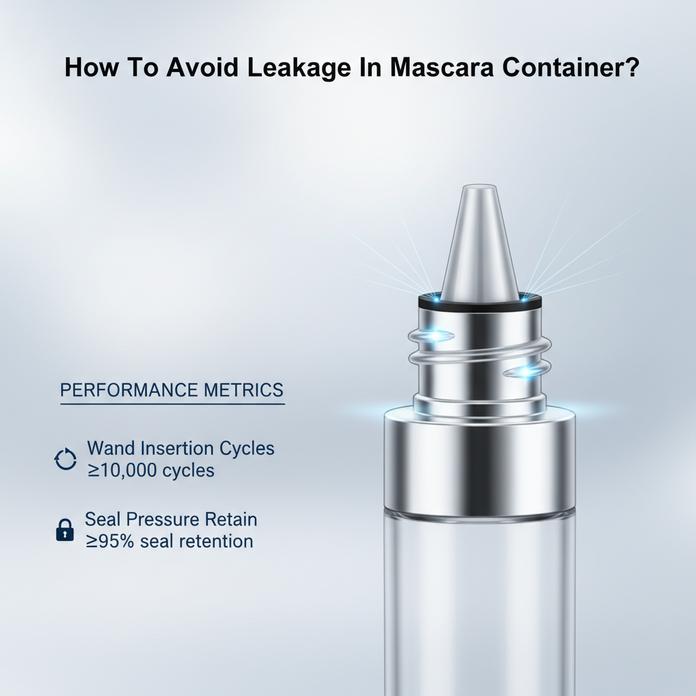
Leakage can ruin both your product and your reputation. Let’s break down what keeps a mascara container sealed tight from the inside out.
Wiper insert engineering and durability testing standards
To keep that creamy formula where it belongs, the wiper insert design plays a starring role. It’s not just a plastic ring—it’s engineered to grip, flex, and hold strong.
A. Engineering Considerations
- Seal integrity is determined by how well the wiper hugs the wand shaft.
- The choice of elastomer material affects flexibility across temperature changes.
- Optimized dimensional stability ensures consistent performance over time.
B. Durability Testing Phases
- Initial compression tests simulate wand insertion/removal cycles—up to 10,000 times.
- Environmental stress checks expose inserts to humidity, heat, cold, and vibration.
- Fatigue resistance is evaluated under repeated mechanical loads.
C. Performance Standards & Metrics
| Test Type | Target Value | Tolerance Range | Failure Threshold |
|---|---|---|---|
| Wand Insertion Cycles | ≥10,000 cycles | ±5% | <9,500 cycles |
| Temp Resistance | −10°C to +50°C | ±2°C | Cracks/warping |
| Seal Pressure Retain | ≥95% seal retention | ±3% | <90% |
These steps ensure that every swipe from your mascara tube is smooth—and mess-free.
Injection molding accuracy for ferrule and bottle body fit
When it comes to keeping leaks out of the picture, even microscopic flaws in the mold can spell disaster for a mascara container.
• The injection molding process must account for material flow rate so that every batch of parts comes out clean with no flash or deformation.
• Precise control over ferrule dimensions, especially inner diameter tolerances, helps align components during assembly without forcing or gaps.
• Shrinkage during cooling? That’s where smart mold design shines—anticipating how polymer contracts so that final parts nest together with perfect snugness.
- Engineers monitor shrink factors based on resin type (e.g., PP vs ABS).
- They adjust cavity geometry accordingly using CAD simulations.
- Post-mold inspections confirm if actual parts meet spec using laser scanners or micrometers.
A good fit between the ferrule and bottle means fewer worries about leaks—even when tossed in your gym bag or carried through airport pressure changes.
Assembly line inspection and supplier audit for leak-proof seals
There’s no room for guesswork when sealing thousands of units per hour on an assembly line—this is where airtight quality control meets real-world conditions head-on.
A. Assembly Line Protocols
- Every unit undergoes visual inspection under LED magnifiers.
- Automated torque sensors verify cap closure force within tolerance limits.
- Random sampling includes vacuum-based leak testing, simulating altitude shifts during shipping.
B. Supplier Audit Process
- Pre-shipment evaluations check raw materials used in gaskets or inserts.
- Onsite audits assess adherence to ISO-compliant manufacturing standards.
- Defect logs are reviewed monthly; any spike triggers immediate corrective action plans.
C. Seal Verification Points
✓ Is the wand thread cleanly molded?
✓ Are there air pockets around the neck joint?
✓ Does twisting produce audible clicks indicating proper lock-in?
By combining rigorous audits with real-time feedback loops on the floor, manufacturers make sure each finished unit holds up—not just in lab tests but also in messy makeup bags across the globe.
And that’s how you stop leaks before they even start—by building smart at every single step of making a reliable mascara container system!
FAQs
What advantages make airless mascara containers the preferred choice for bulk buyers?
In high-volume orders, an airless system plays the role of bodyguard for your formula—holding oxygen at bay and stopping contamination in its tracks.
- Keeps texture rich for months during long lead times.
- Protects pigments from fading under warehouse lights.
- Uses PP plastic or SAN plastic that meets FDA compliance without sacrificing feel in hand.
Which materials are most durable for large-order mascara packaging?
Durability builds trust—you want a bottle body that survives drops yet still looks new on shelf.
- PP plastic: Lightweight but impact-resistant, ideal for busy supply chains with tight logistics schedules.
- ABS plastic: Adds a premium weight and smooth finish to match luxury branding goals while delivering strength through tough shipping conditions.
Why is tooling precision important for applicator wand production?
A slight variance in brush head shape can change everything—from lash separation to customer reviews online.
✦ Consistent tooling design guarantees even bristle spread and smooth glide of the wiper insert over time.
✦ Reduces rejection rates during assembly line runs by matching ferrule-to-wand fit exactly.
What decoration techniques maintain brand consistency on bulk packaging orders?
Brand presence isn’t just printed—it’s sculpted into memory through every stroke of ink or flash of metallic shine:
| Technique | Impact |
|---|---|
| Hot stamping | Metallic accents survive constant cap closure twists |
| Silk screening | Crisp logo lines hold color consistency beyond normal wear |
| UV coating | Shields exotic finishes from scratches across shipping sea |
References
- Mintel announces Global Packaging Trends for 2023 – www.mintel.com
- Why Are Airless Bottles Becoming Increasingly Popular? – xuminpackaging.com
- 2024 in Review: Key Cosmetic Regulatory Updates Globally – www.zmuni.com
- Beauty and Personal Care Packaging: Key Trends and Innovations – www.euromonitor.com
- ABS vs. Polypropylene (PP): Deciding Between Two Popular Plastics – www.protolabs.com
- Polypropylene vs ABS: Choosing the Right Plastic – www.jairajgroup.com

