 English (UK)
  English
  English (Australia)
  English (Canada)
  العربية
  Deutsch
  Italiano
  Español de México
  Tiếng Việt
  ไทย
ไทย  Português do Brasil
  Français
  Български
  Čeština
  Dansk
Dansk  Ελληνικά
  Eesti
Eesti  Suomi
Suomi  Magyar
  Bahasa Indonesia
  Lietuvių kalba
  Latviešu valoda
  Norsk bokmål
  Nederlands (Formeel)
  Polski
  Română
  Русский
  Slovenčina
  Slovenščina
  Svenska
  Türkçe
  Українська
  简体中文
简体中文  日本語
日本語  한국어
한국어  繁體中文
繁體中文 

How Long Does a Tube of Mascara Last? Essential Facts Explained
December 23,2025
Mascara—tiny tube, big drama. Ask any beauty buyer how long a tube of mascara lasts, and you’ll get answers that range from “three months” to “until it smells like regret.” But when you’re moving tens of thousands of units? That shelf life suddenly becomes your bottom line.
It’s not just about goop in a glam stick; it’s science meets storytelling. The viscosity of the formula, air exposure, wand shape—all play a role in how fast that fan-favorite flutters out. And packaging? Oh honey, packaging is everything.
According to Mintel’s 2023 Global Beauty Packaging Report, 68% of consumers say they judge a product’s freshness by its container design alone.
So if you’re sourcing packaging for a mascara line and aren’t factoring in longevity… well, buckle up. You might be sealing your next bestseller—or sealing its fate.
Understanding the Lifespan of a Tube of Mascara
How long does a tube of mascara last? It’s not just about time—it’s about what’s inside, how it’s packaged, and how you use it.
Why Volume Measurement Matters: Milliliter Capacity Explained
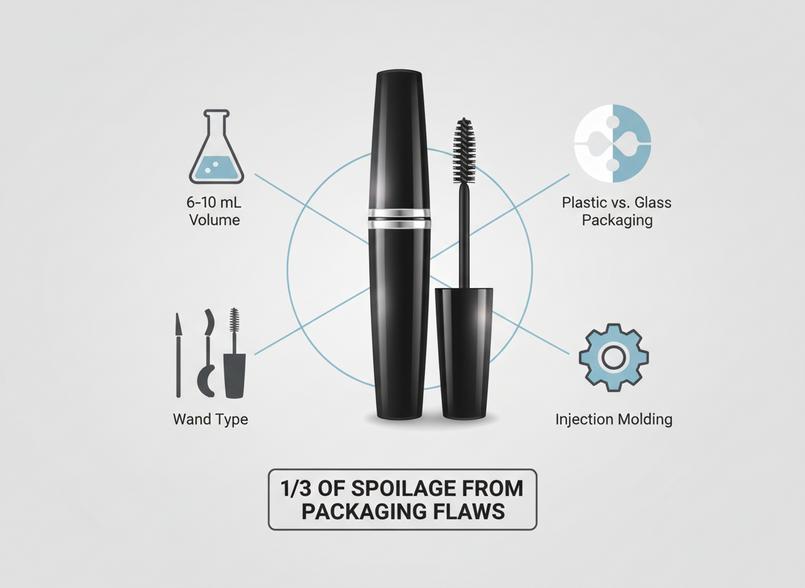
• A standard mascara tube usually holds between 6 mL and 10 mL, but that doesn’t always equal longer use.
• Higher volume doesn’t guarantee more applications—some formulas are thicker and dry faster.
• The actual usable product depends on the formula’s density and how much clings to the wand each time you pull it out.
The fill level might seem generous at first glance, but overuse or drying out can cut that lifespan short. So when wondering how long does a tube of mascara last, look beyond just milliliters.
The Role of Packaging Material: Plastic Container vs. Glass Vial
Grouped by material type:
Plastic containers: – Lightweight and shatterproof, making them ideal for travel bags. – More prone to air seepage over time, which can dry out the formula faster.
Glass vials: – Heavier, sleeker feel with better sealing properties due to denser walls. – Often used in premium mascaras because they preserve formula consistency longer.
The choice between plastic and glass impacts how long your mascara stays fresh—not just aesthetically, but chemically too.
Different Types of Mascara Wands: Which One Lasts Longer?
A few quick facts:
▸ Curved brushes often pick up excess product—leading you to run out quicker even though the tube isn’t empty yet.
▸ Straight wands with tighter bristles offer better control and reduce waste during application.
▸ Silicone applicators tend to be more hygienic than traditional fiber ones like nylon, helping prevent contamination that could shorten shelf life.
If you’re asking yourself “how long does a tube of mascara last,” don’t overlook the role your wand plays in stretching those uses further.
Understanding Manufacturing Processes: Injection Molding Insight
Step-by-step impact on longevity:
Step 1 – Precision shaping through injection molding ensures consistent wall thickness across every container produced.
Step 2 – This uniformity supports airtight sealing during assembly, keeping oxygen exposure minimal after filling.
Step 3 – Automation reduces human contact during production, cutting down contamination risk before it even hits shelves.
According to Euromonitor International’s Q2 Beauty Packaging Report for 2024, “Product integrity begins on the factory floor—packaging flaws account for nearly one-third of premature cosmetic spoilage.” That statistic alone speaks volumes about why packaging quality matters when figuring out how long a tube of mascara lasts.
Signs Your Mascara Has Gone Bad
Knowing when to toss your mascara is key to avoiding eye irritation or infection. Here’s how to spot the warning signs fast.
Texture Changes: What to Look For
When you open a tube of mascara, pay attention—its texture tells the whole story.
- If it feels clumpy or unusually thick, it’s likely dried out and no longer safe for use.
- A sticky application that doesn’t glide smoothly means the formula has probably broken down.
- Watch for watery consistency or product separation, which often signals contamination.
- Sometimes, the wand pulls out with visible flaky bits—that’s not just annoying, it’s a red flag.
- If you’re scraping around the edges for product, chances are your mascara’s past its prime.
In general, a tube of mascara lasts about three months once opened—but if it starts acting up sooner, trust what you see (and feel).
Smell and Color Alterations: Indications of Expiry
Most people don’t sniff their makeup—but they should. A weird smell can save your eyes from trouble.
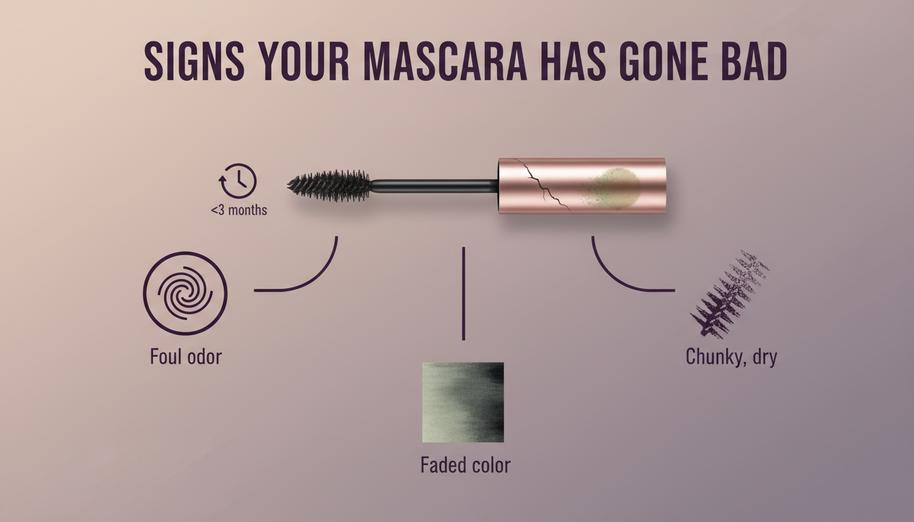
• A strong chemical smell or an outright foul odor is never normal—it means bacteria may have set up camp inside that tiny tube.
• Notice any discoloration, like a strange green tint or just a generally off hue? That’s your cue to toss it immediately.
• An unusual smell—anything that’s not neutral—is enough reason to stop using it. Mascara shouldn’t smell like anything at all.
| Indicator Type | Normal State | Expired State | Action Required |
|---|---|---|---|
| Smell | Odorless | Foul odor, sour | Discard |
| Color | Deep black | Faded color, greenish | Discard |
| Texture | Smooth | Chunky, dry | Discard |
| Use Duration | <3 months | >3 months | Evaluate |
Even if you think you’ve only used a tube of mascara last week, changes in environment or hygiene can shorten its shelf life dramatically.
Essential Tips for Storing Your Mascara
Keep your mascara fresh, clean, and clump-free with these smart storage habits.
Optimal Temperature: Preventing Clogging and Deterioration
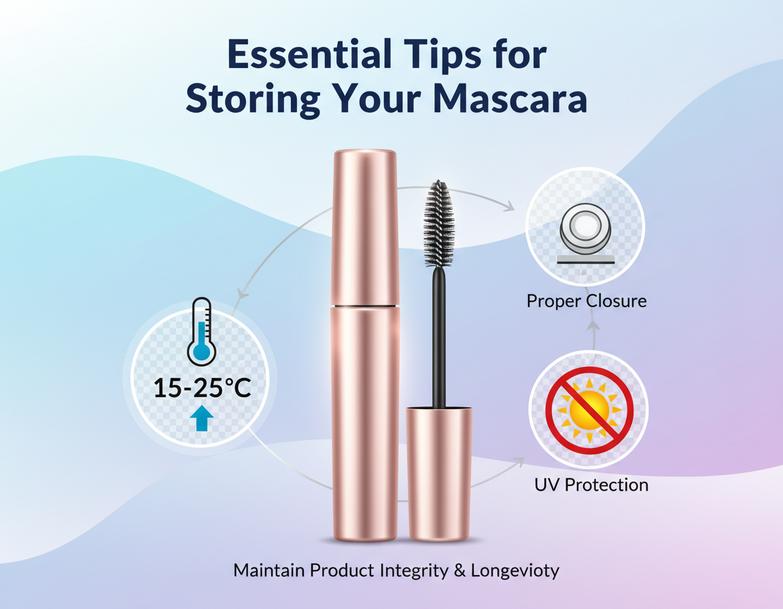
When it comes to mascara storage, temperature is everything. A tube of mascara lasts longer when you avoid extreme heat or freezing cold.
- Cooler temps help slow down formula deterioration, keeping the texture smooth.
- Heat can lead to product clogging, making application a mess.
- Fluctuations cause condensation inside the tube, inviting bacterial growth—gross!
The sweet spot? Keep it between 15°C and 25°C. That’ll seriously boost your shelf life extension without compromising product integrity.
How to Use Flip Top Closures Effectively
A tight seal makes all the difference, especially if you want a tube of mascara to last past the usual three-month mark.
- Always snap the flip-top closure shut until you hear that satisfying click—air is your enemy here.
- Avoid pumping the wand; it draws in air and speeds up product drying. Just swirl gently instead.
- Wipe off excess from the wand before reinserting—it keeps things clean and reduces risk of contamination prevention issues.
It’s not rocket science, but these small moves keep your mascara fresher—and way more hygienic—for longer.
Avoid Direct Sunlight: The Impact of UV Coating
Direct sunlight doesn’t just fade furniture—it wrecks your makeup too.
• UV rays break down active ingredients fast, reducing preservative efficacy and causing color shifts or weird smells due to mascara degradation.
• Heat exposure from sunlight warps plastic tubes, messing with how well they close—bye-bye, secure seal!
• Even packaging with a light layer of UV coating isn’t foolproof against long-term exposure.
Stash your mascara in a drawer or makeup bag away from windows or radiators if you want that tube to stay safe and extend how long a tube of mascara lasts naturally over time.
How Often Should You Replace Your Mascara?
Knowing when to swap out your mascara can save your eyes—and the planet—from unnecessary trouble.
Shelf Life Guidelines: Standard Times for Replacement
Let’s talk about how long a tube of mascara lasts, because it’s not forever—no matter how good it looks.
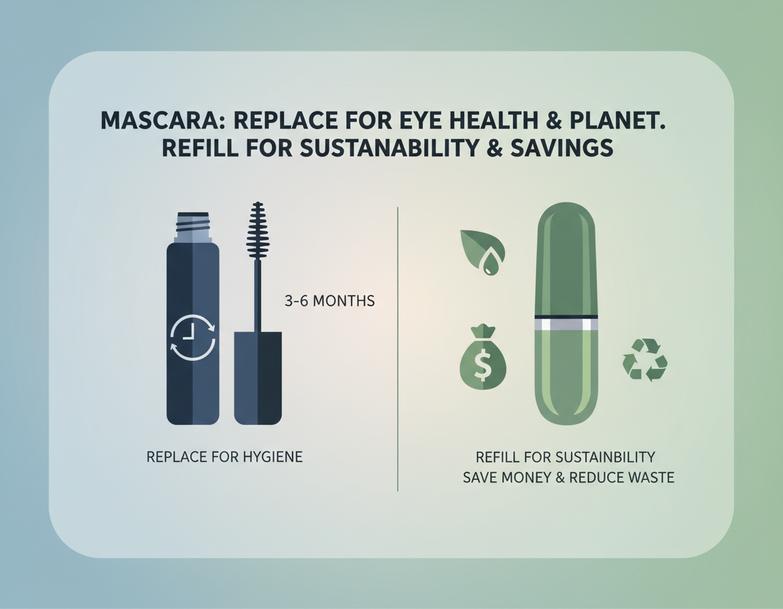
• Mascara typically expires within 3 to 6 months after opening, thanks to its constant exposure to air and bacteria from daily use.
• If you notice a weird smell or clumpy texture, toss it; that’s a clear sign of product degradation and potential harm to your eye health.
• Sharing mascara? Big no-no. That speeds up bacterial growth, which can lead straight to eye infections.
• Even if you don’t use it often, the expiration clock starts ticking once opened—so mark the date!
Keeping tabs on your replacement frequency isn’t just about hygiene—it’s about maintaining safe beauty habits that protect both your lashes and vision.
Benefits of Using Refillable Containers: Sustainability Features Explained
When you think about how many times you replace a tube of mascara, imagine all those little plastic tubes piling up in landfills.
🟢 Refillable mascaras are game changers—they cut down on waste by letting you reuse the primary packaging while only replacing the inner cartridge.
🟢 Less packaging means fewer resources used per product, reducing your overall carbon footprint and contributing to better environmental impact outcomes.
🟢 Some brands now offer stylish, durable designs that last longer than traditional tubes—giving a boost to both aesthetics and eco-consciousness.
🟢 You’ll also likely save money over time since you’re not constantly buying full new products—just refills!
By choosing a reusable option, you’re supporting smarter packaging innovation, embracing an eco-friendly lifestyle, and still getting bold lashes without compromising on performance or style.
FAQs
How long can a tube of mascara stay fresh after opening?
Even the most luxurious glass vial or sturdy aluminum casing bows to time — 3 to 6 months is the usual span. Once air slips past the screw cap or snap fit lid, texture begins to change, pigment fades, and that once-smooth swipe feels heavier on your lashes. Cool storage away from sunlight slows this quiet transformation.
Which packaging materials help extend its life?
- Glass vials cradle formula with elegance and better barrier protection than acrylic jars or plastic containers.
- Aluminum casings resist heat shifts during transit in paperboard box sets.
- UV coating over silk screening shields both wand and closure from light damage before it reaches your hands.
Do different mascara wands influence longevity?
A curved silicone wand glides through fluid ounce volume evenly, avoiding clumps that dry too soon inside foundation bottles; dense bristle brushes trap paste near the base, hastening thickening around pump dispenser stems — every stroke changes how quickly you’ll need a new tube.
What signs warn that inventory has expired before sale?
When a gram weight tester smells off or pigment turns dull under foil stamping labels… when clumps cling stubbornly to eyeliner brush tips… these are whispers of deterioration urging stock rotation before customers notice flaws in their lipstick tubes or concealer applicators too late.
Can refillable designs make a tube last longer for users?
Refillable containers built with PCR content keep closures tight through repeated use; blow molding shapes them precisely so eco-friendly ink labels remain intact even after swaps — letting beauty lovers stretch liter quantity refills without losing freshness early on.
How often should opened tester mascaras be replaced in stores?
Dropper assemblies exposed daily invite unseen bacterial guests; replacing testers every few months keeps safety intact while maintaining trust across display rows lined with recyclable material caps and metallization finish accents that still sparkle under store lights.
References
- Mintel announces Global Packaging Trends for 2023 – Mintel
- How many uses in a mascara? – Reddit
- Beauty and Personal Care Packaging in the US – Euromonitor
- Eye Cosmetic Safety – FDA
- Storing makeup: all the tips & tricks – Bright Beauty Vanity
- How Long Does Mascara Last? When To Toss Your Makeup – Health

