 English (Canada)
  English
  English (UK)
  English (Australia)
  العربية
  Deutsch
  Italiano
  Español de México
  Tiếng Việt
  ไทย
ไทย  Português do Brasil
  Français
  Български
  Čeština
  Dansk
Dansk  Ελληνικά
  Eesti
Eesti  Suomi
Suomi  Magyar
  Bahasa Indonesia
  Lietuvių kalba
  Latviešu valoda
  Norsk bokmål
  Nederlands (Formeel)
  Polski
  Română
  Русский
  Slovenčina
  Slovenščina
  Svenska
  Türkçe
  Українська
  简体中文
简体中文  日本語
日本語  한국어
한국어  繁體中文
繁體中文 
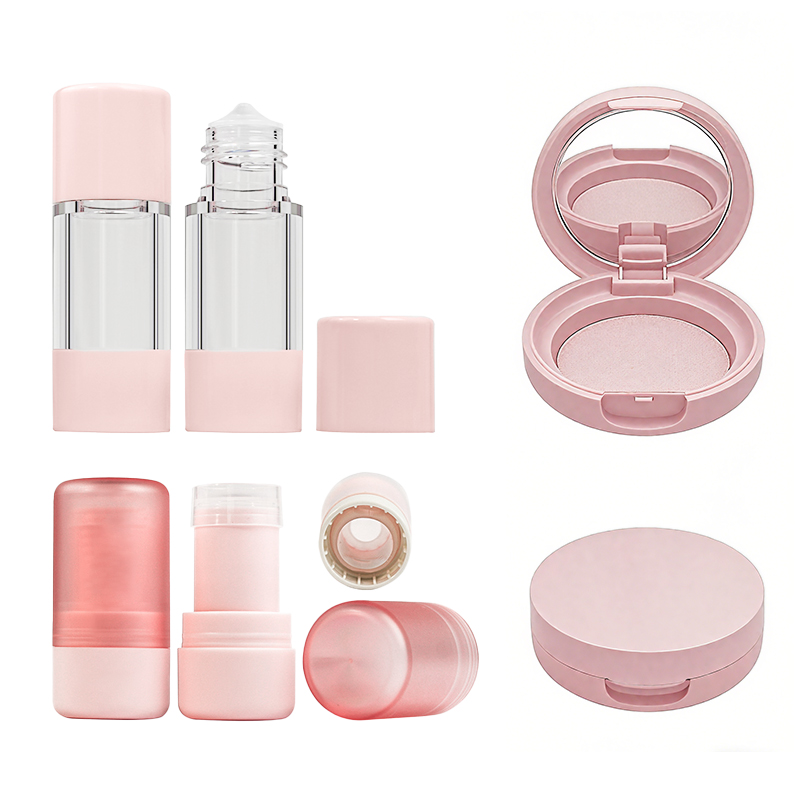
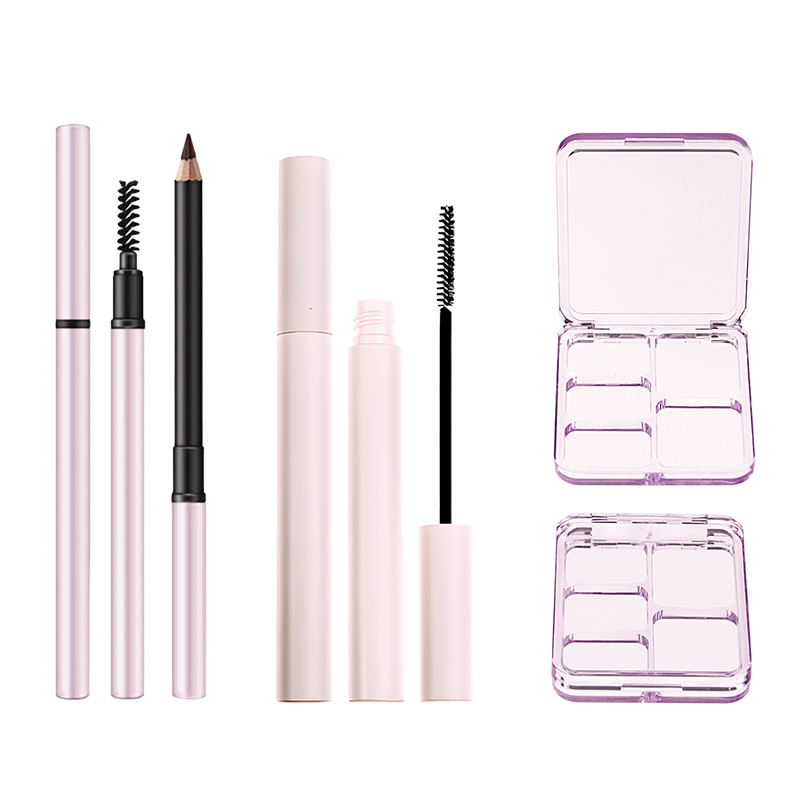
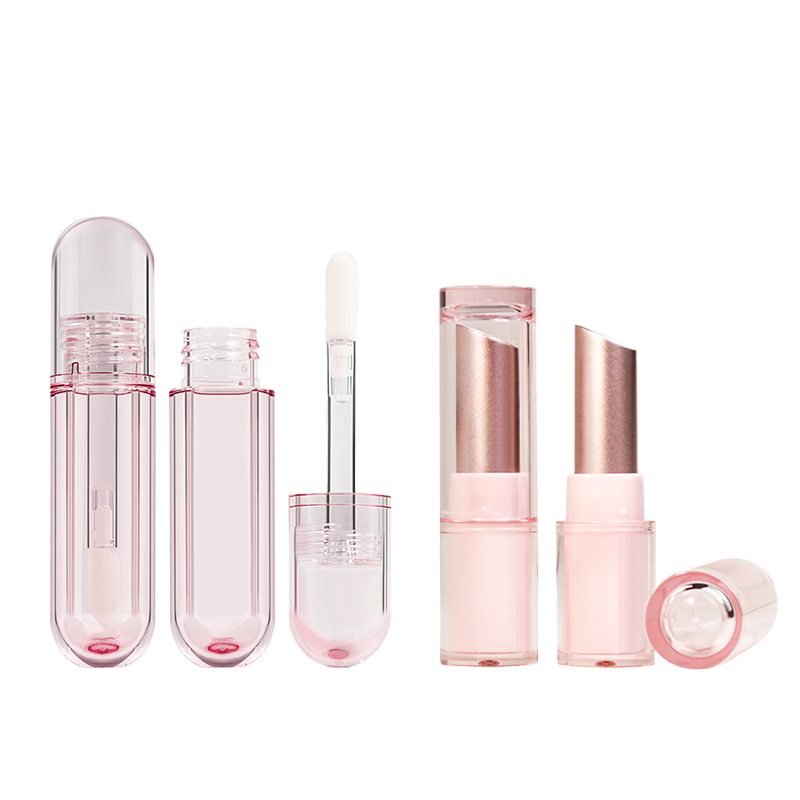

Chemical Compatibility: Ensuring Your Formula Doesn’t Discolor Your White Lipstick Tube
February 11,2026
White tube lipstick is a showstopper—until it turns into a hot mess. You pour your heart (and budget) into that elegant, pearly-white casing, only to watch it yellow like old newspaper when the formula inside starts going rogue. It’s not just annoying—it’s expensive, embarrassing, and frankly avoidable.
Thing is, plastics like ABS or acrylic don’t always play nice with certain ingredients. One Topfeelpack materials engineer put it bluntly in a recent 2024 supplier Q&A: “If your base formula has an aggressive pH and you skip compatibility testing? You’re gambling with every unit.”
Discoloration isn’t just surface-level drama—it hits where it hurts: brand trust and consumer loyalty. This intro peels back the lid on how smart packaging choices keep white tubes looking sharp from factory floor to vanity drawer.
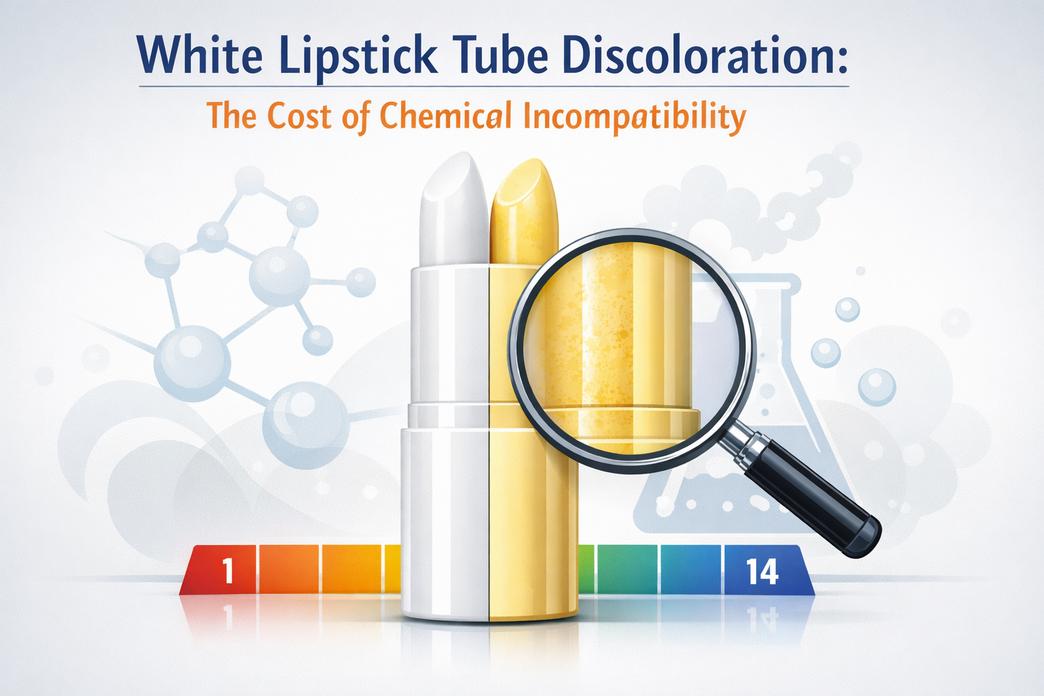
Quick Answers: Keeping Your White Tube Lipstick Flawless
➔ Understand pH Impact: Extreme acidic or alkaline formulas can destabilize ABS or acrylic, leading to yellowing, cracking, or surface degradation.
➔ Select the Right Polymer: ABS offers strength and impact resistance, acrylic provides clarity and gloss, while PP or PETG resist acids—choose based on your formula’s chemistry.
➔ Conduct Rigorous Testing: Follow multi-step compatibility checks—pH exposure, discoloration trials on various finishes, and individual component assessments (caps, bases, inserts).
➔ Optimize Surface Finishes: Matte, glossy, or soft-touch coatings interact differently with cosmetic formulas; pre-test each finish to prevent unexpected texture or color shifts.
➔ Use Inert Liners: Incorporate silicone or PETG liners as chemical barriers, ensuring reactive ingredients never contact the outer tube walls.
Surprising Truth: Why pH Shifts Ruin White Tube Lipstick Packaging
Turns out, even slight changes in pH can mess up your lipstick’s vibe—especially when it’s packed in a white tube.
How pH Levels Affect Plastic and Acrylic Lipstick Tubes
- High pH formulas (alkaline) can cause surface crazing or micro-cracks in acrylic and plastic components.
- Low pH formulas (acidic) may lead to premature brittleness or warping of the lipstick tubes, especially those made from ABS.
- Neutral formulations are generally safest for preserving the structure of your packaging.
- ABS plastic starts to degrade below a pH of 4 or above a pH of 10.
- Acrylic tends to yellow when exposed to acidic compounds over time.
- The risk increases with heat and UV exposure—think sunny retail shelves.
☑ Even white tube lipstick casings that look sturdy can weaken fast if the formula inside isn’t playing nice chemically.
When it comes to keeping your product looking sharp, understanding this hidden chemical tango is key. That’s why Topfeelpack always recommends testing both formula and packaging under real-world conditions before launch.
The Role of pH in Material Discoloration: A Hidden Threat
If your pristine white lipstick case suddenly looks like it got left out in the sun too long, blame the pH level—it’s not just about colorants fading.
Short bursts:
• Low-pH lipsticks may react with polymers, creating yellowish tints on the surface.
• High-pH balms might oxidize additives used in plastics, shifting them toward beige or brown hues.
• Even trace metal ions from pigments can catalyze discoloration under unstable pH conditions.
Here’s how that plays out:
| Formula Type | Common pH Range | Risk Level | Typical Reaction |
|---|---|---|---|
| Matte Lipsticks | 5.5 – 6.5 | Moderate | Slight yellowing |
| Glossy Balms | 6 – 7 | Low | Minimal reaction |
| Tinted Treatments | <4 or >9 | High | Cracking + discoloring |
White tube lipstick designs are especially unforgiving—every stain shows. So picking chemically stable materials is non-negotiable.
Preventing pH-Induced Damage in Lipstick Tubes: Key Packaging Considerations
Let’s break this down into what actually works if you want your white tube lipstick line to stay sleek on shelves:
Step-by-step:
- Start by analyzing your cosmetic formula’s exact pH level and its interaction potential with common plastics.
- Choose packaging materials with strong chemical compatibility, like PP or PETG over ABS for acidic formulas.
- Use coatings with high-quality barrier properties that resist absorption and slow diffusion of reactive agents.
- Incorporate internal liners made from neutral polymers for added protection against direct contact degradation.
- Test everything under accelerated aging conditions—heat, light, pressure—to simulate shelf life stressors.
Group these considerations into two main goals:
-
a) Protect exterior appearance (no yellowing/cracking)
- Use UV-resistant finishes
- Avoid transparent acrylics unless stabilized
-
b) Preserve formula integrity
- Prevent leaching through inner walls
- Avoid chemical feedback loops between contents and container
Topfeelpack engineers every detail—from resin blend to coating layer—to make sure your white tube lipstick doesn’t just look good today but still shines six months from now.
Classification Of Polymers In White Tube Lipstick
Understanding how plastic polymers behave in cosmetic packaging makes all the difference when it comes to keeping your formula fresh and your product looking sharp.
Comparing Plastic Polymers: Which is Best for White Lipstick Tubes?
When choosing materials for a white tube lipstick, it’s not just about looks—performance matters too. Here’s what stands out:
- PP (Polypropylene): Great chemical resistance, especially against acids and alcohols.
- ABS (Acrylonitrile Butadiene Styrene): Stronger than PP, but reacts more with acidic or oily formulas.
- PETG: Offers clarity like acrylic, but with better impact resistance.
- If your formula leans toward oil-based or contains active ingredients like vitamin C, avoid ABS—it might yellow over time.
- For longwear matte lipsticks that tend to be drier, ABS can add durability without cracking under pressure.
- PP works well with natural or organic formulations where pH levels are milder.
☑️ Choose based on the lipstick’s chemistry—not just aesthetics.
Topfeelpack recommends mixing materials in hybrid designs to optimize both function and finish. A white base in PP paired with an ABS cap can balance durability and style—no compromises needed.
Acrylic vs. ABS: Which Polymer Resists Chemical Damage Better?
The battle between acrylic and ABS is a classic one in the world of lipstick packaging—but which holds up better?
• Acrylic wins for visual appeal—clear, glossy, premium feel. But it’s brittle; drop it once, and it’s game over.
• ABS is tougher under pressure—literally. It handles knocks better but risks turning yellow if exposed to acid-heavy formulas.
According to Mintel’s 2024 Packaging Insights Report: “ABS remains a top choice in color cosmetics due to its resilience, though brands are increasingly blending polymers to counteract discoloration.”
Short answer? If you’re formulating a high-pigment or vitamin-rich product inside that sleek white lipstick tube body—go for ABS with UV inhibitors added during molding.
For gloss sticks or balm hybrids where appearance matters most? Acrylic still brings that luxe edge—but keep it away from harsh actives if you want that shine to last.
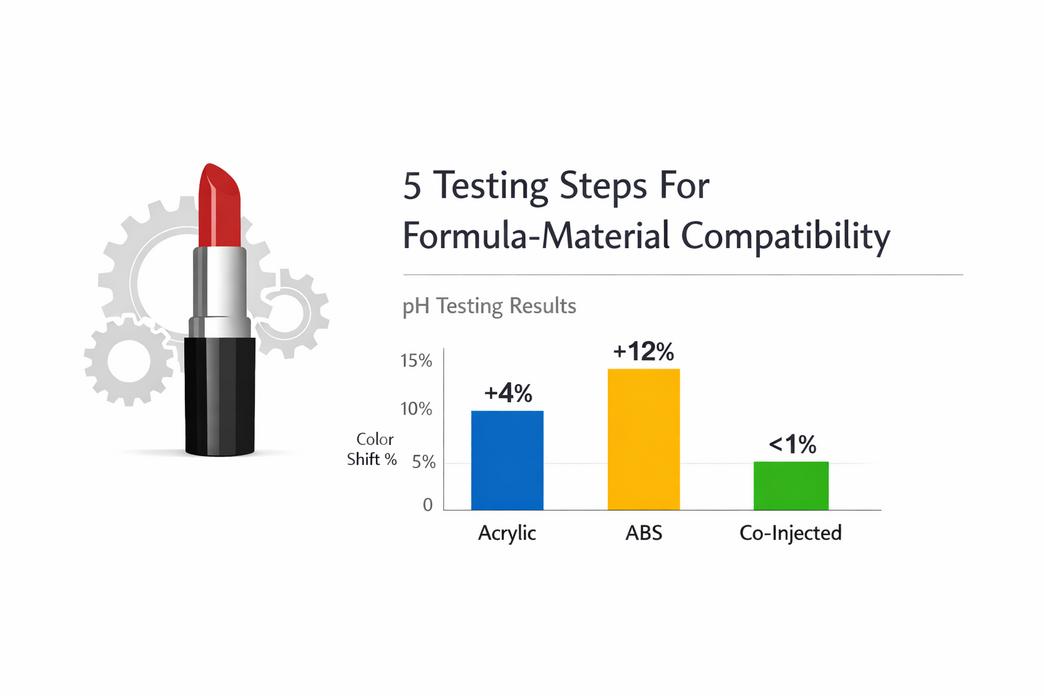
5 Testing Steps For Formula-Material Compatibility
Getting your white tube lipstick formula to play nice with its packaging isn’t just smart—it’s necessary. These five testing steps help make sure nothing funky happens after launch.
Step 1: Assessing Chemical Stability with Plastic Components
• Always start by checking how the formula reacts with different plastic components—especially under pressure and light exposure.
• Look out for signs like warping, softening, or micro-cracks around contact zones.
• Even minor shifts in chemical stability can cause long-term issues like product leaching or sticky textures.
→ If your formula causes any sort of surface bubbling or tackiness, it’s a red flag for poor material compatibility. This is especially true if you’re using softer polymers in the cap or base of a white lipstick tube, which are more prone to deformation.
Step 2: Conducting pH Testing on Acrylic and ABS Tubes
To simulate time passing fast-forward style, expose both acrylic tubes and ABS tubes to formulas at various pH levels:
| Tube Type | pH Range Tested | Color Shift (%) | Surface Damage |
|---|---|---|---|
| Acrylic | 3.0 – 9.0 | +4% | None |
| ABS | 4.5 – 10.0 | +12% | Slight Warping |
| Co-injected | 5.5 – 8.5 | <1% | None |
These tests help confirm whether your formula’s acidity will mess with the tube’s finish or structure over time.
Step 3: Testing for Discoloration with Different Surface Finishes
Glossy might look sleek but can betray you if pigment starts migrating.
- Matte finishes absorb more oils from the formula, often leading to uneven blotching.
- Soft-touch coatings? They’re comfy but can become sticky when exposed to high-oil content formulas.
- A bright white lipstick tube will show even the tiniest hint of discoloration—making this test crucial if you’re going for that clean aesthetic.
You want your product looking fresh even after months on the shelf, so don’t skip this one.
Step 4: Analyzing Lipstick Tube Components: Caps, Bases, and Applicators
Break it down:
-
Test each part separately:
- The cap, which traps vapors
- The inner base that holds the bullet
- The twist mechanism
-
Use swatches of your actual formula inside these parts.
-
Watch for stickiness, shrinkage, or cracks after exposure.
Every piece matters when it comes to total package integrity—especially since many consumers toss products into hot cars or freezing bags without thinking twice.
A mismatch between applicator material and wax-heavy formulas could lead to separation over time—which nobody wants in their go-to lip color.
Step 5: Ensuring Compatibility in Manufacturing: From Injection Molding to Assembly
Group testing across multiple stages helps prevent surprises later:
-
Pre-production:
• Test heat tolerance during injection molding
• Check material flow and fill rates
-
Mid-production:
• Monitor how much stress each mold puts on walls and joints
• Ensure no distortion from assembly pressure
-
Post-production:
• Simulate storage conditions (heat/humidity)
• Re-test exposed units for any delayed reactions due to ongoing formula exposure
If overlooked, minor misalignments during assembly can snowball into serious quality control issues once thousands of units hit shelves—especially in delicate formats like a slimline white tube lipstick, where every flaw shows up loud and clear.
Tube Discoloration? Use Inert Liner For White Tube Lipstick
When your white tube lipstick starts looking yellow or stained, it’s not just a cosmetic issue—it’s chemistry gone wrong. Let’s fix that with the right liner choices.
Why Inert Liners Are Essential for Preventing Tube Discoloration
Discoloration in white tube lipstick packaging often comes down to one thing—chemical reaction. When the formula inside isn’t separated from the tube wall, stuff happens.
- Inert liners act like a shield, keeping reactive ingredients from touching the outer shell.
- This barrier helps preserve both color and packaging integrity, especially in lighter-colored tubes.
- Without this buffer, over time you’ll see fading, smudging, or even strange blotches on the inside of your once-pristine white tube.
Now think about it—your lipstick sits in that container for months. If there’s no chemical separation, you’re inviting slow but steady material degradation. That’s bad news for long-term product stability and shelf appeal.
“By 2024, over 68% of cosmetic brands reported switching to chemically stable liners to reduce visible product deterioration,” according to Mintel Packaging Insights.
And here’s the kicker—this isn’t just about looks. A compromised liner can affect the actual formula too. So yeah, it’s more than skin-deep.
Choosing the Right Liner Material: Silicone vs. PETG
Picking between silicone and PETG as your go-to liner material? It all comes down to what matters most for your product’s vibe and performance.
-
If flexibility is key:
- Go with silicone
- It molds easily around complex shapes
- Offers high-end feel and excellent chemical resistance
-
If clarity and toughness matter:
- Choose PETG
- It’s rigid but transparent
- Great when you want visibility without sacrificing durability
💡 Bonus tip: Always run proper compatibility testing between your liner choice and your specific lipstick formula before scaling production.
Each has its strengths depending on what kind of finish you’re going for with your white tube, whether sleek and soft-touch or clear-cut precision. Either way, make sure you’re matching up those inner layers with real-world wear-and-tear expectations—and don’t skip checking those essential barrier properties during development!
FAQs about White Tube Lipstick
1. Why does pH affect the appearance of white tube lipstick packaging?
Soft whites can shift tone under reactive formulas—pH is a quiet sculptor.
- Acidic blends etch into acrylic or ABS, leaving pale yellow traces around the base or cap edges.
- Alkaline lipsticks sometimes haze glossy and frosted finishes through slow oxidation.
→ A measured formula keeps both shape and color constant across each plastic shell.
2. How can manufacturers prevent discoloration in white lipstick tubes?
Short description + bullet sequence balance: the secret lies in separation between formula and body material.
| Liner Type | Function | Ideal For | Durability |
|---|---|---|---|
| PETG liner | Adds optical clarity inside acrylic shells | Premium white tubes | High |
| Silicone insert | Flexible barrier matching soft-touch caps & mechanisms during assembly | Automatic filling lines | Medium‑High |
Small notes: adding this invisible shield protects against pigment leaching; silk screen printing on matte surfaces then remains crisp after months of use.
3. Which manufacturing processes ensure durable cosmetic packaging at scale?
A grouped nested flow describes how precision becomes beauty:
1️⃣ Injection molding: defines tube walls, ensuring weight consistency and smooth closure type alignment between base and cap.
• Each mold cavity undergoes quality control to check micro warping before spray coating or UV metallization decoration begins.
2️⃣ Assembly phase: inserts join mechanisms; tooling accuracy decides whether a click feels solid or hollow when turned by hand.
3️⃣ Final inspection: offset printing on satin surfaces must align within ±0.5 mm tolerance—even one misprint throws off brand symmetry across thousands of units produced monthly.
Every well‑built white tube lipstick holds its story not only in shade but also in how every molecule meets its container without conflict.
References
[ABS Plastic: Advantages, Disadvantages, and Applications – protolabs.com]
[How to Prevent Yellowing in Acrylic Plastic Sign Holders – displaysandholders.com]
[ABS vs. Polypropylene (PP): Deciding Between Two Popular Plastics – protolabs.com]
[Causes & Prevention of Yellowed Plastics – specialchem.com]
[Polypropylene vs. ABS: A Detailed Comparison Guide – chiggofactory.com]
[The Future of Beauty Packaging – mintel.com]
[Stability and Compatibility Testing of Cosmetic Products – news.ceway.eu]
[Package Compatibility Testing – microchemlab.com]

