 English (Canada)
  English
  English (UK)
  English (Australia)
  العربية
  Deutsch
  Italiano
  Español de México
  Tiếng Việt
  ไทย
ไทย  Português do Brasil
  Français
  Български
  Čeština
  Dansk
Dansk  Ελληνικά
  Eesti
Eesti  Suomi
Suomi  Magyar
  Bahasa Indonesia
  Lietuvių kalba
  Latviešu valoda
  Norsk bokmål
  Nederlands (Formeel)
  Polski
  Română
  Русский
  Slovenčina
  Slovenščina
  Svenska
  Türkçe
  Українська
  简体中文
简体中文  日本語
日本語  한국어
한국어  繁體中文
繁體中文 
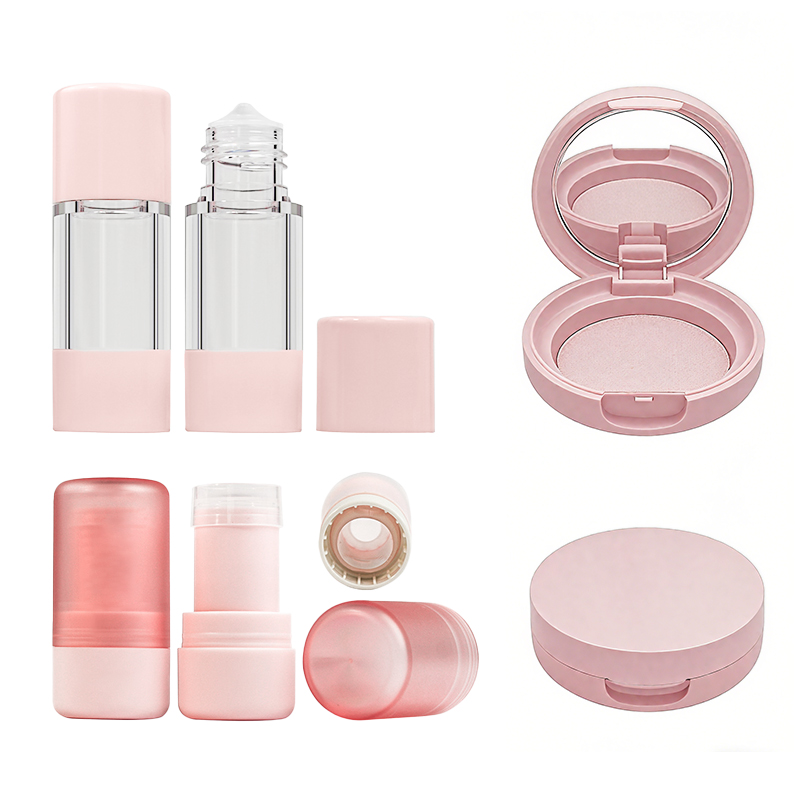
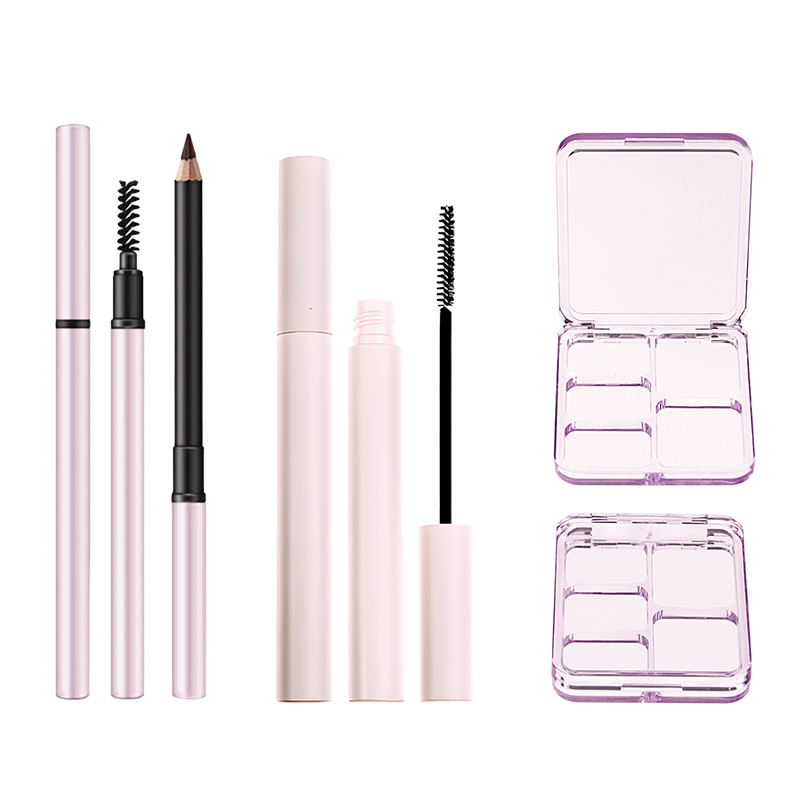
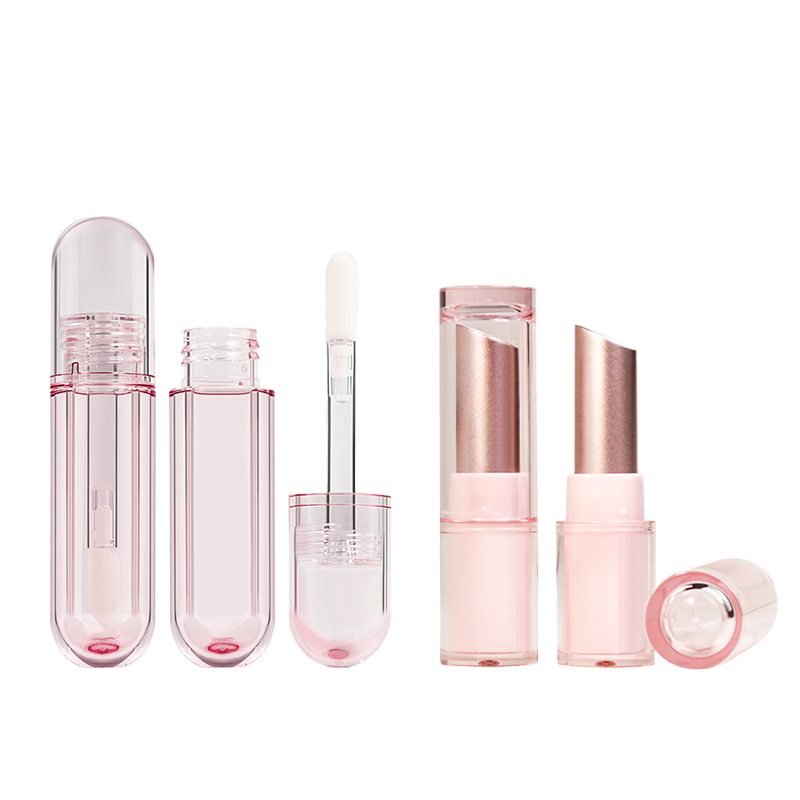

What Size is 13 mm A Simple Breakdown for Consumers
January 26,2026
What size is 13 mm? Feels like a throwaway detail, right? But in the wild world of cosmetic packaging, that tiny number can make or break your product line. Think: cap doesn’t fit, tube too slim for the wand—boom! Thousands lost in production errors and customer returns.
It’s about as wide as a dime or your average eyeliner barrel—but don’t let its modesty fool you. “A single millimeter off in diameter can trigger full-scope retooling,” warns Packaging Digest’s 2023 industry report. Mass manufacturing doesn’t forgive small mistakes.
If you’re sourcing packaging by the thousands—or heck, even hundreds—you’ve got to know what this measurement really means before clicking ‘order.’ Buckle up—we’re breaking down exactly how much punch 13 mm packs when it comes to function, finish, and factory fit.
Understanding What Size is 13 mm: Essential Insights for Cosmetic Packaging
- Accurate Measurements: Ensuring compatibility and functionality are critical in maintaining product integrity and satisfying customers.
- Visual References: 13 mm is comparable to a standard lipstick or mascara wand, providing a tangible point of reference.
- Measurement Tools: Utilize calipers for precise diameter measurements and rulers for accurate height evaluations.
- Design Considerations: A 13 mm diameter balances aesthetic appeal and user comfort in various product designs.
- Material Options: Choose between durable acrylic plastic and elegant glass vials to suit your product needs.
- Color Impact: Different color choices, such as matte black or glossy white, can influence consumer perception and brand identity.
What Size is 13 mm: Understanding Its Measurement
Understanding what size is 13 mm helps you visualize, measure, and apply it across everyday uses—especially with cosmetic containers and small tools.
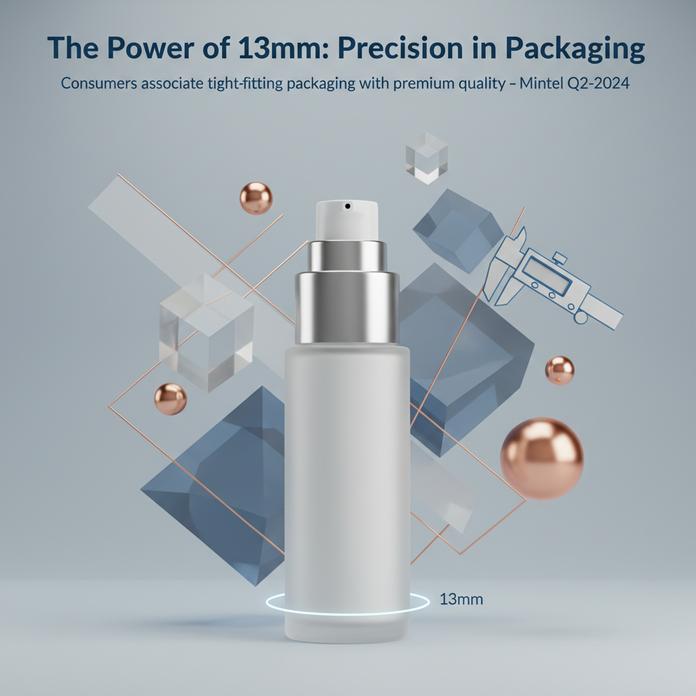
The Importance of Accurate Measurements in Cosmetic Containers
Precision makes or breaks cosmetic packaging. A container that’s just a millimeter off can cause leaks, misfits, or worse—ruin the product inside.
- A slight error in container size can result in wasted formulations.
- Exact measurement accuracy ensures pumps fit snugly and caps twist on securely.
- Brands depend on consistent sizing for smooth production and customer trust.
According to Mintel’s Global Packaging Trends Report Q2–2024, “Consumers now associate tight-fitting and well-measured packaging with premium quality.” That means getting your precise dimensions right isn’t optional anymore—it’s business-critical.
Visualizing 13 mm: Common Items of Similar Size
To get a solid mental picture of what size is 13 mm:
- Standard pen caps often have a diameter close to this.
- The average width of a AAA battery also hovers around the same mark.
- Most mascara wands are built around a 13mm diameter, making them easy to grip but still compact.
Now think about household items—like the metal end of an earbud or the body of a slim marker—that’s roughly the scale we’re talking about here.
Short answer? If you can wrap your fingers around it easily but still feel some heft, it might just be around that size.
How to Measure Diameter and Height for 13 mm Products
Measuring small-scale items like those with a 13mm dimension needs precision tools and steady hands:
Step-by-step guide:
- Step 1: Grab a digital or manual caliper, which gives accurate readings down to tenths of millimeters.
- Step 2: Place the object between caliper jaws; read the inner edge for exact diameter measurement.
- Step 3: For height, use a steel ruler laid flat against the product from base to tip.
- Step 4: Double-check by measuring twice from different angles—accuracy matters at this scale!
And here’s how some common tools stack up when measuring items near this range:
| Tool Type | Accuracy Level | Best Use Case | Cost Range |
|---|---|---|---|
| Vernier Caliper | ±0.02 mm | Measuring tube diameters | $10–$50 |
| Digital Caliper | ±0.01 mm | High precision tasks | $20–$100 |
| Steel Ruler | ±0.5 mm | Quick height checks | $2–$10 |
When you’re working at these tiny scales—even half a millimeter counts big time! So if you’re wondering again what size is 13 mm, remember it’s not just small—it’s precise.
Why 13 mm Matters in Cosmetic Packaging Decisions
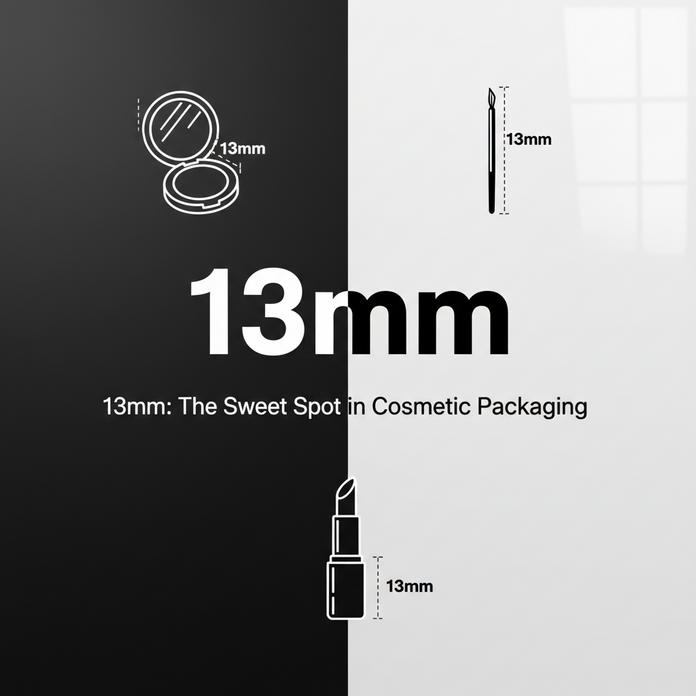
Just how big is 13 mm? Turns out, it’s the sweet spot for more than one beauty essential.
Compact Mirror: The Ideal Size for Portability
- Compact mirrors sized at 13 mm are tiny but mighty.
- Tuck them into your handbag, clutch, or even jeans pocket—no bulk, no fuss.
- They’re ideal for quick checks during travel or touch-ups between meetings.
A travel-sized mirror doesn’t need to be large to be useful. At just 13 mm wide, it offers enough reflection space to check lipstick smudges or fix mascara flakes without crowding your bag. That’s why “what size is 13 mm” gets asked so often—it’s the go-to size when space matters.
Eyeliner Brush: Creating Precision with 13 mm Handles
- A handle that measures around 13 mm gives better fingertip control.
- It reduces wrist fatigue during detailed makeup application.
- It fits snugly into most makeup kits without protruding awkwardly.
Precision tools like an eyeliner brush benefit from compact design. A handle too long becomes clunky; too short and you lose grip balance. But that golden middle—yep, 13 mm—is where precision and comfort meet. Wondering what size is 13 mm? In this case, it’s the perfect length between finesse and function.
Lipstick Tube Design: Achieving Aesthetic Appeal in 13 mm
• Sleek silhouette • Comfortable grip • Balanced weight
A lipstick tube with a diameter of around 13 mm hits all the right notes visually and practically. The slim profile sits elegantly in hand while allowing enough room inside for product volume that satisfies daily use needs. In beauty packaging, “what size is 13 mm” isn’t just trivia—it’s a design benchmark balancing style with ergonomics.
Matte Black vs. Glossy White: Color Choices for 13 mm Packaging
| Finish Type | Perceived Style | Texture Feel | Popular Use Case |
|---|---|---|---|
| Matte Black | Luxurious & bold | Soft-touch matte | High-end cosmetic lines |
| Glossy White | Clean & modern | Smooth shine | Fresh skincare products |
Color choice dramatically shapes how consumers perceive packaging of any size—but especially at compact sizes like 13 mm, where finish can overpower form factor in visual impact. Choosing between a muted matte black and a bright, reflective glossy white finish isn’t just aesthetic fluff—it influences whether your product feels premium or playful on first glance.
So next time someone asks “what size is 13 mm,” remember—it’s more than just numbers; it’s smart design wrapped in tiny details that matter big-time in cosmetics.
Factors to Consider When Selecting 13 mm Cosmetic Containers
Picking the right 13 mm cosmetic container is more than just a size game—it’s about look, feel, and function.
Material Types: Acrylic Plastic vs. Glass Vial Options
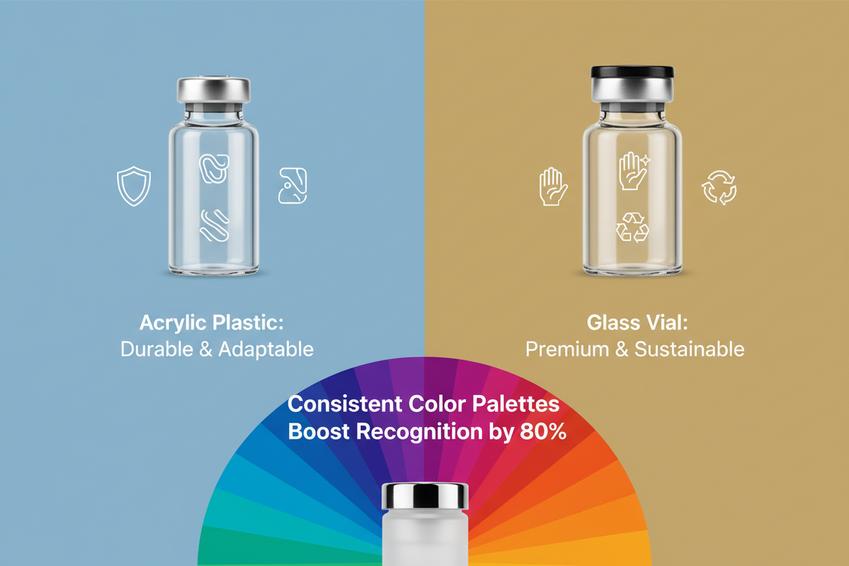
When you’re sizing up what size is 13 mm, it’s not just about diameter—it’s also about what material will elevate your product vibe. Here’s how the two most common materials stack up:
Acrylic Plastic Containers
- Lightweight and shatter-resistant, ideal for travel kits or on-the-go users.
- Offers design flexibility with various shapes and finishes.
- More affordable, making it perfect for large-scale production.
Glass Vial Containers
- Heavier feel adds a sense of luxury and permanence.
- Excellent chemical resistance—great for essential oils or serums.
- Recyclable and eco-conscious consumers love them.
Thinking about durability? Acrylic plastic wins. Want that luxe touch? Go with glass vials. And if you’re wondering “what size is 13 mm” in practical terms—it’s roughly the width of a slim lipstick or mini fragrance vial. That small footprint demands smart material choices.
Custom Pantone Colors: Enhancing Brand Identity in 13 mm Designs
Color isn’t just decoration—it’s identity. Especially when dealing with compact formats like 13 mm, color becomes even more crucial for shelf impact and brand recall.
💡 “By using consistent color palettes across packaging lines, brands increase recognition by up to 80%, especially among Gen Z buyers,” according to a late-2024 Nielsen Packaging Insights report.
Here’s how custom Pantone colors can make your tiny container pop:
🟢 Brand Recognition Use signature hues that align with your core branding—consistency builds trust fast.
🟣 Shelf Differentiation In crowded retail spaces, bold or unique shades grab attention instantly.
🟠 Color Psychology Warm tones evoke energy; cool tones suggest calmness. Pick what fits your product’s mood.
Topfeel has mastered this by offering full-spectrum custom color matching, even on ultra-small formats like these. So when someone asks “what size is 13 mm,” the real answer might just be “the perfect canvas for unforgettable branding.”
And remember—at this scale, every millimeter counts… especially when it comes to color impact.
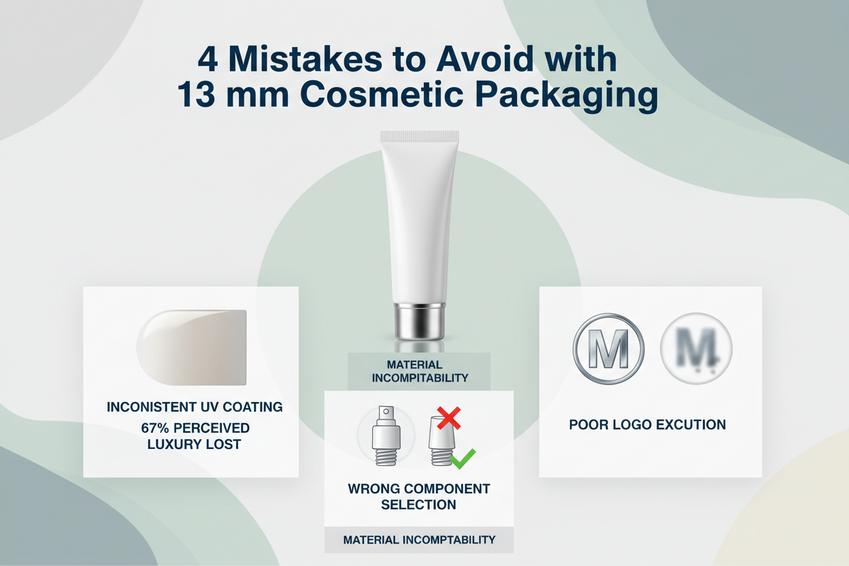
4 Mistakes to Avoid with 13 mm Cosmetic Packaging
Even tiny packaging like 13 mm can cause big headaches. Here’s where brands often slip up—and how you can stay ahead.
Incorrect Surface Finish: Impacts of UV Coating on Appearances
A bad call on the surface finish can make your product look cheap, even if it’s not. Here’s what to consider:
- UV coating that’s too glossy? It might distort your branding under store lighting.
- A poorly applied matte layer dulls the packaging and kills shelf appeal.
- Inconsistent gloss levels across batches lead to visual confusion and poor customer trust.
- According to Mintel’s Q2 Beauty Packaging Report, over 67% of consumers associate high-gloss finishes with luxury—but only when applied evenly.
So before locking down your finish, test samples under different lights. Ask yourself not just “what size is 13 mm,” but also “how will this surface feel and look at scale?”
Forgetting Closure Types: Choosing Between Screw Caps and Pump Dispensers
Closures are more than functional—they shape user experience. When choosing between screw caps and pump dispensers, remember these grouped insights:
🧴 For thicker formulas like creams or gels:
- Go for a pump—it offers smoother application and less mess.
- Prevents accidental spills during travel.
🔩 For oils or serums:
- A screw cap ensures tight sealing and better control over dosage.
- Enhances product longevity by minimizing air exposure.
💡 Bonus tip: Users often judge packaging quality based on closure feel—cheap-feeling threads or loose pumps scream low-end. And don’t forget, when dealing with smaller formats like 13 mm, every millimeter counts for usability.
Uneven Decoration: The Importance of Embossed Logos for 13 mm Products
Let’s be real—on a compact tube, details matter more than ever. That includes your brand logo treatment.
Start here:
- Ensure the embossing mold fits the exact curvature of your 13mm product design—a flat mold won’t cut it.
- Use consistent pressure during decoration; uneven force leads to patchy impressions.
- Double-check alignment so the logo appears centered regardless of rotation.
Embossing isn’t just about looks—it adds tactile memory that sticks with users long after use. A crisp, raised logo enhances both perceived value and brand recall.
In fact, Topfeel has seen a measurable uptick in reorder rates after switching from flat prints to embossed logos on their mini-sized tubes—proof that small tweaks make big waves when you’re asking “what size is 13 mm” worth?
FAQs
How can I picture a 13 mm size in daily cosmetic use?
It’s the slim, confident stance of a mascara wand or lipstick tube—compact yet capable. The diameter glides easily into your palm like an eyeliner brush, while still holding presence beside a powder puff on your vanity.
Which materials suit products designed at a 13 mm diameter?
Acrylic plastic keeps it sturdy and travel-ready; aluminum shell feels cool and sleek against fingers; glass vial brings clear transparent beauty for formulas worth showing off; bamboo casing warms with natural texture; recycled paperboard whispers sustainability without losing charm.
What closure styles work best for 13 mm openings?
- Screw cap: Tight, no-spill security during commutes.
- Flip top: One-hand ease for lip gloss or liquid liner lovers.
- Magnetic closure: A classy snap for matte black finishes.
- Twist up: Effortless motion for balm sticks.
- Pump dispenser: Controlled portions every time.
Which surface finishes bring personality to 13 mm designs?
UV coating catches light playfully, soft touch feels almost like skin, hot stamping makes rose gold shimmer under fingertips, silk screen celebrates intricate graphics, spray painting allows custom Pantone dreams to bloom across compact mirrors or vials.
What design mistakes should be avoided when producing in bulk at this size?
Misjudging height (100 mm) against width (50 mm) can lead to container mismatch; skipping embossed logo placement robs branding of its heartbeat; poor UV coating mutes glossy white vigor—always match finish to desired emotion before sending hundreds into production.
References
- [4 Sustainable Packaging Predictions for 2023 – https://www.packagingdigest.com/sustainability/4-sustainable-packaging-predictions-for-2023]
- [Global Packaging Predictions: 2026 & Beyond – https://www.mintel.com/insights/packaging/global-packaging-trends/]
- [Calipers – https://en.wikipedia.org/wiki/Calipers]
- [The Importance of Color in Branding & Packaging Design – https://www.morganchaney.com/blog/the-importance-of-color-in-branding-packaging-design/]
- [Pantone – https://www.pantone.com/]

