 English (Canada)
  English
  English (UK)
  English (Australia)
  العربية
  Deutsch
  Italiano
  Español de México
  Tiếng Việt
  ไทย
ไทย  Português do Brasil
  Français
  Български
  Čeština
  Dansk
Dansk  Ελληνικά
  Eesti
Eesti  Suomi
Suomi  Magyar
  Bahasa Indonesia
  Lietuvių kalba
  Latviešu valoda
  Norsk bokmål
  Nederlands (Formeel)
  Polski
  Română
  Русский
  Slovenčina
  Slovenščina
  Svenska
  Türkçe
  Українська
  简体中文
简体中文  日本語
日本語  한국어
한국어  繁體中文
繁體中文 
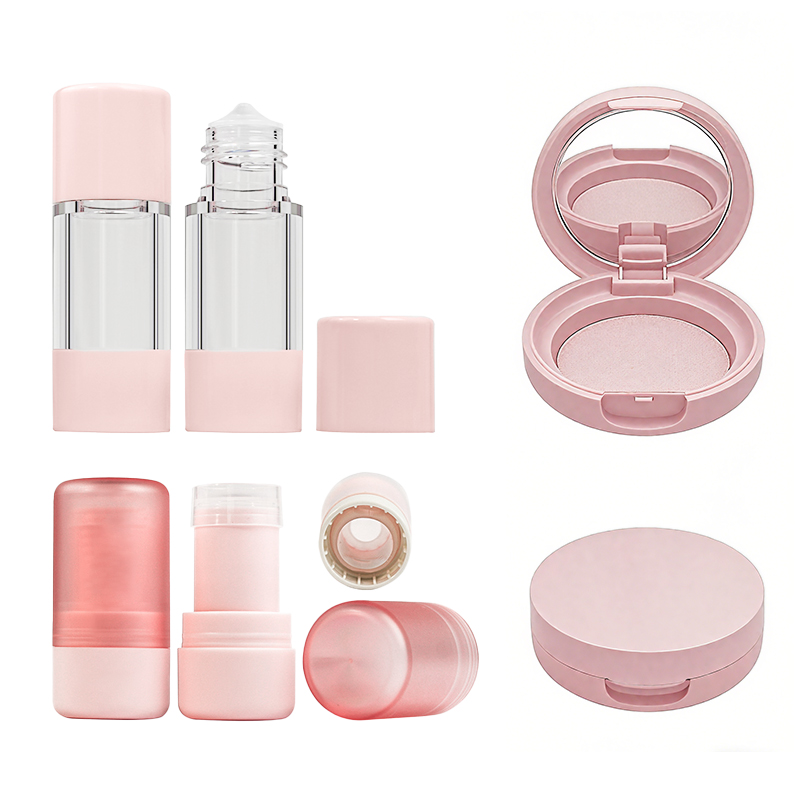
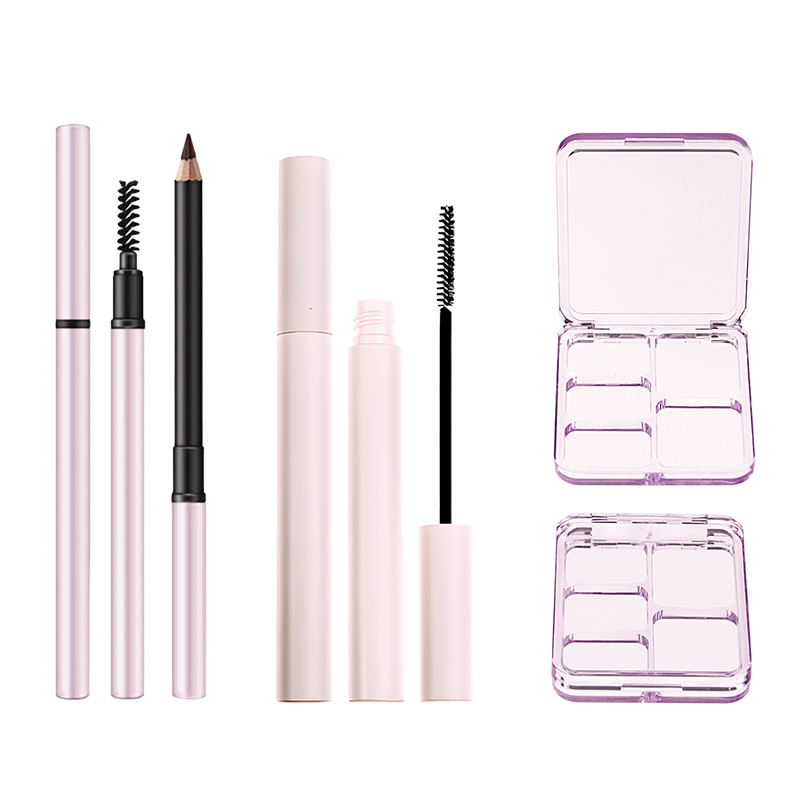
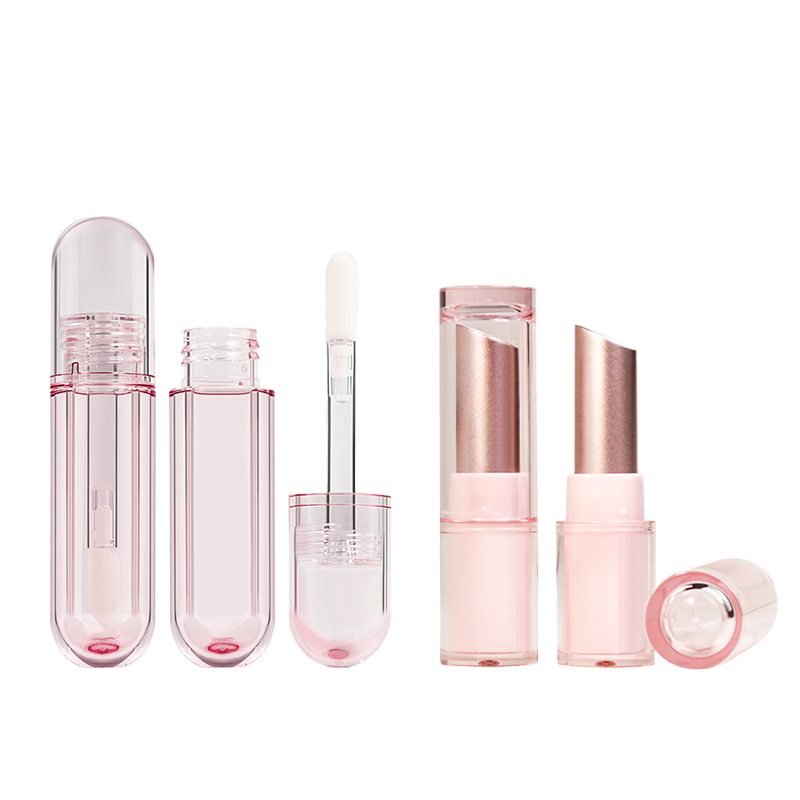

How to Choose the Best Printing Method for Cosmetic Bottles
February 06,2026
Let’s be real—printing on cosmetic bottles isn’t just some artsy afterthought slapped on at the last minute. It’s the front line of your brand’s battle for attention, trust, and shelf dominance. When you’re ordering 10,000 units or more, a misprint isn’t just annoying—it’s a budget-eating monster in lip gloss packaging. From metallic hot stamping that screams luxury to screen prints tougher than a two-dollar steak, each method tells its own story… but not all are made for mass production under pressure.
Most people don’t realize how fast color can shift from “on-brand” to “off-putting” when printing across different materials like PET plastic or frosted glass. As Topfeel Packaging’s senior engineer Rachel Wu put it during a 2024 webinar: “Color fidelity isn’t optional—it’s survival.”
What Is Printing On Cosmetic Bottles?
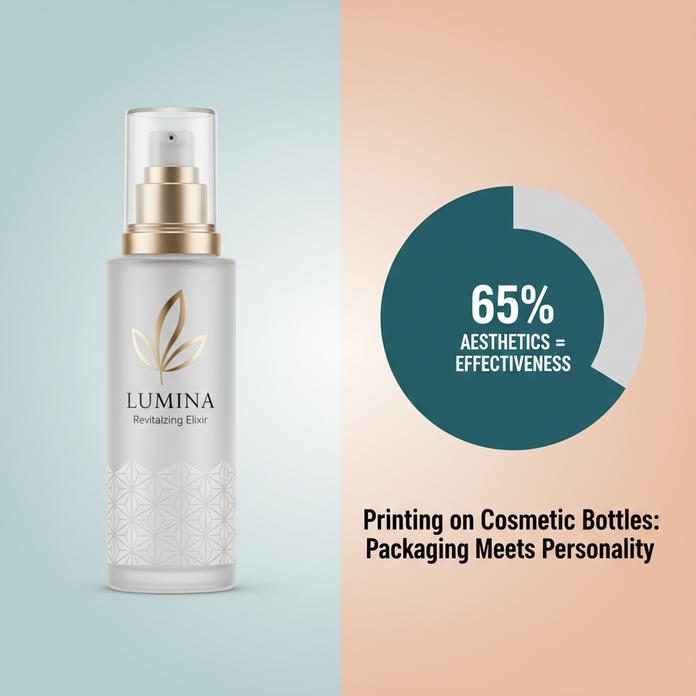
It’s more than just ink—this is where packaging meets personality and technology meets style.
Understanding the Basics of Printing on Cosmetic Bottles
To get how printing on cosmetic bottles works, you’ve gotta break it down by layers—literally and figuratively.
A. Core Technologies Used
- Screen printing: Best for bold, single-color designs that last.
- UV printing: Great for full-color graphics with fast curing times.
- Hot stamping & heat transfer: Adds metallic or textured effects.
B. Matching Techniques to Bottle Materials
- Glass bottles demand inks with strong adhesion, especially under temperature shifts.
- PET plastic needs flexible inks to avoid cracking due to its elasticity.
- For curved or irregular bottle shapes, pad printing handles the job better than flatbed techniques.
C. Ink Types and Durability Factors
- Solvent-based inks offer high durability but may not suit eco-conscious brands.
- Water-based alternatives are gentler but require special handling to maintain print quality.
- UV-curable inks dry instantly under light, improving speed while enhancing durability.
D. Design Complexity vs Production Feasibility
- Simple logos? Go with screen printing—it’s fast and cost-effective.
- Intricate gradients or photographic prints? UV digital is your go-to.
- Want raised textures or foil finishes? Heat transfer can pull off premium vibes without breaking a sweat.
In short, every decision—from ink type to technique—is shaped by your product’s material, shape, and branding goals. Topfeel uses hybrid methods tailored for glass and PET lines so brands don’t have to compromise between looks and performance when exploring options for printing cosmetic bottles.
The Role of Printing in Enhancing Brand Appeal
Think about your favorite skincare brand—the one you spot from across the aisle in seconds. That’s not luck; that’s smart design backed by strategic printing choices.
• Logo placement isn’t random—it guides the eye and reinforces brand recognition, especially when paired with consistent typography across a product line.
• Color palette plays a huge role too; vibrant hues pop on shelves while muted tones suggest luxury or purity depending on context.
• Fonts matter more than most think—a sleek sans serif screams modernity while calligraphy-style fonts hint at elegance or tradition.
According to Mintel’s Global Packaging Trends Report 2024, “Over 65% of consumers associate packaging aesthetics with product effectiveness—even before trying it.”
– That means your bottle better look like it works before anyone even opens it!
Now toss in labeling regulations—yeah, those tiny details like ingredients lists must be readable yet still fit into your overall vibe—and suddenly you’re juggling compliance with creativity.
Topfeel helps brands walk this tightrope by offering customizable solutions that balance visual identity with functional labeling needs. With our help, even small indie labels can create high-impact shelf presence through expert use of color theory, layout planning, and advanced techniques in cosmetic bottle printing that speak directly to consumer emotion without saying a word.
3 Popular Methods For Printing On Cosmetic Bottles
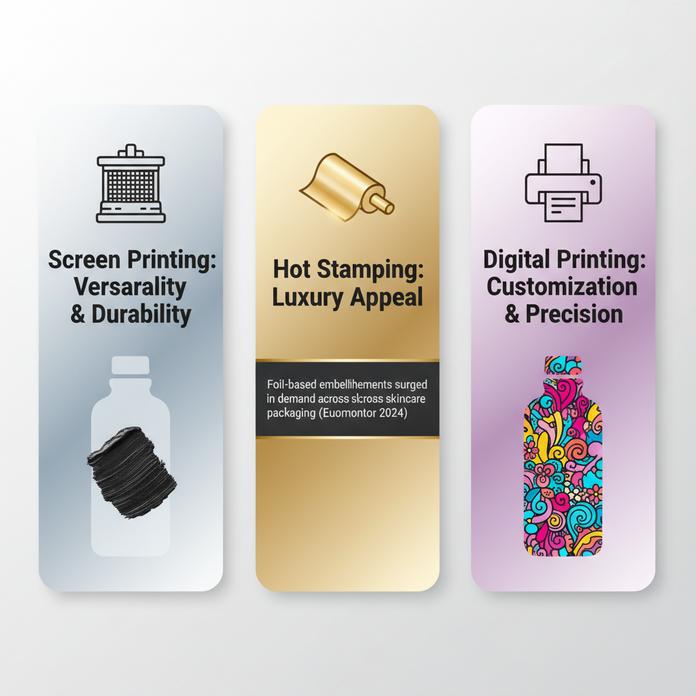
A quick dive into how brands turn plain bottles into eye-catching shelf candy.
Screen Printing: Versatility and Durability
Screen printing is a go-to for high-volume jobs and curved shapes. Here’s why it sticks around:
- Mesh screen allows ink to pass only where needed.
- Works great on materials like acrylic, PETG, and PP.
- Produces a thick ink deposit, making colors bold and long-lasting.
- Offers strong abrasion resistance—perfect for daily-use items.
- Handles both opaque and transparent inks with ease.
You’ll also get solid durability against chemicals, thanks to the method’s natural chemical resistance. It’s not just pretty—it’s tough.
Hot Stamping: Creating Luxury Appeal
Hot stamping gives packaging that “premium” vibe people can’t resist. Here’s how it works:
- Heat activates adhesive on the back of the foil.
- Pressure pushes the foil onto the surface of your bottle or cap.
- The result? A shiny, high-end finish that screams luxury.
Expect a metallic finish that catches light in all the right ways. You can even add holographic effects or an embossed look for extra flair.
According to Global Packaging Trends 2024 by Euromonitor, “foil-based embellishments have surged in demand across skincare packaging due to their perceived value-enhancing effect.”
This technique shines brightest on glass perfume bottles or high-end lotion caps where visual appeal matters most.
Digital Printing: Customization and Precision
Digital printing is the rebel of the bunch—fast, flexible, and full of personality.
• Great for short runs or fast turnarounds
• Supports complex artwork via CMYK process
• Allows real-time updates using variable data
It prints directly onto containers using a direct-to-bottle process—no labels needed. Think intricate designs with razor-sharp edges printed straight onto plastic tubes or glass jars.
Want to test new branding ideas without committing to huge batches? This is your best friend for prototyping or limited editions thanks to its support for ultra-fine detail and low MOQ flexibility.
Whether you’re working with indie skincare lines or global cosmetics giants like Topfeel, digital printing offers unmatched adaptability when it comes to experimenting with packaging for cosmetics styles during product launches.
By mixing precision with speed, digital methods are shaping how brands approach customization in today’s beauty market—all while keeping quality at its core.
UV Printing Vs. Screen Printing: Which Is Better?
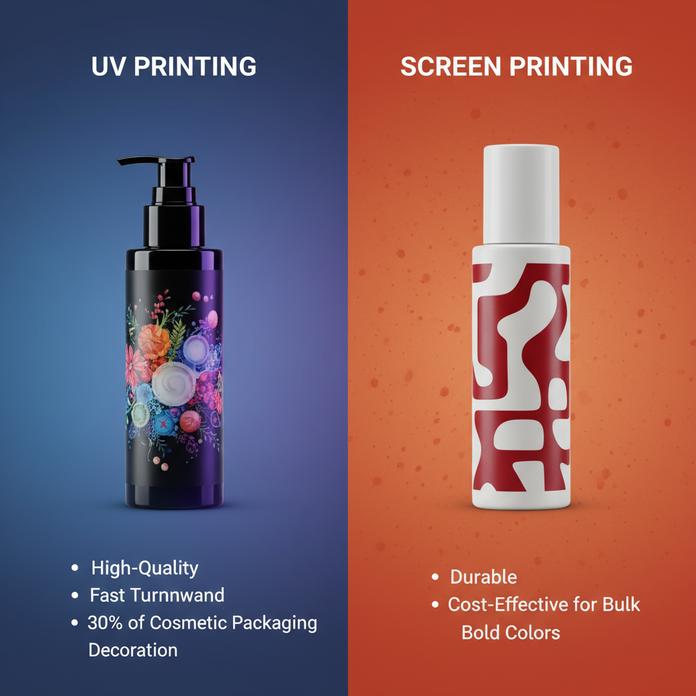
Choosing the right method for printing on cosmetic bottles can seriously affect your product’s shelf appeal and durability. Let’s compare these two popular techniques.
UV Printing: Advanced Technology for High-Quality Prints
- ● Uses UV ink that dries instantly under curing process, eliminating smudging.
- ● Delivers ultra-sharp images with crisp, fine detail, perfect for luxury packaging.
- ● Great on non-porous surfaces like PET or aluminum, offering strong adhesion.
- It excels at short-run jobs with a super-fast turnaround time.
- Compatible with variable data—ideal for personalized branding elements.
- Works well for brands that need full-color, photo-realistic designs.
- It’s especially suited to sleek, modern bottle designs where clarity and gloss matter.
With its ability to produce vibrant colors and intricate detailing quickly, this method is a go-to for premium skincare lines and boutique beauty products. For instance, Topfeel uses UV printing to ensure every logo shines just right—even on the trickiest surfaces.
“Digital printing methods like UV now represent over 30% of all cosmetic packaging decoration processes,” according to a 2024 report by Smithers Pira.
If you’re working with limited storage space or quick turnarounds, UV printing offers flexibility without compromising quality. And when you’re targeting upscale markets, the visual pop of this method gives your brand an edge in crowded beauty aisles.
Screen Printing: The Traditional Choice with a Proven Track Record
A. Simplicity meets strength:
- A mesh screen pushes thick ink through onto the bottle using a squeegee.
- Offers bold, opaque colors that stand out even on dark or textured bottles.
- Best suited for single-color logos or minimalistic branding styles.
B. Why it still rocks:
i. Can handle curved surfaces—like rounded jars or cylindrical tubes—with ease.
ii. Excellent for frosted or matte finishes where other methods struggle.
iii. Provides long-lasting results due to its durable thick ink deposit.
C. Cost-wise:
- More economical at high volumes than digital printing options.
- Set-up costs are higher but pay off in bulk runs due to lower per-unit pricing.
Screen printing is perfect when you’re sticking to classic design choices and want something that’ll last through rough shipping conditions and frequent handling—think gym bag essentials or travel minis tossed around in luggage.
Multiple short-tail variations of “printing on cosmetic bottles” naturally apply here—screen printing remains one of the most trusted forms of decorating cosmetic containers thanks to its reliable performance across diverse materials and shapes.
If you’re going old-school but want it done right? This technique’s got your back—and it’s still widely used by legacy beauty brands who swear by its toughness and simplicity over time.
Choosing The Right Printing Process For Your Packaging Budget
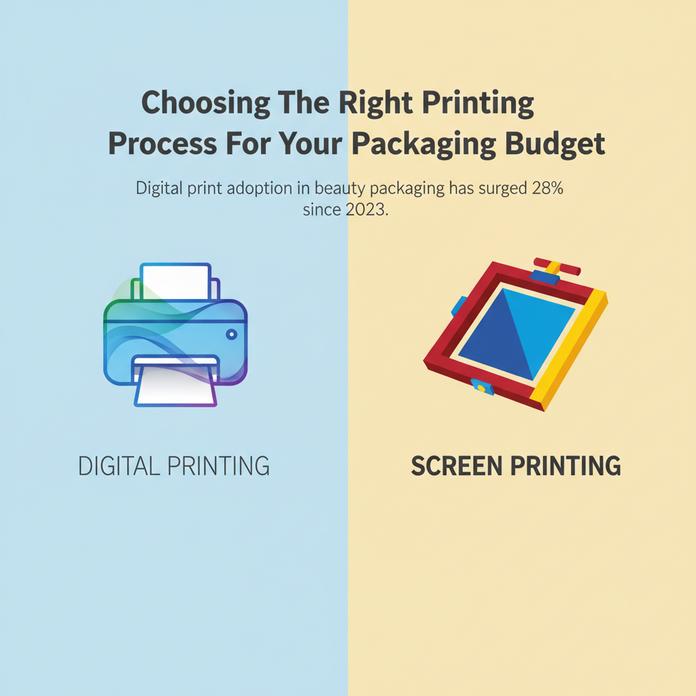
Finding the sweet spot between cost and branding can be tricky. Here’s how to pick a printing method that keeps your packaging sharp without burning through your budget.
Cost-Effective Solutions: Balancing Budget and Quality
Choosing the right print setup for your cosmetic bottles depends on a mix of factors. You can’t just chase cheap—your brand’s look is on the line.
- If you’re running short batches with detailed graphics, digital printing techniques are your best bet.
- For long runs with simple designs? Screen printing wins in both price and consistency.
- Go for high-gloss finishes only if they match your product vibe—those extras add up fast.
You also need to think about material compatibility. Some plastics won’t hold ink well without extra treatment, which means more money and more time. A smart move? Test small before scaling up. Topfeel offers flexible solutions tailored to different needs, helping brands maintain both packaging quality and production speed.
Digital vs. Screen Printing: Cost Implications
When debating between digital or screen options for printing on cosmetic bottles, it’s all about volume, color needs, and design shifts.
- Setup costs: Digital has almost none; screen requires custom screens per color.
- Color vibrancy: Screen gives bolder tones; digital shines in gradients.
- Lead time: Digital is faster for prototypes or last-minute tweaks.
💡 If you’re launching limited editions or seasonal lines, digital slashes costs by skipping plate fees altogether. But if you’re pushing out thousands of units with minimal design changes? Screen becomes cheaper per unit as quantity goes up.
“Digital print adoption in beauty packaging has surged 28% since 2023 due to demand for personalization,” reports Smithers Pira in their 2024 Packaging Outlook.
Brands like Topfeel use hybrid workflows combining both methods depending on run size and artwork complexity—this way you get quality without overspending.
How Packaging Material Affects Printing Costs
The material you choose plays a huge role in how much you’ll spend printing on cosmetic bottles—and how good it’ll look when it’s done.
• Smooth glass allows better ink adhesion, but may require UV curing systems that hike up expenses.
• Soft-touch plastics feel luxe but often need pre-treatment before ink sticks properly—hello extra steps!
• Flexible tubes might distort images unless you’re using high-resolution methods tuned to their curves.
Each substrate affects drying time too: some inks dry instantly; others need heat or air-drying setups that slow down production lines big time. That means longer lead times and higher labor costs just to get things looking crisp.
And don’t forget durability testing—fragile materials might flake or smudge under stress unless paired with the right finish. So yes, choosing between PET, PP plastic, or even aluminum isn’t just an aesthetic call—it’s a cost decision too when planning out your print strategy from start to finish.
The Impact Of Color Accuracy In Cosmetic Bottle Printing
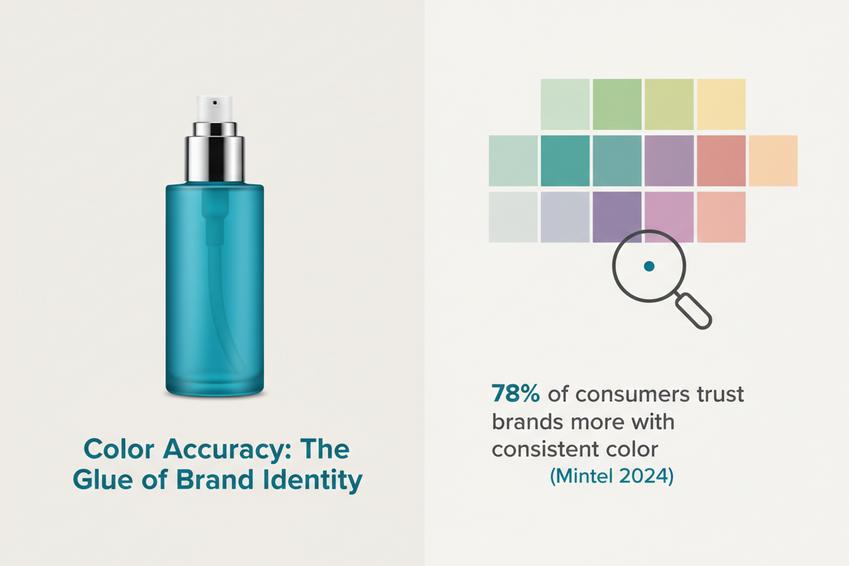
Color accuracy isn’t just about looking good—it’s the glue holding your brand together across every product line. Let’s unpack why it matters and how to get it right.
Why Color Accuracy Is Essential in Cosmetic Branding
Maintaining consistent brand identity across all packaging types is a must, especially when you’re juggling tubes, jars, or eco-friendly bottles.
- A slight shift in tone can throw off consumer perception, making your product feel cheap or knockoff.
- Consistent colors create stronger market recognition, helping customers find you instantly on crowded shelves.
- Matching tones support cohesive packaging design, giving everything from lip gloss to lotion a unified look.
“According to Mintel’s 2024 Packaging Trends Report, 78% of consumers say color consistency in beauty products helps them trust a brand more.”
When you’re printing on cosmetic bottles, even the tiniest hue variation can mess with your vibe. Brands like Topfeel stay sharp by locking in their signature shades early and testing them across every packaging format. That way, the visual appeal stays high—and so does customer loyalty.
Ensuring Consistent Color with Different Printing Techniques
Getting the same color payoff on plastic as you do on glass? Not magic—just smart planning and serious color management.
- Start with calibrated digital files—without tight color calibration, your magenta might turn into raspberry real fast.
- Match your ink to the job: UV printing needs different ink formulation than screen printing.
- Always test against multiple materials: different substrate material means different absorption rates and finish effects.
- Run regular quality checks: inspect for vibrancy loss or shifts between batches using standardized tools.
- Don’t ignore tech upgrades: modern print heads and smarter software help maintain consistency across all kinds of surfaces.
Grouped by technique:
-
UV Printing
- Best for hard plastics
- Requires specialized UV-reactive inks
- Benefits from strong adhesion and vibrant finishes
-
Digital Printing
- Ideal for short runs or custom designs
- Offers flexibility but needs precise file prep
- Works well with variable data applications
-
Screen Printing
- Great for bold, opaque layers
- Slower process but highly durable results
- Demands careful alignment for multi-color jobs
By aligning your entire print process—from design file to final bottle—you keep your brand looking tight no matter what it’s printed on. And when printing on cosmetic bottles is done right? Your whole shelf presence levels up without saying a word.
Topfeel’s approach includes routine audits using Pantone-matched swatches and automated inspection systems to ensure that whether it’s a tinted serum bottle or matte lipstick tube, the color always hits just right.
FAQs
1. What does printing on cosmetic bottles actually involve?
Printing brings a brand’s identity to life directly on glass bottles, plastic tubes, acrylic jars, or aluminum containers. Through screen printing or UV printing, even small details—font selection or logo placement—are transferred with precision. The outcome is visual harmony across droppers, pumps, and sustainable packaging lines.
2. Which printing methods best suit large-volume production?
Each technology serves its own rhythm:
- Screen printing: Reliable for straightforward graphics in high counts.
- Hot stamping: Adds metallic coating for prestige finishes on glossy surfaces or caps and closures.
- Digital printing: Quick turnover when personalized batches are needed across PET plastic ranges.
In long runs, the balance between color consistency and speed defines success more than equipment size alone.
3. How do surface finishes change how prints appear?
Surface feel shapes perception: a matte finish softens brand tones; glossy finish adds brightness to fragrance bottles; frosted effect delivers elegance under soft-touch coating near applicators or liners. Together they frame how consumers interpret each label’s story before even opening the cap.
4. Why is color accuracy vital for printed packaging designs?
Color palette stability binds entire product families—the blush of one jar must match another’s hue exactly across glass and PP plastic forms alike.
A well-tuned calibration during digital setup ensures every stroke glows as intended under retail lighting.
| Aspect | Importance | Control Method |
|---|---|---|
| Color palette alignment | Brand recognition | Ongoing ink vibrancy check |
| Regulatory information legibility | Compliance confidence | Preprint proof review |
| Labeling durability | Consumer trust after handling | Adhesion testing |
Consistent tone equals consistent reputation.
5. What determines cost differences in large orders?
Artwork complexity dictates time; mold design defines setup cost; selected material influences ink behavior.
Larger volumes lower unit prices within screen processes,
while intricate digital sets suit shorter campaigns targeting premium market shifts.
Primary Cost Drivers: Logo placement density • Metallic layer application • Production lead time optimization
6. How can printed outcomes stay flawless over time?
Durability stems from strict quality control:
- Perform adhesion testing to ensure inks cling firmly through transport vibration cycles.
- Measure scratch resistance along assembly line intervals.
- Conduct durability testing that confirms color consistency from warehouse to store shelf.
When these steps merge with attentive human inspection at every molding stage,
each bottle leaves not just printed—but perfected for lasting beauty presentation.
References
- Mintel’s Global Packaging Trends Report 2024 – Mintel announces Global Consumer Trends for 2024 – www.mintel.com
- Global Packaging Trends 2024 by Euromonitor – Beauty and Personal Care Packaging in the US | Market Research Report – www.euromonitor.com
- Smithers Pira – The Future of Package Printing to 2029 – www.smithers.com
- Screen printing – Ink Wars: Screen Printing Vs. UV Printing – www.inkcups.com
- Hot stamping – What is hot stamping in cosmetic packaging – apackaginggroup.com
- UV ink – UV Printing vs Screen Printing: What’s the Difference – www.eufymake.com

