 English (Canada)
  English
  English (UK)
  English (Australia)
  العربية
  Deutsch
  Italiano
  Español de México
  Tiếng Việt
  ไทย
ไทย  Português do Brasil
  Français
  Български
  Čeština
  Dansk
Dansk  Ελληνικά
  Eesti
Eesti  Suomi
Suomi  Magyar
  Bahasa Indonesia
  Lietuvių kalba
  Latviešu valoda
  Norsk bokmål
  Nederlands (Formeel)
  Polski
  Română
  Русский
  Slovenčina
  Slovenščina
  Svenska
  Türkçe
  Українська
  简体中文
简体中文  日本語
日本語  한국어
한국어  繁體中文
繁體中文 
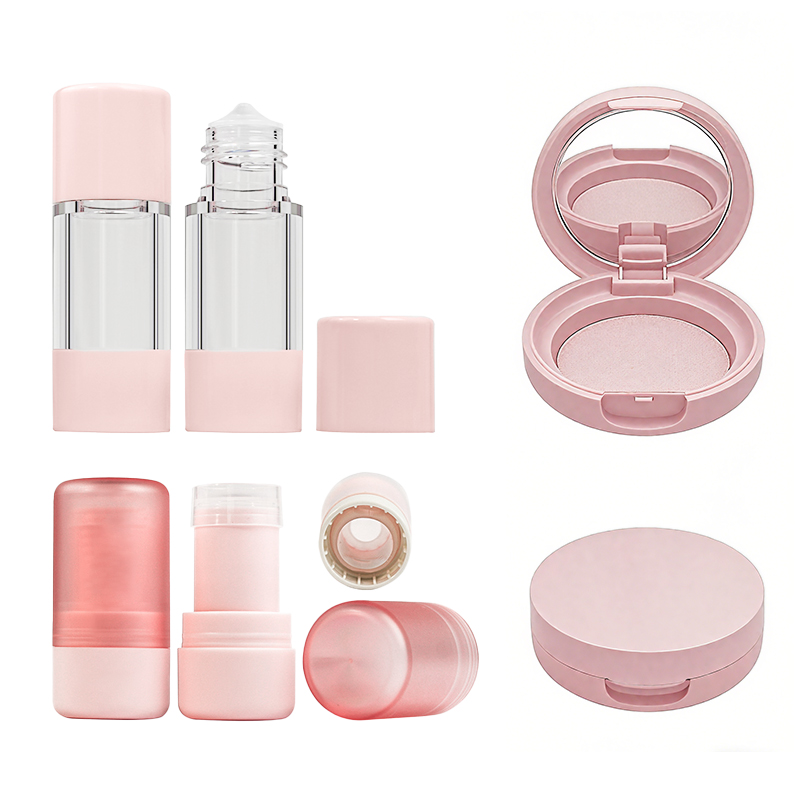
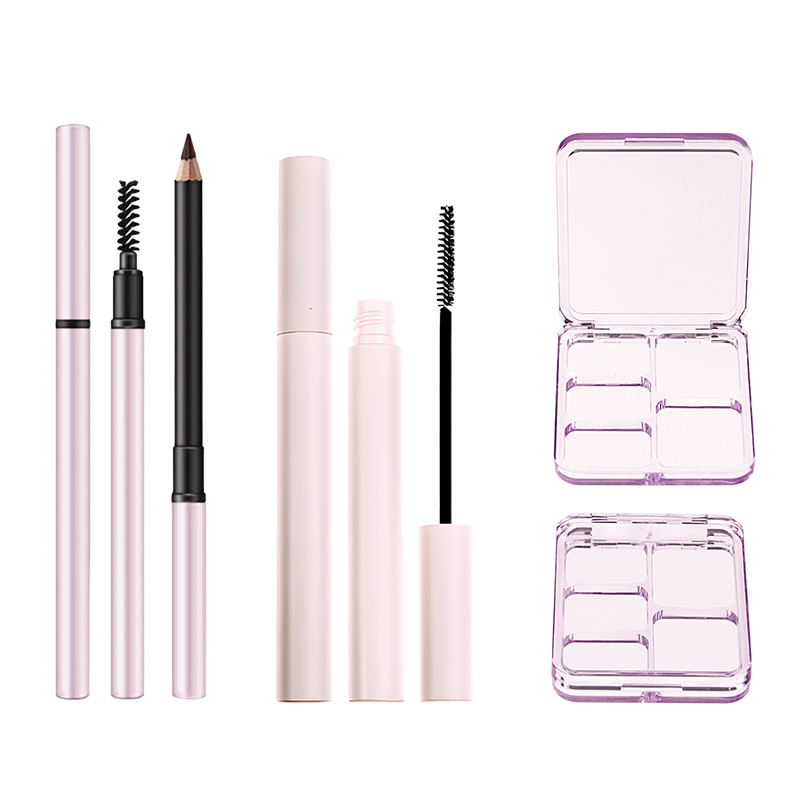
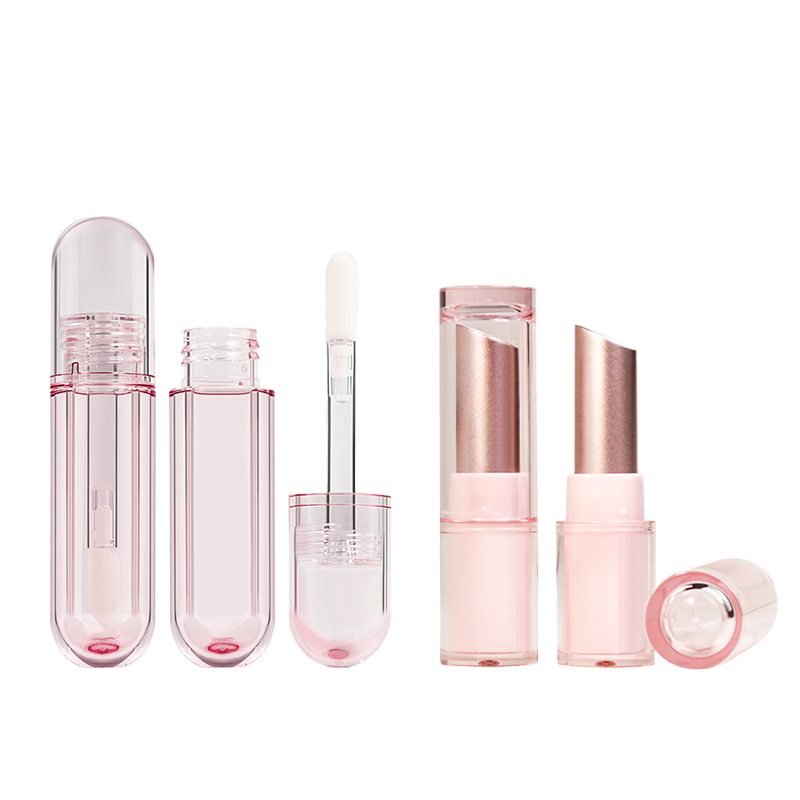

How to Choose the Right Plastic Packaging for Cosmetics
February 04,2026
Choosing plastic packaging for cosmetics isn’t just about slapping a label on a bottle and calling it a day—it’s about chemistry, charisma, and cold hard logistics. If your serum leaks in transit or your lotion goes rancid under the lights of a retail shelf, guess what? That’s not “quirky branding,” that’s lost revenue.
You’ve got formulas worth their weight in gold—but they need armor that holds up on rough shipping routes and still looks sleek enough to stand out online. The wrong material can warp, crack, or straight-up disappear from shelves if buyers don’t trust what’s inside.
“Packaging accounts for 70% of purchase decisions in cosmetic products,” says Mintel’s Global Packaging Trends Report. That isn’t fluff—it’s fact. Your packaging is often the handshake before anyone even opens the jar.
So how do you pick between PET, PP, HDPE—or jump into PCR plastics without compromising your margins? Buckle up—we’re cracking this open with style and clarity.
Types Of Plastic Packaging For Cosmetics
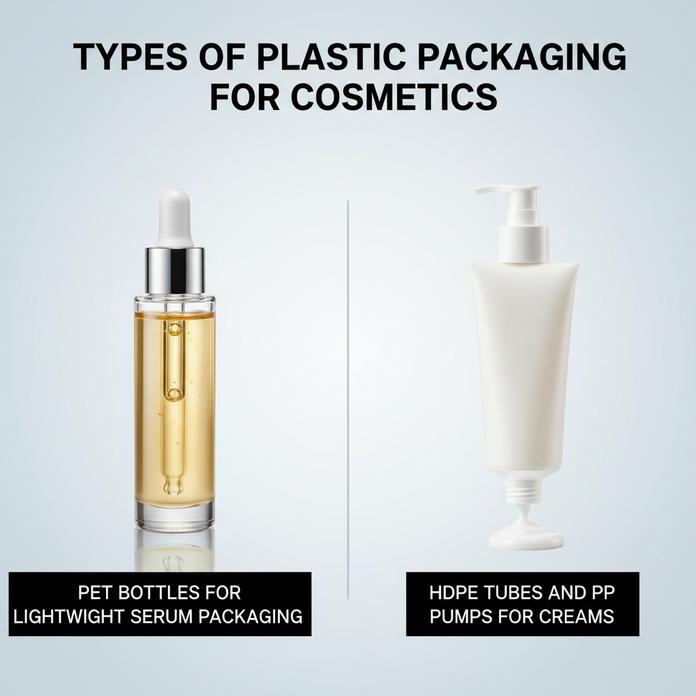
From sleek bottles to eco-friendly jars, plastic packaging for cosmetics has evolved into a smart blend of function and flair. Let’s break down the most common types.
PET Bottles for Lightweight Serum Packaging
- Crystal-clear appearance helps highlight high-end serums.
- Lightweight build cuts down on shipping costs.
- Compatible with droppers or flip-top caps, offering precision use.
- PET plastic is known for its excellent barrier properties, keeping active ingredients fresh.
- Brands love it because it’s both tough and recyclable.
- It also resists shattering—goodbye messy spills.
☑ Ideal choice when you want your serum packaging to look premium but stay practical.
The clarity of these transparent bottles makes them perfect for showcasing colorful serums while still being sturdy enough to handle travel or shelf life without cracking under pressure.
Short bursts of function:
Keeps serums stable
Easy to label
Feels featherlight
HDPE Tubes and PP Pumps for Creams
Grouped together, these two form a power couple in the world of cream containers:
• HDPE tubes – flexible yet strong; they bounce back after every squeeze
• PP pumps – deliver consistent amounts without letting air sneak in
Why they work:
Resistant to oils and acids found in skincare
Easy to decorate with prints or labels
Don’t warp under heat or pressure
| Component | Material | Benefit | Typical Use |
|---|---|---|---|
| Tube | HDPE | Squeezable & chemical-safe | Moisturizing creams |
| Pump | PP | Hygienic & durable | Facial lotions |
| Cap | PP | Secure closure | Night creams |
| Inner liner (opt) | EVOH | Extra barrier protection | Anti-aging formulations |
Together, these components make up some of the most reliable forms of cosmetic container with applicator, especially when dealing with viscous products like creams or lotions.
PS Compact Cases in Powder Foundations
These snappy little packages are all about style meets structure:
- Made from rigid PS plastic, so they hold their shape nicely
- Often molded into chic designs—mirrors included!
- Snap-shut lids protect powders from breaking apart
Quick facts:
• Great moldability = endless design options
• Smooth surface = easy branding via hot stamping or silk screen printing
• Lightweight enough to toss into any bag
Packaging isn’t just about looks here—it’s about protecting delicate textures too. These powder compact case options are built tough enough to take a tumble but still look glam on a vanity shelf.
PVC Sprayers and Roll-on Applicators
You’ll find these mostly where liquid meets movement:
- Sprayers made from durable PVC plastic offer transparency so users can see what’s left inside.
- The material stands up well against alcohol-based formulas like body mists or toners.
- Roll-ons? They’re a go-to for cooling gels and deodorants thanks to their smooth-glide application style.
Symbolically speaking ☀:
✧ Clear visibility + durability = trust + convenience
These dispensing mechanisms aren’t just functional—they add a tactile experience that consumers enjoy using daily. Whether it’s a spritz of fragrance or a swipe under the arm, this type of fragrance packaging delivers exactly what it promises: clean application without mess.
PCR Plastic Jars for Sustainable Skincare
Eco-conscious brands are jumping on the bandwagon—and rightly so—with jars made from post-consumer recycled (PCR plastic) materials.
Grouped benefits:
• Cuts down virgin plastic use by reusing existing resources
• Keeps strength similar to traditional plastics—no compromise there
• Works well with luxurious finishes like matte coatings or metallic foils
Short reasons why it matters:
Appeals directly to eco-aware shoppers
Reduces carbon footprint during production
Supports circular economy goals across industries
These sustainable skincare jars prove you don’t have to sacrifice aesthetics when choosing greener paths in your product line. Expect more brands (including Topfeel) making the switch as demand grows steadily across global markets focused on reducing environmental impact tied to cosmetic packaging choices.
5 Key Factors In Plastic Packaging For Cosmetics
Unpacking what makes plastic packaging for cosmetics functional, stylish, and sustainable—here’s what really counts.
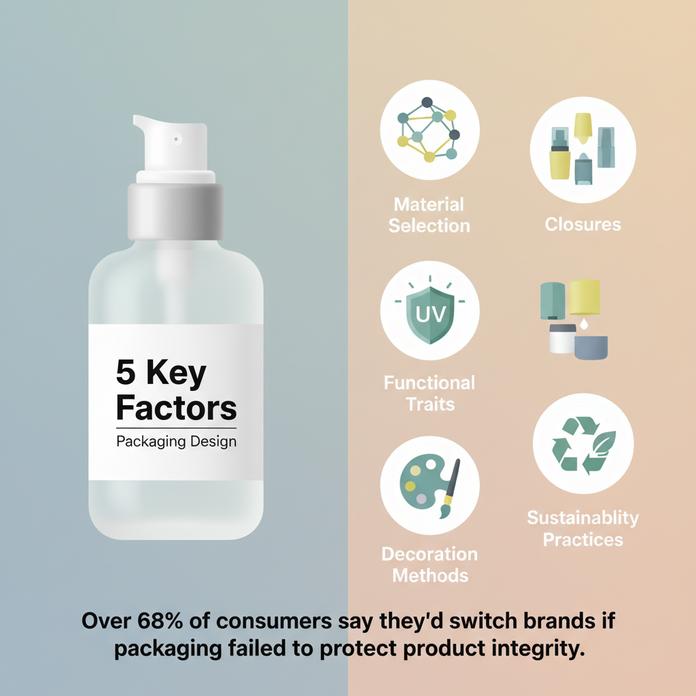
Factor 1 – Material Selection with PET, HDPE and PP
Choosing the right material isn’t just about looks—it’s about chemistry, clarity, and performance. Here’s how the top plastics stack up:
| Material | Clarity | Barrier Strength | Recyclability |
|---|---|---|---|
| PET | High | Medium | Widely Accepted |
| HDPE | Low | High | Widely Accepted |
| PP | Medium | Moderate | Increasing |
- PET gives that glossy, clear finish perfect for high-end lotions.
- HDPE is tougher than it looks—ideal for thicker creams.
- PP, though less flashy, handles heat like a champ and resists fatigue.
Each of these plastics offers different benefits depending on the formula inside. When it comes to matching formulas with containers in cosmetic packaging, compatibility is king. Brands like Topfeel have nailed this balance by offering tailored solutions across their product lines. From serums to scrubs, choosing between PET, HDPE, or PP can make or break your shelf presence.
Factor 2 – Closures from Screw Caps through Airless Pumps
The closure game has gone way beyond just twist-and-go. Today’s options are smarter—and slicker.
- Screw caps: Classic but still relevant; great for thick creams.
- Flip-top caps: Quick access with one hand? Yes please.
- Dispensing pumps: A go-to for lotions and gels—clean and precise.
- Airless pumps: No air = longer shelf life + zero waste.
- Droppers & applicators: Ideal for oils or precise skincare routines.
Modern closures aren’t just about function—they’re part of your brand vibe too. Whether you’re going minimalist or futuristic, the right cap matters more than you’d think in plastic packaging design.
Factor 3 – Functional Traits including UV Protection and Leak-proof Design
“Over 68% of consumers say they’d switch brands if packaging failed to protect product integrity.” — Euromonitor International (2024)
When your face cream turns yellow after a few weeks on the windowsill—that’s UV damage talking. And when serum leaks into a purse? That’s poor sealing at work.
• UV-blocking additives keep light-sensitive ingredients potent longer
• Leak-proof seals reduce returns and customer complaints
• Multi-layered barriers extend shelf life without preservatives
In short: good design = happy skin + no messes + fewer headaches for everyone involved in cosmetic packaging production.
Factor 4 – Decoration Methods such as Silk Screening and Metallization
Looks matter—especially when your bottle needs to stand out from dozens on a shelf.
- Silk screening delivers crisp logos directly onto curved surfaces.
- Add some shine with hot stamping or full-blown foil-based metallization.
- Labels? Sure—but textured finishes create tactile appeal too.
- Offset printing works wonders when you need detail-heavy designs fast.
A well-decorated bottle does more than look pretty—it communicates luxury or utility at first glance. In today’s crowded beauty aisles, decoration isn’t optional; it’s strategic branding baked into every inch of plastic packaging for cosmetics.
Factor 5 – Sustainability Practices like Refillable Systems and Recyclable Packaging
Refillable jars aren’t just trendy—they’re becoming expected by eco-conscious shoppers who want both glam and green credentials.
• Refillable systems cut waste while boosting brand loyalty
• Single-material designs improve recyclability rates
• Using post-consumer resin (PCR) reduces virgin plastic demand
• Lightweight formats lower shipping emissions
Sustainability doesn’t mean sacrificing style either—brands are getting creative with biodegradable inks, minimal labels, even compostable inner liners where possible. The future of cosmetic plastic packaging lies somewhere between sleek aesthetics and smart environmental choices—and we’re already seeing that shift unfold on shelves worldwide.
How Durable Is Plastic Packaging For Cosmetics?
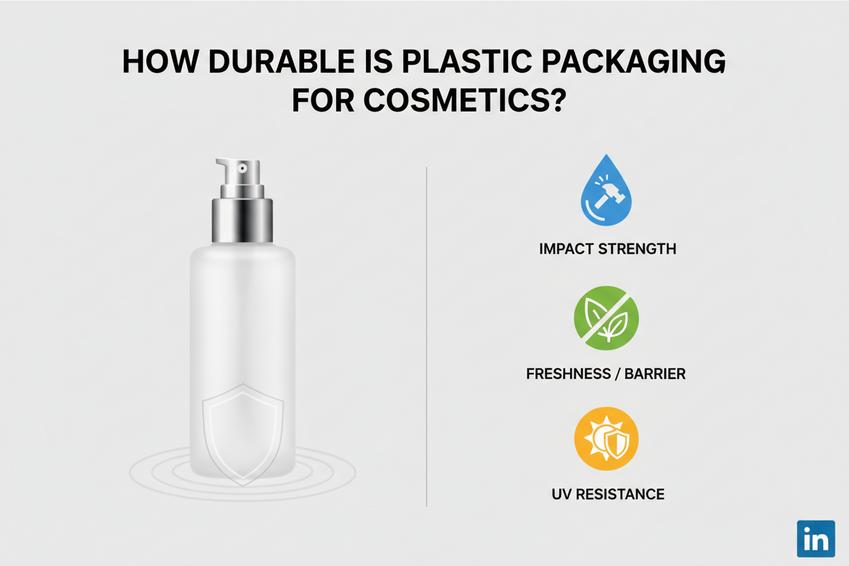
Cosmetic plastic packaging has to do more than just look pretty—it needs to survive daily abuse, protect formulas, and stay strong under pressure.
Evaluating Impact Resistance in ABS and PS Polymers
ABS and PS are standout materials when it comes to impact survival—especially when your favorite compact takes a tumble.
- Impact strength: ABS absorbs shock better than most plastics, making it ideal for drop-prone containers like foundation bottles or travel kits.
- Fracture toughness: PS offers decent rigidity but cracks more easily under stress compared to ABS.
- Material properties: ABS blends flexibility with hardness, while PS leans toward stiffness and brittleness.
- Polymer structure: The amorphous nature of both polymers allows for better molding precision but influences how stress is distributed during impact.
- Stress distribution: ABS handles sudden force with even load dispersion; PS tends to localize stress points.
- Deformation behavior: Under pressure, ABS bends slightly before breaking—PS often snaps without warning.
- Mechanical testing results: In standard drop tests, ABS containers outperform PS by up to 30% in survival rates.
These traits make ABS the go-to pick for durable plastic packaging for cosmetics that need to endure life on the move.
Assessing Barrier Properties for Long-lasting Freshness
Keeping your skincare cream fresh isn’t just about sealing the lid tight—it’s all about what’s happening at the microscopic level inside those plastic walls.
• Some plastics have low oxygen transmission rate, which helps preserve sensitive ingredients like retinol from oxidizing too soon.
• Others shine by limiting moisture vapor transmission rate, keeping water-based products from drying out or separating over time.
• High-end formulations benefit from materials with excellent permeability resistance, especially against gases like oxygen or CO₂.
“According to a Q2 2024 report by Smithers Pira, barrier-enhanced cosmetic plastics can extend shelf life by up to 40% compared to standard HDPE.”
In short bursts:
- Better barrier = longer shelf life
- Poor seals = faster product degradation
- Smart material choice = reliable preservation
So next time your serum still smells great after six months? Thank its gas-tight packaging.
Chemical and UV Resistance over Repeated Use
Skincare formulas are packed with active ingredients—and those can wreak havoc on weak plastics if you’re not careful.
🟢 HDPE stands out for its superior chemical compatibility, resisting breakdown from acids, alcohols, and essential oils found in many serums.
🟢 PP also holds its own against solvents while maintaining shape integrity through countless squeezes or pumps.
🟣 Both materials reduce risk of oxidation, which can cause discoloration or brittleness over time.
🟡 When exposed to sunlight, lesser plastics suffer from rapid UV degradation, turning yellow or cracking; stabilized HDPE resists this well.
🔵 Consistent exposure leads to long-term effects like polymer chain scission—aka silent aging—but high-quality resins delay this process significantly.
If you’ve ever seen an old lipstick tube turn chalky white? That’s poor resistance at play—and why smart packaging design matters so much in cosmetics.
Role of Manufacturing Methods on Packaging Strength
How that bottle gets made says a lot about whether it’ll survive your makeup bag—or fall apart after a few uses.
• Injection molding gives precise control over wall thickness, allowing brands to reinforce weak spots without adding bulk unnecessarily.
• Blow molding is better suited for flexible bottles but may create uneven areas prone to cracking if not carefully monitored during cooling cycles.
• Mold quality directly affects final part performance—badly designed molds lead to poor material flow and internal stresses that weaken structural integrity later on.
Now add this into the mix:
- Material flow depends heavily on temperature settings during processing; too hot or cold alters surface finish and durability alike.
- Thicker walls don’t always mean stronger—they must be balanced with proper cooling times and mold design logic.
So yes, behind every flawless-looking lipstick stick packaging solution lies a world of engineering decisions shaping how long it lasts—and how well it protects what’s inside your favorite formula-filled container made from plastic packaging for cosmetics.
What Makes Plastic Packaging For Cosmetics Eco-Friendly?
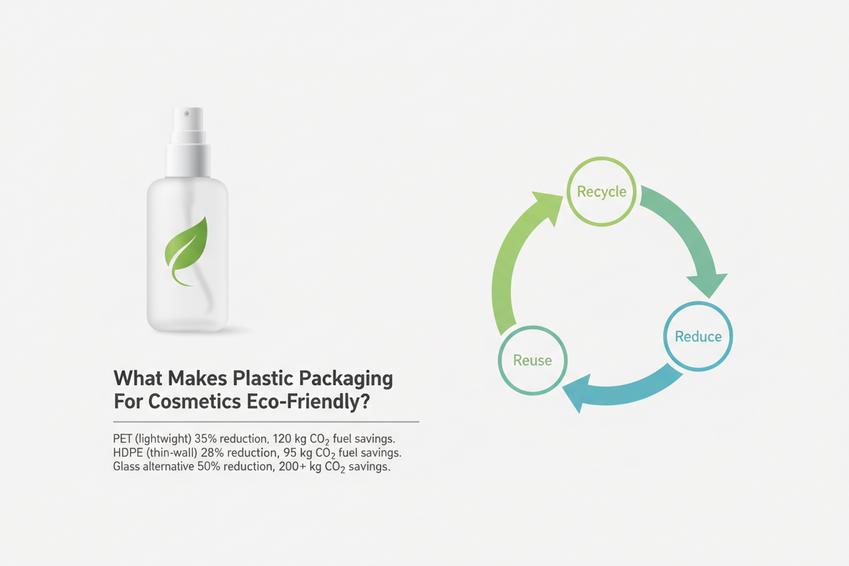
Eco-friendly cosmetic packaging isn’t just a buzzword—it’s a shift in how beauty brands think about waste, resources, and responsibility. Let’s break down what actually makes it sustainable.
Recyclable Packaging: Reducing Post-Consumer Waste
- PET and HDPE bottles are the MVPs of recyclability—widely accepted by most curbside programs.
- Brands are upping their PCR content, using more post-consumer resin to close the loop.
- A strong recycling infrastructure matters just as much as recyclable materials themselves.
♻️ When consumers toss out their used lipstick tubes or serum pumps, what happens next depends on proper material sorting, access to local collection systems, and whether that packaging is made with clean, single-type plastics. The goal? More closed-loop recycling, less landfill junk.
Biodegradable Materials for Short-Lifecycle Products
• Compostable mascara wands? Yep, they exist now. Made with PLA, these tools break down naturally.
• Trial-size creams in sachets made from bio-based polymers like PHA help reduce long-term waste.
• The key is knowing the difference between materials suited for home composting vs. those needing industrial conditions.
For beauty items you use once or twice—think testers or travel packs—switching to materials with faster degradation time is smart. These products embrace short lifecycles without leaving long-term trash behind thanks to innovations in natural decomposition.
Refillable Systems to Minimize Single-Use Plastic
Refillables are changing the game:
- Consumers buy once, refill often—cutting down on plastic by reusing core components.
- Many brands now offer sleek glass jars paired with flexible refill pouches, reducing outer packaging waste.
- Smartly designed pumps and nozzles boost product lifespan while supporting a longer overall packaging lifecycle.
By tapping into the principles of a true circular economy model, refillable systems not only extend product use but also make it easier for users to feel good about their routine—from cleanser to toner and beyond.
Lightweight Design for Lower Transport Emissions
Here’s where shaving grams really counts:
• Thinner walls = less plastic = lower weight during shipping
• Less weight = reduced fuel burn = smaller carbon trail
• Optimized shapes improve stacking = better transport efficiency
Lighter doesn’t mean flimsy anymore. Thanks to advances like thin-wall technology, cosmetic containers can maintain strength while reducing total material usage—a win-win when it comes to both performance and cutting your brand’s overall carbon footprint.
| Material Type | Average Weight Reduction (%) | Fuel Savings per Ton (kg CO2) | Cost Impact |
|---|---|---|---|
| PET (lightweight) | 35% | 120 | Neutral |
| HDPE (thin-wall) | 28% | 95 | Slightly positive |
| Glass alternative | 50% | 200+ | Positive |
This kind of data shows how even subtle tweaks in design can yield big-time climate benefits across supply chains.
Mono-material Packaging Simplifying Recycling Streams
Let’s get real—mixed plastics confuse recycling machines and people alike. That’s why mono-material solutions matter:
- Using only one polymer type like all-PET or all-PP
- Boosting overall recovery rates through improved sorting at MRFs
- Avoiding glue layers or coatings that cause contamination issues
The simpler the structure, the better the outcome for municipal recycling centers. When packaging has true material homogeneity, it sidesteps common pitfalls like incorrect binning or poor downstream processing—and that means higher-quality recycled outputs with fewer losses due to impurity or incompatibility with existing systems around material recovery.
PET Vs. PP: Cosmetic Plastic Packaging Choices
Choosing the right plastic packaging for cosmetics can make or break a product’s performance and shelf appeal. Let’s size up PET and PP.
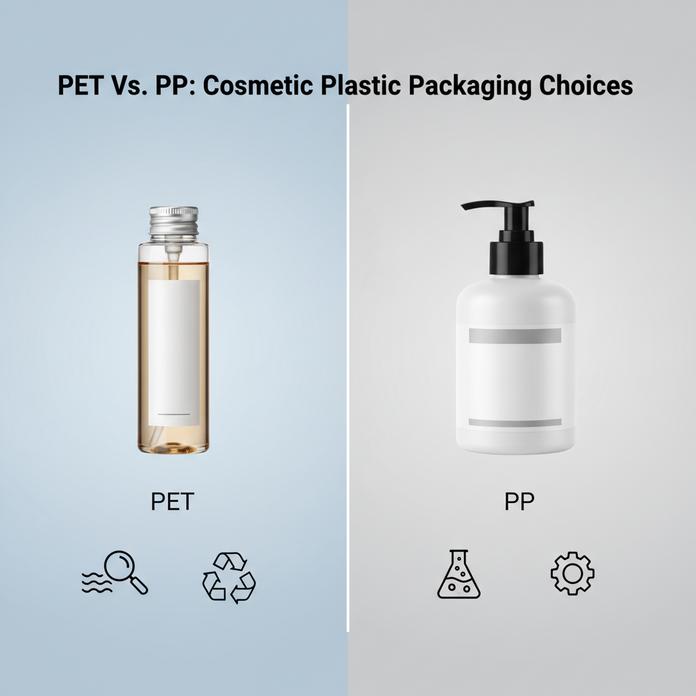
PET
- High transparency gives that crystal-clear finish—perfect for showcasing vibrant serums or colorful toners.
- Offers excellent barrier properties, keeping oxygen and moisture out, which preserves product freshness longer.
- Lightweight yet tough, it balances portability with decent impact resistance.
- Transparency: Ideal for products where visual appeal matters—think bright facial mists or shimmering body oils.
- Recyclability: Widely accepted in recycling streams globally, making it a go-to for eco-conscious brands.
• Commonly used in bottles for toners, sprays, and micellar water due to its clarity and lightness.
The durability of polyethylene terephthalate lets brands ship products worldwide without worrying about breakage—a big win in global logistics.
Short bursts of insight:
- It’s not brittle like glass but still looks just as sleek.
- Compatible with most essential oils and alcohol-based formulas.
- Often used in transparent jars when shelf visibility is key.
→ Blow molding makes shaping PET into sleek silhouettes easy during production.
→ Its resistance to UV degradation helps preserve sensitive formulations under store lighting.
Grouped attributes:
• Visual Shelf Appeal: High clarity, gloss finish
• Functional Durability: Lightweight + strong under pressure
• Eco-Factor: 100% recyclable if cleaned properly
Mixing things up:
- While its chemical resistance isn’t as high as PP’s, it still holds up well against alcohols.
- Some brands use PET for outer shells while switching to more sustainable cores inside the container.
“Consumer preference continues to lean toward clear packaging that reflects product purity—PET leads this trend,” reports Mintel Global Packaging Outlook 2024.
PP
• Ultra-tough against chemical-heavy creams or lotions—thanks to its high chemical inertness.
• Doesn’t warp under heat; perfect for hot-fill applications or steam sterilization processes.
- Moisture Resistance: Keeps thick creams from drying out or reacting with air exposure.
- Cost Efficiency: More affordable than PET on average—ideal when margins are tight but quality can’t slip.
☑️ Used extensively in pump dispensers, flip-top caps, mascara tube options—you name it.
Longer form insight:
Thanks to its superior heat tolerance and flexibility, polypropylene dominates closures and inner components of cosmetic containers where precision fit matters most. You’ll spot it behind-the-scenes in twist-up deodorants or nozzle tube for liquid foundation pumps where durability trumps aesthetics.
Quickfire facts:
- Not as clear as PET but available in frosted finishes.
- Survives rough handling better than many plastics.
- Great at forming airtight seals when molded into caps or plugs.
Sequence of use cases:
→ Cream jars → portable balm stick → Compact powder pans → Cap liners
Grouped bullet format:
• Performance Benefits: Heat-resilient + moisture-proof + flexible under stress
• Application Range: Lids, spatulas, pump heads—even refill pods use PP often
Natural blend of ideas:
Some packaging blends both materials—for example, a transparent PET bottle topped with a sturdy PP cap—to harness the best of both worlds when crafting standout plastic packaging for cosmetics.
By understanding where each plastic shines—whether it’s the glassy elegance of PET, or the rugged utility of PP—brands can make smarter choices that balance cost, performance, and style across their cosmetic lines.
FAQs
Which plastic materials suit different cosmetic products best?
Matching the right polymer to the product feels almost like matchmaking—each has its unique charm:
- PET Bottles & Jars: Crystal-clear, light in hand, perfect for toners or bright serums with droppers or flip-top caps.
- HDPE Tubes: Soft yet strong, comforting lotions and creams against chemical wear.
- PP Pumps & Airless Systems: Precision delivery with built-in leak-proof confidence.
- PS Compact Cases: Sculpted rigidity that cradles pressed powders elegantly.
How can packaging be eco-friendly at high volumes without losing appeal?
Even in mass production, care shines through:
- Switch to Recyclable PET & HDPE, keeping waste streams cleaner.
- Blend in PCR Plastic, giving a second life to yesterday’s bottles and jars.
- Add refillable designs—airless pumps or screw-cap jars—to reduce single-use guilt while inviting reuse rituals.
What closures work well when ordering large batches of containers?
Think of closures as both guardians and storytellers:
☑ Screw caps keep oils safe on long journeys;
☑ Flip-top caps invite quick one-handed use;
☑ Droppers add drama to precise skincare routines;
☑ Snap-on lids seal compacts like treasure chests waiting to open.
Why is mono-material design important for sustainable skincare lines?
It’s the quiet hero in recycling plants—keeping identity pure so sorting is swift: PET-only bottles blow-molded smooth; PP-only airless pumps molded by injection resist moisture intrusion while remaining fully reprocessable after use.
Which material stands up better during travel—ABS or PS—for makeup kits?
ABS has that calm toughness—the impact resistance you feel when bags tumble from car seats—protecting shades inside silk-screened palettes; PS may look sleek but falters under repeated knocks where ABS stays composed yet stylish through custom color matching and hot-stamped finishes.
References
- Packaging Industry and Market Insights – Mintel
- Consumer Packaging Strategies: Adapting to Cost Pressures – Euromonitor International
- ABS vs PS: A Comprehensive Comparison of Their Differences – SogaWorks
- Shelf Life Studies | Healthcare Packaging Testing – Smithers
- The Future of Beauty Packaging: Here’s What Brands Need to Know – Mintel

