 English (Canada)
  English
  English (UK)
  English (Australia)
  العربية
  Deutsch
  Italiano
  Español de México
  Tiếng Việt
  ไทย
ไทย  Português do Brasil
  Français
  Български
  Čeština
  Dansk
Dansk  Ελληνικά
  Eesti
Eesti  Suomi
Suomi  Magyar
  Bahasa Indonesia
  Lietuvių kalba
  Latviešu valoda
  Norsk bokmål
  Nederlands (Formeel)
  Polski
  Română
  Русский
  Slovenčina
  Slovenščina
  Svenska
  Türkçe
  Українська
  简体中文
简体中文  日本語
日本語  한국어
한국어  繁體中文
繁體中文 

A Simple Guide to Makeup Product Verification and Packaging Compatibility Testing
February 25,2026
In today’s beauty world, new makeup products are launched every day. To attract customers, brands create fancy formulas and eye-catching packaging. However, these new designs bring new challenges. To make sure a product is safe and high-quality, we must use scientific testing methods to check both the makeup “juice” (the formula) and the “container” (the packaging).
1. What is Product Verification?
Product verification is a series of tests to ensure everything works perfectly before it reaches the customer. There are four main areas:
1.1 Formula Stability Testing
This test checks if the makeup itself changes over time. Scientists look for physical or chemical changes to make sure the product stays effective and safe until its expiration date. For example, a cream should not turn into a liquid, and a bright red lipstick should not lose its color.
1.2 Packaging Compatibility Testing
This test simulates how the product behaves during shipping, in stores, and in a customer’s home. It focuses on how the formula and the inner packaging (like a bottle or tube) affect each other. Sometimes, the chemicals in the makeup can damage the plastic, or the plastic can change the makeup.
1.3 Packaging Stability Testing
This looks at the “strength” of the container. It checks if the structure is solid, if the cap closes tightly, and if the labels stay on. It ensures the product looks good and functions well throughout its life.
1.4 Regulatory Compliance Verification
Every country has different laws for cosmetics. This step confirms that the ingredients and the packaging materials follow the rules of the local government or the country where the product will be sold.
2. How Do We Test These Products?
Testing must be thorough. We don’t just check if the box looks pretty; we check if the product survives different seasons and climates.
2.1 The “Stress Test” (Stability & Compatibility)
The most important test involves putting samples in extreme environments for 28 days to see what happens. Usually, 12 samples are divided into four groups and placed in different conditions:
- High Heat: 45°C, 50°C, or 60°C to simulate a hot warehouse or a car in summer.
- Extreme Cold: -15°C or -20°C to simulate winter shipping.
- Cycle Test: Moving the product between -5°C and 50°C every few hours to mimic fast weather changes.
- Room Temperature: A control group for comparison.
What are we looking for?
- Formula Changes: Does it separate, grow crystals, smell bad, or change color?
- Packaging Issues: Does the bottle crack? Does the brush fall off? Does the makeup leak?
- Weight Loss: Does the liquid evaporate? (Usually, it should lose less than 2.0% of its weight).
2.2 Testing Packaging Function
Before mass production, the packaging must pass several “physical” exams:
- Structure: Do the magnets work? Does the cap fit perfectly?
- Function: Can it survive being dropped (Drop Test)? Does the ink peel off when touched with alcohol?
- Safety: Are there sharp edges that could cut a finger? Is there a choking hazard for children?
2.3 Legal and Safety Checks (Compliance)
Products are often sent to professional labs like SGS or Intertek to check for hidden dangers:
- For the Formula: Testing for heavy metals (like lead), harmful bacteria, and forbidden chemicals.
- For the Packaging: Checking for “plasticizers” (Phthalates) or harmful minerals that might leak into the makeup.
3. Real-Life Problems and Solutions (Case Studies)
To better understand why this matters, let’s look at five common failures in the industry:
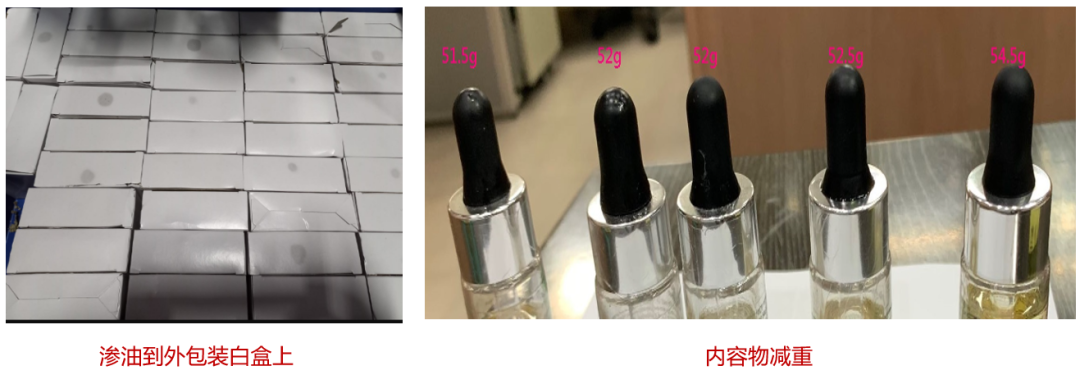
Case 1: The Leaking Oil Bottle
- The Problem: A customer complained that their expensive face oil was leaking and half-empty, even though it was never opened.
- The Cause: The top part of the dropper was made of silicone. The oil “climbed” up the glass and was absorbed by the silicone. This caused the silicone to swell (get bigger), creating gaps where the oil could evaporate.
- The Solution: Change the material to Nitrile Rubber, which does not absorb oil as easily as silicone.
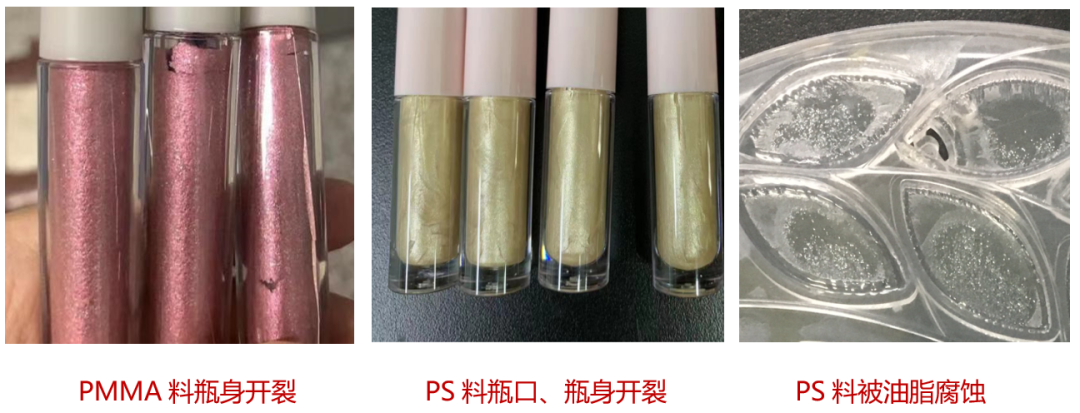
Case 2: Cracked Plastic Containers
- The Problem: During testing, the screw-top area of a plastic jar started to crack and fall apart.
- The Cause: Certain oils in creams (like Palm Oil derivatives) are “aggressive.” They can chemically attack weak plastics like PS or AS, causing them to become brittle and break.
- The Solution: Use stronger plastics like PET or PETG, which are much more resistant to oils.
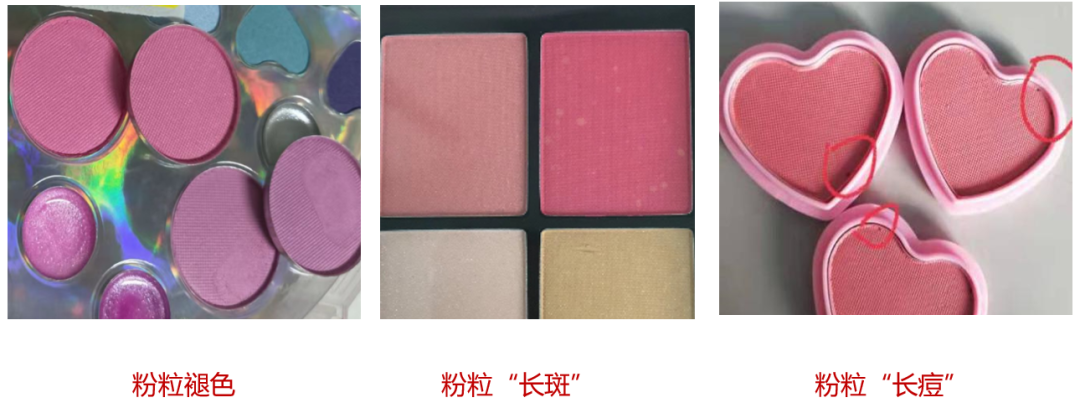
Case 3: Weird Spots on Eyeshadow
- The Problem: After adding glue to hold the eyeshadow pan in place, the powder changed color or grew “pimples”.
- The Cause: Many factories use cheap water-based glue. The water inside the glue evaporates into the powder, reacting with the pigments and causing mold or color changes.
- The Solution: Use oil-based glues (like “jelly glue”) that don’t contain water.
Case 4: Boxes Falling Apart
- The Problem: Makeup palettes were falling out of their paper boxes after sitting on a shelf for three months.
- The Cause: Workers were adding chemicals (like toluene) to the glue to make it easier to brush on. This made the glue dry too fast and become “brittle” like thin glass, so it eventually snapped.
- The Solution: Use machines to control glue thickness and perform “Pull Tests” to ensure the bond can hold at least 5kg of weight.
Case 5: The Legal Nightmare
- The Problem: A shipment was blocked at the border because it contained too many heavy metals.
- The Cause: The brand didn’t check every small part of the packaging. A tiny metal decoration on the box was leaching lead.
- The Solution: Create a “BOM” (Bill of Materials) and test every single part—even the tiny ones—before shipping.
4. Summary and Future Trends
Product verification is a mix of science, law, and design. As the world moves toward eco-friendly packaging (like paper tubes or recycled plastic), testing becomes even more important because these new materials might react differently with makeup formulas.
To be successful, a beauty brand must have a strict, written process for testing every new idea. Only by testing thoroughly can a company protect its customers and its reputation.

