 English (Canada)
  English
  English (UK)
  English (Australia)
  العربية
  Deutsch
  Italiano
  Español de México
  Tiếng Việt
  ไทย
ไทย  Português do Brasil
  Français
  Български
  Čeština
  Dansk
Dansk  Ελληνικά
  Eesti
Eesti  Suomi
Suomi  Magyar
  Bahasa Indonesia
  Lietuvių kalba
  Latviešu valoda
  Norsk bokmål
  Nederlands (Formeel)
  Polski
  Română
  Русский
  Slovenčina
  Slovenščina
  Svenska
  Türkçe
  Українська
  简体中文
简体中文  日本語
日本語  한국어
한국어  繁體中文
繁體中文 
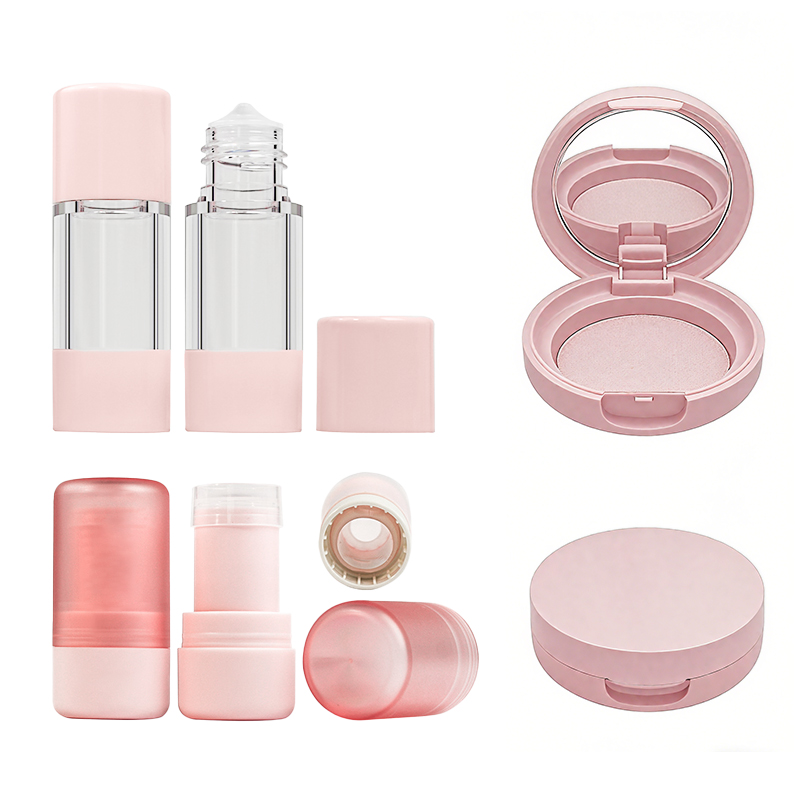
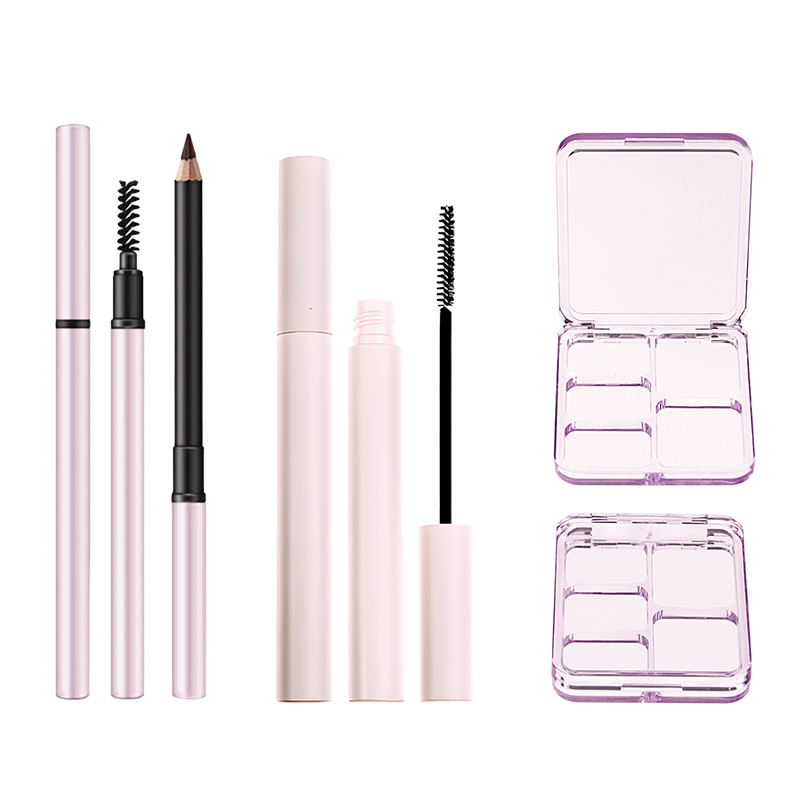
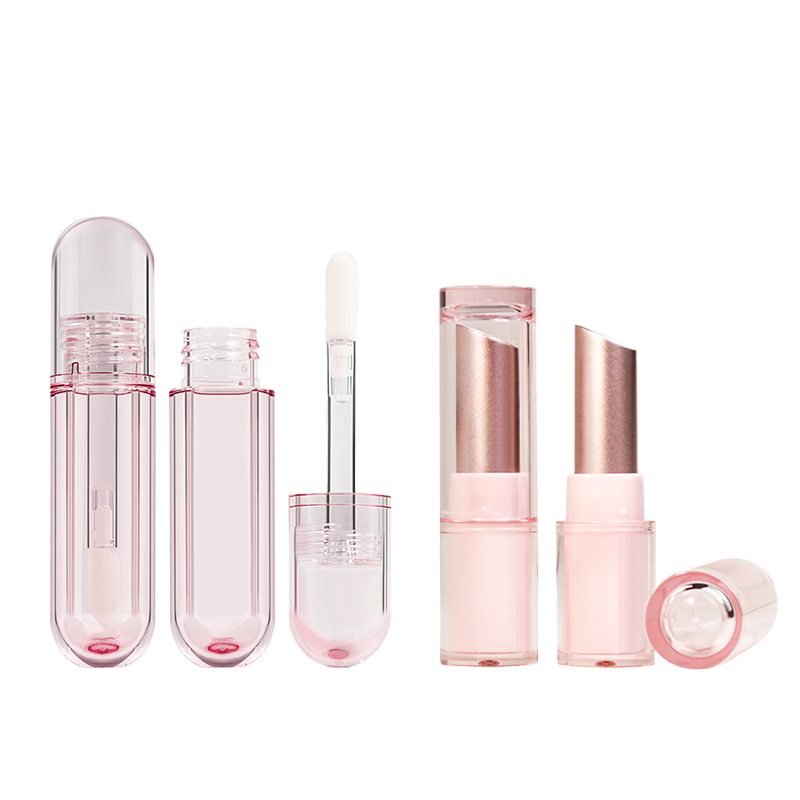

Top Cushion Foundations for Reuse in Empty Cases
March 26,2026
According to McKinsey & Company’s 2023 global consumer survey, more than 60% of beauty shoppers consider sustainability when making a purchase. That’s not a vibe—it’s a mandate.
Picture your brand as a favorite coffee tumbler. Folks don’t toss it; they refill it. A refillable cushion compact works the same way—sleek on the outside, smart on the inside, built to stick around. Lower repeat packaging costs, stronger shelf appeal, and a greener story that actually holds water.
This isn’t about chasing trends. It’s about picking the right case before the market picks for you.
Key Points for Cushion Foundation Empty Case Success
➔ Clean & Inspect the Shell: Verify ABS integrity, hinge function, and finish before reuse.
➔ Embrace Recycled Materials: Opt for PP plastic compacts and PETG pans to cut carbon footprint.
➔ Streamline Refill Workflow: Sanitize inner pan, use airless pumps, and secure airtight gaskets.
➔ Elevate Brand Appeal: Choose custom tooling, UV coating, and precise imprinting for standout design.
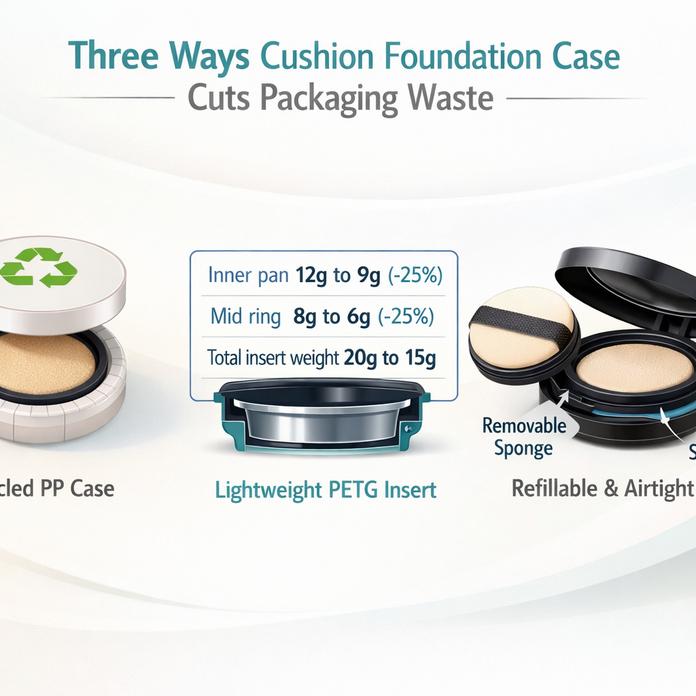
Three Ways Cushion Foundation Case Cuts Packaging Waste
The cushion foundation empty case might look small, yet it carries big environmental weight. Break down the phrase—cushion, foundation, empty, case—and you get comfort, formula, refill space, and structure. When brands rethink each layer of a cushion foundation empty case, waste drops fast. From material swaps to modular tweaks, even a basic cushion compact case can turn into eco-friendly packaging that feels good in hand and on conscience.
Method 1 – Recycled PP Plastic Compact Case
When upgrading a cushion foundation empty case, material choice sets the tone.
-
Core material shift
- Replace virgin resin with recycled plastic made from post-consumer polypropylene.
- Support sustainable materials sourcing within a circular economy loop.
-
Structural performance
- Injection-molded compact case keeps durability.
- Designed as refillable packaging, so the empty foundation case shell stays in use longer.
-
Waste impact
- Less raw fossil input.
- Lower carbon footprint per cushion compact case unit.
Topfeelpack applies recycled PP without compromising hinge strength, making every cushion foundation empty case sturdy enough for multiple refills.
Method 2 – Lightweighting with PETG Inner Pan
Material reduction works best when broken into layers inside the cushion foundation empty case.
- Outer shell: optimized wall thickness.
- Middle layer: switch to PETG for the inner pan.
- Insert design: trim excess ribs while keeping snap-fit stability.
| Component | Traditional ABS (g) | PETG (g) | Reduction |
|---|---|---|---|
| Inner pan | 12 | 9 | -25% |
| Mid ring | 8 | 6 | -25% |
| Total insert weight | 20 | 15 | -25% |
This lightweight design improves resource efficiency and cuts shipping emissions. A lighter cushion foundation empty case also means less bulk in secondary eco-friendly packaging, which brands quietly love.
Method 3 – Modular Sponge Applicator & Airtight Seal
A smart cushion foundation empty case is not just about plastic weight; it’s about lifespan.
-
Modular system
- Detachable sponge applicator for easy component replacement.
- Cleaner, more hygienic design that upgrades daily user experience.
-
Protection system
- Silicone gasket creates an airtight seal.
- Slows oxidation, supports product longevity, and prevents messy leaks inside the empty cushion compact.
-
Circular thinking
- Keep the outer case.
- Swap the refill.
- Replace only worn parts.
That’s how a simple cushion foundation empty case turns into refillable packaging that actually reduces waste, not just talks about it.
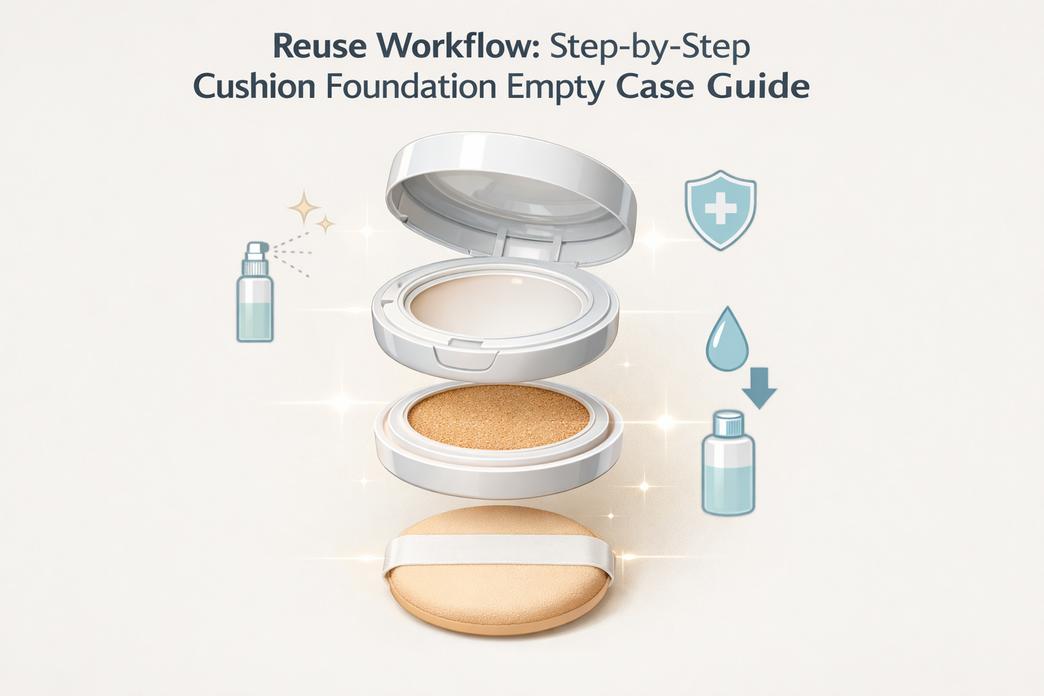
Reuse Workflow: Step-by-Step Cushion Foundation Empty Case Guide
Reusing a cushion foundation empty case is not just about saving a few bucks. It keeps your favorite compact in rotation while cutting waste. When you break down the cushion, foundation, empty case parts, the process feels way less intimidating. Let’s walk through how to refresh a foundation cushion case the smart way.
Clean & Inspect the ABS Plastic Shell
A reused cushion foundation empty case always starts with the outer build.
-
Core material check
-
ABS plastic integrity
- Look for cracks along the hinge
- Test snap closure resistance
-
Surface condition
- Spot scratches or dents
- Examine gloss level under light
-
-
Cleaning routine
-
Apply mild cleaning solution
- Use a soft microfiber cloth
- Focus on edge grooves for residue removal
-
Dry completely before reassembly
-
-
Structural inspection
-
Conduct close inspection
- Perform quick damage assessment on hinge pins
- Ensure mirror backing is secure
-
A solid shell means your empty cushion compact stays aligned and safe during refill cycles.
Remove and Sanitize the Inner Pan and Sponge Applicator
Inside the foundation compact case, hygiene matters.
-
Component removal
- Lift out the inner pan gently
- Separate the sponge applicator
-
Sanitization control
- Apply cosmetic-grade disinfectant
- Light wipe with rubbing alcohol for deep sterilization
- Allow full drying time before reuse
-
Hygiene verification
- Check for odor
- Confirm no moisture remains
According to McKinsey’s 2024 global beauty packaging update, refillable and reusable cosmetic formats continue to rise as consumers prioritize hygiene and sustainability together.
“Refill systems in beauty are moving from niche to norm, driven by consumer demand for safe reuse and reduced packaging waste.” — McKinsey & Company, 2024 Beauty Market Insights
A clean inner system keeps your cushion foundation empty case safe for fresh product.
Refill Using Airless Pump and Secure the Sealing Gasket
Precision refill protects the formula and the compact.
-
Filling system
-
Use a calibrated airless pump
- Dispense measured foundation formula
- Avoid air bubbles in the pan
-
Monitor the refill process for even spread
-
-
Seal protection
-
Insert sealing gasket
- Confirm secure fit around rim
- Press evenly to achieve airtight seal
-
-
Functional review
- Test dispensing mechanism
- Close and reopen the foundation empty case
An airtight cushion case prevents leaks and keeps texture smooth.
Perform Drop Testing and Surface Finish Inspection
Durability checks keep your cushion compact ready for daily use.
-
Mechanical resilience
-
Simulate light drop testing
- Assess impact resistance from waist height
- Listen for loose internal movement
-
-
Visual and tactile review
-
Inspect surface finish
- Confirm no scuffing after handling
- Maintain polished cosmetic appearance
-
-
Quality assurance
- Conduct small leakage test
- Evaluate hinge durability
- Verify closure pressure consistency
When your cushion foundation empty case passes these checks, it’s good to go. Clean shell. Sanitized core. Tight seal. Strong finish. That’s how a simple foundation case turns into a reusable staple without cutting corners.
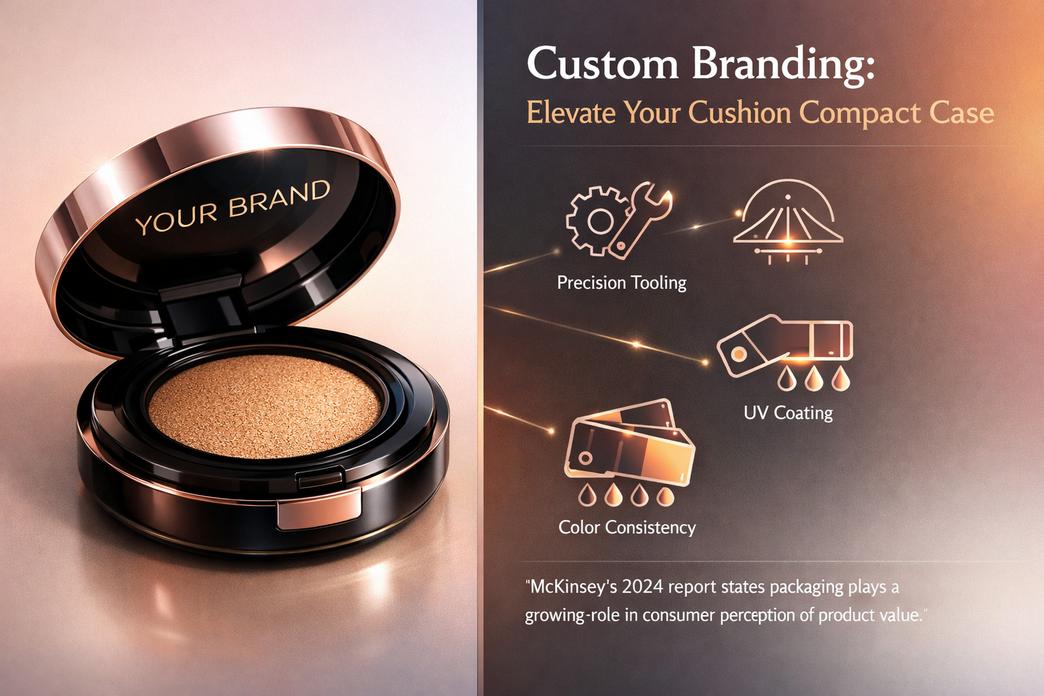
Brand Customization: Imprinting On Empty Cushion Cases
Custom branding turns a simple cushion foundation empty case into something customers actually want to keep. From tooling to coating, every detail shapes how a cushion compact case feels in hand and looks on shelf. Smart choices help your cushion foundation case stand out without blowing the budget.
Selecting Custom Tooling and UV Coating Techniques
When building a cushion foundation empty case, smart tooling selection shapes both vibe and function.
-
Custom tooling
- Ergonomic curves
- Slim hinge alignment
- Window positioning for shade display
-
UV coating and other coating techniques
- Scratch resistance
- Gloss or matte contrast
- Extra surface treatment durability
- Define brand style.
- Match mold depth to refill height.
- Confirm application methods for logo areas.
For brands working with Topfeelpack, the process usually flows like this:
-
Tooling Development
- Mold drafting
- Prototype review
-
Surface Finish
- UV layer curing
- Adhesion testing
A polished compact foundation empty case feels smooth but not slippery. That balance matters.
Hot Stamping vs. Silk Screening for Logo Precision
Logo detail can make or break a cushion foundation empty case.
-
- Metallic shine
- Strong transfer techniques
- High logo precision
-
- Fine detail accuracy
- Flexible printing methods
- Layered color design application
If the brand tone is luxe, hot stamping pops. For playful graphics on a cushion compact case, silk screening keeps lines crisp.
-
Decision Path
- Surface type (PP or ABS)
- Desired finish
- Budget per unit
McKinsey’s 2024 global beauty report noted that packaging “plays a growing role in consumer perception of product value,” especially in color cosmetics.
That insight hits home for any compact foundation empty case.
Ensuring Color Consistency with Material Certification
Color drift is a headache in mass production of a cushion foundation empty case.
-
Raw Material Control
- Material certification review
- Substrate validation
-
Pigment Management
- Pigment standards
- Controlled color matching
-
Production Oversight
- In-line quality assurance
- Batch-level batch uniformity checks
Short runs. Big runs. Same pink, same beige, same gloss. That’s the goal.
Topfeelpack focuses on certified resin sourcing so each cushion foundation case keeps tight color consistency, even across repeat orders.
Managing Lead Time and Minimum Order Quantity
Speed matters when launching a new cushion foundation empty case.
-
Planning Layer
- Lead time management
- Clear delivery timelines
-
Factory Coordination
- Production scheduling
- Balanced manufacturing cycles
-
Logistics
- supply chain coordination
- Streamlined fulfillment process
Here’s a practical flow many brands follow:
- Lock design and tooling.
- Confirm MOQ based on assembly capacity.
- Align shipping window with marketing launch.
With Topfeelpack, brands often adjust minimums based on mold complexity and refill compatibility. The right plan keeps your cushion compact case stocked, not stuck at customs.
FAQs about Cushion Foundation Empty Case
How does a recycled cushion foundation empty case reduce packaging waste?
A cushion foundation empty case made with PP plastic or ABS plastic containing post-consumer resin (PCR) cuts reliance on virgin polymers and lowers carbon footprint.
- Injection molding supports precise refillable design and dimensional accuracy.
- Lightweighting of the inner pan using PETG trims shipping weight in bulk packaging.
- Refillable compact case + replaceable sponge applicator = longer product life cycle.
The result is less landfill pressure and smoother inventory management with fewer full-unit replacements.
Which materials are best for manufacturing a cushion foundation empty case?
Material choice shapes both aesthetics and performance:
- ABS plastic – strong hinge mechanism, ideal for vacuum metallization and UV coating.
- PP plastic – flexible, suitable for airtight seal structures and recycled content.
- PETG – lightweight inner pan, clear window display options.
- Acrylic – glass-like clarity for premium compact case styling.
- Aluminum / Glass – luxury weight, high-end branding.
- Bamboo – biodegradable materials for eco-focused lines.
Selection often balances ergonomic shape, magnetic closure, and cost targets tied to minimum order quantity.
How can brands customize a cushion foundation empty case for large orders?
Customization blends design emotion with factory discipline.
• Custom tooling creates unique compact case silhouettes.
• Silk screening and hot stamping secure sharp logo detail.
• Certified pigments maintain color consistency across the assembly line.
• UV coating or eco-friendly coatings refine surface finish.
Behind the look: strict material certification, closure torque checks, and surface finish inspection before warehousing and customs clearance scheduling.
What quality control tests are critical before shipment?
A cushion foundation empty case must survive real-life pressure, not just showroom lighting.
Key controls include:
- Drop testing to protect the hinge mechanism and mirror
- Leakage testing to confirm sealing gasket performance and airtight seal integrity
- Dimensional accuracy checks for refill compatibility
- Surface finish inspection after blow molding or injection molding
- Closure torque validation for magnetic closure stability
Each step guards against returns, protects shipping containers from damage claims, and keeps lead time promises intact.
References
- Sustainability in packaging 2023 – McKinsey & Company
- Polypropylene – Wikipedia
- Circular economy – Ellen MacArthur Foundation
- Greenhouse gas emissions – US EPA
- Polycyclohexylenedimethylene terephthalate – Wikipedia
- Acrylonitrile butadiene styrene – Wikipedia
- Cosmetics Laws & Regulations – FDA
- Consumer sentiment survey packaging sustainability – Packaging Dive
- ASTM Standards – ASTM International
- Hot stamping – Wikipedia
- Screen printing – Wikipedia
- ISO 22716 Cosmetics GMP – ISO
- Supply chain management – Wikipedia
- Injection moulding – Wikipedia
- Quality control – Wikipedia

